Where to buy
Check the latest price, availability and delivery on Amazon. Orders are placed on Amazon. We may earn a commission from qualifying purchases.
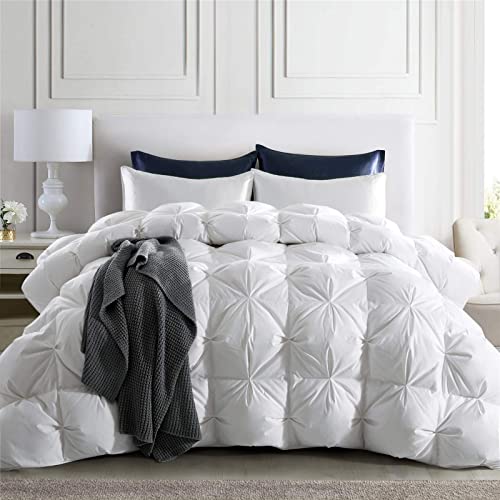
- Best overall: puredown Goose Down Duvet Insert, Full/Queen Oversized 98×90 — Check on Amazon
- Globon Winter White Goose Down Duvet Insert, Queen 90×90 — Check on Amazon
- Beautyrest Hungarian White Goose Down Duvet Insert, Full/Queen 90×98 — Check on Amazon
- APSMILE All Season Down Comforter Duvet Insert, Queen 90×90 — Check on Amazon
See 2 more Amazon options
- Brooklinen All Season Down Alternative Duvet Insert, Full/Queen 90×90 — Check on Amazon
- Egyptian Bedding Luxurious Goose Down Fiber Duvet Insert, Queen 90×90 — Check on Amazon
Read the full guide ↓
Disclosure: As an Amazon Associate, topratedkitchenware.com earns from qualifying purchases. Links to Amazon on this page are affiliate links; they cost you nothing extra. Listing details such as price and availability change often, so check the current Amazon listing before you buy.
Spending up to $400 on a duvet insert for an apartment sounds, at first hearing, like buying chandeliers for a rental. It deserves a fairer hearing than that. An insert is one of the very few premium household purchases that a lease cannot strand: it is not installed, it is not plumbed or wired, it needs no landlord’s permission, and genuine down — the fill this budget finally buys properly — compresses to a fraction of its lofted size, so the best insert in this guide will ride to your next apartment in a single bag and loft back up on the new bed. Judged over the years and the moves, a $400 insert can be the most portable luxury in the home. Judged over a single short lease on a landlord’s furnished bed, it can also be money parked in the wrong object, and this guide argues both sides before it recommends anything.
What the $400 buys, when it is spent well, is the same thing it buys a homeowner: genuine down clusters — the intact, springy plumes that loft high and recover for years — rather than the processed down fiber that fills most cheaper inserts, inside baffle-box shells with the corner tabs and loops an insert needs to stay put inside a cover. Two of the six picks below are fiber-filled, and we say so in their reviews rather than letting the word “down” blur the difference. What the apartment lens adds is a second set of tests the homeowner never faces: Will it pack down on moving day? Can its care routine survive a shared laundry room? Does its size behave in a small bedroom, inside the covers a renter actually owns? Below you will find a quick picks table, detailed notes on each of the six inserts, a comparison table, a buying checklist ordered for renters, the honest case for and against the whole idea, and answers to the questions apartment shoppers ask most at this price.
In this guide
Quick Picks
Short on time, or comparing several options at once? Each row below names a renter type and the insert that suits it, with a link to the listing.
| Buyer type | Pick | Why it stands out | Link |
|---|---|---|---|
| Best overall | puredown Goose Down Duvet Insert, Full/Queen 98×90 | 93% down clusters that compress small and move with you | Check on Amazon |
| Best value in genuine down | Globon Winter White Goose Down Duvet Insert, Queen 90×90 | Cluster down at a mid-tier position — check price on Amazon | Check on Amazon |
| Best for a long lease | Beautyrest Hungarian White Goose Down Duvet Insert, Full/Queen 90×98 | 75% Hungarian down, US-grown cotton, made in USA | Check on Amazon |
| Best warmth in the mid tier | APSMILE All Season Duvet Insert, Queen 90×90 | 46 oz of fiber fill — check price on Amazon | Check on Amazon |
| Best for shared laundry | Brooklinen All Season Down Alternative Duvet Insert, Full/Queen 90×90 | Machine-washable fill, cotton sateen, corner loops | Check on Amazon |
| Best attachment hardware | Egyptian Bedding Luxurious Duvet Insert, Queen 90×90 | 8 corner loops and tabs, 48 oz fill | Check on Amazon |
How These Picks Were Chosen
The first filter was the budget, applied to the queen or full/queen size specifically, because insert listings headline whichever size is cheapest. Every product below is a real Amazon listing sold as a duvet insert or comforter-duvet insert in that size in this guide’s under-$400 tier. Prices change often, so check the current price on Amazon for every pick before you decide, and confirm the queen or full/queen size specifically when you do.
The second filter is the lease. We did not use these inserts ourselves. We read the maker listings and specification pages and compared the things that decide how an insert behaves inside a cover — what the fill actually is (down clusters, down fiber, feather fiber or synthetic, the single most blurred distinction in this category), the maker’s fill-power and fill-weight figures, shell fabric and thread count, baffle-box versus sewn-through construction, the number and placement of corner tabs or loops, and the finished dimensions — and then we re-judged every pick against the renter’s realities: how small the fill packs down for a move, whether its care routine needs a dry cleaner, a home machine it will never meet, or a laundromat’s large drums, and whether its cut suits the standard covers and smaller bedrooms renters actually have. Fill-power, warmth and loft figures are maker claims throughout this guide; no independent lab verified them in the sources we checked, and we flag them as claims wherever they appear.
One overlap deserves stating openly: duvet inserts and comforters are largely the same products under two names on Amazon, and several picks here also appear in our comforter guides. That reuse is deliberate — each product below is genuinely titled or sold as a duvet insert, and this guide re-judges them on insert criteria (attachment hardware, shell behavior inside a cover, sizing against standard covers) and on apartment criteria, rather than repeating the comforter verdicts. If you will use the product bare, without a cover, the comforter guide is the better read; this one assumes a cover goes over it — in a rental, as the care sections below explain, the cover is close to mandatory equipment anyway.
The 6 Best Duvet Inserts for Apartments Under $400
puredown Goose Down Duvet Insert, Full/Queen Oversized 98×90 (800 Fill Power)
Who it suits: Renters who expect to move with their bedding for years — the buy-once insert whose genuine cluster down packs down smallest on moving day and lofts back up in every new bedroom.
This is the insert the tier exists for. The listing specifies 93% white goose down — clusters, not fiber — at a maker-rated 800 fill power, with 40 oz of fill in the full/queen size, inside a 100% cotton shell at a stated 700 thread count. The fill carries RDS and OEKO-TEX Standard 100 certifications per the listing, the construction is a 3D baffle box under a pinch-pleat face, and the listing’s own copy confirms corner tabs for anchoring a duvet cover, which is the detail that turns a premium comforter into a proper insert. It sits at the top of this guide’s tier, so check the current price on Amazon carefully before you order and confirm it still fits your budget.
For a renter, the puredown’s decisive virtue is one no specification table headlines: cluster down is the most compressible serious fill there is. Forty ounces of high-loft clusters will pack into a modest stuff sack or a corner of a moving box and re-loft on the next bed, which is how a premium insert becomes a ten-year, three-apartment purchase rather than a one-lease indulgence — the arithmetic is worked through in the renter’s-budget section below. The same clusters are also why the care warning matters more in a rental than anywhere: roundup coverage of this model consistently reports dry clean only, and a renter’s life — shared laundry room, no spare bedding closet, a landlord’s mattress underneath — makes the duvet cover non-negotiable. The cover takes every wash; the insert takes almost none. The cut is the other apartment fact: at 98×90 inches it is oversized against the 90×90 of a standard queen insert, which drapes generously on the bed but can bunch inside a true-to-size cover and can swamp a small bedroom’s proportions. Measure your cover before assuming, and if your cover is a standard 90×90, the Globon below is the same construction class in the standard cut.
- 93% goose down clusters — the highest genuine down content in this guide, and the most compressible fill here for moving day.
- Maker-rated 800 fill power with 40 oz of fill in the full/queen size.
- Corner tabs for the duvet cover, baffle-box construction, RDS and OEKO-TEX certified fill per the listing.
Honest limitation: It sits at the top of this guide’s tier — check the current price on Amazon first — the oversized cut can bunch in a standard 90×90 cover, and care is dry clean only, a real errand in a renter’s life.
Choose it if you want the best genuine-down insert under $400, you will keep it across leases, and your cover is oversized or generously cut. Skip it if your lease is short, your cover is exactly 90×90 and closely fitted, or machine washing the insert itself is non-negotiable.
Globon Winter White Goose Down Duvet Insert, Queen 90×90
Who it suits: Renters who want real cluster down and baffle-box construction without sitting at the top of the tier — the value route into genuine down, with money left over for the cover system that makes rental life work.
Globon’s winter queen pairs a maker-claimed 800+ fill power with roughly 37 oz of goose down fill (per detailed comparison coverage of the line) in a 3D baffle-box build, with corner tabs listed for cover attachment. It sits in the lower part of this guide’s tier — a strikingly low position for cluster down with these stated specifications, and the reason this insert is the guide’s value pick: check the current price on Amazon, and if it still sits at that lower tier position, it delivers the same construction class as the hero at a lower tier, and for an apartment shopper that difference is not abstract. It leaves room in the budget for a good linen or cotton cover, a second cover for wash day, and a breathable storage bag — the full insert-plus-cover system, bought in one order, alongside the insert itself.
The renter’s physics favor it too: like the hero, its clusters compress small for a move and recover their loft, and its standard 90×90 cut is the safer match for the covers renters already own and the furnished-apartment spares they inherit. The trade sits in the shell. Where the puredown wraps its down in pure cotton, Globon’s shell is a 68% cotton / 32% polyester blend at a stated 420 thread count. Inside a duvet cover that matters less than it would for a bare comforter — your skin meets the cover, not the shell — but the blend is less breathable than pure cotton and it is the clearest sign of where the money was saved. The fill-power figure also deserves its flag: 800+ is the maker’s number, not independently lab-verified in the sources we checked, and Globon sells several near-identical variants, so confirm the live listing still resolves to the winter queen 90×90 before ordering.
- Genuine goose down clusters with a maker-claimed 800+ fill power and ~37 oz fill weight — compressible, portable down.
- 3D baffle-box construction and corner tabs for the cover, in the standard 90×90 cut rental covers are built for.
- Sits in the lower part of this tier — check price on Amazon — leaving budget for covers and storage.
Honest limitation: The shell is a cotton-polyester blend rather than pure cotton, and the 800+ fill-power figure is a maker claim that no source we checked verified independently.
Choose it if you want real down on a mid-tier budget, your insert will live inside a cover, and you would rather fund the whole bedding system than one flagship piece. Skip it if a pure cotton shell is a hard requirement, or you want the highest down content in this guide instead.
Beautyrest Hungarian White Goose Down Duvet Insert, Full/Queen 90×98
Who it suits: Renters on a long lease — or in a rent-controlled keeper of an apartment — who care about named-origin down and domestic making, and who will check the current price on Amazon themselves.
Beautyrest’s Hungarian insert is the provenance pick. Per the maker’s product description, the fill is 75% Hungarian white goose down with 25% white goose feather — that 75% figure matters, because it meets the US labeling threshold at which a fill may be sold simply as “down,” and it is clusters rather than fiber. The maker rates it at 750 fill power, the shell is 100% US-grown cotton at 500 thread count in a damask stripe, the construction is baffle box with self-piping, and the listing confirms 4 corner tabs for securing a duvet cover. The full/queen cut runs 90×98 — longer than the standard 90×90.
The apartment re-judgment turns on that extra length and on time horizon. Ninety-eight inches of insert is a gift on a tall bed and a nuisance in a small bedroom: the drape pools toward the floor, and inside a standard 90×90 cover the surplus length has nowhere to go but bunching. Renters with a standard cover should treat the length as a reason to buy a longer cover deliberately or to choose a different pick. And this is the guide’s settle-in pick — its virtues (named-origin clusters, domestic making, a real cotton shell) repay a long tenancy, and its current price is one to confirm at the listing: check the current price on Amazon before you decide. If it sits within this guide’s budget it is one of the strongest inserts in this guide; if it sits above this tier, the Globon above covers similar ground at a lower tier position.
- 75% Hungarian white goose down clusters — meets the US “down” labeling threshold — with a maker-rated 750 fill power.
- 500 thread count US-grown cotton damask shell; made in USA; OEKO-TEX certified per the maker.
- Baffle-box construction with 4 corner tabs and a longer 90×98 cut for tall beds and long covers.
Honest limitation: Check the current price on Amazon before you decide, and note that the 90×98 length will swamp a short cover and crowd a small room.
Choose it if named-origin down and US making top your list, your lease runs long, and you will check the current price on Amazon at the listing. Skip it if your cover is a standard 90×90, or you expect to move within the year.
APSMILE All Season Down Comforter Duvet Insert, Queen 90×90
Who it suits: Renters who want the warmth and weight of a natural fill at a mid-tier position — and who understand exactly which natural fill they are getting, and how it behaves on moving day.
Read this pick’s label the way this guide reads every label: APSMILE’s own materials line for this listing reads “down fibers & feathers fibers.” That is processed fiber fill — down and feather material broken down into fiber form — not the intact clusters in the puredown, Globon and Beautyrest above, and no fill-power figure belongs to it: the “750 fill power” number attached to APSMILE’s line in some roundups is brand marketing for the range, and it is not printed for this listing in the sources we could verify. Judged on its own honest terms, though, the insert is well specified: 46 oz of fill weight — more ounces than the hero — in a 90×90 queen, baffle-box construction, corner tabs for the cover, fulfilled by Amazon — check the current price on Amazon.
Fiber fill has real virtues at this tier, and one renter-specific vice. The virtues: it is warm for its tier position, it lofts evenly without the delicate handling clusters ask for, and its mid-tier position leaves much of this guide’s budget unspent — useful room in a household where the cover, the storage and the move itself all compete for the same budget. The vice is physics: broken-down fiber does not compress the way intact clusters do, and it recovers less of what compression it accepts. On moving day this is the bulkiest natural-fill pick in the guide relative to its warmth, and across several moves its loft will thin sooner than the cluster picks’. None of that disqualifies it — buy it as what it is, a generously filled fiber insert at a mid-tier position, and it is a good purchase. Buy it believing the roundup headline that it is a 750 fill power down comforter, and you have paid cluster expectations for a fiber product.
- 46 oz fill weight — the heaviest fill in this guide — check price on Amazon.
- Baffle-box construction and corner tabs; fulfilled by Amazon.
- Natural fiber warmth without cluster-down pricing or cluster-down delicacy.
Honest limitation: The fill is down and feather fiber, not clusters — it packs down worst of the natural fills here and thins sooner across moves — and any “750 fill power” figure attached to this brand’s line should not be attributed to this listing.
Choose it if generous warmth at a mid-tier position is the priority, your moves are infrequent, and you are content with fiber fill honestly labeled. Skip it if you move often and need a fill that compresses and recovers, or you are specifically shopping for cluster down — that is the Globon or the puredown.
Brooklinen All Season Down Alternative Duvet Insert, Full/Queen 90×90
Who it suits: Renters whose care routine is a shared laundry room — this is the one premium insert here designed to be machine washed — and anyone who wants no animal fill in the home.
Brooklinen’s down alternative is the synthetic pick that earns its place on construction rather than apology. The fill is recycled polyester formed to mimic down clusters, the shell is 100% cotton sateen, the construction is baffle box, and — the insert-specific detail — it carries corner loops for tying into a duvet cover, confirmed in independent review coverage of the model. Check the current price on Amazon before you order. Most of this model’s sales happen on the brand’s own site rather than on Amazon, which is worth knowing before you judge it by the Amazon page alone.
The apartment case for it is the laundry math. The high-cluster picks in this guide are dry-clean-only in practice, which in a rental means either a cleaning bill or an insert that simply never gets washed and relies entirely on its cover. This pick tolerates the machine-wash route — follow the listing’s care label — and a shared laundry room is, for once, an advantage rather than an obstacle: laundromat and building machines are typically the large-capacity drums a queen insert actually needs, the kind a homeowner’s standard washer often is not. The honest counterweight is moving day: synthetic fill is the bulkiest of the three fill families here and recovers least from compression, so this is the pick that takes the most space in the truck and should be packed last and unpacked first. One terms note: Brooklinen’s generous brand-store trial and warranty apply to brand-store purchases; an Amazon purchase follows Amazon’s return policies, and this guide recommends it on the product, not the perks.
- No animal fill: recycled polyester fill in a 100% cotton sateen shell.
- Baffle-box construction with corner loops for the duvet cover.
- The most wash-friendly pick in this guide — the shared-laundry route — check price on Amazon.
Honest limitation: Most of this model’s sales happen direct through the brand rather than on Amazon, and synthetic fill is the bulkiest to move and the slowest to forgive compression.
Choose it if you want premium construction without down, or an insert you can machine wash in the building’s machines. Skip it if genuine down loft is the point of spending at this tier, or you move so often that pack size rules your purchases.
Egyptian Bedding Luxurious Goose Down Fiber Duvet Insert, Queen 90×90
Who it suits: Renters whose last insert bunched into a corner of its cover every night — this one has the best attachment hardware in the guide — including renters working with covers they already own or inherited with a furnished room.
Egyptian Bedding has sold this insert since 2009, and its specification is a study in insert-first design: 48 oz of fill in a 90×90 queen, a 100% Egyptian cotton shell, baffle-box construction with double-needle stitching and rope piping, and 8 corner loops and tabs — double the anchor points of most inserts — to hold a duvet cover exactly where you tied it. In a rental that hardware earns its headline: renters change covers more often than homeowners (a furnished unit’s spare, a roommate’s hand-me-down, the cheap cover bought for one lease and replaced at the next), and eight anchor points forgive the tie-placement mismatches that make four-tab inserts wander inside odd covers. The fill, stated plainly on the listing, is 80% goose down fiber and 20% waterfowl feather fiber: fiber again, not clusters, and the listing publishes no fill-power figure. The certifications are real ones — RDS, Downpass and OEKO-TEX Standard 100 are all stated on the listing — and the long sales history is its own kind of evidence in a category full of listings that vanish in a year.
Two disciplines apply. First, price: as with the Beautyrest, check the current price on Amazon before you decide, and if it sits at a top-tier position near the cluster-down picks, the guide’s own advice is to buy the Globon or puredown instead. Second, warmth and bulk: the brand’s own language for this product contradicts itself, describing it as both lightweight and extra warm in different places, and independent coverage of the line notes that 48 oz of fiber fill runs warm in practice. Fiber also packs down least willingly of the natural fills, so this is a heavier moving-day object than its tier suggests. Buy it as a substantial, warm, exceptionally well-anchored fiber insert — not as the featherlight summer layer some of its copy implies.
- 8 corner loops and tabs — the most attachment points in this guide, and the most forgiving of mismatched rental covers.
- 48 oz fill, Egyptian cotton shell, baffle box with rope piping; on sale since 2009.
- RDS, Downpass and OEKO-TEX certifications stated on the listing.
Honest limitation: The fill is down fiber rather than clusters, the brand’s warmth language contradicts itself (lightweight in one line, extra warm in another), it packs down poorly for moves — check the current price on Amazon before you decide.
Choose it if cover-shifting is your chief complaint and you want a warm, well-anchored insert that works with whatever cover you have. Skip it if you sleep hot, you move frequently, or you want cluster down at this tier.
Comparison Table
| Product | Fill (queen) | Construction & attachment | Link |
|---|---|---|---|
| puredown Goose Down Duvet Insert, 98×90 | 93% down clusters, 40 oz, maker-rated 800 FP | 3D baffle box, pinch pleat, corner tabs | Check on Amazon |
| Globon Winter Duvet Insert, 90×90 | Goose down clusters, ~37 oz, maker-claimed 800+ FP | 3D baffle box, corner tabs | Check on Amazon |
| Beautyrest Hungarian Duvet Insert, 90×98 | 75% Hungarian down clusters, maker-rated 750 FP | Baffle box, 4 corner tabs | Check on Amazon |
| APSMILE All Season Duvet Insert, 90×90 | Down & feather fiber, 46 oz | Baffle box, corner tabs | Check on Amazon |
| Brooklinen Down Alternative Duvet Insert, 90×90 | Recycled polyester, no animal fill | Baffle box, corner loops | Check on Amazon |
| Egyptian Bedding Luxurious Duvet Insert, 90×90 | 80% down fiber / 20% feather fiber, 48 oz | Baffle box, 8 corner loops and tabs | Check on Amazon |
How to Choose a Duvet Insert for an Apartment Under $400
- Start with your lease horizon, not the loft. An insert is a multi-year object bought in a one- or two-year housing unit. If you expect to keep renting and keep the bed, premium down earns its keep across leases; if this is a final-year or furnished-unit stopgap, the mid-tier picks below the hero are the rational spend.
- Read the fill line before the headline. “Down” in a title can mean clusters, down fiber or a blend. The materials line tells the truth: clusters loft most per ounce, compress smallest for moving and last longest; fiber delivers strong warmth at a lower tier position but packs down worst and compresses sooner.
- Know the 75% rule. Under US labeling practice a fill sold simply as “down” must be at least 75% down clusters. The Beautyrest’s stated 75% and the puredown’s 93% both clear it; anything labeled “down fiber” is a different material by definition.
- Treat fill power as a maker claim. Fill power (the volume an ounce of down occupies) is the best single proxy for loft quality, but no figure in this guide was independently lab-verified — compare claims within the guide, and weigh fill weight alongside them.
- Match the insert’s dimensions to your cover, not your bed. A standard queen cover is usually cut near 90×90 — the size most rental spares and furnished-unit covers actually are. The puredown’s 98×90 oversized cut fills a generous cover and bunches in a tight one; the Beautyrest’s 90×98 adds length a small bedroom may not want. Measure the cover’s inside dimensions first.
- Count the anchor points. Four corner tabs are the premium-tier minimum; side tabs or eight loops (the Egyptian Bedding) hold the middle edges too and forgive mismatched covers. If your cover has only corner ties, four tabs are enough; if it has eight ties, buy an insert that can use them.
- Prefer baffle box at this price. Sewn-through stitching pinches the fill at every seam and caps loft; baffle walls let clusters expand fully and stop migration. Every pick in this guide is baffle box — at $400, accept nothing less.
- Decide the care question against your actual laundry. High-cluster down here is dry clean only in practice, which makes the duvet cover mandatory equipment and the cleaner a line item. If the insert itself must go through the building’s machines, the Brooklinen is the pick designed for that life — and shared machines are usually large enough for a queen insert.
- Think about moving day before the discount. Cluster down compresses to a fraction of its size and recovers; fiber and synthetic fills resist compression and recover less. If you move every year or two, that difference is worth weighing heavily.
- Check the current price on Amazon before you decide. Prices change often, so confirm every pick — including the Beautyrest and Egyptian Bedding — at the live listing for the queen or full/queen size, and check it against this guide’s budget before you order.
The Renter’s $400 Question: The Case For and Against a Premium Insert
The case against writes itself, so let it go first. Four hundred dollars is a serious fraction of a security deposit. A rental bed may not be yours — furnished units come with the landlord’s mattress and sometimes the landlord’s bedding rules — and a short lease gives an expensive object little time to earn its keep. Down also asks for things rental life supplies badly: a dry cleaner’s errand instead of a wash cycle, storage space in a closet that is already the apartment’s only closet, and a cover system bought and maintained by you for a bed you will leave. A renter in a one-year furnished lease who buys the hero of this guide has spent top-tier money for twelve months of loft — and could have had a perfectly decent mid-tier insert and money left over for groceries instead.
The case for rests on a single fact the against-case ignores: the insert is not the apartment. It is not painted on, plumbed in or built into a wall. A premium down insert bought at 28 will still be lofting at 38, in the fourth home since the purchase, and it earns its keep with every lease it survives, across a long working life — a far better use of the budget than repeatedly replacing cheap bedding that went flat. Down is also, not coincidentally, the fill that travels best: it is the one premium household good that gets smaller when you move. The honest verdict is therefore conditional, and this guide’s picks are ordered by it. Long or rolling tenancy, your own bed, a cover you will keep: the premium tier is defensible and the puredown or Globon is the buy. Short lease, furnished bed, imminent move you cannot pack for: buy the APSMILE for its generous warmth or wait — the down will still be there at the next address, and you can check the current price on Amazon when you get there.
One boundary is worth drawing in both directions. Above this tier sit the genuine luxury markers — 900-plus fill powers, heritage houses, Lincove’s Canadian down queen at Target and The Company Store’s Legends Hungarian line, both positioned well above this tier — named here unlinked because none is an Amazon-verifiable purchase at this budget. A renter does not need them, but neither does a homeowner; they are the ceiling, not the standard. And below this tier, nothing about renting obliges you to buy badly: the mid-tier picks in this guide are honestly labeled, well-built inserts that happen to cost less, which is a different thing from cheap.
Moving Day Math: Down Compresses, Fiber Resists
Every fill in this guide behaves differently in a moving box, and for a renter that behavior is a specification, not a footnote. Down clusters are mostly trapped air held in a springy filament structure; squeeze the air out and 40 oz of premium down collapses into a stuff sack, then re-expands when the sack opens — the same property that makes down the fill of expedition sleeping bags makes it the fill of people who move house with their bedding. Compress it for the move, unpack it on arrival, give it a day of airing and shaking, and the loft returns. The one discipline is duration: down is built to survive compression, not to live in it, so the vacuum bag is a moving tool, not a storage system. Between leases or over a summer, store an insert loose in a breathable cotton bag where it can stay lofted; a cluster fill kept crushed for months is a cluster fill being slowly spent.
Fiber fills — the APSMILE’s down and feather fiber, the Egyptian Bedding’s down-fiber blend — start from broken structure, and it shows in the box. They compress less, spring back less completely, and lose a little loft with every hard squeeze, which is why this guide charges them for frequent movers and excuses them for settled ones. Synthetic fill, the Brooklinen’s recycled polyester, is the bulkiest of the three and the least forgiving of compression, though it repays its truck space with the easiest care in the guide. The storage corollary matters in a small apartment: the insert you are not using — the spare, the off-season swap — should be the one that packs smallest, and that is the down. A queen cluster insert in a breathable bag takes a shelf corner; the fiber and synthetic equivalents take the shelf. In a home where the linen closet is also the pantry and the tool cupboard, that difference decides what gets kept.
Dry Clean Only in a Building With a Shared Laundry Room
The care labels in this guide divide the picks into two rental realities. The high-cluster inserts — puredown, Globon, Beautyrest — should be treated as dry clean only in practice; roundup coverage of the puredown reports exactly that. For a homeowner with a car and a cleaner on the corner, that is a minor errand. For a renter it is a recurring cost and a logistics problem, and it changes how the product must be owned: the duvet cover stops being a style choice and becomes the insert’s washing machine, taking every weekly wash so the insert takes almost none. Budget for the cover system as part of the purchase — two covers, so one is on the bed while the other is in the building’s machines — and the dry-clean-only insert becomes entirely practical: aired on a balcony or over a door, spot-cleaned when life happens, professionally cleaned rarely. Skip the second cover and the same insert becomes the thing you cannot wash before guests arrive.
The shared laundry room, meanwhile, is not the obstacle it first appears — for the right pick it is the solution. Building and laundromat machines are commercial-capacity drums, typically larger than a home washer, and a queen insert that would swamp a domestic machine fits them properly. That is the Brooklinen’s whole case: a premium insert whose fill tolerates the machine route (follow its listing’s care label), washed where renters actually wash. The fiber picks sit between the two worlds — hardier than clusters, less delicate about handling — but their care labels, not this guide, are the authority, and none of them should be promised a machine cycle the maker has not promised first. Whichever pick you choose, never store any insert damp and never judge a vacuum-packed insert’s loft in its first day; give it 24 to 48 hours of air before the first night, in the new apartment as at the first.
Common Buying Mistakes
- Reading “down” in a title and never checking the materials line — then paying cluster expectations for down fiber.
- Attributing a brand-line fill-power figure (such as APSMILE’s marketed 750) to a specific fiber-filled listing that publishes no fill power at all.
- Buying a top-tier dry-clean-only insert for a one-year furnished lease, then leaving it behind or selling it for far less than you paid at move-out.
- Storing a down insert vacuum-sealed between leases. Compression is for the moving truck; months of it spend the loft you paid for. Store loose in a breathable bag.
- Buying an oversized 98×90 or extra-long 90×98 insert for a standard 90×90 rental cover, and blaming the insert for bunching the cover’s cut caused.
- Skipping the duvet cover — or the second cover — on a dry-clean-only down insert to save money, then paying the savings back in cleaning bills and a stained shell.
- Judging loft in the first hour. Vacuum-packed down needs a day of airing and fluffing — some brands specify up to 24 hours — before it reaches its real height, in a new apartment as much as a first home.
- Counting only corner tabs when your cover has eight ties, or buying eight loops for a cover with four — anchor hardware only works in matched pairs, and rental covers are the least standard covers of all.
- Treating a brand-store trial or warranty as if it covered an Amazon purchase; Amazon purchases follow Amazon’s return terms.
- Comparing listings across sizes — insert listings headline the twin size, and the queen is a different variant. Check the current price on Amazon for the queen or full/queen size specifically before you compare picks.
Final Recommendation
- Most renters, keeping the bed across leases: puredown Goose Down Duvet Insert, Full/Queen 98×90.
- Genuine down, whole system funded: Globon Winter White Goose Down Duvet Insert.
- Long lease, named-origin down: Beautyrest Hungarian White Goose Down Duvet Insert (check price on Amazon).
- Generous warmth, settled tenancy: APSMILE All Season Duvet Insert.
- Shared-laundry households: Brooklinen All Season Down Alternative Duvet Insert.
- Cover-shifting sufferers: Egyptian Bedding Luxurious Duvet Insert (check price on Amazon).
Our top two are the puredown for the renter who will keep it — it is the only pick here combining 93% clusters, a maker-rated 800 fill power, a 700 thread count cotton shell and proper corner tabs, and it is the easiest premium object in the home to move — and the Globon for everyone else, because genuine cluster down in a baffle box at its lower tier position leaves the budget to fund the covers and storage that make an insert work in a rental. The Brooklinen is the right answer when the laundry room, not the loft, is your binding constraint, and the Beautyrest is the connoisseur’s alternative if its current price on Amazon fits this tier. What this tier rewards, in an apartment as anywhere, is label literacy plus lease literacy: read the fill line, match the dimensions to your cover, count the anchor points, know how the fill packs and how it washes — and the $400 buys an insert that will loft properly in this home and the next two.
Frequently Asked Questions
Is a $400 duvet insert worth it for a rental apartment?
It depends on the lease, not the landlord. An insert is not installed and needs no permission; it moves with you, and genuine down compresses small enough to make moving it trivial. Across a long or rolling tenancy on your own bed, a premium insert earns its keep far longer than repeatedly replaced cheap bedding. On a short lease or a furnished bed that stays with the unit, the same money is better spent at this guide’s mid-tier — or saved for the next address.
Does down survive being compressed for a move?
Yes — compression and recovery is what cluster down does best, which is why it fills expedition gear. Pack it compressed for the move itself, unpack on arrival, and give it a day of airing and shaking to re-loft. What down does not forgive is living compressed: store it between leases loose in a breathable cotton bag, not in the vacuum bag. Fiber and synthetic fills compress less willingly and recover less, so frequent movers should weight that difference.
Can I wash a down insert in a shared laundry room?
The high-cluster picks in this guide should be treated as dry clean only — roundup coverage of the puredown reports exactly that — which is why the duvet cover is not optional: it takes the washing so the insert does not have to. The Brooklinen down alternative is the pick designed for the machine route, and building or laundromat machines are usually the large-capacity drums a queen insert needs. Whatever you buy, follow the listing’s care label, and dry any insert completely before use or storage.
Will these inserts fit my queen duvet cover?
Check your cover’s inside dimensions against the insert, not the bed size. A standard queen cover is usually cut near 90×90 inches, which matches the Globon, APSMILE, Brooklinen and Egyptian Bedding. The puredown is oversized at 98×90 and the Beautyrest runs long at 90×98; both are deliberate cuts that drape and fill generously, but either can bunch in a closely fitted standard cover — a common rental situation, since spare and furnished-unit covers are almost always standard cut. Oversized covers exist for both; buy the pairing deliberately.
What is the difference between down clusters and down fiber?
Clusters are the intact three-dimensional plumes; they trap air in a springy structure, are graded by fill power, and compress and recover better than any other fill here. Down fiber is down and feather material processed into loose fiber — the structure is broken down, so it insulates like a natural batting: warm and soft, but flatter per ounce, faster to stay flat, and bulkier to move. Both are legitimate fills at the right tier position; the mistake is paying top-tier money for fiber, which is why this guide names the material in every review.
How many corner tabs or loops does an insert need?
Four corner anchors is the workable minimum and what most premium inserts, including three picks here, provide. Eight anchor points — corners plus sides, as on the Egyptian Bedding — hold noticeably better for restless sleepers and are the most forgiving of the mismatched, inherited or furnished-unit covers renters often work with. What matters most is matching: your cover’s internal ties and the insert’s tabs must exist in the same places, or the extra hardware does nothing.
How should I check prices before I buy?
Check the current price on Amazon at the listing for the queen or full/queen size, and check it against this guide’s budget before you order — prices change often, so the live listing is the only figure to decide on. Apply the guide’s own test as you check: a fiber-filled pick such as the Egyptian Bedding is worth buying at a mid-tier position, and should not be bought at a top-tier position that would fetch verified cluster down instead; the Beautyrest is worth buying when its current price sits within this guide’s budget.
Does a down insert help with allergies?
An insert is a comfort product, not a medical one, and this guide makes no health claims for any pick. Where a maker labels a product “hypoallergenic,” we report it only as the maker’s label. Down is washed and certified under standards such as RDS and OEKO-TEX by the brands here, and a washable duvet cover is the practical hygiene layer for any sleeper; if allergies are a medical concern in your household, the synthetic Brooklinen removes animal fill from the equation entirely, and a clinician’s advice comes before any bedding purchase.
- Best Duvet Cover Sets to Protect a Premium Insert
- Best Duvet Insert For Apartments Under $200
- Best Duvet Insert Under $400
- Best Comforter For Apartments Under $400
- Best Cooling Pillow For Apartments Under $100
- Best Bed Sheet Set For Apartments
