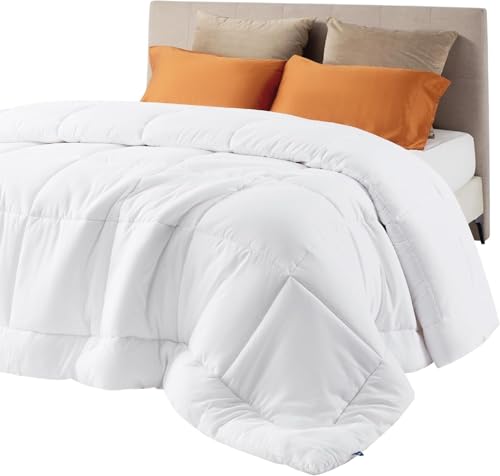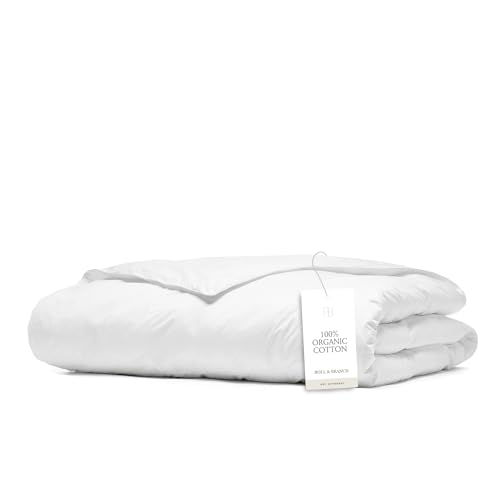
Where to buy
Check the latest price, availability and delivery on Amazon. Orders are placed on Amazon. We may earn a commission from qualifying purchases.
- Best overall: Boll & Branch Down Duvet Insert, Full/Queen, All Season — Check on Amazon
- puredown Goose Down Duvet Insert, Full/Queen, 800 Fill Power — Check on Amazon
- Brooklinen All Season Down Alternative Comforter, Full/Queen — Check on Amazon
- Buffy Cloud Comforter, Full/Queen — Check on Amazon
See 2 more Amazon options
- Buffy Breeze Comforter, Full/Queen — Check on Amazon
- Egyptian Bedding Siberian Goose Down Comforter, Queen — Check on Amazon
Read the full guide ↓
Disclosure: As an Amazon Associate, topratedkitchenware.com earns from qualifying purchases. Links to Amazon on this page are affiliate links; they cost you nothing extra. Listing details such as price and availability change often, so check the current Amazon listing before you buy.
Here is the honest headline before anything else: no single queen duvet insert on Amazon verifiably costs anywhere near $1,000. We went looking for one — through listings, price trackers and premium-brand storefronts — and the most expensive queen insert we could tie to a real Amazon offer is the Boll & Branch Down Duvet Insert, at the top of the verifiable premium tier on Amazon — check price on Amazon. Below it, the verified premium tier steps down through the other picks in this guide. The upper part of this budget, for a single insert on Amazon, is, as far as verifiable offers go, empty. Genuine four-figure duvets exist — Sferra, Matouk, 900-fill-power Hungarian goose down, eiderdown — but they sell direct or through boutiques, not through an Amazon listing we could verify, and we name them below without links rather than pretend otherwise.
Small bedrooms change how that budget should be spent, in ways the standard advice ignores. A small room has less air to heat and cool, so it warms up faster under a sleeper and a winter-weight insert — and many small bedrooms are also short on the two things a premium bedding system quietly assumes: closet space to store the off-season insert, and a laundry room of your own. The bed is often a full or a twin rather than a queen, pushed against a wall you cannot walk around. So this guide re-judges the six best premium inserts on Amazon under $1,000 through that lens: how each one behaves in a room that runs hot, whether it stores compressed in the space you actually have, whether it survives shared-laundry life, and whether its dimensions suit the bed rather than a showroom. Every pick below is discussed in its queen / full-queen configuration — the same listings sell smaller sizes, so check the current price on Amazon and use the size selector on the live listing rather than assuming a smaller bed means a smaller bill by a set amount. Every warmth, loft and fill-power figure is a maker claim, flagged as such.
In this guide
Quick Picks
Short on time, or comparing several options at once? Each row below names a small-bedroom situation and the insert that suits it, with a link to the listing. Check the current price on Amazon for the queen / full-queen configuration.
| Buyer type | Pick | Why it stands out | Link |
|---|---|---|---|
| Best overall | Boll & Branch Down Duvet Insert, Full/Queen, All Season | The highest verifiable insert on Amazon: responsibly sourced down, organic cotton baffle box, corner loops — and down compresses small for storage | Check on Amazon |
| Best fill specification | puredown Goose Down Duvet Insert, Full/Queen | Maker-stated 800 fill power, 93% goose down, 3D baffle box in the upper premium tier — but oversized at 98×90, which is a real problem in a small room | Check on Amazon |
| Best down alternative | Brooklinen All Season Down Alternative, Full/Queen | Baffle-box recycled-fiber fill in a cotton sateen shell from a bedding specialist | Check on Amazon |
| Best for shared laundry | Buffy Cloud Comforter, Full/Queen | Machine washable, corner tabs, standard 90×90 size — the premium pick a laundromat routine can handle | Check on Amazon |
| Best for hot small rooms | Buffy Breeze Comforter, Full/Queen | All-eucalyptus summer weight, about five pounds — and it stores almost flat | Check on Amazon |
| Best value in real down | Egyptian Bedding Siberian Goose Down, Queen | 60 oz of down in a baffle box in the lowest price band in this guide — heavy warmth for cold, drafty small rooms | Check on Amazon |
How These Picks Were Chosen
The first filter was verification, and at this budget it is the filter that does most of the work. Every linked product below is a real Amazon listing whose ASIN we could tie to the exact product and size. Where a famous premium product could not meet that bar — Brooklinen’s All Season Down comforter, seen on Amazon’s own Brooklinen storefront but with no isolable full/queen ASIN — it is named in the ceiling section below, unlinked, with the reason stated. We would rather show you five verified picks and one honest explanation than six links and a guess.
The second filter was insert fitness, because an insert is not just a comforter with a higher price. An insert lives inside a duvet cover, so we graded the hardware and construction that decide whether it behaves there: corner loops or tabs for tying to the cover’s inner ties, baffle-box construction (internal fabric walls that let down loft fully and stop it migrating) versus plain sewn-through quilting, shell thread count and down-proofing, and the insert’s actual dimensions against the cover it will live in.
The third filter is the one this guide exists for: the small-room test. A small bedroom punishes four things that a large one forgives. It runs hot — two sleepers and a door shut against a small volume of air will overwhelm a heavyweight insert by 3 a.m. It has nowhere to put things — an off-season insert that will not compress is an insert that lives on your only chair. Its laundry is often shared or down the street, which turns a dry-clean-only care label from a footnote into a recurring errand. And its bed is frequently against a wall and smaller than a queen, which makes insert migration harder to fix and oversizing harder to hide. Every pick below was re-judged on those four pressures, and several rankings change because of them.
The fourth filter was fill honesty. Fill power, warmth ratings and loft figures are maker claims — there is no mandatory audit of an Amazon listing — so we print them attributed, and we distinguish carefully between down clusters, which insulate, and feather or down fiber, which mostly adds weight. None of the six picks below is a fiber product wearing a down name; where a pick’s specification rests on reviewer measurement rather than the maker’s own page (the Boll & Branch fill-power figure is the notable case), the review says so openly. Comfort claims only, throughout: no insert treats allergies, night sweats or any condition, and the one “hypoallergenic” label in this guide is printed as what it is — a maker’s label on a synthetic fill.
Finally, the budget itself. Because no single verifiable insert comes close to this budget on its own, we did not pad this guide with a token near-budget product. The six picks span the premium tier from its top down to its most accessible band, and the allocation section further down shows three complete ways to use up to $1,000 as a system budget, re-scoped for one small bed and the storage that comes with it, with part of the budget deliberately unspent.
The 6 Best Duvet Inserts for Small Bedrooms Under $1,000
Boll & Branch Down Duvet Insert, Full/Queen, All Season
Who it suits: The small-bedroom buyer who wants one flagship insert, ethically sourced, that will live inside good covers for a decade — and store small when it is off the bed.
This is the ceiling of the verifiable Amazon insert market, and it earns the position on construction rather than marketing. The fill is responsibly sourced down (Responsible Down Standard certified, per the maker) inside a baffle-box shell of certified organic long-staple cotton — baffle boxes being the construction that lets down expand to its full loft instead of being pinched flat at every stitch line. It carries Fair Trade certification and OEKO-TEX Standard 100 screening, comes in three weights (Lightweight, All Season and Ultraweight — this guide covers the All Season, the midweight), and, critically for an insert, it has corner loops that tie to your cover’s internal ties. That hardware matters more in a small bedroom than anywhere: when the bed is pushed against a wall, you cannot walk around it to shake a migrated insert back into place, so an insert that stays tied spread to the corners is the difference between making the bed from one side and wrestling it. Check the current price on Amazon for the full/queen All Season; pricing varies across the three weights and sizes.
For a small room specifically, down is the storage-friendly fill: it compresses far smaller than fiber and recovers its loft, so the flagship can spend summer rolled tight in a storage bag under the bed rather than occupying the closet you do not have. The All Season midweight is also the right default warmth for a room whose temperature swings — warm enough for a drafty January night, not so heavy that a small, body-heated room turns it into a liability by spring.
- The highest verifiable queen insert tier on Amazon, and the construction justifies the top slot: baffle box, organic cotton, certified down.
- Corner loops for cover ties — the feature that keeps an insert put when you can only make the bed from one side.
- Down compresses small and re-lofts, so the off-season storage footprint is the best in this guide.
- Three warmth weights under one listing family, so the summer and winter versions match in shell and sizing.
Honest limitation: Boll & Branch does not publish a fill-power figure for this insert. The 650 fill-power number you will see in coverage of it comes from reviewers (Sleep Foundation), not from the maker — at this top tier, the one specification that best predicts warmth-per-ounce is the one the brand leaves unstated. The Amazon review record is also thin (the brand sells mainly direct), so you are leaning on the maker’s reputation more than on a deep base of Amazon buyer reports.
Choose it if you want one flagship insert, ethically sourced, sized and tied to stay put on a wall-side bed. Skip it if you need a published fill-power figure to justify the spend, or if your cover has no internal ties to use its loops with.
puredown Goose Down Duvet Insert, Full/Queen, 800 Fill Power
Who it suits: The specification-led buyer whose small room is cold rather than hot — and whose covers are oversized, or will be bought to match.
Where Boll & Branch withholds its fill-power figure, puredown leads with its own: a maker-stated 800 fill power, 93% white goose down, 40 ounces of fill in the full/queen, wrapped in a 700-thread-count cotton shell with 3D baffle-box construction and a pinch-pleat finish. Corner tabs are fitted for tying into a cover, and the maker claims RDS and OEKO-TEX Standard 100 certification. Check the current price on Amazon — this sits in the second-highest verifiable insert tier on Amazon and, on paper, offers the most warmth for its tier at the top of the market: 800 fill power is the grade where down gets genuinely light for its warmth. That lightness is also a storage argument — high-fill-power down packs down to the smallest bundle per unit of warmth in this guide, which is exactly what a no-closet room needs from its winter insert.
Now the catch, and in a small bedroom it is a serious one: this insert is oversized at 98×90 inches — eight inches wider than a standard queen insert. On a queen bed in a generous room, that drape is luxury. On a full bed, or a queen wedged into a small room, the extra width has nowhere graceful to go: inside a standard 90×90 cover it folds and bunches, and used with an oversized cover it pools toward the floor and the wall, collecting dust and making a small bed look swamped. Measure your cover — and your bed — before ordering, not after.
- Maker-stated 800 fill power and 93% down content — the strongest published specification in this guide.
- 3D baffle box, 700 TC cotton shell and corner tabs: the full insert construction checklist.
- High-fill-power down compresses to the smallest stored bundle per unit of warmth here.
Honest limitation: Two practical catches, both sharper in a small room. First, the oversizing: 98×90 in a standard 90×90 cover will fold and bunch, and on a twin or full bed the drape overwhelms the bed entirely — this is a queen-and-oversized-cover product. Second, the care label: coverage of this comforter lists it as dry clean only, which at this size means professional laundering bills across its life — a heavier burden when your laundry routine is already a trip out of the building.
Choose it if your small room runs cold, your covers are oversized or you will buy one to match, and you want maximum published specification for its tier. Skip it if your bed is a twin or full, your covers are standard 90×90, or dry-clean-only care is a deal-breaker.
Brooklinen All Season Down Alternative Comforter, Full/Queen
Who it suits: The buyer who wants a premium insert without animal fill — for preference, household rules or a partner’s sensitivities.
Brooklinen’s down-alternative is the synthetic pick that behaves most like a designed bedding product rather than a commodity one. The fill is recycled microfiber (RPET spun from recycled bottles) distributed through a baffle-box construction — the baffles matter even more for fiber than for down, because fiber has no natural cluster structure to redistribute itself — inside a 100% cotton sateen shell. The maker labels it hypoallergenic, which we print as a maker’s label: a synthetic fill does not support dust-mite food the way untreated natural fill can, but no insert is a medical product. The full/queen All Season sits in the middle of this guide’s premium tier; check the current price on Amazon, since it moves with the brand’s promotions.
The small-room trade-off is storage. Fiber fill does not compress the way down clusters do: rolled or bagged, this insert takes up noticeably more of your limited storage volume than either down pick, and it is the bulkiest off-season resident in this guide. Against that, it asks for no special handling in daily use and its even, flatter drape sits tidier on a small bed than a high-loft down insert that dominates the room.
- Baffle-box construction keeps the recycled fill evenly spread inside a cover — no cold corners.
- Cotton sateen shell feels like bedding, not like a sleeping bag.
- The premium down-alternative benchmark, from a specialist bedding brand.
Honest limitation: Brooklinen does not recommend machine washing this comforter, which is a real inconvenience in a product category whose whole point is living inside a washable cover system — spot cleaning and professional laundering are the maker’s route. Its Amazon review record is also thin because the brand sells mainly through its own site; attachment hardware is not a headline feature of this listing, so confirm the corner-loop arrangement on the live listing before relying on it with a tie-less cover; and the fiber fill stores bulky compared with down.
Choose it if you want the best-regarded down-alternative insert and your laundry routine can live with spot cleaning. Skip it if storage space is your scarcest resource, you wash everything at home on principle, or you need verified corner loops confirmed before purchase.
Buffy Cloud Comforter, Full/Queen
Who it suits: The small-bedroom buyer whose laundry is shared, coin-operated or a laundromat — and who wants premium feel with none of the premium care burden.
The Cloud is built from eucalyptus lyocell in the shell and layers of recycled-fiber fill (the maker puts it at roughly fifty recycled bottles per comforter). At 90×90 inches it is a true standard queen size, it has corner tabs for tying into a cover, and unlike the two down picks above it, it is machine washable at home — which, across a ten-year life, is a major practical advantage over the dry-clean-only puredown. In a small bedroom that usually means a small apartment, and in a small apartment the washable insert is not a convenience but the whole care plan: this is the only premium pick here you can put through a shared laundry room’s machines without a professional-cleaning errand. Check the current price on Amazon for the full/queen; it sits in the more accessible part of this guide’s premium tier and moves with promotions. As an insert it is the pragmatist’s premium: soft, even, washable, and sized to fit the covers people already own.
- Machine washable in ordinary machines — the lowest lifetime care cost in this guide, and the only premium pick suited to shared laundry.
- Corner tabs and a true 90×90 queen size that matches standard covers.
- Lyocell shell is smooth and cool-handled compared with cotton in this tier; the flatter drape sits tidier on a small bed.
Honest limitation: Recycled-fiber fill does not loft or recover like down clusters; expect a flatter, more even drape and a gradual loss of puff across years of washing that a good down insert would shrug off. It is also a midweight warmth — cold sleepers in cold houses will want it as one layer of a system, not the whole system. Check the size selector, too: the king configuration sits in a higher band than the queen, so confirm your size before comparing anything.
Choose it if washability and standard sizing matter more than maximum loft. Skip it if you are chasing the cloud-like height of real 800-fill down — this is a different, flatter kind of comfortable.
Buffy Breeze Comforter, Full/Queen
Who it suits: Hot sleepers in small, warm rooms — which is to say, a large share of small-bedroom sleepers — building the summer half of an insert system.
The Breeze is the Cloud’s warm-weather sibling: eucalyptus lyocell in both shell and fill, a lightweight build of about five pounds, corner tabs, and a 90×90 queen footprint. Small rooms are where this pick earns its keep. Less air volume means the room — and the bed — holds heat, and the insert that felt perfect in a showroom in January can be the reason you are awake in July. The Breeze is the swap that fixes that: the down comes off the bed in June, the Breeze goes into the same cover, and at roughly five pounds and a fraction of a down insert’s bulk, the off-season storage problem nearly disappears — it folds to a thin package that fits a drawer or the end of a shelf. Check the current price on Amazon. One warning, printed plainly: pricing for this pick has been inconsistent across listings, so confirm the live full/queen price carefully before planning around it — the allocation plans below treat it qualitatively for that reason.
- All-eucalyptus construction — the coolest-handling insert in the guide, aimed squarely at rooms that hold heat.
- Corner tabs and standard 90×90 sizing; swaps into the same cover as your winter insert.
- Lightweight at roughly five pounds and stores almost flat — the easiest off-season resident in this guide.
Honest limitation: It is a summer weight, full stop: as a household’s only insert it will leave cold sleepers cold by November. And the pricing inconsistency above is real — check the current price on Amazon when you buy, and judge the value case against the other picks in this tier at that moment.
Choose it if your small room runs warm, you are building a two-insert seasonal system, or storage space is measured in inches. Skip it if you want one insert that must handle January on its own.
Egyptian Bedding Siberian Goose Down Comforter, Queen
Who it suits: The value hunter in a cold, drafty small room who wants genuine down and baffle-box construction in a mid-market tier.
On specification, this is the most surprising product in the guide: 60 ounces of Siberian goose down — half again the puredown’s fill weight — inside a 600-thread-count Egyptian cotton shell with baffle-box construction, in the lowest price band in this guide. Review coverage lists its fill power at 750, a maker figure we print as such. Sixty ounces is a lot of down; this is a warm, heavy-draping insert, the opposite philosophy from the high-fill-power lightweights above it. In a small bedroom, that philosophy has a specific address: the small room with an exterior wall, a single-glazed window and a radiator that never quite wins. Where the Breeze answers the hot small room, this answers the cold one. The honesty requirement runs the other way here: across our research we could not settle on a single stable price for this listing, so check the current price on Amazon before anything else, and treat it in the allocation below as this guide’s budget-band down pick.
- 60 oz of real goose down in a baffle box — the most fill weight in the guide, at the lowest price band.
- 600 TC Egyptian cotton shell, a specification usually found a tier up.
- The cold-room route to genuine down inside a $1,000 system.
Honest limitation: Pricing is the soft spot: no single stable figure could be settled in research, so check the current price on Amazon before anything else — if it sits well above the budget band described here, the value story and Plan 3’s logic both change. Fill weight is also not fill quality: a heavier insert is warmer and weightier on the body, which in a small room that runs warm is a genuine liability, and 60 ounces of down is the bulkiest stored bundle in this guide when summer comes. Brand-level coverage of this maker’s range includes buyer reports of specification variance on a sibling variant, so check the received product against the listing.
Choose it if your small room is the cold one — exterior wall, old windows — and you want maximum warmth weight in a mid-market tier. Skip it if your room runs hot, storage is tight, or you need pricing you can pin down before planning around it — take the puredown instead.
Comparison Table
| Product | Fill | Construction / attachment | Queen tier | Link |
|---|---|---|---|---|
| Boll & Branch Down Duvet Insert, All Season | Responsibly sourced down | Baffle box, organic cotton; corner loops | Top of the premium tier — check price on Amazon | Check on Amazon |
| puredown Goose Down, 800 Fill Power | 93% goose down, 40 oz | 3D baffle box, 700 TC cotton; corner tabs; oversized 98×90 | Upper premium tier — check price on Amazon | Check on Amazon |
| Brooklinen Down Alternative, All Season | Recycled microfiber (RPET) | Baffle box, cotton sateen shell | Mid premium tier — check price on Amazon | Check on Amazon |
| Buffy Cloud | Recycled fiber, lyocell shell | Quilted; corner tabs; machine washable | More accessible premium tier — check price on Amazon | Check on Amazon |
| Buffy Breeze | Eucalyptus lyocell shell and fill | Quilted; corner tabs; lightweight, stores flat | More accessible premium tier; pricing varies — check price on Amazon | Check on Amazon |
| Egyptian Bedding Siberian Goose Down | Goose down, 60 oz | Baffle box, 600 TC Egyptian cotton | Lowest band in this guide — check price on Amazon | Check on Amazon |
How to Choose a Duvet Insert for a Small Bedroom Under $1,000
- Start from the ceiling, not the budget. Since no verifiable Amazon insert comes close to this budget on its own, a $1,000 budget is a system budget. In a small bedroom, decide first whether storage lets you run a system at all — one flagship, or a flagship plus a summer swap — because the answer changes what to buy. The allocation section below works through both.
- Size the insert to the bed you have, not the guide’s default. Every pick in this guide is discussed in its queen / full-queen configuration, because that is the size our research could verify. If your small bedroom holds a twin or a full, the same listings sell those sizes — check the current price on Amazon in the live listing’s size selector instead of scaling the queen’s tier down in your head.
- Match the insert size to your cover, exactly. Measure the cover’s inside dimensions. A standard queen cover is about 90×90; the puredown is 98×90 and will bunch in one. On a small bed, oversizing stops being a drape preference and becomes floor-pooling, wall-side bunching and a bed that fills the room.
- Diagnose your room’s temperature before its size. Small rooms split into two camps: warm rooms (interior walls, upper floors, electronics, two sleepers) that need a summer-weight swap, and cold rooms (exterior walls, old windows) that need real fill weight. The Breeze and the Egyptian Bedding are answers to opposite rooms — buy for yours.
- Audit storage before buying a second insert. Down compresses and re-lofts; fiber does not compress nearly as well. If the off-season insert must live under the bed or in a drawer, a down flagship plus the near-flat Breeze is the system that fits. If nothing will fit, buy one midweight and spend the remainder on covers.
- Check the attachment hardware — twice, if the bed is against a wall. Corner loops or tabs on the insert, ties inside the cover. Both halves present means the insert stays spread; either half missing means weekly re-shaking, which on a wall-side bed means hauling the mattress around to reach the far corners.
- Prefer baffle box for down. Internal fabric walls let down loft and stop migration. Sewn-through quilting pinches fill at every seam and suits fiber fills and summer weights better.
- Read fill power and fill weight together. Fill power (a maker claim) is warmth per ounce; fill weight is how many ounces you get. 800 fill power at 40 oz and 750 at 60 oz are different philosophies — light versus heavy warmth — not a simple ranking. In a hot small room, the lighter philosophy usually wins.
- Discount any fill-power figure the maker won’t print. If the number comes only from reviewers, as with the Boll & Branch, treat it as informed estimation, not specification.
- Price the care against your actual laundry. Dry-clean-only down at queen size costs real money and real errands across a decade. If your laundry is a shared room or a laundromat, a machine-washable insert in the accessible band can be the cheaper — and far more likely to actually be washed — ten-year purchase than a higher-tier one that needs professional cleaning.
- Check the size selector twice. Premium listings bundle twin, queen and king under one page, and the headline price is rarely the queen. The Buffy Cloud’s king sits in a higher band than its queen — select your size before comparing anything.
Why Small Bedrooms Sleep Hot — and Sometimes Cold
A bedroom’s temperature problem is mostly a volume problem. Two sleepers give off heat all night into the air around the bed; in a large room that heat disperses, and in a small one it concentrates — the same bodies, the same bedding, a fraction of the air to warm. Add the small room’s usual companions (a door kept shut for privacy or noise, a radiator or vent sized for the whole flat rather than the room, electronics and chargers adding their own warmth, a bed that fills most of the floor and blocks airflow along the walls) and the small bedroom becomes the warmest sleeping space in the home by the small hours. This is why insert advice written for average rooms misleads here: the midweight that sleeps perfectly in a spacious primary bedroom can be a sweaty mistake in a nine-by-eleven, and the heavyweight winter insert is very often simply the wrong product.
But small rooms split, and the other half matters just as much. The small bedroom is also frequently the spare-shaped room: the one over the garage, the one with two exterior walls, the one with the original single-glazed window and the door that does not quite seal. Those rooms shed heat as fast as the warm ones trap it, and they swing — cold at midnight, stuffy by morning once the heating cycles and two sleepers have warmed the air. The insert strategy that fits both kinds of small room is the same: a genuine midweight as the anchor, light enough not to punish the warm hours, and — if the budget and the storage allow — one swap for the extreme season rather than one heavyweight asked to do everything. That is precisely the shape of the plans in the next section, and it is why this guide’s flagship is an all-season midweight rather than the warmest product we could find.
One Small Bed, One Budget: Spending $1,000 on a System
Because the flagship sits well below this budget on its own, the interesting question at this budget is what the rest of the budget does. In a small bedroom the honest answer starts with a constraint the standard plans ignore: there is usually one bed, and there is very little storage. So these plans are re-scoped for a single small bed — every plan is built only from the picks documented in the reviews above; check the current price on Amazon for each pick before you buy.
Plan 1 — one small bed, three seasons. The Boll & Branch All Season covers autumn through spring. The Buffy Breeze takes the same cover for summer — the swap a hot small room genuinely needs — and stores almost flat while the down is on the bed. The Buffy Cloud covers the shoulder-season weeks when the down feels like too much and the Breeze like too little, and doubles as the washable spare while the flagship is being cleaned. Storage check: the off-season residents are one compressed down insert and one five-pound summer insert — the pair fits an under-bed bag. One caution attaches to this plan: pricing for the Breeze has been inconsistent across listings, so check its current price on Amazon first and confirm the three picks still fit your $1,000 system budget together before ordering.
Plan 2 — the cold small room, two down inserts. The Boll & Branch as the year-round anchor, the puredown as the deep-winter weight for the room with the exterior wall and the old window. Two baffle-box down inserts, no fiber anywhere, and — because both are down — the off-season one compresses to the smallest bundle in this guide. This plan carries two conditions: the puredown is oversized at 98×90, so it needs an oversized cover and a bed it will not swamp (a queen, honestly assessed), and it is dry clean only. If either condition fails in your room, Plan 1 is the better spend.
Plan 3 — mixed fills, maximum warmth weight. The puredown on the bed, the Brooklinen Down Alternative as the animal-free rotation partner, and the Egyptian Bedding as the heavy, warm spare. If the Egyptian’s live price sits well above the budget band described here, this is the plan to re-check first — confirm its current price on Amazon. Storage check, stated plainly: this is the bulkiest plan here, because fiber and 60 ounces of down do not compress like the flagship pair in Plan 2. Choose it for the fills, not if cupboard space is your binding constraint.
And the option none of the plans takes: buying one flagship and stopping. For a small bedroom with truly no storage, the Boll & Branch alone — with much of the budget unspent, or spent on the covers it will live in — is a legitimate and often correct answer. The unspent remainder is not a failure of ambition; in a small room, unspent money that would have become unstored bedding is the honest shape of this market.
Where the Second Insert Lives: Storage, Drape and the Small-Room Details
Every multi-insert plan quietly assumes a closet. Small bedrooms break that assumption, so storage deserves the same scrutiny as fill power. The physics are simple: down clusters are mostly air and structure, so a down insert can be rolled or gently vacuum-bagged to a fraction of its lofted size and will re-loft when released — the flagship and the puredown both store this way. Fiber fills resist compression and spring back against the bag, so the Brooklinen and, to a lesser degree, the Buffy Cloud claim more cubic space per season. The Breeze is the exception that proves the rule: at about five pounds and a summer weight’s thinness, it stores nearly flat and can live in a drawer. The practical hierarchy for a small room is under-bed storage bags first (the space is already dead), the top of a wardrobe second, and a vacuum bag for the down insert only — never store any insert sealed airtight while damp, and let down breathe in a cotton bag rather than plastic for long storage where you can.
Drape is the other small-room detail with outsized consequences. An insert’s width relative to the bed decides whether the bed looks tailored or drowned. On a twin or full bed — the sizes small bedrooms actually hold — a queen insert of any kind is already an oversize decision, and the puredown’s 98×90 cut is an oversize decision squared: it will reach the floor on both sides, trail against the wall, and gather the dust that small rooms have nowhere else to put. The discipline is to size to the bed and the cover, not to the price tier: buy the insert in the size of the bed it will sleep on, confirm its dimensions against your cover’s inside measurements, and treat the queen configurations in this guide as the reference for each product’s tier, and check the current price on Amazon for the smaller size rather than assuming it.
Finally, the wall-side bed. In most small bedrooms the bed sits against at least one wall, which means the insert is serviced from one side and one end. That is an argument for attachment hardware (loops and tabs, tied every time the cover is washed), for baffle-box construction that resists migration you cannot easily correct, and against any insert whose care routine involves hauling it around the room. None of these details appears in a warmth rating, and all of them decide whether a premium insert stays pleasant in a small room for a decade or becomes a nightly annoyance by February.
Common Buying Mistakes
- Assuming a $1,000 insert exists on Amazon and paying flagship money for a mid-tier listing dressed in luxury language. The verifiable ceiling sits well below this guide’s budget.
- Buying the queen size for a twin or full bed because the guide’s reference configuration was the queen — then living with floor-pooling drape in a room with no floor to spare. Buy the bed’s size; check the current price on Amazon in the live listing’s size selector.
- Buying an oversized 98×90 insert for a standard 90×90 cover — or for a small bed — and blaming the insert for bunching that was really a sizing error.
- Buying a two-insert seasonal system with nowhere to store the off-season insert. Audit the under-bed space first; if nothing fits, buy one midweight.
- Putting a heavyweight, high-fill-weight insert in a small room that runs hot. Small volumes of air warm fast; the winter trophy is the July problem.
- Ignoring attachment hardware entirely: no loops or tabs on the insert, no ties in the cover, and a nightly migration problem you can only fix by climbing over a wall-side bed.
- Judging down by fill weight alone, or by fill power alone. Warmth is the two numbers multiplied by construction — and all of them are maker claims until independently tested.
- Believing a fill-power figure the maker itself does not publish, without noticing it came from a review roundup.
- Forgetting the care label until the first cleaning — especially with shared laundry, where a dry-clean-only insert’s cleaning becomes an errand across town rather than a load down the hall.
- Expecting a synthetic fill labeled “hypoallergenic” (a maker’s label) to manage a diagnosed allergy. It is a comfort product; manage conditions with a clinician’s advice and encasements designed for the purpose.
- Judging a down insert in its first hour out of the vacuum packaging. Give it 24–48 hours to loft before deciding anything — then store the packaging dimensions out of your mind and measure the insert, not the box it came in.
Final Recommendation
- Most small bedrooms: Boll & Branch Down Duvet Insert, Full/Queen, All Season.
- Cold, drafty small rooms: puredown Goose Down Duvet Insert, 800 Fill Power — with an oversized cover to match.
- Animal-free households: Brooklinen All Season Down Alternative.
- Shared-laundry households: Buffy Cloud.
- Hot small rooms: Buffy Breeze, as the summer half of a system.
- Maximum warmth in the lowest band: Egyptian Bedding Siberian Goose Down — check the current price on Amazon first.
Our top two are the Boll & Branch for the main bed — the most expensive insert Amazon verifiably sells, and the one whose construction, sourcing, attachment hardware and storage-friendly down are all at the level a small room needs — and the puredown for cold rooms that can house its oversized cut, with the strongest published specification (800 fill power, 93% down, 3D baffle box) in the tier just below the flagship. If your budget really is $1,000, do not spend it hunting for a single insert that does not exist: take Plan 1’s system — flagship, summer insert, washable rotation insert — if your under-bed storage can hold it, and the flagship alone if it cannot. That is what $1,000 honestly buys for a small bedroom, and it buys it well.
Frequently Asked Questions
Can you actually buy a $1,000 duvet insert on Amazon?
Not that we could verify. The most expensive queen insert tied to a real Amazon offer in our research was the Boll & Branch Down Duvet Insert, at the top of the verifiable premium tier — check price on Amazon. Genuine four-figure duvets — Sferra, Matouk, 900-fill-power Hungarian down, eiderdown — sell direct or through boutiques. A $1,000 budget on Amazon is best spent as a system of inserts across seasons, as the allocation plans in this guide show — or, in a small bedroom with no storage, on one flagship and a pair of excellent covers.
What size insert should I buy for a twin or full bed in a small bedroom?
The size of the bed and the cover, not the size of this guide’s configurations. Every pick here is discussed in its queen / full-queen configuration, because that is the size our research could verify; the same listings sell twin and full sizes, so check the current price on Amazon and read the size from the live listing’s size selector. What we can say from the verified research: match the insert’s stated dimensions to your cover’s inside measurements, and avoid oversized cuts on small beds — an insert that reaches the floor on both sides of a full bed will bunch, trail and gather dust in a small room.
Why does my small bedroom feel hotter under the same duvet?
Air volume. Two sleepers warm the air around the bed all night; a small room has far less air to absorb that heat, and a shut door, a wall-side bed and warm electronics concentrate it further. The insert has not changed — the room has. The fix is a lighter insert for the warm months (the Breeze in this guide is built for exactly that swap), not a heavier “all-season” compromise worn year-round.
Where do I store a second insert when the bedroom has no closet?
Under the bed, in a storage bag, is the usual answer — and it favors down. Down inserts compress to a fraction of their lofted size and recover; fiber inserts resist compression and claim more space. The summer-weight Breeze stores almost flat and can live in a drawer. If even under-bed space is spoken for, the honest answer is one midweight insert rather than a system: an off-season insert with no home ends up on a chair, and no fill power justifies that.
Is an oversized insert a problem in a small room?
Yes, more than in a large one. The puredown’s 98×90 cut drapes generously on a queen in a big room; in a standard 90×90 cover it folds and bunches, and on a twin or full bed it pools toward the floor and the wall. Oversized inserts need oversized covers and beds with room around them. In a small bedroom, standard sizing is not the budget option — it is the correct one.
Down or down alternative for a small bedroom?
Down wins on loft, drape, longevity, warmth-per-weight — and, specific to small rooms, on storage: it compresses smallest in the off-season. Down alternative wins on household preference and price — the Brooklinen delivers baffle-box construction in the mid premium tier — check price on Amazon — — and the Buffy Cloud wins outright on laundry, as the only premium pick here that goes through ordinary machines. Neither is a medical product; “hypoallergenic” on a synthetic fill is a maker’s label, not a treatment.
How do I care for a premium insert when my laundry is shared?
Match the pick to the routine you actually have. The Buffy Cloud is machine washable in ordinary machines, which suits a shared laundry room or laundromat. The puredown is dry clean only per its coverage, so its cleaning is a professional errand — budget for it honestly. For every pick, the duvet cover is the working wash layer: it goes through the shared machines weekly while the insert is cleaned rarely, which is why the cover — and the ties that keep the insert inside it — matter as much as the fill.