Where to buy
Check the latest price, availability and delivery on Amazon. Orders are placed on Amazon. We may earn a commission from qualifying purchases.
- Best overall: Buffy Cloud Comforter, Full/Queen — Check on Amazon
- Egyptian Bedding Siberian Goose Down Comforter, Queen — Check on Amazon
- REST Evercool Cooling Comforter, Full/Queen — Check on Amazon
- APSMILE All Season Down Comforter, Queen — Check on Amazon
See 2 more Amazon options
- Pacific Coast Goose Feather Down Fiber Comforter, Queen — Check on Amazon
- Serta Goose Feather Down Fiber Comforter Duvet Insert, Queen — Check on Amazon
Read the full guide ↓
Disclosure: As an Amazon Associate, topratedkitchenware.com earns from qualifying purchases. Links to Amazon on this page are affiliate links; they cost you nothing extra. Listing details such as price and availability change often, so check the current Amazon listing before you buy.
A small bedroom changes what a good duvet insert is. The room has less air in it, so the heat from two sleepers, a radiator and a charging laptop concentrates faster than it would in a big room — and the bed, which takes up most of the floor, is where that heat ends up. There is usually no linen closet, so whatever you buy has to store inside the room it serves. And there is no spare floor for drape: an oversized insert does not puddle elegantly in a small bedroom, it pools against the wall, trails toward the floor and collects dust in the gap you cannot reach with a vacuum. The insert that wins in a small room is not simply the warmest or the loftiest; it is the one that sleeps at the right temperature in a heat-trapping space, stores in the footprint you actually have, and is cut to the bed you actually own.
Two hundred dollars is a good budget to solve that problem with. It is the first tier at which genuine goose down with a maker-stated 750 fill power enters the frame, the best down-alternative insert on Amazon sits comfortably in budget, and even a specialist cooling comforter qualifies — provided you catch it on sale. What $200 still does not buy is the top shelf: 800-plus fill power, luxury hotel brands at their regular positioning, and the long sleep trials of the direct-to-consumer labels all live above this line, and this guide names them rather than pretending otherwise.
One warning before the picks: the words on these listings need translating. “Down fiber” and “feather fiber” are shredded, processed fill — real goose material, but not the clusters that give down its loft, and this guide never calls a fiber product a down comforter. Where a pick is fiber, it says fiber. Where a pick is genuine cluster down, it says that too, and says whose figure the fill power is. A second warning, about sizes: small bedrooms often run full or twin beds, but every pick in this guide was judged in the queen or full/queen size, because that is the size we verified. The judging transfers to smaller sizes — check the size selector on the listing for your bed’s size and check the current price on Amazon there.
In this guide
Quick Picks
Short on time, or comparing several options at once? Each row below names a buyer type and the product that suits it, with a link to the listing.
| Buyer type | Pick | Why it stands out | Link |
|---|---|---|---|
| Best overall | Buffy Cloud Comforter, Full/Queen | Washable, cool-feeling lyocell shell and real corner loops — the easiest insert to live with in a small room | Check on Amazon |
| Best for tiny storage | Egyptian Bedding Siberian Goose Down Comforter, Queen | Genuine down compresses smaller than any other fill here — and it is the only true down pick | Check on Amazon |
| Best for hot small rooms (on sale) | REST Evercool Cooling Comforter, Full/Queen | Cool-to-touch fabric and the thinnest, flattest-storing profile in the guide; only qualifies on sale | Check on Amazon |
| Best mid-tier natural fill | APSMILE All Season Down Comforter, Queen | 46 oz of down/feather fiber in a quiet organic cotton shell, with corner tabs | Check on Amazon |
| Best attachment hardware | Pacific Coast Goose Feather Down Fiber Comforter, Queen | Eight corner and center loops — the most anchor points in this guide | Check on Amazon |
| Best value | Serta Goose Feather Down Fiber Comforter Duvet Insert, Queen | Genuine goose feather/down fiber, usually the cheapest in this guide — budget left for the cover | Check on Amazon |
How These Picks Were Chosen
The first filter was the budget, applied to the queen size specifically. Every product below is a real Amazon listing whose queen or full/queen size belongs in the under-$200 tier — check the current price on Amazon to confirm it still sits in budget when you shop. Anything that could not be tied to a specific listing was left unlinked and named in the notes, however good it looked. Where a pick sits near the top of the budget or only qualifies when discounted, the review says so in plain language rather than rounding the uncertainty away.
The second filter was insert behavior. A duvet insert is judged inside a cover, so we looked for attachment hardware — corner tabs, corner loops, or, best of all, loops at the corners and the centers of the sides — and for construction that holds fill in place once the cover is on: baffle boxes for lofty down, honest box stitching for everything else. Five of the six picks have tabs or loops. The one that does not is a cooling comforter designed to be used without a cover at all; it is included for hot sleepers, and its missing loops are printed as its honest limitation, with the workaround (duvet clips) stated rather than hidden.
The third filter was the small bedroom itself, and it re-ordered this guide. We asked four questions of every pick. Does it help or hurt in a room that traps heat — a cool-feeling shell and a breathable build count for more here than raw warmth? What footprint does it need when it is not on the bed, because in a small room “storage” means a vacuum bag, an under-bed box or one shelf, not a closet? Can it be cared for by someone whose laundry is a shared room, a laundromat or a small machine — which makes machine washability a feature and dry-clean-only a real cost? And is it sized with discipline, because an insert with generous drape is a liability when the bed nearly touches two walls? Picks were promoted and charged against those four questions throughout the reviews below.
The fourth filter was fill honesty. At $200 the listings divide into three families that marketing tries hard to blur: genuine cluster down, feather and down fiber, and down-alternative. This guide keeps them separate in every review, in the comparison table and in the fill section below. Fill power figures are maker claims and are attributed as such; fill power is only ever quoted for real down, because the number means nothing for shredded fiber or polyester — a point one excluded listing, which advertises a “750 fill power” for a synthetic fill, illustrates perfectly.
A note on overlap: duvet inserts and comforters are largely the same products under two names on Amazon, and most of these listings carry both words in their titles. Several picks here also appear in our comforter guide at this budget. That reuse is deliberate — each product below is genuinely sold for, and built for, use as a duvet insert (the Serta’s Amazon title literally includes the words “Duvet Insert”) — and each is re-judged here on insert criteria and small-room criteria: attachment hardware, storage footprint, temperature behavior and sizing against standard covers. If you already read the comforter guide, the new information here is the grading, not a repeated sales pitch.
We did not use these products ourselves. We read the maker listings and specification pages and reviewer measurements, and favored products whose claims could be checked against something other than the brand’s own copy.
The 6 Best Duvet Inserts Under $200 for Small Bedrooms
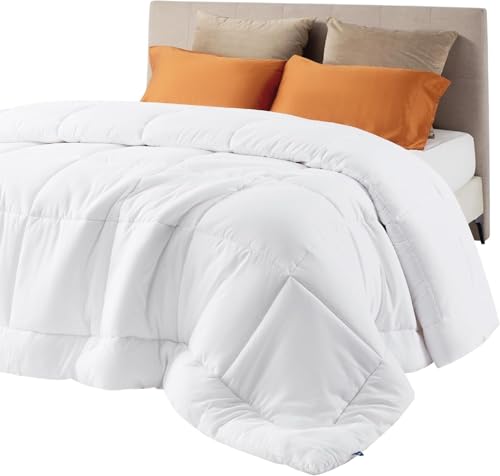
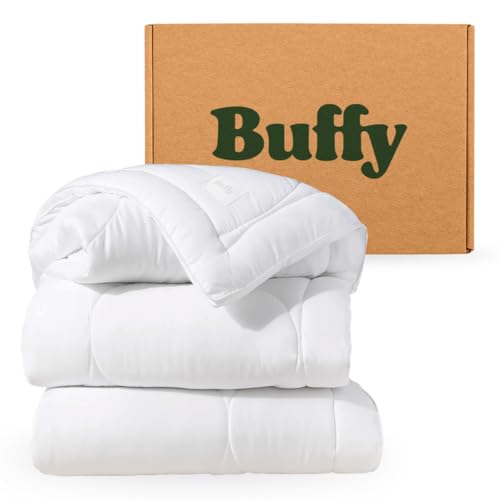
Buffy Cloud Comforter, Full/Queen
Who it suits: Small-bedroom sleepers who want one washable, all-season insert that behaves inside a cover and asks nothing of a linen closet that does not exist.
The Cloud is the rare down-alternative that behaves like a premium product instead of a placeholder. The shell is eucalyptus lyocell (the listing describes it as rayon from eucalyptus), smooth and cool-feeling against a cover — a small mercy that matters more in a small room, where the air around the bed warms up faster and a shell that starts cool is worth having. The fill is layers of 100% recycled fiber — the maker puts it at roughly 50 recycled bottles per comforter, which is a maker figure, printed here as one. It measures a true 90 by 90 inches in full/queen, it is machine washable, and — the detail that earns it the top spot in an insert guide — it has corner loops for duvet ties, a feature independent reviewers specifically note as making it work “more akin to a traditional duvet insert” than most comforters in this tier. For the current figure for the full/queen, check price on Amazon — it sits comfortably within this under-$200 budget.
For a small room, its virtues compound. The lyocell shell slides into a cover without the static cling and bunching of cheap microfiber — a bigger deal when making the bed means working in the narrow gap between bed and wall. The fill is evenly layered rather than blown loose, so there are no cold corners to shake into place. Its loft is moderate rather than theatrical, which suits a bed that dominates a small room: it looks finished instead of swallowing the bed. And when the cover comes off for washing, the insert itself can go in the machine too — the care routine of someone with a shared laundry room or a laundromat, not of someone with a utility room and a dry cleaner on retainer.
- Corner loops for duvet ties — genuinely insert-ready, unlike most comforters.
- Machine washable, shell and all; the easiest care in this guide.
- Lyocell shell stays smooth and cool-feeling inside a cover — welcome in heat-trapping rooms.
- Sits comfortably within the under-$200 tier — check price on Amazon.
Honest limitation: It is recycled polyester fill, however well made — it will not match the loft-per-ounce or the decade-long lifespan of the genuine down pick below, and it does not compress as small as down for storage. The king size sits above this budget, so the size selector is a real trap — check the current price on Amazon for the size you select.
Choose it if you want the best all-round insert under $200 for a small room and prefer down-alternative. Skip it if genuine down loft is the whole point of the purchase — go to the Egyptian Bedding below.
Egyptian Bedding Siberian Goose Down Comforter, Queen
Who it suits: The small-room buyer whose binding constraint is storage — and who came to this guide for real down: maximum loft, a cotton shell, and proper baffle-box construction.
This is the genuine article: Siberian goose down in a 600 thread count 100% Egyptian cotton cover, with a maker-stated 750 fill power and a generous 60 ounces of fill in the queen — figures that come from the maker’s specifications as measured and reported by reviewers, and printed here as maker claims, not laboratory results. The construction is what separates it from the fiber crowd: true baffle boxes, which give the down three-dimensional room to loft instead of sewing it flat, double-needle stitching, and — decisive for this guide — eight tabs stitched around the corners and edges to anchor it inside a duvet cover, a detail confirmed in hands-on review coverage. Reviewers who have handled it describe it as one of the loftiest comforters in its class, and that loft is exactly what 750 fill power with 60 ounces behind it should feel like.
What promotes it in a small bedroom is what down does off the bed. Cluster down compresses further, for its warmth, than any other fill in this guide: squeezed into a storage bag it shrinks to a fraction of its lofted size, which is the difference between an off-season insert that fits one under-bed box and one that colonizes the only shelf you have. A word of care discipline comes with that: compression is for moving and short spells — store down as loosely as your space allows the rest of the time, because fill kept crushed for months gives up loft. Even stored loosely in a breathable bag, though, a down insert is the most space-efficient warm bedding you can own, and in a room with no closet that efficiency is a feature on par with warmth. For pricing, check the current price on Amazon — this pick belongs within the under-$200 tier in the queen size. Buy it on the construction and the fill, and confirm the figure on the listing before you commit.
- Genuine goose down clusters — the only true down pick in this guide.
- Compresses smallest of any fill here — the storage champion for closet-free rooms.
- Maker-stated 750 fill power with 60 oz of fill: real loft, not marketing loft.
- Baffle-box construction and eight duvet tabs, confirmed by reviewers.
Honest limitation: Check the current price on Amazon before you buy, and confirm the live figure on the listing itself. Its high loft is also a lot of duvet on a smaller bed — glorious in January, visually and thermally generous in a small room in July — and down asks for a cover and gentler care than any synthetic pick.
Choose it if real down is what you came for, storage space is your scarcest resource, and the current price on Amazon still sits within this budget. Skip it if you are not comfortable checking the current price on Amazon yourself before buying, or you want machine-washable convenience.
REST Evercool Cooling Comforter, Full/Queen
Who it suits: Committed hot sleepers in small, heat-trapping rooms — the readers for whom the room itself is the problem — and who are patient enough to buy on sale.
The Evercool is the specialist: a cool-to-touch nylon and spandex face fabric over a Tencel and Sorona-blend fill, engineered to feel cold on contact rather than merely breathable. Small bedrooms are its natural habitat. A room with little air volume and a bed filling most of it warms up around the sleeper faster than a large room does, and the first minutes of contact are when that warmth is hardest to fall asleep through. It is thin — reviewers consistently note the low, quilt-like profile — machine washable, quick-drying, and decorated with a Good Housekeeping award that the listing claims and we repeat only as a listing claim. REST publishes cool-touch lab figures for its fabric; those are maker-reported measurements of first contact, not all-night temperature control, and no comforter in this guide — this one included — treats night sweats or any medical condition. What it genuinely does is start cold and wick well, which for many hot sleepers is the difference between falling asleep and lying there radiating.
Its small-room virtues are practical as well as thermal. That thin profile makes it the flattest-storing pick in the guide: it folds down to almost nothing, slides into a drawer or under-bed box, and dries fast after washing — a real consideration when your drying space is a rack in the same small room you sleep in. The pricing discipline matters more here than for any other pick. The full/queen sits above this budget at its regular positioning, and only belongs in this guide when it is discounted into the under-$200 tier. So the rule is printed in the review rather than buried: buy the Evercool only when the current price on Amazon sits within this budget, and do not buy it at its regular positioning. If it is not discounted when you shop, this pick does not apply to you — the Buffy above is your cooling-adjacent alternative.
- The strongest cool-to-touch face fabric in this guide — aimed squarely at hot small rooms.
- Thin profile stores flatter than any other pick; folds into a drawer or under-bed box.
- Machine washable and quick-drying — practical where drying space is the same small room.
- Regularly discounted into this budget — check the current price on Amazon.
Honest limitation: It has no corner loops or tabs. REST designs it to be used on its own — its own FAQ says a cover is unnecessary — so inside a duvet cover it can drift, and you will need duvet clips to anchor it. It is also only in this guide when discounted into this budget; at its regular positioning it is over budget, full stop.
Choose it if your small room sleeps hot, the sale price is live, and you will use it bare or with clips. Skip it if you want a traditional lofty insert that anchors to a cover out of the box.
APSMILE All Season Down Comforter, Queen
Who it suits: Buyers who want natural fill and an organic cotton shell at a mid-tier position in this budget, and who understand precisely which kind of “down” they are getting.
Precision first, because this listing’s name will not give it to you: the APSMILE is filled with 46 ounces of down and feather fibers — processed, shredded material — not down clusters. It is not a down comforter in the way the Egyptian Bedding pick is, and this guide will not call it one. What it is, judged on its own terms, is a well-specified fiber insert: the fill sits in a 100% organic cotton cover, the queen is a full 90 by 90 inches, the line claims OEKO-TEX certification on its listings, and it has corner tabs for duvet-cover use — the hardware that qualifies it for this guide. Fiber fills have real virtues: they are consistent from corner to corner, they do not poke quills through the shell the way feather-heavy fills can, and they cost far less than clusters of equivalent warmth.
In a small bedroom, the cotton shell earns a specific mention: it is quiet. You sleep closer to your walls, your bedding and everything else in a small room, and a rustling synthetic shell is more noticeable at close quarters than in a big room — cotton over fiber is the hushed combination. For the figure, check the current price on Amazon — this pick sits in the middle of the under-$200 tier. One caution is attached to this pick: confirm on the live listing that the ASIN resolves to the all-season queen, 90 by 90, 46-ounce version before relying on it. The brand also sells other warmth levels under similar names, and the differences are exactly the kind that get mis-ordered. Against it, in this lens: fiber is the bulkiest fill family here to store, so it asks the most of your under-bed box.
- 46 oz of down/feather fiber in a 100% organic cotton shell.
- Quiet cotton shell — a genuine virtue when you sleep at close quarters.
- Corner tabs included — properly equipped for cover use.
- Mid-tier positioning within this budget — check price on Amazon.
Honest limitation: The fill is fiber, not clusters — loft and lifespan sit a class below genuine down, it is the bulkiest fill here to store, and any “fill power” language attached to this product line should be ignored, because fill power does not describe fiber. Check the current price on Amazon on the live listing before you buy.
Choose it if you want natural fill, a quiet cotton shell and tabs at a mid-tier position in this budget. Skip it if you are specifically shopping for cluster down — that is the Egyptian Bedding pick — or your storage space is measured in inches.
Pacific Coast Goose Feather Down Fiber Comforter, Queen
Who it suits: The insert-first buyer — someone whose current insert migrates inside its cover every night and who wants the most anchoring hardware this budget can buy.
Pacific Coast Feather Company supplies hotels, and this comforter reads like it: a 90 by 90 queen filled with goose feather and down fiber, offered in all-season and heavyweight builds, and fitted with eight loops — at the corners and at the centers of the sides. That center-loop detail is why it is in this guide. Corner-only attachment lets a wide insert sag and bunch along its long edges; eight anchor points keep the whole perimeter registered to the cover, which is the difference between an insert that disappears and one you re-make every morning — and re-making a bed you can only reach from one side, in a room where the bed touches the wall, is a chore you will feel every day. Feather fiber is the heaviest, most substantial fill family here — this is the pick for sleepers who like a comforter with presence rather than a cloud.
Both the heavyweight queen and the all-season extra-fluffy queen sit right at the top of this guide’s budget — at the ceiling of the under-$200 tier, not comfortably under it. And one important caution: an Amazon crawl of this listing during research showed “No featured offers available.” Listings flicker — but before you rely on this pick, confirm on the live listing that a featured offer exists and check the current price on Amazon to confirm the queen still sits within this budget. If it does not, the documented swap is the Egyptian Bedding 48-ounce baffle-box queen from the same research trail, which has also flickered — verify whichever one you use.
- Eight corner and center loops — the best attachment hardware in this guide.
- Hotel-supplier brand with a long track record in feather bedding.
- All-season and heavyweight builds, both at the top end of this budget — check price on Amazon.
- Substantial, weighty fill for sleepers who dislike floaty inserts.
Honest limitation: This pick sits at the top of the under-$200 budget, the fill is feather/down fiber (not clusters), the weight that feels substantial on a queen can feel like a lot on a smaller bed, and a research crawl found no featured offer on the listing — live availability must be confirmed before this pick can be used.
Choose it if anchoring is your priority and the live offer checks out within this budget. Skip it if the listing has no live featured offer, or you want loft without weight.
Serta Goose Feather Down Fiber Comforter Duvet Insert, Queen
Who it suits: Value hunters who want genuine goose material, a cotton shell and proper loops without spending anywhere near the $200 cap — which leaves budget for the cover the insert will live in, and for the storage box it will live in too.
Start with the name, because the name is the lesson of this whole guide: this is feather fiber and down fiber — the listing’s own specification reads 90% white goose feather fiber and 10% white goose down fiber — in a 100% cotton cover. It is the entry rung of real goose fill, not a down comforter, and positioned like it: it is frequently the lowest-priced genuine feather/down queen in this guide — check the current price on Amazon. The maker’s “hypoallergenic” label appears on this product; we print it only as the maker’s label, because fiber processing claims are the brand’s to make, not ours to endorse.
As an insert it is better equipped than its value positioning suggests. The Amazon title includes “Duvet Insert” outright, the queen is a full 90 by 90 inches, and roundup spec reads credit it with eight corner loops for cover attachment — hardware budget-tier inserts in this series would envy. Roundups put the queen at roughly seven pounds, a medium, hotel-style presence. This is the pick that makes the budget work hardest: buy the Serta as the value pick in this tier, spend part of what remains in your under-$200 budget on a genuinely good cotton or linen cover and part on the under-bed box a small room needs, and the combination out-sleeps most higher-priced inserts in this tier hiding inside a cheap cover with nowhere to be stored.
- Frequently the lowest-priced genuine goose-fill queen in this guide — check price on Amazon.
- Eight corner loops and a title that says “Duvet Insert” — built for covers.
- 100% cotton shell; medium warmth that suits most bedrooms.
- Made under license by Blue Ridge Home Fashions, a specialist feather-bedding maker.
Honest limitation: Care is dry-clean-only per retailer listings — the least convenient care in this guide, and a heavier charge in a small room than elsewhere, because it means trips out with a bulky insert instead of a load in the shared laundry; it is the reason a washable cover is not optional with this pick. The fill is fiber, with the loft ceiling that implies.
Choose it if you want real goose fill and proper loops as the value pick here. Skip it if you will not use a cover, or you need to machine wash the insert itself.
Comparison Table
| Product | Fill (honest label) | Small-room note | Position in this budget | Link |
|---|---|---|---|---|
| Buffy Cloud, Full/Queen | Recycled fiber (down-alternative), lyocell shell | Washable, moderate loft, corner loops | Comfortably within budget — check price on Amazon | Check on Amazon |
| Egyptian Bedding Siberian, Queen | Goose down clusters, maker-stated 750 FP, 60 oz | Compresses smallest for storage; 8 tabs, baffle box | Within budget — check the current price on Amazon | Check on Amazon |
| REST Evercool, Full/Queen | Tencel/Sorona blend, cool-touch nylon face | Thinnest profile; stores flattest; no loops — clips needed | In budget only when on sale — check price on Amazon | Check on Amazon |
| APSMILE All Season, Queen | Down/feather fiber, 46 oz, organic cotton shell | Quiet shell; bulkiest fill to store; corner tabs | Mid-tier in this budget — check price on Amazon | Check on Amazon |
| Pacific Coast, Queen | Goose feather/down fiber | 8 corner & center loops; heaviest, most substantial fill | Top end of this budget — check price on Amazon | Check on Amazon |
| Serta, Queen | Goose feather/down fiber, 90/10 | 8 corner loops; dry-clean-only care | Lowest-priced pick in this guide — check price on Amazon | Check on Amazon |
How to Choose a Duvet Insert Under $200 for a Small Bedroom
- Start with the room’s temperature, not the season name. Small rooms trap heat: less air volume, more of the room occupied by warm bodies and bedding. If your small room sleeps hot, weight the cooling and breathability picks (REST on sale, the Buffy’s lyocell shell) over maximum warmth; if it is a cold little room, the fiber and down picks earn their keep.
- Buy one all-season insert, not a seasonal pair. The two-insert strategy assumes a linen closet. In a small room, one versatile insert plus a cover you can swap — or a thin layer added in winter — beats two inserts competing for one under-bed box.
- Match the fill to your storage, honestly. Down clusters compress to the smallest stored size; thin synthetics like the REST fold flat; feather/down fiber is the bulkiest family here. Measure your under-bed clearance or shelf before falling for a fill you cannot put away.
- Size the insert to the cover and the bed — skip the oversized drape. An insert should match its cover within roughly two inches in each dimension. In a small room, extra overhang does not look luxurious; it pools, bunches against walls and gathers dust where you cannot clean. If your bed is a full or twin, buy that size rather than folding a queen down to fit.
- Count the attachment points. Four corner tabs are the minimum for a queen. Eight tabs, or loops at corners and side centers, keep a wide insert registered to its cover. No loops at all means clips, or drift.
- Plan laundry around the laundry you actually have. Machine-washable picks (Buffy, REST) suit shared laundry rooms and laundromats. A dry-clean-only insert (the Serta) means carrying a bulky bundle out and paying per clean — survivable under a washable cover, a real cost without one.
- Decide which fill family you are actually buying. Cluster down, feather/down fiber, and down-alternative are three different products at three different loft and lifespan levels. The listing title will blur them; the specification block will not. Read the fill line, not the headline.
- Ignore fill power on anything that is not cluster down. The figure measures how much space one ounce of down clusters occupies. Fiber and polyester have no clusters; a synthetic listing quoting “750 fill power” is quoting a number that does not exist for its fill.
- Respect the sale calendar at this tier. Two of the six picks only belong in this guide when discounted into this budget. If the current price on Amazon for the listing in front of you sits over the $200 budget, the correct move is to wait or choose another pick — not to stretch.
- Check the size selector before the price. Every pick in this guide was judged in queen or full/queen; several listings headline a smaller size or default to a king that breaks the budget. Confirm you are looking at your size and check the current price on Amazon for that size before you compare.
Why Small Bedrooms Sleep Hot — and What an Insert Can Honestly Do About It
A bedroom’s night-time temperature is a volume problem. Two sleepers radiate heat all night, and in a small room that heat is diluted into far less air than in a large one — while the bed itself, the largest warm object in the space, takes up proportionally more of the room. Add a radiator that serves the whole flat from one wall, a south-facing window that loaded the room with sun all afternoon, or a door kept shut for privacy, and the small bedroom is routinely the warmest room in the home by the early hours. This is why the cooling question, a specialty topic in a big bedroom, is a first-order question here: the insert sits in the middle of that concentrated warmth, and whether it traps or sheds heat decides how the night goes.
What an insert can do is narrower than the marketing, and worth stating precisely. A cool-to-touch face fabric like the REST’s feels cold on first contact because it pulls heat from the skin quickly; that effect is real, it helps you fall asleep, and it fades as the fabric reaches skin temperature — it is a welcome, not a climate. Breathable builds help differently and for longer: a lyocell shell and layered fill, like the Buffy’s, let warmth and moisture escape steadily instead of pooling under a sealed microfiber skin. Loft is the third lever, and in a hot small room it points the opposite way from instinct: the loftiest insert (the Egyptian Bedding’s baffle-box down) is the warmest object in this guide, and the thinnest (the REST) is the coolest, whatever the season names on the listings suggest. None of this treats night sweats, hot flashes or any other condition — persistent night sweating is a conversation for a clinician, not a bedding purchase. What the right insert honestly does in a small room is stop adding the bed itself to the room’s heat problem, and for many sleepers that is the whole battle.
One Insert, No Linen Closet: Storage Maths for Small Rooms
Every insert in this guide has two sizes: the size it is on the bed, and the size it is when you need to put it somewhere. In a big house the second size barely matters. In a small bedroom it decides what else you get to own. The storage ranking of the fills is consistent and worth memorizing: down clusters compress furthest for their warmth — an off-season down insert in a compression bag shrinks to a fraction of its lofted bulk, which is the Egyptian Bedding’s quiet superpower in this guide. Thin synthetics come next by a different route: the REST is already nearly flat, folds into a drawer or a shallow under-bed box, and asks for almost no volume at all. Layered down-alternative like the Buffy folds and stacks tidily but keeps its shape’s worth of space. Feather and down fiber — the Pacific Coast, APSMILE and Serta — are the bulkiest family to store: substantial, springy, and reluctant to stay compressed.
Two disciplines make the maths work. First, compress for moves and short spells, store as loosely as you can manage the rest of the time: down in particular loses loft if it lives crushed for months, so the under-bed box beats the vacuum bag for long storage, and the vacuum bag beats both when you are carrying the insert across town. Second, let storage settle the one-insert question. The classic advice — a summer insert and a winter insert, swapped seasonally — silently assumes somewhere to keep the one that is off duty. In a small room that somewhere is the same box your out-of-season clothes need. One all-season insert, a breathable cover, and a thin blanket layered on top for the coldest weeks is the system that fits the room; the picks above were judged with that system in mind.
Size It to the Bed: Drape, Overhang and the Two-Inch Rule
Insert sizing fails in a specific way in small bedrooms: shoppers buy the generous option — the oversized insert, the queen for a full bed — picturing hotel drape, and get physics instead. An insert meaningfully larger than its cover bunches inside it, because the extra material has nowhere to lie flat. An insert meaningfully larger than the bed overhangs until it meets the wall or the floor, where it wicks dust, gets stepped on in the dark gap beside the bed, and makes the room look smaller by blurring the bed’s edges. The rule that prevents all of it is boring and absolute: the insert should match the inside of its cover within about two inches in each dimension, and the cover should be sized to the bed you own — not the bed in the listing photograph.
That discipline matters doubly here because small bedrooms are where the non-queen beds live: fulls, twins, and the occasional twin XL in a student room. Every pick in this guide was verified in queen or full/queen — 90 by 90 inches across the board — because that is the size we verified. The same listings sell the smaller sizes, and the judging in the reviews (fill family, hardware, care, storage behavior) carries over unchanged. Measure your cover’s inside dimensions, select your bed’s size on the listing, and check the current price on Amazon for that size against the $200 budget.
Common Buying Mistakes
- Believing the title instead of the fill specification — ordering “down” and receiving feather fiber, then blaming the category.
- Buying the oversized insert for hotel drape in a room where the drape pools against the wall and gathers dust you cannot reach.
- Owning two seasonal inserts with one under-bed box between them — and a closet that does not exist.
- Storing down vacuum-crushed for an entire season, then wondering where the loft went.
- Taking fill power seriously on a synthetic or fiber listing, where the number is meaningless.
- Buying an insert with no tabs or loops for a cover with ties — or the reverse — and fighting bunching for years instead of buying a set of clips.
- Ignoring the size selector: the king size of some picks in this guide breaks the $200 budget, and several listings headline a smaller size.
- Judging a down insert in its first hour. Down arrives compressed and needs a day or two of airing and shaking to reach the loft you paid for.
- Buying the REST at its regular positioning. Its place in this guide is as a discounted pick within this budget; at its regular tier it belongs to a different budget’s guide.
- Skipping the cover on a dry-clean-only insert — a heavier mistake in a small home, where the dry cleaner trip is the whole care plan.
- Assuming “hypoallergenic” on a listing is a medical finding. It is a maker label; no insert in this guide treats allergies or any other condition.
Final Recommendation
- Most buyers: Buffy Cloud Comforter, Full/Queen.
- Tightest storage: Egyptian Bedding Siberian Goose Down Comforter, Queen.
- Hot small rooms (sale only): REST Evercool Cooling Comforter, Full/Queen.
- Mid-tier natural fill: APSMILE All Season Down Comforter, Queen.
- Anti-bunching hardware: Pacific Coast Goose Feather Down Fiber Comforter, Queen.
- Best value: Serta Goose Feather Down Fiber Comforter Duvet Insert, Queen.
Our top two are the Buffy Cloud for most small bedrooms and the Egyptian Bedding Siberian for the storage-pressed down loyalist. The Buffy earns the lead because it answers the small room’s whole list at once: corner loops, a cool-feeling shell that behaves inside a cover, moderate loft that does not swamp a smaller bed, and machine washing that fits a life without a utility room. The Egyptian Bedding is the pick when the fill itself is the point and the closet is the constraint: genuine clusters, real baffle boxes, eight tabs, and the smallest stored footprint of any warm insert here, provided the current price on Amazon still sits within this budget. Between them they frame the honest choice at $200 in a small room: the best-engineered alternative, or the most space-efficient real down. Everything else in the guide serves a specific reader — the hot sleeper, the bunching sufferer, the value hunter — and each review says plainly who should skip it.
Frequently Asked Questions
Can you really buy a genuine down duvet insert for under $200?
Yes — that is exactly what changes at this budget. The Egyptian Bedding Siberian pairs maker-stated 750 fill power with 60 ounces of fill within this under-$200 budget — check the current price on Amazon. What you cannot yet buy at this budget is 800-plus fill power or the luxury labels, which sit well above this tier. And read carefully: most “down” listings under $200 are feather or down fiber, which is a different, cheaper material.
Will a cooling insert fix a small bedroom that sleeps hot?
It will help at the surface, which is where you feel it. A cool-to-touch face feels cold on first contact and a breathable build lets heat escape steadily, but no insert lowers the room’s temperature — in a small, heat-trapping room, ventilation, lighter pajamas and the thinnest insert that keeps you comfortable do more together than any one product. If night sweats are heavy, new or persistent, that is a clinician conversation, not a bedding one.
What size insert do I need if my small bedroom has a full or twin bed?
Match the insert to the inside of your cover, within about two inches, and buy your bed’s size rather than sizing up for drape — in a small room, extra overhang pools and bunches instead of draping. Every pick in this guide was verified in the queen size; the same listings sell full and twin sizes, so check the selector on the listing and check the current price on Amazon for the size you are actually buying.
How do I store an insert in a bedroom with no closet?
By fill. Down compresses furthest — a breathable under-bed box for the season, a compression bag for moves — and should be stored as loosely as your space allows the rest of the time. Thin synthetics like the REST fold almost flat into a drawer. Fiber inserts are the bulkiest and need the under-bed box measured before you buy. The system that fits most small rooms is one all-season insert plus a layering blanket, not two seasonal inserts.
What is the difference between a duvet insert and a comforter?
On Amazon, mostly the title. An insert is any comforter used inside a duvet cover; the products that earn the name have tabs or loops to anchor to the cover’s ties, plain shells that are not meant to be the visible bedding, and sizes matched to standard covers. Five of the six picks here have that hardware; the sixth, a cooling comforter built to be used bare, is included with its missing loops flagged.
Feather fiber, down fiber, down clusters — what am I actually buying?
Clusters are the whole, quill-free, three-dimensional pieces of down — the lofty, expensive form, and the only form fill power describes. Fibers are feathers or down processed into shredded fill: genuinely goose material, genuinely warm, but flatter and shorter-lived than clusters. Four of this guide’s six picks are fiber or alternative fills, and each review labels its fill in plain words.
How do I stop my insert bunching inside the cover?
Use every attachment point you have: tie all four (or eight) tabs or loops to the cover’s ties, match insert and cover sizes within about two inches, and shake the made bed from the foot once a week. If your insert or cover lacks hardware, duvet clips are the standard fix. The Pacific Coast pick, with loops at the corners and side centers, is the guide’s answer for chronic bunching — worth it when making the bed means reaching across from one side only.
What if a pick has moved over $200 when I shop?
Two picks live near the top of this budget by design: the Pacific Coast sits at the top end of the tier, and the REST only qualifies when discounted into it. Prices on these listings move with promotions, so check the current price on Amazon when you shop. If a pick is over $200 on the day you shop, it is out of this guide’s scope — drop to the Serta and a better cover, or wait for the next discount cycle rather than stretching beyond this budget.