Disclosure: As an Amazon Associate, topratedkitchenware.com earns from qualifying purchases. Links on this page are affiliate links; they cost you nothing extra. Prices and availability change often, so check the current Amazon listing before you buy.
Every panini press pros and cons list on the internet agrees on the headline items — crisp sandwiches good, storage annoying — and stops there, which is a shame, because the interesting truth lives one level deeper. The pros are more specific than “tastes nice”: they are about evenness, repeatability, and foods you did not expect. The cons are more specific than “takes up space”: they are about steam in your face, grease in a tray, cheese in a hinge, and a very particular kind of buyer’s remorse. This article works through both sides properly — five to seven of each, explained rather than listed — then translates them into what they mean for different households, sets the press against its two real alternatives, and finishes with the buying and care habits that shrink the cons to their smallest honest size.
Panini Press Pros and Cons: Quick Verdict and Key Takeaways
Quick verdict: a panini press is one of the most satisfying single-purpose appliances a sandwich-loving household can own, and one of the most pointless for a household that rarely eats hot sandwiches. The pros cluster around the cooking itself — even browning, melted-through fillings, speed, repeatability. The cons cluster around everything surrounding the cooking — storing it, cleaning it, and respecting its steam and hot grease. If your household presses weekly, the pros will dominate your experience; if monthly, the cons will be nearly all you ever meet.
- Suits: weekly sandwich households, work-from-home lunch makers, parents cooking in rounds, quesadilla and wrap fans.
- Does not suit: occasional sandwich eaters, storage-starved kitchens, cooks who love the skillet ritual, households that prefer cold sandwiches.
- The single biggest pro is two-sided heat: no flipping, no pale top, no patchy melt.
- The single biggest con is the clean after cheese escapes — manageable, but never zero.
- Every serious con has a habit that shrinks it; every pro survives honest scrutiny. The balance depends on frequency, as our is a panini press worth it analysis explores in depth.
In this guide
The Pros
Pro: Both Sides Brown at Once, Evenly
This is the foundational advantage from which most others follow. In a skillet, a sandwich has a cooked side and a waiting side; the waiting side steams gently in the sandwich’s own moisture while the bottom crisps, and by the time you flip, the two faces are at different starting points — which is why skillet sandwiches so often emerge with one deep-golden face and one merely adequate one. A press eliminates the asymmetry entirely. Both plates deliver the same heat at the same time, the bread crisps in step, and the result is the uniform, café-style finish that makes a pressed sandwich look like an event rather than a compromise. It sounds cosmetic until you taste the difference in texture: crispness all the way around, with no soft quadrant.
Pro: Fillings Heat Through and Actually Fuse
Because heat arrives from both directions and pressure holds the layers in contact, the interior of a pressed sandwich cooks as a unit. Cheese melts across the whole slice rather than in the middle only, cold fillings like tomato warm through instead of chilling the bite, and the layers bond into a single structure that can be cut cleanly, carried, and eaten one-handed without disassembly. Anyone who has chased a sliding grilled cheese across a plate — top slice skating on a layer of half-melted cheese — understands that this fusion is not a nicety. It is the difference between a sandwich and a stack of ingredients travelling in formation.
Pro: Speed Without Supervision
A press cooks a sandwich in roughly the time a skillet needs for one side, and it does so unattended. That combination — fast and hands-off — is rarer in the kitchen than it should be. While the press works, you make the salad, pour the soup, set the table, or simply stand in the kitchen doing nothing for three minutes, which on a workday lunch break is its own luxury. For families, the hands-off quality multiplies: sandwiches cook in sequence while the cook plates the previous one, and nobody’s portion sits under a heat lamp going leathery. The skillet method can match the press’s best sandwich; it cannot match the press’s calm.
Pro: Repeatability That Survives Distraction
Once you know your press — its timing for your standard sandwich, its behaviour with thick fillings — results become strikingly consistent, because the variables are few and the machine holds them steady. Heat is the same, pressure is the same, the geometry is the same. This repeatability is what turns a press from a gadget into a household utility: children can be taught the routine, a partner who “can’t cook” can produce the family grilled cheese indistinguishable from yours, and a tired cook on a Friday night gets the same sandwich they got on a rested Sunday. Consistency is an unglamorous pro, but over hundreds of sandwiches it may be the most valuable one on this list.
Repeatability has a second beneficiary: the recipe itself. Because the press holds its variables steady, you can actually develop a household sandwich the way cafés do — adjusting one element at a time across successive lunches, confident that differences in the result came from the change you made and not from the pan’s mood. Bread trials, cheese comparisons, the great household debate about whether the tomato goes above or below the cheese: all become answerable questions. A small thing, certainly — but households that cook together argue about exactly such small things, and the press settles them deliciously.
Pro: More Than Sandwiches, Genuinely
The versatility claim for most appliances is marketing fog; for the press it survives inspection. Quesadillas are arguably better pressed than pan-fried — flatter, crisper, sealed at the edges. Wraps close and crisp. Thick vegetable slices grill with proper marks while the oven stays off. Leftover pizza reheats with a revived base instead of a microwaved sponge. Thick French toast, potato waffles made from leftover mash, even warm filled flatbreads all suit the format. None of these requires a press, but the press makes each of them easy enough to actually happen on a weeknight, and that ease is the mechanism by which the appliance defends its counter space month after month.
There is a learning dividend, too, that rarely gets counted: the press teaches sandwich construction. Because it punishes overfilling visibly and rewards balance immediately, owners become better builders within a dozen sandwiches — better at judging how much cheese a slice of bread can carry, where a wet ingredient can hide, and how a filling should be distributed to the edges. Those instincts transfer to every sandwich you ever make afterward, pressed or not, which makes the press a quiet tutor as well as a tool.
Pro: Compact Energy and Kitchen Footprint While Cooking
A press heats two small plates rather than an oven cavity or a large burner, and it cooks quickly, so a hot lunch carries a modest energy footprint and throws little waste heat into the kitchen — a genuine comfort in summer, when the oven turns cooking into weather. It also works on any clear patch of counter near a socket, which makes it useful in small flats, office kitchens, and student housing where the main cooker may be shared, temperamental, or occupied. Portability is an underrated pro: a press travels to a holiday rental or a relative’s house in a way no installed appliance can.
Pro: Forgiving for Beginners
The press has a short list of ways to fail and announces most of them gently. Sandwich a little pale? Give the next one another minute. Filling escaped? Build the next one tidier. There is no flipping skill to acquire, no pan temperature to judge by water droplets, no timing split between two sides. For new cooks, teenagers learning to feed themselves, and households where cooking confidence varies, that forgiveness matters. The safety rules are few and concrete — mitts on, open away from the face, unplug after, let the tray cool — and once learned they become automatic. Few appliances offer this much result for this little technique.
The Cons
Con: It Is One More Thing to Store
The press’s body is compact but not negligible, its cord is awkward, and its natural homes — a deep drawer, a low cupboard, a counter corner — are the most contested territory in any kitchen. If it stores badly, it gets used badly: every use becomes an excavation, and excavation is the first step toward disuse. This con is entirely predictable before purchase, which does not stop it being the leading cause of press abandonment. Measure first, assign the home, and only then buy; a press without an address is a donation in waiting.
Con: Cleaning After Cheese Is a Real Chore
Melted cheese does not respect plate boundaries. It escapes at the edges, bakes onto grooves, and occasionally reaches the hinge area, where it must be coaxed out with a damp cloth and patience. Removable plates reduce this con to a sink job; fixed plates make it a ritual of wiping warm plates and fishing crumbs from ridges. The drip tray adds its own task: it collects hot grease that must cool fully before the tray can be carried and emptied, adding a waiting step at exactly the moment you want to be done. None of this is hard. All of it is more than rinsing a skillet, and it happens after every rich cook, forever.
Con: Steam and Hot Surfaces Demand Respect
Open a press carelessly and the steam from a moist sandwich rises straight into your face — startling at best, a scald risk at worst. The plates remain hot long after the light changes and after unplugging, so the appliance is a burn hazard to a reaching child or a cook who steadies the lid with a bare hand out of habit. The drip tray’s hot grease is the third member of this family. These are manageable hazards — the same family as a waffle iron’s — but they are real, they are present at every use, and they make the press a supervised appliance in houses with small children. Any honest pros and cons account must put them in the ledger, not the footnotes.
It is worth being precise about the scale of this chore, because vague dread puts off buyers who would actually cope fine. A tidy sandwich — cheese contained, no fatty meat — leaves plates that wipe clean in under a minute once cool. A bacon-and-cheese blowout with escape at both edges is a five-minute job with a cloth, a soft brush for the grooves, and a tray to empty later. The truth sits between a rinse and a project, and it sits closer to the rinse for households that build sandwiches with a small unfilled border. Technique, once again, quietly decides which version of a con you live with.
Con: It Flattens What Should Not Be Flattened
Pressure is the press’s gift and its limitation. Delicate rolls compress to wafers, lofty artisan loaves lose their crumb structure, and very wet fillings — juicy tomatoes, dressed leaves, saucy leftovers — get squeezed toward the edges and out. Some beloved sandwiches are simply worse pressed: anything whose pleasure is height, softness, or a cool crisp filling contrasting a warm exterior. A press with an adjustable hovering lid softens this con considerably; a basic press asks you to learn which of your sandwiches belong in it and which belong in the skillet or on the board, unpressed and unbothered.
Con: Capacity Limits Show Up at Gatherings
Two sandwiches at a time is plenty until it is not: a table of six hungry people turns the press into a production line with a queue, and the cook eats last or eats a sandwich that waited. Larger and convertible models soften this, and quick rounds help, but the category’s ceiling is real — this is a household appliance, not catering equipment. Households that entertain in sandwich form regularly should size up deliberately, as the panini press buying guide advises, rather than discovering the queue at the first family lunch.
The queue has one more subtlety: it is not only about numbers but about synchrony. A family that eats together experiences the press’s rhythm as a small ceremony — first round for the children, second for the adults, everyone starting within minutes of each other. A gathering of guests experiences the same rhythm as a delay, because guests expect to be served together. The appliance is identical; the social frame decides whether its pace reads as charm or as a bottleneck. Entertainers who press for guests learn to build the menu around it — soup first, sandwiches in rounds — and the con dissolves into planning.
Con: Single-Purpose Guilt Is Real
Even a well-used press does one category of cooking, and in a small kitchen that singularity can itch. The skillet it supplements also fries eggs, sears chicken, and bakes cornbread; the press presses. Owners who feel this con most sharply are those who bought during a brief sandwich enthusiasm and now watch a specialist tool idle while generalists work daily. The defence is the frequency test applied before purchase — and the secondary uses in the pro list above, which are genuine but only count if your household actually cooks those foods.
Con: Cheap Models Flex, Sag, and Brown Unevenly
The category’s floor is low, and the weakest models give the whole idea a bad name: lids that flex and press unevenly, thin plates that lose heat to a cold sandwich and brown the fourth round paler than the first, hinges that wobble within the year. This con is avoidable — it is a purchasing error rather than a category flaw — but it belongs in an honest account because it is the most common source of the verdict “panini presses are disappointing.” The disappointment is real; its address is a specific flimsy model, not the concept. Mid-tier build quality is the reliable escape.
What the Trade-Offs Mean for You
For the daily lunch maker, the ledger is not close: the pros — speed, evenness, unattended cooking — are experienced five times a week, while the cons reduce to a wipe and a designated counter corner. Buy mid-tier or better and the balance tilts further. For the weekend family, the pros arrive in batches and so do the cons: the cleaning after a four-sandwich grilled cheese session is the worst clean this appliance ever asks, and removable plates move from luxury to near-necessity. For the occasional sandwich eater, the ledger inverts: the storage con is experienced daily, the cooking pros quarterly, and the skillet wins. For the small-kitchen solo cook, the decision is geometric before it is culinary — a compact press stored upright can be all pros, while a convertible that lives in its box is all cons.
Parents should weight the safety con honestly and then notice its flip side: the press is also one of the most teachable cooking appliances in the house. The rules are few, visible, and concrete — mitts, steam, cord, tray — and an older child who masters them gains a real cooking skill with a forgiving tool. Households with toddlers, by contrast, should plan storage and use around small reaching hands, and may reasonably decide the whole category waits a few years. There is no universal verdict because there is no universal kitchen; there is only your frequency, your storage, and your people.
Two more profiles complete the picture. The student or first-flat cook gets a disproportionate share of the pros: a press turns the cheapest ingredients — bread, cheese, whatever is in the fridge — into hot food that feels cooked, on any counter with a socket, with almost no technique to learn and no oven to preheat. For that cook, the cleaning con is real but small at single-sandwich scale, and the storage con is solved by the press’s own modest size. The enthusiastic home cook with a full batterie de cuisine gets the thinnest margin: they already own the skillet, the griddle, and the grill pan, and for them the press must justify itself purely on sandwich-night calm — which, if sandwich night is weekly, it does, and if it is not, it honestly does not. The category does not need every kitchen. It needs the right kitchens, and it serves them exceptionally well.
Context: The Press Against Its Alternatives
| Option | Where it wins | Where it loses |
|---|---|---|
| Panini press | Even two-sided browning, speed, unattended cooking, repeatability | Storage, cleaning after cheese, capacity ceiling |
| Heavy skillet with a weight | No purchase, no storage, versatile pan, excellent results with patience | Flipping, uneven tops, attention required, batch cooking is juggling |
| Convertible grill and griddle | Modes for breakfast and open grilling, larger capacity | Biggest footprint, longest cleaning, pays for modes you may not use |
The skillet row deserves emphasis, because it is the alternative most buyers actually face and the one most often caricatured. A heavy skillet — the best cast iron skillet options are the benchmark — with a second pan as a weight produces a genuinely excellent pressed sandwich. The press beats it on evenness, speed, and calm, not on some separate plane of quality. If your skillet sandwiches already satisfy you and your frequency is low, the table above is an argument for buying nothing, and this article endorses it.
How to Buy Smart
Buy the hinge first: a floating hinge that settles level matters more than any other specification, and it is the feature that separates the pro list from the con list in daily use. Buy plates second: removable if your fillings are messy or your frequency is high, fixed only with open eyes about the wiping ritual. Buy size third, from a measured storage space and an honest headcount. The models below, presented in prose while verification is pending, mark the shapes worth shortlisting.

Breville Panini Press
The Breville Panini Press is the premium-tier answer to the flattening con: its adjustable lid can hover or rest lightly, so delicate items survive and open melts finish beautifully. In prose here pending verification, it suits daily users who want the cons engineered down to storage alone. Best for committed households; not for small cupboards.

Cuisinart Griddler
The Cuisinart Griddler answers the single-purpose con by adding open grilling and griddling, with removable plates answering the cleaning con at the same time. Presented in prose pending verification, it is the mid-to-premium choice for households that will use the extra modes — and an over-purchase for those that will not.

Hamilton Beach Panini Press
The Hamilton Beach Panini Press is the entry-tier dedicated option, in prose pending verification: simple, compact, floating-lidded, and honest about doing one job. It carries the storage con lightly and the cleaning con in its standard form, and for tidy, moderate use it is the balanced buy. Shoppers comparing it against open cooking surfaces may also weigh our best electric griddles guide.
George Foreman Grill and Panini Press
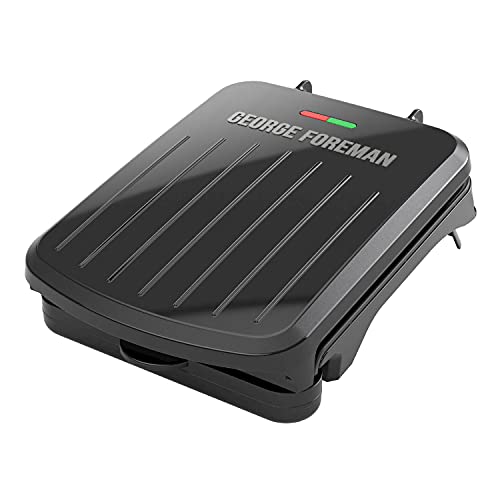
The George Foreman Grill and Panini Press contributes a distinctive entry to this balance sheet, in prose pending verification. Its sloped plates turn the grease con into something closer to a feature: fat leaves the food and collects in the tray as you cook, so rich fillings eat lighter — provided the tray discipline is observed and the tray itself is emptied only once cool. Its cons are the fixed-plate cleaning ritual and a portion scale aimed at smaller households. For cooks whose pressing splits evenly with grilling, it may be the most balanced box in the category.
Pros and Cons by Food Type
The balance shifts with what you cook, and a food-by-food account is more useful than any global verdict. Classic cheese sandwiches sit at the top of the pro column: maximum evenness benefit, minimum mess if built tidily, and the fusion effect at its most satisfying. Quesadillas are close behind — the press seals and crisps them superbly — with the small con that hard fillings like raw onion soften less than they would in a pan, so many cooks soften them first. Breakfast sandwiches press beautifully, with the caveat that a runny yolk and a closing lid are natural enemies; cook the egg fully or serve it separately.
Vegetables are a quiet triumph: peppers, zucchini, mushrooms, and onions take marks and sweetness from the plates with no oil pool and no oven preheat, and the only con is batch size — a press cooks vegetables for two more happily than for six. Reheated pizza is a pro with an asterisk: the base revival is real, but tall toppings can weld to the top plate, so a hovering lid or a piece of baking parchment between topping and plate is the experienced cook’s trick. Delicate pastries and croissants sit in the con column for basic presses and move to the pro column only with an adjustable lid. Sweet items — brioche melts, fruit-filled French toast — brown fast and scorch faster, rewarding attention; they are the foods that teach new owners their press’s true temperament, usually within one slightly dark first attempt.
Meats deserve a clarifying paragraph, because expectations here cause real disappointment. A press will cook a thin chicken breast or a burger, and sloped models handle the fat well, but it does not sear like a ripping-hot skillet or grill, and thick cuts cook unevenly under a lid that cannot accommodate them. Treat meat as an occasional convenience, not a reason to buy, and the category will never disappoint you. The press’s kingdom is bread, cheese, tortillas, and vegetables — within that kingdom it has few rivals, and outside it, it never claimed the throne.
Setup and Care That Reduce the Cons
Half the cons shrink with routine. Store the press where it will actually live before it arrives, and the storage con becomes a non-event. Wipe the plates while they are still warm — with a damp cloth, once they are no longer hot enough to sizzle it — and baked-on cheese rarely gets the chance to set. Build sandwiches with a modest margin of unfilled bread edge and the escape that causes the worst cleaning mostly stops happening. Route the cord away from the counter edge from the first day, unplug the moment cooking ends, and let the press stand open to cool where small hands cannot reach the plates.
The grease discipline deserves its own sentence, because it prevents the category’s most common injury: after cooking fatty fillings, leave the drip tray exactly where it is until its contents have cooled and settled, then carry it level with two hands to the sink. Never tilt a hot tray, never carry it one-handed across a child’s height, and never pour hot grease toward yourself. Add one weekly habit — a slightly deeper clean of grooves and hinge area with a soft brush — and the appliance stays pleasant to be near, which is a real factor in whether it keeps being used. The hands-on texture of daily ownership is covered further in our panini press review, and long-term owners report in the collected panini press reviews. Readers whose countertop shortlist includes a waffle iron will find the same pro-and-con honesty applied in our best waffle makers guide.
The Pros and Cons Nobody Lists
Beyond the standard ledger sits a second, quieter one. On the pro side: a press makes leftovers feel intentional. The two slices of roast chicken, the end of the cheese, the half pepper — pressed between good bread they become a meal with a name rather than a fridge tidy-up, and households quietly waste less food because the press gives oddments a destination. It also democratises a certain kind of cooking pleasure: the café sandwich stops being a purchased treat and becomes a Tuesday. And it reheats in a way that respects food — the pressed reheat of a leftover quesadilla or flatbread is closer to fresh than any microwave manages.
On the quieter con side: a press encourages a house style, and house styles can narrow. Families fall into two or three favourite builds and rotate them until someone rebels; the appliance that was bought for variety becomes the engine of a delicious rut. There is also the noise-and-smell factor nobody mentions — a press cooking onions, peppers, or strong cheese announces itself through the whole flat, which is a pro at lunchtime and a con at midnight in a studio. And there is the guest effect in reverse: once your pressed sandwiches become known, you will be asked to make them, in batches, at gatherings, standing at your own party with a mitt on. Whether that is a pro or a con depends on the cook, but it is a real and predictable consequence of ownership.
A further honest con belongs to the category’s middle age: plate coatings wear. Years of faithful service gradually thin the non-stick surface, sandwiches begin to catch, and cleaning — the con that was managed — creeps back up the ledger. This is not a defect; it is the physics of coated cookware, shared with every non-stick pan you own. It argues for buying build quality, for gentle utensils from day one, and for viewing a press as a long-lived but not immortal tool. Owners who understand this in advance tend to be the ones still praising their press years later, because nothing about its ageing surprised them.
A Month-by-Month View of Ownership
Month one is honeymoon and calibration: sandwiches daily, a few escapes of cheese, the discovery that sturdy bread matters, and the first drip-tray lesson — learned, ideally, by reading rather than by carrying a hot tray. The pros dominate the month’s accounting because novelty amplifies them. Month two is the sorting: the household’s two or three standing builds emerge, the press settles into its permanent home, and the cleaning routine either becomes automatic or becomes resented. This is the month that predicts the appliance’s future, and it is decided almost entirely by placement and plates.
By month three, the secondary uses have either joined the routine — quesadilla night, the pizza reheat, the pressed vegetables — or they have not, and the press’s true frequency is visible to anyone who cares to look. Households using it weekly by now own a success; households using it monthly own a decision to make about counter space, and the honest ones make it without guilt in either direction. By month six, the press is furniture in the best sense: unremarkable, reliable, and missed immediately on the rare week it is lent out or packed away. That unremarkable quality is the final pro, and it cannot be photographed for a listing — it is simply what a well-matched appliance feels like from the inside of a routine.
The failure timeline is equally regular and worth stating so buyers can interrupt it. Week three: the press is moved once, to a slightly worse place, to make room for something newer. Month two: fetching it requires moving the thing stored in front of it, so a skillet gets used instead, once, then again. Month four: it is rediscovered during a clear-out, wiped, and placed in the charity box by someone who reports, accurately, that “we never used it” — when the truth is that they used it happily until its home made using it a chore. Nearly every abandoned press in the world followed this path, and nearly every step of it was about storage rather than sandwiches. If you take one practical lesson from this entire article, take that one.
The Safety Ledger, Stated in Full
Because this article deals honestly in cons, the safety entries deserve expansion beyond a bullet. Steam is the hazard owners meet most: a press full of moist filling holds a small cloud of it under pressure of its own making, and opening the lid releases it upward and outward in one motion. The defence is choreography — stand to the side rather than leaning over, lift the lid from the handle with a mitt, and let the first breath of steam escape before reaching in. Children should be taught that the cloud is the press “breathing out” and that faces stay back until it has finished. It takes two seconds and becomes as automatic as stepping back from a kettle.
Hot surfaces are the second entry. The plates are the obvious danger, but the lid’s outer surfaces, the hinge area, and even the handle’s metal fittings on some designs grow hot in use, and everything stays hot far longer than intuition suggests after the power is off. The rule that covers all of it: treat the whole appliance as hot from the moment it is plugged in until it has stood unplugged and open long enough that you could rest a palm on the plates — and test that with the back of a finger, briefly, rather than assuming. Grease is the third entry, already covered but worth repeating in ledger form: it leaves the food hot, it pools in a shallow tray, and it scalds exactly like any hot oil. Cooled fully, carried level, emptied without hurry — that is the entire protocol, and it has no shortcuts.
The electrical entries are mundane and absolute. The cord stays away from the counter edge and never dangles; the press is unplugged when cooking ends, not when the meal does; it is never cleaned while plugged in, never immersed, and never left heating unattended with the lid down on an empty plate for long stretches. None of these rules is burdensome, and together they move safety from the con column into the neutral background of ownership — which is where it sits for the great majority of owners, most of whom will tell you the press feels safer than a splattering skillet of hot butter. That comparison is fair, and it belongs in the ledger too: the press contains its heat and its grease in a way open-pan cooking does not, and many a forearm freckled by skillet spatter testifies that every cooking method keeps its own small account of risks.
How the Balance Changes Over Years of Ownership
Year one is the year of the pros, provided frequency holds: the cooking advantages are at their most noticeable because the comparison with your old method is fresh, the plates are at their slickest, and the cleaning is at its easiest. Year two is the honest year, when novelty has fully drained away and the appliance’s place in the household is whatever it truly is — a weekly utility, a monthly pleasure, or a shelf resident. Nothing about the press changes in year two; what changes is that you stop grading it generously. Owners who still reach for it without thinking in year two own a success by any definition that matters.
Later years test the hardware rather than the concept. Hinges either stay true or develop the wobble that makes pressure uneven; coatings either hold under kind treatment or begin their slow decline; drip trays crack or vanish into the general population of orphaned kitchen plastic. This is where the buy-smart advice earns its keep retrospectively: the mid-tier press with the sound hinge and replaceable plates is still working evenly in year five, while the flimsy bargain has become an argument against the whole category in its owner’s mind. When you read owner verdicts, weight the multi-year ones heavily and the first-week ones lightly — a discipline this site applies in its panini press reviews as well.
There is a final, pleasant change that long ownership brings: the press becomes social infrastructure. It is the appliance lent to a neighbour for a party, taken to the holiday house, handed to a child leaving for a first flat with a decade of family sandwiches in its grooves. Tools that feed people accumulate that kind of biography, and it never appears in a pros and cons table — but when owners defend a battered old press against a shiny replacement, biography is usually what they are defending. Buy well, keep the habits, and there is every chance your press earns the same defence.
Bottom Line
The pros of a panini press are about cooking and they are substantial: even browning, fused fillings, speed without supervision, repeatability, and a second life across quesadillas, wraps, and reheated pizza. The cons are about ownership and they are equally real: storage, cleaning, steam, capacity, and singularity of purpose. Frequency decides which list you will actually live in. If hot sandwiches are a weekly habit in your house, buy with confidence at the tier your messiness dictates. If they are an occasional pleasure, honour the skillet, spend the money on bread and cheese, and let this article have saved you a cupboard.
So the final accounting is unusually personal for an appliance verdict. Count your weekly hot sandwiches. Look at the cupboard where the press would live. Picture the wipe-down after your favourite, messiest build. If all three pictures please you, the pros and cons have already voted, and they voted yes.
Panini Press: Weighing the Trade-Offs in Daily Use
Start with how the strengths and frustrations of a {p} balance out in a real kitchen. Most coverage of a panini press concentrates on the first week of ownership, yet the decisions that matter most tend to surface later, once the panini press has to earn its place in an ordinary weekday routine rather than a carefully staged first attempt. Write down the three jobs you expect it to do most often, in the order you actually do them, and judge every claim you read against that short personal list instead of against a generic ideal.
Troubleshooting is easier when you expect the usual failure points. With any panini press, the recurring problems tend to cluster in the same places: uneven results from overloading or poor arrangement, wear showing first on the parts handled most often, and small annoyances with lids, seals, handles, controls or fittings that only appear after repeated use. Before buying, look for whether those wear parts can be cleaned properly, replaced or worked around, and whether the instructions address them directly rather than pretending they never happen.
Measure before you commit. Note the footprint, the clearance above and behind the spot where the panini press will live, and the route you will carry it by when it is hot, full or awkward. A panini press that technically fits but blocks a cupboard door, crowds a neighbouring appliance or has to be dragged across a worktop every time will quietly fall out of use, whatever its merits on paper. In the Kitchen Appliances category especially, a few centimetres of clearance and a sensible storage plan separate a daily tool from a bulky regret.
Finally, plan the first fortnight deliberately. Use the panini press for one familiar job first, so you have a baseline you trust, then introduce the harder cases one at a time and note what changes. Small adjustments to arrangement, timing, quantity or preparation usually close most of the gap between disappointing first results and the performance the design is capable of. That short learning period is also the fairest test of the trade-offs that only show up after weeks of use: if the routine has not settled by the end of it, the mismatch is real, and it is better to know while returning or exchanging is still straightforward.
Work through a realistic scenario, not a best case. Picture the busiest version of the job: more people to serve, less time than planned, ingredients or materials that are slightly out of the ordinary, and a clean-up waiting at the end. Ask how the panini press behaves at that upper edge, because a model that only shines on a small, simple load will disappoint precisely when you need it most. If the honest answer is that you would split the job into batches or fall back on an older method, factor that into the decision now rather than discovering it later.
Use a short decision checklist to finish. One, does it fit the space and the storage you really have. Two, does it handle your three most common jobs without a workaround. Three, do the edge cases you listed stay manageable. Four, can every wear part be cleaned or replaced without drama. Five, would you still choose it if a friend described the same drawbacks in their own kitchen. A panini press that passes all five is a sound buy; one that fails two or more is a compromise you are choosing with open eyes, which is a very different thing from being surprised later.
Edge cases deserve a deliberate pass. Think about the odd shapes, the thicker or thinner than usual loads, the leftovers, the second helping and the guest with different preferences. A well-chosen panini press handles the exceptions gracefully, or at least predictably, while a poor match turns every exception into a workaround. List your two or three most common exceptions in advance and check, from the manual or the listing details, that nothing about them is ruled out by size, shape, material or care requirements.
Maintenance decides how long the good results last. Set a simple rhythm: a quick wipe or rinse after each use, a deeper clean on a fixed day, and a periodic check of the parts that move, seal or bear weight. A panini press that needs fiddly disassembly for basic care will be cleaned less often, and performance drifts long before anything actually breaks. Prefer designs where the parts that get dirtiest are the parts that are easiest to reach, and be honest with yourself about which cleaning steps you will genuinely keep up.
Frequently Asked Questions
What is the biggest advantage of a panini press?
Two-sided heat. Browning both faces at once while melting the interior evenly removes the flipping, the pale top, and the patchy melt that limit skillet sandwiches. Nearly every other advantage — speed, repeatability, fused layers — flows from that single mechanical fact. It is also the advantage no technique can fully replicate with one-sided heat, which is why the press exists as a category at all.
What is the biggest disadvantage of a panini press?
For most owners, the clean after cheese-heavy cooking, with storage a close second. Escaped cheese on plates and grooves, plus a drip tray that must cool before it can be emptied, makes the tidy-up meaningfully longer than a skillet’s. Removable plates and tidy sandwich construction shrink this disadvantage a great deal, but no model eliminates it entirely — go in with your eyes open.
Is a panini press better than a skillet for grilled cheese?
Better on evenness, speed, and effort; not better by a mile on final flavour when the skillet is handled skilfully. A patient cook with a heavy skillet and a weight produces an excellent sandwich. The press produces that standard with less attention, both sides at once, and the same result on the fourth sandwich as the first. Choose by how much you value the calm, not by a quality gap that is smaller than advertised.
Are panini presses safe around children?
They are a supervised appliance. The hazards are steam on opening, plates that stay hot after cooking, and hot grease in the drip tray. With the press placed back from the counter edge, the cord routed safely, and clear rules, older children can learn to use one confidently — many families treat it as a first cooking appliance. Toddlers and hot presses should simply never share unsupervised space.
Do panini presses use much electricity?
They are among the more modest cooking appliances: two small plates, heated for short periods, rather than an oven cavity or a large hob ring kept hot. A pressed lunch is a brief, targeted use of energy, and in summer it has the side benefit of not heating the whole kitchen. Exact consumption varies by model and habit, but no household has ever traced a bill shock to its sandwich press.
Can a panini press replace a grill or griddle?
Only partly, and only the convertible models try. A dedicated press will not griddle pancakes or sear like an open grill, and a skillet still wins for eggs and large cuts. What the press replaces completely is the sandwich-and-quesadilla corner of those appliances’ work. Buy it as a specialist that earns its place, not as a generalist that retires three other tools.
One last balance-sheet entry belongs to value over time. A press bought at any tier and used weekly for years delivers its sandwiches at a per-use cost that dwindles toward the negligible, while a press used monthly never escapes its purchase feeling expensive. The appliance does not change; the arithmetic of use does. That is why every section of this article, whatever its heading, has really been about one question — how often — and why the most honest sentence in any pros and cons list is the one that asks it.
Related Guides
Decide with the is a panini press worth it analysis, shop with the panini press buying guide, and check daily-use reality in the panini press review before you commit.