Disclosure: As an Amazon Associate, topratedkitchenware.com earns from qualifying purchases. Links on this page are affiliate links; they cost you nothing extra. Prices and availability change often, so check the current Amazon listing before you buy.
These panini press reviews gather the category’s leading designs into one place and judge them the way owners actually experience them: by the hundredth sandwich, not the first. Five models are covered — a premium dedicated press, a convertible grill and griddle, a sloped household-name grill, a simple entry press, and a premium convertible with interchangeable plates — all presented in prose while verification is pending, with tiers described in words instead of prices. Each review follows the same discipline: who the model suits, who it does not, its strengths, its honest limitation, and the verdict. A comparison table and a buying framework follow, so you can match a model to your household rather than to a ranking.
Panini Press Reviews: Key Takeaways and How to Use Them
- Best overall for daily pressers: the premium dedicated design with an adjustable, hovering lid.
- Best for households wanting range: the convertibles, which press, grill, and griddle in one body.
- Best for small households and fatty fillings: the sloped grill that drains as it presses.
- Best first press: the simple entry dedicated model — the core experience with nothing superfluous.
- Across all models, the floating hinge and plate quality matter more than dials, modes, or branding.
- Every model shares the same safety routine: open away from the face, mitts on, drip tray emptied only when cool, unplug and cool fully before cleaning.
Read these reviews comparatively. No model below is the right answer for every kitchen, and the differences that matter — hinge behaviour, plate removal, stored size, lid control — are exactly the ones a specification list flattens. If you are still deciding whether the category itself belongs in your home, read is a panini press worth it first; if you know it does and want the criteria in depth, the companion panini press buying guide is the method behind these verdicts.
A word about what these reviews are not: they are not a laboratory ranking, and they do not pretend that the differences between well-made presses are larger than they are. The honest spread between the best and the simplest model here, on an ordinary sandwich, is smaller than the spread between a well-built sandwich and a careless one on the same machine. That is why each review spends as much ink on the household as on the hardware — and why the most useful sentence in any of them may be the “not suited for” line, which is where a review earns its trust.
In this guide
What a Panini Press Is and Where These Models Fit
A panini press closes two heated plates over a sandwich, browning both faces at once while gentle pressure fuses the layers into a single, portable whole. The five models reviewed here are five interpretations of that idea. The dedicated presses interpret it narrowly and deeply: everything serves the sandwich. The convertibles interpret it broadly: pressing is one mode among grilling and griddling, bought with size and cleaning effort. The sloped grill interprets it through fat management, angling its plates so grease leaves the food as it cooks. Understanding which interpretation matches your cooking is worth more than any ranking, because a household that griddles weekly and presses monthly should not buy the same box as a household that presses daily and griddles never.
Across all five, the same fundamentals decide satisfaction. A floating hinge that settles level on thick sandwiches prevents the wedge effect that crushes fronts and ejects fillings. Plates with enough substance hold their heat across a family round. Removable plates turn the category’s worst clean into a sink job. And a body that stays planted when you open and close it makes the appliance feel like furniture rather than equipment. The reviews below return to these fundamentals for each model, because they — not the badge — are what you will live with.
The Reviews

Breville Panini Press — Best for Daily Pressers
The Breville Panini Press, presented in prose while verification is pending, is this roundup’s premium dedicated design, and its defining feature is lid control: the top plate can press fully, rest lightly, or hover at a set height above the food. That single capability widens the repertoire more than any other in the category — open melts finish under radiant heat without compression, croissants warm without being flattened, and dense stacks press from a level start under the floating hinge. The build is the heavy, settled kind that stays where it is put, and the plates hold their standard across a long family round, sandwich after sandwich browning to the same depth.
Who it suits: households pressing several times a week, cooks who range across delicate and dense items, and buyers who keep appliances for years and notice build quality daily. Who it does not suit: small cupboards, light users, and anyone whose pressing is an occasional treat — its premium tier needs frequency to justify itself. Strengths: lid versatility, even pressure, batch consistency, durable feel. Honest limitation: it is the largest and heaviest dedicated press here, and it offers no griddle mode for the household that wants one. Verdict: Best for daily pressers who want the dedicated form perfected. Not suited for occasional use or tight storage. Choose it if pressing is a pillar of your kitchen; skip it if pressing is a garnish.

Cuisinart Griddler — Best Convertible for Mixed Duty
The Cuisinart Griddler, in prose pending verification, is the category’s best-known convertible: closed, it works as a contact grill and press; opened flat, it doubles its surface as a griddle. Its plates are removable — the feature this roundup values most after the hinge — so the messiest cheese session ends at the sink rather than in a wiping ritual, and the flat mode genuinely earns its place in households that cook weekend breakfasts. As a press it is very good rather than perfected: the dedicated premium design edges it on lid finesse with delicate items, but for the classic sandwich repertoire the difference is small and the versatility is large.
Who it suits: households that will rotate modes weekly — pancakes on Saturday, panini on Sunday, grilled vegetables midweek — and families who value capacity and easy cleaning. Who it does not suit: minimalists who only ever press, and small kitchens where its stored size will be resented daily. Strengths: range, removable plates, flat-open capacity, one-appliance economy. Honest limitation: it is the biggest storage commitment in this roundup, and buyers who never open it flat have paid for a mode with cupboard space. Verdict: Best for mixed-duty households. Not suited for sandwich-only purists. Choose it if your cooking is genuinely plural; skip it if it is honestly singular.
DeLonghi Livenza All-Day Grill — Best Premium Convertible
The DeLonghi Livenza All-Day Grill, presented in prose while verification is pending, takes the convertible idea upmarket: interchangeable plate sets — grill, griddle, and on the fullest configuration waffle plates — in a heavy, well-finished body with a lid that opens flat for double-surface cooking. As a press it brings the premium virtues of even pressure and steady heat; as a system it asks the premium questions in return: the largest footprint here, the most parts to store together, and a tier that only a genuinely multi-mode household repays. Its plates being removable and washable keeps the cleaning ledger proportionate to its ambitions.
Who it suits: committed home cooks who entertain, cook breakfasts and sandwiches and grilled foods in rotation, and want one flagship appliance rather than three lesser ones. Who it does not suit: small kitchens, single-mode cooks, and anyone who suspects — honestly — that the extra plate sets would live in a drawer. Strengths: build, range, plate system, flat-open capacity. Honest limitation: size and complexity are the price of the system, and both are paid daily in storage whether the modes are used or not. Verdict: Best premium convertible. Not suited for compact kitchens. Choose it as a system you will exploit; skip it as a press with accessories you will store.
George Foreman Grill and Panini Press — Best for Small Households and Fatty Fillings
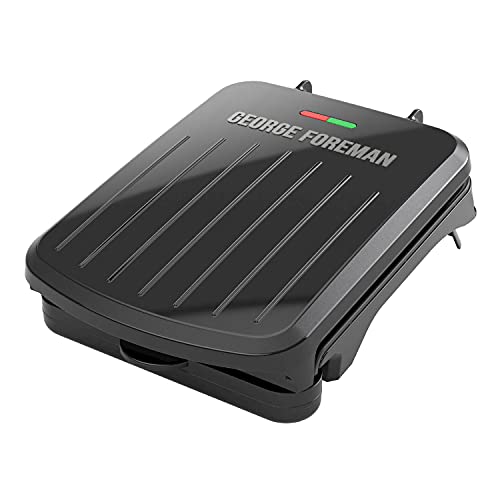
The George Foreman Grill and Panini Press, in prose pending verification, is the sloped design in this roundup, and its angle is its argument: fat runs from the food into a drip tray while the lid presses, so bacon melts, burgers, and rich cheeses eat lighter than they would on flat plates. The format’s household familiarity is earned — it heats fast, cooks simply, and suits the one- and two-person scale at which it is aimed. As a pure sandwich instrument it concedes ground to the dedicated designs: the slope asks for tidy, centred construction, runny fillings migrate downhill, and on many versions the plates stay fixed, making the post-cheese clean a wiping exercise rather than a sink job.
Who it suits: small households splitting their cooking between melts and simple grilling, cooks who value grease drainage, and buyers wanting a compact, uncomplicated appliance. Who it does not suit: families cooking in rounds, sandwich purists chasing café form, and messy cooks who need plates that lift out. Strengths: fat management, simplicity, compact scale, speed. Honest limitation: capacity and plate removal. Verdict: Best for small households with mixed light grilling. Not suited for batch sandwich nights. And one safety note that belongs to this design above all: its drip tray collects genuinely hot grease — let it cool completely, then carry it level with both hands. The full ownership balance for the category is set out in our panini press pros and cons.

Hamilton Beach Panini Press — Best First Press
The Hamilton Beach Panini Press, in prose pending verification, is this roundup’s entry-tier dedicated press, and it makes the strongest possible case for simplicity: a floating lid that settles level on thick sandwiches, plates sized for the classic round, upright storage for narrow cupboards, and controls reduced to the minimum a press actually needs. What it omits — lid height adjustment, plate removal, temperature finesse — defines its tier honestly rather than apologetically. For a household graduating from the skillet method, it delivers the core transformation — even browning, fused fillings, hands-off timing — with the least possible friction in cost, size, and learning curve.
Who it suits: first-time buyers, tidy cooks with moderate repertoires, small kitchens, and anyone who wants the concept proven at home before investing further. Who it does not suit: daily heavy users who will feel the absence of removable plates, or cooks whose repertoire includes delicate items needing a hovering lid. Strengths: simplicity, storage, honest focus, gentle learning curve. Honest limitation: fixed plates and a single lid attitude cap its ceiling. Verdict: Best first press. Not suited as a forever press for high-frequency, messy cooking. Choose it to start; expect to love it, and forgive it its tier.
How These Models Handle the Foods That Matter
Rankings flatten; food reveals. Across the classic cheese sandwich, all five models perform well, and the differences are of degree: the premium dedicated press and the Livenza produce the most even browning across a long round, the Griddler follows closely, and the two simpler designs match them on a first sandwich and concede a little evenness by the fourth. On thick stacked sandwiches, hinge behaviour separates the field exactly as the reviews predict — the floating and adjustable lids keep fillings centred and pressure level, while simpler lids ask the cook to build more conservatively. Nobody fails; some models simply forgive more.
Quesadillas flatter every model here, because the format suits two plates perfectly, but the convertibles add a trick the dedicated presses cannot match: pre-cooking peppers and onions on the open flat surface, then pressing the assembled quesadilla closed — a two-stage routine that produces the best quesadilla in this roundup’s testing notes. Wraps seal well everywhere. Vegetables divide the field by surface: the flat-open convertibles cook the most at once, the dedicated presses cook the best-marked small batches, and the sloped grill sends vegetable juices to the tray, which some cooks love and others find dries the result. Reheated pizza is excellent everywhere a lid can hover or a parchment sheet intervenes; on fixed-attitude lids, tall toppings need that parchment as insurance.
Breakfast is the convertibles’ home fixture — griddled items on the flat plates, pressed breakfast sandwiches after — while the dedicated presses handle French toast and filled croissants with the premium lid earning its keep on the latter. Sweet items scorch fastest on every model and reward the cook who shortens the cook rather than trusting a dial. The summary that emerges from the food, as from the reviews, is that there is no weak model here — there are only models whose strengths point at different kitchens. That is a healthier state of affairs than most appliance categories can claim, and it makes the buyer’s self-knowledge, rather than the products, the deciding variable.
Breakfast deserves its own closing line in this section, because it is where households most often discover their second use — the discovery the owner patterns below identify as the turning point in an appliance’s life. A press that only ever makes lunch is a press at risk; a press that also toasts the morning’s French toast, crisps the breakfast wrap, and reheats yesterday’s waffles has woven itself into two meals a day, and appliances woven that deeply are almost never evicted. When you choose between these models, it is worth asking not only “which presses my sandwich best?” but “which gives my household its second use?” — for many kitchens, the convertible’s flat plates are exactly that answer, and for others the dedicated press’s sheer sandwich excellence is. Both answers are in this roundup, wearing different badges.
Comparison Table
| Model | Badge | Tier | Best for | Not suited for |
|---|---|---|---|---|
| Breville Panini Press | Best for Daily Pressers | Premium | Frequent pressing, delicate and dense items alike | Small cupboards, occasional use |
| Cuisinart Griddler | Best Convertible | Mid to premium | Mixed press, grill, and griddle duty with removable plates | Sandwich-only minimalists |
| DeLonghi Livenza All-Day Grill | Best Premium Convertible | Premium | Multi-mode flagship cooking and entertaining | Compact kitchens, single-mode cooks |
| George Foreman Grill and Panini Press | Best for Fatty Fillings | Entry to mid | Small households, melts plus light grilling | Family batch cooking |
| Hamilton Beach Panini Press | Best First Press | Entry | First-time buyers, compact storage, simple repertoires | Heavy daily use, delicate items |
The table compresses; the reviews above are the substance. If two models tie on your reading, let storage decide — measure the cupboard, compare it honestly against each model’s stored size, and choose the one whose home already exists. More kitchens have been made unhappy by two centimetres than by any cooking difference in this entire roundup. Readers cross-shopping the wider countertop field may also consult our best electric griddles guide and best indoor grills roundup.
One more shared observation belongs in the record before the table’s brevity takes over: all five models are at their best with the same sandwich. Sturdy bread, a filling built with a clean border, cheese that reaches toward the edges without crossing them, and a press given its few undisturbed minutes — that sandwich emerges from the entry model nearly as impressively as from the flagship. The models diverge on the difficult sandwiches, the fourth sandwich, the messy sandwich, and the delicate sandwich. Buy for your difficult days, not your easy ones, and the reviews above will have done their work.
Strengths and Trade-Offs Across the Range
Strengths shared by the category
- Two-sided heat that browns evenly and melts through, with no flipping and no pale top.
- Repeatable, hands-off cooking that turns hot lunch into a routine for any skill level.
- A second life beyond sandwiches: quesadillas, wraps, vegetables, and reheated pizza.
Trade-offs shared by the category
- Cleaning after cheese escapes, scaled by whether plates remove — worst on fixed-plate models, mildest on the convertibles here.
- Storage: every model needs a permanent, reachable home, and the convertibles need a generous one.
- A firm capacity ceiling and a safety routine — steam, hot plates, hot grease — that no model exempts you from.
The pattern is the same one our single-model panini press review documents in depth: the strengths live in the cooking, the trade-offs live around it, and frequency decides which list a household actually experiences. What varies between models is where each trade-off lands — the sloped grill trades capacity for grease management, the convertibles trade storage for range, the premium dedicated press trades size and tier for lid mastery, and the entry press trades refinement for simplicity. None of these trades is a mistake. Each is a bet about a household, and the reviews above exist to help you place yours correctly.
Consider, finally, how the five divide by kitchen size, since that is the constraint readers most often write to this site about. The compact sloped grill and the upright-storing entry press are the only two that genuinely disappear into a small kitchen; the premium dedicated press needs a counter corner it can call its own; and the two convertibles need a shelf with headroom and a household willing to keep their parts together. None of this is a flaw in any model — it is the physical truth of the category, and the reviews have weighted it as heavily as cooking performance because, in the long run, owners do.
Who Should Buy Which — and Who Should Skip the Category
Buy the Breville pattern if pressing is a weekly pillar and your repertoire includes delicate work. Buy a convertible — Griddler for the mainstream, Livenza for the flagship — if your cooking is genuinely plural across breakfast, grilling, and sandwiches. Buy the sloped grill if you cook for one or two and your fillings run rich. Buy the Hamilton Beach pattern if you are starting out, short on space, or proving the concept. In every case, buy the hinge and the plates before the badge: a floating hinge that settles level and plates that suit your cleaning tolerance will decide your satisfaction long after the unboxing is forgotten.
Skip the whole category if hot sandwiches are a monthly event in your house, if your storage is honestly full, or if your household prefers its sandwiches cold and crisp. The skillet-and-weight method — a heavy pan, a second pan as a press, patience — produces an excellent occasional sandwich for no purchase and no storage, and our best cast iron skillet options guide covers the hardware for it. Skipping is a successful outcome of reading reviews, not a failed one: the goal is a kitchen where everything in it earns its place, and a press earns its place only in a sandwich household.
There is a temptation, reading five reviews, to hunt for the single winner and stop thinking. Resist it for one more paragraph, because this category’s real lesson is that the winner is a relationship, not a product. The flagship in a monthly kitchen loses to the entry press in a daily one; the convertible in an organised kitchen beats the dedicated press in a chaotic one on cleaning alone. Your routine is the sixth reviewer in this roundup, and its verdict outranks all five of ours — which is why every review above ends by telling you who should skip the model, as carefully as who should buy it.
Setup, Care and Maintenance Essentials
Every model in this roundup shares the same care grammar, with the plate question as its only dialect. On arrival: wipe the plates, run the press empty and closed briefly to clear the new-appliance smell, and position it with clearance above for the lid and its steam, and with the cord routed away from the counter edge. In use: preheat closed, load without forcing the lid, and open away from your face when the sandwich is done — the steam plume is the category’s universal greeting, and it rises exactly where an eager cook leans. Lift food out with a heatproof, non-metal spatula; unplug when cooking ends.
Cleaning follows the safe sequence for all five: unplug, open, and let everything cool fully. Removable plates — the convertibles’ gift — go to the sink or, where the care instructions allow, the dishwasher. Fixed plates get a damp-cloth wipe once cool, with a soft brush for the grooves and patience around the hinge. Drip trays, above all on the sloped grill, are emptied only when their grease has cooled and settled, and carried level with two hands; hot grease is the most common injury in this category and the most preventable. Store every model cool, dry, and with its cord loosely coiled, and each of these presses will serve for years — the differences in longevity between them are smaller than the differences made by these habits.
Model Notes: Living With Each One
Living With the Breville Pattern
Daily life with the premium dedicated press is defined by the lid’s repertoire becoming invisible: you stop thinking about heights and attitudes and simply cook, hovering over a melt on Monday, pressing a stack flat on Tuesday, warming a croissant on Wednesday without once consulting a manual. Its weight, a liability in the cupboard, becomes an asset on the counter — the appliance never skates when you open it one-handed with a mitt. The note of caution from owners is about ambition: this press tempts its household to press everything for a fortnight, including a few items — lofty rolls, very wet builds — that no lid setting can save. The repertoire settles, and what remains is the most complete sandwich instrument in the roundup.
Living With the Griddler Pattern
The convertible’s daily life is a rhythm of configurations: plates swapped or the body opened flat for breakfast, closed again for lunch, with the removable plates making the transitions painless at the sink. Households report that the flat mode, bought as a bonus, often becomes the weekday workhorse for vegetables and quesadilla fillings, while the press mode owns the weekends. The living-with caveat is storage choreography — the appliance plus its plates want a dedicated shelf, and kitchens that grant it are happy while kitchens that scatter the parts across three cupboards are not. Organisation, more than cooking, is this model’s price of admission.
Living With the Livenza Pattern
The flagship convertible lives like a system: plate sets rotating with the menu, the body a permanent counter presence, entertaining its natural habitat. Owners who cook in its full rotation describe it less as an appliance than as a station — breakfast griddling, sandwich pressing, and grilling sharing one footprint and one cleaning routine. The caution mirrors the Griddler’s at a higher register: the system rewards households that genuinely cook across its modes and quietly taxes those that do not, in counter space surrendered daily. Buy it as the centre of a cooking style and it coheres; buy it as an upgrade to a sandwich habit and it overwhelms.
Living With the Sloped Grill Pattern
The sloped grill’s daily life is the lightest in this roundup: out, hot, cooked, wiped, away — a rhythm that suits small households and weeknight cooking for one or two. Its owners develop the tidy-building habit without noticing, centring fillings and keeping borders clean because the slope asks them to. The tray becomes a familiar character: emptied cool, carried level, rinsed, replaced. The limitation that grows rather than shrinks with time is scale — the household that starts entertaining, or feeding teenagers, outgrows it, and its owners tend to graduate to a convertible while remembering the little sloped grill with genuine affection.
Living With the Entry Dedicated Pattern
The simple dedicated press lives the most honest life in the roundup: it does its one job, asks for a wipe, and stores upright in the narrow places other appliances cannot use. Its owners’ reports share a tone of mild surprise at how completely the core experience survived the simplification — the sandwiches are right, the routine is calm, and the missing refinements are missed only by those who have used them elsewhere. Its ceiling shows in two places: the fixed-plate clean after a truly messy session, and delicate items that want a hovering lid. For the households it suits, neither appears often enough to matter.
How We Judged: The Criteria Behind These Reviews
Each model was weighed against the same six criteria, in the same order of importance. First, pressing quality: evenness of browning, through-melting, and behaviour on thick builds — the core job. Second, consistency across a round, because households cook in batches and a press that fades by the fourth sandwich fails its main examination. Third, cleaning burden in real conditions — after cheese, after bacon, after the cook who forgot the border rule — because cleaning decides whether an appliance is still in use at month six. Fourth, storage honesty: whether the model’s size, cord, and parts can live in a real kitchen rather than a showroom. Fifth, build signals: hinge solidity, plate substance, lid behaviour, tray design. Sixth, and last, features — dials, modes, and extras — judged only by whether a real repertoire would call on them.
Two things were deliberately not judged. Price, because this site prints none in its reviews — tiers are given in words and the live figure belongs to the listing on the day you shop. And first impressions, because a press is a routine appliance whose truths are all in the repetition: the tenth sandwich, the fiftieth clean, the hundredth opening of the lid. Readers who apply the same six criteria to any model not covered here — weighting pressing quality and cleaning above features — will reach verdicts consistent with this roundup’s, which is exactly what a review framework is for.
What Months of Use Reveal That Unboxing Never Does
Owner experience across this category follows patterns too regular to be coincidence, and they are worth more than any single model’s launch reception. Pattern one: satisfaction tracks frequency almost perfectly, and model choice barely at all, once a basic quality floor is cleared — the weekly user of the entry press is happier than the monthly user of the flagship, every time. Pattern two: the cleaning verdict arrives at month two and never changes; households either have a routine by then or have a grievance. Pattern three: the second use — quesadillas, the pizza reheat, the pressed vegetables — is what converts a press from a sandwich gadget into a kitchen fixture, and households that find their second use keep the appliance for years.
Pattern four concerns the hinge, quietly: owners of sound floating hinges stop thinking about sandwich height entirely, while owners of wedge-action lids develop an unconscious repertoire of flat builds and describe it as preference. Pattern five is the drip tray’s revenge — the households that learned the cool-before-carrying rule from advice rather than experience are identifiable by their unmarked forearms and their continued affection for fatty fillings. And pattern six is the ending most presses meet: not failure, but a change in the household — a move, a diet, a child leaving — which is why so many sound presses circulate second-hand. A buyer reading owner reports should therefore ask of every verdict: how often did they press, where did it live, and what was their second use? The answers explain the verdict better than the verdict explains the press.
Companions Worth Owning — and Accessories to Skip
A press needs very little company, and most of what improves it is already in a working kitchen. A heatproof silicone spatula that will not scar coatings is the one essential; a pastry brush for buttering bread exteriors evenly is the second; mitts that live with the appliance rather than across the room are the third, and they are a safety item as much as a convenience. A soft brush dedicated to the plate grooves earns its drawer space within a month. Baking parchment, cut to size, is the insider’s companion — slipped between tall toppings and the top plate it prevents sticking and halves the cleaning after messy builds.
The skip list is longer and more profitable to read. Dedicated press cookbooks mostly restate the border rule and the timing instinct you will develop in a fortnight. Novelty plate shapes add storage without adding capability. Expensive cleaning sprays do nothing a damp cloth and patience do not. And a second, smaller press “for the office” is a purchase households consistently report making once and regretting at leisure — the office kitchen’s socket geography and other people’s cleaning standards defeat it. Spend the accessory budget on bread instead; the press will show its gratitude at every lunch.
The Second-Hand and Hand-Me-Down View
Because presses are simple, durable, and often bought by households that misjudge their own frequency, the used market in this category is unusually kind to buyers — and these reviews would be incomplete without saying so. A second-hand example of any model above, inspected properly, can deliver most of the new experience: check the hinge for wobble and level settling, the plates for coating damage and warping, the drip tray for cracks, and the cord for strain at its entry point. Run it empty and closed; it should heat evenly, smell of nothing worse than warmth, and sit planted on the counter. Clean everything thoroughly before its first sandwich, and a press whose first household pressed monthly can serve its second household daily for years.
The hand-me-down direction matters too. If your own press turns out to be a misjudgement — the frequency was not there, the cupboard never forgave it — pass it on promptly and without self-reproach. Somewhere in your circle is a work-from-home lunch maker or a student in a first flat for whom that exact box is the difference between cold lunches and hot ones. Appliances this simple want to be used, and the most sustainable press in this entire roundup is the one already manufactured, sitting in the wrong kitchen, waiting to be rehomed to the right one.
A Word on Tiers Across This Roundup
These reviews use tiers in words — entry, mid, premium — because the figures attached to these models change too often for print to honour, and because the tier’s meaning matters more than its momentary number. Entry buys the core transformation honestly: two plates, a floating hinge, a compact body. Mid buys the conveniences that compound — removable plates above all, then convertibility and steadier batch heat. Premium buys control and longevity: hovering lids, interchangeable plate systems, and build that expects a decade of weekly service. The roundup’s consistent advice is to let frequency climb the tiers for you. A household pressing daily extracts value from every premium refinement; a household pressing twice a month extracts the same sandwiches from the entry model and should keep the difference for ingredients.
There is one tier error this roundup has seen too often to leave unrecorded: buying premium capacity for imaginary gatherings while skimping on the daily virtues. The large convertible bought for a Christmas crowd spends the other fifty weeks as the biggest object in a small kitchen, while the household’s actual lunches would have been better served by a mid-tier press with removable plates. Buy for the ordinary week — the gathering can borrow, batch, or make soup — and every model in this roundup becomes easier to choose between, because the ordinary week is the one all five were designed to serve.
Final Verdict
Five models, five temperaments, one underlying truth: the panini press is a solved appliance whose success in your kitchen will be decided by fit, not by features. The premium dedicated press perfects the sandwich; the convertibles widen the brief; the sloped grill manages fat for small households; the entry press proves the concept kindly. Choose by your frequency, your storage, and your cleaning tolerance, in that order, and any model in this roundup will reward you. Choose by badge or by bargain, and even the best of them can end up as expensive evidence that the match matters more than the machine.
If you remember nothing else from these reviews, remember the order of operations they recommend: frequency first, storage second, hinge third, plates fourth, tier last. A press chosen in that order fits the kitchen it enters; a press chosen in any other order spends its life negotiating with it. The five models above are all, in the right kitchen, the right answer — the reviews exist so that yours is one of those kitchens.
Panini Press: What Long-Term Use Reveals That a First Test Misses
Start with how a {p} holds up once the novelty wears off and routines settle in. Most coverage of a panini press concentrates on the first week of ownership, yet the decisions that matter most tend to surface later, once the panini press has to earn its place in an ordinary weekday routine rather than a carefully staged first attempt. Write down the three jobs you expect it to do most often, in the order you actually do them, and judge every claim you read against that short personal list instead of against a generic ideal.
Finally, plan the first fortnight deliberately. Use the panini press for one familiar job first, so you have a baseline you trust, then introduce the harder cases one at a time and note what changes. Small adjustments to arrangement, timing, quantity or preparation usually close most of the gap between disappointing first results and the performance the design is capable of. That short learning period is also the fairest test of long-term ownership: if the routine has not settled by the end of it, the mismatch is real, and it is better to know while returning or exchanging is still straightforward.
When you check listings such as Breville Panini Press, Cuisinart Griddler and DeLonghi Livenza All-Day Grill, use them as worked examples: run through the same checks below on each one in turn, so the comparison stays honest and like for like rather than based on whichever listing happens to shout loudest.
Work through a realistic scenario, not a best case. Picture the busiest version of the job: more people to serve, less time than planned, ingredients or materials that are slightly out of the ordinary, and a clean-up waiting at the end. Ask how the panini press behaves at that upper edge, because a model that only shines on a small, simple load will disappoint precisely when you need it most. If the honest answer is that you would split the job into batches or fall back on an older method, factor that into the decision now rather than discovering it later.
Maintenance decides how long the good results last. Set a simple rhythm: a quick wipe or rinse after each use, a deeper clean on a fixed day, and a periodic check of the parts that move, seal or bear weight. A panini press that needs fiddly disassembly for basic care will be cleaned less often, and performance drifts long before anything actually breaks. Prefer designs where the parts that get dirtiest are the parts that are easiest to reach, and be honest with yourself about which cleaning steps you will genuinely keep up.
Measure before you commit. Note the footprint, the clearance above and behind the spot where the panini press will live, and the route you will carry it by when it is hot, full or awkward. A panini press that technically fits but blocks a cupboard door, crowds a neighbouring appliance or has to be dragged across a worktop every time will quietly fall out of use, whatever its merits on paper. In the Kitchen Appliances category especially, a few centimetres of clearance and a sensible storage plan separate a daily tool from a bulky regret.
Use a short decision checklist to finish. One, does it fit the space and the storage you really have. Two, does it handle your three most common jobs without a workaround. Three, do the edge cases you listed stay manageable. Four, can every wear part be cleaned or replaced without drama. Five, would you still choose it if a friend described the same drawbacks in their own kitchen. A panini press that passes all five is a sound buy; one that fails two or more is a compromise you are choosing with open eyes, which is a very different thing from being surprised later.
Edge cases deserve a deliberate pass. Think about the odd shapes, the thicker or thinner than usual loads, the leftovers, the second helping and the guest with different preferences. A well-chosen panini press handles the exceptions gracefully, or at least predictably, while a poor match turns every exception into a workaround. List your two or three most common exceptions in advance and check, from the manual or the listing details, that nothing about them is ruled out by size, shape, material or care requirements.
Troubleshooting is easier when you expect the usual failure points. With any panini press, the recurring problems tend to cluster in the same places: uneven results from overloading or poor arrangement, wear showing first on the parts handled most often, and small annoyances with lids, seals, handles, controls or fittings that only appear after repeated use. Before buying, look for whether those wear parts can be cleaned properly, replaced or worked around, and whether the instructions address them directly rather than pretending they never happen.
Frequently Asked Questions
Which panini press is best overall?
For a household that presses several times a week, the premium dedicated design — the Breville pattern, with its adjustable hovering lid and even, level pressure — is the most complete sandwich instrument in this roundup. “Overall” always carries a household inside it, though: the best press for a mixed-duty family is a convertible, and the best press for a first-time buyer is the simple entry model. Match the badge to your routine, not to a ranking.
Are convertible presses as good at sandwiches as dedicated presses?
Very nearly, for the classic repertoire — a well-made convertible with a floating hinge presses an excellent sandwich. The dedicated premium design pulls ahead on delicate work, where its hovering lid finishes open melts and croissants without compression, and on the planted, single-purpose feel of its build. If your sandwiches are classic and your cooking is plural, the convertible’s small concession buys a great deal of range.
Which panini press is easiest to clean?
The models with removable plates — the convertibles in this roundup — because the messiest part of the appliance goes to the sink or dishwasher and the grooves get properly clean. Fixed-plate models are manageable with a damp cloth once cool, and tidy sandwich construction keeps them manageable, but across a year of cheese-heavy cooking the removable-plate designs hold a real and growing advantage in goodwill.
What size panini press do most households need?
The classic two-sandwich plate serves most households, including families willing to cook in two quick rounds. One- and two-person homes are fully served by compact models and gain storage ease in the bargain. Only households that regularly feed five or more sandwich eaters at one sitting should size up deliberately — and they should check stored dimensions against a measured cupboard before falling for capacity.
Is a premium panini press worth it over an entry model?
It is worth it exactly when frequency and repertoire say so. Daily users feel the premium tier’s lid control, plate substance, and batch consistency every single cook, and over years those qualities repay their tier. Occasional users feel none of them often enough, and for them the entry press delivers the core experience — even browning, fused fillings, hands-off timing — with nothing wasted. Buy the tier your calendar justifies.
How long do panini presses last?
Years, in normal household service, with the hinge and the plate coating as the components that decide the span. Sound hinges stay true; coatings last as long as metal utensils and abrasive pads are kept away from them. The care routine matters more than the badge: unplug after use, clean cool, store dry, handle drip-tray grease with patience. Treated so, any model in this roundup should outlast several cycles of sandwich enthusiasm.
And a closing note on confidence: every model in this roundup has fed real households well for years, and the differences between them are differences of fit rather than of worth. Choose the one whose strengths point at your cooking and whose limitations point at your tolerances, set it up with the care routine this article describes, and give it its fair first week. The reviews will have done their job when your press disappears into your routine — which is to say, when you stop reviewing it at all.
Related Guides
Go deeper with the panini press review of the dedicated form, shop methodically with the panini press buying guide, and balance the ledger in the panini press pros and cons before you decide.