Disclosure: As an Amazon Associate, topratedkitchenware.com earns from qualifying purchases. Links on this page are affiliate links; they cost you nothing extra. Prices and availability change often, so check the current Amazon listing before you buy.
An honest account of vacuum sealer pros and cons has to hold two truths at once: for the right household this is one of the highest-value small appliances in the kitchen, and for the wrong one it is a boxed monument to good intentions. This guide gives both sides their full weight — the genuine advantages, the genuine drawbacks, and what the trade-offs mean for different kinds of cooks — so your decision rests on your life rather than on anyone’s enthusiasm, including ours.
Quick Verdict: Who This Suits and Who It Does Not
Vacuum sealing suits households that buy ahead, freeze often, batch-cook, garden, hunt, fish or cook sous vide — anyone whose food life involves a gap between buying and eating that air currently fills with damage. It does not suit households that shop daily, freeze rarely and eat leftovers immediately, nor anyone whose honest self-knowledge says a cupboard appliance stays in the cupboard. Neither verdict is a judgement; both are simply the shape of the tool.
In this guide
Key Takeaways
- Biggest pro: freezer quality — food emerges tasting like food, not like the freezer.
- Biggest con: the system only pays while the habits around it are practised.
- Running costs are bags and rolls, forever — budget for them from day one.
- Delicate foods and liquids need technique; the machine is not equally gifted at everything.
- Safety con to respect: sealing never sterilises food or replaces refrigeration.
The Pros
Pro: Freezer Burn Is Largely Abolished
This is the headline advantage and it is real. By removing the air that lets moisture escape from food surfaces, vacuum packaging keeps frozen meat, fish and vegetables recognisably themselves for far longer than loose wrapping can. The practical consequence is not just prettier food — it is food you actually eat, at full quality, instead of trimming, tolerating or discarding. For households that freeze seriously, this single pro carries most of the machine’s value case on its own shoulders.
Pro: Bulk Buying Becomes Practical
Family packs and warehouse prices are only bargains if the food survives to be eaten, and sealing is what lets an ordinary household claim them. Portion a bulk buy into dated bags and the discount survives contact with your real appetite — two portions tonight, four in the freezer, none wasted. Over a year of weekly shops, this quiet arithmetic is where the machine repays its shelf space for most families, without any single dramatic moment.
Pro: Leftovers and Batch Cooking Level Up
Sealed portions of cooked food hold their quality in the refrigerator and freezer noticeably better than the same food in loose containers, which changes the economics of cooking itself. A big Sunday cook becomes a fortnight of lunches and emergency dinners rather than three days of repetition and a bin. Meal preppers build entire systems on this pro, pairing bags with food storage containers for meal prep for the jobs each format does best.
Pro: Sous Vide and Better Marinades
A sealer unlocks sous vide cooking outright — the bag is part of the method — and improves marinating as logistics: compact, leak-proof, evenly coated and freezable in the same package. These are not marginal gains for the cooks who use them; they are entire techniques that simply do not exist in a kitchen without a sealer, which is why enthusiastic cooks describe the purchase as buying a capability rather than an appliance.
Pro: The Pantry Dividend
Cheese resealed after every use, coffee portioned into fresh weekly bags, nuts and baking supplies protected from stale air, garden produce and game processed for the season — the small wins accumulate across the whole kitchen, not just the freezer. Owners consistently report that the uses they never predicted, from camping provisions to waterproofed emergency supplies, end up mattering as much as the use they bought the machine for.
Pro: A More Organised Freezer
Flat, labelled, stackable bags impose a gentle order on the freezer: visible inventory, first-in-first-out rotation, portions that thaw quickly. The pro sounds cosmetic until you have lived with the alternative — a frost cave of anonymous lumps — and realised how much food the disorder was quietly wasting. Organisation is a preservation technology in its own right, and sealing is the easiest way to buy it.
The Cons
Con: The Bags Are a Permanent Cost
The machine is bought once; the bags are bought forever, and a heavy user’s consumables bill is a real line in the household budget. Rolls and sensible buying soften it, selective reuse for dry goods softens it further, but it never reaches zero, and any honest pros-and-cons account has to put it near the top of the debit column. Households that seal trivial jobs with premium pre-cut bags can spend their savings as fast as they make them.
Con: It Eats Space and Demands a Home
A countertop sealer needs a footprint, working room for bags, and a storage answer for rolls and accessories. In a small kitchen that rent is genuinely felt, and a machine without a proper home drifts toward the cupboard, then toward disuse. Compact models mitigate the con; they do not repeal it. Measure before buying, and treat ‘where will it live?’ as a first-order question rather than an afterthought.
Con: Liquids and Delicate Foods Fight Back
An external sealer’s physics are not universal. Thin liquids get pulled toward the seal, soft foods get squeezed by enthusiastic suction, and both need technique — pre-freezing, gentle cycles, patience — that a new owner must learn. Chamber machines solve the liquid problem at a price and size most households cannot justify. The con is not that these foods are impossible; it is that the marketing rarely mentions the apprenticeship they require.
Con: The Learning Curve Is Real, If Short
Expect a first month containing a crushed loaf, a leaky seam and at least one bag of marinade that reached somewhere it should not have. None of these is dangerous and all of them are educational, but households expecting instant mastery sometimes abandon the machine at exactly the point where one more week of practice would have made it feel effortless. The curve is measured in bags, not months — budget the tuition and climb it.
Con: It Can Create False Confidence
This is the safety con, and it matters most. A vacuum bag looks like preservation authority, and it is not: sealing does not sterilise food, does not stop all spoilage, and does not make perishables safe at room temperature. Owners who internalise ‘sealed equals safe’ can keep food longer than they should or relax the cold chain that does the real protective work. The full rules are set out in the safety section below, and they are non-negotiable.
Con: Noise, Pacing and Session Time
The pump is audible, cycles take their time, and long sessions require pauses while the sealing bar rests — a bulk shop now includes a sealing session measured in tens of minutes. For some households that session is a pleasant ritual; for others it is the chore that quietly kills the habit. Be honest about which household you are, because this con is about temperament, and temperament does not change with a more expensive model.
Food Safety: The Con That Is Really a Rulebook
Start with the rule that governs everything else in this guide: vacuum sealing is a packaging method, not a preservation guarantee. Removing air slows some kinds of spoilage and protects food from freezer burn, but it does not sterilise food, it does not kill bacteria, and it does not make perishable food shelf-stable. A sealed bag of raw chicken is still raw chicken, with the same need for prompt, cold storage as the day you bought it.
That means the cold chain never becomes optional. Perishable foods — raw and cooked meats, seafood, soft cheeses, cooked vegetables, leftovers — must go straight into the refrigerator or freezer after sealing, exactly as they would without the bag. Treat the vacuum bag as armour against air and moisture, never as a substitute for refrigeration, and be especially careful with food left sitting on the counter while you seal the rest of a batch: work in small groups and return each finished bag to the cold promptly.
Raw meat demands its own hygiene discipline. Handle raw meat and poultry on a dedicated board, keep its juices away from ready-to-eat foods, and wash hands, boards, knives and counters after the raw work is done and before you touch cooked or fresh items. Seal raw proteins in their own session or at the end of the session, so their packaging never shares a surface with the salad vegetables you plan to seal next. Cross-contamination is invisible, which is precisely why the routine has to be automatic.
Two smaller rules protect you and the food. First, the sealing bar gets genuinely hot during a cycle — give it a moment to cool and avoid touching it right after a seal, particularly during long sessions when you are reaching across the machine repeatedly. Second, never reuse a bag that held raw meat, poultry or seafood, even if it looks clean after washing; the risk is not worth the saving, and bags that held dry goods or produce are the only candidates for any reuse at all, after thorough washing and drying.
Finally, label honestly and rotate stock. Write the contents and the sealing date on every bag, store new bags behind older ones, and when you thaw a sealed package, treat it like any other thawed food: refrigerate it, cook it within a sensible window, and never refreeze raw food that has sat out. Vacuum sealing buys time and quality inside a cold system that you still have to run properly — respect that partnership and it will serve you well for years.
What the Trade-Offs Mean for You
For the bulk-buying family, the pros are weekly and compounding while the cons are a bag budget and one counter corner — an easy trade. For the keen cook, the capability pros (sous vide, marinades, prep) outweigh a short learning curve they will probably enjoy. For the seasonal processor, one intense month of pros justifies a year of the machine sitting ready. For the small, daily-shopping household, the ledger honestly inverts: few pros arise, all the cons apply, and the correct decision is to admire the category and spend the money elsewhere.
How Vacuum Sealing Compares With the Alternatives
Against rigid containers, sealing wins on freezer life and space efficiency and loses on liquids and delicates — see glass food storage containers for leftovers for the container case. Against hand-wrapped freezer packaging, sealing wins on quality and loses on consumables cost. Against doing nothing, sealing wins wherever a time gap exists between buying and eating, and is pointless where none does. The comparison table of real life has no overall winner — only matches between methods and households.
How to Buy Smart If the Pros Win
Bags, Rolls and the Economics of Consumables
A vacuum sealer is one of the few kitchen tools whose running costs deserve a chapter of their own. The machine is a one-time decision; the bags are a subscription you pay forever. Pre-cut bags are pure convenience — grab, fill, seal — and they make sense for standard portions you repeat weekly. Rolls ask a little more of you: cut a length, seal one end, fill, then seal the other. In exchange they eliminate waste on odd-sized items, let a long fillet or a rack of ribs dictate its own packaging, and usually work out gentler on the consumables budget over a year of regular use.
Bag quality matters more than bag branding. The textured channel pattern embossed into proper vacuum bags is what lets air travel out of the package during the cycle; smooth, thin substitutes can trap air pockets and seal poorly. Whatever you buy, keep two sizes in the drawer, store rolls where you can see them — running out of bags mid-batch is the classic unforced error — and factor consumables honestly into any worth-it calculation. A sealer used weekly with sensibly bought rolls is a frugal tool; a sealer fed a constant diet of premium pre-cut bags for trivial jobs can quietly eat its own savings.
Seal Quality: Where Success Is Actually Decided
Every experienced sealer eventually says the same sentence: the seal is the product. A wide, clean, even seam with no wrinkles, no moisture and no food particles is what stands between your food and the freezer’s dry air for the next several months, and it is created in the ten seconds around the cycle, not by the badge on the machine. Build the habits: leave enough empty bag above the food for the seam to sit flat, smooth the bag mouth with your fingers before closing the lid, and check every finished seal against the light before the bag goes anywhere near the freezer.
Double-sealing is the belt-and-braces option for bags facing long storage, sharp contents or a sous vide bath — run a second seal a small distance from the first, so a flaw in one line does not compromise the package. If a seal fails repeatedly, suspect the bag mouth first, the bag stock second and the machine third; in practice the culprit is almost always a damp or wrinkled seam. This is also where keeping the sealing area clean pays rent: a crumb on the gasket today becomes a slow leak in a bag you will not inspect again until spring.

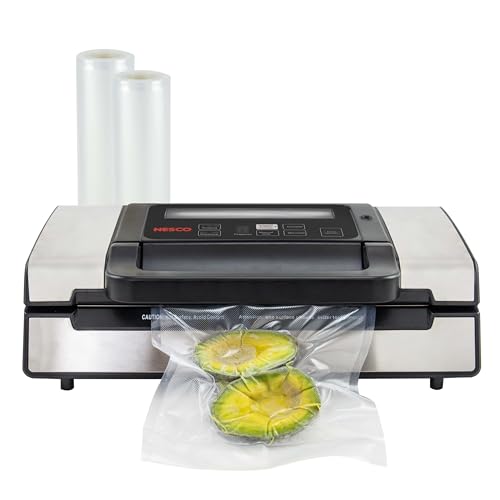
Nesco VS-12 — mid-tier countertop model with gentle handling
The Nesco VS-12 has built its reputation on control, in particular a gentler touch for delicate foods that stronger machines can crush before the seal forms. That matters more than it sounds: soft breads, ripe fruit, baked goods and fragile leftovers are exactly the foods casual sealers ruin first, and a machine that lets you temper the vacuum or pulse it manually turns those failures into routine successes. Its positioning is mid-tier, which fits its pitch — not the cheapest way to seal a bag, but a thoughtful one for varied diets.
Best for: households whose sealing habits match the mid-tier countertop model with gentle handling profile described above. Not suited for: buyers whose workload sits at the opposite extreme of that profile. This pick is presented prose-only in this draft, positioned in the mid-tier tier by description rather than by any fixed price.
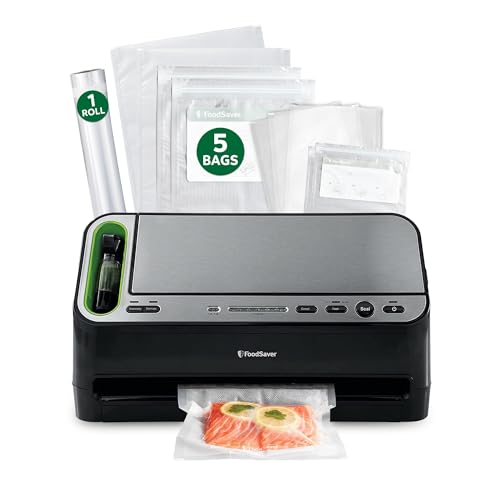
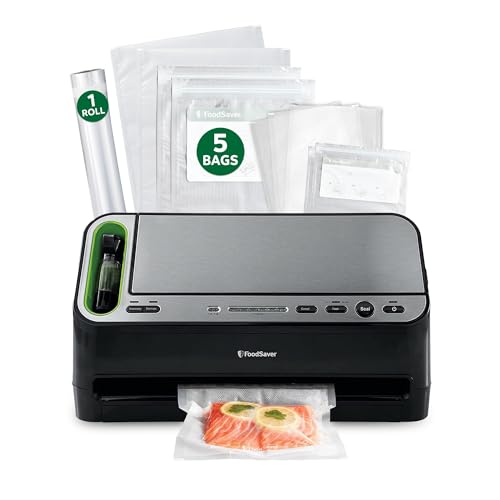
FoodSaver V4400 — premium-leaning countertop model
The FoodSaver V4400 is built around convenience for households that seal often and do not want to fuss with alignment on every bag. Its automatic approach to detecting a bag and starting the cycle suits people who process a full shopping trip in one sitting, moving from chicken portions to cheese to garden vegetables without breaking rhythm. In prose terms it sits toward the premium end of the countertop range, and that positioning buys ease rather than raw power: the appeal is a calmer, more repeatable routine for frequent users who value consistency over tinkering.
Best for: households whose sealing habits match the premium-leaning countertop model profile described above. Not suited for: buyers whose workload sits at the opposite extreme of that profile. This pick is presented prose-only in this draft, positioned in the premium-leaning tier by description rather than by any fixed price.
Setup and Care That Reduce the Cons
Cleaning and Looking After the Machine
A vacuum sealer’s maintenance list is mercifully short, but every item on it protects seal quality. The drip tray, where fitted, catches the liquid that escapes moist foods — empty and wash it after messy sessions rather than letting it become a science project. Wipe the sealing area and gaskets with a damp cloth once cool, because dried sauce on a gasket is tomorrow’s slow leak. Check the gaskets themselves occasionally for flattening or cracks; they are wear parts on many models, and a tired gasket mimics a dying pump with uncanny accuracy.
Storage care is equally plain: keep the lid unlatched or loosely closed if the maker advises it, so the gaskets are not compressed for months between uses, and store the machine dry. Bags and rolls keep best away from heat and sunlight, in the same drawer logic as the machine itself. None of this takes more than minutes a month, and it is the difference between a sealer that works like new in year three and one that mysteriously ‘lost suction’ — a complaint that, on inspection, is usually a dirty gasket wearing a disguise.
Delicate Foods and the Gentle Touch
Berries, sliced bread, leafy herbs, soft cakes, ripe avocado: the foods most likely to be crushed by an enthusiastic vacuum are also the foods we most hate to waste. The techniques are gentle ones. Pulse or manual controls let you stop the suction at the moment the bag snugs around the food rather than squeezing it. Pre-freezing firms berries and baked goods so they hold their shape under pressure. Rigid canisters and containers — used with the accessory hose many machines support — remove air around the food instead of pressing a bag against it.
Accept, too, that some delicate foods are simply better served by other storage. A paper-towel-lined container still wins for salad leaves; the freezer itself, in a plain rigid box, may beat a crushed sealed bag of muffins. Mature sealing practice is not sealing everything — it is knowing which foods gain from vacuum, which tolerate it with technique, and which should be left to simpler methods. That judgement, more than any machine feature, is what the experienced owners you meet in forums are actually describing when they praise their setup.
Bottom Line
The pros of vacuum sealing are structural — they arise from physics and from the shape of bulk food economics — and the cons are mostly managerial: costs to budget, space to allocate, technique to learn, safety rules to respect. Households whose lives generate the situations the pros address will find the cons trivially manageable. Households whose lives do not will find the pros theoretical. Decide which household is yours, and the pros-and-cons question answers itself.
Vacuum Sealer: Weighing the Trade-Offs in Daily Use
Start with how the strengths and frustrations of a {p} balance out in a real kitchen. Most coverage of a vacuum sealer concentrates on the first week of ownership, yet the decisions that matter most tend to surface later, once the vacuum sealer has to earn its place in an ordinary weekday routine rather than a carefully staged first attempt. Write down the three jobs you expect it to do most often, in the order you actually do them, and judge every claim you read against that short personal list instead of against a generic ideal.
Maintenance decides how long the good results last. Set a simple rhythm: a quick wipe or rinse after each use, a deeper clean on a fixed day, and a periodic check of the parts that move, seal or bear weight. A vacuum sealer that needs fiddly disassembly for basic care will be cleaned less often, and performance drifts long before anything actually breaks. Prefer designs where the parts that get dirtiest are the parts that are easiest to reach, and be honest with yourself about which cleaning steps you will genuinely keep up.
Edge cases deserve a deliberate pass. Think about the odd shapes, the thicker or thinner than usual loads, the leftovers, the second helping and the guest with different preferences. A well-chosen vacuum sealer handles the exceptions gracefully, or at least predictably, while a poor match turns every exception into a workaround. List your two or three most common exceptions in advance and check, from the manual or the listing details, that nothing about them is ruled out by size, shape, material or care requirements.
Troubleshooting is easier when you expect the usual failure points. With any vacuum sealer, the recurring problems tend to cluster in the same places: uneven results from overloading or poor arrangement, wear showing first on the parts handled most often, and small annoyances with lids, seals, handles, controls or fittings that only appear after repeated use. Before buying, look for whether those wear parts can be cleaned properly, replaced or worked around, and whether the instructions address them directly rather than pretending they never happen.
Measure before you commit. Note the footprint, the clearance above and behind the spot where the vacuum sealer will live, and the route you will carry it by when it is hot, full or awkward. A vacuum sealer that technically fits but blocks a cupboard door, crowds a neighbouring appliance or has to be dragged across a worktop every time will quietly fall out of use, whatever its merits on paper. In the Kitchen Appliances category especially, a few centimetres of clearance and a sensible storage plan separate a daily tool from a bulky regret.
Use a short decision checklist to finish. One, does it fit the space and the storage you really have. Two, does it handle your three most common jobs without a workaround. Three, do the edge cases you listed stay manageable. Four, can every wear part be cleaned or replaced without drama. Five, would you still choose it if a friend described the same drawbacks in their own kitchen. A vacuum sealer that passes all five is a sound buy; one that fails two or more is a compromise you are choosing with open eyes, which is a very different thing from being surprised later.
Frequently Asked Questions
What is the biggest disadvantage of a vacuum sealer?
For most households it is the combination of ongoing bag costs and the discipline the system quietly demands: portioning, labelling, rotating and checking seals. The machine itself is simple, but its savings only materialise inside those habits. A close second is false confidence — treating sealed food as shelf-stable when perishables still need refrigeration. Both disadvantages are manageable, but only by owners who know they exist before they buy.
Do vacuum sealers damage delicate food?
They can, if used carelessly: full suction will happily flatten bread, bruise berries and squeeze soft cheese. The mitigations are standard — gentle or pulse cycles stopped early, pre-freezing soft items until firm, and rigid evacuated containers for the most delicate refrigerator goods. With those techniques the damage risk becomes minor; without them, new owners learn the lesson on one loaf and rarely repeat it. It is a technique con, not a fatal flaw.
Are vacuum sealers noisy and slow to use?
They are audible — a pump drawing air makes a purposeful hum — and a single cycle takes a short, noticeable pause rather than an instant. In bulk sessions the cycles stack into tens of minutes of rhythm, with brief rests to let the sealing bar cool between seals. Most owners acclimatise within a week and build the rhythm into their routine; households sealing late at night beside sleeping children should simply schedule accordingly.
Is vacuum sealing safe for all foods?
No storage method is universal, and sealing has specific cautions: it does not sterilise food, perishables must still be refrigerated or frozen, raw meat needs strict hygiene and its bags must never be reused, and some foods have dedicated guidance of their own in food-safety references. Used inside those rules, sealing is a safe, well-established home practice. Used as a substitute for the rules, it creates exactly the false confidence this guide warns against.
Do the pros outweigh the cons for sous vide cooks?
Decisively, for most. Sous vide is not a marginal benefit of owning a sealer; the sealed bag is part of the cooking method itself, so the machine moves from storage accessory to essential equipment. Add marinating, portioning proteins ahead and freezing leftovers, and a sous vide household uses its sealer several times a week — the usage level at which bag costs and counter space are most easily justified. See our guide to how to choose a sous vide cooker for the other half of the pairing.
Can the cons be reduced after buying?
Most of them, yes. Bag costs fall with rolls, sensible formats and selective reuse of dry-goods bags. The learning curve flattens within a month of regular use. Space friction falls if the machine is given a genuine home rather than a cupboard exile. Noise and pacing become routine. The one con that cannot be reduced is the safety discipline — refrigeration, hygiene and honest dating are permanent features of the practice, and should be.
Related Guides and Next Steps
Vacuum sealing sits inside a wider food-storage system, and the guides below continue the same conversation from neighbouring angles — choosing, using, judging and reviewing the machines and the storage methods around them.
- how to choose a vacuum sealer
- how to use vacuum sealer
- is a vacuum sealer worth it
- vacuum sealer buying guide
- oxygen absorbers for food storage
- glass food storage containers
Going Deeper: Reading Your Own Kitchen
Consider the humble chicken thigh as a sealing classroom. Bought in a family pack, thighs vary in size, carry surface moisture and include bone edges that test a bag. Patting them dry, portioning two to a bag and smoothing the bag mouth flat teaches three core skills in one cheap exercise, and the frozen result — flat, labelled, quick to thaw under cold water — shows a new owner exactly why the machine exists. Most sealing confidence is built on exercises exactly this ordinary.
The accessory worth its drawer space, for many households, is a set of reusable containers the machine can evacuate. Crackers stay crisp, coffee stays aromatic, chopped salad components survive an extra day or two, and none of it involves cutting a new bag for a two-day job. Matching the tool to the timescale — bags for the freezer months, containers for the refrigerator days — is the mark of a mature setup, and it noticeably slows how fast you burn through bag stock.
In Practice: A Month With the Machine
Cheese teaches a different lesson: restraint. A hard cheese resealed after each use wants the air out and the pressure stopped before the bag starts squeezing moisture from the surface. Owners who learn to stop early — or to use a gentle cycle — keep a block pleasant for far longer than any wrap achieves, while owners who blast every cycle to maximum learn that more vacuum is not always more preservation. Judgement, again, is the feature no specification sheet can sell you.
A word about odours: vacuum bags are excellent but not perfect barriers over very long storage, and strongly flavoured foods will eventually perfume a freezer if their seals are imperfect. Double-bagging the truly pungent items, keeping the freezer itself clean, and grouping strong flavours together are the practical answers. The deeper answer is rotation — a freezer that turns over steadily never gives odours the months they need to become a personality trait of the appliance.
The Details That Decide Long-Term Satisfaction
Think about the bag as a piece of engineering rather than a consumable afterthought. Its textured channels are air highways during the cycle; its layered construction is the barrier that must survive months of freezer cold, sharp contents and handling. A bag that feels flimsy in the hand usually behaves flimsily in the freezer, and the saving on a bargain roll evaporates the first time a failed seam costs you a quality cut of meat. Buy bags the way you buy tyres: respectfully.
New owners often ask whether they should seal food before or after freezing, and the practical answer is: both, for different jobs. Seal-then-freeze is the default for raw portions and most cooked dishes. Freeze-then-seal suits liquids, soft fruits and anything whose shape or moisture would fight the cycle; a short freeze firms the food into a cooperative solid. Keeping both orders in your repertoire doubles the range of foods you can handle well, at the cost of one extra tray in the freezer.
Beyond the Basics: Habits of Happy Owners
There is a small ritual worth adopting on day one: the seal check. Hold every finished bag up, look along the seam for gaps, wrinkles or trapped moisture, and give the bag a gentle squeeze over the sink. Ten seconds per bag feels fussy in week one and invisible by week four, and it converts the freezer from a place of hopeful storage into a place of verified storage. Almost every ‘my sealer failed’ story told months later is, on inspection, a seal that was never checked.
Portion geometry is an underrated pleasure of the practice. Flat bags thaw in a fraction of the time a lump takes, slide into gaps in a packed freezer, and stack into tidy bricks that make inventory a glance rather than an excavation. Shaping a bag flat before it freezes — spreading mince evenly, arranging portions in a single layer — takes seconds and pays you back at every single thaw. It is the kind of detail that separates a freezer people brag about from a freezer people apologise for.
Putting It All Together in a Real Week
Freezing order matters more than most guides admit. Seal and freeze the most perishable items first, keep finished bags moving into the cold rather than accumulating on the counter, and never let a long session turn into a long queue of raw food warming gently beside the machine. This is the food-safety spine of the whole practice: the sealer works bag by bag, but your planning has to work session by session, with the refrigerator and freezer treated as destinations rather than afterthoughts.
When a household shares the machine, agree the house rules early: what gets sealed, how bags are labelled, where finished bags go, and which bags are never reused. Shared routines prevent the two classic domestic failures — the mystery bag nobody can identify, and the well-meant resealing of something that should have been thrown away. A marker pen living beside the machine does more for household food safety than any feature comparison in this guide.
Going Deeper: Reading Your Own Kitchen
The accessory worth its drawer space, for many households, is a set of reusable containers the machine can evacuate. Crackers stay crisp, coffee stays aromatic, chopped salad components survive an extra day or two, and none of it involves cutting a new bag for a two-day job. Matching the tool to the timescale — bags for the freezer months, containers for the refrigerator days — is the mark of a mature setup, and it noticeably slows how fast you burn through bag stock.
Travel and outdoor cooks find a second career for the sealer. Marinating meat sealed for the cooler travels without leaks, dry ingredients stay dry in damp conditions, and portioned meals for camping or boating pack flat and thaw predictably. Even non-food items join in: matches, first-aid supplies, spare batteries and emergency snacks all benefit from a waterproof, air-free package. A machine bought for the freezer often ends up serving the whole household’s logistics, which quietly strengthens its value case.
In Practice: A Month With the Machine
A word about odours: vacuum bags are excellent but not perfect barriers over very long storage, and strongly flavoured foods will eventually perfume a freezer if their seals are imperfect. Double-bagging the truly pungent items, keeping the freezer itself clean, and grouping strong flavours together are the practical answers. The deeper answer is rotation — a freezer that turns over steadily never gives odours the months they need to become a personality trait of the appliance.
Finally, keep perspective on pace. A vacuum sealer rewards households that adopt it as a rhythm — ten minutes after each big shop, an hour on a processing day — rather than as an occasional event. Like a good knife, it disappears into the routine until the routine would feel broken without it. If you reach that point, the purchase has succeeded in the only way that matters; if the machine is still in its box at month three, no feature list would have saved it, and the honest fix is a smaller machine in a better place.
The Details That Decide Long-Term Satisfaction
New owners often ask whether they should seal food before or after freezing, and the practical answer is: both, for different jobs. Seal-then-freeze is the default for raw portions and most cooked dishes. Freeze-then-seal suits liquids, soft fruits and anything whose shape or moisture would fight the cycle; a short freeze firms the food into a cooperative solid. Keeping both orders in your repertoire doubles the range of foods you can handle well, at the cost of one extra tray in the freezer.
Consider the humble chicken thigh as a sealing classroom. Bought in a family pack, thighs vary in size, carry surface moisture and include bone edges that test a bag. Patting them dry, portioning two to a bag and smoothing the bag mouth flat teaches three core skills in one cheap exercise, and the frozen result — flat, labelled, quick to thaw under cold water — shows a new owner exactly why the machine exists. Most sealing confidence is built on exercises exactly this ordinary.
Beyond the Basics: Habits of Happy Owners
Portion geometry is an underrated pleasure of the practice. Flat bags thaw in a fraction of the time a lump takes, slide into gaps in a packed freezer, and stack into tidy bricks that make inventory a glance rather than an excavation. Shaping a bag flat before it freezes — spreading mince evenly, arranging portions in a single layer — takes seconds and pays you back at every single thaw. It is the kind of detail that separates a freezer people brag about from a freezer people apologise for.
Cheese teaches a different lesson: restraint. A hard cheese resealed after each use wants the air out and the pressure stopped before the bag starts squeezing moisture from the surface. Owners who learn to stop early — or to use a gentle cycle — keep a block pleasant for far longer than any wrap achieves, while owners who blast every cycle to maximum learn that more vacuum is not always more preservation. Judgement, again, is the feature no specification sheet can sell you.
Putting It All Together in a Real Week
When a household shares the machine, agree the house rules early: what gets sealed, how bags are labelled, where finished bags go, and which bags are never reused. Shared routines prevent the two classic domestic failures — the mystery bag nobody can identify, and the well-meant resealing of something that should have been thrown away. A marker pen living beside the machine does more for household food safety than any feature comparison in this guide.
Think about the bag as a piece of engineering rather than a consumable afterthought. Its textured channels are air highways during the cycle; its layered construction is the barrier that must survive months of freezer cold, sharp contents and handling. A bag that feels flimsy in the hand usually behaves flimsily in the freezer, and the saving on a bargain roll evaporates the first time a failed seam costs you a quality cut of meat. Buy bags the way you buy tyres: respectfully.
Going Deeper: Reading Your Own Kitchen
Travel and outdoor cooks find a second career for the sealer. Marinating meat sealed for the cooler travels without leaks, dry ingredients stay dry in damp conditions, and portioned meals for camping or boating pack flat and thaw predictably. Even non-food items join in: matches, first-aid supplies, spare batteries and emergency snacks all benefit from a waterproof, air-free package. A machine bought for the freezer often ends up serving the whole household’s logistics, which quietly strengthens its value case.
There is a small ritual worth adopting on day one: the seal check. Hold every finished bag up, look along the seam for gaps, wrinkles or trapped moisture, and give the bag a gentle squeeze over the sink. Ten seconds per bag feels fussy in week one and invisible by week four, and it converts the freezer from a place of hopeful storage into a place of verified storage. Almost every ‘my sealer failed’ story told months later is, on inspection, a seal that was never checked.
In Practice: A Month With the Machine
Finally, keep perspective on pace. A vacuum sealer rewards households that adopt it as a rhythm — ten minutes after each big shop, an hour on a processing day — rather than as an occasional event. Like a good knife, it disappears into the routine until the routine would feel broken without it. If you reach that point, the purchase has succeeded in the only way that matters; if the machine is still in its box at month three, no feature list would have saved it, and the honest fix is a smaller machine in a better place.
Freezing order matters more than most guides admit. Seal and freeze the most perishable items first, keep finished bags moving into the cold rather than accumulating on the counter, and never let a long session turn into a long queue of raw food warming gently beside the machine. This is the food-safety spine of the whole practice: the sealer works bag by bag, but your planning has to work session by session, with the refrigerator and freezer treated as destinations rather than afterthoughts.
The Details That Decide Long-Term Satisfaction
Consider the humble chicken thigh as a sealing classroom. Bought in a family pack, thighs vary in size, carry surface moisture and include bone edges that test a bag. Patting them dry, portioning two to a bag and smoothing the bag mouth flat teaches three core skills in one cheap exercise, and the frozen result — flat, labelled, quick to thaw under cold water — shows a new owner exactly why the machine exists. Most sealing confidence is built on exercises exactly this ordinary.
The accessory worth its drawer space, for many households, is a set of reusable containers the machine can evacuate. Crackers stay crisp, coffee stays aromatic, chopped salad components survive an extra day or two, and none of it involves cutting a new bag for a two-day job. Matching the tool to the timescale — bags for the freezer months, containers for the refrigerator days — is the mark of a mature setup, and it noticeably slows how fast you burn through bag stock.
Beyond the Basics: Habits of Happy Owners
Cheese teaches a different lesson: restraint. A hard cheese resealed after each use wants the air out and the pressure stopped before the bag starts squeezing moisture from the surface. Owners who learn to stop early — or to use a gentle cycle — keep a block pleasant for far longer than any wrap achieves, while owners who blast every cycle to maximum learn that more vacuum is not always more preservation. Judgement, again, is the feature no specification sheet can sell you.
A word about odours: vacuum bags are excellent but not perfect barriers over very long storage, and strongly flavoured foods will eventually perfume a freezer if their seals are imperfect. Double-bagging the truly pungent items, keeping the freezer itself clean, and grouping strong flavours together are the practical answers. The deeper answer is rotation — a freezer that turns over steadily never gives odours the months they need to become a personality trait of the appliance.
Putting It All Together in a Real Week
Think about the bag as a piece of engineering rather than a consumable afterthought. Its textured channels are air highways during the cycle; its layered construction is the barrier that must survive months of freezer cold, sharp contents and handling. A bag that feels flimsy in the hand usually behaves flimsily in the freezer, and the saving on a bargain roll evaporates the first time a failed seam costs you a quality cut of meat. Buy bags the way you buy tyres: respectfully.
New owners often ask whether they should seal food before or after freezing, and the practical answer is: both, for different jobs. Seal-then-freeze is the default for raw portions and most cooked dishes. Freeze-then-seal suits liquids, soft fruits and anything whose shape or moisture would fight the cycle; a short freeze firms the food into a cooperative solid. Keeping both orders in your repertoire doubles the range of foods you can handle well, at the cost of one extra tray in the freezer.
Going Deeper: Reading Your Own Kitchen
There is a small ritual worth adopting on day one: the seal check. Hold every finished bag up, look along the seam for gaps, wrinkles or trapped moisture, and give the bag a gentle squeeze over the sink. Ten seconds per bag feels fussy in week one and invisible by week four, and it converts the freezer from a place of hopeful storage into a place of verified storage. Almost every ‘my sealer failed’ story told months later is, on inspection, a seal that was never checked.
Portion geometry is an underrated pleasure of the practice. Flat bags thaw in a fraction of the time a lump takes, slide into gaps in a packed freezer, and stack into tidy bricks that make inventory a glance rather than an excavation. Shaping a bag flat before it freezes — spreading mince evenly, arranging portions in a single layer — takes seconds and pays you back at every single thaw. It is the kind of detail that separates a freezer people brag about from a freezer people apologise for.