Disclosure: As an Amazon Associate, topratedkitchenware.com earns from qualifying purchases. Links on this page are affiliate links; they cost you nothing extra. Prices and availability change often, so check the current Amazon listing before you buy.
Countertop oven pros and cons are easy to list and surprisingly hard to weigh, because almost every item on both sides depends on your kitchen: the same wide chamber that delights a family of five is a counter-eating burden to a studio flat, and the same powerful heat that crisps so well demands clearance a small kitchen may not have. This page lays out the honest ledger — the genuine advantages of the countertop oven, argued properly rather than as marketing bullets, and the genuine disadvantages, without softening — then does the part most pros and cons pages skip: it translates the ledger into what it means for different households, sets the appliance against its real alternatives, and shows how smart buying and simple care habits shrink the cons column considerably. The verdict up front is this: for households that cook and reheat daily in small-to-medium quantities, the pros decisively outweigh the cons; for households with tiny counters, crowd-sized cooking or no patience for crumb trays, the cons are not footnotes but the whole story. Everything below exists to help you work out which household is yours.
Key Takeaways
- The core pro is versatility at speed: one always-ready appliance that toasts, bakes, roasts, air fries and reheats better than the alternatives.
- The core con is real estate: the oven plus its mandatory ventilation clearance claims serious counter, permanently.
- Reheating quality is the quiet superpower — leftovers return crisp instead of soggy.
- Capacity has a hard ceiling: big birds, big pans and multi-rack baking stay with the full oven.
- Heat is both sides of the ledger: it crisps your food and it demands clearance, distance from flammables and a heat-resistant surface.
- Most cons shrink with the right model and simple habits; the counter-space con never does — measure first.
Countertop Oven Pros and Cons: The Pros
One Appliance Replaces Several
The countertop oven’s first advantage is consolidation. A single chamber on the counter covers the work of a toaster, a small oven, a reheating appliance and — in air fryer oven form — most of a basket air fryer’s work as well. Consolidation matters beyond tidiness: one appliance to learn, one to clean, one footprint instead of three, and one purchase decision instead of a parade of gadgets each used monthly. Households that have lived with a counter of single-purpose machines consistently describe the countertop oven as the appliance that ended the clutter, because its repertoire is not a party trick but the actual list of things a kitchen does every day: toast in the morning, a tray at lunch, reheats and roasts at dinner. Versatility that gets used daily is worth more than specialisation that gets used weekly, and no other appliance on the counter can match this one’s breadth of genuine, everyday use.
Speed and Convenience That Change Habits
A small chamber preheats in a fraction of the time a full oven needs, and that single fact quietly rewires a kitchen’s habits. Jobs that felt like productions — roasting vegetables for two, baking a small batch of scones, crisping garlic bread to go with pasta — become casual, because the oven is ready almost before the prep is finished. Convenience compounds: food is visible through the door, controls are at counter height rather than at a bending crouch, and there is no heating a cavern to warm a portion. Owners frequently report cooking things at home they previously bought ready-made or skipped entirely, not because the countertop oven taught them new recipes but because it removed the friction from old ones. An appliance that lowers the activation energy of cooking improves a household’s diet in ways no feature list captures.
Reheating That Respects the Food
If the countertop oven has a superpower, this is it. Microwaves reheat by exciting water, which is why reheated pizza slumps, roast potatoes go leathery and fried food loses its reason to exist. A countertop oven reheats with dry heat, restoring crisp bases, re-crisping edges and melting cheese the way it melted the first time. The practical consequence is that leftovers stop being a penance and become a plan: cook once, eat twice, with the second meal genuinely worth eating. Households that batch-cook, households with teenagers grazing at odd hours, and households that simply hate waste all rate this advantage near the top of the pros column — and it is one no microwave, however advanced, can answer.
Real Cooking Performance in a Small Chamber
The countertop oven is not a toy oven. Convection models roast vegetables with deep caramelisation, crisp chicken skin, bake cookies and cakes properly, and air fry wings and chips to a standard that satisfies most households completely. The small chamber is part of the secret: hot air moves fast around the food, surfaces brown eagerly, and the whole system responds quickly. For the quantities it is designed for — a family’s tray, a couple’s casserole, a batch of baking — performance is not a diluted version of the full oven’s but frequently its equal, and on browning sometimes its superior. This is the pro that surprises sceptics most: people buy the appliance for convenience and stay for the cooking.
Efficiency and a Cooler Kitchen
Heating a small chamber instead of a large one uses less energy for the same meal and dumps far less waste heat into the room. In summer, or in a small flat, that difference is not a footnote but a transformation: dinner no longer requires heating the kitchen itself. The efficiency argument extends to time as a resource — faster preheats and slightly faster cooks on many dishes — and to the full oven’s lifespan, which is spared hundreds of small jobs a year. None of this makes the countertop oven free to run, and large loads that force multiple batches belong in the big oven on efficiency grounds too; but for its designed quantities, the physics are firmly on its side.
Capacity Where It Counts, in a Format You Can Watch
Against its closest rival, the basket air fryer, the countertop oven’s tray format is a genuine advantage: a whole family batch in a single layer, no shaking a drawer, no cooking in relay, and a window to watch browning happen instead of guessing at it. Against the full oven, its capacity is smaller but honestly sized for daily life — most oven jobs in most households are one tray or one dish. The format also accepts the kitchen’s existing language of pans, casseroles and baking dishes in a way basket fryers cannot, which makes recipes transfer without translation. Capacity, in other words, is a pro when measured against real meals rather than holiday fantasies.
Accessibility and Ease for Every Cook
A countertop oven sits at counter height, opens at counter height and is operated at counter height — no bending into a hot cavern, no lifting a heavy dish from below knee level, no peering into darkness. For older cooks, cooks with limited mobility, and anyone supervising children learning to cook, that ergonomics is a real and underrated advantage. Controls at the simple end need no learning at all, and even the guided digital models are kinder than a modern range’s touch panel. The appliance is, in the best sense, approachable — which is part of why it gets used so much.
In this guide
The Cons
It Claims Serious Counter Space — Plus Clearance
The first con is the one that cannot be argued away. A countertop oven lives permanently on the counter — storing it between uses would destroy its convenience — and its true footprint is larger than its base, because the manufacturer specifies ventilation clearance at the sides, at the back and above that must stay empty for the life of the appliance. In a generous kitchen that is a fair trade. In a small one, the oven competes with the chopping board, the kettle and the only workspace there is, and something has to lose. Buyers who measure the box but not the clearance discover this con on delivery day, which is why every guide in this cluster repeats the same instruction: measure the space the manual demands, not the space the box occupies.
The Capacity Ceiling Is Real
What fits is wonderful; what does not fit is absolute. Large birds, the biggest sheet pans, tall celebration cakes, multi-rack baking and holiday volume all remain the full oven’s work, and no countertop oven — however wide, however premium — changes that. Households that regularly cook for crowds will find the appliance a useful deputy and a frustrating commander. There is also a subtler ceiling: even within capacity, the chamber’s geometry means food sits close to elements, so delicate bakes need rack discipline and sometimes shielding, and very tall dishes have fewer safe positions than in a big oven. The ceiling is not a flaw in any model; it is the format’s physics, and it should be priced into the decision.
It Runs Hot, and the Kitchen Must Respect That
The exterior of a working countertop oven gets hot — hottest on top — and the air from its vents is hotter still. That heat is a standing condition of ownership: nothing can be stored on top of the machine, nothing flammable can live beside it, curtains and towels and paper must be kept away, the surface beneath must tolerate heat, and under-cabinet placement needs the specified gap or the cabinet suffers. Households with small children must plan placement with hob-level seriousness. None of this is dangerous when respected — these are among the most common appliances in the world — but it is a permanent discipline, and kitchens that cannot offer the clearance and the respect should not host the appliance at all.
Cleaning Is a Chore That Cannot Be Skipped
Crumbs fall in a toaster oven by design, grease splatters in any oven by physics, and in a small chamber both accumulate close to the elements. The result, if neglected, is an oven that smokes, smells, browns unevenly and eventually becomes a genuine fire risk — the one con on this list with a safety edge. The routine itself is not heavy: crumb tray emptied often, interior wiped when cool, racks washed before residue bakes on. But it is forever, and it is non-negotiable in a way that, say, a microwave’s occasional wipe is not. Honest self-assessment belongs in the buying decision: a household that will not keep the routine should weight easy-clean design heavily, and a household that knows it will not clean at all should not buy a countertop oven.
Air Frying Is Very Good — and Still Second Best
The oven format air fries convincingly, but the dedicated basket fryer keeps a small, real edge in ultimate crisping intensity for small batches, thanks to its compact high-velocity airflow and shakeable basket. Oven owners also find that tray-format air frying wants the food in a single layer with space between pieces, so the headline capacity shrinks in this mode. For most households the difference is academic; for crunch perfectionists who air fry daily in small quantities, it is the deciding fact, and they should buy the basket and accept its narrower repertoire with open eyes.
Evenness and Accuracy Vary by Tier
The category’s budget end makes honest compromises: dial thermostats that run a little hot or cool until learned, browning that stripes slightly on toast, thinner insulation that leaves the shell hotter and the chamber less steady. Premium models largely engineer these away, which means the pros column is at its fullest at the top of the market and somewhat abridged at the bottom. Buyers should therefore read generic praise — including this page’s — as describing the format’s potential, and check the specific model’s tier for how much of that potential it delivers. The model-level judgements are in countertop oven reviews.
Less Food Waste, Better Leftovers Culture
A quieter pro follows from the reheating one: when leftovers are genuinely good the second time, households waste less food. Portions get saved deliberately rather than scraped away, batch cooking becomes practical for small households, and the odds and ends of a roast reappear as a crisped, appetising lunch instead of a sad one. It is difficult to put a figure on this advantage and this page will not invent one, but owners mention it unprompted often enough that it belongs in the ledger. An appliance that makes yesterday’s food worth eating changes a kitchen’s economics as surely as one that cooks today’s food faster.
Noise, Light and General Presence
A minor con that surprises buyers who expected a silent box: a countertop oven announces itself. The convection fan hums through every roast and air fry, elements click as they cycle, timers chime, and on digital models a bright display joins the kitchen’s constellation of standby lights. In an open-plan home where the kitchen shares air with the living room, the fan’s working note is part of the soundscape of dinner. Premium models are noticeably more civilised in this respect, which is one of the quieter things the premium tier buys. None of this troubles most owners after the first week — kitchens are not silent places — but in a studio flat where the oven sits metres from the sofa and the bed, presence is a legitimate line in the ledger, and it points, again, toward the smaller and simpler end of the class.
It Is One More Appliance Competing for the Socket and the Budget
A small con, honestly stated: the countertop oven duplicates capability most kitchens already own. The range can bake the tray; the microwave can warm the portion; the toaster can toast. What the countertop oven sells is doing all of it better, faster or more conveniently — which is a real value, but a value each household must price against its own habits and its own counter. Households that rarely use any oven function are buying a large, warm ornament, and the money and space would serve them better elsewhere. The full value examination is in is a countertop oven worth it.
The Pros and Cons by Tier
The ledger is not identical at every price point, and pretending otherwise would make this page less honest. At the entry tier, the pros arrive in their simplest form — toast, reheats, consolidation — and the cons arrive at full strength: the least even cooking, the hottest shells, the most approximate controls, and the same space claim as any other model, which is why the entry tier only makes sense where space is genuinely available and needs are genuinely small. At the value tier, convection joins the pros and the cooking becomes respectable, while the accuracy and finish cons soften from facts to tendencies. The mid tier is where the ledger balances best for most households: the full versatility pro, credible air frying, digital repeatability against the accuracy con, interiors that clean without heroics — with the space, capacity and cleaning cons present but unremarkable. At the premium tier, the performance cons are largely engineered away: evenness, steadiness, insulation and finish all improve, and what remains is the irreducible core of the cons column — counter, clearance, capacity ceiling, crumb tray — which no tier can remove because they belong to the format itself.
That last point is the most useful sentence in this section. Shoppers often hope a more expensive model will solve the category’s disadvantages wholesale; in truth, money solves the performance disadvantages and cannot touch the physical ones. So the tier decision and the format decision are separate: first decide whether your kitchen accepts the format’s physical terms, then decide how much performance refinement your cooking frequency justifies. Buyers who reverse that order — falling for a premium model before auditing their counter — are the ones who return beautiful ovens.
How the Balance Shifts Over Time
Pros and cons pages are usually written as if the balance were fixed, but owners experience it as a curve. In the first week, the pros dominate the experience: the speed, the reheats, the novelty of watching food brown at counter height. The cons that appear early are the learning ones — a dial to calibrate, a rack position to discover, one batch of toast sacrificed to science. By the third month, the appliance has either become infrastructure or become an obstacle, and the deciding factors are almost never cooking performance. They are placement and routine: whether the clearance zone stayed clear or filled with clutter that must be moved at every use, whether the crumb tray became a rhythm or a resentment, whether the counter it claimed turned out to be counter the household actually needed for prep. This is why the pros and cons that matter most are the boring physical ones, and why this page has weighted them so heavily.
Over years, the balance shifts once more, toward durability and support. The household that bought an established model with replaceable trays and racks finds its oven ageing gracefully; the household that bought the cheapest possible box finds small failures — a tired door, a worn tray, a fading dial — compounding into replacement. None of this appears on a specification sheet, and all of it appears in owner forums, which is why the final buying advice in this cluster’s guides keeps returning to the same unglamorous trio: buy the format only if your counter accepts it, buy the tier your frequency justifies, and buy the brand whose parts and support will still exist when you need them.
What the Trade-Offs Mean for You
The ledger reads differently through different kitchens, so here is the translation. For the daily-cooking household — trays, casseroles, reheats, weekend baking — the pros land at full weight and the cons reduce to a cleaning routine and a measured corner of counter: buy with confidence, mid tier or above. For the baker specifically, the ledger narrows to two lines: the evenness pro, which decides whether the appliance is a real baking tool, and the capacity con, which decides how much of the baking life fits inside it; bakers should buy the premium end or accept the full oven’s continued reign over large bakes, because a mid-tier compromise pleases this profile least. For the small household in a small kitchen, the calculus inverts: capacity pros shrink, the space con grows teeth, and the right answer is often the compact end of the class or a good basic toaster oven, bought deliberately rather than as a consolation. For the family that entertains and cooks at volume, the countertop oven is a deputy, not a replacement — its pros are real but supplementary, and it should be bought after the main oven’s needs are met. For the crisp-food household, the deciding question is batch size: family trays favour the oven, small-batch perfectionism favours the basket fryer, and some households honestly keep both, using each where it wins. For the low-maintenance household, the cleaning con is the headline: either commit to the routine and an easy-clean interior, or let the category pass. Notice that in every profile the decision turns on two or three items from the ledger, never the whole list — which is why weighing, not counting, is the right way to read pros and cons.
The Alternatives in Context
| Option | Where it wins | Where the countertop oven wins |
|---|---|---|
| Full-size oven | Capacity, big roasts, multi-rack baking | Speed, efficiency, reheating, summer comfort |
| Basket air fryer | Maximum crisping in small batches, smaller footprint | Capacity per batch, versatility, visibility, real baking |
| Microwave | Raw reheating speed, liquids, defrosting | Texture, browning, crispness — everything quality-related |
| Basic toaster | Smallest footprint, lowest tier, toast only | Everything beyond toast |
The table’s lesson is that the countertop oven rarely replaces any of these outright; it rebalances a kitchen toward the jobs it does best. Most satisfied owners run a partnership — range for scale, microwave for speed, countertop oven for the broad middle of daily cooking — and the households that expect it to be the only appliance are the ones who meet its cons at full strength. The format comparisons are explored further in the best air fryers toaster oven guide and our best air fryers guide.
How to Buy Smart
Buying smart means choosing the model whose cons you can live with, because the pros are broadly shared. Check the current Amazon listing when you buy. Read them with your own ledger weights in hand: if the space con dominates your thinking, read from the bottom of the list upward; if performance cons worry you, read from the top down; if cleaning is your headline, weigh the interior finishes described here and in the model reviews most heavily of all. The right model is rarely the one with the longest pros column — it is the one whose cons column contains nothing your household will still be complaining about in a year.
Breville Smart Oven Air Fryer Pro
The premium answer to the evenness and accuracy cons: the class’s most even cooking, best baking and easiest-cleaning interior, at a premium tier and a large footprint. Buys down the performance cons, keeps the space con in full. Best for: daily cooks and bakers. Not suited for: tight counters.
On the pros side of its personal ledger, add the broadest function range in the group and a build quality that makes the cleaning and durability cons the mildest here. Its owners’ complaints, when they come, are almost purely about size — which is the con this page has told you to settle with a tape measure before any money moves.

Ninja Foodi XL Prestige Countertop Oven
The family answer to the capacity con within the format: wide trays, fast work, strong air frying. Its own version of the space con is width. Best for: families cooking tray meals. Not suited for: short counter runs.
Its personal pros emphasise rhythm: dinner for a family in one layer, at speed, with presets that remove daily friction. Its personal cons are a fan with presence and baking that is good rather than distinguished — a fair trade for its audience, and a poor one for a household of two, which would be buying width it cannot use.

Cuisinart TOA-65
The balanced answer: digital repeatability against the accuracy con, full versatility, family capacity in a moderate footprint. The cleaning con applies at full strength — keep the routine. Best for: most couples and small families. Not suited for: anyone wanting top-tier finish.
Its ledger is the category’s ledger in miniature, which is precisely its recommendation: no pro exaggerated, no con hidden, everything at the level a mainstream household actually experiences. If reading this page has left you thinking the balance sounds acceptable, this is the model whose balance you were picturing.

Instant Omni Plus
The guided answer: presets and a clear display shrink the learning curve, air frying is a strength, capacity is family-sized. Best for: preset-guided cooks and Instant households. Not suited for: dial traditionalists.
Add to its pros that it brings less confident cooks up to good results fastest of any model here — an accessibility pro with real household value. Its distinctive con is menu complexity for cooks who would rather turn a dial, which is a temperament mismatch rather than a defect, and easily avoided by choosing its rival instead.
Hamilton Beach Countertop Oven
The value answer: the core pros — consolidation, speed, reheating — at a value tier, with the accuracy con present in mild, learnable form. Best for: value-first buyers and second ovens. Not suited for: precision baking.
Its ledger is the easiest to summarise on this page: nearly all of the format’s everyday pros, most of its everyday cons softened or unchanged, and a tier that forgives the experiment. As a first countertop oven — the purchase that tells a household whether the category suits its life — it may be the smartest money here.
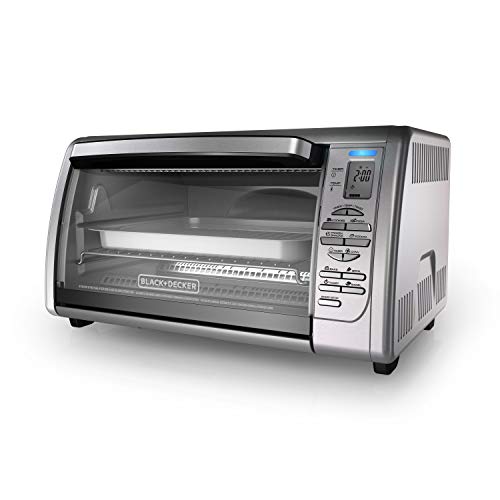
BLACK+DECKER Toaster Oven
The small-space answer: it shrinks the space con to the minimum and keeps the reheating and toast pros, at the cost of the capacity and versatility pros. Best for: one or two people with simple jobs. Not suited for: family cooking. The crossover alternatives are in the best air fryers that toast, and the classic format’s wider field is in the best toaster ovens roundup.
Its inclusion in a pros and cons page about countertop ovens is deliberate: it demonstrates that the ledger is a dial, not a switch. Trade away the cooking pros you do not need and the space con — the biggest one — shrinks with them. Many households’ correct answer sits somewhere on that dial rather than at either end of it.
Myths on Both Sides
An honest ledger should also clear out the entries that do not belong in either column. On the pro side, the persistent myth is that a countertop oven will replace the full oven entirely; for most households it replaces most uses, and the difference matters at holidays, with big pans and with batch baking — buyers who believe the myth meet the capacity con as a betrayal rather than a fact. A second myth promises that air fryer ovens make fried food healthy by magic; they cook with far less oil than deep frying, which is a genuine benefit, but the food is the food, and the oven changes the method, not the ingredients. A third myth sells function counts — a dozen presets as a dozen advantages — when in practice households use four or five modes for years.
On the con side, the myths are equally durable. The claim that countertop ovens cannot really bake is a generation out of date: modern convection models bake credibly and premium ones bake well, as any of the baking households in this category will testify. The claim that they are inherently dangerous inverts the truth — they are powerful heating appliances with clear, standard precautions, in the same family as the oven and hob every kitchen already runs. And the claim that they are a fad, due to vanish like other countertop novelties, underestimates how completely the format has absorbed the toaster oven, the reheating role and much of the air fryer’s: categories that eat three other categories do not tend to disappear. Clearing the myths matters because decisions made on them are wrong in both directions — ovens bought for magic disappoint, and ovens refused for superstition leave real advantages unclaimed.
The Ledger in Special Situations
Some kitchens bend the ledger in ways worth naming separately. Renters often find the pros amplified: a countertop oven upgrades a landlord’s tired range without touching anything permanent, travels to the next home, and in flats where the main oven is small, old or unreliable, it can quietly become the primary oven. The con to check is the tenancy one — the surface and clearance rules still apply, and a heat-marked worktop is a deposit argument nobody needs. Students and first-apartment cooks meet a different balance: the entry tier’s simple pros — toast, reheats, basic bakes — arrive at a tier that suits a first budget, and the capacity cons barely register at that household size; the discipline cons, clearance and crumbs, are the ones to take seriously in shared and small spaces. Holiday homes, cabins and RVs weight portability and self-sufficiency: a countertop oven can be the only real oven in the building, which promotes capacity and versatility to the top of the pros column and makes the mid-size band the natural choice. Offices and staff kitchens value the reheating pro above all and should weight simple controls and easy cleaning, because shared appliances are cleaned by whoever cares most, which argues for the most wipeable interior the tier allows.
The pattern across all four situations is the one this page has argued throughout: the ledger’s items are stable, but their weights are set entirely by the kitchen in front of you. Anyone selling you a universal verdict — in either direction — is selling you their kitchen’s answer as if it were yours.
Setup and Care That Reduce the Cons
Several cons are partly self-inflicted, and the habits that shrink them are simple. The space con shrinks with honest measuring before purchase — oven plus clearance, on the actual counter, checked against cabinets — and with choosing the smallest size band your meals allow. The heat con shrinks with placement discipline: the manufacturer’s clearance kept clear for life, nothing stored on top, flammables — paper, towels, curtains, wooden utensils, packaging — kept away from the shell and vents, a heat-resistant surface beneath, and fatty foods watched rather than abandoned at high heat. The cleaning con shrinks to minutes with rhythm: crumb tray out and emptied on a weekly beat, a wipe of the cool interior after fatty cooks, racks into the sink before residue sets, and the door glass kept clean enough to cook by sight. The evenness con shrinks with technique: correct rack positions, trays rotated in long cooks, a foil shield for delicate tops, and an oven thermometer’s knowledge of your own machine. The full cleaning method is in how to clean a countertop oven, and the choosing method is in how to choose a countertop oven. What no habit can shrink is the capacity ceiling and the counter claim themselves — those two are decided at purchase, which is why they dominate this page’s advice.
Bottom Line
Weighed rather than counted, the countertop oven’s pros describe a genuinely better way to do most everyday cooking, and its cons describe the price: counter, clearance, capacity limits and a cleaning rhythm. Households that can pay that price get one of the hardest-working appliances in the kitchen; households that cannot should pass without regret, because the cons are structural, not fixable by a cleverer model. Decide with your tape measure and your honest cooking diary, and the ledger will not mislead you. If it helps, run the final check as three questions. Does my counter offer the oven and its clearance without costing me the workspace I cook on? Do my three most common oven jobs fit its chamber in my own pans? Will I empty a crumb tray and wipe an interior without resentment? Three yeses mean the pros column is yours to enjoy; any no deserves a smaller model, a different format, or a pass — and each of those is a successful outcome of reading a pros and cons page properly. The step-by-step buying method is in the countertop oven buying guide, and the category’s cooking is reviewed in the countertop oven review.
Countertop Oven: Weighing the Trade-Offs in Daily Use
Start with how the strengths and frustrations of a {p} balance out in a real kitchen. Most coverage of a countertop oven concentrates on the first week of ownership, yet the decisions that matter most tend to surface later, once the countertop oven has to earn its place in an ordinary weekday routine rather than a carefully staged first attempt. Write down the three jobs you expect it to do most often, in the order you actually do them, and judge every claim you read against that short personal list instead of against a generic ideal.
Work through a realistic scenario, not a best case. Picture the busiest version of the job: more people to serve, less time than planned, ingredients or materials that are slightly out of the ordinary, and a clean-up waiting at the end. Ask how the countertop oven behaves at that upper edge, because a model that only shines on a small, simple load will disappoint precisely when you need it most. If the honest answer is that you would split the job into batches or fall back on an older method, factor that into the decision now rather than discovering it later.
Finally, plan the first fortnight deliberately. Use the countertop oven for one familiar job first, so you have a baseline you trust, then introduce the harder cases one at a time and note what changes. Small adjustments to arrangement, timing, quantity or preparation usually close most of the gap between disappointing first results and the performance the design is capable of. That short learning period is also the fairest test of the trade-offs that only show up after weeks of use: if the routine has not settled by the end of it, the mismatch is real, and it is better to know while returning or exchanging is still straightforward.
When you check listings such as Breville Smart Oven Air Fryer Pro, Ninja Foodi XL Prestige Countertop Oven and Cuisinart TOA-65 Digital AirFryer Toaster Oven, use them as worked examples: run through the same checks below on each one in turn, so the comparison stays honest and like for like rather than based on whichever listing happens to shout loudest.
Measure before you commit. Note the footprint, the clearance above and behind the spot where the countertop oven will live, and the route you will carry it by when it is hot, full or awkward. A countertop oven that technically fits but blocks a cupboard door, crowds a neighbouring appliance or has to be dragged across a worktop every time will quietly fall out of use, whatever its merits on paper. In the Kitchen Appliances category especially, a few centimetres of clearance and a sensible storage plan separate a daily tool from a bulky regret.
Troubleshooting is easier when you expect the usual failure points. With any countertop oven, the recurring problems tend to cluster in the same places: uneven results from overloading or poor arrangement, wear showing first on the parts handled most often, and small annoyances with lids, seals, handles, controls or fittings that only appear after repeated use. Before buying, look for whether those wear parts can be cleaned properly, replaced or worked around, and whether the instructions address them directly rather than pretending they never happen.
Maintenance decides how long the good results last. Set a simple rhythm: a quick wipe or rinse after each use, a deeper clean on a fixed day, and a periodic check of the parts that move, seal or bear weight. A countertop oven that needs fiddly disassembly for basic care will be cleaned less often, and performance drifts long before anything actually breaks. Prefer designs where the parts that get dirtiest are the parts that are easiest to reach, and be honest with yourself about which cleaning steps you will genuinely keep up.
Edge cases deserve a deliberate pass. Think about the odd shapes, the thicker or thinner than usual loads, the leftovers, the second helping and the guest with different preferences. A well-chosen countertop oven handles the exceptions gracefully, or at least predictably, while a poor match turns every exception into a workaround. List your two or three most common exceptions in advance and check, from the manual or the listing details, that nothing about them is ruled out by size, shape, material or care requirements.
Use a short decision checklist to finish. One, does it fit the space and the storage you really have. Two, does it handle your three most common jobs without a workaround. Three, do the edge cases you listed stay manageable. Four, can every wear part be cleaned or replaced without drama. Five, would you still choose it if a friend described the same drawbacks in their own kitchen. A countertop oven that passes all five is a sound buy; one that fails two or more is a compromise you are choosing with open eyes, which is a very different thing from being surprised later.
One more check worth doing with any countertop oven is to read the care and safety instructions in full before the first use, not after the first problem. The manual for a countertop oven usually states plainly which materials, loads and cleaning methods are off limits, and most early disappointments trace back to a line in those pages that was skimmed. Five minutes with the instructions is the cheapest performance upgrade available in the whole Kitchen Appliances category.
Frequently Asked Questions
What is the biggest advantage of a countertop oven?
Versatility at speed: one appliance, always ready on the counter, that toasts, bakes, roasts, air fries and reheats to a standard that replaces several other machines and most everyday use of the full oven. Owners tend to name two runners-up close behind — reheating quality that rescues leftovers, and preheat speed that makes small cooking jobs feel effortless. Together the three explain the category’s hold on its owners: it is not that any single function is miraculous, but that the whole of daily cooking gets a little faster, a little better and a little easier in one move. There is also a compounding effect worth naming: because the appliance is always out and always ready, it gets used for jobs that would otherwise default to the microwave or the takeaway menu, so the advantage grows with the habit it creates. The best appliance feature, in the end, is the one that changes what a household does on an ordinary Tuesday — and by that measure this category’s lead advantage earns its place at the top of the pros column.
What is the biggest disadvantage?
Counter space, including the ventilation clearance the manufacturer requires around it — because that cost is permanent, is paid by every owner regardless of tier, and cannot be reduced by spending more. Capacity limits come second: the format will never host the largest roasts or multi-rack baking. Cleaning discipline is third, and it is the disadvantage most within the owner’s control. Notably, the biggest disadvantage is also the most knowable in advance: a tape measure and an honest look at your kitchen tell you before purchase whether it will bite, which is more than can be said for most appliance regrets.
Is a countertop oven better than an air fryer?
Better at breadth, slightly behind on one speciality. The countertop oven bakes, roasts, toasts, reheats and air fries, in family-sized single layers, with a window to watch — a far wider repertoire. The basket air fryer crisps small batches a touch more intensely and takes less counter. Households that mostly air fry small amounts should favour the basket; households that cook varied meals in family quantities should favour the oven; and households that do both at volume sometimes keep both, using the oven as the main instrument and the basket as the crisping specialist. Better, in this comparison, is a question about your menu, not about the machines.
Do countertop ovens use a lot of electricity?
They draw serious power while running, as any oven does, but they run for less time on a smaller space: fast preheats, quicker cooks on everyday quantities, and no heating a large empty cavity. For their designed jobs that makes them economical relative to the full oven; for oversized loads run in repeated batches, the advantage disappears. This page avoids invented figures because tariffs and habits vary, but the structural rule is dependable — match the appliance to the meal size and you will be on the efficient side of the comparison almost every time.
Are countertop ovens safe?
Yes, when used as their manuals direct — which is the only honest form of the answer for any powerful heating appliance. The conditions are concrete: the specified ventilation clearance kept clear, a heat-resistant surface, nothing flammable near the shell or vents, nothing stored on top, fatty foods not left unattended at high heat, and a crumb tray emptied regularly so debris cannot smoulder near the elements. Millions of households meet those conditions without thinking about them, in the same way they run a hob or a full oven without incident every single day of the year. A countertop oven treated casually — wedged into clutter, crumb tray forgotten, towels draped nearby — is a different proposition, and the difference is the owner’s habits, not the appliance.
Who should not buy a countertop oven?
Four households, mainly. Those whose counters genuinely cannot offer the oven plus its clearance without losing the workspace they cook on. Those who regularly cook at crowd scale, for whom it can only ever be a deputy bought too early. Those whose cooking barely involves an oven at all — stovetop and microwave households whose only oven job is toast, where a simple toaster oven or toaster covers life. And those who know they will not empty a crumb tray or wipe an interior, because the format punishes neglect more honestly than most appliances. Everyone else is a plausible owner; those four are better served spending elsewhere.
Related Guides
Continue with the countertop oven buying guide, is a countertop oven worth it and countertop oven reviews, plus the live roundups: the best convection ovens and the best smart ovens.