Disclosure: topratedkitchenware.com is reader-supported. When you buy through links on our site, we may earn an affiliate commission from Amazon and other retailers, at no extra cost to you.
Where to buy
These are the verified picks for this guide to best alternaticmve down blankets. Each linked name takes you to its Amazon listing, where you can check the latest price on Amazon, confirm the current size and colour, and read the newest owner feedback before you decide. Prices and availability move, so the listing, not this page, is the final word on both. Read the full guide ↓
- Bedsure Fleece Bed Blanket, Queen Size, Grey — Check on Amazon
- Utopia Bedding Soft Warm Fleece Bed Blanket, Queen Size, Grey
- Bedsure Soft Queen Size Blanket for Bed, Beige
- Bedsure GentleSoft Sherpa Fleece Blanket, Queen Size, Navy
- Bedsure Fleece Blanket, Queen Size, Cream
- Utopia Bedding Soft Warm Fleece Bed Blanket, Queen Size, Navy
Shoppers typing best alternaticmve down blankets usually want one simple thing: the warmth and softness people associate with a down blanket, without the down itself. The reasons vary. Some households avoid animal fillings altogether. Some find down too warm, too rustly, or too fussy to wash. Some have lived with a down layer that shed feathers through the stitching and swore never again. Whatever the reason, the practical alternative most people land on is a well-made synthetic fleece bed blanket: no fill to shift or leak, nothing to fluff back into place, and a fabric you can put through an ordinary wash cycle at home.
That is exactly the category this guide covers. Every pick below is a queen-size fleece or sherpa-fleece bed blanket that does the job a down blanket would have done in the layering system — the middle layer over a top sheet and under a duvet or comforter, or the single layer on milder nights — while being simpler to live with. If you are comparing across blanket types more broadly, our notes on Best And Softest Blankets are a useful companion read.
One honesty note before the picks. A fleece blanket is not a filled down-alternative comforter. It has no lofted chambers and no fill weight, so it will not puff up the way a comforter does. What it offers instead is consistent, even warmth with no cold spots where fill has migrated, a lighter feel on the bed, and far easier care. For a great many sleepers, especially in heated homes and in spring and autumn, that trade is the right one. The six picks below were chosen to cover the realistic range: an all-round first choice, a value pick, a guest-room option, a genuinely warm sherpa for cold sleepers, a light layer, and a versatile second colourway of a proven design.
Key Takeaways
- Fleece and sherpa-fleece blankets are the simplest down-free alternative: no fill, no feathers, no special washing routine.
- All six picks are queen size at 90×90 inches, so each one covers a queen bed with drape to spare and can fold down for a full bed.
- The sherpa pick is the warmest by a clear margin; the plain fleece picks are the better all-season and layering choices.
- Warmth here comes from fabric weight and pile, not fill power — judge these by how your bedroom actually feels at night, not by comforter logic.
- Every pick is a research-led recommendation; check the listing for the current colour range and care label before ordering.
In this guide
Quick Picks
| Pick | Badge | Why it stands out |
|---|---|---|
| Bedsure Fleece Bed Blanket, Queen Size, Grey | Best Overall | A full queen-size fleece bed blanket in a neutral grey that layers cleanly over sheets in any season. |
| Utopia Bedding Soft Warm Fleece Bed Blanket, Queen Size, Grey | Best Value Pick | Breathable microfiber fleece in queen size, positioned as one of the lower-cost designs in this class. |
| Bedsure Soft Queen Size Blanket for Bed, Beige | Best for Guest Rooms | A soft, fluffy beige queen blanket that reads as bedding rather than a throw, and is machine washable. |
| Bedsure GentleSoft Sherpa Fleece Blanket, Queen Size, Navy | Best for Cold Sleepers | The thickest, warmest option here: sherpa fleece weight for winter nights, in a deep navy. |
| Bedsure Fleece Blanket, Queen Size, Cream | Best Light Layer | A light cream fleece that brightens a bed and works as the layer you add or remove first. |
| Utopia Bedding Soft Warm Fleece Bed Blanket, Queen Size, Navy | Most Versatile | The navy twin of the value pick: same breathable microfiber fleece, a colour that hides wear between washes. |
How These Picks Were Chosen
We built this shortlist by comparing synthetic bed blankets that could honestly stand in for a down blanket in everyday use. That meant full bed sizes first — a couch throw cannot replace a bed blanket — so every pick here is a queen at 90×90 inches. We then compared fabric constructions: plain fleece for breathable, even warmth; brushed soft finishes for sleepers who care most about surface feel; and sherpa fleece for maximum warmth. Products were confirmed against the verified pool for this guide, and the details in each spec box come only from the verified listing information for that product.
We also weighed the ownership side, because that is where down alternatives win or lose. Can you wash it at home? Does the colour work with ordinary bedding? Does it layer without sliding off a duvet? Blankets that only made sense as decorative throws were left out. This is a research-based guide, not a hands-on lab test: we do not claim to have slept under all six, and where a pick has a real limitation — fleece can pill over time, sherpa is too warm for summer — we say so in its review rather than burying it. Readers who are also weighing heated options will find a different angle in Best And Safest Electric Blankets, and readers set on natural-fibre bedding should know upfront that every pick here is synthetic, chosen deliberately for easy care.
The 6 Best Alternaticmve Down Blankets

Bedsure Fleece Bed Blanket, Queen Size, Grey
Badge: Best Overall
Strengths
- True bed-blanket coverage at 90×90 inches, with enough drape to tuck or fold back
- Smooth fleece face that layers without catching on a top sheet
- Grey colourway hides lint and pairs with almost any bedding set
Trade-offs
- Plain fleece has no loft, so it looks flatter on the bed than a filled comforter
- Warm enough for most heated homes, but cold sleepers in unheated rooms will want a layer over it
- Single-layer construction means no reversible second look
| Spec | Detail |
|---|---|
| Size | Queen, 90×90 inches |
| Type | Fleece bed blanket |
| Colour | Grey |
| Use | Bed layering, all-season middle layer |
This Bedsure fleece is the pick we would hand to someone who said: just replace my down blanket with something simpler. It is a proper bed blanket rather than an oversized throw, and that distinction matters at 2 a.m. The 90×90-inch cut covers a queen mattress with drape on both sides, so it stays put when you roll over instead of migrating to the middle of the bed. The fleece surface is smooth rather than plush, which is exactly what you want from a middle layer: it slides over a top sheet without gripping, and a duvet or comforter placed over it does not cling and bunch.
In use-case terms, this is the all-season worker. In winter it sits between sheet and duvet and adds even warmth with no cold channels. In spring and autumn it can be the only layer over the sheet. In summer, most sleepers in air-conditioned rooms will find it enough on its own, while hot sleepers can fold it to the foot of the bed. The grey is a practical choice too: it sits quietly under a folded-back duvet and does not show the light lint that darker fleece displays.
The honest limitation is loft. If the look you love is a puffy, cloud-like bed, a flat fleece layer will visually disappoint you even if it keeps you just as warm. It is a blanket, not a comforter, and it behaves like one. Within that expectation, it is the most balanced pick in this guide.
Best for: Most queen-bed households replacing a down layer with something easier to wash and layer / Not suited for: Anyone who specifically wants the puffy loft of a filled comforter

Utopia Bedding Soft Warm Fleece Bed Blanket, Queen Size, Grey
Badge: Best Value Pick
Strengths
- Breathable microfiber fleece that suits year-round use, including travel and outdoor use per the listing
- Lightweight feel that adds warmth without weight on the body
- One of the lower-cost designs in this class, in qualitative tier terms
Trade-offs
- Lighter weight means less insulation on genuinely cold nights
- Microfiber fleece can develop static in very dry winter air
- Finish is functional rather than luxurious
| Spec | Detail |
|---|---|
| Size | Queen, 90×90 inches |
| Material note | Microfiber fleece (per listing) |
| Colour | Grey |
| Use | Bed, travel and outdoor use per listing |
Utopia Bedding’s fleece blanket is the straightforward value route into down-free bedding. The listing describes a breathable microfiber construction, and breathability is the quality that makes a fleece blanket work as an all-season layer rather than a winter-only one: air moves through it more readily than through a dense sherpa, so it is less likely to leave you kicking it off at 3 a.m. in a heated house. At queen size it covers the bed properly, and its lighter hand makes it the easiest of the six to wash, dry and fold away.
This is also the pick that travels best within the group. The listing itself flags travel and outdoor use, and a light fleece that folds small is genuinely useful in a guest room, a caravan, or the back of a car on a long drive. As a down alternative it makes the strongest sense for people whose down blanket was always slightly too much — too warm, too heavy, too precious to wash often.
The limitation is the flip side of that lightness. In a cold bedroom in January, this layer alone will not satisfy a cold sleeper; plan on a duvet over it. And microfiber fleece at this tier is a practical fabric, not a plush one — if surface luxury is your priority, look at the beige Bedsure below instead.
Best for: Budget-conscious shoppers and warm-to-average sleepers who want one light layer for most of the year / Not suited for: Cold sleepers in unheated bedrooms who need maximum insulation from a single layer

Bedsure Soft Queen Size Blanket for Bed, Beige
Badge: Best for Guest Rooms
Strengths
- Soft, fluffy surface that feels like finished bedding, not a utility layer
- Beige colourway suits guest rooms and light, neutral bedding schemes
- Machine washable per the listing, which matters for a guest bed
Trade-offs
- Light colours show marks sooner, so it needs washing more often to look fresh
- Fluffy pile can flatten in the centre over time with nightly use
- Too warm-looking for people who prefer a crisp, flat bed
| Spec | Detail |
|---|---|
| Size | Queen, 90×90 inches |
| Colour | Beige |
| Care | Machine washable (per listing) |
| Use | Bed blanket and large sofa throw |
Some down alternatives fail the guest-room test: they work, but they look like a compromise. This beige Bedsure is the pick that does not. Its soft, fluffy surface reads as intentional bedding, so a guest bed made up with it looks finished rather than improvised. The 90×90-inch queen cut gives the same proper drape as the grey Bedsure, and the warm beige tone pairs naturally with white sheets and the pale wood and linen palette most guest rooms use.
It also doubles honestly as a large sofa throw. Plenty of households replacing a down blanket actually use the replacement in two places — on the bed in winter, across the sofa in the evenings — and a blanket this soft earns that second job. Machine washability, stated in the listing, is not a footnote for a guest-room blanket; it is the feature that lets you launder it between visitors without a second thought.
The trade-off is upkeep of appearance. Beige shows what grey hides: a coffee splash, a muddy paw, the general evidence of a lived-in house. Expect to wash it more often to keep it looking its best, and expect the fluffiest pile to settle a little with nightly use. As a sometimes-bed, often-guest-room blanket, neither point should trouble you much.
Best for: Guest rooms, neutral bedrooms and anyone who wants the softest-looking bed layer in this group / Not suited for: Busy households that need a colour which forgives marks between washes
Bedsure GentleSoft Sherpa Fleece Blanket, Queen Size, Navy
Badge: Best for Cold Sleepers
Strengths
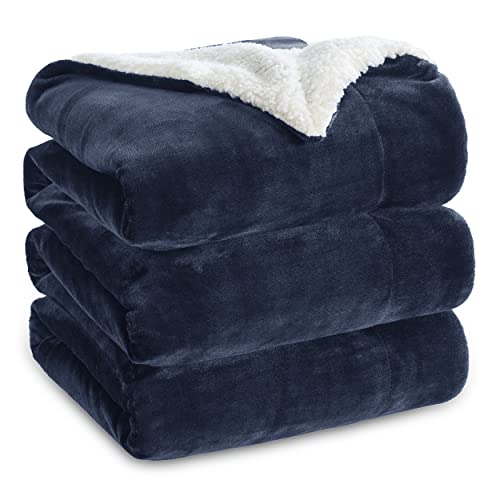
- Sherpa fleece construction is the warmest in this guide by a clear margin
- Thick, plush weight that cold sleepers describe as the cosy option
- Navy colourway is practical and suits winter bedding
Trade-offs
- Too warm for summer and for hot sleepers in heated homes
- Heaviest pick here, so it takes the most machine capacity to wash
- Sherpa texture can trap pet hair more than smooth fleece
| Spec | Detail |
|---|---|
| Size | Queen, 90×90 inches |
| Type | GentleSoft sherpa fleece blanket, non-heated |
| Colour | Navy |
| Use | Winter bed layer |
If your complaint about down was never the fill itself but the price of staying genuinely warm, this sherpa is your pick. The GentleSoft sherpa construction puts a deep, woolly pile against the sleeper, and pile traps air — which is where insulation actually comes from in a blanket with no fill. Of the six picks here, this is the one we would choose for a cold bedroom, a draughty house, or a sleeper who is always the coldest person in the bed. The listing describes it as thick and warm, and its winter positioning is consistent across the product information.
The navy colourway is a quiet advantage. Winter blankets live hard lives — they are the layer that gets pulled up over pyjamas, dragged to the sofa for film nights, and borrowed by guests. Navy forgives all of that between washes in a way cream and beige do not. Readers comparing warmth-first options across categories may also want to glance at Best And Cheapest Gravity Blankets for a very different, weight-based approach to a cosy bed, though the two products solve different problems.
Be honest with yourself about the limitation, though: this blanket is a seasonal specialist. In a heated home it will be too much blanket for much of the year, and hot sleepers should not buy it as their only layer. It is also the bulkiest wash in this guide. Bought as a winter layer alongside a lighter fleece for summer, it makes complete sense.
Best for: Cold sleepers, cold bedrooms and winter-first households / Not suited for: Hot sleepers, warm climates, or anyone wanting a single blanket for all twelve months

Bedsure Fleece Blanket, Queen Size, Cream
Badge: Best Light Layer
Strengths
- Cream colourway brightens a bed and layers invisibly under white duvets
- Smooth fleece face is the easiest here to fold back neatly
- Same proven queen-size Bedsure fleece format as the overall pick
Trade-offs
- Cream shows marks and lint more than any other colour here
- No more insulating than the grey version — the difference is colour, not warmth
- Light fleece can show sheet patterns through it in bright light
| Spec | Detail |
|---|---|
| Size | Queen, 90×90 inches |
| Colour | Cream |
| Type | Fleece bed blanket |
| Use | Layering and light bedding schemes |
Think of this cream Bedsure as the layering specialist. Its job is to disappear gracefully into a bed system: cream fleece under a white or ivory duvet, folded back at the top so the bed looks made rather than merely covered. Because the fleece face is smooth, it folds to a clean edge and does not fight the duvet for visual attention. For people whose down blanket was really a background layer — never the star of the bed — this is the most faithful replacement in the guide.
It shares the 90×90-inch queen format and the even, channel-free warmth of the grey Bedsure, so everything said about coverage and layering applies here too. Where it earns its own slot is in bright, light-toned bedrooms, where a grey or navy layer can look like a mistake under pale bedding. Cream keeps the palette intact.
The limitation is purely practical: cream is the least forgiving colour in this guide. It will show the evidence of breakfast in bed, a resting cat, and ordinary dust sooner than any other pick. If your household is hard on bedding, choose the grey version and accept the slightly moodier look. If your bedroom is a calm, light space and you wash bedding often anyway, cream is the prettier answer.
Best for: Light, neutral bedrooms and tidy layering systems under pale duvets / Not suited for: Homes with pets on the bed or anyone who washes blankets infrequently

Utopia Bedding Soft Warm Fleece Bed Blanket, Queen Size, Navy
Badge: Most Versatile
Strengths
- Same breathable microfiber fleece as the value pick, in a deeper colour
- Navy hides wear, lint contrast and minor marks between washes
- Lightweight and easy to store as a spare or second-bed blanket
Trade-offs
- Functionally overlaps the grey Utopia — choose on colour, not performance
- Light insulation on the coldest nights without a duvet over it
- Utilitarian finish rather than a plush, giftable feel
| Spec | Detail |
|---|---|
| Size | Queen, 90×90 inches |
| Material note | Microfiber fleece (per listing) |
| Colour | Navy |
| Use | Bed, travel and outdoor use per listing |
Every household with more than one bed learns the same lesson: the spare blanket gets used constantly and washed rarely. This navy Utopia is built for that life. It is the same breathable microfiber fleece design as the grey value pick — queen size, lightweight, easy to fold small — but the deep navy colourway changes its practical character. Navy hides the minor marks, faded patches and general wear that accumulate on a blanket which migrates between the second bed, the sofa and the car.
As a down alternative it suits the second-bed role perfectly. Guests rarely want a heavy, precious blanket; they want a clean, warm, uncomplicated layer, and that is what this is. It is also the pick we would keep in a holiday home or rental, where bedding needs to survive frequent laundering and look acceptable for years without careful treatment. Readers outfitting several rooms at once might pair it with ideas from Best American Made Blankets if domestic manufacture is also on their checklist, though note every pick in this guide is synthetic fleece chosen for care, not origin.
Its limitation is redundancy if you already own the grey version: there is no performance reason to own both. Choose between them on colour alone. And like its grey sibling, it is a light-to-middle layer — in a cold room it supports a duvet rather than replacing it.
Best for: Second beds, guest use, rentals and anyone who wants the lowest-maintenance colour / Not suited for: Shoppers seeking one luxurious statement blanket for a main bedroom
Comparison Table
| Pick | Key attributes | Listing |
|---|---|---|
| Bedsure Fleece Bed Blanket, Queen Size, Grey | Fleece, queen 90x90in, grey — the balanced all-season layer | Check on Amazon |
| Utopia Bedding Soft Warm Fleece Bed Blanket, Queen Size, Grey | Microfiber fleece, queen 90x90in, grey — lightest and most breathable | Check on Amazon |
| Bedsure Soft Queen Size Blanket for Bed, Beige | Soft fluffy fleece, queen 90x90in, beige — guest-room finish, machine washable | Check on Amazon |
| Bedsure GentleSoft Sherpa Fleece Blanket, Queen Size, Navy | Sherpa fleece, queen 90x90in, navy — thickest and warmest | Check on Amazon |
| Bedsure Fleece Blanket, Queen Size, Cream | Fleece, queen 90x90in, cream — light colourway for pale bedding | Check on Amazon |
| Utopia Bedding Soft Warm Fleece Bed Blanket, Queen Size, Navy | Microfiber fleece, queen 90x90in, navy — low-maintenance spare-bed pick | Check on Amazon |
How to Choose a Down-Alternative Blanket
Start by being clear about which kind of alternative you actually need, because the phrase covers two different products. A filled down-alternative comforter uses synthetic fill inside stitched chambers to imitate down’s loft. A fleece bed blanket — every pick in this guide — skips fill entirely and gets its warmth from fabric pile. The fleece route gives you even warmth with no cold spots, a lighter layer, a lower qualitative price tier in most cases, and much simpler washing. The filled route gives you loft and a puffier bed. Neither is wrong; they are answers to different preferences, and choosing the wrong one is the most common reason shoppers end up disappointed with a down alternative.
Next, match fabric weight to your bedroom, not to the calendar. A heated modern home at a steady temperature needs far less blanket than a draughty older house, whatever the month. Smooth fleece is the middle path: warm in winter as a layer, usable alone in shoulder seasons. Sherpa fleece is a winter specialist. Lightweight microfiber fleece is the choice for warm sleepers and warm climates. If you share a bed with someone whose temperature runs opposite to yours, the classic solution is a lighter shared layer plus an individual throw on the colder side — a pattern we return to in Best And Most Affordable Chunky Knit Blankets territory, where texture and weight vary even more widely.
Size is simpler than people make it. A queen bed wants a blanket around 90×90 inches to drape properly; all six picks meet that. On a full bed, a queen blanket gives generous overhang, which most people enjoy. On a king bed, a 90×90 blanket will cover the top but with minimal side drape — workable for a middle layer under a king duvet, less satisfying as the visible top layer.
Finally, judge care requirements honestly. The whole point of leaving down behind is easier ownership. A down-alternative blanket should go through your own machine and dryer routine without drama, come out the same size, and not need special detergents or professional cleaning. Check the care label on the listing, wash before first use, and you have removed the main friction that made the down blanket a chore.
How to Layer and Care for a Fleece Bed Blanket
Layering order matters more than layer count. Work from the skin out: fitted sheet, top sheet, then your fleece blanket, then a duvet or comforter if the season calls for one. The top sheet keeps the blanket cleaner for longer, and the blanket’s smooth face lets the duvet sit without gripping. Fold the blanket’s top edge back over the duvet for the classic made-bed look, or keep it hidden beneath if you prefer a single visible layer.
- Wash the blanket before its first night on the bed to remove loose surface fibres from manufacture.
- Make the bed with the blanket pulled evenly to both sides; fleece that starts centred stays centred.
- Adjust by folding, not by adding layers: folding the blanket double over the torso adds warmth exactly where most sleepers want it.
- Shake and air the blanket outdoors or over a line on dry days between washes; fleece freshens quickly.
- Wash on a gentle, cool-to-warm cycle with similar colours, and dry on low heat or line-dry to protect the pile.
Problem: the blanket keeps sliding off the bed → what to do. Fleece on a smooth duvet cover can migrate. Tuck the foot of the blanket under the mattress, or move it beneath the duvet so the duvet’s weight anchors it.
Problem: static shocks and clinging in winter → what to do. Dry indoor air is the cause. Dry the blanket a little less aggressively, add a dryer ball, and avoid over-drying, which is when microfiber builds the most charge.
Problem: the pile looks flat and tired after months of use → what to do. A gentle wash and a full, low-heat dry usually re-lofts fleece pile. Brush sherpa lightly with a soft clothes brush once dry. If pilling appears, a fabric shaver restores the surface in minutes.
Down vs Fleece: An Honest Warmth Comparison
Down insulates by loft: clusters trap air in three dimensions, which is why a good down blanket feels almost weightless for its warmth. Fleece insulates by pile: a dense field of fine fibres traps a thinner layer of air, so a fleece blanket needs more contact and usually a little more weight to match the same warmth. In a heated bedroom, that difference is mostly theoretical — both will keep a sleeper comfortable, and the fleece will do it with more even coverage because there are no stitched channels to go cold where fill has shifted.
Where the difference becomes real is at the extremes. In a genuinely cold, unheated room, loft wins, and the sensible fleece answer is the sherpa pick or a fleece-plus-duvet combination. In warm conditions, fleece wins in reverse: it is easier to push half off, fold down, or use at half coverage without the all-or-nothing feel of a puffy layer. Understanding this is also why searches like Best And Least Expensive 120×120 Blankets exist — some households solve warmth with sheer coverage instead, wrapping a very large blanket rather than layering a thick one.
Who Should Not Switch Away From Down?
Some sleepers should keep their down blanket, and a good guide should say so. If you sleep in a cold room and love the weightless-loft sensation, no fleece in this guide will reproduce it. If your bed’s look depends on a puffy, hotel-style top layer, a flat blanket will not satisfy you visually. And if you already own a down blanket you like and simply need to wash it less often, a fleece layer over the top sheet — protecting the down beneath — may serve you better than a full replacement. The picks here are for people who have decided the down itself is the problem: the fill, the care, the cost tier, or the feathers escaping at the seams. For that reader, fleece is not a compromise. It is the simpler product they wanted all along.
Setting Up a Two-Blanket Rotation
The households happiest with down-free bedding rarely own one blanket. They own two, and rotate them. A light or mid-weight fleece handles spring, summer in air-conditioned rooms, and autumn; a sherpa or a fleece-plus-duvet combination handles winter. The rotation costs less effort than it sounds like, because the off-season blanket folds small, stores in a linen cupboard or under-bed box, and comes out of storage already clean if you wash it before putting it away.
A rotation also extends the life of both blankets. Fleece pile compresses under nightly use and recovers during rest, so a blanket used six months a year ages far more slowly than one used twelve. The same logic applies to washing: half the annual washes means half the gradual wear on the fabric face. If you are buying your first down alternative today, the practical path is to start with the balanced grey Bedsure, live with it through one season change, and then add the sherpa only if winter proves the first blanket insufficient. Many households find it is not, especially with a duvet over the top.
Labelling helps more than expected. A small tag or a note in the linen cupboard recording which blanket belongs to which bed ends the familiar hunt through folded piles, and it keeps the guest-room blanket — the one you want looking freshest — from quietly becoming the everyday blanket on the main bed.
What About Allergies and Sensitive Skin?
Many shoppers arrive at down alternatives because of the fill itself: some people react to feather and down bedding, others simply dislike the possibility of quills working through a cover over time. A fleece blanket removes the fill from the equation entirely. There is nothing inside it to migrate, break down, or escape, and the whole blanket can be washed frequently at home, which is the single most useful habit for keeping any bedding fresh for sensitive sleepers.
That said, fleece has its own considerations. Synthetic pile can hold onto dust within its fibres if it is rarely washed, so the easy-care advantage only counts if you actually use it — wash on the schedule the care label allows, and air the blanket outdoors between washes when the weather cooperates. People with very sensitive skin sometimes prefer the smooth face of a plain fleece against a top sheet rather than the deeper texture of sherpa, which is one more reason the layering order in the how-to section keeps a sheet between sleeper and blanket. None of this is medical advice; it is household practicality. Anyone with a diagnosed allergy should follow their own clinician’s guidance about bedding, and treat any blanket — down or fleece — as one part of that wider plan.
Finally, wash any new blanket before its first night, whatever its material. Manufacturing and shipping leave loose fibres and finishing residues on the surface of almost all new bedding, and a first wash is the cheapest comfort upgrade in this entire guide.
How Long Should a Fleece Bed Blanket Last?
A well-kept fleece bed blanket should give several years of nightly service before its pile thins enough to matter. The enemies are heat and friction: repeated high-heat drying breaks down the fine fibres that make fleece soft, and washing it with rough items like towels with hooks, zips and heavy denim accelerates pilling. Wash it with similar soft bedding, dry it gently, and the surface stays presentable far longer.
Expect gradual change rather than sudden failure. The centre of the blanket, where bodies lie, flattens first; the edges keep their pile longest. Many owners rotate the blanket head-to-foot every few weeks so the wear spreads evenly, a ten-second habit that visibly evens out the surface over a season. Pilling, when it comes, is cosmetic rather than functional — the blanket still insulates — and a battery fabric shaver removes pills in a few minutes without thinning the fabric if used lightly.
Retire a fleece blanket when it no longer feels warm for its weight, when the pile has worn to a shine in the middle, or when it holds odours after washing. At that point it still has a second life as a car blanket, a pet bed cover, or the layer you keep for painting and picnics, which is more than can be said for a leaking down blanket at the end of its road. Judged across its whole life — purchase tier, washing ease, years of service and second uses — the simple fleece layer is one of the best-value pieces of bedding a household can own, and that value, as much as the absence of down, is why so many shoppers who switch never switch back.
A Note on Colour, Light and Lint
It sounds trivial until you live with it: fleece shows lint, and the contrast between blanket colour and lint colour decides how often the blanket looks untidy. Light lint on navy and grey shows as pale specks; dark lint on cream shows as shadow. Households with pale bedding and pale pets find dark blankets forgiving in one direction and demanding in the other. There is no universally tidy colour — there is only the colour that matches your household’s actual lint.
Two habits keep any colour looking fresh. Keep a simple lint roller in the bedroom drawer for a ten-second pass when making the bed, and wash the blanket separately from high-lint items like new towels, which shed heavily in their first washes and will happily donate that shed to your fleece. With those two habits, even the cream pick in this guide stays presentable between washes, and the darker picks look almost self-maintaining.
One last practical point on storage: fleece should be stored clean, dry and uncompressed. Vacuum-compression bags are tempting for bulky bedding, but long compression crushes pile and the blanket comes out looking tired; a breathable storage bag or a simple shelf in the linen cupboard treats it far better. Add nothing scented directly against the fabric — a sachet in the cupboard, not on the blanket, keeps storage smells away without leaving residue on the surface that touches your skin all night.
Common Buying Mistakes
- Buying a couch throw to do a bed blanket’s job. A 50×60-inch throw cannot cover a queen bed or stay in place through the night. Check dimensions before anything else.
- Expecting comforter loft from a blanket. Fleece warmth is real, but the look is flat. Buy it for even, easy warmth, not for a puffy bed.
- Choosing sherpa for all-season use. The warmest pick is a winter specialist; hot sleepers who buy it as their only layer end up sleeping on top of it.
- Ignoring the care label until the first wash. The point of a down alternative is easy care — confirm machine washability on the listing before ordering.
- Picking the lightest colour for the hardest-working bed. Cream and beige look wonderful and show everything. Match the colour to the household, not just the room.
- Assuming one blanket must do every job. A light fleece plus a warm sherpa, rotated by season, outperforms any single compromise blanket for most homes.
Final Recommendation
Start with the grey Bedsure fleece. It is the balanced centre of this guide: proper queen coverage, a smooth layering face, even warmth with no fill to manage, and a colour that suits almost every bedroom. Most people replacing a down blanket need exactly that and nothing more complicated.
Choose by exception from there. Cold sleepers should go straight to the navy sherpa, the one pick here built for genuinely cold nights. Warm sleepers and tight budgets point to the grey Utopia microfiber, the lightest layer in the group. Guest rooms look best with the beige Bedsure, light-toned bedrooms with the cream, and second beds and rentals with the navy Utopia that hides a hard life between washes. Whichever you choose, you are getting the core benefit that started the search: a warm bed with no down in it, and a blanket you can simply wash and put back.
Related guides
Frequently Asked Questions
Is a fleece blanket really a good alternative to a down blanket?
For most heated homes, yes. Fleece gives even warmth with no fill to shift, leak or go cold in channels, and it is far easier to wash. What it does not reproduce is down’s puffy loft, so choose it for warmth and simplicity rather than for a cloud-like look.
Which of these picks is the warmest?
The Bedsure GentleSoft sherpa in navy. Its deep pile traps the most air of the six, making it the clear winter and cold-sleeper choice. The plain fleece picks are mid-weight layers, and the Utopia microfiber options are the lightest.
Can I use a queen-size blanket on a king bed?
As a middle layer under a king duvet, yes — a 90×90-inch blanket covers the sleeping surface. As the visible top layer it will look short on drape at the sides, so king-bed owners who want the blanket on show should size up where a king option exists.
How do I wash a fleece bed blanket?
Follow the care label on your specific listing. In general, fleece blankets wash on a gentle cycle with similar colours and dry on low heat or on a line. Avoid high dryer heat, which can damage the pile and increase static.
Will a fleece blanket make me too hot in summer?
The lighter microfiber picks are designed to breathe and many sleepers in air-conditioned rooms use one alone in summer. The sherpa pick is a different story — treat it as a winter blanket and rotate to a lighter layer in warm months.
Do these blankets work for people avoiding animal products?
Yes. Every pick in this guide is a synthetic fleece or sherpa-fleece blanket with no down or feather fill, which is one of the most common reasons shoppers search for a down alternative in the first place.