Carbon steel cookware heats quickly, handles high heat and builds a natural nonstick layer as you season it. It is popular among restaurant cooks and home cooks who want something lighter than cast iron. Full carbon steel sets are uncommon, so this guide mixes pan sets and wok kits. We have not used these products ourselves, so please confirm the details on the current listing before you buy.
The six picks below include French-style fry pans, an American skillet and wok sets, so you can build a small collection. Sizes and contents change, so check the current listing. Claims about heat tolerance and seasoning are the makers’ own.
As an Amazon Associate we earn from qualifying purchases. Links below are affiliate links, and they do not change the product information we give.
What to Look For
| Feature | Why it matters |
|---|---|
| Seasoning | Carbon steel needs a seasoned layer to cook well |
| Weight | Lighter than cast iron, but heavier than aluminum |
| Handle | Check whether the handle is riveted and oven safe |
| Size | Pick a pan that fits your burner |
| Induction | Carbon steel generally works on induction, but check the listing |
In this guide
Specs at a Glance
| Item | Type | Maker origin | Notes |
|---|---|---|---|
| Made In Blue Carbon Steel Frying Pan | Fry pan | American brand | Blue steel finish |
| de Buyer Mineral B Fry Pan | Fry pan | French | Beeswax finish |
| Matfer Bourgeat Black Steel Fry Pan | Fry pan | French | Restaurant style |
| Lodge Seasoned Carbon Steel Skillet | Skillet | American | Pre-seasoned |
| Joyce Chen Carbon Steel Wok Set | Wok set | American | Includes tools |
| Craft Wok Hand Hammered Carbon Steel Wok Set | Wok set | Hand-made style | Includes accessories |
The 6 Best Carbon Steel Cookware
Top pickBest for searing
1. Made In Blue Carbon Steel Frying Pan
A carbon steel fry pan sold by a direct-to-consumer cookware brand. It suits searing and sauteing. Check the listing for the size. Like all carbon steel pans, it darkens with use, and that dark layer is part of how it becomes slicker over time.
Suits: searing. Strengths: a modern, polished look. Weaknesses: needs seasoning. Skip it if you want nonstick out of the box.
View Made In Blue Carbon Steel Frying Pan on Amazon

Best for serious cooks
2. de Buyer Mineral B Fry Pan
A French carbon steel pan used in professional kitchens, sold with a protective beeswax finish. Check the listing for size. It is often recommended for people who want to learn how to season a pan, because the maker’s wax coating needs to be removed first.
Suits: serious cooks. Strengths: a pro-style build. Weaknesses: seasoning is required. Skip it if you want a light pan.

Best for restaurant style cooking
3. Matfer Bourgeat Black Steel Fry Pan
A classic restaurant pan from a French supplier. It suits high-heat cooking. Check the listing for size. It is a plain, thick pan with a long handle, so expect it to feel more like a tool than a decorated piece of cookware.
Suits: restaurant style cooking. Strengths: a rugged build. Weaknesses: it is heavy. Skip it if you want a coated pan.
View Matfer Bourgeat Black Steel Fry Pan on Amazon

Best for beginners
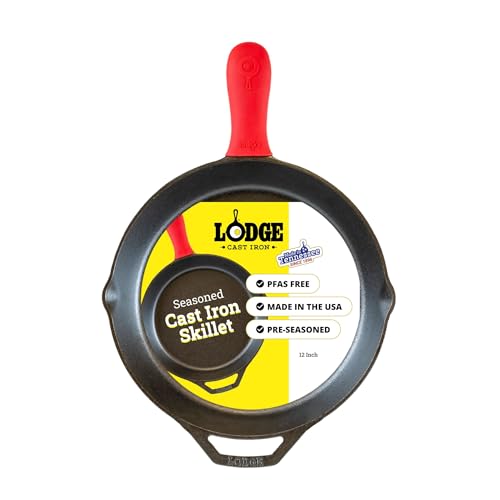
4. Lodge Seasoned Carbon Steel Skillet
Lodge is best known for cast iron, and its carbon steel skillet comes pre-seasoned. It suits beginners. Check the listing for size. The pre-seasoning gives you a head start, but plan to keep adding thin layers of oil as you cook.
Suits: beginners. Strengths: a pre-seasoned surface. Weaknesses: needs upkeep. Skip it if you want the lightest pan.


Best for stir-fry
5. Joyce Chen Carbon Steel Wok Set
A wok set that is often sold with a flat bottom and handle for home stoves. It suits stir-fry. Check the listing for what is included. A flat-bottom shape is generally easier to use on a typical home range than a round-bottom wok.
Suits: stir-fry. Strengths: a classic wok shape. Weaknesses: needs seasoning. Skip it if you have only an induction cooktop.

Best for wok enthusiasts
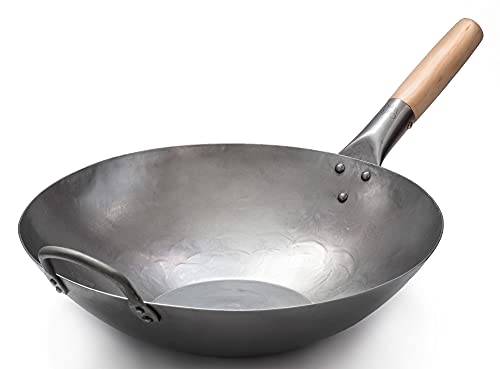
6. Craft Wok Hand Hammered Carbon Steel Wok Set
A hand-hammered carbon steel wok often sold with a lid and utensils. Check the listing for the wok size and set contents. Hammered woks show tool marks that help hold seasoning and give each one a slightly different look.
Suits: wok enthusiasts. Strengths: a hand-made look. Weaknesses: it needs seasoning. Skip it if you want a nonstick finish.

Care and Setup
- Season the pan before first use.
- Rinse with hot water and a soft brush.
- Dry on low heat after washing.
- Wipe with a thin coat of oil.
- Re-season any spots that turn gray or dull.
- Store in a dry place with a paper towel between stacked pans.
Mistakes to Avoid
- Soaking the pan.
- Using soap with a heavy hand.
- Cooking acidic sauces in a new pan.
- Leaving it wet.
- Skipping the first-use prep that the maker describes.
- Starting with a very high flame on a cold pan.
Building a Small Carbon Steel Collection
Because full matched sets are rare in carbon steel, most cooks build a collection one piece at a time, and it helps to plan which pieces will do the most work. A fry pan is the usual starting point. It handles eggs, seared meat, pan-fried vegetables and shallow frying. A larger skillet or a second pan adds room for cooking for a family or for keeping one pan for savory food and another for delicate dishes like eggs.
A wok adds a different tool altogether. Its high, sloping sides keep food moving during stir-fry, and the shape lets you push cooked food up the side while the rest finishes. If you cook a lot of stir-fry, fried rice or quick vegetables, a wok earns its space, but if you rarely cook this way, a deep skillet may do almost as well.
Think about what you already own. Carbon steel does not need to replace everything. Many cooks keep a nonstick pan for sticky or delicate items, a stainless pan for pan sauces and acidic dishes, and a carbon steel pan or two for high-heat searing. A short, well-chosen set serves you better than a large pile of pans you never use.
- Start with one fry pan in a size that suits your household.
- Add a wok if you cook stir-fry regularly.
- Add a second size only when the first feels limiting.
When a listing calls something a set, read the contents carefully to see which pieces and tools are included.
Size, Shape and Burner Match
Size should match both your cooking habits and your stove. A pan that is much wider than the burner will have a hot center and cooler edges, and cooking may be uneven. A pan that is too small makes you cook in batches, which slows things down and can cause food to steam rather than sear. As a starting point, match the pan base to the burner and leave a little room around the food.
Look at the listing for two measurements: the diameter across the top and the diameter of the flat cooking surface, which is often smaller because of the sloping sides. The cooking surface is the figure that tells you how much food fits at once. Depth matters too, because shallow sides make flipping and sliding easier, while taller sides help with stir-fry and frying.
For woks, shape is a practical concern. A round-bottom wok is designed for a ring or a very powerful burner and can wobble on a flat stove. A flat-bottom wok sits on a standard stove and is the more usual home choice. Check which type the listing describes and whether a ring is included or needed.
Your storage matters too. Long handles take up cupboard width, and woks are bulky. Measure the space or hanging area before buying, especially if you plan to hang pans on a rack.
Handles, Weight and Heat Sources
Handles affect safety and comfort more than most people expect. Metal handles stay solid in the oven but get hot on the stove, so keep a dry cloth or a handle sleeve close by. Riveted handles are usually more secure than welded or screwed ones, though construction varies, so read what the listing says. Wood handles are comfortable but may have temperature limits, so check before placing a pan in the oven.
Weight comes down to how the pan feels in use. Carbon steel is generally lighter than cast iron, but thick pans are still heavy to lift one-handed, especially larger skillets full of food. A lighter pan reacts quickly to heat changes and is easier to toss, while a heavier one holds heat more steadily. Choose something you can comfortably lift and move.
Heat source compatibility is worth checking. Carbon steel is a magnetic metal, so it generally works on induction, but the base needs to sit flat on the glass top and the listing should confirm the material. Warped or domed bases lose contact on flat cooktops. Gas and electric coils suit most pans, and an open fire or grill is also an option if the handle is suitable.
Remember that oven safety depends on every part of the pan, including the handle and any coating, so rely on the maker’s stated limit rather than assumption. Never place a hot pan under cold water, as it can warp.
Cooking Technique and What Suits the Pan
Carbon steel rewards a few habits. Preheat the pan gradually until it is hot, then add oil, then food. A cold pan with food added early invites sticking. A very high flame is not necessary for most cooking, and starting too hot can scorch oil and leave sticky patches. Medium to medium-high usually does a lot.
Use enough oil, and choose a cooking oil that suits your heat level. Pat food dry before it goes in, because moisture lowers pan temperature and causes sticking. Do not crowd the pan, since food needs space to brown. Let meat or fish release naturally before turning it; when it is ready it often lifts with little effort.
Good uses for carbon steel include searing steaks and chops, browning vegetables, frying eggs once the surface is well seasoned, stir-fry and shallow frying. Be careful with long-simmered acidic sauces such as tomato or wine reductions, which can strip seasoning and affect flavor, especially in a newer pan. A short deglaze is usually fine on a well-seasoned surface.
- Preheat, add oil, then add dry food.
- Use metal or wooden utensils that suit the surface.
- Let a hot pan cool a little before washing.
Expect the surface to darken and develop patches. That is normal and shows the pan is being used. Do not scrub it to look new.
Fixing Rust, Sticking and Knowing When to Replace
Most problems with carbon steel can be fixed. If you see orange rust spots, scrub them off with a non-metal scrubber or fine abrasive, rinse, dry quickly and heat the pan lightly with a thin coat of oil to rebuild protection. Light surface rust is common after a pan has been left damp and does not mean the pan is ruined.
Sticking usually points to a thin or uneven seasoning layer, a pan that was not preheated, or too little fat. Rather than scrubbing hard, cook with a little more oil for a while and add thin layers of seasoning. A gray, dull or blotchy look often means the layer is worn, so refresh it according to the maker’s instructions. Sticky, tacky patches mean oil was applied too thickly, and that can be corrected by heating the pan until it dries, then wiping off the excess.
Warping is another issue. A pan that rocks on a flat burner may have been heated too suddenly or cooled too quickly. Light warping may not affect cooking on a gas flame, but it hurts contact on induction. A pan with a deep warp, a loose or cracked handle or deep pitting that will not recondition is worth replacing.
When shopping, ask a few questions.
- Is the pan pre-seasoned or coated, and what does the maker say about first use?
- What is the base diameter, and is the base flat?
- How is the handle attached and what are the oven limits?
- Is it listed for induction?
Budget tiers mostly reflect brand, finish and extras. A basic pan can cook very well once seasoned, so extra cost is not essential.
A Pre-Purchase Checklist for Carbon Steel
This cookware rewards a bit of planning. A short list helps you buy the right pieces the first time.
- List the dishes you cook most, such as eggs, steaks, stir-fries or pancakes.
- Check your burner type, since some pans suit gas better than a flat glass top.
- Measure your storage space, because the pans are heavy for their size.
- Decide how much care you are willing to give, since the surface needs seasoning and drying.
- Look at handle shape and length, and whether it stays comfortable for a long cook.
- Confirm whether the pan arrives with a protective wax or coating that must be removed.
Answering these first keeps you from buying a pan that sits unused because it does not fit your stove or your habits.
Fry Pan Versus Wok: Which Shape Does More for You
Carbon steel comes mostly in two forms, and each has strengths. The table sums them up.
| Trait | Fry pan | Wok |
|---|---|---|
| Surface contact | Large flat base | Smaller base, high sides |
| Good for | Searing, eggs, flat foods | Stir-frying, tossing |
| Burner fit | Works on most burners | Best with a round or ring support |
| Storage | Stacks easily | Needs a hook or deep shelf |
If you can only buy one piece, a medium fry pan covers the widest range. A wok is a wise addition once you know you love stir-fries.
Seasoning Slips New Owners Make
The most common slip is applying too much oil, which leaves a sticky, uneven layer instead of a thin, smooth one. Another is washing the pan hard with strong soap right after you build a layer, then leaving it wet. Dry it promptly and wipe on a thin film of oil. Do not worry about patchy color, since carbon steel darkens unevenly with use. Follow the maker’s seasoning steps, because instructions can differ between brands.
Decoding a Carbon Steel Product Page
Look at the gauge or thickness, the diameter at the top and at the base, and the handle material. A riveted handle is usually sturdier than one that is welded or glued. Check whether the product says it suits induction, since not every pan does. If the listing does not say, ask the maker before you order. Product photos often show a polished pan that you will not see once seasoning begins, so do not judge the finish by the picture alone. Read the care sheet that comes with the pan, and keep it handy for the first few weeks.
Care Notes for the First Month
The first weeks shape how the pan behaves for years, so treat them with a little attention. Cook fatty foods such as bacon or sausage early on, since the fat helps build the surface. Avoid long simmers of acidic sauces while the layer is still thin, because they can strip it back. After cooking, wipe out the pan, rinse with hot water and a soft brush, and dry it fully on a warm burner. Add a thin film of oil before storing.
If a patch of rust appears, scrub it off gently, dry the pan and season it again, following the maker’s guidance. Rust on a pan that is stored dry is rare, so regular drying is your best defense. Store the pan where air can circulate, and avoid stacking other heavy cookware directly on top of it.
Keep in mind that a carbon steel pan gets better with use. Early sticking is normal, and it fades as the surface builds. Be patient and keep cooking.
Seasoning, Explained Without Mystique
Seasoning is the most mythologized topic in carbon steel cooking, and stripping away the mystique makes the pans far easier to live with. Seasoning is simply a thin layer of oil that has been heated until it hardens and bonds to the steel. That layer does two jobs: it stands between the steel and moisture, slowing rust, and it fills the metal’s microscopic texture so food releases more easily. It is not a coating in the manufactured sense. It grows, wears, darkens and repairs itself through ordinary cooking, and it does not need to be perfect to work. A pan with blotchy, uneven seasoning that cooks eggs happily is a healthy pan; a pan with a mirror-black finish that sticks is a pretty problem.
The practical method is modest. Wash and thoroughly dry a new pan, warm it, wipe in the thinnest possible film of a neutral high-heat oil, then heat it until the film sets and stops looking wet. The key word is thin: excess oil pools and bakes into sticky, soft patches that attract dust and go rancid, which is the single most common beginner mistake. Several thin layers beat one thick one. After that, ordinary cooking takes over. Frying potatoes, searing meat, cooking with butter and roasting vegetables all add to the layer in the places that need it most. You do not need to season after every meal, and you should be suspicious of any routine that turns a frying pan into a weekend hobby. Cook with it, keep it dry, and the surface matures on its own schedule.
Pan by Pan: What Each Piece in a Set Is Really For
A carbon steel set typically combines fry pans in one or two sizes, sometimes a crepe or omelette pan, and in wok-inclusive sets a flat-bottomed wok suited to home burners. The large fry pan is the searing and frying center: steaks, chops, chicken thighs skin-side down, fried potatoes and big batches of vegetables. Its sloping sides let steam escape so food fries rather than steams, and they make tossing and flipping easy. The smaller fry pan earns its keep at breakfast and for single portions: two eggs, a small omelette, toasting spices or nuts, reheating a portion of leftovers with better texture than a microwave gives.
The crepe pan, where included, with its very low sides, is a specialist that generalizes surprisingly well: crepes and pancakes obviously, but also quesadillas, grilled sandwiches, warming tortillas and frying eggs for a crowd in quick succession. The wok is the set’s high-heat stir-fry tool, and on a home burner its job is small batches cooked fast: vegetables kept crisp, strips of meat seared in a single layer, fried rice that actually fries. The discipline with a home wok is batch size; crowding drops the temperature and produces stew instead of stir-fry. Seeing the set as a team of specialists rather than a stack of similar pans helps you choose the right piece automatically, and choosing the right piece is most of what good pan cooking is.
Heat Management on Real Home Stoves
Carbon steel responds to heat quickly, which is its pleasure and its trap. The pan has less thermal mass than cast iron, so it heats fast and cools fast, and the cook, not the pan, is responsible for steadiness. Preheat over medium rather than high: a carbon steel pan slammed onto a fierce burner can heat unevenly and, in thin examples, even warp slightly, after which it will spin or rock on a flat glass top. A minute or two at medium brings the whole surface to working temperature evenly. The water test tells you when you are there: a few drops flicked into the pan should sizzle and skitter rather than sit and simmer or vanish in a hiss of steam.
Once food goes in, manage the sequence rather than the dial. Cold food drops the pan’s temperature, so give a steak a moment to start searing before adding the second one, and cook stir-fries in batches that keep the pan hot. If the pan overshoots and oil begins to smoke hard, lift it off the heat for a few seconds rather than reaching for the tap; carbon steel sheds heat quickly and recovers without drama. On induction, start at a moderate setting and step up, because induction can drive a thin pan’s center very hot very fast. These are small skills, but they are the whole craft of this material: the pan gives you responsiveness, and in exchange it asks for attention. Cooks who enjoy being actively involved at the stove tend to love carbon steel for exactly this reason.
Cooking the Foods People Actually Buy These Pans For
Eggs and breakfast
Eggs are the test everyone applies to a seasoned pan, and they pass when two conditions meet: a mature-enough surface and correct heat. Warm the pan at medium-low, add butter or oil, and let the fat get properly hot before the eggs arrive. Eggs dropped into a lukewarm pan bond before the fat can protect them, which is an operator error often blamed on seasoning. Omelettes reward the same patience plus a confident wrist; fried eggs want a touch more heat for lacy edges. A set’s smaller pan will become the household’s egg pan within a month, and keeping it in regular egg service is also what keeps its seasoning in the best condition.
Meat, skin and browning
For steaks and chops, dry the surface of the meat thoroughly, because surface moisture is browning’s enemy in any pan. Preheat until the oil just shimmers, lay the meat away from you, and then leave it alone. Carbon steel releases food when the crust forms; prying early tears the crust and leaves it welded to the pan, and that, too, gets blamed on the pan rather than the impatience. Chicken skin behaves the same way and rewards the same restraint with a shattering, even crispness. Deglazing the pan afterward with stock or wine lifts the browned residue into a quick sauce and, conveniently, does half the washing-up at the same time.
Vegetables and stir-fries
Vegetables show off the material’s responsiveness. Green beans blister, mushrooms give up their water and then brown, cabbage chars at the edges while staying crisp inside, all in a pan that can go from fierce to gentle in seconds. The rules are space and dryness: a single layer, patted dry, with the pan properly hot before anything lands. In the wok, keep the batch small and the ingredients moving, adding aromatics in the final moments so they perfume rather than scorch. Cooked this way, a carbon steel set quietly replaces a shelf of specialty gadgets, because the pans themselves do the work.
When a Pan Goes Wrong: Rust, Stickiness and Warps
Every carbon steel owner eventually meets one of three problems, and all three have calm solutions. Rust appears as orange patches after a pan is left wet, stored damp or soaked. Light rust is cosmetic: scrub it away with a scouring pad or a halved potato dipped in an abrasive powder, wash, dry thoroughly on the stove’s warmth, and apply a thin seasoning layer. The pan returns to service the same day. Deep pitting from long neglect is rarer and still usually cookable, though the surface may never be as smooth. Prevention is the whole game: dry the pan as the last step of washing, every time, and store it where air can reach it.
Sticky, gummy patches are the signature of oil applied too thickly during seasoning or of oil left to sit and oxidize in a stored pan. The cure is to cook through it if it is mild, since frying gradually hardens and evens the layer, or to scrub the gummy area back and re-season thinly if it is severe. Warping, the third problem, comes from thermal shock or fierce uneven heat, and shows as a pan that rocks or spins. Minor warps on gas are a nuisance; on glass and induction they break the pan’s contact and its usefulness. Gentle preheating is the prevention. Notice what unites all three: none of them are caused by food. Carbon steel fails through water, excess oil and heat shock, and a cook who manages those three things will keep a set in service for decades.
Set or Open Stock: A Second Look at the Choice
The sets in this guide bundle the pans most kitchens use in matched steel and handles, and the case for a set is strongest for a cook building a carbon steel collection from little or nothing. You get size coverage, a consistent feel from pan to pan, and usually better value than buying the same pieces one by one. A set also solves the sequencing problem: instead of wondering which pan to add next, you start with the full vocabulary and learn them together, which is genuinely how people become fluent with a material.
Open stock, buying piece by piece, suits a cook who already owns some pans and wants carbon steel for specific jobs, or who wants to test the material before committing. The classic single first purchase is the large fry pan, because it demonstrates everything the material does well within a week of dinners. If it wins you over, the smaller pan and the wok follow naturally. What does not work well is mixing strategies halfway: a set bought while keeping every old pan in the same cabinets leads to clutter and to the new pans being used least. Whichever route you take, plan the storage before the pans arrive, retire or rehome what the new pieces replace, and give the carbon steel the front-of-cabinet position. Tools that are easy to reach become habits; tools that become habits justify themselves.
Carbon Steel Versus Cast Iron and Stainless, for Set Buyers
Shoppers choosing a carbon steel set are usually cross-shopping two other materials, and the honest comparison helps. Against cast iron, carbon steel is the lighter, faster sibling: it heats and cools quickly, its pans are easier to lift, tilt and toss with, and its smoother surface releases food more readily once seasoned. Cast iron holds heat more stubbornly, which suits long, steady searing and oven work, and it asks for the same seasoning care, so households often end up owning both, using iron for the stationary heavy work and steel for the agile stovetop work. Against stainless steel, carbon steel trades zero-maintenance indifference for performance: stainless never rusts and tolerates soaking and dishwashers in its better grades, but it does not build a seasoning layer, so eggs and fish demand more fat and more skill, and its heat response, in affordable sets, is often less even than a good carbon pan’s.
The decision usually comes down to the cook’s temperament. If you enjoy the active, responsive feel of a pan that answers the burner immediately, and you are willing to dry what you wash, carbon steel will please you every day. If your kitchen runs on soaking pans overnight and loading dishwashers without thought, stainless will forgive you in ways carbon steel will not, and forgiveness is a legitimate feature. What carbon steel uniquely offers a set buyer is a collection that improves with use: the pans you cook with most become the most nonstick, the most personal, the most yours, and a decade later they are not worn out but worn in. Few other kitchen purchases can honestly promise that trajectory.
Organizing a Set in a Working Kitchen
A set of pans succeeds or fails partly on storage, and carbon steel has its own requirements. The pans must live dry and with air around them; a stack nested tightly in a damp cabinet is an invitation to rust spots where the seasoning is thin. If you stack, separate the pans with cloths or pan protectors, which also guard the seasoning from being scraped by the pan above. Hanging from a rail is the classic solution and the best one where space allows: the pans are visible, instantly reachable, bone dry and frankly handsome, and grabbing the right size becomes a one-second decision instead of a cabinet excavation.
Assign the everyday fry pan the prime position, at the front or on the most accessible hook, and let the wok and the crepe pan live one step further away. Keep the set’s neighborhood free of the steam trap: directly above a kettle’s spout or a constantly simmering stockpot is humid real estate, and pans stored there can develop surface rust even in a careful household. A final organizational habit pays for itself: after washing, return each pan to its place only when it is fully dry, using the stove’s residual warmth for a final thirty seconds if there is any doubt. Kitchens that run this way find their carbon steel needs almost no remedial care at all; the routine is the care.
A Month of Dinners That Season the Set for You
New owners often ask what to cook to build seasoning, and the answer is simply the fattiest, most regular cooking in your repertoire, repeated. Week one might be fried potatoes, pork chops and a stir-fry, foods that lay down seasoning while feeding people. Week two adds eggs as the pans begin to cooperate, plus chicken thighs with their skin rendered slowly in the large fry pan, which is close to a seasoning treatment disguised as dinner. Week three is a good moment for the wok’s first fried rice and a batch of pancakes or crepes on the low-sided pan, whose broad, even surface shows you exactly how far the seasoning has come by how cleanly the batter releases.
By week four the set will have sorted itself into personalities: the egg pan slick and darkening, the big fry pan blotchy in the honest way of hard-working pans, the wok developing its gradient from the fierce center outward. Nothing about this process requires special oils, oven marathons or rituals. It requires dinners. Cooks who try to perfect the seasoning before they start cooking have the sequence backward; the seasoning is the cooking, accumulated. If a pan lags, give it more fatty, moderate-heat work rather than another stripping and restarting cycle, which resets progress and morale alike. Patience, in this one corner of the kitchen, is genuinely a technique.
What to Check When Your Set Arrives
A short inspection on arrival day protects you and teaches you your pans. Set each pan on a flat surface, ideally the cooktop, and check that it sits steady without rocking or spinning; a pan that spins freely on glass will annoy you for years and is worth exchanging immediately. Look along each pan’s surface for dents, deep scratches or patches where a factory coating, if your pans shipped with a protective wax or lacquer, has pooled. Run a hand around the rim and handle joints: edges should be finished, rivets or welds sound, handles without play. If the pans arrived with a protective coating, follow the maker’s removal instructions exactly, usually a thorough hot wash, before any seasoning or cooking, because cooking on shipping wax produces smoke, smell and a gummy layer that then has to be scrubbed off anyway.
Then cook something simple and forgiving first, not the dish you bought the set to perfect. Fried potatoes or a grilled cheese will tell you how your burners map to the pan’s heat, how the handles feel under load and how the seasoning journey begins, all without stakes. Note which burner suits which pan while the information is fresh; many owners are surprised to find the medium burner, not the large one, is their fry pan’s best partner. A set inspected and introduced this way starts its life as known equipment rather than as a stranger, and the small chance of a shipping defect is caught while exchanges are effortless.
Teaching Someone Else to Cook on Your Set
A carbon steel set eventually gets used by other hands, and how you hand it over decides whether that is a pleasure or a slow disaster. The teaching session takes five minutes and covers exactly three things. First, heat: warm the pan gently, and never leave it empty on a fierce burner. Second, water: the pan is washed, dried on the stove’s warmth and put away dry, every time, without exception for being in a hurry. Third, food judgment: if something sticks, let it finish cooking and release, or add a splash of liquid, rather than scraping at it in frustration. Demonstrate each once with an actual egg or potato rather than lecturing in the abstract, because people remember what their hands have done.
Partners and older children taught this way usually become the set’s defenders rather than its threats, and many become better pan cooks than the owner, having learned the material without first unlearning stainless habits. Houseguests are a different category: for a single visit, it is kinder to everyone to leave out the one pan you are least precious about, or to cook the guest-night meal yourself and enjoy doing it. A set is communal property with a care culture, and cultures spread by demonstration and good humor far better than by rules taped to the fridge.
Knowing When a Pan Needs a Reset
Occasionally a pan accumulates enough gummy, uneven seasoning and cooked-on history that cooking through it stops being the answer. The signs are persistent sticking in the same spots, a surface that feels tacky when warm, or flaking where thick seasoning was built over debris. A reset is not a failure; it is maintenance on a longer cycle, and carbon steel’s great virtue is that a reset is always possible. Scrub the pan back firmly with an abrasive pad and hot soapy water, or use a vinegar soak for the worst cases, until the surface feels uniformly smooth and bare, then dry it completely and apply one or two of the thinnest seasoning layers described earlier. The pan returns to service the same day and re-seasons through cooking within a week.
Most pans need this rarely, perhaps never, if their daily handling is sound, and needing it once in years of service says nothing bad about the cook. What matters is recognizing the moment rather than struggling for months against a surface that is asking for a fresh start. A reset pan often becomes the owner’s favorite story about the material: proof that these are tools you can restore rather than products you consume, in a kitchen category where so much else is designed to be replaced.
The Bottom Line on Carbon Steel Sets
A carbon steel cookware set is the rare kitchen purchase that improves the longer you own it, provided you meet it halfway with dry storage, patient heat and food cooked regularly. The sets in this guide cover the working vocabulary of stovetop cooking, eggs to stir-fries, searing to simmering, in pans that respond instantly to the burner and forgive almost everything except water left standing and oil laid on too thick. Buy the set if your cooking is daily and varied and your temperament enjoys an active pan; buy a single fry pan first if you want to test the material’s character before committing your cabinets. Either way, cook the month of dinners, let the seasoning build itself, and judge the pans at week four rather than day one. By then the set will have stopped being a purchase and started being your kitchen’s native equipment, which is the highest compliment cookware can earn.
Carbon Steel Cookware FAQ
Is carbon steel the same as cast iron?
They are similar, but carbon steel is lighter and thinner.
Does it need seasoning?
Yes. Seasoning protects the pan and builds a nonstick layer.
Can I use it on induction?
Generally yes, but check the listing.
Is it dishwasher safe?
No. Hand wash and dry it.
How much should I cook in it at once?
Avoid crowding the pan, since carbon steel works best when food has room to sear.
Do I need to remove the factory coating before use?
Some pans arrive with a protective wax or similar finish that the maker tells you to remove, while others are pre-seasoned. Follow the instructions that came with your pan.
Can I cook eggs in carbon steel?
Yes, once the seasoning is established. Preheat the pan, use enough fat and give the egg time to release.
Why is my pan turning dark and uneven?
That is normal. The surface darkens as oils polymerize with use. It is not a defect, and uneven color does not hurt cooking.
Can I use metal utensils?
Many cooks do, but hard scraping can wear the seasoning faster. Check the maker's advice and use gentle strokes.
Is carbon steel safe in the oven?
Often yes, but the handle and any coating set the limit. Check the listing for the maker's oven rating.
What should I do if food sticks badly?
Soak briefly, scrub gently with a non-metal tool, dry well and re-oil. Cook with a bit more fat while the surface improves.
How should I store carbon steel?
Store it fully dry in a place with low humidity, and place a paper towel between stacked pans to absorb moisture.
Can I use carbon steel on a glass cooktop?
Generally yes if the base is flat, but lift rather than slide it to avoid scratching the glass. Check the maker's guidance.
The Short Version
For a modern look, the Made In pan. For a French pro pan, the de Buyer. For a restaurant build, the Matfer Bourgeat. For pre-seasoned convenience, the Lodge. For stir-fry, the Joyce Chen wok. For a hand-hammered wok, the Craft Wok.