Disclosure: topratedkitchenware.com is reader-supported. When you buy through links on our site, we may earn an affiliate commission from Amazon and other retailers, at no extra cost to you.
Where to buy
The best chairs for 911 dispatch are built for a job with no pause button: twelve-hour shifts, rotating operators sharing the same chair, headsets on, screens up, and no option to stand up and leave when the chair starts to fail you. The six verified chairs below are the pool’s long-hours heavyweights — stated capacities up to 350 lb, dual and multi-dimensional lumbar systems, headrests, tilt locks, footrests and BIFMA testing — compared here on dispatch criteria: adjustment speed for shift changes, durability under continuous use, and comfort that holds at hour eleven of a night shift.
- Daeorio High-Back Big and Tall Leather Chair with Footrest — the wide, high-back executive recliner with lumbar support and a footrest — full-size seating for full-size dispatchers
- FOKESUN Ergonomic Office Chair with Footrest — designed for long hours and BIFMA-tested, with a stated 350 lb capacity, 2D lumbar and a 3-position tilt lock
- GTPLAYER PU Leather Office Chair with Memory Foam — memory foam and 90-degree flip-up arms — the chair for tight consoles and backup positions
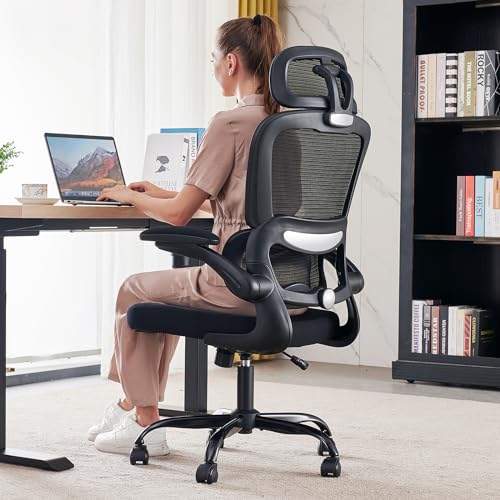
- TRALT Ergonomic Office Chair with Headrest — a stated 330 lb capacity, lumbar support, a headrest and flip-up arms — the balanced shared-fleet chair
- ELABEST X100 Ergonomic Mesh Office Chair with Footrest — a big-and-tall mesh chair with 3D lumbar, 5D flip-up arms and a footrest — breathable, adjustable, shareable
- MIMOGLAD Ergonomic Office Chair with Dual Lumbar Support — dual lumbar support, three tilt locks to 145 degrees, stated 350 lb capacity, headrest and footrest
Read the full guide ↓ for how each chair earned its place, what separates the strong picks from the compromises, and which one fits your situation.
The best chairs for 911 dispatch answer to the hardest brief in seating. A dispatcher’s chair works twenty-four hours a day in the hands of three different bodies, each needing it adjusted in under a minute at shift change, each depending on it through calls that do not schedule themselves around anyone’s comfort. The chair cannot be left when it disappoints. It cannot be nursed. It is, in the most literal sense in this entire guide series, mission equipment.
This guide compares six chairs from the verified pool against dispatch criteria rather than office criteria. Adjustment depth leads — the MIMOGLAD’s dual lumbar and three tilt locks, the FOKESUN’s two-dimensional lumbar with a stated 350 lb capacity and BIFMA testing, the ELABEST X100’s three-dimensional lumbar and 5D arms. Durability evidence follows — stated capacities, heavy-duty and big-and-tall designations, certifications. Then the human factors of the night shift: headrests for the lean-back seconds between calls, footrests for the long quiet stretches, and surfaces that clean quickly because a dispatch chair’s next operator is always coming. The same evidence-first method governs our ten-hour guide at Best Chairs For 300 Pounds 10 Hours A Day; dispatch simply raises every stake it names.
Everything here is comfort, fit and durability guidance for a demanding workplace. We make no medical claims for any chair; we compare stated specifications against the known shape of dispatch work, and we say plainly where a chair’s office origins show.
Key Takeaways
- Dispatch chairs are shared chairs: adjustment range and adjustment speed matter more than any single operator’s perfect setup.
- The MIMOGLAD is the adjustment leader — dual lumbar support, three tilt-lock angles to 145 degrees, stated 350 lb capacity, headrest and footrest.
- The FOKESUN matches it on evidence: designed for long hours, BIFMA-tested, stated 350 lb capacity, 2D lumbar and a 3-position tilt lock.
- Stated capacities and certifications are procurement-grade evidence — in a 24/7 chair, “probably sturdy” is not a specification.
- Headrests and footrests are night-shift infrastructure: the seconds between calls are when a dispatcher’s posture recovers.
- Every chair here should be bought with a maintenance rhythm: continuous use loosens hardware three shifts faster than office use.
In this guide
Quick Picks
| Pick | Badge | Best for | Where to check it |
|---|---|---|---|
| Daeorio High-Back Big and Tall Leather Chair with Footrest | Best for Larger Operators | larger dispatchers and centers specifying a big-and-tall option | Check on Amazon |
| FOKESUN Ergonomic Office Chair with Footrest | Best Evidence-Based Pick | centers wanting certified evidence and per-operator adjustment | Check on Amazon |
| GTPLAYER PU Leather Office Chair with Memory Foam | Best Compact Console Pick | overflow, training and backup dispatch positions | Check on Amazon |
| TRALT Ergonomic Office Chair with Headrest | Best All-Rotation Value | centers standardizing a shared fleet on one capable chair | Check on Amazon |
| ELABEST X100 Ergonomic Mesh Office Chair with Footrest | Best Mesh for Shared Use | busy centers with warm rooms and a taught handover routine | Check on Amazon |
| MIMOGLAD Ergonomic Office Chair with Dual Lumbar Support | Best Overall for Dispatch | primary dispatch consoles and centers buying for the long term | Check on Amazon |
How These Picks Were Chosen
We selected from the verified pool on dispatch-stated evidence: explicit long-hours or heavy-duty design, stated weight capacities, lumbar systems with real adjustment range, headrest and tilt-lock provision, and testing or certification claims. All six chairs here state a serious long-hours specification; general task chairs without that evidence were not considered for a round-the-clock brief.
We then ranked by the shift-change test: how completely and how quickly can a new operator make this chair theirs? Dual and multi-dimensional lumbar systems, multi-position tilt locks and multi-axis arms scored highest, because a chair shared by three body types per day lives or dies on its adjustment envelope. Break features — recline range and footrests — were weighted for the night shift specifically, when call volume ebbs and a chair’s second posture is where recovery happens.
This is research-led guidance from manufacturer listing data, not hands-on testing and not a procurement certification. Agencies should verify current specifications, warranty terms for continuous use, and any institutional standards through their own procurement process; this guide’s role is to compare the stated designs honestly against the work.
The 6 Best Chairs for 911 Dispatch Work

Daeorio High-Back Big and Tall Leather Chair with Footrest
Badge: Best for Larger Operators
Strengths
- Big-and-tall, wide design gives larger operators a chair actually built at their scale — a real issue in shared-seat centers
- High back and lumbar support hold a working posture through long call stretches
- Recline and footrest serve the night shift’s quiet stretches, when recovery happens in the chair
Trade-offs
- Leather-style upholstery is warmer and slower to wipe down than mesh in a shared, continuous-use setting
- Adjustment menu is simpler than the dual-lumbar specialists — fewer operators will find a perfect fit
- Executive styling is more chair than some consoles have floor for
| Design | High-back, big and tall, wide executive |
|---|---|
| Extras | Footrest, reclining |
| Support | Lumbar support |
| Upholstery | Leather-style |
| Color | Black |
Every dispatch center has operators the standard chair fails by size alone, and a shared fleet specified to the average quietly excludes them for twelve hours at a time. The Daeorio answers that exclusion directly: big and tall by designation, wide in the seat, high in the back, with lumbar support and a recline-and-footrest combination that suits the night shift’s rhythm of surge and lull.
Its trade-offs are a shared chair’s trade-offs: upholstery that holds warmth and asks more of the cleaning routine, and an adjustment range simpler than the specialists below, so the middle of the operator distribution is served adequately rather than precisely. As the fleet’s big-and-tall answer — or the dedicated chair for a larger dispatcher — it earns its place in the room.
Centers that run the Daeorio as their big-and-tall position report the same quiet effect: the operator who used to rotate through standard chairs with cushions and compromises simply stops being a seating problem. Dignity is an operational variable — a dispatcher who fits their chair fits their shift better. Keep its upholstery on the cleaning rota and its recline clear of console cabling, and it will hold that position for years of rotations.
Best for: larger dispatchers and centers specifying a big-and-tall option / Not suited for: centers wanting maximum per-operator adjustability

FOKESUN Ergonomic Office Chair with Footrest
Badge: Best Evidence-Based Pick
Strengths
- The dispatch brief in one listing: long-hours design, stated 350 lb capacity, BIFMA testing
- 2D lumbar and 3D arms give each incoming operator a real chance at a personal fit within a minute
- Headrest, footrest and a 3-position tilt lock cover work, calls and the quiet stretches
Trade-offs
- Arms adjust in 3D but do not flip away — console geometry should be checked
- Full adjustment menu means centers should teach the controls at handover, or operators will use a third of them
- Upholstered surfaces need a defined wipe-down routine in shared use
| Stated capacity | 350 lb |
|---|---|
| Lumbar | 2D adjustable |
| Armrests | 3D adjustable, with headrest |
| Tilt | 3-position tilt lock |
| Testing | BIFMA-tested |
| Extras | Footrest |
If a procurement officer wrote a chair listing, it would read like this one: a stated capacity, a recognized test standard, and an adjustment menu itemized in dimensions. For dispatch, that paperwork style is a feature — a center buying chairs for continuous multi-operator use needs evidence it can file, and the FOKESUN supplies more of it than any other chair in this pool. The two-dimensional lumbar is its operational heart: height and depth adjustment means the support can actually find each operator’s back at shift change, instead of approximating the average of three bodies.
The human features keep pace: a headrest for the lean-back seconds, a footrest for the lulls, three tilt positions for the day’s different modes. Teach the controls once, laminate a card for the console, and this chair will serve a rotation properly. It shares our top recommendation in the eight-hour guide too — dispatch simply asks its questions louder.
The FOKESUN’s BIFMA testing has a bureaucratic benefit worth naming: it gives a center’s procurement file a defensible line, which in public-safety purchasing is not paperwork for its own sake but the record that a standard was chosen on purpose. Pair that with the 2D lumbar’s real-world effect — operators actually finding their fit at handover — and the chair justifies itself in both the file and the room, a rare double.
Best for: centers wanting certified evidence and per-operator adjustment / Not suited for: consoles where fixed-arm clearance is tight

GTPLAYER PU Leather Office Chair with Memory Foam
Badge: Best Compact Console Pick
Strengths
- Flip-up arms solve the tight-console problem: the chair parks close and clears armrests from crowded worksurfaces
- Memory foam gives a kind first sit at every shift change — morale is a specification in a shared fleet
- Mid-back, heavy-duty positioning keeps its footprint and its ambitions console-appropriate
Trade-offs
- Mid-back support and a rocking motion are a simpler package than the tilt-lock specialists
- No headrest or footrest for the night shift’s recovery moments
- PU leather in continuous shared use wants a stricter cleaning rhythm than mesh
| Armrests | 90-degree flip-up |
|---|---|
| Seat | Memory foam |
| Back | Mid back, ergonomic |
| Upholstery | PU leather |
| Motion | Flexible rocking |
| Color | Black |
Not every dispatch position is a flagship console. Overflow desks, training positions, supervisor corners and the spare chair that saves a shift when another fails — these need a chair that is comfortable, compact and uncomplicated, and that is the GTPLAYER’s exact brief. Its flip-up arms are a console feature, not a home-office nicety: at crowded worksurfaces, arms that fold away keep the chair from fighting the desk, the neighboring operator and the room.
Memory foam makes its shared-fleet case in the first ten seconds of every shift — a kind sit, immediately, for whoever drew the position. Its limits are honest: a mid-back and a rocking motion cannot match the specialists’ adjustment depth, and there is no headrest for the quiet hours. As the fleet’s compact and backup answer, it is the right chair at the right scope.
The spare-chair role deserves more respect than it gets: when a primary chair fails at 2 a.m., the GTPLAYER is the difference between an operator working in a proper chair and an operator working in a folding one. Its flip-up arms also make it the training position’s friend, sliding close to a mentor’s console without a furniture negotiation. Fleets are judged at their weakest position, and this chair raises the fleet’s floor.
Best for: overflow, training and backup dispatch positions / Not suited for: the primary 12-hour console seat for most operators

TRALT Ergonomic Office Chair with Headrest
Badge: Best All-Rotation Value
Strengths
- Stated 330 lb capacity covers the great majority of operators without a special order
- Headrest plus lumbar support is the classic long-shift pairing, present and correct
- Flip-up arms add console-friendly parking to a full ergonomic specification
Trade-offs
- Lumbar adjustment is simpler than the dual and multi-dimensional systems on the MIMOGLAD and ELABEST
- No footrest for night-shift lulls
- Upholstery rather than mesh — centers should plan the cleaning routine
| Stated capacity | 330 lbs |
|---|---|
| Armrests | Flip-up |
| Support | Lumbar support, headrest |
| Format | Ergonomic desk chair |
| Color | Black |
The TRALT is the fleet buyer’s balanced answer: a stated 330 lb capacity that covers nearly every operator who will sit in it, the headrest-and-lumbar pairing that long shifts actually use, and flip-up arms that keep it friendly to crowded consoles. Nothing in its specification is exotic, and that is the point — a shared chair should be comprehensible in thirty seconds to an operator meeting it at 3 a.m.
Its compromises sit at the top end of adjustment: the lumbar does not offer the multi-dimensional tailoring of the MIMOGLAD or ELABEST, and there is no footrest for the quiet stretches. For a center standardizing a fleet on one chair that serves almost everyone well, those are acceptable trades, and the TRALT is the value anchor of this guide.
Across a rotation, the TRALT’s flip-up arms develop a second use: operators flip them up for the stand-and-stretch minutes between call clusters without leaving the console area, then drop back into a fully supported sit. Small freedoms like that are how a chair participates in a shift’s rhythm rather than merely enduring it. Its stated capacity, meanwhile, quietly removes the most awkward conversation in fleet management — who may sit where.
Best for: centers standardizing a shared fleet on one capable chair / Not suited for: operators needing maximum lumbar tailoring

ELABEST X100 Ergonomic Mesh Office Chair with Footrest
Badge: Best Mesh for Shared Use
Strengths
- Mesh back is the shared-fleet hygiene and heat answer: breathable across shifts and quick to wipe down
- Adjustable 3D lumbar gives the deepest lumbar tailoring in this guide alongside the MIMOGLAD
- 5D flip-up arms combine full adjustability with console-friendly parking — a rare pairing
Trade-offs
- The largest adjustment menu here means the steepest learning curve at handover
- Big-and-tall scale needs console floor space verified
- Gaming-executive styling may read informal in traditional centers
| Armrests | 5D flip-up |
|---|---|
| Lumbar | Adjustable 3D lumbar support |
| Back | Mesh |
| Extras | Footrest |
| Design | Big and tall |
| Format | Gaming and executive computer chair |
Shared chairs have a hygiene and heat problem that single-owner chairs never face: three operators a day, every day, through summer. The X100’s mesh back is the structural answer — airflow for the operator, a surface that wipes down in seconds for the center. Onto that practical base it bolts the guide’s joint-deepest lumbar system, adjustable in three dimensions, and arms that both adjust in five dimensions and flip away for console parking. As a specification for shared, continuous use, it is remarkably complete.
The cost is complexity: a chair with this many axes needs its operators taught, or its best features will sit at factory settings for a year. Centers that invest the ten minutes — a handover routine, a settings card — get the most tailorable shared chair in this guide. Centers that will not should buy the TRALT’s simplicity instead, and this guide respects both decisions.
The X100’s mesh pays a dividend nobody lists: in a room that never empties, the chair itself stays fresher — air moves through it between operators instead of the previous shift lingering in foam. Centers running it should still teach the lumbar system properly; a 3D system at factory settings is a sports car in first gear. Taught and maintained, it is the shared chair that feels least shared, which is the highest compliment the category offers.
Best for: busy centers with warm rooms and a taught handover routine / Not suited for: centers wanting zero-learning-curve equipment

MIMOGLAD Ergonomic Office Chair with Dual Lumbar Support
Badge: Best Overall for Dispatch
Strengths
- Dual lumbar support is the deepest back-tailoring in the pool — two zones, tuned per operator
- Three tilt-lock positions (90, 120, 145 degrees) give the chair a working posture, a call posture and a recovery posture
- Stated 350 lb capacity with 3D arms and a headrest completes the round-the-clock specification
Trade-offs
- Executive scale and a footrest need console space verified before fleet purchase
- 3D arms adjust richly but do not flip away for tight parking
- The full menu needs a handover routine to be more than decoration
| Stated capacity | 350 lbs |
|---|---|
| Lumbar | Dual lumbar support |
| Tilt | 90, 120 and 145 degree tilt lock |
| Armrests | 3D adjustable, with headrest |
| Extras | Footrest, reclining backrest |
The MIMOGLAD reads like it was specified by someone who has worked the night shift. Dual lumbar support — two zones of the back, addressed separately — because one operator’s support point is another’s pressure point, and a shared chair must satisfy backs in series. Three tilt locks, because dispatch has three modes: upright at the console in a surge, opened for the steady call flow, fully reclined with the footrest out in the lull before dawn. A stated 350 lb capacity, because a fleet chair meets every body the roster holds.
It is our first recommendation for a primary dispatch position. Its asks are space and a taught handover — executive dimensions at the console, and operators who know what the controls do. Meet those, and this is the chair that treats a dispatcher’s twelve hours with the seriousness the job treats everyone else’s worst day. Pair it with the maintenance discipline in the how-to section and it will out-serve chairs bought on price alone, which in a 24/7 room is the only economy that matters.
What dispatchers notice about the MIMOGLAD by the end of a rotation cycle is the tilt lock’s middle position: 120 degrees turns out to be the posture of steady call flow — open enough to breathe, upright enough to work — and operators set it and leave it for hours. The dual lumbar, once zoned at handover, disappears from attention entirely, which is what support is supposed to do. It is the chair in this guide most likely to be requested by name on the roster.
Best for: primary dispatch consoles and centers buying for the long term / Not suited for: tight consoles — verify footprint and arm clearance
Comparison Table
| Pick | Badge | Key features | Link |
|---|---|---|---|
| Daeorio High-Back Big and Tall Leather Chair with Footrest | Best for Larger Operators | Wide executive recliner with footrest and lumbar support | Check on Amazon |
| FOKESUN Ergonomic Office Chair with Footrest | Best Evidence-Based Pick | Long-hours chair, 350 lb stated, BIFMA-tested, 2D lumbar, tilt lock | Check on Amazon |
| GTPLAYER PU Leather Office Chair with Memory Foam | Best Compact Console Pick | Memory foam mid-back chair with flip-up arms | Check on Amazon |
| TRALT Ergonomic Office Chair with Headrest | Best All-Rotation Value | Stated 330 lb capacity, headrest, lumbar, flip-up arms | Check on Amazon |
| ELABEST X100 Ergonomic Mesh Office Chair with Footrest | Best Mesh for Shared Use | Mesh big-and-tall chair, 3D lumbar, 5D flip-up arms, footrest | Check on Amazon |
| MIMOGLAD Ergonomic Office Chair with Dual Lumbar Support | Best Overall for Dispatch | Dual lumbar, 350 lb stated, 3-angle tilt lock, footrest, headrest | Check on Amazon |
How to Choose a Chair for 911 Dispatch
Specify for the rotation, not the individual. A dispatch chair’s user is a roster — different heights, weights and backs across every twenty-four hours — so the specification that matters is the adjustment envelope: lumbar that moves in more than one dimension, arms that move in several, tilt with locked positions rather than a free rock, and a stated capacity that covers the roster’s top end with headroom. Chairs that state capacities — 330 and 350 lb in this guide — and testing give a center something it can defend in procurement and rely on at 3 a.m.
Run the sixty-second shift-change test mentally for every candidate. Can the incoming operator, in under a minute, set seat height, find lumbar support, place the arms and choose a tilt? If a chair needs tools, a manual or a predecessor’s help, it will spend its life at compromise settings, and its specification sheet is fiction. The dual-lumbar MIMOGLAD and the multi-axis ELABEST pass this test on range; the TRALT and GTPLAYER pass it on simplicity. Both passes are legitimate — choose the one your center’s culture will actually perform.
Plan the night shift explicitly. Call volume ebbs, adrenaline fades, and the chair’s second life — recline, headrest, footrest — becomes the recovery system that carries an operator to dawn. A chair that is merely adequate upright and useless reclined is half a dispatch chair. Equally, plan the surge: in the worst ten minutes of the year, the chair must disappear beneath the operator’s attention entirely, which is what good lumbar support and a stable tilt lock are for.
Finally, buy the maintenance with the chair. Continuous use consumes hardware roughly three times faster than office use: budget for bolt checks, caster replacement and a cleaning rota as line items, not afterthoughts. The cheapest dispatch chair is the one bought once — a doctrine this guide shares with Best Chairs For 8 Hours A Day, extended from one person’s workday to a whole center’s rotation.
How to Set Up a Dispatch Chair for Shared, Round-the-Clock Use
Institutionalize the handover setup. Sixty seconds, same order every time: seat height so feet rest flat at the console; lumbar positioned and, on dual systems, zoned; arms set under the elbows without shoulder lift; tilt chosen for the shift’s first mode. Centers that laminate this sequence at the console get the value they paid for; centers that leave it to folklore get a fleet of expensive chairs all set for the tallest operator on the roster.
Run a cleaning rhythm worthy of shared equipment. Wipe contact surfaces at every shift change — arms, seat edge, headrest — with the center’s approved cleaner; mesh chairs like the ELABEST make this a seconds-long job, upholstered chairs need it scheduled rather than improvised. A chair that is visibly cared for is treated carefully; a chair that is not becomes the room’s dumping ground, and dispatch rooms cannot afford the morale arithmetic of either direction.
Maintain on a continuous-use calendar. Monthly: every bolt, every caster, every mechanism on every chair — a fleet checklist, initialled. Quarterly: a deeper audit for cylinder sink, tilt drift and upholstery wear, with the worst chair rotated to the lightest position and flagged for replacement budgeting. Keep one spare chair — the GTPLAYER’s compact profile suits the role — because in a 24/7 room a broken chair is not an inconvenience, it is an uncovered position.
Problem: operators keep resetting each other’s chairs into arguments → the settings are fine and the system is missing; agree a neutral “handover position” every chair returns to, and let each operator adjust from the known start. Problem: a chair develops a lean or a sinking cylinder mid-roster → rotate it out immediately and log it; a failing chair under a dispatcher during a surge is a safety issue, not a comfort footnote. Problem: night-shift operators report the room’s chairs feel identical and mediocre → the fleet was bought to the average; add one high-adjustment chair, like the MIMOGLAD, per console row and let operators gravitate — preference data is procurement data.
The Night Shift: Where Dispatch Chairs Earn Their Money
Day shifts forgive chairs. Night shifts cross-examine them: circadian lows at 3 and 4 a.m., call volume that swings between silence and surge, and an operator whose alertness is a public-safety input. In that environment the chair’s recovery features — a genuine recline with a lock, a headrest that meets the head, a footrest that changes the body’s whole geometry for five minutes — stop being comforts and become part of how a center manages fatigue within the chair’s small jurisdiction.
This is why this guide weights tilt locks and footrests as heavily as lumbar systems, and why the MIMOGLAD’s three locked angles lead its review. The chair cannot fix a roster, a workload or a winter night — but across twelve hours it can offer three postures instead of one, and that variety is the closest thing furniture has to a second wind.
Shared Chairs, Shared Standards: A Note on Fleet Buying
Buying one chair is shopping; buying a fleet is policy. A center that standardizes on one capable model — the TRALT pattern — gains interchangeable parts, one handover routine and predictable comfort. A center that mixes — specialists at primary consoles, compact chairs at overflow, a big-and-tall option in the rotation — gains fit at the cost of complexity. Both strategies beat the common third way, which is replacing failed chairs one emergency at a time with whatever is on sale that week.
Whichever strategy a center chooses, the evidence discipline is the same as this guide’s: stated capacities over adjectives, certifications over claims, adjustment envelopes over showroom impressions. It is the discipline of Best Chairs For A Masseuse and every other professional-seat brief we cover — people who sit for a living cannot afford decorative specifications — and dispatch, where the sitting never stops, is simply its purest case.
Procurement Lessons from the Chair That Never Sleeps
Dispatch centers learn chair lessons the expensive way and remember them: the purchase made on a showroom sit was replaced in a year; the purchase made on stated capacity and certification is still in service. The pattern generalizes into a procurement rule any center can adopt: no stated capacity, no purchase; no adjustment envelope documented, no fleet order; and a pilot chair, worked for a full rotation by real operators, before any fleet commitment is signed.
The pilot is the step most often skipped and most worth doing. One MIMOGLAD or FOKESUN, placed at a live console for a month of rotations, will generate more truthful specification data than a year of catalogue reading — which operators fit it, which controls get used, how the cleaning rhythm holds. Centers that pilot buy once. Centers that do not, buy repeatedly, and the difference shows up in both the budget and the room.
The Operator’s Personal Kit: What the Center Cannot Buy
Even in the best-specified center, experienced dispatchers personalize within the rules: a cushion that travels with them between chairs, a footrest preference noted on the handover card, a lumbar setting remembered as a number rather than a feeling. Centers that welcome this — within hygiene and safety policy — get operators who arrive at a shared chair and make it theirs in seconds, which is the operational goal of every adjustment system in this guide.
New dispatchers should be taught the kit mindset at training: your chair setup is part of your professional readiness, like your headset and your login. Sixty seconds of setup at shift start is not fussiness; it is the first procedure of the shift, and the centers with the best seating culture treat it exactly that way — briefed, laminated, and led by the senior operators who learned the lesson one long night at a time.
Designing the Room Around the Chair
A dispatch chair does not sit in a room; it sits in a system — console height, screen array, keyboard surface, foot room, lighting that never fully brightens or fully dims. The best centers treat chair selection as part of console design: the chair’s height range must serve the console’s fixed geometry for the roster’s shortest and tallest operators, its arms must clear the worksurface’s edge through the full swivel, and its base must roll on the room’s actual floor without eating cables. A chair that fails the room fails the roster, however fine its specification reads in isolation.
Test in situ before any fleet order: one chair, one live console, one full rotation of operators, and a feedback form that asks about the handover as much as the sit. The room will tell you things no catalogue can — that the footrest meets the console’s modesty panel, that the headrest meets the screen sightline, that the mesh chair is the one the night shift fights for. Believe the room. It is the only reviewer that works your shifts.
Wellbeing Within the Chair’s Jurisdiction
A dispatch center’s wellbeing conversation rightly covers rosters, breaks, light and support — and the chair’s part in it is modest but real. A chair that fits reduces the physical static an operator carries from call to call; a chair that reclines properly gives the lulls back their restorative value; a chair that is clean at handover tells the incoming operator, wordlessly, that the room is run by people who care about the people in it. None of that is a medical claim. All of it is operational culture, expressed in furniture.
Operators feel the difference between a center that buys chairs as equipment and one that buys them as furniture, and they feel it at 4 a.m. in week nine of a hard winter. The specification discipline in this guide — stated numbers, deep adjustment, maintained hardware — is how a center says, in the language of procurement, that the people who answer everyone else’s worst calls deserve a seat that answers theirs.
One Last Standard: The Chair Should Disappear
Every specification in this guide — capacities, lumbar dimensions, tilt locks, certifications — serves a single operational test: during the worst call of the year, does the operator think about the chair at all? A dispatch chair that is doing its job is not noticed; it holds its operator the way a good headset holds a voice, completely and without commentary. Buy to that standard, maintain to that standard, and judge every future fleet decision by it. The chairs linked here were chosen because their stated designs give a center the best chance of that disappearance, shift after shift, operator after operator, all night and all year.
The Spare Chair and the Broken-Chair Drill
Every center should rehearse the smallest emergency in its building: a chair fails at the worst hour of the night shift. The drill is simple — a spare chair, stored within a minute’s roll of the console floor, swapped in without the operator leaving the position uncovered, and the failed chair tagged and rolled to a repair corner rather than abandoned in a corridor. Centers that have done this once, on a quiet afternoon, do it calmly at 3 a.m. Centers that have not, improvise — and improvisation is the one thing a dispatch floor exists to eliminate.
The spare itself should be a known quantity from the fleet — the GTPLAYER’s compact, flip-up-arm profile suits the role — already set to the neutral handover position, already on the cleaning rota. A spare that is itself a stranger helps no one. Treat the drill as part of the chair fleet’s specification, because in a room that never closes, the fleet is not the chairs you bought; it is the chairs that are working tonight.
Common Buying Mistakes
- Buying dispatch chairs like office chairs. Continuous, multi-operator use is a different duty cycle. Specify for the rotation or replace on the emergency cycle.
- Skipping stated capacities in procurement. A roster includes every body. If the listing does not state a number your heaviest operator clears, the chair is not specified — it is hoped.
- Letting handover setup become folklore. Un-taught adjustments are unused adjustments. Laminate the sixty-second sequence at the console.
- Ignoring the night shift in the specification. Recline locks, headrests and footrests are fatigue-management equipment after midnight. Buy them on purpose.
- No spare chair. In a 24/7 room, a broken chair is an uncovered position. One compact spare is the cheapest insurance in the building.
- Treating cleaning as housekeeping rather than operations. Shared chairs need a per-shift wipe rhythm, owned by the rotation — both for hygiene and for the morale of the next operator.
Final Recommendation
For a primary dispatch console, buy the MIMOGLAD: dual lumbar support, three locked postures, a stated 350 lb capacity and the full night-shift feature set make it the most complete dispatch chair in this pool. Buy the FOKESUN where procurement wants BIFMA-tested evidence filed alongside the same class of specification, the ELABEST where warm rooms and shared-use hygiene argue for mesh with deep adjustment, and the TRALT as the fleet standard that serves almost every operator well. The Daeorio holds the big-and-tall position, and the GTPLAYER keeps overflow and the spare-chair cupboard honest.
Set them up with a taught handover, clean them on the rotation, and maintain them on a continuous-use calendar — and the chairs will disappear beneath the work, which is the highest praise dispatch equipment can earn. For the individual long-hours version of this same standard, Best Chairs For A Gamer applies it to the chair waiting at home after the shift ends.
To check the current listing for a shortlist pick, use these links: the Best for Larger Operators pick, Daeorio High-Back Big and Tall Leather Chair with Footrest, here on Amazon; the Best Evidence-Based Pick pick, FOKESUN Ergonomic Office Chair with Footrest, here on Amazon; the Best Compact Console Pick pick, GTPLAYER PU Leather Office Chair with Memory Foam, here on Amazon.
Frequently Asked Questions
What makes a dispatch chair different from an office chair?
Duty cycle and sharing. A dispatch chair serves multiple operators around the clock, so it needs a wider adjustment envelope, faster adjustment, stated capacity with headroom, and durability evidence — plus recovery features like tilt locks and footrests for the night shift. An office chair serves one person’s preferences; a dispatch chair serves a roster’s range.
What weight capacity should a dispatch chair have?
A stated capacity that clears the roster’s heaviest operator with headroom — in this guide, chairs state 330 lb and 350 lb. In continuous use, headroom is durability: a chair working near its limit across three shifts a day ages far faster than its office counterpart.
Why do dual and adjustable lumbar systems matter so much here?
Because the chair must fit different backs in series. A fixed lumbar contour fits one operator and approximates the rest; a dual or multi-dimensional system can be re-placed for each incoming operator in seconds. Across a rotation, that adjustability is the difference between a fleet that fits its center and a fleet that fits its first user.
How should chairs be handled at shift change?
With a taught, sixty-second routine in a fixed order — seat height, lumbar, arms, tilt — starting from an agreed neutral handover position. Laminating the sequence at the console turns expensive adjustment hardware into actual per-operator fit, instead of settings that drift toward whoever shouts loudest.
How long should a dispatch chair last?
Continuous use consumes a chair roughly three times faster than single-user office duty, so plan on a shorter replacement cycle, monthly hardware checks, and quarterly condition audits. A chair bought on stated specifications and maintained on schedule will out-serve two chairs bought on price — the only economy a 24/7 room can afford.
Is mesh or upholstery better for a dispatch center?
Mesh breathes and wipes down fastest, which suits warm rooms and strict per-shift cleaning — the ELABEST is this guide’s mesh answer. Upholstered chairs offer the deeper recline-and-footrest packages and a plusher sit. Many centers mix both by position, and either is defensible when the cleaning rhythm is real. The reception-area cousin of this decision is covered in Best Chairs For A Doctors Reception Room, where shared seating meets the public.