Disclosure: topratedkitchenware.com is reader-supported. When you buy through links on our site, we may earn an affiliate commission from Amazon and other retailers, at no extra cost to you.
Where to buy
The best chairs for 8 hours a day are not the chairs that feel best in a showroom minute — they are the ones still working for you at hour seven: breathable where heat builds, adjustable where your posture drifts, supportive without locking you into a single position. The six verified chairs below are all genuine long-hours designs — high-back mesh chairs, a big-and-tall recliner with a footrest, an executive leather chair, a chair designed explicitly for long hours with a stated 350 lb capacity, and a memory-foam mid-back — compared here on the only shift that matters: the full working day, start to finish.
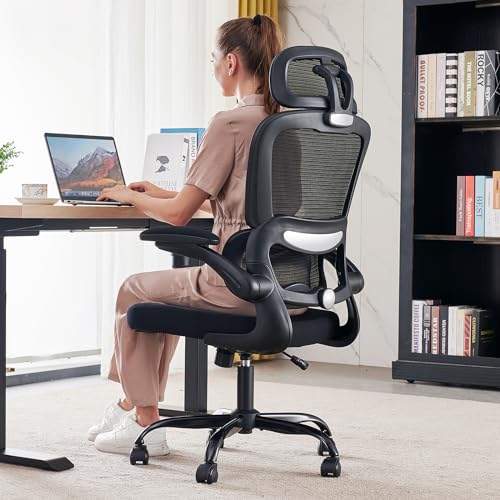
- NEO CHAIR High Back Mesh Office Chair, Black — a high-back breathable mesh chair with adjustable lumbar and flip-up arms — the cool, tidy eight-hour default
- Staples Hyken Ergonomic Mesh Task Chair, Gray — the mesh task chair found in countless offices — familiar, breathable, lumbar-supported everyday endurance
- COMHOMA Big and Tall Heavy Duty Office Chair with Foot Rest — the big-and-tall heavy-duty chair with a wide seat, pocket-spring back, 135-degree recline and a foot rest
- Daeorio High-Back Big and Tall Leather Chair with Footrest — the wide executive recliner in leather-style upholstery, with lumbar support and a footrest
- FOKESUN Ergonomic Office Chair with Footrest — designed for long hours: stated 350 lb capacity, 2D lumbar, 3D arms, headrest and a 3-position tilt lock
- GTPLAYER PU Leather Office Chair with Memory Foam — memory foam comfort, a mid-back profile and 90-degree flip-up arms that park the chair under the desk
Read the full guide ↓ for how each chair earned its place, what separates the strong picks from the compromises, and which one fits your situation.
Shopping for the best chairs for 8 hours a day means shopping for hour seven, not minute one. Almost any chair can host a pleasant first sit; the working day asks different questions. Does the back breathe when the room warms up at two in the afternoon? Does the lumbar support sit where your back actually is at four, after six hours of unconscious slouching? Can the chair change — tilt, recline, arms up, arms down — because the body that started the day fresh is not the body finishing it?
This guide compares six ergonomic chairs from the verified pool across a full day’s arc. The mesh chairs — the NEO CHAIR high-back and the Staples Hyken — bring airflow and proven task-chair manners. The COMHOMA big-and-tall and the Daeorio executive bring width, recline and footrests for the breaks that reset a day. The FOKESUN is the specification’s athlete: designed for long hours, a stated 350 lb capacity, two-dimensional lumbar and a tilt lock. The GTPLAYER closes the list with memory foam and flip-up arms for smaller home offices. Readers working even longer shifts should continue to Best Chairs For 300 Pounds 10 Hours A Day, where the same evidence-first method is applied to a ten-hour, heavy-duty brief.
Everything here is comfort guidance for ordinary working life — how a chair supports attention, posture and energy across a day. We make no medical claims; we compare stated designs, explain what each feature does across eight hours, and flag every honest limitation.
Key Takeaways
- Judge an eight-hour chair at hour seven: breathability, adjustable lumbar and a seat that has not packed down are the features that survive the day.
- The FOKESUN is the long-hours specification leader — designed for long hours, stated 350 lb capacity, 2D lumbar, headrest and a 3-position tilt lock.
- Mesh backs (NEO CHAIR and Staples Hyken) are the warm-room answer: airflow is a comfort feature that compounds hourly.
- Recline-and-footrest chairs (COMHOMA and Daeorio) turn short breaks into genuine resets without leaving your desk.
- The GTPLAYER’s flip-up arms and memory foam make it the small-home-office pick — it tucks away when the workday ends.
- No chair replaces movement: the best eight-hour setup pairs an adjustable chair with a standing-break rhythm.
In this guide
Quick Picks
| Pick | Badge | Best for | Where to check it |
|---|---|---|---|
| NEO CHAIR High Back Mesh Office Chair, Black | Best Breathable All-Rounder | keyboard-heavy days in warm rooms and tidy home offices | Check on Amazon |
| Staples Hyken Ergonomic Mesh Task Chair, Gray | Best Proven Task Chair | standard office days and buyers who value a proven design | Check on Amazon |
| COMHOMA Big and Tall Heavy Duty Office Chair with Foot Rest | Best for Larger Sitters | larger sitters working full days at home | Check on Amazon |
| Daeorio High-Back Big and Tall Leather Chair with Footrest | Best Executive Comfort | executive home offices and call-heavy days | Check on Amazon |
| FOKESUN Ergonomic Office Chair with Footrest | Best Overall | full-time workers who will use the adjustments across the day | Check on Amazon |
| GTPLAYER PU Leather Office Chair with Memory Foam | Best for Small Home Offices | compact home offices and multi-use rooms | Check on Amazon |
How These Picks Were Chosen
We selected from the verified ergonomic pool on long-day evidence stated in the listings: lumbar design and adjustability, back material and breathability, headrest provision, tilt and recline range, arm adjustability, stated capacities where given, and seat construction. Every chair here states a genuine long-hours design story; chairs with no ergonomic specification at all were not in contention for an eight-hour brief.
We deliberately balanced three philosophies of the long day. The mesh task chairs bet on airflow and light, correct posture. The upholstered executives bet on cushioning, width and break-time recline. The FOKESUN bets on adjustment depth — the chair as an instrument you tune across the day. Different workers swear by each philosophy, and the right one depends on your room temperature, your meeting load and how you actually spend hour six.
This is research-led guidance from manufacturer listing data, not hands-on testing and not medical advice. Features and capacities are reported as the listings state them, and each review names the limitation we would want to know before buying.
The 6 Best Chairs for 8 Hours a Day

NEO CHAIR High Back Mesh Office Chair, Black
Badge: Best Breathable All-Rounder
Strengths
- Breathable mesh back is the warm-room, warm-afternoon advantage that compounds across eight hours
- High-back design supports the shoulders, where mid-backs abandon taller sitters
- Flip-up armrests let it tuck under the desk — a home-office virtue at day’s end
Trade-offs
- Mesh support is firmer and more hammock-like than upholstered cushioning; some sitters miss the plush feel
- No headrest or footrest — break-time reclining is limited
- A task-chair look that will not satisfy anyone wanting an executive presence
| Back | High back, breathable mesh |
|---|---|
| Lumbar | Adjustable |
| Armrests | Flip-up |
| Color | Black |
| Listed use | Home office, computer work |
The NEO CHAIR is the eight-hour brief in its most honest form: a tall mesh back that breathes, lumbar support you can position, and arms that flip away when the day is done. Mesh earns its reputation across long days not in the first hour but in the sixth, when an upholstered back has been holding heat against your shirt since lunch and the mesh chair simply has not. For warm rooms and warm sitters, that is the whole argument, and it is a strong one.
Its posture is upright and task-focused, which suits keyboard-heavy days; its limits are the absence of lounging hardware — no headrest to lean into on a call, no footrest for a break. If your day is work with pauses rather than work with rests, and your office runs warm, this is the balanced default we would buy first.
By the second week, the NEO CHAIR’s flip-up arms develop an unexpected fan club: they make the chair the easiest in the house to vacuum around, to borrow for a guest, to slide aside when the desk becomes a wrapping station. Tools that disappear when not needed are the soul of home-office design. Add the mesh’s indifference to summer, and this is the chair that asks the least of its owner while giving a full working day back.
Best for: keyboard-heavy days in warm rooms and tidy home offices / Not suited for: sitters who want plush cushioning and recline breaks

Staples Hyken Ergonomic Mesh Task Chair, Gray
Badge: Best Proven Task Chair
Strengths
- A widely used, proven task-chair format — its eight-hour manners are known quantities, not promises
- Mesh back and lumbar support cover the long-day essentials without fuss
- Gray finish and a compact task profile suit shared and professional offices
Trade-offs
- Its listing positions it as an everyday chair; heavy-duty seekers should note no capacity is stated in the title data
- Fewer adjustment flourishes than the FOKESUN — no headrest, no tilt-lock menu
- Task-chair cushioning is workmanlike rather than luxurious
| Back | Mesh |
|---|---|
| Support | Lumbar support |
| Format | Swivel task chair |
| Color | Gray |
| Listed use | Home and professional offices |
The Hyken’s recommendation is its ubiquity: this is a chair that offices have bought by the hundred and sat in for years, and a design does not achieve that by failing at hour six. Mesh back, lumbar support, an honest task posture — the formula is unglamorous and it works, which is why so many working days have been spent in this exact silhouette.
Its ceiling is specification depth. There is no headrest for call-leaning, no multi-position tilt story, and its own listing calls it an everyday seating option — a fair self-description that heavier-duty shoppers should respect, cross-checking the live listing for any capacity figure their brief requires. For the standard eight-hour day at a standard desk, it remains the low-drama, proven pick.
The Hyken’s long service in offices has a practical corollary for buyers: its behavior is known. Colleagues have sat in it, facilities teams have maintained it, and its comforts and limits are documented by a decade of ordinary use rather than by marketing. For a risk-averse buyer furnishing a first real home office, that known-quantity quality is a feature no specification table captures, and it is why the chair keeps earning its place in guides like this one.
Best for: standard office days and buyers who value a proven design / Not suited for: buyers needing a stated heavy-duty capacity

COMHOMA Big and Tall Heavy Duty Office Chair with Foot Rest
Badge: Best for Larger Sitters
Strengths
- Big-and-tall, heavy-duty design with a wide seat — the eight-hour answer for larger sitters
- Pocket-spring back support with a pillow treats the day as a marathon, not a meeting
- Recline to 135 degrees plus a foot rest converts micro-breaks into real recovery
Trade-offs
- Leather-style upholstery breathes less than mesh across a warm afternoon
- Its size needs floor space — small rooms should measure
- Gaming embroidery styling is a matter of taste in professional settings
| Designation | Big and tall, heavy duty |
|---|---|
| Seat | Wide ergonomic seat |
| Back | Pocket-spring support, pillow |
| Recline | 135 degrees |
| Extras | Foot rest, adjustable armrests |
For the larger sitter, the eight-hour problem starts before comfort: most chairs are simply not built at their scale. The COMHOMA is — big and tall by designation, heavy duty by design, wide in the seat — and it layers its long-day features on that foundation: a pocket-spring back with a pillow, a recline that opens to 135 degrees, and a foot rest that lets a five-minute break do the work of a walk to the kitchen and back.
Choose it with eyes open about heat and footprint: upholstery is warmer than mesh by hour six of a summer day, and the chair is a large object in a small room. For the home-based larger professional, though, it is the most complete eight-hour package in this guide — the chair that treats both the work and the worker at full size. It also anchors the heavier brief in Best Chairs For 300 Pounds 10 Hours A Day, where its designation matters even more.
Across a season, the COMHOMA’s pocket-spring back becomes its signature: unlike a plain foam back, the spring support keeps its character month after month, which matters when the sitter’s weight is the design case rather than the exception. The chair also doubles, unapologetically, as the household’s film-night throne — a second life that big, reclining chairs earn easily and mesh task chairs rarely attempt.
Best for: larger sitters working full days at home / Not suited for: small, warm rooms where mesh and compactness win

Daeorio High-Back Big and Tall Leather Chair with Footrest
Badge: Best Executive Comfort
Strengths
- High-back, wide executive build gives shoulders and frame a full-size place to work
- Reclining design with a footrest suits a day punctuated by calls, reading and thinking
- Leather-style finish presents the formal look client-facing home offices want
Trade-offs
- Upholstery runs warmer than mesh across long days
- No flip-up arms are stated, so it will not tuck tightly under compact desks
- Its executive width is a cost in small rooms
| Design | High-back, big and tall, wide executive |
|---|---|
| Extras | Footrest, reclining |
| Support | Lumbar support |
| Upholstery | Leather-style |
| Color | Black |
The Daeorio is the eight-hour chair for the worker whose day is a portfolio: emails upright, calls reclined, documents read with feet up. Its high back and wide seat give a full-size sitter a full-size place, its lumbar support holds the working posture, and the recline-and-footrest combination makes the chair a second room for thinking — the mode in which a surprising amount of senior work actually happens.
It asks for space and gives back presence: this is an executive object, in a room that can hold it, for a worker whose video calls benefit from a chair that looks like a decision. Warmth is its tax — leather-style upholstery in a hot room at hour seven is a real consideration — and compact-desk owners should note the absence of flip-up arms. In the right office, it is the comfort pick with the best posture for the camera.
The Daeorio’s eight-hour story is really about transitions: it is the chair that changes with the day’s modes, and workers whose calendars alternate deep focus with calls find that rhythm written into the furniture. Its width also makes it the chair guests and partners gravitate to after hours. Keep it out of the smallest rooms and away from the hottest corners, and it returns executive comfort without executive ceremony.
Best for: executive home offices and call-heavy days / Not suited for: compact desks and hot, small rooms

FOKESUN Ergonomic Office Chair with Footrest
Badge: Best Overall
Strengths
- The listing says “designed for long hours” and then evidences it: 2D lumbar, headrest, tilt lock and a footrest
- Stated 350 lb capacity with BIFMA testing gives its durability a verifiable basis
- 3D arms and a 3-position tilt let the chair be re-tuned as the day changes — the eight-hour skill that matters most
Trade-offs
- Feature density means a real setup session: budget twenty minutes to dial it in
- 3D arms do not flip away, so tight tuck-under parking at small desks is limited
- A specification this complete sits at the considered end of the pool’s price conversation
| Stated capacity | 350 lb |
|---|---|
| Lumbar | 2D adjustable |
| Armrests | 3D adjustable, with headrest |
| Tilt | 3-position tilt lock |
| Testing | BIFMA-tested |
| Extras | Footrest |
Most chairs claim ergonomics; the FOKESUN itemizes them. Lumbar support adjustable in two dimensions, so it can meet your back in depth as well as height. A headrest for the lean-back moments. A tilt lock with three positions, so the chair can be an upright desk chair at nine, a reading chair at two and a thinking chair at five. A stated 350 lb capacity, BIFMA testing, and a footrest for the breaks. It is the most complete answer in this guide to the question the title asks.
Its demands are the demands of any good instrument: set it up properly, and re-tune it as the day moves, rather than freezing its morning settings. Its arms adjust in three dimensions but do not flip away, so owners of compact desks should check their tuck geometry — the GTPLAYER below is the small-desk specialist. For the full-time, full-day worker, the FOKESUN is our first recommendation.
Owners of deeply adjustable chairs report a pattern worth copying: a sticky note on the monitor with their three settings — focus, calls, reading — until the positions become muscle memory. The FOKESUN rewards that ritual more than any chair here, because its adjustments actually change how the day feels. It is also the pick most likely to still be the right chair after a promotion, a move or a change of desk: range is future-proofing.
Best for: full-time workers who will use the adjustments across the day / Not suited for: buyers wanting a set-it-and-forget-it chair

GTPLAYER PU Leather Office Chair with Memory Foam
Badge: Best for Small Home Offices
Strengths
- Flip-up arms give it the full tuck-away parking that small home offices live by
- Memory foam seat is the plushest sit in this guide for its size
- Mid-back design keeps the chair’s bulk and visual weight down in multi-use rooms
Trade-offs
- Mid-back support stops lower than the high-back picks — less shoulder and head support for lean-back work
- PU leather breathes less than the mesh picks across warm days
- A simpler rocking mechanism than the tilt systems on the FOKESUN
| Armrests | 90-degree flip-up |
|---|---|
| Seat | Memory foam |
| Back | Mid back, ergonomic |
| Upholstery | PU leather |
| Motion | Flexible rocking |
| Color | Black |
The GTPLAYER solves the home-office version of the eight-hour problem, where the office is also a bedroom or a living room and the chair must clock off when you do. Its arms flip up ninety degrees, the chair slides under the desk, and the room returns to its evening self. During the day, memory foam gives it the kindest seat in this guide relative to its size, and the mid-back keeps its profile modest.
It is the right chair for the worker whose day is focused and whose room is shared: less shoulder support than the high-backs, warmer than mesh, and entirely sufficient for the thousands of compact workstations it was designed for. If your desk is compact, start your shortlist here and in Best Chairs For 50 Desk, where this chair’s tuck-away talent gets its own full examination.
The GTPLAYER’s second career is as the household’s most borrowed chair: it parks under any desk, presents at any table and gives a guest a memory-foam welcome that folding chairs cannot. That versatility is why it suits the compact home office so well — in a small home, every object should hold two jobs. Its rocking motion, dismissed as simple, turns out to be the feature used most during thinking time, which is not a small portion of an eight-hour day.
Best for: compact home offices and multi-use rooms / Not suited for: tall sitters wanting full high-back support
Comparison Table
| Pick | Badge | Key features | Link |
|---|---|---|---|
| NEO CHAIR High Back Mesh Office Chair, Black | Best Breathable All-Rounder | High-back mesh, adjustable lumbar, flip-up arms | Check on Amazon |
| Staples Hyken Ergonomic Mesh Task Chair, Gray | Best Proven Task Chair | Proven mesh task chair with lumbar support, gray | Check on Amazon |
| COMHOMA Big and Tall Heavy Duty Office Chair with Foot Rest | Best for Larger Sitters | Big-and-tall heavy-duty, wide seat, recline and foot rest | Check on Amazon |
| Daeorio High-Back Big and Tall Leather Chair with Footrest | Best Executive Comfort | Wide executive recliner, lumbar support, footrest | Check on Amazon |
| FOKESUN Ergonomic Office Chair with Footrest | Best Overall | Long-hours design, 350 lb stated, 2D lumbar, 3D arms, tilt lock | Check on Amazon |
| GTPLAYER PU Leather Office Chair with Memory Foam | Best for Small Home Offices | Memory foam, flip-up arms, mid-back, rocking | Check on Amazon |
How to Choose a Chair for 8 Hours a Day
Plan for the whole arc of the day, not the first sit. In the morning you need an upright, supportive posture for focused work. By mid-afternoon you need airflow, a lumbar position that still matches a tired back, and a chair that lets you change angle without a fight. In the last hour you need the seat to feel like it did at nine. Shop for those three moments: breathability or cushioning that suits your room, lumbar you can reposition, and a tilt or recline that gives the chair a second and third posture.
Match the back to your climate and your work. Mesh backs — the NEO CHAIR and the Hyken — win warm rooms and keyboard-marathon days. Upholstered backs — the COMHOMA, the Daeorio, the GTPLAYER — win cooler rooms, call-heavy days and workers who lean back to think. There is no universal winner; there is only the honest answer for your room, which is why this guide keeps both philosophies fully linked and lets your thermometer vote.
Weight and width deserve the same honesty. Larger sitters should start from chairs that state their design for it — the FOKESUN’s stated 350 lb capacity and the COMHOMA’s big-and-tall designation are the pool’s explicit answers — and everyone should compare seat width against their own frame rather than trusting a photograph’s proportions. A chair that fits is a chair whose support lands where your body is.
Finally, build the day around the chair: desk height set so feet rest flat, screen at eye level, and a standing break at natural intervals — the chair’s job is to make sitting good, not to make sitting endless. The fixed-post professionals in Best Chairs For 911 Dispatch cannot leave their chairs the way you can; borrow their chair standards, keep your freedom to move, and you have the best of both doctrines.
How to Set Up an Eight-Hour Chair and Survive the Day in It
Setup is a fifteen-minute investment that pays out for years. Seat height first: feet flat, thighs level, no pressure behind the knees. Lumbar second: sit in your real working posture — not a parade-ground sit — and position the support into the small of your back until your back reports contact without pressure. Arms third: just under your resting elbows, so shoulders stay down. Headrest last, if fitted: it should meet your head when you lean back, not push it forward when you sit up.
Run the day in postures, not in one position. Upright and locked for focused work; tilt open for reading and calls; recline and footrest — where fitted — for the genuine breaks. Re-tune the lumbar once at midday: your afternoon back is not your morning back, and chairs with adjustable support, like the FOKESUN’s two-dimensional system, exist precisely for that second tuning. The workers who finish eight hours freshest are the ones who treated their chair as an instrument, not a throne.
Maintain the machine. Monthly: tighten bolts, clear caster hair, check that tilt and lift mechanisms move as they should. Seasonally: reconsider the setup — a chair adjusted in January’s posture may be serving a different body by July. Small attentions, compounded across thousands of sitting hours, are what separate a chair that lasts from a chair that merely survives.
Problem: comfortable at nine, aching by three → the chair is fine and the position is stale; unlock the tilt, move the lumbar, and add two standing breaks before blaming the purchase. Problem: the seat feels flat by evening → sustained load packs any cushion; a quality seat pad extends comfort, and rotating your sitting posture across the seat spreads the wear. Problem: warm back by mid-afternoon in an upholstered chair → that is the mesh argument arriving on schedule; a breathable seat cover helps, and your next chair decision has been made for you.
Mesh vs Upholstery: The Eight-Hour Schism
Ask a room of full-time sitters to divide by chair religion and they will split into mesh and upholstery camps, each with eight hours of evidence. Mesh offers airflow, a firmer and more suspended sit, and a back that never holds the day’s heat. Upholstery offers cushioning, a warmer and more enveloping feel, and — in the reclining designs here — the break-time range of a footrest and a deep tilt. Neither camp is wrong; each is describing its own room, body and working style accurately.
The tiebreakers are practical. Hot room, warm sitter, keyboard-marathon day: mesh. Cool room, call-heavy day, a worker who thinks leaning back: upholstery. Hybrid days argue for adjustment depth — the FOKESUN path — where tilt positions let one chair play both roles across the day. Choose by your calendar and your thermometer, and be suspicious of anyone who tells you one material wins for everyone.
The Break Is Part of the Chair
An eight-hour chair is used for roughly seven hours of work and one hour of everything else — calls, reading, thinking, pauses — and the everything-else is where recline, tilt lock and footrests earn their price. A chair that opens up for a five-minute reset returns a worker to the desk measurably more willing than a chair that holds its one posture like a rule. This is why the executives and the big-and-tall recliner in this guide are not indulgences; they are break infrastructure.
Build the ritual deliberately: at natural breaks, change the chair before you check the phone. Recline, feet up where the design allows, eyes at distance, two minutes. The chair cannot make you take the break, but a chair that rewards it makes the habit far more likely to survive a busy quarter — a lesson the rotating professionals of Best Chairs For 911 Dispatch build entire rosters around.
The Home Office Tax: Why Your Chair Choice Compounds
A full-time home worker will spend roughly two thousand hours a year in their chair — more time than in their car, their bed’s waking hours, or any other single object they own. At that scale, small qualities compound like interest: a lumbar support an inch out of place is a thousand small discomforts; a mesh back’s airflow is a thousand cooler afternoons; a chair that tucks away is a thousand evenings where the bedroom is a bedroom again.
This compounding is the honest argument for buying the best chair your budget reaches, and for spending decision time in proportion to sitting time. An hour spent comparing lumbar systems returns itself within the first month. The workers who regret their chair purchases almost never regret them at the till — they regret them at hour six hundred, in a chair chosen in six minutes.
Two Chairs, One Day: The Rotation Strategy
Some full-time sitters swear by a heresy: two different chairs, rotated by task or by day. A firm, upright task chair for focused mornings; a reclining chair for calls and reading in the afternoon. The rotation varies posture more radically than any single chair’s adjustments can, and each chair wears at half the rate. The pool in this guide supports the strategy naturally — a mesh task chair plus the COMHOMA or Daeorio as the second seat covers both halves of most working days.
The strategy asks for floor space and a second purchase, so it is not for every home office. But for the worker whose chair is genuinely their workplace, it deserves consideration alongside the single perfect chair — because the perfect chair, sat in identically for two thousand hours, is still one posture repeated two thousand times.
Standing Desks, Hybrid Days and the Chair’s New Job
Many eight-hour workers now split their day — standing for calls, sitting for focus, a walk standing in for the commute. The chair’s job in a hybrid day is narrower and more demanding: it must be perfect for the sitting hours rather than tolerable for all of them, and it must wait, parked and ready, without colonizing the room while you stand. Flip-up arms and honest casters matter more in this pattern, and the midday re-tune becomes a per-sit ritual rather than a daily one.
The hybrid pattern also changes what “best” means at purchase: a chair with a genuinely supportive upright posture — the mesh picks and the FOKESUN’s locked positions — serves the focused sitting block better than a chair whose charms are all in its recline. Match the chair to the block it will actually serve. The standing hours will look after themselves; they always do, because nobody has ever needed a buying guide to stand up from a good chair and walk away from it refreshed.
What Your Chair Says on Video Calls
The modern office chair has an audience its designers never anticipated: everyone you meet on video. A high back frames a speaker with authority; a headrest reads as seniority; a gaming silhouette reads as personality; a mesh task chair reads as pure business. None of this should outrank comfort across eight hours — but at equal comfort, the chair that presents you the way your work deserves is a legitimate tiebreaker, and the Daeorio and the COMHOMA earn part of their keep exactly here.
Frame the whole shot while you are at it: the chair’s top should sit below or just at your head’s line on camera, the light should favor your face over the chair’s outline, and the background your chair creates is the one your colleagues will associate with your name for years. It is a strange new specification for furniture, and a real one — the eight-hour chair is now also office architecture, broadcast daily.
Your First Week With a New Chair: A Short Diary
Day one with a new eight-hour chair is setup day, and it should be treated as an appointment rather than an unboxing: fifteen minutes with the adjustments, a full morning’s work, and a note — literally, a note — of what you changed at midday and why. Day two is the honesty day, when the novelty has worn off and the chair’s real character shows: where does your back look for support at three in the afternoon, and does the chair provide it without being asked twice? Most good chairs pass day two quietly, which is the point.
By day five, the pattern of your use has emerged — the tilt position you actually live in, the arm height you stopped adjusting, the lumbar setting that survived the week. Lock those in as your documented setup, and schedule the one-month review the day you buy the chair: bodies change, projects change posture, and the chair that was perfect for January’s spreadsheet marathon may need re-tuning for March’s call-heavy sprint. The workers who love their chairs at year three are, almost without exception, the ones who kept these small appointments with them.
Accessories That Earn Their Desk Space
A great chair invites accessory creep, so let this guide be strict: three accessories earn their place beside an eight-hour chair, and the rest are décor. A footrest — for chairs without one built in — changes the geometry of the afternoon sit more than any cushion. A small lumbar cushion, paradoxically, earns its place only as a diagnostic: if you need it daily, your chair’s own lumbar system is set wrong or is the wrong chair. And a seat pad, bought when a good chair’s cushion begins its late-life packing, extends a sound chair’s service honestly.
Everything else — headrest pillows strapped to chairs that have headrests, armrest pads on adjustable arms, blankets marketed as posture systems — should be bought only after the chair itself has been properly set up and lived in for a month. Accessories cannot fix a chair that does not fit, and on a chair that does fit, most of them are solutions shopping for problems. Spend the money on the chair, the setup and the breaks; the desk will stay clearer and the day will go better.
Common Buying Mistakes
- Buying on the first sit. Minute one is a liar. Judge breathability, lumbar position and seat construction — the things hour seven will judge.
- Freezing the morning setup. An adjustable chair left at one setting is an expensive fixed chair. Re-tune at midday; that is what the adjustments are for.
- Ignoring your room’s temperature. Upholstery in a hot room and mesh in a cold one are both daily taxes. Let the thermometer vote.
- Skipping the capacity and width check. Support that does not fit your frame is not support. Read the stated figures and compare seat width with your own body.
- Expecting the chair to replace movement. The best eight-hour setup still includes standing breaks. A chair that makes sitting good is a partner, not a permission slip.
- Letting maintenance slide. Thousands of sitting hours loosen bolts and clog casters. A monthly five-minute check keeps an eight-hour chair feeling new.
Final Recommendation
Start with the FOKESUN if you want the most complete eight-hour instrument: long-hours design, stated capacity, deep adjustment and a footrest, ready to be tuned across your day. Choose the NEO CHAIR or the Hyken if your room runs warm and your day runs on a keyboard — mesh is the afternoon’s best friend. Choose the COMHOMA if you are a larger sitter who wants width, springs and a proper recline, the Daeorio if your day is executive and call-led, and the GTPLAYER if your office must disappear into a bedroom at six.
Whichever you choose, set it up properly, re-tune it at midday, and keep your standing breaks sacred. Do those three things and eight hours stops being something your chair survives and becomes something it supports — the same standard, applied at gaming-desk scale, that runs through Best Chairs For A Gamer for the hours after work.
To check the current listing for a shortlist pick, use these links: the Best Breathable All-Rounder pick, NEO CHAIR High Back Mesh Office Chair, Black, here on Amazon; the Best Proven Task Chair pick, Staples Hyken Ergonomic Mesh Task Chair, Gray, here on Amazon; the Best for Larger Sitters pick, COMHOMA Big and Tall Heavy Duty Office Chair with Foot Rest, here on Amazon.
Frequently Asked Questions
What matters most in a chair used 8 hours a day?
Adjustability and endurance: lumbar support you can position, a back material matched to your room’s temperature, a seat that resists packing down, and a tilt or recline that lets you change posture across the day. First-sit softness is the least reliable predictor of eighth-hour comfort.
Is mesh or upholstery better for long days?
Mesh breathes, which wins warm rooms and warm sitters, and offers a firmer suspended sit. Upholstery cushions and enables the recline-and-footrest designs that make breaks restorative. Match the material to your room and your working style; both philosophies are fully represented in this guide because both are right for somebody.
Do I need a headrest for office work?
If your day includes leaning back — calls, reading, thinking — a headrest turns those moments into rest rather than strain, and the FOKESUN and TRALT-style designs include one. If you work upright at a keyboard all day, a headrest is unused furniture. Buy for the day you actually have.
What capacity should I look for?
A stated capacity comfortably above your weight, printed in the listing — the FOKESUN states 350 lb and the COMHOMA is designated big-and-tall and heavy-duty. Where a listing states no figure, check the live product page before relying on the chair for full-time duty, especially at higher weights.
How often should I adjust my chair during the day?
At least twice: once at setup in the morning, and once at midday when your posture has settled into its afternoon shape. Beyond that, change the tilt posture at natural task changes — upright for focus, open for calls and reading. The adjustments are the product; use them.
Can the right chair fix a bad desk setup?
No — it can only carry its third of the system. Desk height, screen position and break rhythm matter alongside the chair. The good news is that a well-chosen chair makes the other fixes easier to keep, and our compact-desk guide at Best Chairs For 50 Desk covers the small-workstation version of the whole setup.