Disclosure: topratedkitchenware.com is reader-supported. When you buy through links on our site, we may earn an affiliate commission from Amazon and other retailers, at no extra cost to you.
Where to buy
The best chairs for 300 pounds 10 hours a day have to pass two tests at once, and most office chairs fail the first one silently: the listing must actually support the sitter’s weight, and the chair must stay comfortable across a ten-hour shift. From the verified pool, only two chairs state the qualifying evidence in their listings — the COMHOMA Big and Tall heavy-duty chair, and the MOLENTS ergonomic chair with its wide seat and BIFMA X5.1 certification — so those two carry the store links in this guide. The other four pool chairs are decent everyday mesh task chairs, but none of them states a weight capacity, a wide seat or a heavy-duty build, so they are reviewed in full as prose-only picks with no link: for a 300-pound sitter, an unstated capacity is not a detail to gamble a ten-hour day on.
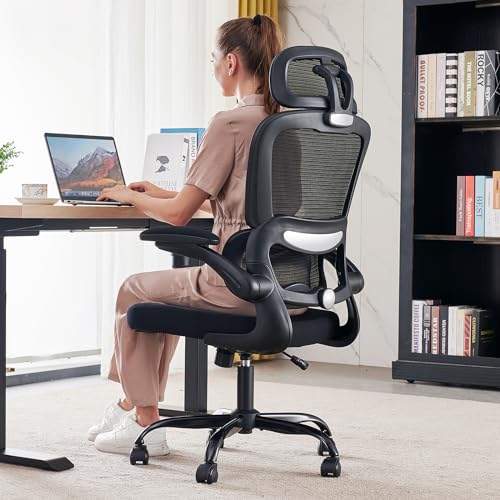
- COMHOMA Office Chair with Flip-Up Armrests, Black — a breathable mesh chair with adaptive lumbar support and flip-up arms — a good everyday chair that simply never states a capacity (covered in full below as a prose-only pick: no store link in this guide.)
- Staples Dexley Ergonomic Mesh Task Chair, Black — a mainstream mesh task chair for home offices and workstations — honest everyday seating with no capacity stated (covered in full below as a prose-only pick: no store link in this guide.)
- MOLENTS Ergonomic Office Chair, Obsidian Black — the wide-seat mesh chair with adjustable lumbar, 3D arms and BIFMA X5.1 certification
- NEO CHAIR High Back Mesh Office Chair, Black — a high-back breathable mesh chair with adjustable lumbar and flip-up arms — and no stated capacity (covered in full below as a prose-only pick: no store link in this guide.)
- Staples Hyken Ergonomic Mesh Task Chair, Gray — the familiar gray mesh task chair found in countless offices — comfortable everyday seating, no capacity stated (covered in full below as a prose-only pick: no store link in this guide.)
- COMHOMA Big and Tall Heavy Duty Office Chair with Foot Rest — the explicit big-and-tall, heavy-duty chair: wide seat, reclining back with pillow support and a foot rest
Read the full guide ↓ for how each chair earned its place, what separates the strong picks from the compromises, and which one fits your situation.
Searching for the best chairs for 300 pounds 10 hours a day is really two searches wearing one coat. The first is structural: a chair whose frame, cylinder and seat are built and rated for a 300-pound sitter, with a seat wide enough that the rating is usable rather than theoretical. The second is temporal: ten hours is not a longer version of two hours — it is a different discipline, where breathable materials, adjustable lumbar support and a seat that does not pack down by hour six matter as much as the frame. A chair that passes only one test will let you down at work, daily.
That is why this guide is stricter than most. Four of the six pool chairs are perfectly respectable mesh task chairs for average-weight sitters at ordinary desks — and not one of them states a weight capacity in its listing. We review them honestly as prose-only picks, because a 300-pound professional working ten-hour days should never have to discover a chair’s limit by reaching it. The two chairs that do state their qualifications — one explicitly big-and-tall and heavy-duty, one wide-seated and certified to a recognized durability standard — carry the links and the recommendations. If your long-hours search is about shift work specifically, Best Chairs For 911 Dispatch applies the same standards to rotating, round-the-clock desks.
Everything in this guide is framed around comfort, fit and durability — how a chair supports a working day. We make no medical claims for any chair; we compare stated specifications, explain what they mean in practice, and tell you what to verify before a chair becomes the foundation of your working life.
Key Takeaways
- A stated capacity is non-negotiable at 300 pounds: if the listing does not print one, the chair is a prose-only pick in this guide, whatever its other virtues.
- The COMHOMA Big and Tall is the headline recommendation — heavy-duty build, wide ergonomic seat, reclining back with pillow support and a foot rest for breaks.
- The MOLENTS is the certified alternative: wide seat, adjustable lumbar, 3D arms and BIFMA X5.1 certification behind its durability story.
- Ten hours demands breathability and adjustment, not just strength — mesh backs and movable lumbar support are what hour eight feels like.
- Seat width matters as much as the capacity figure: a rated chair whose seat pinches is a chair you will hate by lunch.
- The four prose-only chairs are fine everyday task chairs for lighter sitters — they are excluded by evidence, not by quality.
In this guide
Quick Picks
| Pick | Badge | Best for | Where to check it |
|---|---|---|---|
| COMHOMA Office Chair with Flip-Up Armrests, Black | Prose-Only: No Stated Capacity | average-weight sitters wanting a breathable everyday desk chair | Prose-only pick |
| Staples Dexley Ergonomic Mesh Task Chair, Black | Prose-Only: No Stated Capacity | everyday home-office use by average-weight sitters | Prose-only pick |
| MOLENTS Ergonomic Office Chair, Obsidian Black | Best Certified Pick | 300 lb professionals who want certified durability and a wide mesh seat | Check on Amazon |
| NEO CHAIR High Back Mesh Office Chair, Black | Prose-Only: No Stated Capacity | general home-office sitters wanting a high mesh back | Prose-only pick |
| Staples Hyken Ergonomic Mesh Task Chair, Gray | Prose-Only: No Stated Capacity | everyday office seating for average-weight users | Prose-only pick |
| COMHOMA Big and Tall Heavy Duty Office Chair with Foot Rest | Best Overall | 300 lb sitters working full ten-hour days at home or in relaxed offices | Check on Amazon |
How These Picks Were Chosen
The method for this guide was a filter before it was a comparison. We read every pool listing for three kinds of stated evidence: an explicit weight capacity, an explicit big-and-tall or heavy-duty designation, or a wide seat paired with a recognized certification. Two chairs produced that evidence. Four produced none of it — their listings describe ergonomic mesh task chairs in general terms — and under this guide’s rule, a chair that cannot evidence its capacity does not get linked to a reader whose requirement is a number.
For the two qualifying chairs we then compared the ten-hour factors: lumbar design and adjustability, arm adjustability, seat width and construction, back material and breathability, and break-time features such as recline and foot rests. We also considered what ten hours a day, five days a week does to a chair across a year — roughly two and a half thousand sitting hours — which is why certification and heavy-duty framing weigh so heavily here.
This is research-led guidance from manufacturer listing data, not hands-on testing and not medical advice. Capacities and certifications are reported as the listings state them, and we flag every place where a reader should verify a figure on the live product page before buying.
The Best Chairs for 300 Pounds 10 Hours a Day: What Actually Qualifies
COMHOMA Office Chair with Flip-Up Armrests, Black
Badge: Prose-Only: No Stated Capacity
Strengths
- Breathable mesh and adaptive lumbar support are the right ingredients for long general use
- Flip-up armrests let the chair tuck under a desk and suit multi-use rooms
- From the same maker as our top pick, with a similar design language
Trade-offs
- No weight capacity is stated in the listing — the disqualifying gap for this guide’s reader
- Nothing in the listing claims a wide seat or heavy-duty frame
- Prose-only here: a fine chair for lighter sitters, an unknown for a 300-pound, ten-hour brief
| Back | Breathable mesh |
|---|---|
| Lumbar | Adaptive lumbar support |
| Armrests | Flip-up |
| Color | Black |
| Stated capacity | Not stated in listing |
Taken on its own terms, this COMHOMA is a sensible everyday desk chair: breathable mesh for warm rooms, lumbar support that adapts rather than sitting at one fixed contour, and flip-up arms that make it a good citizen in small offices. For a sitter of average weight working ordinary hours, there is little to complain about, and its maker’s big-and-tall chair below shows the brand knows the category.
For this guide’s reader, though, the listing’s silence is the story. No capacity figure, no wide-seat claim, no heavy-duty designation — nothing a 300-pound sitter can rely on for ten hours a day. Office chairs fail gradually and then suddenly, and they fail the sitter who trusted an unstated number. We therefore review it without a link: not a bad chair, but an unevidenced one for this specific, demanding brief.
For a lighter colleague or a partner sharing your office, this chair’s flip-up arms and breathable mesh make it a perfectly sensible buy, and its adaptive lumbar is a nicer feature than many chairs at its level offer. Our prose-only verdict is a statement about evidence, not quality: the moment its listing publishes a capacity that clears your requirement, it becomes a candidate. Until then, for this reader, it remains a well-reviewed unknown.
Best for: average-weight sitters wanting a breathable everyday desk chair / Not suited for: any sitter who needs a stated 300 lb capacity
Staples Dexley Ergonomic Mesh Task Chair, Black
Badge: Prose-Only: No Stated Capacity
Strengths
- A proven, mainstream task-chair design from a major office retailer
- Mesh back and lumbar support cover the everyday ergonomic basics
- Swivel task format suits workstations and shared desks
Trade-offs
- The listing positions it for everyday desk use and states no weight capacity
- No wide seat or heavy-duty construction is claimed
- Prose-only for this brief: the reader’s requirement is a number this listing never gives
| Back | Mesh |
|---|---|
| Support | Lumbar support |
| Format | Swivel task chair |
| Color | Black |
| Stated capacity | Not stated in listing |
The Dexley is the kind of chair that fills a million home offices competently: mesh back, lumbar support, swivel base, no drama. Its listing describes it, accurately, as ideal for home offices, workstations and everyday desk use. Everyday is the operative word — the chair is specified and sold for the broad middle of the market.
A 300-pound sitter working ten-hour days is not the broad middle of the market, and a responsible guide cannot stretch an everyday chair into a heavy-duty recommendation on goodwill. No capacity is stated, no reinforced build is claimed, so the Dexley is prose-only here. Readers under its unstated limits will find it a perfectly good chair; readers at 300 pounds should buy a chair that says so.
The Dexley’s real home is the general office population, where its mesh back and lumbar support will serve thousands of ordinary days without complaint. Fleet buyers for mixed offices buy chairs like this by the dozen for good reason. But a fleet average is not an individual specification, and a 300-pound professional deserves a chair chosen the way this guide chose its two linked picks — by stated evidence, for their body, for their hours.
Best for: everyday home-office use by average-weight sitters / Not suited for: 300 lb sitters or ten-hour heavy-duty use

MOLENTS Ergonomic Office Chair, Obsidian Black
Badge: Best Certified Pick
Strengths
- BIFMA X5.1 certification gives its durability a recognized standard rather than a slogan
- Wide seat addresses the fit half of the 300-pound brief, not just the strength half
- Adjustable lumbar support and 3D arms let the chair be tuned across a long day
Trade-offs
- Mesh-and-task styling is functional rather than executive
- Certification supports the durability story, but larger sitters should still confirm the live listing’s capacity figure before ordering
- Tilt-back task posture, not a recliner — break-time lounging is limited
| Certification | BIFMA X5.1 certified |
|---|---|
| Seat | Wide seat |
| Lumbar | Adjustable lumbar support |
| Armrests | 3D adjustable |
| Back | Mesh, tilt back |
| Color | Obsidian Black |
The MOLENTS earns its link the paperwork way, and at 300 pounds paperwork matters. BIFMA X5.1 is the recognized durability standard for office seating — a regime of load and cycle testing that a chair passes or fails — and its presence turns “trust us, it is sturdy” into something verifiable. Pair that with a seat the listing explicitly calls wide, and both halves of this guide’s brief get an answer: strength with evidence, and room to sit in.
Across ten hours, its adjustments do the quiet work: lumbar support you can position rather than endure, 3D arms that meet your elbows where your desk puts them, and a breathable mesh back. Our one caution is procedural, not structural — confirm the capacity figure on the live listing at purchase, since certifications and ratings are exactly the details worth thirty seconds of verification. For the sitter who wants the certified route, this is the pick.
Across a working week, the MOLENTS’ certification story shows up as an absence: no new creaks, no loosening arms, no seat that feels different on Friday from Monday. The wide seat also changes the psychology of the day — a sitter who is not managing the chair’s edges can give their attention to the work. Keep the mesh brushed free of dust so the airflow stays honest, re-tune the lumbar as your posture evolves across a project, and the chair repays its paperwork with performance.
Best for: 300 lb professionals who want certified durability and a wide mesh seat / Not suited for: sitters wanting a plush executive or reclining chair
NEO CHAIR High Back Mesh Office Chair, Black
Badge: Prose-Only: No Stated Capacity
Strengths
- High-back mesh design gives tall-backed, breathable support for general use
- Adjustable lumbar and flip-up armrests cover the small-office essentials
- Clean black styling suits home and company offices alike
Trade-offs
- No weight capacity stated anywhere in the listing data
- No wide seat or heavy-duty claim to set against this guide’s brief
- Prose-only: good general chair, unevidenced for 300 lb, ten-hour duty
| Back | High back, breathable mesh |
|---|---|
| Lumbar | Adjustable |
| Armrests | Flip-up |
| Color | Black |
| Stated capacity | Not stated in listing |
The NEO CHAIR makes a fair case to the general reader: a high mesh back for support and airflow, adjustable lumbar, flip-up arms for tight desks. As a home-office chair for the average sitter it is a reasonable, tidy package, and its high back will suit taller users better than the mid-back crowd.
But this guide’s question is narrower and heavier. Nothing in the listing states a capacity, a seat width claim or a heavy-duty build, and ten hours a day at 300 pounds is precisely the use case where “probably fine” is not an acceptable engineering standard. It is therefore prose-only here — reviewed, respected, and not linked for this reader.
In a general home office, the NEO CHAIR’s high mesh back is a genuinely nice thing to work in — tall support, moving air, arms that flip away at the end of the day. Nothing in this review retracts that. It is prose-only because a ten-hour, 300-pound brief is an engineering specification, and this listing offers ergonomic adjectives where the brief requires numbers. Readers shopping for ordinary use should feel free to shortlist it; readers shopping this title should not.
Best for: general home-office sitters wanting a high mesh back / Not suited for: any brief with a stated weight requirement
Staples Hyken Ergonomic Mesh Task Chair, Gray
Badge: Prose-Only: No Stated Capacity
Strengths
- One of the most widely used mesh task chairs in offices, with a familiar, proven format
- Lumbar support and a breathable mesh back for everyday comfort
- Gray finish suits professional offices as easily as home desks
Trade-offs
- Positioned by its own listing as an everyday seating option, with no capacity stated
- No wide seat or reinforced build is claimed
- Prose-only for this guide: popularity is not a weight rating
| Back | Mesh |
|---|---|
| Support | Lumbar support |
| Format | Swivel task chair |
| Color | Gray |
| Stated capacity | Not stated in listing |
The Hyken may be the most sat-in chair in this entire guide: it is a staple of offices and home workstations, and its mesh-and-lumbar formula is comfortable, breathable and unpretentious. If the question were simply “a good task chair”, it would be an easy recommendation, and for lighter colleagues sharing your office it remains one.
The question here, though, includes a number — 300 pounds — and a duration — ten hours a day — and the Hyken’s listing answers neither. Its own description calls it a comfortable everyday seating option, and everyday seating is what it is. We will not upgrade it by implication into a heavy-duty chair it never claims to be, so it stands as a prose-only pick.
The Hyken illustrates the guide’s central lesson better than any other chair: it is popular, proven and comfortable — and none of those words is a weight rating. In offices across the country it gives good service to the sitters it was designed for. The discipline this guide asks of you is simply to be the sitter the chair was designed for, verified in print, before you stake two and a half thousand working hours a year on it.
Best for: everyday office seating for average-weight users / Not suited for: 300 lb, ten-hour heavy-duty briefs

COMHOMA Big and Tall Heavy Duty Office Chair with Foot Rest
Badge: Best Overall
Strengths
- Big-and-tall, heavy-duty designation is stated outright — the chair is designed and sold for larger sitters
- Wide ergonomic seat with pocket-spring back support aims at all-day comfort, not just capacity
- Recline to 135 degrees plus a foot rest turns breaks into real recovery without leaving the chair
Trade-offs
- Leather-style upholstery breathes less than mesh across a warm ten-hour day
- A big chair needs a big footprint — measure your desk space
- Gaming-leaning styling with embossing will not suit every professional setting
| Designation | Big and tall, heavy duty |
|---|---|
| Seat | Wide ergonomic seat |
| Back | Pocket-spring support, pillow |
| Recline | 135 degrees |
| Extras | Foot rest, adjustable armrests |
| Upholstery | Designed leather with embossing |
This is the chair in the pool that was actually designed for the reader in the title. Big and tall, heavy duty, wide — the listing says the quiet parts out loud, and that honesty is what a 300-pound buyer is shopping for. The wide ergonomic seat gives the capacity somewhere comfortable to live, and the pocket-spring back support with its pillow treats the ten-hour half of the brief as seriously as the weight half.
Its break-time design is the other half of its case: a recline to 135 degrees and a foot rest mean the chair changes roles across the day — upright for work, opened up for the ten minutes that reset your attention. The compromises are real but ordinary: leather-style upholstery runs warmer than mesh, the chair is physically large, and its gaming embroidery will not charm every boardroom. For the home-based or hybrid professional it is aimed at, it is the most complete answer in this guide.
A month into ownership, the COMHOMA’s most-used feature is often not the recline but the pillow-and-spring back’s consistency: the support at hour nine resembles the support at hour one, which is the whole game at this duty cycle. The foot rest earns its floor space on Friday afternoons. Keep its bolts on the monthly check and its upholstery wiped down weekly, and treat its size as what it is — the physical footprint of taking a large sitter’s workday seriously.
Best for: 300 lb sitters working full ten-hour days at home or in relaxed offices / Not suited for: small desks and formal, mesh-only office environments
Comparison Table
| Pick | Badge | Key features | Link |
|---|---|---|---|
| COMHOMA Office Chair with Flip-Up Armrests, Black | Prose-Only: No Stated Capacity | Mesh task chair, adaptive lumbar, flip-up arms — no stated capacity | Prose-only pick |
| Staples Dexley Ergonomic Mesh Task Chair, Black | Prose-Only: No Stated Capacity | Mainstream mesh task chair — no stated capacity | Prose-only pick |
| MOLENTS Ergonomic Office Chair, Obsidian Black | Best Certified Pick | Wide seat, BIFMA X5.1 certified, adjustable lumbar, 3D arms, mesh | Check on Amazon |
| NEO CHAIR High Back Mesh Office Chair, Black | Prose-Only: No Stated Capacity | High-back mesh chair, adjustable lumbar — no stated capacity | Prose-only pick |
| Staples Hyken Ergonomic Mesh Task Chair, Gray | Prose-Only: No Stated Capacity | Popular mesh task chair, gray — no stated capacity | Prose-only pick |
| COMHOMA Big and Tall Heavy Duty Office Chair with Foot Rest | Best Overall | Big-and-tall heavy-duty, wide seat, 135° recline, foot rest, pocket-spring back | Check on Amazon |
How to Choose a Chair for 300 Pounds and 10 Hours a Day
Start with the number and refuse to negotiate with it. Your chair must state a weight capacity at or above your weight with headroom to spare, because a chair at its limit all day ages like a chair being tested to destruction. Treat any listing that omits capacity as a listing that has answered your question: not this one. This single rule eliminates most of the office-chair market for a 300-pound buyer, and that is the rule working as intended — the chairs that remain, like the two linked here, are the ones designed for you.
Then check that the capacity is usable: seat width and depth. A strong frame under a narrow seat is a technical pass and a practical fail. Look for explicit wide-seat language, compare the listed seat width against a chair you currently find comfortable, and remember that your thighs, not the brochure, cast the deciding vote. Armrest width and height adjustability matter here too — arms that adjust outward or upward keep a wide seat genuinely usable across a long day.
For the ten-hour half, prioritize in this order: adjustable lumbar support you can position as your posture changes; a back material that breathes, or the discipline to stand and move if you choose upholstery; a seat construction described with some structure — springs, layered foam, anything beyond a single slab; and tilt or recline that lets the chair change angle across the day. Static perfection at 9 a.m. is not the goal; adjustable adequacy at 5 p.m. is.
Finally, plan the ecosystem, because no chair survives ten hours alone. Desk height that lets feet rest flat, a monitor at eye level, and a standing break rhythm do as much for a long day as the chair does — the same whole-station thinking that governs Best Chairs For 8 Hours A Day, extended to your longer shift. And keep the receipt and the listing’s capacity claim together: for a chair bought against a stated specification, that paper is part of the product.
How to Set Up a Long-Hours Chair and Keep It Comfortable
Setup decides whether a good chair performs. Begin with seat height: feet flat on the floor, thighs roughly level, no pressure digging into the back of the knees. Set the lumbar support to meet the small of your back when you sit back fully — not where it looks right from across the room, but where your own back reports contact. Adjust armrests so elbows rest without shoulders rising, and if the arms adjust in width, give yourself the room the wide seat promised.
Across a ten-hour day, use the chair’s range rather than its single best position. Work upright for focused stretches, open the tilt for calls and reading, and — on the COMHOMA — use the recline and foot rest for genuine breaks instead of perching through them. Change the lumbar position slightly at midday; a support that moves with you stays comfortable longer than one frozen at its morning setting. Stand and walk briefly at natural breaks: the chair’s job is to make sitting good, not to make sitting endless.
Maintenance is heavier-duty too, because the chair works as hard as you do. Check and tighten bolts monthly — a chair carrying real weight through thousands of hours works its fixings loose faster than a guest chair. Keep casters clean of hair and grit so the base rolls instead of dragging, and inspect the seat’s front edge and the cylinder for any change in feel; a cylinder that begins to sink slowly is telling you its news early, while it is still a cheap fix.
Problem: the seat feels harder by late afternoon → the cushion is packing under sustained load; a quality seat pad buys time, but treat it as a signal to plan the chair’s replacement cycle rather than a permanent fix. Problem: the chair creaks when you shift → check the seat-plate and arm bolts first; creaks at load are usually hardware asking for a wrench, not a frame failing. Problem: you are comfortable at your desk but wrecked by evening → audit the station, not just the chair: monitor height, foot support and break rhythm are the usual culprits, and Best Chairs For 50 Desk covers the compact-desk version of the same setup puzzle.
Why “Ergonomic” on the Box Is Not a Weight Rating
Ergonomic describes how a chair adjusts to a body; it says nothing about how much body the chair can carry. The four prose-only chairs in this guide are all legitimately ergonomic — mesh backs, lumbar support, sensible arms — and none of that makes them heavy-duty. The confusion is profitable and common: a chair can be ergonomic and lightly built at the same time, and a 300-pound buyer who shops the ergonomic label instead of the capacity line is the one who pays for the ambiguity.
The fix is a reading habit: capacity first, certification second, ergonomics third. A stated number, or a recognized standard like the MOLENTS’ BIFMA X5.1 certification, is evidence. Adjectives are atmosphere. Apply that order ruthlessly and the market sorts itself — most chairs excuse themselves, and the few that remain are the ones actually built for the job, which is exactly the shortlist a ten-hour professional needs.
The Ten-Hour Day: What Changes After Hour Six
Short sittings forgive almost any chair. Past hour six, small things become the whole experience: a seat edge that presses, a lumbar pad that sits an inch from where you need it, a back that holds heat, arms that fix your elbows a fraction too low. This is why adjustability outranks plushness for long-hours buying — the chair you can re-tune at 3 p.m. beats the chair that was perfect at 9 a.m. and offers no moves since.
It is also why break features deserve respect rather than embarrassment. A recline and a foot rest are not laziness equipment; on a ten-hour day they are how a chair returns value during the pauses that keep the work sustainable. Dispatchers and other fixed-post professionals build their whole seating doctrine around this, which is why Best Chairs For 911 Dispatch makes such useful cross-reading for anyone whose chair is effectively their workplace.
Reading a Chair Listing Like an Engineer
Manufacturers write listings to sell; engineers read them to verify. For this brief, your reading order should be: capacity figure, stated plainly; certification, named specifically; seat dimensions, in numbers; construction materials for frame and cylinder class, where given. Adjectives — “sturdy”, “premium”, “heavy-duty feel” — are not data, and the chairs in this guide were sorted by exactly that distinction: the two linked picks offer numbers or named standards, and the four prose-only picks offer atmosphere.
Screenshots are your friend. Save the listing’s specification section at purchase, with the capacity claim visible. If a chair ever fails inside its stated duty, that record is the difference between a warranty conversation and an argument. It is also a useful honesty check on yourself: if you would not screenshot the claim, you do not believe it, and a chair you do not believe should not carry you for ten hours a day.
The Replacement Cycle: Planning for a Chair That Works This Hard
A chair in this duty class is a consumable on a long fuse, and planning its replacement is part of owning it well. Track the signals in order of seriousness: a cylinder that sinks slowly is announcing months of warning; a seat that has packed to the frame is telling you the cushion’s life is spent; creaks that survive bolt-tightening are the frame asking for retirement planning. None of these is a failure of your purchase — they are the physics of thousands of loaded hours, arriving on schedule.
Budget accordingly: a heavy-duty chair replaced on a planned cycle costs less per working year than a cheap chair replaced on emergencies, and it never strands you mid-project in a broken seat. When replacement time comes, your own notes — what you liked, what wore, what your body asked for — are a better buying guide than any review, including this one. Bring them to the next purchase the way you brought your measurements to this one.
Talking to Your Employer About a Chair That Fits
If your ten-hour day happens in someone else’s building, the chair conversation is a procurement conversation, and it helps to have it in the language of specifications rather than comfort. Bring the number: your requirement, the stated capacities of chairs that meet it, and the certification evidence behind them. Facilities teams replace chairs on cycles and standards; a request framed as “a chair rated for my weight, like these two models” is a request they can action, while “my chair is uncomfortable” enters a queue with no bottom.
If you work from home for an employer, ask about equipment budgets before assuming the chair is your private expense — many employers fund home workstations, and a heavy-duty chair is a standard line item in those schemes. If the purchase is yours, keep the listing evidence and the receipt together: a chair bought against a stated specification, for work, is documentation as much as furniture. Either way, the principle is the same as this guide’s: evidence first, adjectives last, and no gambling on unstated numbers with your working day as the stake.
A Week in the Chair: What Ten Hours a Day Actually Feels Like
Monday in a new heavy-duty chair is mostly novelty: the width registers, the support registers, and the day passes with the pleasant background hum of a problem being solved. By Wednesday the chair has stopped being news and become infrastructure — which is precisely the goal. The honest test arrives in week three, on the long day, when a deadline stretches the shift and the chair’s seat, back and arms are asked for their tenth hour without ceremony. Chairs that were specified on evidence pass that evening without being thought about. Chairs that were gambled on announce themselves.
Keep a sentence of notes at the end of the first fortnight: where did you notice the chair, and when? The answers calibrate everything — a lumbar nudge here, an arm height there — and they become the setup record that keeps the chair fitted as your body and your work change across the year. Ten hours a day is a relationship with an object; like all relationships, it rewards a little deliberate attention early.
Common Buying Mistakes
- Trusting “ergonomic” to mean “strong enough”. Ergonomics is about adjustment, not capacity. Only a stated rating or certification is evidence.
- Buying a rated chair with a seat that is too narrow. Capacity you cannot sit in comfortably is a failed purchase at full price. Check seat width against your own body.
- Choosing plush over adjustable. Ten hours punishes fixed perfection. Lumbar, arms and tilt you can move at midday are worth more than morning softness.
- Ignoring the desk and monitor. A great chair under a bad station still produces a bad day. Set the whole workstation, not just the seat.
- Skipping monthly bolt checks. A chair working at real load for thousands of hours loosens faster. A wrench, monthly, is the cheapest durability upgrade there is.
- Gambling on an unstated capacity to save money. The saving is imaginary: a chair that fails early costs its price plus its replacement. Buy the stated number once.
Final Recommendation
Buy the COMHOMA Big and Tall if your day is long, your office is your own, and you want the chair that states its purpose outright: heavy-duty build, wide seat, spring-supported back, and a recline with a foot rest for the breaks that make ten hours workable. Buy the MOLENTS if you prefer mesh breathability and a task-chair profile, and value a recognized certification behind the durability claim — just confirm its capacity figure on the live listing as a final check.
And let the four prose-only chairs be what they are: good everyday chairs for lighter sitters, honestly reviewed and honestly not linked for this brief. The discipline of this guide — evidence first — is the same discipline that will serve you at replacement time in a few thousand working hours, and it is the thread that runs through all our long-hours research, including Best Chairs For 6 Ft Person for taller sitters solving the adjacent fit problem.
To check the current listing for a shortlist pick, use these links: the Best Certified Pick pick, MOLENTS Ergonomic Office Chair, Obsidian Black, here on Amazon; the Best Overall pick, COMHOMA Big and Tall Heavy Duty Office Chair with Foot Rest, here on Amazon; the Best Certified Pick pick, MOLENTS Ergonomic Office Chair, Obsidian Black, here on Amazon.
Frequently Asked Questions
Why do only two chairs in this guide have store links?
Because only two listings state evidence for the brief: the COMHOMA declares itself big-and-tall and heavy-duty, and the MOLENTS pairs a wide seat with BIFMA X5.1 certification. The other four chairs state no weight capacity at all. For a 300-pound reader, linking a chair with an unstated capacity would be a guess dressed as advice, so those chairs are reviewed in full as prose-only picks.
What does BIFMA X5.1 certification actually mean?
It means the chair has been tested against a recognized industry standard for office-chair durability and performance — a defined regime of loads and cycles administered to a specification, rather than the manufacturer’s own description. It does not replace checking the stated capacity for your weight, but it is real, third-party-style evidence that the chair was built and verified to a standard.
Is a gaming-style chair appropriate for professional work?
Functionally, often yes: big-and-tall gaming chairs like the COMHOMA frequently offer the widest seats, the strongest stated designs and the best recline-and-footrest break features in their class. The question is presentational, not structural — embossed leather styling suits a home office better than a formal boardroom. The MOLENTS is the pick when the setting demands a conventional task-chair look.
How long should a heavy-duty chair last at ten hours a day?
Ten hours a day is roughly two and a half thousand sitting hours a year, which ages any chair faster than home use. A genuinely heavy-duty chair should give years of service in that duty with monthly bolt checks and caster cleaning; budget for its replacement on a shorter cycle than a lightly used chair, and treat early cylinder sink or seat packing as maintenance signals rather than surprises.
Mesh or upholstered — which is better for long days?
Mesh breathes, which matters across warm ten-hour days and is why the MOLENTS suits hot rooms and warm sitters. Upholstered chairs like the COMHOMA typically offer a plusher seat and the recline-and-footrest package. Choose by your room and your habits: heat argues for mesh, break-time reclining argues for the upholstered chair.
What else should I set up besides the chair?
Desk height that lets your feet rest flat, a screen raised to eye level, and a rhythm of standing breaks. The chair carries the sitting hours, but the station carries the day — a point our eight-hour guide at Best Chairs For 8 Hours A Day develops in full for standard shifts.