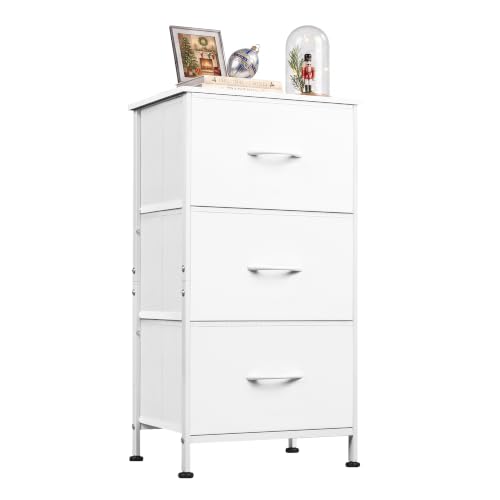
Where to buy
Check the latest price, availability and delivery on Amazon. Orders are placed on Amazon. We may earn a commission from qualifying purchases.
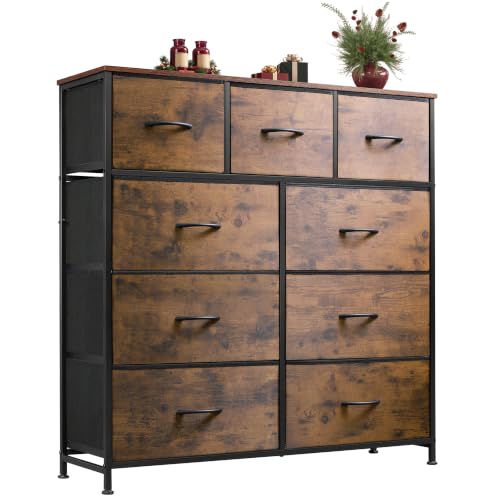
- Best overall for apartments: WLIVE 9-Drawer Dresser, Rustic Brown — Check on Amazon
- Huuger 63-Inch Dresser with 9 Drawers, Rustic Brown — Check on Amazon
- SONGMICS BELLAH 5-Drawer Dresser, Rustic Brown and Ink Black — Check on Amazon
- DUMOS Dresser with 9 Drawers, Brown — Check on Amazon
See 2 more Amazon options
- YITAHOME 10-Drawer Dresser, Cool Gray — Check on Amazon
- Sorbus Narrow Dresser with 4 Drawers — Check on Amazon
Read the full guide ↓
Disclosure: As an Amazon Associate, topratedkitchenware.com earns from qualifying purchases. Links to Amazon on this page are affiliate links; they cost you nothing extra. Listing details such as price and availability change often, so check the current Amazon listing before you buy.
An apartment changes what a good dresser is. In a house, you measure the wall and order. In a rental, the dresser also has to come up the stairs or fit in the elevator, pass through a 30-inch bedroom door, sit against a wall you may not be allowed to drill into, work in a room where the closet is also the linen cupboard, and — when the lease ends — leave with you without a truck, a second pair of hands or a moving bill bigger than the dresser cost. A traditional particleboard dresser fails several of those tests at once: it is heavy, it assembles into a rigid box that cannot turn a tight stairwell corner, and moving it twice often costs more than it is worth. That is why this guide exists separately from our general under-$100 dresser guide. The products are the same honest category — fabric-drawer towers on steel frames, because that is what $100 buys on Amazon — but every pick below has been re-judged against the renter’s checklist: footprint, depth, weight, assembly without power tools, anchoring in a home you do not own, and moving day.
Two things have not changed from the general guide, because the apartment lens does not soften them. Every load figure printed by a maker is a maker claim, not a test result, and we attribute those figures every time. And wall anchoring is not optional at this price: the US Consumer Product Safety Commission recalled several fabric dressers sold on Amazon in 2025 and 2026 for tip-over hazards, and a rental lease is not a reason to skip the strap — the safety section below covers how to anchor properly in a rented home and what to do if your lease genuinely forbids it. If you need drawers that glide on metal runners and survive a decade, this is the wrong tier; save toward the next one. If you need real folded-clothes storage that fits an apartment’s doors, floors and lease, read on.
In this guide
Quick Picks
| Pick | Product | Drawers | Dimensions (D × W × H) | Price | Best for |
|---|---|---|---|---|---|
| Best overall for apartments | WLIVE 9-Drawer Dresser, Rustic Brown | 9 fabric | 11.8 × 39.6 × 40.2 in | Check price on Amazon | Most storage in a footprint that fits a rental bedroom or closet |
| Best for studios and shared flats | Huuger 63-Inch Dresser, Rustic Brown | 9 fabric | 13.8 × 63 × 26.8 in | Check price on Amazon | Dresser and TV stand in one, split between two people’s clothes |
| Best budget buy | SONGMICS BELLAH 5-Drawer Dresser | 5 fabric | 11.8 × 38.9 × 20.6 in | Check price on Amazon | Low chest that fits under apartment windows for well under budget |
| Best tall square tower | DUMOS Dresser with 9 Drawers, Brown | 9 fabric | 11.8 × 39.4 × 39.4 in | Check price on Amazon | Maximum drawers on a compact footprint for a closet wall or corner |
| Most drawers | YITAHOME 10-Drawer Dresser, Cool Gray | 10 fabric | 11.8 × 33 × 47.2 in | Check price on Amazon | Category-by-category sorting on a narrow wall |
| Best for tight gaps | Sorbus Narrow Dresser with 4 Drawers | 4 fabric | 16.5 × 7.8 × 29.25 in | Check price on Amazon | The eight inches beside the bed where no nightstand fits |
*Check the current price on Amazon for each pick. Dresser prices on Amazon change frequently, so confirm the live price before you buy.
How These Picks Were Chosen
The starting filter was the same one our general under-$100 guide applies. Every pick had to be a verifiable Amazon US listing positioned at or under $100 — a stable ASIN, stated dimensions and a drawer count confirmable from the listing or the maker’s own documentation, ideally with a featured offer. Products whose price we could not verify were named without a link rather than guessed at. The unit had to work as a dresser — a frame with drawers you pull out daily for clothing — not loose storage cubes or a hanging organizer in a dresser costume. And we checked the safety record, because this category has an unusually public one: the CPSC recalled several fabric dressers sold on Amazon in 2025 and 2026 for tip-over hazards, including taller WLIVE models and models from Furnulem and Yitahome. No recalled model appears as a pick in this guide, Furnulem was excluded as a brand entirely, and the recalls are covered in the safety section below.
On top of that, each pick had to pass the apartment test. Could one person get it from the delivery door to the bedroom — up stairs, through standard doors — without help? Does it assemble with the included Allen key and no power tools, in the room it will live in? Is it shallow enough for a small bedroom and light enough to reposition when you rearrange? Can it be anchored in a rental, and if it cannot be anchored where it stands, is its shape forgiving enough to say so honestly? And when the lease ends, can it be broken down, carried out and loaded into a car rather than a truck? A unit that failed the apartment test on several counts did not make this list even if it is a perfectly good dresser for a house.
One construction note, because renters ask about it constantly: every pick here has fabric drawers, and that is the market, not an editorial preference. A rigid dresser with wooden or particleboard drawers needs a carcass, drawer boxes and runners, and that arithmetic starts above this budget — established engineered-wood dressers generally sit above this tier. HOMCOM sells a 5-drawer particleboard and MDF dresser that is the only rigid design we found near this price, but its listing showed no featured offer and we could not verify that it fits this budget, so it is named here without a link rather than recommended on a guess. Under $100, the construction that delivers nine or ten usable drawers is a steel frame and fabric bins — which, for apartment life, turns out to have real advantages: the bins lift out, fold flat and weigh almost nothing, as the moving-day section below explains.
The 6 Best Dressers for Apartments Under $100
WLIVE 9-Drawer Dresser, Rustic Brown
Who it suits: Renters who need one unit to swallow most of a wardrobe — one adult’s folded clothes, a full kids’ wardrobe, or the overflow from a too-small apartment closet — in a standard dresser footprint.
The WLIVE 9-Drawer Dresser is the shape this category does best, and it happens to be the shape apartments reward. Per the maker’s manual it measures 39.6 inches long by 11.8 inches wide by 40.2 inches tall: roughly the footprint of a traditional chest of drawers, but only 11.8 inches deep where a wooden dresser runs 16 to 18 — in a small rental bedroom, those saved inches are walking space at the foot of the bed. Nine fabric drawers in mixed sizes sit on a steel tube frame under a wood-grain MDF top you can actually put things on. Check the current price on Amazon before you buy — it is positioned in this under-$100 tier, sold by a third-party seller and shipped from Amazon, and it offers the most storage for its position in this tier among the picks we verified, which is why it leads the guide.
The apartment case goes beyond the footprint. The whole unit is light enough for one person to carry up a flight of stairs and reposition alone — try that with a particleboard chest. Assembly is the standard fabric-dresser routine: build the frame, slot the crossbars, fold the drawers open, drop in the base inserts, well under an hour with no power tools. And the drawers themselves are the renter’s friend: they lift out completely, so packing for a trip means carrying a drawer to the bed, and moving day means carrying nine light bins instead of one heavy box of drawers. The mixed sizes are genuinely useful — small drawers up top for socks and accessories, deeper ones below for sweaters and jeans — and at 39.6 inches wide the unit also fits inside many reach-in closets, which frees the bedroom wall entirely.
- Nine drawers in mixed sizes in a true dresser footprint, 39.6 × 11.8 × 40.2 inches — shallow enough for small rental bedrooms and wide closets.
- Rigid MDF top gives you a usable surface for a lamp, photos or folded laundry.
- Drawers lift out completely, which makes sorting, packing and lease-end moving far easier than a wooden dresser.
- Light enough for one person to carry upstairs and reposition — a real advantage in walk-up rentals.
Honest limitation: Two things, stated plainly. The drawers are about 11.8 inches deep front to back, so bulky hoodies and thick sweaters fit folded but snug, and nothing about this unit will feel like furniture-store wood — because it isn’t. And the brand context matters: WLIVE’s taller 12-, 15- and 16-drawer fabric dressers were recalled by the CPSC in 2025 because they are unstable when not anchored to the wall. This 9-drawer model is not one of the recalled models, and its wider, lower stance is inherently steadier — but treat the wall anchor as mandatory, not optional, and read the rental anchoring section of this guide before it goes in a child’s room.
Choose it if you want the default renter’s recommendation: the most verified storage under $100 in a normal dresser shape that also moves easily. Skip it if you need deep drawers for bulky knitwear, or if the dresser will stand somewhere it cannot be anchored and children will climb it — in that case, take the low, wide Huuger below or save for a heavier rigid dresser.
Huuger 63-Inch Dresser with 9 Drawers, Rustic Brown
Who it suits: Studio tenants, couples sharing one dresser, and anyone whose apartment has one long wall that has to do two jobs — dresser and TV stand.
Most dressers under $100 go up; the Huuger 63-Inch Dresser goes sideways, and sideways is exactly what a studio asks for. Amazon’s spec block for this listing gives 13.8 inches deep by 63 inches wide by 26.8 inches tall, with nine fabric drawers and an item weight of about 43 pounds. That extra depth matters more than it sounds: at 13.8 inches, the drawers are roughly two inches deeper than the standard 11.8-inch fabric-dresser format, and folded jeans, sweaters and bedding sit noticeably more comfortably. Check the current price on Amazon — it is positioned comfortably inside this budget, for the widest storage footprint in this guide, and a sibling 10-drawer version of the same unit exists in the same listing family.
Huuger markets the long top as a TV stand for sets up to 70 inches, and in a studio that dual role is the whole point: one piece of furniture on the one long wall, television on top, two people’s clothes in nine drawers split into his-and-hers columns with shared drawers in the middle. The low, wide stance is also genuinely the steadiest shape here: a 26.8-inch-tall unit with a 63-inch base is far harder to tip than a tall tower, which matters in rentals where anchoring options are limited. It still ships with anchoring hardware and should still be anchored — a child can climb a low dresser too, and a television on top raises the stakes — but physics is on this one’s side. At about 43 pounds it is the heaviest pick in the guide, yet still a one-person carry in pieces, and it breaks down flat for the move out.
- 63-inch width: the only pick here that truly replaces a full-size double dresser for two people.
- 13.8-inch-deep drawers — the deepest in this guide — take bulky folded clothes more easily.
- Low, wide stance is inherently the most tip-resistant shape of the six — valuable where anchoring is awkward.
- Long top works as a TV stand, which in a studio means one less piece of furniture to buy and move.
Honest limitation: At 26.8 inches tall, every drawer is at knee height or below; you will bend for everything you own, and there is no tall storage at all. It also needs a genuine 63 inches of clear wall — measure before ordering, because many apartment bedrooms offer one long wall and it may already hold the bed. And note the listing family is confusing: Huuger sells near-identical 63-inch units in 9-, 10- and 12-drawer versions, so confirm the drawer count on the listing you land on.
Choose it if you have the wall space and want maximum, deepest storage with the steadiest stance — the studio and shared-flat pick. Skip it if your room is small, your longest free wall is under five feet, or bending to low drawers all day will annoy you.
SONGMICS BELLAH 5-Drawer Dresser, Rustic Brown and Ink Black
Who it suits: Renters who need a modest amount of drawer storage — a nightstand-plus, an entryway catch-all, storage under a low window — and would rather stay well under the top of this budget.
The SONGMICS BELLAH 5-Drawer Dresser (model ULGS322B02S) is the value anchor of this guide: check price on Amazon — it sits at the lower end of this tier. It measures 11.8 inches deep by 38.9 inches wide by 20.6 inches tall — wide but low, a chest rather than a tower. That height is an apartment feature, not a compromise: 20.6 inches tucks under the low window sills and radiators that eat wall space in older rental buildings, works at the foot of a bed, and serves as an oversized nightstand with real drawers where a small bedroom cannot fit a dresser and a nightstand both. SONGMICS publishes unusually specific maker figures for it: the particleboard top is rated by the maker to 88 pounds, each large drawer to 22 pounds and each small drawer to 11 pounds. Treat those as maker claims, not test results — but even halved, they describe a unit sensibly matched to folded clothes, and the specificity itself is a better sign than the vague “heavy duty” language most of this category uses.
Two practical details lift it above the no-name crowd, and both are renter-specific. It ships with an anti-tip kit in the box — again: use it — and its adjustable feet let you level it on the slightly uneven floors that older apartment buildings specialize in and that make light furniture rock. Assembly is the usual quick fabric-dresser build, no power tools. Its lower position in this tier also leaves room in the budget for a second unit or a closet organizer, which is how small apartments actually get furnished: in pieces, as the problems appear.
- Positioned at the lower end of this tier — well under budget — leaving room for a second unit or other storage.
- Low 20.6-inch height fits under windows and radiators and works as a wide nightstand.
- Anti-tip kit included, and adjustable feet for leveling on uneven rental floors.
- Maker publishes per-drawer load figures (22 lb large, 11 lb small) instead of vague claims.
Honest limitation: Five drawers at this size is a supplement, not a wardrobe: roughly one person’s folded basics, or a child’s clothes, and then it is full. The 20.6-inch height also means the top sits low for a lamp beside a taller bed. If you are furnishing an empty bedroom, one of the 9- or 10-drawer picks is the honest buy; this one is for topping up storage you mostly already have.
Choose it if you need a low, wide chest for a specific awkward spot and want to stay well under budget. Skip it if this is your only dresser — you will outgrow five drawers fast.
DUMOS Dresser with 9 Drawers, Brown
Who it suits: Renters with a compact patch of floor — a closet wall, the corner of a small bedroom, the end of an entry hall — who want nine separate drawers without a wide footprint.
The DUMOS 9-Drawer Dresser stacks its nine fabric drawers into a near-square tower: 11.81 inches deep by 39.37 inches wide by 39.36 inches tall per the Amazon listing, at roughly 29 to 31 pounds — light enough to carry up two flights of stairs in one trip, which is not a trivial virtue in a walk-up. Three smaller drawers sit on top with six larger ones below, per the maker’s manual, which also states a 66-pound capacity for the wooden top and 13 pounds per drawer, and confirms an anti-tilt device is included. It is positioned in the upper part of this under-$100 tier, so check the current price on Amazon before ordering; one older crawl of this listing showed no featured offer, so confirm a live offer is available before ordering.
The DUMOS earns its place on drawer organization and placement flexibility: nine genuinely separate compartments is the joint-highest count among the standard-format picks, and the square shape fits the spots apartments actually offer — inside a closet against the back wall, in the corner left over after the bed and desk, at the end of a hallway. It is also the pick where we most want to temper the maker’s numbers with tester experience. In one review site’s hands-on testing of this dresser, the fabric drawers began to sag when loaded past roughly 6 to 8 pounds — about half the printed 13-pound maker figure — and the fluted fabric trim on the tested unit started lifting at the corners after some weeks. Neither is a dealbreaker for folded clothes, which rarely reach 6 pounds a drawer; both are reasons not to store books, tools or dumbbells in it.
- Nine drawers in a compact, near-square 39.4 × 39.4-inch face — easy to place in closets and corners.
- At roughly 29–31 lb, the easiest full-size pick to carry up stairs and move at lease end.
- Anti-tilt device included per the maker’s manual; wooden top rated by the maker to 66 lb.
- Assembly timed at roughly 38–50 minutes in independent testing — typical for the category.
Honest limitation: Plan around real-world drawer loads of about 6–8 pounds, not the maker’s 13, and expect the fabric fronts to age faster than the frame. Its price also tends to vary more than the other picks, so check the current price on Amazon before you decide.
Choose it if you want maximum drawer separation on a small footprint and your loads are clothes-weight. Skip it if you need any drawer to hold genuinely heavy items, or if, when you check the current prices on Amazon, the WLIVE better fits your budget that day.
YITAHOME 10-Drawer Dresser, Cool Gray
Who it suits: Organizers who sort by category — one drawer per clothing type — and anyone furnishing a narrow wall in a small bedroom where width is scarcer than height.
The YITAHOME 10-Drawer Dresser (model YHFST33) is the tallest and narrowest full-size pick here: 11.8 inches deep by 33 inches wide by 47.2 inches tall, about 34 pounds, with ten fabric drawers stacked in two columns. In an apartment, that 33-inch width is the headline: it fits the short wall between a closet door and a window, or the end wall of a reach-in closet, where no 40-inch unit will go. Check the current price on Amazon — it is positioned in the lower-to-middle part of this tier, and with ten drawers it offers a lot of drawer count for its position in the band. Ten drawers is not a gimmick: it is the difference between “tops” and separate drawers for t-shirts, gym gear, sleepwear and seasonal pieces, which is how people sharing small closets actually stay organized.
Now the part that decides whether this pick is right for your rental: a 47.2-inch-tall, 34-pound dresser is the most tip-sensitive shape in this guide, full stop. Height plus light weight plus drawers that slide out toward the climber is exactly the geometry behind the category’s recalls — and YITAHOME’s own 16-drawer fabric dressers were recalled by the CPSC in February 2026 for tip-over and entrapment hazards when unanchored. This 10-drawer model is not a recalled model, but the lesson transfers directly: this unit goes against a wall, gets anchored into a stud before a single drawer is loaded, and does not belong in a toddler’s room unanchored under any circumstances. If your lease or your walls make anchoring impossible, this is the wrong pick — take the low, wide Huuger instead. Anchored and loaded heaviest-at-the-bottom, it is a lot of organized storage for this budget tier.
- Ten drawers — the most in this guide — positioned accessibly within this tier for the drawer count.
- Narrow 33-inch width fits short walls and closet ends the wider picks cannot.
- Light 34-pound build is easy to carry in and assemble solo.
- Two-column layout suits category-by-category organizing in shared small closets.
Honest limitation: Tallest and lightest is a real trade-off, not a footnote: anchoring is absolutely non-negotiable here, and the top drawers sit high enough that shorter users will reach up for them. YITAHOME also sells lookalike 10-drawer listings under more than one ASIN, so confirm the listing you land on shows the 33 × 47.2-inch YHFST33 tower.
Choose it if you want maximum sorting capacity on a narrow wall and will anchor it the day it arrives. Skip it if it cannot be anchored where it will live, or if it is destined for a young child’s room — pick the low, wide Huuger instead.
Sorbus Narrow Dresser with 4 Drawers
Who it suits: Renters with a useless sliver of space — the gap beside the bed in a room too small for a nightstand, the end of a closet, a laundry corner — that no normal dresser can touch.
Every other pick in this guide assumes you have at least 33 inches of wall. The Sorbus Narrow Dresser assumes you have about eight. Its listing dimensions are 16.5 inches deep by 7.8 inches wide by 29.25 inches tall — a slim vertical tower with four fabric drawers, a steel frame and a wood top — check price on Amazon. Read those dimensions again, because they define the product: this is not a small dresser, it is a gap-filler, closer in spirit to a tall nightstand drawer stack than to a chest of drawers. In the right eight inches — beside a bed in a room where a nightstand simply does not fit, inside a closet beside the hanging rail, next to a washing machine in a laundry nook — it is genuinely the only product shape that works, and small apartments are full of exactly those eight inches.
Within that brief, it does the job properly: the drawers pull out fully and hold the small stuff that otherwise colonizes the limited surfaces of a rental — chargers, medications, socks, underwear, toiletries, laundry supplies — and the wood top holds a lamp, phone or alarm clock at nightstand height. Sorbus markets several colorways of this tower at children, and the pastel versions do look like kids’ furniture; the neutral finishes read fine in an adult room. What it will not do is hold a wardrobe: four narrow drawers take a few stacks of small clothing each, and that is the honest ceiling. Its party trick is for lease end: the fabric drawers fold flat, so between uses or between apartments the whole unit stores away in a fraction of its working size.
- 7.8-inch width fits gaps no other pick can use — beside beds, in closets, in laundry corners.
- Four drawers at nightstand height, with a wood top for a lamp, phone or alarm clock.
- Fabric drawers fold flat, so the unit stores away easily between uses or moves.
- Mid-pack positioning in this tier for a problem few other products solve.
Honest limitation: The drawers are small in every direction, and a tall, narrow, light tower is tip-prone by geometry — anchor it, especially since its natural homes (bedside, kids’ rooms) are exactly where anchoring matters most. If you have room for a standard-width dresser, every other pick here holds several times more for similar money.
Choose it if you have a specific narrow gap and small-item clutter to fill it with. Skip it if you are shopping for actual clothing capacity — this is a supplement, not a dresser substitute.
Comparison Table
| Product | Drawers | Dimensions (D × W × H) | Top surface | Anti-tip hardware | Price |
|---|---|---|---|---|---|
| WLIVE 9-Drawer Dresser | 9 fabric | 11.8 × 39.6 × 40.2 in | MDF wood-grain top | Anchor advised; see safety section | Check price on Amazon |
| Huuger 63-Inch Dresser | 9 fabric | 13.8 × 63 × 26.8 in | Wood-grain top, TV-stand length | Included per listing family | Check price on Amazon |
| SONGMICS BELLAH 5-Drawer | 5 fabric | 11.8 × 38.9 × 20.6 in | Particleboard top, maker-rated 88 lb | Kit included | Check price on Amazon |
| DUMOS 9-Drawer Dresser | 9 fabric | 11.8 × 39.4 × 39.4 in | Wooden top, maker-rated 66 lb | Anti-tilt device included | Check price on Amazon |
| YITAHOME 10-Drawer Dresser | 10 fabric | 11.8 × 33 × 47.2 in | Wood top | Anchor essential — tallest, lightest pick | Check price on Amazon |
| Sorbus Narrow Dresser | 4 fabric | 16.5 × 7.8 × 29.25 in | Wood top | Anchor essential — narrow tower | Check price on Amazon |
*Check the current price on Amazon for each pick; prices change frequently. Load figures are maker claims.
How to Choose a Dresser for an Apartment Under $100
Measure the route in, not just the wall. Apartments filter furniture twice: once at the bedroom wall and once at every door, hallway turn, stairwell and elevator on the way there. The good news is that every pick in this guide arrives as a flat box one person can carry, so the route rarely disqualifies them — but measure the wall the box is heading for, including baseboards and radiators, and confirm the assembled footprint fits before you order. A 63-inch dresser does not fit a 55-inch wall, and a 47-inch tower does not fit under a sloping attic ceiling.
Measure the depth against your clothes. Nearly every fabric dresser at this price is 11.8 inches deep, against 16 to 18 inches for a traditional wooden dresser. In a small bedroom that shallowness is often a benefit — more floor, easier walking space — but folded adult clothes are typically 10 to 14 inches front-to-back, so standard items fit and bulky ones sit snug. If your wardrobe is mostly thick knitwear, the Huuger’s 13.8-inch depth is the only real relief in this guide.
Count usable drawers, not headline drawers. A “12-drawer” unit often means twelve small bins; a 9-drawer unit with six large drawers can hold more clothing. Look at the layout — how many large drawers, how many small — and match it to what you own. Small drawers are perfect for underwear, socks and accessories and useless for sweaters. The reviews above flag each pick’s layout so you can plan drawer by drawer.
Read load figures as marketing, then halve them. Makers print per-drawer capacities from about 11 to 22 pounds in this category. Independent handling of these units suggests fabric drawers stay happy at roughly 6 to 10 pounds of clothing — which, conveniently, is what a drawer of folded clothes actually weighs. The figures only mislead if you plan to store books, vinyl, tools or exercise gear in fabric bins. Do not.
Plan the anchor point before you order. Look at where the dresser will stand: you need a wall stud within reach of the included strap, or proper drywall anchors rated for furniture restraint. Check for studs before choosing the spot, not after assembly. If the spot has neither — a closet interior with no stud access, a position away from any wall — choose the lowest, widest pick, keep heavy items out of the top drawers, or rethink the spot entirely. The next section covers anchoring in a rental in detail.
Think about the move out on the day you buy. Every dresser in this guide breaks down, weighs between roughly 29 and 43 pounds in pieces, and fits in a car. A rigid particleboard dresser often cannot say any of that, and paying movers — or paying a deposit deduction for abandoning furniture — can cost more than the dresser did. If your lease is short or your next move is uncertain, weight and packability are not conveniences; they are the budget.
Small Rooms, Shallow Dressers: Why 11.8 Inches Deep Works in Apartments
The first thing apartment shoppers notice about this category is the depth, and most read it as a flaw. Nearly every fabric dresser under $100 is 11.8 inches deep, where a traditional dresser is 16 to 18. In a house bedroom, that is a compromise. In a 10-by-11-foot rental bedroom — bed, dresser, door swing and walking space all competing — six saved inches along an entire wall is the difference between squeezing past the foot of the bed and walking past it. The shallower footprint is also what lets several of these units live inside a reach-in closet: a 39.6-inch WLIVE or a 33-inch YITAHOME against the closet’s back wall turns dead hanging space into drawer storage and gives the bedroom its wall back. Measure your closet’s depth and door swing before assuming it works, but when it does, it is the single best storage trick in this guide.
The depth does set an honest ceiling, and this guide will not pretend otherwise. Folded clothes are typically 10 to 14 inches front-to-back, so t-shirts, underwear, gym clothes and most jeans fit; thick sweaters and hoodies fit folded but snug, and a wardrobe that is mostly bulky knitwear will fight these drawers. The Huuger, at 13.8 inches deep, is the one meaningful step up inside the budget. What the shallow format never does is waste the space it takes: every pick here is all drawer from floor to top, with no decorative frame, no plinth, no wasted inches — which, in a small apartment, is the correct priority.
Placement rules for small rooms follow from the same logic. Put the dresser on the wall the door does not swing against. Keep tall towers — the YITAHOME above all — out of the fall zone beside a child’s bed and anchored regardless. Use the low picks where height is blocked: the SONGMICS under a window, the Huuger under a wall-mounted TV. And resist the studio temptation to use a dresser as a freestanding room divider: a unit that is not against a wall cannot be anchored, and an unanchored drawer tower in the middle of a room is the one configuration this guide advises against outright. Against a wall, anchored, these are space-efficient tools. Floating in a room, they are a hazard with drawers.
Anchoring in a Rental: The Safety Step You Cannot Skip — and How to Keep Your Deposit
Dressers tip over, and light dressers full of drawers that slide out are the highest-risk furniture in the category. This is not theoretical, and it is not ancient history. In 2025, the CPSC announced recalls of WLIVE fabric dressers — the 12-drawer model (about 76,500 units), plus 15- and 16-drawer models — sold on Amazon, because they are unstable if not anchored to the wall and pose tip-over and entrapment hazards to children. In December 2025 and February 2026, Furnulem dressers sold on Amazon were recalled on the same grounds — an 8-drawer model (about 16,800 units) and a 5-drawer wooden model; Furnulem appears nowhere in this guide’s picks for that reason. In February 2026, Yitahome’s 16-drawer fabric dressers (about 6,800 units, also sold under sibling brand names) joined the list. You will notice two of those brand names among the picks. The recalled models are not our picks — we checked — but the recalls tell you something essential about the whole category: the hazard is the shape and the weight, not one bad factory. Any tall, light drawer tower can tip when a child climbs it or several loaded drawers open at once.
Renters sometimes treat the lease as a reason to skip anchoring. It is not, and the practical facts are kinder than the fear. An anti-tip strap installs into a wall stud with one or two small screws; the holes it leaves are the size of picture-hook holes, and filling them at move-out with a few dollars of spackle is a ten-minute job that landlords routinely accept as normal wear or trivial repair — the same category as the holes from your picture frames and curtain rods. If you are unsure, ask: many landlords would rather approve two screw holes in writing than have an unanchored dresser in a unit with children, and an email approval costs nothing. What you should not do is substitute adhesive-only straps and call it anchored: adhesive furniture restraints exist, but their hold depends entirely on paint and surface condition, and no adhesive strap is a verified equivalent of a screw into a stud. If drilling is genuinely impossible — a lease that forbids it in writing and a landlord who refuses permission — the honest options are the low, wide Huuger loaded heaviest at the bottom, a dresser inside a closet where climbing access is limited, or different storage altogether. What is not an option is a tall tower standing unanchored because the lease made anchoring inconvenient.
The rest of the rules are the same in a rental as anywhere. Anchor the dresser before you load it — not this weekend, not when you get around to it; if the kit is missing, furniture restraint straps cost a few dollars. Put the heaviest items in the bottom drawers, always. Teach children that drawers are not ladders or steps, and do not store toys, remotes or anything a child wants on top of the dresser, where it invites climbing. Open one drawer at a time yourself, too — several open loaded drawers shift any dresser’s balance forward. And never place a television on an unanchored dresser. Follow those rules and a fabric dresser is a reasonable, widely used piece of furniture; skip them and the recall notices above describe the risk precisely.
Moving Day: The Dresser That Leaves With You
Every furniture decision in a rental is really two decisions: getting it in, and getting it out. Fabric dressers are the rare category that wins the second decision outright. The frames break down into tubes and panels; the fabric drawers fold flat or lift out and stack; the heaviest complete pick in this guide, the Huuger, weighs about 43 pounds, and the lightest full-size tower, the DUMOS, is roughly 29 to 31 pounds. One person can carry any of these down stairs, through a standard door and into a hatchback or sedan with the seats folded — no truck rental, no mover’s minimum, no paying a friend in pizza to haul a particleboard box that was never designed to be moved. Compare the realistic alternatives: a rigid flat-pack dresser, assembled once, often cannot survive being carried whole and was not built to be disassembled and rebuilt repeatedly, since cam-lock joints loosen with each cycle. Renters who have paid to dispose of a dresser they could not move — or lost deposit money for leaving one behind — will recognize the fabric tower’s lightness as the feature, not the compromise.
A few habits make the move-out even easier. Keep the manual and the spare hardware in a labeled bag taped to the frame’s underside; replacement drawers and reassembly are far simpler when you know your model number. Photograph the assembled frame before you break it down — the connector layout is obvious in a photo and puzzling from memory in a new apartment. Load the heaviest drawers lowest in the car, and if the unit will sit in storage between leases, fold the drawers flat and store them dry: fabric bins that sit damp in a storage unit come out smelling like it. Finally, re-anchor at the new address before loading, and check the frame’s connectors after the first month — moving and rebuilding is exactly when a half-tightened joint shows up as a wobble.
There is also an honest economic point. At this budget tier, these units cost less than a single hour of professional moving labor in most cities, and far less than a deposit deduction for abandoned furniture. If your lease is a year and your plans are uncertain, a dresser you can carry out yourself is not a lesser version of “real” furniture — it is the version whose total cost, across the whole tenancy, you can actually predict.
Common Buying Mistakes
Measuring the wall but not the room. A 63-inch dresser fits the wall and still crowds a small bedroom; an 11.8-inch-deep tower fits where a 17-inch dresser would block the door swing. Measure the wall, the depth and the door swing together.
Buying the tallest tower for the room that cannot anchor it. The YITAHOME’s ten drawers are excellent — in a room where it can be screwed into a stud. If your spot cannot be anchored, the low Huuger is the honest pick, whatever the drawer count says.
Treating the anchor strap as packaging. It is the single most important part in the box. The 2025–2026 recall wave exists because unanchored light dressers tip; install the strap the day the dresser arrives, and patch the two small holes when you leave.
Loading fabric drawers like wooden ones. Books, tools, vinyl records and weights will sag or tear fabric bins rated — by their makers — for clothes-weight loads. Keep fabric drawers for fabric-weight things.
Believing the word “wood” in a title. At this price, “wood dresser” almost always means a wood-grain top panel on a steel-and-fabric unit. That is fine — our picks are exactly that — as long as you know it before the box arrives.
Assembling in the wrong room. Build the unit where it will live. A 40-inch fabric tower is awkward to carry through doorways once assembled, and a 63-inch dresser may not turn the corner at all.
Ignoring the 11.8-inch depth. Most fabric dressers are about four inches shallower than a traditional dresser. Measure your bulkiest folded items; if everything you own is thick knitwear, this category will frustrate you.
Final Recommendation
For most renters, the answer is the WLIVE 9-Drawer Dresser: nine drawers in a standard, shallow footprint that fits a rental bedroom or the back of a reach-in closet, a usable rigid top — check the current price on Amazon — and a unit light enough to carry out yourself when the lease ends — anchor it, respect the shallow drawers, and it will quietly do a dresser’s job for the whole tenancy. If you have the wall for it, the Huuger 63-Inch Dresser is the better piece of storage and the natural studio pick: deeper drawers, room for two people’s clothes, a top that holds the TV, and the steadiest stance here. On a tighter budget, the SONGMICS BELLAH is the honest lower-priced option; organizers with a narrow wall should take the YITAHOME’s ten drawers — anchored, always — and anyone with a useless eight-inch gap should take the Sorbus and enjoy the found space. Whichever you choose, the purchase is not finished when the last drawer slides in. It is finished when the anchor strap is in the stud.
Frequently Asked Questions
Can a dresser under $100 really work in a small apartment?
Yes — in some ways it works better than a traditional dresser. The fabric-drawer towers in this guide are only 11.8 inches deep against 16 to 18 for a wooden dresser, so they take less floor in a small bedroom, and several fit inside a reach-in closet. What you give up is drawer depth for bulky clothes and the rigid, glide-on-runners feel of wooden drawers. For folded clothing, the best units here genuinely work.
Will these dressers fit through my apartment door and up the stairs?
Almost certainly. Every pick arrives as a flat box, and the assembled units weigh roughly 29 to 43 pounds, so one person can carry the parts up stairs and build the dresser in the room it will live in. That is the practical advantage over a rigid dresser, which often cannot turn a stairwell corner once assembled. Build in the room, not the hallway.
Can I anchor a dresser in a rental without losing my deposit?
In most cases, yes. An anti-tip strap fixes to a wall stud with one or two small screws, leaving holes comparable to picture hooks; a few dollars of filler at move-out makes them a ten-minute repair, and many landlords will approve the holes in advance if you ask — in writing is best. What you should not do is rely on adhesive-only straps as an equivalent: their hold depends on the paint surface, and they are not a verified substitute for a screw into a stud.
What if my lease forbids drilling into the walls at all?
Then placement and shape have to do the work. Choose the lowest, widest unit — the Huuger in this guide — load it heaviest in the bottom drawers, keep it against a wall rather than freestanding, and keep children from climbing it. A dresser inside a closet, where access is limited, is another reasonable option. What you should not do is stand a tall, light tower unanchored and hope; that is exactly the configuration behind the 2025–2026 recalls.
Are fabric drawers sturdy enough for everyday use?
For clothing, yes. Makers rate fabric drawers at roughly 11 to 22 pounds each, and real-world experience suggests planning around 6 to 10 pounds of folded clothes per drawer — which is what a drawer of clothes weighs anyway. They are not suited to books, tools or other dense items, and the fabric will soften and sag gradually over years of use.
Which of these is easiest to move when my lease ends?
All six break down and travel in a car, which is the category’s main advantage. The DUMOS is the lightest full-size tower at roughly 29 to 31 pounds; the Sorbus is the easiest of all, since its fabric drawers fold flat and the whole unit stores in a fraction of its working size. Keep the manual and spare hardware, photograph the frame before disassembly, and re-anchor before loading at the new address.
Will the 63-inch Huuger work as a TV stand in a studio?
That is what it is designed for: Huuger markets it for TVs up to 70 inches, and its low, wide shape is the steadiest in this guide — one piece of furniture doing two jobs is exactly what a studio needs. Check your TV’s foot spacing against the 63-inch top, keep the TV’s weight within the maker’s top rating, and anchor the unit to the wall before the TV goes on it.
What if a fabric drawer tears or a part arrives damaged?
Contact the seller through Amazon first — the brands in this guide sell replacement drawers and hardware, and a model number from your manual makes the request faster. Check every part before assembly and photograph damage on arrival; returns and replacements are far simpler within the first days than after the unit is built and loaded.