Disclosure: topratedkitchenware.com is reader-supported. When you buy through links on our site, we may earn an affiliate commission from Amazon and other retailers, at no extra cost to you.
Where to buy
The six best enameled cast iron dutch ovens below were chosen because each one is exactly that: a cast iron pot sealed in enamel, verified from its listing. Each name links to its Amazon listing, and each detailed review carries its own link so you can check the latest price on Amazon for the pot you are considering. Finishes and bundled extras differ between listings, so confirm the colour and contents on the listing before ordering.
- Umite Chef 5QT Enameled Cast Iron Dutch Oven, Cream White — Best for Bread Bakers. Best for smaller households and sourdough routines.
- Umite Chef 5QT Enameled Cast Iron Dutch Oven, Red — Best Classic Finish. Best for cooks who want the same pot in a stain-forgiving red.
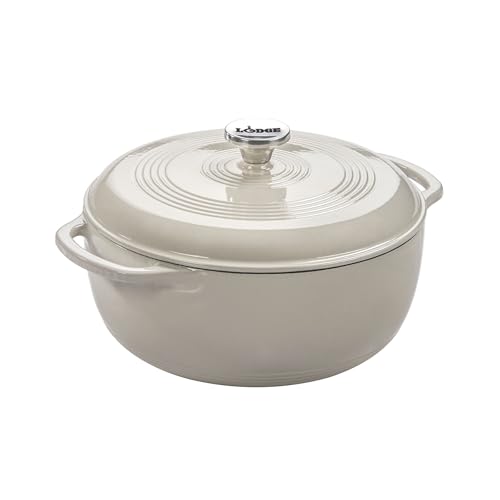
- Lodge Essential Enamel Cast Iron Dutch Oven, 6 Quart, Oyster White — Best Value with a Sealing Lid. Best for families who braise often.
- Overmont Enameled Cast Iron Dutch Oven, 5.5QT, White — Best Bundle. Best for new owners who want a cookbook and potholders included.
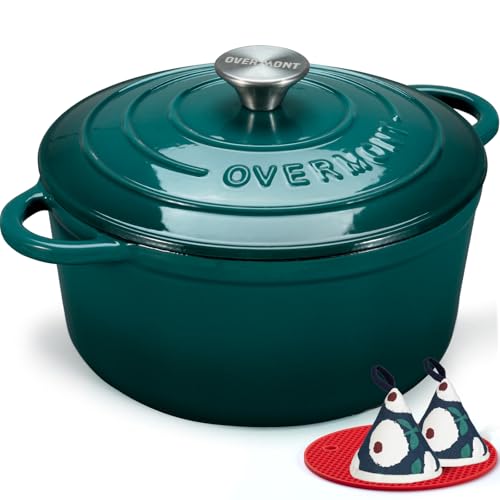
- Overmont Enameled Cast Iron Dutch Oven, 7QT — Best Large Capacity. Best for batch cooking and big loaves.
- Amazon Basics Enameled Cast Iron Dutch Oven, 6-Quart, Blue — Best Simple Budget Format. Best for buyers who want six quarts, dual handles and no extras to pay for.
Read the full guide ↓ for the material science in plain language, honest trade-offs for each pot, a comparison table and a buying guide built around how enameled cast iron actually behaves.
Shoppers who search for the best enameled cast iron dutch ovens are usually asking a material question as much as a product question. They have heard that cast iron holds heat like nothing else, and that bare cast iron demands seasoning and careful drying, and they want to know whether the enameled version keeps the benefits while dropping the chores. It does — with two honest caveats about chipping and thermal shock that this guide will not hide. Enameled cast iron is a cast iron core coated with a fused enamel surface: the iron provides the thermal mass that steadies temperatures and browns food properly, while the enamel provides a smooth, non-reactive, rust-resistant skin that tolerates tomatoes, wine and soap-and-water washing. That combination is why this specific construction, rather than plain cast iron or stainless steel, dominates braising, slow cooking and enclosed bread baking in home kitchens.
The six pots below are all verified enameled cast iron designs, spanning five to seven quarts. Two are colour variants of one mid-size pot, and we label them as such. Two come from Overmont in different sizes, which lets us compare what the same maker’s approach looks like at family and batch scale. Lodge brings the established cast iron name and a lid the listing specifically describes as moisture-sealing, and Amazon Basics brings the plainest six-quart format in the set. If you arrived from the misspelled version of this search, the shortlist there overlaps heavily; the companion guide to Best Enamelled Dutch Ovens covers the same shelf with British spelling for readers who prefer it.
Key Takeaways
- Enameled cast iron pairs cast iron’s heat retention with a non-reactive enamel skin: no seasoning, no rust worries, and acidic sauces are welcome.
- The enamel is durable but not invulnerable — avoid metal utensils, sudden cold water on a hot pot, and banging the lid, and it will serve for years.
- Capacity still rules the decision: 5QT for one to four people and loaves, 5.5–6 quarts for most families, 7QT for batch cooking.
- Two picks are the same Umite Chef pot in Cream White and Red; choose by finish, not by imagined performance differences.
- The Overmont 7QT’s listing calls out an enclosed lid-knob design and oven-safe positioning for sourdough and braising; the Lodge listing calls out a moisture-sealing lid. Named features like these are the honest differences between models.
- Bundled cotton potholders appear in several listings here because cast iron handles reach full cooking temperature — treat hand protection as part of the system.
In this guide
Quick Picks
Six verified enameled cast iron pots, six jobs. Badges match the detailed reviews below so you can track each pick from summary to verdict.
| Pick | Badge | Who it suits |
|---|---|---|
| Umite Chef 5QT Enameled Cast Iron Dutch Oven, Cream White | Best for Bread Bakers | Smaller households, sourdough routines, everyday soups |
| Umite Chef 5QT Enameled Cast Iron Dutch Oven, Red | Best Classic Finish | Cooks who want the mid-size pot in forgiving red enamel |
| Lodge Essential Enamel Cast Iron Dutch Oven, 6 Quart, Oyster White | Best Value with a Sealing Lid | Families who braise often and want a trusted cast iron name |
| Overmont Enameled Cast Iron Dutch Oven, 5.5QT, White | Best Bundle | New owners who value a cookbook and potholders in the box |
| Overmont Enameled Cast Iron Dutch Oven, 7QT | Best Large Capacity | Batch cooks, big loaves, enclosed lid-knob design |
| Amazon Basics Enameled Cast Iron Dutch Oven, 6-Quart, Blue | Best Simple Budget Format | Buyers who want six round quarts and dual handles, nothing more |
How These Picks Were Chosen
This guide is research-led and listing-verified. For this keyword the material was the filter: a pick only qualified if its verified title confirmed enameled cast iron construction, because a guide to the best enameled cast iron dutch ovens that quietly included bare iron or stainless pots would be answering a different question. Within that filter we shortlisted for the spread home cooks actually choose between — capacities from five to seven quarts, finishes from cream and white to red and blue, and bundles from bare pot to pot-plus-cookbook-plus-potholders. Every specification in the reviews comes from the verified listing title; where a title is silent — a numeric oven limit on most of these, for instance — the review stays silent too, and you should confirm current details on the listing before buying.
We also read the titles for the small named features that genuinely differentiate otherwise similar pots. A moisture-sealing lid changes braising behaviour. An enclosed lid-knob design changes how a lid handles and cleans. Dual handles change how safely a full pot moves. Cotton potholders in the box change what else you need to buy. Those listing-stated details, plus capacity and finish, are the honest axes of comparison in a category where the underlying material is deliberately the same. Readers comparing heat performance specifically will find the neighbouring guide to Best Heat Tolerant Dutch Ovens useful, since it ranks this same material by how the listings position oven use.
The 6 Best Enameled Cast Iron Dutch Ovens in Detail

Umite Chef 5QT Enameled Cast Iron Dutch Oven, Cream White
Badge: Best for Bread Bakers
Strengths
- Five quarts encloses a standard boule with room for expansion and traps steam under the lid for crust development.
- Cotton potholders are included, which matters when a preheated pot comes out of a hot oven.
- The pale interior makes it easy to judge fond colour and sauce reduction at a glance.
Trade-offs
- Cream White enamel shows spice and tomato staining more than dark finishes.
- Five quarts crowds a family-sized browning batch; work in two rounds.
- It is one of two colour variants of the same pot in this guide.
Mini spec box
- Material: enameled cast iron
- Capacity: 5QT
- Includes: lid and cotton potholders (per listing title)
- Colour: Cream White
- Listed uses: bread baking, braising, stews, roasting
Bread is where enameled cast iron quietly outperforms almost every alternative in a home kitchen, and this five-quart Umite Chef is sized for it. A preheated cast iron pot acts as a miniature deck oven: the iron radiates stored heat into the dough from all sides while the lid holds the loaf’s own steam against the surface, which is what produces the blistered, crackling crust home bakers chase. Five quarts suits the loaf sizes most home recipes produce, and the same pot then covers the household’s soups, stews and small braises through the week. The listing positions it for bread baking, braising, stews and roasting, and includes cotton potholders — a thoughtful match for a pot that will often be handled at full oven heat.
It suits households of one to four, and bakers in particular. The honest limitations are the finish and the ceiling: pale enamel records your cooking history in stains that dark finishes hide, and five quarts is a real boundary when a recipe doubles. If either point bites, the red variant below answers the first and the seven-quart Overmont answers the second.
Best for: sourdough bakers and smaller households / Not suited for: batch cooking or buyers who want a stain-hiding finish
Check on Amazon to see the current listing for the Umite Chef 5QT in Cream White.

Umite Chef 5QT Enameled Cast Iron Dutch Oven, Red
Badge: Best Classic Finish
Strengths
- The same bread-friendly five-quart format as the Cream White pick, in the category’s heritage colour.
- Red enamel forgives staining from tomatoes, paprika and turmeric far better than pale finishes.
- Cotton potholders included in the listing.
Trade-offs
- No functional difference from the Cream White version — this is a finish choice.
- The darker exterior makes scorch marks from gas flames less visible but no less worth cleaning.
- Still a five-quart ceiling for larger households.
Mini spec box
- Material: enameled cast iron
- Capacity: 5QT
- Includes: lid and cotton potholders (per listing title)
- Colour: Red
- Listed uses: bread baking, braising, stews, roasting
Everything true of the Cream White Umite Chef is true here, because it is the same enameled cast iron pot wearing the finish most associated with the category. Red is not merely traditional; it is practical. The sauces and spices that mark pale enamel — tomato, paprika, turmeric, red wine reductions — blend into a red exterior instead of announcing themselves, so the pot keeps its looks with ordinary washing rather than periodic restoration projects. For cooks whose repertoire leans on exactly those ingredients, that is a genuine ownership advantage, and it costs nothing in performance because the iron, the enamel and the capacity are unchanged.
Choose the red if your cooking is sauce-heavy or your kitchen suits the classic look. Choose the cream if you prefer judging fond against a pale interior and do not mind the patina. The shared limitation remains size: five quarts serves its households well and frustrates larger ones, regardless of colour.
Best for: sauce-heavy cooks who want the forgiving classic finish / Not suited for: buyers expecting any performance gain over the Cream White version
Check on Amazon to see the current listing for the Umite Chef 5QT in Red.

Lodge Essential Enamel Cast Iron Dutch Oven, 6 Quart, Oyster White
Badge: Best Value with a Sealing Lid
Strengths
- The listing names a moisture-sealing lid — the feature that most directly improves braises and slow cooking.
- Dual handles give two secure grips on a full six-quart pot.
- Lodge’s long cast iron heritage at a value tier, in a family-friendly six-quart size.
Trade-offs
- No potholders are listed as included.
- Oyster White shows cooking stains over time.
- Buyers seeking a premium-tier statement piece should look at the wider category instead.
Mini spec box
- Material: enamel cast iron (per listing title)
- Capacity: 6 Quart
- Features named in listing: moisture-sealing lid, dual handles
- Colour: Oyster White
- Listed uses: bread baking, braising, marinating, slow cooking
In a material-focused guide, the Lodge earns its place on a lid. Braising is a moisture-management exercise: meat cooks in a small amount of liquid, and the flavour of the dish depends on that liquid staying in the pot, condensing and basting rather than escaping as steam. A lid the listing describes as moisture-sealing speaks directly to that job, and it is the kind of specific, verifiable claim we weight more heavily than generic quality language. Add dual handles — the safe way to move six quarts of hot stew — and a size that fits family recipes as written, and the Lodge becomes the pragmatic centre of this shortlist: enameled cast iron from the category’s most established American name, at a tier that does not require deliberation.
It suits families who braise and slow-cook weekly. Its limitations are bundle and finish rather than function: bring your own mitts, and expect the pale enamel to show its history. Neither affects the cooking, which is the point of the pick.
Best for: families who braise often and value a sealing lid / Not suited for: buyers who want bundled accessories or a dark finish
Check on Amazon to see the current listing for the Lodge Essential 6 Quart in Oyster White.

Overmont Enameled Cast Iron Dutch Oven, 5.5QT, White
Badge: Best Bundle
Strengths
- Cookbook and cotton potholders included — the most complete starter set in this guide.
- 5.5QT is the versatile middle capacity most recipes assume.
- Positioned by the listing for braising, stews, roasting and sourdough baking.
Trade-offs
- White enamel stains visibly with regular use.
- The bundle’s value fades for experienced cooks who own the extras already.
- No lid feature is named in the listing, unlike the Lodge and the larger Overmont.
Mini spec box
- Material: enameled cast iron
- Capacity: 5.5QT
- Includes: lid, cookbook and cotton potholders (per listing title)
- Colour: White
- Listed uses: braising, stews, roasting, sourdough baking
The Overmont 5.5QT makes the beginner’s case. Enameled cast iron rewards owners who understand it from day one — gradual preheating, the right tools, a few reliable recipes — and this listing bundles the pot with a cookbook and the potholders that safe handling requires. The capacity sits in the band most published recipes target, so a new owner following the included recipes meets no conversion friction. For a first Dutch oven, or a gift that should be self-sufficient, that completeness is a real feature rather than packaging.
It suits new owners and gift buyers. Experienced cooks will find less marginal value in the extras and may prefer the Lodge’s named lid or the larger Overmont’s capacity. The white finish carries the standard pale-enamel staining note. As a starting point into the material, though, this is the lowest-friction pick of the six.
Best for: first-time owners and gift buyers / Not suited for: veterans who already own mitts and recipes
Check on Amazon to see the current listing for the Overmont 5.5QT in White.

Overmont Enameled Cast Iron Dutch Oven, 7QT
Badge: Best Large Capacity
Strengths
- Seven quarts handles batch cooking, whole birds and large loaves that crowd smaller pots.
- The listing names an enclosed lid-knob design and positions the pot as oven safe for sourdough baking, braising, stews and roasting.
- Cotton potholders and a cookbook are included, scaling the bundle to the big pot.
Trade-offs
- The heaviest lift in this guide when full; plan two-handed moves.
- Needs real storage space and a burner that suits its base.
- Oversized for one- and two-person everyday cooking.
Mini spec box
- Material: enameled cast iron
- Capacity: 7QT
- Includes: lid, cookbook and cotton potholders (per listing title)
- Features named in listing: enclosed lid-knob design, oven safe positioning
- Listed uses: sourdough baking, braising, stews, roasting
The larger Overmont is the capacity answer within the same brand as the bundle pick, and its listing adds a design detail worth noting: an enclosed lid-knob design, alongside oven-safe positioning for sourdough baking, braising, stews and roasting. At seven quarts the cooking changes scale — double batches, a chicken with vegetables in one layer, loaves sized for a gathering — while the included cookbook and potholders acknowledge that a pot this size is often bought by someone stepping up their cooking, not just their capacity. The enclosed knob is the kind of small, listing-verifiable difference that matters in daily handling and cleaning, and we flag it rather than inventing broader claims around it.
It suits batch cooks, large households and hosts. Its limitations are physical: weight, footprint and the inefficiency of heating seven quarts for two portions. Readers whose kitchens run that large should also weigh the options in Best Large Dutch Ovens, where capacity is the sole ranking lens.
Best for: batch cooking, big loaves and regular entertaining / Not suited for: small households or cooks who struggle with heavy pots
Check on Amazon to see the current listing for the Overmont 7QT.

Amazon Basics Enameled Cast Iron Dutch Oven, 6-Quart, Blue
Badge: Best Simple Budget Format
Strengths
- A plain six-quart round format with dual handles and oven-safe positioning stated in the listing.
- Blue is a saturated finish that hides cooking marks better than the pale options here.
- No bundle to pay for — the budget goes to the pot itself.
Trade-offs
- No potholders, cookbook or named lid feature in the listing.
- Round shape is confirmed in the title, which matters if you were hoping for an oval — see the shape discussion in the buying guide.
- It is the no-frills option; buyers wanting named design features should look at the Lodge or Overmont picks.
Mini spec box
- Material: enameled cast iron
- Capacity: 6-Quart
- Shape: round (per listing title)
- Features named in listing: dual handles, heavy-duty, oven safe positioning
- Colour: Blue
- Listed uses: stews, roasting, baking
Amazon Basics strips the category to its essentials: six quarts of enameled cast iron, a round pot with dual handles, oven-safe positioning for stews, roasting and baking, and a blue finish that will not show every meal it has cooked. For buyers who already own mitts, own recipes, and simply want the material and the capacity at the straightforward end of the market, that restraint is the appeal. Six quarts covers family cooking as recipes are written, and the round shape sits evenly on standard burners.
It suits pragmatic buyers and second-pot purchases — a dedicated bread pot, for instance, that lives a harder life than a presentation piece. The honest limitation is what is absent: no named lid feature, no bundle, no design flourish. If those matter to you, this guide contains picks that offer them; if they do not, this is the cleanest value in the set.
Best for: pragmatic buyers who want six honest quarts / Not suited for: buyers who want bundled extras or named lid features
Check on Amazon to see the current listing for the Amazon Basics 6-Quart in Blue.
Comparison Table
| Pick | Capacity | Colour | Named feature or extras | Link |
|---|---|---|---|---|
| Umite Chef Dutch Oven | 5QT | Cream White | Cotton potholders | Check on Amazon |
| Umite Chef Dutch Oven | 5QT | Red | Cotton potholders | Check on Amazon |
| Lodge Essential Dutch Oven | 6 Quart | Oyster White | Moisture-sealing lid, dual handles | Check on Amazon |
| Overmont Dutch Oven | 5.5QT | White | Cookbook, cotton potholders | Check on Amazon |
| Overmont Dutch Oven | 7QT | Not stated in title | Enclosed lid-knob design, cookbook, potholders | Check on Amazon |
| Amazon Basics Dutch Oven | 6-Quart | Blue | Dual handles, round shape | Check on Amazon |
How to Choose Among Enameled Cast Iron Dutch Ovens
Since the material is constant across this shortlist, choose on the variables that actually differ. Capacity first, as always: five quarts for one to four people and standard loaves, five and a half to six quarts for families cooking recipes as written, seven quarts for batch work. Shape second: round pots dominate this category and sit best on round burners; an oval pot suits whole chickens and elongated roasts but is a different purchase — if shape is your priority, start from Best Oval Dutch Ovens and check each listing’s stated shape rather than assuming it. Third, the lid and knob: a listing that names a moisture-sealing lid or an enclosed lid-knob design is telling you something verifiable about braising performance and handling, and those claims deserve weight. Fourth, the bundle: potholders are near-essential with cast iron handles, so a listing that includes them saves a second purchase; a cookbook helps beginners and is neutral for veterans.
Finish is the final variable, and it is more practical than it looks. Pale interiors — cream, white, oyster — let you see fond develop and sauces reduce, which genuinely helps cooking, but the exteriors record stains. Saturated finishes like red and blue hide the record. Many cooks split the difference by choosing a coloured exterior and accepting whatever interior the model has, then simply living with a pot that looks cooked-in, because a used-looking Dutch oven is usually a loved one. Tier, finally, should follow use: daily cooks can justify stepping up; occasional cooks get the same material and the same methods at the value end, which is the quiet truth of this entire category.
How Enameled Cast Iron Works — and How to Cook and Care for It
The physics are simple and worth understanding. Cast iron is dense, so a pot made from it absorbs a lot of heat and releases it slowly and evenly. That steadiness is why braises do not surge and stall, why bread crusts colour uniformly, and why a stew holds a bare simmer on a low burner that would make a thin pot cycle between boiling and cooling. The enamel layer adds a smooth, non-reactive surface: acidic ingredients that would strip seasoning from bare iron and pick up metallic notes instead cook cleanly, and the pot washes with soap like ordinary cookware. The trade for those benefits is that enamel is a glass-like coating — hard, but brittle under impact and stressed by sudden temperature change.
Cooking technique follows from that. Preheat gradually with oil or liquid present. Brown in batches. Deglaze to capture fond. For braises, start on the stove, then let the oven’s even heat take over with the lid on. For bread, preheat pot and lid together, bake covered for steam, uncovered for colour. Care follows the same logic: let the pot cool before washing, soak rather than scour, simmer water with baking soda for stubborn residue, use wood or silicone tools, and dry before storing. None of this is fussy — it is a short list of habits that protect a coating designed to last for years.
Troubleshooting, in brief. Problem: enamel looks dull or stained after tomato or spice dishes → soak, then simmer water with baking soda; most discolouration lifts, and what remains is cosmetic. Problem: food sticks during browning → the pot was not fully preheated or the food went in wet; dry the surface of meat, preheat properly, and let the crust form before turning. Problem: a chip appears at the rim → stop using metal tools and lid-banging; small rim chips are cosmetic, but cookware with chipped interior cooking surface should be retired from food contact and the maker’s guidance followed.
What Separates the Tiers in This Category
Buyers often ask what more money buys when the material is identical, and the honest answer is: refinement and assurance rather than a different cooking method. Higher tiers typically bring the established brands, their longer track records, and presentation finishes. The middle brings named features — sealing lids, enclosed knobs — and useful bundles. The value end brings the same enameled cast iron in plainer form, as the Amazon Basics pick shows. Cooking outcomes depend far more on capacity fit and technique than on tier, which is why this guide ranks by job rather than by price. A household that will braise weekly for a decade may still rationally choose a premium name for the pleasure of using it; a household equipping a first kitchen rationally chooses value and spends the difference on ingredients. Both are correct decisions, and recognising which household is yours is the real buying skill. For a build-quality-first ranking of this same shelf, see Best Made Dutch Ovens.
Anatomy of the Material: Iron Core, Enamel Skin
It is worth picturing what you are actually buying, because the construction explains every care rule in this guide. The pot begins as cast iron — iron poured into a mould, giving the vessel its weight and its thermal mass. Onto that core, makers fuse layers of enamel, a powdered glass-like coating baked until it bonds to the metal and hardens into the smooth surface you cook on. The exterior enamel carries the colour: Cerise-style reds, creams, whites, blues and greens are all this outer layer. The interior enamel is the working surface, and its smoothness is why sauces release, why a soak cleans what a braise leaves behind, and why the pot shrugs off ingredients that would attack bare metal.
Two practical consequences follow. First, the enamel and the iron expand with heat at slightly different rates, which is why gradual heating and cooling matter: you are protecting the bond between the layers, not babying the pot for its own sake. Second, the coating is thin relative to the iron, so it cannot add meaningful insulation or change the cooking — the iron does the cooking, the enamel does the protecting. When you read that one enameled pot outperforms another, the real differences are therefore almost never mystical material claims. They are capacity, lid fit, knob and handle design, finish, bundle and brand assurance — the exact axes this guide compares. That honesty is liberating for buyers: within verified enameled cast iron, you can choose on fit and features with confidence that the underlying cooking method is sound in every pick here.
Matching the Pot to Your Hob, Oven and Storage
A Dutch oven lives in three places — on the hob, in the oven, and in storage — and a good purchase fits all three. On the hob, match the pot’s base roughly to a burner you actually use; a very wide pot on a small electric ring heats unevenly, while a small pot on a large gas burner wastes flame up the sides and can scorch exterior enamel over time. In the oven, check your shelf spacing: a tall pot plus its lid knob needs vertical room, and seven-quart formats test smaller ovens, especially with the lid on and a shelf positioned above. Measure once with a tape rather than discovering the conflict with a hot, full pot in your hands.
Storage is the third fit, and the one most often skipped. These pots are heavy and wide; the right home is a low, sturdy shelf or a deep drawer near where you cook, not a high cupboard that turns every use into a lift-and-pray exercise. If the pot will live on the hob — common, and perfectly reasonable for daily cooks — choose the finish you enjoy seeing, because you will see it constantly. Households short on space should weight the five-quart formats heavily: they store like ordinary large saucepans while still covering loaves, soups and small braises, which is why so many two-pot kitchens pair a five-quart everyday pot with one larger vessel rather than owning two big ones.
Three Core Techniques This Material Rewards
First, the sear-and-braise sequence. Dry the meat, preheat the pot gradually with oil, sear in uncrowded batches until a deep crust forms, then remove the meat, soften aromatics in the rendered fat, deglaze with wine or stock, and return everything to a covered, gentle oven braise. Enameled cast iron carries every step in one vessel, so the fond from step one becomes the sauce of step four — the single strongest argument for the format. Second, the enclosed bread bake. Preheat pot and lid until thoroughly hot, bake the dough covered so its own steam inflates and sets the crust, then uncover to finish the colour. The iron’s stored heat mimics a professional deck oven more closely than any baking stone most homes own. Third, the low-and-slow simmer: soups, beans and sauces held at the barest simmer for hours, where the pot’s thermal mass smooths the burner’s cycles into an even, unattended cook. Master those three and you have the repertoire this category exists for; every pick in this guide performs all three, differing in scale and detail rather than in kind.
Common Buying Mistakes
- Assuming a silent listing shares another model’s specs. If a title does not state an oven limit or a shape, do not import one from a different pot. Check the listing itself.
- Treating colour variants as different products. The two Umite Chef picks differ in finish only. Pick one.
- Heating an empty enameled pot on full power. Gradual preheating with oil or liquid protects the coating.
- Buying capacity for the biggest day of the year. Everyday fit beats annual capacity; oversize pots get used less.
- Skipping hand protection. Cast iron handles are pot-temperature. Use the bundled potholders or your own mitts, every time.
- Scouring with steel wool or harsh powders. Soaking and a baking-soda simmer clean enamel without damaging it.
The Second-Pot Strategy
Many households end up owning two enameled cast iron pots, and the shortlist here maps neatly onto that pattern. The classic pairing is a five-quart everyday pot — the size that handles loaves, soups and weeknight stews without ceremony — plus one larger vessel, six or seven quarts, reserved for family braises, whole birds and batch cooking. Bought in that order, the small pot teaches you the material and the techniques while the big pot waits for the cooking that needs it. Bought the other way around, many owners find the large pot slightly intimidating for daily use and reach for lesser pans instead. If you are choosing your first pot today with a second in mind, let that future pairing guide the size: a five-quart first purchase leaves the six-to-seven-quart step open, while a six-quart first purchase covers so much ground that the second pot, if it ever comes, is usually a small specialist rather than another all-rounder. Either way, finishes need not match — the enamel colours in this guide mix happily on a shelf, and plenty of kitchens run a red everyday pot beside a blue batch pot without a second thought.
Reading a Listing Like an Inspector
Because this guide restricts itself to what listings verify, it is worth teaching the habit. When you open any enameled cast iron listing, extract five things before you look at photographs: the capacity in quarts, the stated shape if any, the named lid or knob features if any, the included items, and any explicit cooktop or oven positioning the maker states. Those five data points predict your ownership experience better than pages of lifestyle copy. Then check what is absent: if oven positioning is not stated, do not assume a limit from a rival model; if potholders are not listed, price your own mitts into the comparison; if the shape is not stated and shape matters to you, look for dimensions or choose a listing that confirms it. This discipline is also why the neighbouring guide to Best Oven Proof Dutch Ovens treats stated oven-safe claims carefully rather than stamping every pot with the same assurance.
Apply the same scepticism to your own needs. Listings are written to make every pot sound universal, but your cooking is specific: the loaves you bake, the family you feed, the hob you own, the shelf you have. The best enameled cast iron dutch ovens for another household — bigger, smaller, bundled, bare — may be wrong for yours in ways no ranking can see. Use the shortlist here to narrow the field to verified, sensible options, then let your kitchen’s measurements and your month’s typical meals make the final call. That is not indecision; it is exactly how a pot that gets used for years gets chosen.
Final Recommendation
For most families, the Lodge Essential 6 Quart is the sensible first choice in this material-first shortlist: the right capacity, a moisture-sealing lid named in the listing, dual handles and an established cast iron name at a value tier. Bread bakers and smaller households should choose a five-quart Umite Chef — Cream White for a pale interior, Red for a forgiving finish. New owners who want everything in one box should take the Overmont 5.5QT bundle, batch cooks the Overmont 7QT, and pragmatic buyers the Amazon Basics 6-Quart. Every route leads to the same material and the same methods; you are choosing fit, features and finish, not a different kind of cooking.
One last word on confidence: every pick in this guide was verified as enameled cast iron from its listing before it earned a place here, so whichever you choose, you are buying the material you came for. The remaining decision — size, finish, features, bundle — is a matter of fit rather than risk, and fit is something your own kitchen can tell you better than any ranking can.
If you want a fast answer, start with one of these three and read its detailed review above: Lodge Essential Enamel Cast Iron Dutch Oven, 6 Quart, Oyster White, Umite Chef 5QT Enameled Cast Iron Dutch Oven, Cream White, Overmont Enameled Cast Iron Dutch Oven, 7QT. Together they cover the family, baker and batch-cooking cases that dominate this category.
Frequently Asked Questions
What is the difference between enameled and bare cast iron?
Bare cast iron is seasoned metal that you maintain with oil and careful drying; it is superb and traditional, especially over open fire. Enameled cast iron coats the same iron core with a fused enamel surface that needs no seasoning, resists rust and handles acidic foods without reacting. Indoors, for most households, enameled is the lower-maintenance route to the same heat retention.
Can enameled cast iron be used on induction?
Cast iron is magnetic, so enameled cast iron pots are generally induction-compatible, but you should confirm the individual listing for the model you choose, because bases and maker guidance vary. The Mueller-style explicit induction claim appears in some listings in this category and not others, which is exactly why checking beats assuming.
Why do two picks look identical apart from colour?
Because they are the same Umite Chef five-quart pot in Cream White and Red. We list both because buyers genuinely choose between the finishes, and we say plainly that performance is identical so nobody pays twice expecting a different pot.
Does enamel chip, and is a chipped pot still usable?
Enamel can chip from impacts, metal utensils or thermal shock. Small exterior or rim chips are generally cosmetic. Damage to the interior cooking surface is more serious; follow the maker’s guidance, and prevent chips by using wood or silicone tools, heating gradually and avoiding cold water on a hot pot.
What size should a bread baker choose?
Five quarts suits most home sourdough recipes and standard boules. If you bake large or double loaves for gatherings, the seven-quart Overmont gives the dough room. Match the pot to the loaf sizes in the recipes you actually bake rather than buying for an imaginary bakery output.
Is enameled cast iron a good choice for a first Dutch oven?
Yes — for most indoor cooks it is the easiest first Dutch oven to live with, because it removes the seasoning learning curve while teaching the same braising, baking and simmering techniques. Choose the size your household needs, protect the enamel with the basic habits in this guide, and the pot will reward you from the first week. Buyers whose cooking centres on campfires and coals are the main exception, since bare cast iron suits open fire better.
How long should an enameled cast iron Dutch oven last?
With the basic habits in this guide — gradual heating, no thermal shock, soft tools, soak-based cleaning — an enameled cast iron pot is a many-years purchase, and the iron core itself is effectively permanent. What ages is the enamel’s appearance: light finishes stain, exteriors pick up marks, and that patina is the normal record of use rather than a failure. Treat chips to the interior cooking surface seriously and follow maker guidance, but expect the pot to outlast trends, kitchens and most other cookware you own.
Are the included potholders and cookbooks worth anything?
Potholders are worth a great deal with cast iron handles, which reach full cooking temperature — several listings here include cotton pairs. A cookbook’s value depends on you: beginners often use included recipes heavily for the first months, while experienced cooks may never open it. Price the bundle accordingly.