Disclosure: topratedkitchenware.com is reader-supported. When you buy through links on our site, we may earn an affiliate commission from Amazon and other retailers, at no extra cost to you.
Where to buy
The best made dutch ovens are not the ones with the loudest claims but the ones whose construction you can verify — and this guide ranks six enameled cast iron pots by exactly the build details their listings state: lids, knobs, handles, bundles and the makers behind them. Each name below links to its Amazon listing, and each detailed review carries its own link so you can check the latest price on Amazon for the pot you are judging.
- Umite Chef 5QT Enameled Cast Iron Dutch Oven, Cream White — Best Made for Everyday Cooks. Best for smaller households that want solid, heavy-duty construction at a working size.
- Umite Chef 5QT Enameled Cast Iron Dutch Oven, Red — Best Made in a Classic Finish. Best for cooks who want the same build in stain-forgiving red.
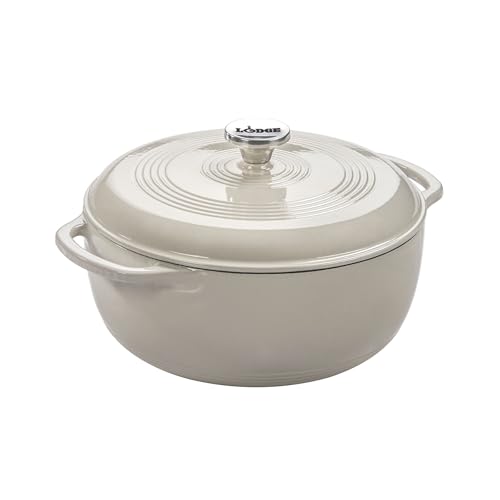
- Lodge Essential Enamel Cast Iron Dutch Oven, 6 Quart, Oyster White — Best Made Lid Design. Best for braisers who value the moisture-sealing lid and dual handles.
- Overmont Enameled Cast Iron Dutch Oven, 5.5QT, White — Best Made Starter Package. Best for new owners who want the pot, potholders and a cookbook from one maker.
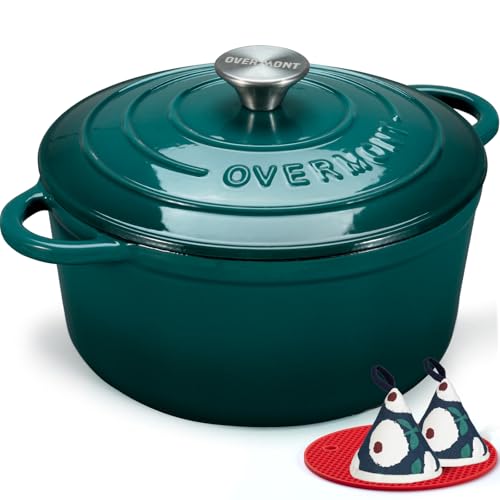
- Overmont Enameled Cast Iron Dutch Oven, 7QT — Best Made at Scale. Best for batch cooks who want the enclosed lid-knob design in a seven-quart body.
- Amazon Basics Enameled Cast Iron Dutch Oven, 6-Quart, Blue — Best Made Simplicity. Best for buyers who judge a pot by its plain, honest format.
Read the full guide ↓ for the construction cues that matter, honest trade-offs for each pot, and a care routine that keeps a well-made pot well made.
Asking for the best made dutch ovens is asking a craftsman’s question: not which pot is famous, or cheapest, or biggest, but which is put together with the most care in the places care shows. In enameled cast iron, those places are knowable. They are the lid and how it manages moisture, the knob and how it is designed, the handles and how they carry weight, the honesty of the stated specifications, and the completeness of what the maker puts in the box. This guide ranks six verified pots on those evidence points alone, drawn strictly from their listings: a Lodge whose title names a moisture-sealing lid and dual handles, an Overmont whose larger model names an enclosed lid-knob design, Umite Chef pots described as heavy-duty with potholders included, a smaller Overmont bundled with cookbook and potholders, and an Amazon Basics pot whose plainness is itself a kind of construction statement.
Two of the six are colour variants of one Umite Chef design, and they are ranked together in spirit even as they are reviewed separately — build quality does not change with paint, and this guide says so wherever it matters. The ranking that follows is therefore not a beauty contest and not a price ladder; it is an audit. Readers who want the same pots judged by oven documentation will find that lens at Best Oven Proof Dutch Ovens, while this page keeps its eyes on how the objects are made.
Key Takeaways
- Build quality in this category shows in verifiable details: a moisture-sealing lid (Lodge), an enclosed lid-knob design (Overmont 7QT), dual handles (Lodge, Amazon Basics) and honest stated specifications.
- Several listings here use heavy-duty positioning and include cotton potholders — the bundle is part of the maker’s care signal, because handles are a safety component.
- The two Umite Chef picks are one build in two finishes; judge the construction once and choose the colour separately.
- Capacity is not craftsmanship: the best made pot for you still has to be the right size, from 5QT everyday to 7QT batch.
- A well-made enameled pot rewards basic care — gradual heat, no thermal shock, soft tools — with years of service.
- Plain can be well made: the Amazon Basics pot’s restraint is a legitimate construction philosophy, not an apology.
In this guide
Quick Picks
Six pots audited for build, badges repeated in the detailed reviews.
| Pick | Badge | Who it suits |
|---|---|---|
| Umite Chef 5QT Enameled Cast Iron Dutch Oven, Cream White | Best Made for Everyday Cooks | Smaller households, heavy-duty build, potholders included |
| Umite Chef 5QT Enameled Cast Iron Dutch Oven, Red | Best Made in a Classic Finish | The same build in a forgiving red finish |
| Lodge Essential Enamel Cast Iron Dutch Oven, 6 Quart, Oyster White | Best Made Lid Design | Braisers who value the sealing lid and dual handles |
| Overmont Enameled Cast Iron Dutch Oven, 5.5QT, White | Best Made Starter Package | New owners who want pot, potholders and cookbook together |
| Overmont Enameled Cast Iron Dutch Oven, 7QT | Best Made at Scale | Batch cooks; enclosed lid-knob design named in listing |
| Amazon Basics Enameled Cast Iron Dutch Oven, 6-Quart, Blue | Best Made Simplicity | Buyers who want six plain, honest quarts |
How These Picks Were Chosen
The audit method was simple to state and strict to apply: read each verified listing title as a specification sheet and credit only what it states. Named lid behaviour counted. Named knob design counted. Named handles counted. Included items counted, because a maker who bundles the potholders a cast iron pot requires has thought about the object in use, not just in the box. Heavy-duty positioning was noted where a listing claims it, as a maker’s own description of intent. What did not count: reputation imported from outside the listing, specifications borrowed from sibling models, and any number a title does not print. That discipline produces the ranking’s distinctive shape — a value-tier Lodge near the top on the strength of its named lid, a big Overmont credited for a knob detail its smaller sibling’s title does not claim, and no pot praised for virtues its maker did not state.
Capacity and finish were treated as fit, not quality, and are reported neutrally so you can apply your own household’s needs. All six pots are enameled cast iron, verified from their titles, and all cook by the same methods; the audit is about the details around that shared core. Confirm the current listing before buying, since bundles and finishes are the parts of a listing most often revised. The capacity-first view of several of these pots appears at Best Large Dutch Ovens for readers whose first question is size rather than construction.
The 6 Best Made Dutch Ovens in Detail

Umite Chef 5QT Enameled Cast Iron Dutch Oven, Cream White
Badge: Best Made for Everyday Cooks
Strengths
- Described in its listing as heavy-duty cookware, with the lid and cotton potholders included — a complete, considered package.
- Five quarts is the size that gets used daily, and a well-made pot used daily beats a finer pot used monthly.
- The pale interior lets you judge fond and reduction, a working cook’s detail.
Trade-offs
- No named lid or knob design feature in the title, unlike the Lodge and the big Overmont.
- Cream White enamel records stains more than dark finishes.
- Mid-size ceiling for larger households.
Mini spec box
- Material: enameled cast iron
- Capacity: 5QT
- Includes: lid and cotton potholders (per listing title)
- Colour: Cream White
- Listed uses: bread baking, braising, stews, roasting
The everyday Umite Chef earns its badge on completeness of thought. Its listing describes heavy-duty enameled cast iron cookware for bread baking, braising, stews and roasting, and includes the cotton potholders that safe handling of cast iron requires — a small inclusion that signals a maker thinking past the sale to the first time you lift the pot from a hot oven. At five quarts the pot is sized for the cooking most households do most often, which is itself a build virtue: a pot proportioned to its user’s life gets seasoned by use, understood deeply and kept for years. The Cream White finish shows your cooking as you go, fond browning against a pale ground, and asks only that you accept the patina that honest work leaves on light enamel.
It suits smaller households and daily cooks. Its audit limitations are absences rather than flaws: the title names no lid behaviour and no knob design, so buyers who rank those details first should look at the Lodge and the large Overmont below. As a complete, heavy-duty everyday build, it sets the guide’s baseline.
Best for: daily cooks in smaller households / Not suited for: buyers who rank named lid or knob features first
Check on Amazon to see the current listing for the Umite Chef 5QT in Cream White.

Umite Chef 5QT Enameled Cast Iron Dutch Oven, Red
Badge: Best Made in a Classic Finish
Strengths
- The identical heavy-duty build and potholder bundle as the Cream White version.
- Red enamel is the finish that best preserves a well-made pot’s looks under sauce-heavy cooking.
- The classic colour suits the pot’s role as a serving vessel.
Trade-offs
- A finish variant, not a distinct build — this guide will not pretend otherwise.
- Same absence of named lid or knob features in the title.
- Same five-quart ceiling.
Mini spec box
- Material: enameled cast iron
- Capacity: 5QT
- Includes: lid and cotton potholders (per listing title)
- Colour: Red
- Listed uses: bread baking, braising, stews, roasting
A build-quality guide is the right place to make a point other guides blur: finish is part of how a pot is made, but it is the last part, not the first. The red Umite Chef shares every construction fact with its cream sibling — same enameled cast iron, same heavy-duty positioning, same included potholders, same stated repertoire — and differs only in the enamel’s colour. That colour is not trivial: red forgives the evidence of tomatoes, paprika and wine, so a well-made pot keeps looking well-kept with ordinary washing, and for cooks whose food runs red and gold, that is a genuine ownership quality. But it is a quality of appearance and maintenance, not of structure, and it is ranked here exactly on those terms.
Choose the red if your cooking is sauce-rich or your kitchen wants the classic look; choose the cream if you value reading fond against a pale interior. Do not let any guide sell you the second as an upgrade to the first.
Best for: sauce-heavy cooks who want the build in a forgiving finish / Not suited for: buyers expecting any construction difference from the Cream White pick
Check on Amazon to see the current listing for the Umite Chef 5QT in Red.

Lodge Essential Enamel Cast Iron Dutch Oven, 6 Quart, Oyster White
Badge: Best Made Lid Design
Strengths
- The listing names a moisture-sealing lid — the single most consequential build detail for braising.
- Dual handles are also named, completing a design that thinks about the pot full and hot.
- Six quarts from the category’s established American cast iron maker, at a value tier.
Trade-offs
- No potholders listed as included, despite the well-designed handles needing them.
- Oyster White shows cooking stains over time.
- No knob design is named in the title.
Mini spec box
- Material: enamel cast iron (per listing title)
- Capacity: 6 Quart
- Features named in listing: moisture-sealing lid, dual handles
- Colour: Oyster White
- Listed uses: bread baking, braising, marinating, slow cooking
If one pick in this audit demonstrates what best made means in practice, it is the Lodge — not because of its famous name, which this guide deliberately discounts, but because its listing names the two design decisions that most affect a Dutch oven’s working life. A moisture-sealing lid keeps braising liquid circulating inside the pot, so food bastes itself across long oven hours instead of drying at the surface; that is a cooking result you can taste, specified in writing. Dual handles distribute the load of a full six-quart pot across two hands and two wrists; that is a safety result you can feel. A maker who specifies both has designed for the pot in use, at temperature, full of food — and has done it at a value tier, in a family size, under a name with a long cast iron record standing quietly behind the claims.
It suits braising households and anyone who ranks design evidence over decoration. Its audit gaps are the missing potholder bundle and the unnamed knob. Neither outweighs the lid. For construction-first buyers, this is the pot to beat, and readers comparing it against the premium end of the category will find the brand-side analysis at Best Le Creuset Dutch Ovens Braisers.
Best for: braisers who judge a pot by its lid and handles / Not suited for: buyers who want the accessories bundled
Check on Amazon to see the current listing for the Lodge Essential 6 Quart in Oyster White.

Overmont Enameled Cast Iron Dutch Oven, 5.5QT, White
Badge: Best Made Starter Package
Strengths
- The most complete maker package here: pot, lid, cookbook and cotton potholders in one box.
- 5.5QT is the versatile middle size, so the package is built around the capacity most recipes assume.
- Positioned by its listing for braising, stews, roasting and sourdough baking.
Trade-offs
- No named lid or knob feature in this model’s title — its larger sibling claims the knob design, this one does not.
- White enamel stains visibly.
- Veterans gain less from the bundled cookbook.
Mini spec box
- Material: enameled cast iron
- Capacity: 5.5QT
- Includes: lid, cookbook and cotton potholders (per listing title)
- Colour: White
- Listed uses: braising, stews, roasting, sourdough baking
The smaller Overmont’s claim to craftsmanship is the package as a designed whole. A first Dutch oven fails its owner in predictable ways — no mitts that fit the handles, no recipes scaled to the pot, hesitation at the first braise — and this maker has bundled against every one of them: potholders for the handles, a cookbook for the repertoire, and a 5.5-quart pot sized to the recipes a beginner will actually meet. That is systems thinking, and in an audit of how things are made, the system around the object counts. The pot itself is enameled cast iron positioned for the category’s core work — braising, stews, roasting, sourdough — in a bright white finish that will record its service honestly.
It suits new owners and gift buyers who want one maker to have thought the whole purchase through. Experienced cooks should note the audit’s precision: this model’s title names no knob design, and the credit for that detail belongs only to the seven-quart Overmont below. Buy this one for the package, not for features its listing does not claim.
Best for: first-time owners who value a complete package / Not suited for: veterans who already own the accessories
Check on Amazon to see the current listing for the Overmont 5.5QT in White.

Overmont Enameled Cast Iron Dutch Oven, 7QT
Badge: Best Made at Scale
Strengths
- The listing names an enclosed lid-knob design — a specific construction detail no other title here claims.
- Oven-safe positioning is stated for sourdough baking, braising, stews and roasting.
- Seven-quart heavy-duty body with cookbook and cotton potholders included.
Trade-offs
- The heaviest full lift in the guide; construction quality does not repeal gravity.
- Needs storage and oven clearance to match its scale.
- Oversized for small households’ daily cooking.
Mini spec box
- Material: enameled cast iron
- Capacity: 7QT
- Includes: lid, cookbook and cotton potholders (per listing title)
- Features named in listing: enclosed lid-knob design, oven safe positioning
- Listed uses: sourdough baking, braising, stews, roasting
The large Overmont is where this maker shows its construction homework most explicitly. An enclosed lid-knob design is the kind of detail a build audit exists to catch: the knob is the component you grip at full oven temperature and the one whose design affects cleaning and handling every time the lid moves, and this listing names its approach where rivals stay silent. Add stated oven-safe positioning for the pot’s whole repertoire, a seven-quart heavy-duty body for batch work, and the same complete bundle as its smaller sibling — cookbook, cotton potholders — and the result is the most fully specified large pot in the guide. Scale exposes weak construction faster than any test, because weight, heat and handling all multiply; a maker willing to specify details at this size is making a claim this audit is happy to record.
It suits batch cooks, hosts and bakers of large loaves. Its limitations are physical rather than qualitative: the lift, the footprint, the storage. Buyers whose kitchens fit it will find the most completely documented build here; the patio-and-grill extension of big-pot cooking is discussed, with appropriate caution about enamel outdoors, at Best Outdoor Dutch Ovens.
Best for: large-format cooking with named construction details / Not suited for: small households or tight storage
Check on Amazon to see the current listing for the Overmont 7QT.

Amazon Basics Enameled Cast Iron Dutch Oven, 6-Quart, Blue
Badge: Best Made Simplicity
Strengths
- A plain, verifiable format: six round quarts, dual handles, heavy-duty and oven-safe positioning stated in the listing.
- No bundle, no flourish — the construction budget is the pot itself.
- Blue finish conceals the working marks of regular use.
Trade-offs
- No named lid behaviour or knob design in the title.
- No included potholders or cookbook.
- Buyers who enjoy maker detail will find this listing terse.
Mini spec box
- Material: enameled cast iron
- Capacity: 6-Quart
- Shape: round (per listing title)
- Features named in listing: dual handles, heavy-duty, oven safe positioning
- Colour: Blue
- Listed uses: stews, roasting, baking
The Amazon Basics pot closes the audit with a philosophy: make the essential object plainly and state its essentials plainly. Its title confirms enameled cast iron, six quarts, a round shape, dual handles, heavy-duty construction and oven-safe positioning for stews, roasting and baking — every fact a buyer needs and not one ornament more. In a category where titles often read like poetry, that terseness is information: the value here is the format itself, executed without bundle or badge. Dual handles, notably, are present — the safety-relevant design choice — even in this plainest pot, which supports the guide’s broader point that the fundamentals of good making in this category are widely shared, and the differences live in the named refinements above it.
It suits pragmatic buyers, second-pot purchases and anyone who distrusts flourish. Buyers who want a sealing lid, a designed knob or a maker’s package should choose the Lodge, the big Overmont or the bundled Overmont respectively — this guide has audited each for exactly those virtues. For plain, honest making at a family size, this is the benchmark of restraint.
Best for: pragmatists who judge the pot alone / Not suited for: buyers who want named refinements or bundles
Check on Amazon to see the current listing for the Amazon Basics 6-Quart in Blue.
Comparison Table
| Pick | Capacity | Named build detail | Included extras | Link |
|---|---|---|---|---|
| Umite Chef Dutch Oven | 5QT | Heavy-duty positioning | Cotton potholders | Check on Amazon |
| Umite Chef Dutch Oven | 5QT | Heavy-duty positioning | Cotton potholders | Check on Amazon |
| Lodge Essential Dutch Oven | 6 Quart | Moisture-sealing lid, dual handles | None listed | Check on Amazon |
| Overmont Dutch Oven | 5.5QT | Bundle design | Cookbook, cotton potholders | Check on Amazon |
| Overmont Dutch Oven | 7QT | Enclosed lid-knob design, oven safe positioning | Cookbook, cotton potholders | Check on Amazon |
| Amazon Basics Dutch Oven | 6-Quart | Dual handles, heavy-duty, oven safe positioning | None listed | Check on Amazon |
How to Choose a Well-Made Dutch Oven
Audit the listing the way this guide audited the shortlist. First, the lid: is any behaviour named — sealing, self-basting, a designed knob? A named lid detail is the strongest single signal of considered construction in this category. Second, the handles: dual handles, sized for two protected hands, are the safety baseline; every pick here meets it where stated, and you should confirm it where a listing is silent. Third, the stated specifications: oven-safe positioning, cooktop compatibility and any figure printed in the title are a maker’s written commitments, and a maker who commits in writing is easier to hold to account than one who gestures. Fourth, the bundle: potholders included means the maker thought about the pot in use; a cookbook means they thought about the cook. Fifth, and only fifth, the finish and the name — real pleasures, legitimately paid for, but ornaments on the audit rather than entries in it.
Then fit the audited pot to your life. The best made five-quart pot will frustrate a batch cook exactly as much as a shoddy seven-quart one, because fit is not a construction property. Choose capacity for your household, confirm your oven and storage fit the body, and let the audit break ties among the pots that pass. That order — design evidence, then fit, then finish — is the whole method, and it transfers to any Dutch oven listing you meet after this guide.
How to Keep a Well-Made Pot Well Made: Use and Care
Construction quality is a starting condition, not a permanent one; owners preserve or squander it with technique. Preheat enameled cast iron gradually with oil or liquid present. Brown in uncrowded batches, deglaze for the fond, and braise covered at gentle heat — a sealing lid, where your pot has one, does its best work at a bare simmer rather than a rolling boil. Bake bread in the fully preheated pot, covered then uncovered. Handle every lid by its knob with protection, and every full pot by both handles, because the best-designed grip still needs a hand in it.
Cleaning protects the enamel that defines the category. Cool before washing, soak instead of scouring, lift residue with a baking-soda simmer, and use wood or silicone tools throughout. Dry fully and store with the lid slightly ajar in humid kitchens; line the interior if you nest other pans inside, because rim chips are storage injuries, not cooking honours. Treated this way, the construction you audited at purchase is the construction you will still own in a decade.
Troubleshooting, in brief. Problem: the lid seems to let braises dry → check your heat first; most lids seal adequately at a gentle simmer, and a parchment layer under the lid is the traditional assist. Problem: enamel dulls or stains → soak and use the baking-soda routine; staining is cosmetic and does not indict the build. Problem: a knob or handle feels awkward at temperature → you are missing the potholder half of the system; several makers here bundle them for a reason, and good mitts complete any pot.
The Parts That Wear — and the Parts That Do Not
A final craftsman’s observation for buyers thinking in decades. In an enameled cast iron pot, the iron core effectively does not wear out; it will outlast its owner’s cooking career. The enamel is the working surface and the honest wear point: it accumulates patina, the occasional mark, and — if abused with shock or metal — chips. Lids and knobs live the hardest life, cycling between oven heat and counter, which is why named lid and knob design earned this audit’s closest attention. Handles, being solid with the body, ask only for protected hands. Read in that light, the ranking above is a ranking of attention: the makers who specified the wear points — the sealing lid, the enclosed knob — thought hardest about the pot’s tenth year, not just its first photograph. Buyers who think in decades should weight those signals accordingly, and then join the makers’ care with their own. The shape dimension of the same long view — round against oval for the joints you actually roast — is explored at Best Oval Dutch Ovens.
How to Inspect a Listing Like a Maker
Turn the audit into a habit you can run on any listing in two minutes. Open the title and underline every verifiable noun: a lid behaviour, a knob design, a handle configuration, a stated oven or cooktop claim, an included item. Those underlined phrases are the maker’s enforceable promises, and a well-made pot’s title usually contains at least one of them. Then note the silences with equal care. A title silent on the lid tells you nothing bad — it tells you the lid is unremarkable or unmarketed, and that your decision should rest on other evidence. A title silent on included potholders tells you to price mitts into the comparison. Finally, weigh the maker’s own adjectives last: heavy-duty and premium are seasoning, while a moisture-sealing lid is meat. Readers who internalise that order will find most buying guides, this one included, easier to use — because they will be reading for evidence in the same order the evidence deserves.
Apply the same inspection to the pot’s fit in your kitchen, since a well-made object in the wrong place becomes a badly used one. The best made pot in this guide still needs a burner that suits its base, an oven shelf that clears its lid and knob, and storage that respects its weight. Construction quality and domestic fit are the two halves of a purchase that lasts, and neither substitutes for the other.
Making as a System: Pot, Lid, Hands, Habits
The deepest lesson of this audit is that a Dutch oven’s quality is a system, not a single casting. The pot provides the thermal mass. The lid manages the moisture that defines braising. The knob and handles connect the system to your hands at the moments of highest temperature and weight. The potholders — bundled by the thoughtful makers here — complete that connection. And your habits, the gradual heating and gentle cleaning, maintain the whole assembly across years. A maker who designs and bundles with that system in view, as the Overmont packages and the Lodge’s specified lid suggest, is practising the craft this keyword asks about. A buyer who completes the system with technique honours it. Judge pots as systems when you shop, and the question of which is best made largely answers itself from the listings, without anyone needing to raise their voice.
Common Buying Mistakes
- Judging build by weight alone. Mass is a property of cast iron generally. Judge the named details: lid, knob, handles, stated specs.
- Crediting one model with its sibling’s features. The enclosed knob belongs to the 7QT Overmont’s listing, not the 5.5QT’s. Read each title on its own.
- Treating colour variants as different builds. The two Umite Chef picks share one construction. Choose the finish once.
- Ignoring the bundle as a quality signal. Included potholders show a maker thinking about the pot in use. Their absence is information too.
- Abusing good construction with bad technique. Thermal shock and metal tools undo careful making. The care routine is part of the purchase.
- Buying the audit winner in the wrong size. Fit outranks finish and features. A well-made pot you cannot fill or lift will not be used.
Makers’ Bundles as Autobiography
Read the bundles in this guide as short autobiographies of their makers, because what a company puts in the box is what it believes ownership feels like. Umite Chef includes potholders and nothing else: a maker’s bet that you own recipes and need safety. Overmont includes potholders and a cookbook at both sizes: a bet that guidance is part of the product, and that a new owner should be cooking successfully within the week. Lodge and Amazon Basics include nothing beyond the pot: a bet that the object speaks for itself and the owner is already equipped. None of these bets is foolish, and each predicts a different first month of ownership. The best made purchase, in the fullest sense, matches the maker’s bet to your actual kitchen — your mitts drawer, your recipe shelf, your confidence — so that nothing essential is missing and nothing included is waste. That matching is a quality judgement too, and it is entirely yours to make with the evidence assembled here.
Weight, Balance and the Feel of a Made Thing
There is one quality signal no listing can print, and this guide names it so you can test it yourself in the first days of ownership: balance in the hand. A well-made pot feels composed when lifted by its handles — the load sits between your hands rather than arguing with them, the lid seats with a settled finality rather than a rattle, and the whole object moves like one thing. You cannot audit that from a title, which is why this guide’s rankings rest on stated details instead. But you can confirm it on arrival, during the same inspection the FAQ describes, and a pot that feels composed in the hand is usually telling the truth about the care in its making. Conversely, trust the stated evidence over a first impression formed from weight alone: heft is iron being iron, while a sealing lid and a designed knob are makers being thoughtful. The best made pot for your kitchen will satisfy both audits — the paper one you can run today, from the listings gathered here, and the physical one you run when the box opens.
Enamel: The Surface Where Making Shows Daily
Of all the parts this audit weighs, the enamel is the one you will interact with most — every meal, every wash, every year. It is where making becomes visible in daily life: a smooth interior that releases a braise cleanly, a surface that shrugs off tomato and wine, an exterior colour that either hides or displays the record of work. The listings here do not grade their enamels against one another, and this guide does not invent a ranking the evidence cannot support. What can be said is procedural: the enamel on any of these pots will reward the same courtesies — gradual heat, soft tools, soaking over scouring — and will record the same history in its patina. Choose the finish whose record you will enjoy reading. A pale interior turns cooking into something you can watch, fond by fond; a saturated exterior turns years of sauces into a rumour rather than a display. Both are legitimate crafts of living with a made thing, and the makers here offer you the choice across cream, white, red and blue.
Final Recommendation
For construction-first buyers, the Lodge Essential 6 Quart is this audit’s headline: a moisture-sealing lid and dual handles, named in writing, at a family size and a value tier, from a maker whose whole business is cast iron. Buyers who want the most fully specified build at scale should choose the Overmont 7QT for its enclosed lid-knob design, stated oven-safe positioning and complete bundle. New owners should take the smaller Overmont’s package, everyday cooks in smaller households either Umite Chef finish, and pragmatists the Amazon Basics for its plain, honest format. Every pick here is verified enameled cast iron; the audit simply shows you where each maker spent their care, so you can spend yours to match.
If you want a fast answer, start with one of these three and read its detailed review above: Lodge Essential Enamel Cast Iron Dutch Oven, 6 Quart, Oyster White, Overmont Enameled Cast Iron Dutch Oven, 7QT, Umite Chef 5QT Enameled Cast Iron Dutch Oven, Cream White. They cover the lid-design, large-scale and everyday cases between them.
One last encouragement: quality in this category is not fragile. Any pick in this guide, used with the basic courtesies of gradual heat and gentle cleaning, will still be cooking when trends and lesser tools have cycled out of your kitchen — which is, in the end, the only definition of well made that matters.
Whichever you choose, run the arrival inspection, cook in it within the week, and let the audit continue in your own kitchen — the best made pot is the one whose making you can still feel, meal after meal, years after the listing is forgotten.
Frequently Asked Questions
What makes one Dutch oven better made than another?
Verifiable design attention at the wear points: a lid that manages moisture, a knob designed for hot handling and cleaning, handles that carry a full pot safely, honest stated specifications, and a bundle that shows the maker thought about use. Brand fame and price are weaker evidence than those named details, which is why this guide ranks by them.
Does heavy-duty in a listing mean anything?
It is the maker’s own description of intent — worth noting, as this guide does where listings claim it, but weaker than a named feature. A stated lid behaviour or a printed oven-safe positioning commits the maker to something checkable; heavy-duty language asks for trust. Weight your decision accordingly.
Are the two Umite Chef picks really the same build?
Yes — same enameled cast iron design, same five-quart capacity, same included potholders, same stated uses. Only the enamel colour differs, Cream White against Red. Judge the construction once, then choose the finish by your cooking and kitchen: pale to read the fond, red to hide the record.
Why does the value-tier Lodge rank so high in a quality guide?
Because its listing names the two features that matter most in use — a moisture-sealing lid and dual handles — and named features are this audit’s currency. Tier and quality are related but not identical, and a maker who specifies well at a value tier has made a strong construction case.
How long should a well-made enameled Dutch oven last?
The iron core is effectively permanent, and the enamel, treated with gradual heat, no thermal shock and soft tools, serves for many years. Expect patina rather than perfection on the surface. The parts to inspect over time are the lid’s fit and the knob’s condition — the wear points this guide teaches you to value at purchase.
Should I pay more for a named lid or knob design?
If you braise often or cook at oven temperature regularly, yes — those are the components you will use hardest and notice most, and a maker who specifies them is offering checkable quality rather than adjectives. If your cooking is mostly stovetop soups and occasional loaves, the plainer well-made formats here will serve you just as faithfully.
Is a heavier Dutch oven always better made?
No. Weight in this category mostly reflects iron volume and pot size, and beyond the mass needed for even heating it buys handling costs rather than quality. Judge the design evidence — lid, knob, handles, stated specifications — and choose the size your cooking fills. A composed, well-specified six-quart pot is better made, for most kitchens, than an unspecified seven-quart one.
How can I tell if the enamel is in good condition after years of use?
Look for a smooth, intact cooking surface without chips that expose the iron beneath, and expect — accept — colour change: staining, gentle dulling and exterior marks are the normal autobiography of a used pot. Hairline surface lines from thermal cycling are usually cosmetic. Damage that reaches the cooking surface itself is the point at which to seek the maker’s guidance.
Does where a pot is made matter to quality?
This guide judges making by stated design evidence rather than origin, because the listings here specify features, bundles and formats — the things a buyer can verify — rather than inviting origin-based assumptions. A sealing lid seals in any country; a designed knob grips in any language. Audit what is printed, inspect what arrives, and let origin matter only where a listing itself makes it part of the specification.
What is the first thing to check when a well-made pot arrives?
Fit and finish, literally: set the lid on and check it sits evenly, look over the enamel for chips or flaws, confirm the included items match the listing, and test the pot’s fit in your oven and storage before the first cook. Report any transit damage immediately. A pot that passes that inspection is ready for its first gradual preheat and its long career.
Is a bundled cookbook a sign of quality?
It is a sign of a maker designing the ownership experience, which this audit counts as a secondary virtue: it helps beginners use the pot well from the first week. It does not substitute for construction details like lid design. The Overmont picks pair the bundle with solid formats, which is why they read as complete packages rather than decorated ones.