Disclosure: topratedkitchenware.com is reader-supported. When you buy through links on our site, we may earn an affiliate commission from Amazon and other retailers, at no extra cost to you.
Where to buy
For readers chasing the best europian induction cooktops — European-style induction, with its frameless glass, precise temperature culture, and compact footprints — the four linked portable models below are the picks that honour that style and are verified against their manufacturer listings. Two built-in gas units that haunt this search are reviewed afterwards in prose only, because gas is many things, but it is not induction.
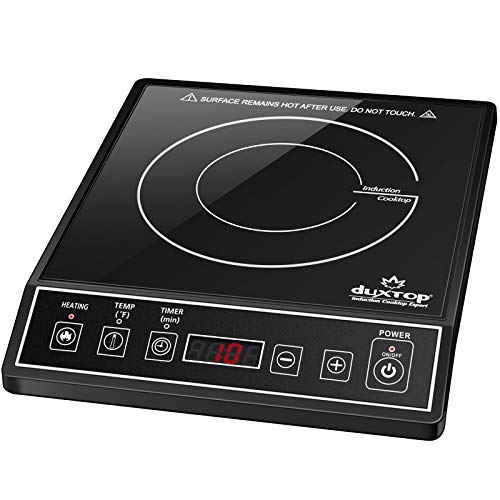
- Duxtop 9100MC Portable Induction Cooktop — Best Classic Portable · Check on Amazon
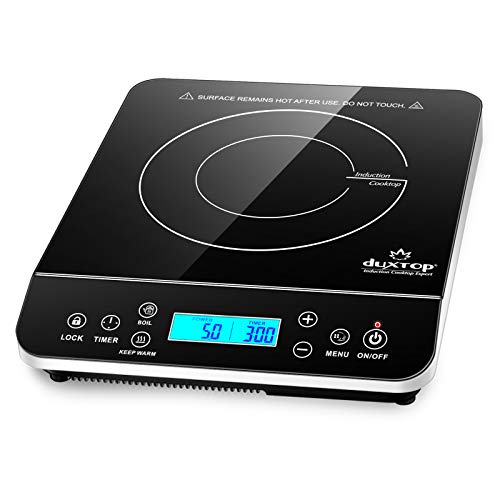
- Duxtop 9610LS Portable Induction Cooktop — Best European Interface
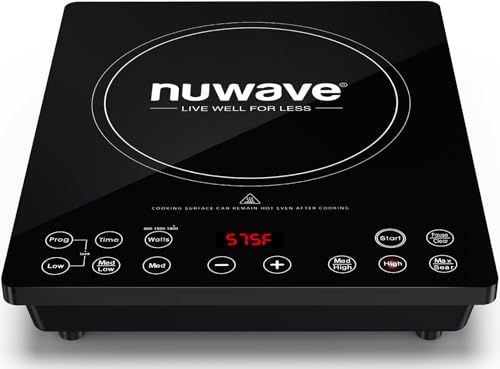
- Nuwave Pro Chef Induction Cooktop — Best for Precision — the European Virtue
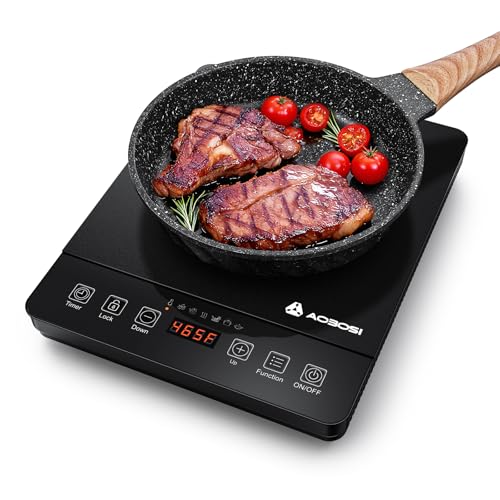
- ISILER Portable Induction Cooktop — Best Accessible All-Rounder
- VEVOR 30-Inch 5-Burner Gas Cooktop — Gas Alternative — Prose-Only (reviewed in full below; no purchase link — see the review for why)
- ThermoMate 36-Inch 5-Burner Gas Cooktop — Gas Alternative — Prose-Only (reviewed in full below; no purchase link — see the review for why)
Read the full guide ↓
European induction cooking has a recognisable character, and it is worth naming before the picks: frameless black glass that disappears into the worktop, controls reduced to a touch and a number, zones sized in centimetres for the pans Europeans actually use, and a cultural assumption that temperature is something you set precisely rather than approximately. The best europian induction cooktops — “europian” being the spelling this search often travels under — bring that character within reach of kitchens that cannot, or will not, rebuild around a full European hob. The portable format is where the style and the practical meet: a single or double zone of frameless glass that plugs in, cooks with European manners, and stores in a drawer.
Honesty requires one clarification up front, and this guide makes it gladly. The linked picks below are portable models sold for the North American market that embody the European induction style — the glass, the precision, the compact discipline. A reader physically cooking in Europe, on 230-volt supply, should read the voltage section of this guide carefully before ordering anything from a US listing. Style travels; voltage does not. With that stated, the four electrics below are ranked for control fineness, design fluency, and session stamina, and two gas built-ins follow as prose-only reviews — included because they crowd this search, labelled clearly because they fail its first word after “best”: induction.
Key Takeaways
- European style in induction means frameless glass, touch controls, precise set temperatures, and compact, pan-honest zone sizes.
- The four linked picks are portable models in that style, verified against their listings; the two gas built-ins reviewed later are prose-only because gas is not induction.
- Voltage is the one non-negotiable: US-market portables are built for North American supply. Cooking in Europe? Verify the listing’s voltage rating before anything else.
- The Nuwave Pro Chef’s 94 temperature settings in 5°F steps are the closest portable expression of the European set-a-number culture.
- All four electrics are 1800W class — the North American socket’s ceiling — so control and build, not power, separate them.
- European pan discipline applies: flat, magnetic bases, sized to the zone. The magnet test is universal, in every spelling.
In this guide
Quick Picks
Four portable induction burners ranked by how faithfully they deliver the European brief — precision, frameless design, compact discipline — then two gas units, honestly labelled, for the cross-shoppers.
| Pick | Badge | Why it stands out | Link |
|---|---|---|---|
| Duxtop 9100MC Portable Induction Cooktop | Best Classic Portable | Duxtop’s proven 9100MC: the established portable induction design, in black glass-top form, with full 1800W and zero fuss. | See review below |
| Duxtop 9610LS Portable Induction Cooktop | Best European Interface | The 9610LS: an LCD sensor-touch panel flush with the glass — the control language of the European hob, word for word. | Check on Amazon |
| Nuwave Pro Chef Induction Cooktop | Best for Precision — the European Virtue | 94 temperature settings, 100°F to 575°F, in 5°F steps: set-a-number cooking in its most complete portable form. | See review below |
| ISILER Portable Induction Cooktop | Best Accessible All-Rounder | Ten plus ten settings, 7 presets, a timer, and a safety lock in a compact body — European discipline, translated for everyone. | See review below |
| VEVOR 30-Inch 5-Burner Gas Cooktop | Gas Alternative — Prose-Only | A 30-inch, 5-burner built-in gas hob — the Mediterranean flame tradition, reviewed without a link because this guide is about induction. | Prose-only pick |
| ThermoMate 36-Inch 5-Burner Gas Cooktop | Gas Alternative — Prose-Only | A 36-inch built-in gas hob with Italy Sabaf burners — Italian hardware, honestly labelled as the gas tradition, not induction. | Prose-only pick |
How These Picks Were Chosen
Each candidate was verified against its manufacturer listing, then tested against this keyword’s definition: induction technology, delivered with the European style markers of frameless glass, precise temperature control, and compact form. Four portable models qualified and are linked. Two built-in gas cooktops that rank for this search failed the technology test absolutely — flame is not a dialect of induction — so they are reviewed in full as prose-only entries, without links or images, for readers whose renovation genuinely points that way.
Among the qualifiers, we weighted temperature-control fineness most heavily, because it is the soul of the European brief: the difference between a burner that offers “low, medium, high” and one that holds a set degree is the difference between the two cooking cultures. Design fluency (flush panels, minimal visual noise), timer stamina, and build followed in that order. Headline wattage was ignored, as it must be when every candidate shares the same socket ceiling.
Method, plainly: a research-led guide from verified listing specifications. We did not bench-test these units in a European test kitchen, we claim no specifications the listings do not state, and we print no prices, because figures drift. One specification we deliberately do not guess is voltage — the guide tells you how to check it rather than asserting it, which is the only honest way to handle the detail that matters most to this keyword’s transatlantic audience. The same discipline governs Best Fan Cooling On Portable Induction Cooktops.
Our 6 picks for best europian induction cooktops, reviewed one by one
Ranked by fidelity to the European brief: precision first, then interface, then the accessible all-rounder — with the gas pair closing the section under their honest flag.
Duxtop 9100MC Portable Induction Cooktop
Badge: Best Classic Portable
Strengths
- Long-running Duxtop design — the portable induction benchmark for years
- Full 1800W in a compact single-zone body
- Simple, durable control philosophy that ages well
Trade-offs
- Listing is modest about fine-control features
- Single zone
- Black finish shows dust in bright European-style kitchens
Key specs (from the manufacturer listing)
- Power: 1800W
- Model: 9100MC (BT-M20B)
- Finish: black
- Format: portable countertop burner
European induction culture rests on proven platforms, and the Duxtop 9100MC is the portable field’s establishment figure: an 1800W countertop burner in black, from the category’s best-known specialist, with a production history long enough to make its reliability a matter of record rather than promise. In a guide about style it earns its place on substance — the frameless black-glass look that European hobs made standard began, in portable form, with designs exactly like this.
Its character is restraint. The listing does not advertise dozens of temperature steps or a library of presets; it offers a mature burner that boils, sears, sautés, and simmers with induction’s native responsiveness, and then gets out of the way. Buyers who equate European design with honesty of function — the object that does one thing completely — will recognise the philosophy. Buyers who want the full set-a-degree culture should read the Pro Chef’s review below, where that culture reaches its portable peak.
Best for: buyers who want the proven, restrained portable platform / Not suited for: cooks who want fine-step temperature programming
Duxtop 9610LS Portable Induction Cooktop
Badge: Best European Interface
Strengths
- Flush LCD touch panel — the defining interface of European induction design
- 1800W with instant, pan-centred response
- One-plane surface cleans the European way: a single wipe
Trade-offs
- Touch controls ask for dry fingers
- Single zone
- Feature set centres on interface rather than timers
Key specs (from the manufacturer listing)
- Power: 1800W
- Model: 9610LS (BT-200DZ)
- Controls: LCD sensor touch
- Finish: black
- Format: portable countertop burner
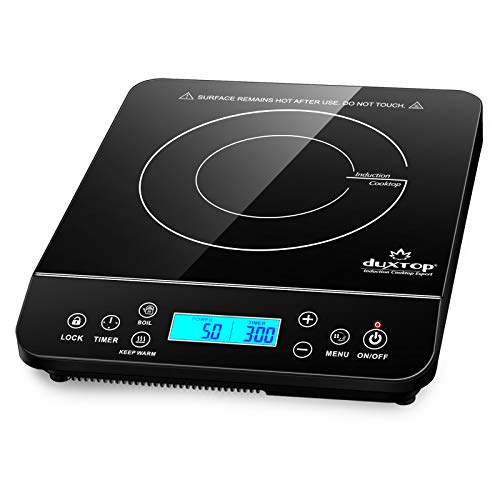
If one object in this guide speaks European induction fluently, it is the Duxtop 9610LS. Its LCD sensor-touch controls lie flush in the surface — tap, slide, set — exactly the interface grammar that frameless European hobs standardised, with no knob breaking the plane and no seam collecting the evidence of dinner. In a pale, handleless, stone-and-glass kitchen, it does not look like an appliance visiting from another category; it looks like a relative of the architecture.
The cooking is the full portable standard: 1800W, one responsive zone, and the immediate obedience that makes induction feel less like heating and more like instructing. The interface’s single demand — dry fingers for reliable touches — is the same demand a built-in European hob makes, so owners migrating from one will find the manners familiar. Readers comparing the wider electric field will find this model’s philosophy echoed across Best Freestanding Oven Cooktops.
Best for: design-led kitchens that want the authentic European touch interface / Not suited for: button loyalists and wet-handed improvisers

Nuwave Pro Chef Induction Cooktop
Badge: Best for Precision — the European Virtue
Strengths
- 94 settings in 5°F increments — precision worthy of the European brief
- Large 8-inch coil for even work under wide pans
- Shatter-proof ceramic glass surface stated in the listing
Trade-offs
- Precision is wasted on purely hearty cooking
- Single zone
- Commercial-grade build reads professional rather than domestic-elegant
Key specs (from the manufacturer listing)
- Power: 1800W
- Heating coil: large 8-inch
- Temperature settings: 94, from 100°F to 575°F in 5°F increments
- Surface: shatter-proof ceramic glass
- Grade: commercial-grade portable burner
Ask what separates European induction culture from the rest of the world’s, and the honest answer is a number: the temperature, stated exactly, held exactly. The Nuwave Pro Chef is that culture’s portable ambassador, with 94 temperature settings spanning 100°F to 575°F in 5°F increments. A sauce is not “on medium-low”; it is at its degree, for as long as the recipe’s patience requires. Chocolate, custards, emulsions, and slow braises stop being negotiations with a dial.
The hardware honours the software: 1800W, a large 8-inch coil that treats a wide sauté pan fairly, and a shatter-proof ceramic glass surface in a commercial-grade body. The trade-offs are audience-shaped rather than quality-shaped — a cook whose repertoire never leaves hearty territory will use a tenth of this machine, and its professional register suits design-led kitchens of the professional dialect better than the decorative one. For the precision cook, though, this is the pick the whole keyword exists to find.
Best for: precision cooks and anyone raised on set-a-number European hobs / Not suited for: hearty-only cooking that never uses fine settings

ISILER Portable Induction Cooktop
Badge: Best Accessible All-Rounder
Strengths
- 7 presets make the common European staples one-touch work
- Safety lock suits family kitchens and shared flats
- Compact footprint honours the European small-kitchen tradition
Trade-offs
- 10 temperature levels are a summary, not the full precision text
- Preset assumptions may not match every pan
- Compact coil coverage under the widest pans
Key specs (from the manufacturer listing)
- Power: 1800W
- Heating plate: 8-inch
- Settings: 10 power and 10 temperature levels
- Presets: 7 cooking presets
- Safety: timer and safety lock
- Format: compact portable design
Not every European kitchen is a showroom; most are small, busy, and shared — and the ISILER portable induction cooktop is specified for that real Europe. Ten power levels and ten temperature settings keep decisions simple, seven cooking presets cover the recurring repertoire, and a timer plus safety lock make it the household citizen of the set: the burner a flatmate, a teenager, or a grandparent can use correctly the first time, in a compact body that respects a small kitchen’s scarcest resource, surface.
Its 8-inch heating plate and full 1800W output keep it honest as a cooking tool — this is accessibility without apology. The ceiling is control fineness: where the Pro Chef offers 94 settings, this offers 10, and a cook who graduates to delicate sauce work will feel the steps. As the first induction burner in a European-style small kitchen, or the safe second zone in a family home, it translates the brief for the widest audience here.
Best for: small European-style kitchens, shared flats, and families / Not suited for: cooks who need fine temperature steps
VEVOR 30-Inch 5-Burner Gas Cooktop
Badge: Gas Alternative — Prose-Only
Strengths
- Five burners in a 30-inch built-in format
- NG/LPG convertible — bottled gas is a genuinely European pattern
- Thermocouple flame-failure protection stated in the listing
Trade-offs
- Gas is not induction — it fails this keyword’s defining technology
- Permanent installation with a gas connection
- Open flame in a guide about flameless precision is a different philosophy entirely
Key specs (from the manufacturer listing)
- Fuel: gas, NG/LPG convertible
- Size: 30 inch, built-in
- Burners: 5, 12250 BTU (per listing title)
- Body: stainless steel
- Safety: thermocouple protection
The VEVOR 30-inch gas cooktop appears in this search constantly, and it deserves a fair sentence before its honest verdict: as a built-in gas hob — five burners, stainless steel, convertible between natural gas and LPG, with thermocouple protection — it represents the older European tradition, the flame cooking of a million Mediterranean kitchens, in modern built-in form. LPG convertibility is even, in its way, a European note: bottled gas remains a living pattern across rural Europe.
And still: no link, no image, because this keyword asks for induction and this product burns gas. The two technologies are rival philosophies — visible flame and universal pans against flameless precision and magnetic discipline — and a guide that blurred them would fail readers of both. If flame is your tradition, our gas coverage, including Best Five Burner Gas Cooktops, treats it with the respect it deserves. If you came for induction’s European present rather than its past, the four linked picks above are your shortlist.
Best for: flame-tradition renovations, assessed in our gas guides / Not suited for: the induction brief in any respect
ThermoMate 36-Inch 5-Burner Gas Cooktop
Badge: Gas Alternative — Prose-Only
Strengths
- Italy Sabaf burners — genuinely European gas hardware
- 36-inch width with real pan room across five burners
- CSA certification and thermocouple protection stated in the listing
Trade-offs
- Gas fuel disqualifies it from an induction guide’s linked picks
- 36-inch built-in format is a renovation commitment
- Flame’s learning curve and cleaning load exceed induction’s
Key specs (from the manufacturer listing)
- Fuel: gas, NG/LPG convertible
- Size: 36 inch, built-in
- Burners: 5 Italy Sabaf power burners
- Body: 304 stainless steel
- Safety: thermocouple protection, CSA certified (per listing title)
The ThermoMate 36-inch gas cooktop is the more poetic of the two prose-only entries: its five burners are Italy Sabaf units, set in 304 stainless steel across a wide built-in body, with thermocouple protection and CSA certification in its listing. Italian burner hardware in a European-keyword search is no accident — the flame tradition’s engineering heartland is real, and for a kitchen being built around it, this is serious equipment.
Poetry aside, the category rule holds: an induction guide cannot link a gas hob without misleading the reader who trusted its title. We review it fully so the choice between traditions is an informed one — flame’s theatre and pan freedom against induction’s precision, cool surfaces, and wipe-clean calm, a contrast drawn fully in Best Flat Cooktops. Choose your tradition with open eyes; then buy from the guide that serves it.
Best for: large flame-tradition kitchens, assessed in our gas coverage / Not suited for: anyone seeking European induction
Comparison Table
Four induction portables in the European style, and two gas built-ins from the rival tradition. The table’s type column is the whole argument — read it first.
| Pick | Type | Power / Output | Controls & standout feature | Link |
|---|---|---|---|---|
| Duxtop 9100MC Portable Induction Cooktop | Portable induction, single zone | 1800W | Classic Duxtop design, black finish | Check on Amazon |
| Duxtop 9610LS Portable Induction Cooktop | Portable induction, single zone | 1800W | LCD sensor-touch panel, black finish | Check on Amazon |
| Nuwave Pro Chef Induction Cooktop | Portable induction, single zone | 1800W | 94 temp settings in 5°F steps, ceramic glass | Check on Amazon |
| ISILER Portable Induction Cooktop | Portable induction, single zone | 1800W | 10 + 10 settings, 7 presets, safety lock | Check on Amazon |
| VEVOR 30-Inch 5-Burner Gas Cooktop | Built-in GAS cooktop, 5 burners | 30 inch, NG/LPG | Thermocouple protection, stainless steel | Prose-only pick |
| ThermoMate 36-Inch 5-Burner Gas Cooktop | Built-in GAS cooktop, 5 burners | 36 inch, NG/LPG | Italy Sabaf burners, CSA certified in listing | Prose-only pick |
How to Choose European-Style Induction Cooktops — Including the Voltage Question
The voltage question, answered before everything else
Europe runs on 220–240 volt supply; North America on 120 volts. Appliances are built for one and are not casually interchangeable — a US-market portable induction burner is designed for North American outlets, full stop. The linked picks in this guide are sold on the US market and embody European style; they are the right purchase for a North American kitchen that cooks with European manners. If you are physically in Europe, buy a model whose listing explicitly rates it for 230-volt supply, ideally from a European retailer, and treat any listing silent on voltage as a listing that has not answered your most important question.
Plug shape is the trivial part of this — adapters exist. Voltage is the substance: no adapter converts it, and a converter heavy enough for an 1800W-class appliance is a specialist purchase, not a travel accessory. Style travels in a suitcase; electrical standards do not.
What “European style” actually specifies
Strip the marketing and four concrete markers remain. Frameless glass: the surface sits as one uninterrupted plane, with no raised trim. Touch control: settings are tapped and slid, not turned, keeping the plane unbroken. Set-temperature culture: control expressed in degrees and held precisely, rather than vague levels alone. Compact discipline: zones sized honestly for real pans, in kitchens that rarely waste a centimetre. Judge any candidate — portable or built-in — against those four markers and you are judging it the way a European buyer would, whatever its badge says.
The picks above map onto the markers deliberately: the 9610LS for the interface, the Pro Chef for set-temperature culture, the ISILER for compact discipline, the 9100MC for the frameless black-glass foundation.
Pan discipline, European edition
European induction assumes flat-based, magnetic pans sized to the zone — a discipline born of small kitchens where a pan that wastes the zone wastes the meal. The magnet test applies unchanged on both continents. Base diameter should roughly match the coil (the portable class clusters near 8 inches, about 20 centimetres); heavy, flat bases — cast iron, enamelled cast iron, quality stainless — heat the most evenly and quietly. If your collection skews to thin, warped, or aluminium pans, induction in any style will disappoint you until the pans change, and it is kinder to learn that from a guide than from a delivery.
Portable now, built-in later: the European pathway
Across Europe’s rental-heavy cities, the standard pathway is portable first: a season with a single-zone unit teaches the household induction’s rules and reveals the real zone count its cooking needs. Then the built-in decision — two zones or four, 60 centimetres or 80 — is made from experience rather than brochure. North American readers in rentals can borrow the pathway intact. The portable is not the compromise before the real thing; it is the research that makes the real thing right, a sequence we also recommend in Best Frameless Glass Cooktops.
The domino idea: thinking in 30-centimetre modules
European hob design thinks in modules — the 30-centimetre “domino” unit is the standard building block, combined as two-zone pairs or set beside a wok burner or teppanyaki plate in ambitious kitchens. The portable single zone is the domino idea freed from the worktop: one honest module of cooking, placed where the meal needs it. Thinking modularly clarifies buying: you are not purchasing a diminished four-zone hob, you are purchasing one complete module, and the question is only whether one module — or the Double Pro pattern’s two — matches your cooking’s real parallelism.
It also clarifies the upgrade path. A household that learns it lives happily on one module has saved itself a four-zone installation; a household that learns it needs two has learned it at portable prices. Either way the module was not a compromise — it was the measurement.
How to Cook in the European Induction Manner
Set temperatures, not moods
The European induction habit is to cook by number: the sauce at its degree, the pan at its degree, the oil just below its smoke point because you set it there. Begin by translating your repertoire: note the setting at which your pan fries an egg perfectly, your soup holds a bare simmer, your steak sears without smoking the room. Within two weeks you own a personal table of numbers that makes your cooking repeatable in a way “medium-high” never was.
Step by step for a pan sauce: sear on a high setting, remove the protein, drop the pan to a precise moderate temperature, deglaze, and hold the emulsion at its set point while the rest of the meal lands. The burner’s obedience — instant down, exact hold — is the technique.
Small-kitchen choreography
European small-kitchen cooking is sequential by design: one zone, used in the right order, with resting and holding doing the work of extra burners. Cook the element that holds best first — a braise, a sauce — and park it at a low hold; cook the fast element last, at full attention. Lids, residual pan heat, and a low holding setting are the extra zones you do not have to store. The ISILER’s presets and the Pro Chef’s fine low end both serve this choreography; the cook’s planning serves it most.
Care of frameless glass
The frameless aesthetic survives on a two-minute ritual: wipe before cooking so grit cannot grind, lift pans rather than sliding them, and clean spills once the surface is touch-cool — induction’s quick cooling makes that moment come early. Sugary spills are lifted promptly with a flat scraper. No abrasives, ever: the European look is a finish, and finishes are kept by cloths, not scouring pads.
Troubleshooting: three common problems
Problem: the burner will not start with a favourite pan → the pan is non-magnetic or its base is too small or warped for detection. Magnet-test it; aluminium and copper classics from a pre-induction kitchen are the usual casualties.
Problem: the unit behaves differently on a different continent → it is the voltage, and it is not a fault to troubleshoot but a specification to respect. Use appliances only on the supply their listing rates them for.
Problem: precise settings seem to overshoot with thin pans → thin bases respond violently to induction’s speed. Drop a step, preheat progressively, and let heavier pans handle the high-heat work.
Induction Versus Flame: The Two European Traditions
Europe cooks with both of this guide’s technologies and argues about them with centuries of conviction. Flame offers theatre, universal pans, and the wok’s beloved violence; induction offers precision, cool rooms, clean air, and surfaces that wipe like tabletops. The prose-only gas pair in this guide are not villains — the Sabaf-burnered ThermoMate is the flame tradition engineered in its heartland — they are simply the other answer. The modern European kitchen increasingly keeps both: induction for the daily precision, flame (or a portable of it) for the dishes that demand it.
Your own tradition is a legitimate deciding vote. Just cast it knowingly: buy induction from an induction guide, flame from a flame guide, and let each technology be judged by its own best examples.
Sizing in Centimetres: A Note for Transatlantic Shoppers
European hobs are sold by width in centimetres — 30 for a domino two-zone, 60 for the standard four, 80 and 90 for the ambitious — and pan zones are drawn for the cookware those kitchens own. Portable units translate the idea rather than the dimensions: a single honest zone, roughly 20 centimetres of coil, sized for the saucepan-and-sauté-pan centre of real cooking. When you eventually shop built-ins, carry the portable lesson with you: zone-to-pan fit decides evenness, and a vast zone under a small pan is not luxury but waste.
Measure your two most-used pans’ bases before any purchase, in whichever unit your ruler prefers. That single measurement prevents more disappointment than any other act in this category.
A Pantry Test: Five European Dishes That Judge a Burner
Judge a European-style burner the European way — by dishes. A risotto judges the low end and the cook’s patience together: the burner must hold the stock’s bare simmer and the pan’s gentle bubble for twenty minutes without a scorch or a surge. A crêpe judges evenness: the pan’s whole surface is the recipe, and a coil much smaller than the pan writes its signature in pale rings. A steak, seared and rested, judges the top end and the recovery — how fast the pan returns to searing heat when the cold meat lands.
A chocolate fondant’s bain-marie judges fineness — the few degrees between silken and split — and here the fine-step models stop being specifications and become insurance. And a simple pot of pasta, boiled hard in a small flat’s only pan, judges the honest centre: speed, stability, a timer that minds the minutes. Run any candidate in this guide against the dishes you actually cook, and the ranking reorders itself around your kitchen — which is what rankings are for.
Two Buying Memos: Renting in Europe, Owning in America
Memo one, for the reader renting in Europe: your constraint is the socket and the lease, in that order. Buy locally, buy 230-volt-rated, and buy the compact discipline this guide describes — a single module that leaves with you when the lease ends. Confirm the landlord’s rules on appliances if your contract is strict, keep the box for the move, and let the magnet test audit the furnished kitchen’s pans before you spend a cent on replacements.
Memo two, for the reader owning in America and cooking with European intent: your constraint is only the pans. The style — frameless, precise, compact — is fully available to you in the linked picks, at North American voltage, with no converter nonsense and no compromises beyond the format’s honest ones. Spend the money a European installation would have consumed on the two things that actually transfer across the Atlantic: one or two superb magnetic pans, and the burner whose control culture matches your cooking. The accent, in the end, is in the technique.
The Language of Listings: European Terms, Translated
Transatlantic shopping runs on vocabulary, so translate the dialect. “Hob” is the cooktop itself; a “domino” is a 30-centimetre module; “frameless” means the glass sits without a metal border, the default European aesthetic. “Bridge” zones merge two areas for a long pan — a built-in feature portables answer with the double-zone format. “Boost” is a temporary power surge above a zone’s continuous rating, a built-in habit portable listings express instead through raw wattage. “Residual heat indicators” warn that glass is still hot — on induction a courtesy, since the surface warms only through the pan.
Two terms deserve a buyer’s suspicion in any language. “European design,” unaccompanied by electrical specifications, describes a photograph, not a rating — the voltage section of this guide is the antidote. And “professional,” unaccompanied by a certification or a duty specification, is an adjective in search of evidence; the ChangBERT pattern in our wider coverage — certification stated in the listing — shows what the substantiated version looks like. Read listings the way you would read a menu in a language you half-speak: slowly, and with respect for what is not said.
After the Portable Season: Specifying the Built-In, If It Comes
Suppose the portable season ends in conviction and a built-in European hob is the destination. The season’s lessons convert directly into a specification. Your real zone count is now known — not the four of brochure symmetry but the number your cooking actually used, which for many households is two, generously sized. Your control culture is known: if the portable’s numbers became your recipes’ language, the built-in must speak in degrees as fluently. Your pan collection is already induction-native, which removes the transition cost that distorts most built-in purchases.
Carry two portable lessons into the showroom and ignore the rest of the theatre. First, zone-to-pan fit beats zone count — take your largest pan’s base measurement and make the salesperson work with it. Second, the low end matters more than the boost: hobs are bought on their maximum demonstrations and lived with at their minimums, in the long simmers and gentle holds where European cooking spends its hours. A buyer armed with a season of portable evidence is the showroom’s most dangerous customer, in the best sense — unhurried, specific, and immune to adjectives.
Breakfast in Three Countries: What the Morning Reveals
Watch a technology at breakfast and you learn its culture. In the Italian morning, the moka pot rules — and the moka, traditionally aluminium, is induction’s most famous exile, which is why Italian portable induction so often arrives with a small steel moka as its first companion purchase. In the French morning, the burner idles at the gentle end: milk warming at a set temperature, butter melting without browning, yesterday’s croissants reviving in the oven while the hob does the delicate work. In the German morning, the egg timer and the burner timer are set with the same faith in numbers, and both are obeyed.
The portable picks in this guide serve all three mornings without modification, which is the European idea in miniature: one disciplined module, culturally fluent. Your own morning — whatever its country — is the fastest honest test of which pick belongs to you: the preset-led breakfast, the precision breakfast, or the two-zone family breakfast each points at a different badge above.
The Second Life of a Good Burner: Resale, Hand-Me-Downs, and Spares
Well-chosen portables rarely die in their first kitchen. They graduate — to the student flat, the holiday home, the parents’ annex, the friend whose hob failed at the worst moment — and a model with a proven platform and a durable build carries value through each graduation that a fragile novelty does not. This is a quiet argument for buying the better-built pick even when the lighter one would do: you are not only buying your own sessions, you are buying the unit’s whole biography.
It is also an argument for the boring virtues at resale time: keep the manual, keep the box, keep the glass ritual unbroken. A burner that arrives in its second kitchen clean, documented, and gleaming is received as an appliance; one that arrives dusty and mysterious is received as a project. The difference was decided by habits, years earlier, in the first kitchen — as, this guide has argued throughout, most things in this category are.
Why the Designs Converge: Reading the Market’s Mind
Lay the world’s portable induction burners side by side and a pattern emerges that no single maker designed: black frameless glass, a coil near twenty centimetres, touch or simple controls, a slim body. The convergence is the European brief winning by merit — small kitchens, rental mobility, and precision culture selected these traits across a decade of products, the way harbours select hull shapes. When a design language spreads this completely, it usually means the underlying problem was stated correctly once and answered honestly many times.
For the buyer, convergence is good news disguised as boredom: the category’s centre is proven, parts and knowledge are everywhere, and the remaining differences — the ones this guide ranks — are the genuine margins where cooking lives differ. Buy inside the convergence for the format, and outside it, in control fineness and build, for yourself.
One Pan, Honestly Chosen
If the portable season teaches a household to buy a single new pan, the European answer is consistent: a heavy, flat-based sauté pan with a lid, in enamelled cast iron or quality stainless, sized to the coil it will live on. That one pan boils, braises, sears, simmers, and goes to the table looking like it means it — the entire repertoire of the small European kitchen in a single object. Buy it before the second burner, before the accessory drawer, before anything else this guide has mentioned.
The pan outlives the burner, the kitchen, and possibly the cook’s address. Of every purchase this keyword can lead to, it is the one with the longest memory — choose it like it matters, because in the European tradition, it is the appliance; the burner is merely its power supply.
Common Buying Mistakes
Ignoring voltage because the style matches. A US-market burner in a European socket is not a style statement; it is a specification error. Verify the listing’s voltage rating for your supply before ordering.
Assuming “European” on a listing means European-made or European-rated. It usually describes style. The rating plate and the listing’s electrical specification are the documents that count.
Buying precision you will not use — or denying yourself precision you need. The 94-setting question is about your repertoire, not your budget. Answer it from your last month of cooking.
Forgetting the pans in a style purchase. Frameless glass and touch controls cannot rescue a non-magnetic pan collection. Magnet-test before the aesthetic decision, not after.
Treating the gas-versus-induction choice as a search engine’s accident. It is a philosophy decision. The prose-only reviews exist so you make it deliberately.
Final Recommendation
For the European brief in portable form: the Nuwave Pro Chef is the precision heart of the style — buy it if set-temperature cooking is your culture. The Duxtop 9610LS is its interface made object, the 9100MC its proven foundation, and the ISILER its translation for small, shared, family kitchens. The two gas units stand as the rival tradition, reviewed fairly and linked never, so that your choice between the traditions is a choice and not a mix-up.
Final checks before ordering, in order of consequence: confirm the voltage your kitchen supplies and the listing’s rating; magnet-test your pans; measure your main pan’s base. Style brought you here — those three verifications make the style work.
Start with our top pick here: Check on Amazon
Related guides
Frequently Asked Questions
What does “europian” mean in this search?
It is a common misspelling of “European.” The intended subject is European-style induction cooktops — frameless glass, touch controls, precise set temperatures, compact zones — and this guide covers exactly that, under the spelling the search travels with.
Can I use a US-market portable induction burner in Europe?
Only if its listing explicitly rates it for 220–240V supply — most US-market models are built for North American 120V outlets. A plug adapter does not convert voltage. In Europe, buy a locally rated model; in North America, the picks here are the European style without the electrical mismatch.
Why are two gas cooktops reviewed in an induction guide?
Because they rank for this search and readers keep meeting them. They are reviewed honestly as gas built-ins, without links, because linking them as induction recommendations would mislead. Their presence marks the boundary between the two cooking traditions.
What makes induction “European” in style?
Four markers: frameless glass, flush touch controls, set-temperature precision, and compact, pan-honest zone sizing. The picks are ranked by how completely they embody those markers in portable form.
Are European pans different for induction?
The rules are the same everywhere — flat, magnetic, sized to the zone — but European kitchens, being smaller, tend to enforce them more strictly. Cast iron, enamelled cast iron, and quality stainless are the reliable citizens on both continents.
Should I buy portable or wait for a built-in European hob?
If you rent, are renovating later, or are new to induction, the portable is the rational first step: it teaches your household the technology’s rules for a fraction of an installation’s cost. If you own the kitchen and cook multi-pan meals daily, the built-in is the destination — reached more wisely after a portable season.