Where to Buy
Every pick in this guide is sold on Amazon in the full size (54 x 75 in) — check price on Amazon for the current full-size price of each pick — and every pick is a hybrid, because at this budget, in this size, the verified list is a hybrid list. The headline pick is the first Premier-class bed this series has been able to link: the DreamCloud Premier Hybrid 13″ Full, a premium-tier pick inside this budget. The side sleeper’s other headline is the soft end of a firmness ladder that finally verifies whole: the Brooklyn Bedding Signature Hybrid 11″ Full, Soft, with its Medium and Firm siblings beside it. One warning: the priciest pick here is also its least certain — its price fluctuates and its tracked average sits over this budget. Read its review first.
Disclosure: topratedkitchenware.com is reader-supported. As an Amazon Associate, we earn from qualifying purchases made through links on this page, at no additional cost to you. Prices and availability change constantly, so check price on Amazon for the current price of any pick before you buy.
For six tiers running, this series told side sleepers a frustrating story. The famous hybrids could not be verified in a full at all, and the one soft bed that did verify — the Brooklyn Soft, at our lower tier — arrived wearing the longest warning label in the guide, because its tracked average price sat over that budget. At this tier, both halves of the story end. The DreamCloud Premier Hybrid, the 13-inch step-up model, is a pick and leads this guide, and the Brooklyn firmness ladder verifies whole — Soft, Medium and Firm, each with its own listing and long price record. For the first time in this series, feel in a full is a choice you make, not a compromise you accept.
That is why this guide judges the way it does. A side sleeper’s body meets a mattress at two points — the shoulder and the hip — and everything else is commentary. So every pick is read through three tests, in this order: depth (enough verified thickness and comfort material for a shoulder to travel into?), surface (what does first contact feel like, and what happens to that feel after twenty minutes under a stationary shoulder?), and local give (does the support yield point by point where shoulder and hip press, or push back as one slab?). Depth first, because no surface softens a bed that runs out of travel. Surface second, because it is what you feel first and what marketing sells hardest. Local give third, because it is the difference between a bed that cradles two pressure points and one that bridges between them.
What has not changed is the discipline. The priciest pick, Tuft & Needle’s Original Hybrid full, is also the most volatile — check price on Amazon before planning around it, because its tracked average sits over this budget, and for a side sleeper that matters doubly: you are buying a feel, and a feel cannot be planned around a price that spends much of its life over the cap. The Rolanstar 8-inch full failed its featured-offer check for the seventh straight tier, and Nectar still cannot pin an Amazon full price, so it stays out even at this budget. A buying guide links what it can verify.
In this guide
Quick Picks
| Pick | Best for | Type | Price |
|---|---|---|---|
| DreamCloud Premier Hybrid 13″ — Full | Best overall for side sleepers — deepest verified shoulder travel in the guide | Hybrid (memory foam + pocketed coils) | Check price on Amazon |
| Brooklyn Bedding Signature Hybrid 11″ — Full, Soft | The plush answer — softest rung of a ladder that finally verifies whole | Hybrid (TitanFlex foam + encased coils) | Check price on Amazon |
| Brooklyn Bedding Signature Hybrid 11″ — Full, Medium | The compromise — for combination sleepers and couples split on softness | Hybrid (TitanFlex foam + encased coils) | Check price on Amazon |
| DreamCloud Classic Hybrid 12″ — Full | Best trial terms in a listing title — for heavier side sleepers who like firm | Hybrid (gel memory foam + wrapped coils) | Check price on Amazon |
| Brooklyn Bedding Signature Hybrid 11″ — Full, Firm | The ladder’s firm rung — for back-leaning and heavier sleepers | Hybrid (TitanFlex foam + encased coils) | Check price on Amazon |
| Tuft & Needle Original Hybrid Legacy — Full, Medium | A third brand’s simple medium feel — and a line-sitter | Hybrid (adaptive foam + coils) | Check price on Amazon — its tracked average is over budget; see the warning |
How These Picks Were Chosen
Full size only, verified or it doesn’t count. Every pick belongs to the 54 x 75 full variant, and its Amazon listing was identified and checked during research in November 2026. Check price on Amazon for the current full-size price before you buy. A headline attached to a twin, queen or king is a trap we name, never a listing we use — and we never link one size’s ASIN in another size’s guide. That rule is why several famous names appear below as named, deliberately unlinked entries: their Amazon full listings or ASINs could not be pinned, and a link we cannot aim at the right size is worse than no link.
The wall test, applied name by name — and passed, mostly. Each candidate had to pass three checks: a full-size ASIN we can identify with confidence, an Amazon full-size listing priced within this budget, and a listing that can actually be bought. Five picks pass all three, including the Premier class for the first time and the complete Brooklyn ladder. The sixth passes when its live price sits within the budget, with its volatility printed next to it. The failures are documented after the reviews, because “why isn’t the famous one here?” is still the most useful question a guide at this tier can answer.
The Rolanstar rule, seventh application. The Rolanstar 8-inch full has carried a famous low roundup price since our lowest-tier guide, and its Amazon listing has shown “No featured offers available” in every crawl this series has checked. We checked a seventh time for this guide: still no featured offer. A mattress you cannot actually buy at the quoted price is not a pick at any budget, so it remains named and unlinked; if a featured offer ever verifies, it gets promoted and this guide gets rewritten around it.
The first side-sleeper test: depth. A shoulder is narrower and bonier than a hip, and arrives with a larger share of your weight behind a smaller area — it needs somewhere to go. We judge depth only from verified construction: stated profile height and stated comfort layers, nothing else. A 13-inch bed with two inches of memory foam over transition foam offers more verified travel than an 11-inch bed with a thinner stack, and we say “more travel” rather than inventing a sink figure no source measured. Where a pick’s stack is thin for its tier, that is its honest limitation, printed as such.
The second test: surface — and the saturation rule. The first five minutes on a bed are the surface’s audition, and the least honest five minutes of the night. Gel infusions, cooling fibers and phase-change covers are first-contact effects: they feel cool at touch because they start at room temperature, and they saturate toward body temperature under a sleeper who stays still — and nobody stays stiller than a side sleeper with a shoulder buried in one spot for an hour. So this guide credits every cooling claim as a first-contact effect only, judges the surface by its material and quilting, and treats the deep-night feel — foam at body temperature — as the real surface. Plan for the bed at 3 a.m., not the showroom touch.
The third test: local give. Under the comfort layers, what yields? Every pick here is a hybrid with individually wrapped, encased or pocketed coils under the foam — coils that compress where they are pressed and stand where they are not. That point-by-point yield is the one genuine local-give mechanism in mattress construction: the coils under a shoulder can give ground while the coils under a ribcage hold, instead of the whole surface tilting like a raft. We credit it where the listing states the coil type, in those words, and never upgrade a lesser construction into it — the Zinus hybrid’s coils are described by its own listing as interconnected, and they are called interconnected everywhere in this series, never “pocketed.”
Firmness labels are maker-described; tester patterns are the evidence. A label is one number a brand assigns its own bed. This guide prints the pattern across independent testers beside every label, and where the two disagree, the disagreement is the story — one pick below wears a 6.5 label that testers read at 7.5 to 8. For the Brooklyn rungs we print no numbers at all, because no listing-grade source numbers them: Soft, Medium and Firm are relative placements within one line.
Trials are quoted only where a listing states them. A brand’s direct-store trial is not an Amazon term. Both DreamCloud listings’ titles advertise a 365-night trial and a Forever Warranty, printed here as listing claims to confirm at checkout — and for a side sleeper they matter doubly, because feel is the one specification no table can settle, and a trial is the instrument that settles it. For the Brooklyn picks and the Tuft & Needle, no in-listing trial could be verified; their brands’ direct-store trials do not follow an Amazon purchase.
The Six Best Full Mattresses for Side Sleepers Under $1000
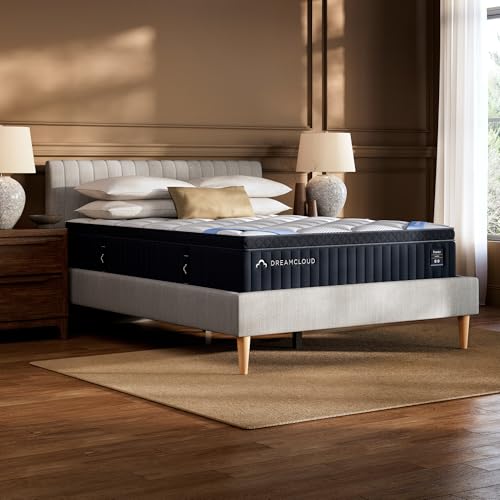
1. DreamCloud Premier Hybrid 13″ (Full) — the deepest shoulder in the guide, with a trial to prove it
Who it suits: Side sleepers and combination sleepers who have been waiting for the step-up model — the taller, plusher DreamCloud with doubled cooling fibers — in a true full size, with the guide’s deepest verified comfort stack and a listing trial behind the feel.
Start with the evidence, because the evidence is the story. The Premier Hybrid’s full listing (ASIN B0F74SLW9V) is a premium-tier pick whose price moves between deal periods and regular periods — check price on Amazon and confirm it sits inside this budget when you look. The reason it leads this guide is that it is the Premier class, verified in a true full size, at this tier.
Now judge it the way a side sleeper has to. On depth, it is the strongest pick in this guide and it is not close: 13 inches and six layers, a quilted CloudQuilt top with twice the cooling fibers of the Classic, and two full inches of pressure-relieving memory foam over transition foam before the pocketed-coil core — the thickest verified comfort stack this series has published in a full. Two inches of memory foam over a yielding coil core is the deepest verified route down in this list. On local give, the pocketed coils compress point by point — the listing counts 792 coils in the queen, and the full carries fewer — so the shoulder’s coils can give while the waist’s hold. On feel, the brand labels it medium-firm, and for once the testers land close: NapLab measures 6 out of 10, other coverage 6 to 7 — a genuine middle feel, noticeably less firm than the Classic below.
The trial is what turns that evidence into a decision. The listing’s title advertises a 365-night trial and a Forever Warranty — listing claims, to confirm at checkout — and here the trial does double duty: it settles the feel question no tester pattern can settle for your shoulder, and it is the safety net under a price that moves. Buy in a deal window and the question is merely comfort; buy at its regular premium-tier price and you can still hand the bed back if your shoulder votes no. The same title advertises relief from back pain; that is marketing language, and this guide declines it — no mattress here treats anything. It also claims a fiberglass-free build — a brand claim from listing copy, reported as a claim.
- Premier class, verified in a full at last — check price on Amazon
- Deepest verified stack in the guide: 13 inches, six layers, 2 inches of memory foam over coils
- Tester-measured medium-firm (6 to 7 of 10) — label and testers roughly agree
- The listing’s own title advertises a 365-night trial and Forever Warranty (confirm at checkout)
Honest limitation: Its price moves between deal periods and regular periods, so check the live price and know which state you are in before you plan around it. Its doubled cooling fibers are a first-contact effect that saturates at body temperature under a stationary shoulder; judge the surface by its foam, not its temperature story. The 13-inch profile is also the tallest in this guide, which matters for fitted sheets and low frames. And never confuse this listing with the legacy 14-inch Premier full that older trackers still carry: that is a previous generation, and it is not this bed.
Choose it if: You want the most substantial verified full this series has published, you sleep on your side or change positions, and you can buy during a deal window — or accept its regular premium-tier pricing with the listing trial behind you.
Skip it if: You need a genuinely firm bed (the Brooklyn Firm below is firmer), you run heavy enough to want a firmer core, or the listing is showing the all-foam Premier Memory Foam namesake instead of the Hybrid. Check the title says Hybrid before you check out.
2. Brooklyn Bedding Signature Hybrid 11″ (Full, Soft) — the plush answer, no longer wearing a warning
Who it suits: Dedicated side sleepers, and lighter back sleepers, who want the softest verified rung of a real firmness ladder — the bed that headlined our lower-tier guide under a cloud of warnings this tier lifts.
The Soft variant (ASIN B076MKH3LD, model BBS46S) carries the longest price record in this series: pricehistory.app has tracked it for years — check price on Amazon for its current full-size price. At the lower tier, its figures made it a line-sitter in the strictest sense: inside that budget at its current read, over it at its average. At this tier, both its current price and its tracked average sit comfortably inside the cap, and the honest thing to say is that the warning expires: this is now an ordinary pick with an extraordinary paper trail.
Judged from the side, the Soft is the tier’s plush answer: the softest comfort stack in the Brooklyn line — TitanFlex pressure-relieving foam tuned to the line’s soft end — over individually encased coils, in an 11-inch build with true 75 x 54 dimensions. On depth it gives up two inches of profile to the Premier above; a shoulder travels less far here. What it returns is surface and give working together: a comfort layer that yields immediately rather than asking the shoulder to earn its sink, over a coil core that still yields point by point — coils under the shoulder give ground, coils under the ribs hold, and the waist is not left bridging a hammock. For a light side sleeper, whose shoulder presses with less force and stalls on firmer surfaces, that immediate yield is the whole purchase. CertiPUR-US certified foams, as with both its siblings.
What fine print survives? Its price still moves within the ladder’s range, so its cost advantage over its siblings comes and goes; at times all three rungs are priced alike, and firmness — not price — should make the choice. And no sleep trial could be verified in this listing’s copy: the brand’s 120-night trial is a buy-direct term. Softness is the most personal specification in this guide, and this pick asks you to commit to it without the listing-trial instrument the DreamClouds offer. Buy it because the recipe is right, not because you can return it.
- Check price on Amazon — a long tracker record behind the listing, with current price and tracked average both inside this budget; the lower-tier line-sitter warning is retired
- The softest verified full in this guide — the side sleeper’s rung of the ladder, with immediate surface yield for light shoulders
- Individually encased coils under TitanFlex foam — point-by-point local give under the soft stack
- True full footprint (75 x 54 in on the listing’s figures) — no cut-small surprise
Honest limitation: Soft is the rung with the narrowest audience: heavier sleepers will work its comfort layers too hard and may bottom through to the coils, and stomach sleepers will find it under-supportive. Its depth is the ladder’s, not the Premier’s — 11 inches against 13. And no in-listing trial was verifiable, so a softness guess that proves wrong is harder to undo than either DreamCloud’s.
Choose it if: You sleep on your side, run light to average, and want the ladder’s plush end.
Skip it if: You sleep on your stomach, run heavy, or need a guaranteed trial. The Medium is the safer guess for the undecided.
3. Brooklyn Bedding Signature Hybrid 11″ (Full, Medium) — the compromise rung
Who it suits: Combination sleepers who spend part of the night on a side and part on a back, and couples in a 54-inch bed split between a soft preference and a firm one.
The evidence here is the strongest in this guide. The Signature Hybrid’s full-size Medium variant (ASIN B076MLJLYS, model BBS46M) has a pricehistory.app record spanning years — check price on Amazon for its current full-size price — and its tracked average sits comfortably inside this tier, which makes it a sturdier pick than its Soft sibling was at the lower tier, where it was named without a link because it sat over that cap. Nothing about the bed changed; the budget grew past its price. The bed is the same 11-inch hybrid as the Soft: TitanFlex pressure-relieving foam over individually encased coils, CertiPUR-US certified foams, and published dimensions of 75 x 54 inches — a true full.
From the side, the Medium is an honest compromise and should be bought as one. Its comfort stack yields less readily than the Soft’s: a dedicated side sleeper’s shoulder travels less far and rests on a surface that pushes back sooner, which is precisely what the same sleeper’s back-sleeping hours want. The coil core’s local give is unchanged — point by point, shoulder down, ribs held — so the difference from the Soft is a surface-and-depth difference, not a support difference. That makes the Medium right for the sleeper whose night is genuinely split, and for the couple whose two shoulders disagree: neither partner gets their bed, and both get a bed they can sleep on. What it is not is a soft bed with a sturdier name — a light, dedicated side sleeper who buys it because it sounds balanced will feel the compromise at the shoulder within a week.
The fine print mirrors its siblings’. Its price moves over time, so a patient shopper may catch the Medium priced much like the Soft. And no sleep trial could be verified in this listing’s copy; Brooklyn’s own store advertises a 120-night trial, but that is a direct-purchase term — treat an Amazon purchase as covered by Amazon’s standard return policy unless the listing itself says otherwise at checkout.
- Check price on Amazon — a long tracker record behind the listing, with current price and tracked average inside this budget
- The ladder’s balance point: enough yield for side-sleeping intervals, enough surface for back and stomach
- Same encased-coil local give as the Soft — the rungs differ in the comfort stack, not the core
- True full footprint (75 x 54 in on the listing’s figures)
Honest limitation: A compromise is a compromise: the dedicated side sleeper gives up the Soft’s immediate yield, and the dedicated back sleeper gives up the Firm’s level surface. It is priced in line with its siblings rather than as the ladder’s budget rung — and no in-listing trial was verifiable.
Choose it if: You change positions through the night, share the bed with someone whose taste differs from yours, or simply want the verified default: a real DTC hybrid in a true full.
Skip it if: You are a dedicated side sleeper who runs light (the Soft above is your rung), a dedicated back or stomach sleeper (the Firm below), or a trial period is non-negotiable.
4. DreamCloud Classic Hybrid 12″ (Full) — the firm-leaning pick, with the trial in the title
Who it suits: Heavier side sleepers who like a firmer surface, and back and stomach sleepers — buyers who want the famous-name hybrid whose Amazon listing itself carries the famous terms, and who have read the feel warning below.
The Classic Hybrid full (ASIN B0F74STD2J) is a 12-inch, six-layer hybrid: a quilted CloudQuilt top in a cashmere blend, gel memory foam, and a core of individually wrapped coils. Its published full dimensions are a true 54 x 75 inches and it weighs about 66 pounds in full — a manageable two-person carry. Check price on Amazon for the current full-size price; coverage confirms Amazon itself is the seller. DreamCloud’s own store also sells the model, but what makes this a pick here is that the Amazon listing’s own title advertises the 365-night trial and Forever Warranty. Do not confuse it with the all-foam Classic fulls, which share the name and none of the coils: the hybrid is the only Classic this guide links.
Now the feel, because in a side-sleeper guide this pick’s feel is a charge, not a footnote. DreamCloud rates the Classic Hybrid at 6.5 out of 10 — medium-firm. Tom’s Guide’s testers experienced it at 7.5 to 8, which is genuinely firm, and Sleep Foundation’s lab work fits it best to back sleepers under 230 lb and side sleepers in the 130–230 lb range who like a firmer surface. Believe the testers over the label. Its depth is real — 12 inches with a quilted top — but depth only helps a shoulder that can reach it, and a surface at 7.5 to 8 makes a light side sleeper’s shoulder earn every inch of travel against resistance. That is the wrong direction for light side sleepers, printed here at the same strength as in our lower-tier side-sleeper guide. For heavier side sleepers the arithmetic reverses: more force behind the shoulder, more need for a core that holds the hip level, and a firm surface becomes support rather than resistance. The gel in its foam is a first-contact effect, and a buried side saturates it fastest — buy it as foam, not as cooling. The listing states the bed is made without fiberglass — the brand’s claim, printed as a claim. And the title’s trial language is this pick’s settlement mechanism: where label and testers disagree, the 365 nights are how your own shoulder settles it — confirm the terms at checkout.
- Check price on Amazon for the full size — a mid-range pick comfortably inside this budget tier
- The listing’s own title advertises a 365-night trial and Forever Warranty (confirm at checkout)
- Amazon itself is the seller on the listing
- True 54 x 75 full; 12-inch stack with wrapped coils and point-by-point local give
Honest limitation: It sleeps firmer than its 6.5 label — plan on a 7.5–8 feel — which makes it the wrong direction for light side sleepers, this guide’s core reader. Check the live listing before purchase. The brand’s own store may price the full differently, which may matter more than the listing’s terms to some buyers.
Choose it if: You are a heavier side sleeper who likes a firm surface, or a back or stomach sleeper, and you want the trial language attached to the Amazon purchase itself.
Skip it if: You are a light side sleeper who needs real cushion — the Premier above, or the Brooklyn Soft, is your bed.
5. Brooklyn Bedding Signature Hybrid 11″ (Full, Firm) — the ladder’s firm rung, charged plainly
Who it suits: Back and stomach sleepers, heavier sleepers, and the minority of side sleepers who have tried soft beds and hated them — the rung that completes the ladder, included with its direction stated honestly.
The Firm variant (ASIN B076MGDTCH, model BBS46F) carries the same quality of evidence as the Medium: a pricehistory.app record spanning years — check price on Amazon for its current full-size price — and the lowest tracked average of the three rungs. At the lower tier it was named without a link, over that cap like the Medium. Here it is simply a pick. The construction is the line’s standard build — TitanFlex foam over individually encased coils, CertiPUR-US foams, true 75 x 54 dimensions — tuned to the firm end of the line’s own scale.
A side-sleeper guide owes this pick a direct charge, and here it is: for a light or average side sleeper, the Firm is the wrong direction. Depth is present on paper — the same 11 inches as its siblings — but depth a shoulder cannot use is not depth; a firm surface holds the shoulder up at the top of the stack, concentrates the night’s pressure on the point of the shoulder, and turns the coil core’s local give into a mechanism the sleeper never reaches. The sleepers this rung genuinely serves from the side are the heavy ones, whose weight carries them through the firm comfort stack to the support they need, and combination sleepers whose side hours are intervals between back hours. Everyone else should treat the Firm’s presence as the ladder’s completeness, not as an option.
The cautions mirror its siblings’. Its price moves over time, so patience may catch a lower read, and its pricing sits inside this budget. No in-listing trial could be verified; Brooklyn’s 120-night trial is a direct-store term, not an Amazon one. And the firmness warning compounds the trial warning: firm is the rung with the least forgiveness, and a side sleeper who buys it by mistake — because “firm” sounded like “supportive” — will feel the error at the shoulder within a week, with no verified Amazon trial to undo it.
- Check price on Amazon — a long tracker record behind the listing, with current price and tracked average inside this budget
- The firmest verified full in this guide — level support for back, stomach and heavier sleepers
- True full footprint (75 x 54 in on the listing’s figures)
- Same encased-coil build and CertiPUR-US foams as its siblings — only the tuning differs
Honest limitation: For this guide’s core reader it is the wrong direction: the least forgiving feel in the guide, sold with no verified in-listing trial on Amazon, and priced in line with the Medium — no saving for choosing the rung fewer side sleepers want.
Choose it if: You run heavy, sleep mostly on your back or stomach with side intervals, or have found every medium and soft bed too soft by 3 a.m. — and you are confident, because a no-verified-trial firm purchase requires it.
Skip it if: You sleep on your side for any real part of the night and run light or average. The Soft and the Premier are this guide’s answers for you.
6. Tuft & Needle Original Hybrid Legacy (Full, Medium) — the most expensive pick, and a line-sitter
Who it suits: Buyers who want the third brand in this guide — a simple, medium-feel hybrid from the original bed-in-a-box name — and who are disciplined enough to buy it only when its live price sits within this budget.
Start with the warning, because with this pick the warning is the review’s first fact. The Original Hybrid Legacy full (ASIN B0DJ22KGNL) sits inside this budget at its current read — check price on Amazon — and that is why it is a pick. Its tracked record, though, shows an average over this budget and a recent high over it as well: a mattress inside the budget today that has spent much of its tracked life above it. In a side-sleeper guide the charge is harder than in a general one: a side sleeper is buying a feel, and a feel cannot be planned around a price that averages over the cap. If the listing reads over budget when you check, buy something else in this guide, not a stretch.
The bed itself, on its listing’s terms, is a medium-feel hybrid from Tuft & Needle’s Legacy line — the previous-generation Original Hybrid the brand still sells through Amazon — with adaptive foam over a coil core, in a true full size. Judged by the three tests it is a middling side-sleeper answer: a medium surface, local give from its coil core, and a depth story thinner than the Premier’s. Its case is brand and simplicity. Two channel facts belong in the open. First, the brand’s own store sells the current Original Hybrid full as the cheaper channel — check both before buying either. Second, no in-listing trial could be verified for this Legacy listing; the brand’s 100-night trial is a direct-purchase term, so the side sleeper buying this feel on Amazon buys it without the instrument that settles feel.
- Check price on Amazon — buy only when the live price sits within this budget
- A third brand and a simple medium feel — the diversity pick
- True full size; coil core gives point-by-point local give
- Its price volatility is stated openly, so the risk is visible, not hidden
Honest limitation: It is a line-sitter in the strictest sense: inside the budget at its current read, over it at its tracked average and recent high. It is also the worst channel deal in this guide — the brand’s own store undercuts it substantially — and no in-listing trial was verifiable, so its feel is bought uninsured. Every other pick here is a safer purchase.
Choose it if: You specifically want this brand and this feel, the live listing sits within this budget when you check, and you have checked the brand’s own store and still prefer Amazon.
Skip it if: The live price has climbed back over budget — its history says it does — or you want the strongest evidence in the guide. The Brooklyn Medium offers a comparable medium feel with its average inside the budget, and it is the pick this review would steer most readers to.
Comparison Table
| Model | Type | Price | Trial (listing terms only) | Side-sleeper read |
|---|---|---|---|---|
| DreamCloud Premier Hybrid 13″ | Hybrid | Check price on Amazon | 365 nights + Forever Warranty, per listing title | Deepest travel in the guide; testers 6–7 against a medium-firm label |
| Brooklyn Signature Hybrid 11″ Soft | Hybrid | Check price on Amazon | None verified in listing | The plush answer: immediate yield for light shoulders; no trial behind it |
| Brooklyn Signature Hybrid 11″ Medium | Hybrid | Check price on Amazon | None verified in listing | The compromise: side intervals served, dedicated side sleepers under-served |
| DreamCloud Classic Hybrid 12″ | Hybrid | Check price on Amazon | 365 nights + Forever Warranty, per listing title | Firm-leaning: testers 7.5–8 against a 6.5 label — wrong direction if you run light |
| Brooklyn Signature Hybrid 11″ Firm | Hybrid | Check price on Amazon | None verified in listing | The wrong direction for light side sleepers; the right one for back, stomach and heavier bodies |
| Tuft & Needle Original Hybrid Legacy | Hybrid | Check price on Amazon | None verified in listing | A medium feel you cannot plan around: line-sitter; the brand’s own store is cheaper |
How to Choose a Full Mattress for Side Sleepers Under $1000
Run the three tests in order: depth, surface, local give. First, is there verified travel for your shoulder — profile height and comfort-layer thickness, from the listing, not adjectives? Second, what is the surface at 3 a.m., after its gel or cooling fibers have saturated under a stationary shoulder — because that saturated surface, not the showroom touch, is the one you sleep on? Third, does the core yield point by point under shoulder and hip while holding the waist — the pocketed, encased or wrapped coils every pick here uses — or is the give only foam over a unit that moves as one piece? A pick that passes all three is a side-sleeper bed. A pick that passes two is a compromise.
Choose your rung by body, not by adjective. With all three Brooklyn rungs verified, firmness is a genuine choice in a full for the first time in this series — make it by sleeper, not by name. Light and dedicated to your side: Soft. Split nights, or a couple compromising in 54 inches: Medium. Back, stomach, or heavy: Firm. Do not buy a rung because its name sounds like a quality grade, or because “firm” sounds like “supportive” — support is what the coil core does after the comfort stack lets you in, and a firm stack may never let you in.
Use tester patterns over labels. The Premier’s medium-firm label is corroborated by testers at 6 to 7: buy it expecting roughly what the box says. The Classic’s 6.5 label sleeps at a tester-rated 7.5–8: buy it expecting a firm bed wearing a medium-firm name. A label is marketing’s opinion; the pattern across independent testers is the closest thing to a measurement you will get before the bed arrives — and where a listing advertises a trial, that trial is the real firmness test.
Buy the read, not the name — twice over. Two picks here have prices that move. The Premier moves between deal periods and its regular premium-tier price; both states can fit this budget, but they are different purchases, so confirm the live price before you plan around it. The Tuft & Needle sits within budget at its current read and over budget at its average and recent high; it is a pick only on days it reads within budget. In both cases: check the live listing, confirm the variant and size, and be willing to walk away.
Budget the whole bed. A premium mattress on a failing frame sleeps worse than a budget mattress on a sound one. Full-size slats should be close enough together to support foam (gaps over about 3 inches invite sagging and warranty arguments), a protector from night one is cheaper than any warranty claim, and the Premier’s 13-inch profile needs deep-pocket sheets your 10-inch bedding may not have.
The Line-Sitter and the Wall at $1,000
Five of this guide’s six picks pass all three of this series’ tests — identifiable full ASIN, Amazon full price under the cap, a buyable listing — and the sixth passes at its current read with its average printed next to it. The Tuft & Needle is that sixth: a pick when its live price sits within this budget, not a pick at its tracked average or recent high, and its own record says the over-budget state is the normal one. For a side sleeper the demote logic is sharper than usual, because the purchase is a feel purchase: if the live price has swung over budget, do not stretch for it — the Brooklyn Medium offers a comparable medium feel with its average inside the budget, and the Novilla Bliss 12″ stands behind the whole guide as the documented alternate if any pick fails its live check at publication.
And some of the wall still stands. The Rolanstar failed its seventh straight featured-offer check and stays unlinked — still famous, still quoted at a low roundup price, still not buyable at that price in any crawl this series can find. Nectar is the tier’s strangest holdout: its own store sells the Classic full in a tier comfortably inside this budget, yet no dated Amazon full price for Nectar could be pinned in this research, for the second straight tier. A brand can be affordable in its own shop window and unverifiable on Amazon at the same time, and a buying guide has to grade the channel it links to. The alternates bench from our lower guides remains verified and named, all in the budget tier: the Ashley Chime 12″ Hybrid full — maker’s dimensions roughly 74.5 by 53 inches, about an inch small and never rounded up in this series — and the Zinus 12″ hybrid full, whose coils its listing calls interconnected, never “pocketed.” The wall was never really about money. At this tier it is about proof.
Common Buying Mistakes
Buying the firm rung because “firm” sounds like “supportive.” Support is the coil core’s job, and all three Brooklyn rungs share the same core design. The comfort stack’s job is to let your shoulder in. A light side sleeper on the Firm gets neither — just the pressure.
Trusting the firmness label over the testers. A 6.5 that sleeps at 7.5–8 is a firm bed, and a medium-firm that testers confirm at 6–7 is a medium bed. Buying the label instead of the pattern is how a side sleeper ends up on the wrong DreamCloud.
Judging the surface in the first five minutes. Gel and cooling fibers audition well and saturate at body temperature under a stationary shoulder — yours. Judge the bed after a full night, protector fitted.
Buying the Tuft & Needle on a day it reads over budget and calling it an under-budget pick. Its price swings widely; the over-cap reading is its normal state, not an anomaly. Check the live price, and be willing to switch to the Brooklyn Medium.
Letting the variant drift. The all-foam Premier Memory Foam namesake, the legacy 14-inch Premier listing, the Luxe line, Brooklyn’s pillow-top upgrade, the all-foam Classic fulls: every pick here has a neighbouring variant that costs more or delivers less. Confirm size, model and firmness on the listing before checkout.
Assuming brand-store terms follow an Amazon purchase. Brooklyn’s 120 nights and Tuft & Needle’s 100 nights are direct-store terms; the DreamClouds’ 365 nights are printed in their Amazon listing titles. Read the terms attached to the listing you are actually buying from.
Planning around the Premier’s deal price after the deal window closes. A deal read is a moment, not a standing price, and its regular price sits at the premium end of this tier. Both states can fit this budget — but only the deal state fits a lower-tier plan.
Removing the cover to check for fiberglass. Never unzip or remove a mattress’s inner cover — if a fiberglass-containing barrier is present, that is how fibres get into your room. Keep covers intact and use a protector.
Related guides
Final Recommendation
For most full-size shoppers, the best mattress in this budget tier is still a budget-tier one: the Novilla Bliss 12″ remains the value centre of this category, and the Ashley Chime 12″ Hybrid, the Zinus 12″ hybrid and the EGOHOME Dreamer below it — all verified in our lower guides, the Dreamer with its 100-night trial and a processing fee on that trial — are honest budget-tier beds. (If any pick here fails its live check at publication, the Bliss 12″ is the documented alternate that steps in first.) But for a side sleeper with this budget, the recommendation splits by shoulder. If you want the deepest verified travel in the guide with trial language attached to the Amazon listing itself, the DreamCloud Premier Hybrid is the buy — check price on Amazon, catch a deal window if you can, and confirm it sits in budget either way. If you want the plushest surface and know your feel without a trial to confirm it, the Brooklyn Soft is the side sleeper’s rung, finally free of its lower-tier warning; if your nights are split or your bed is shared, the Medium is the compromise both sleepers can live with. The Classic is the heavier side sleeper’s firm option with the trial in its title; the Firm is for back, stomach and heavier bodies; and the Tuft & Needle carries a condition: buy it only when its live price sits within this budget, or do not buy it from this guide at all.
Still deciding between tiers? Compare this guide with Best Full Mattress For Side Sleepers Under $700 to see exactly what this step up adds, or look ahead to Best Full Mattress For Side Sleepers Under $1500 if the Luxe-class beds are calling. The same budget judged without the side-sleeper lens appears in Best Mattress Under $1000 and Best Hybrid Mattress For Side Sleepers Under $1000, and if your current mattress needs help rather than replacing, start with Best Mattress Topper Under $200 and a sound base from Best Headboard For Apartments Under $200.
FAQ
Is a $1,000 full mattress actually better for side sleepers than a budget one?
It buys different things, not uniformly better sleep: the Premier class’s taller, deeper build, a firmness choice within one line, and trial language attached to Amazon listings. The foam in the budget-tier Novilla Bliss will feel better to a dedicated foam lover than any hybrid here. What this budget does not buy in a full is a Luxe-class model — those sit in a higher tier — or a verifiable Nectar.
Why does the DreamCloud Premier’s price move?
Because its price moves between deal periods and regular periods. Check price on Amazon for the live full-size price: the pick qualifies when that price sits inside this budget, but which price you pay depends on when you buy, so confirm the live figure at checkout.
Why are three of the six picks the same Brooklyn mattress?
Because the Signature Hybrid sells in three firmness levels, each with its own listing and long price record, and at this budget all three verify — check price on Amazon for each rung. They are three genuinely different beds to sleep on — the side sleeper’s, the compromiser’s and the back sleeper’s — and printing the ladder whole is more honest than picking one rung and hiding the others. The names that would diversify the list are the ones whose Amazon full prices still cannot be pinned, each documented in the wall section above.
Can I trust the Tuft & Needle price in this guide?
Trust the record, not the day. Its current read is a genuine dated tracker read — and the same record shows an average and a recent high both over this budget. That makes it a line-sitter: a pick at its current read, not at its typical one. For a side sleeper the stakes are higher, because the purchase is a feel and the wrong feel is a return — and this listing carries no verified in-listing trial. If the live listing shows over budget when you check, the Brooklyn Medium is the comparable bed at a stable price.
Why is there still no Nectar in this guide, even at $1,000?
Because the test is not the budget — it is the proof. Nectar’s own store sells the Classic full in a tier inside this budget, but no dated Amazon full price for any Nectar model could be pinned in this research, for the second straight tier. A buying guide links the channel it can verify. The day an Amazon full price for Nectar pins with a dated source, it will be judged here like everything else.
Whatever happened to the Rolanstar full mattress?
It is still famous, still quoted at a low roundup price, and its Amazon listing still showed “No featured offers available” in the freshest crawl we could check — the seventh straight tier with that result. A price you cannot buy at is not a price. It stays named and unlinked here, and the day a featured offer verifies, it gets promoted and this guide gets rewritten.
Are any of these mattresses fiberglass-free?
Several listings say so — the DreamClouds’ titles and bullets state it outright — and we report those as the makers’ claims, because listing copy is what we can verify. No claim here comes from independent laboratory testing, and the safe practice is identical either way: never remove a mattress’s inner cover, and use a protector from the first night — fitted before you judge the feel, since a protector is itself a thin change to the surface.
Can a new mattress fix my shoulder or back pain?
No mattress in this guide is presented as treating shoulder pain, back pain or any other condition, whatever a listing title claims — a bed can feel more or less comfortable to you, and that is all. If you have persistent pain, numbness, tingling or weakness in an arm, or you notice pauses in your breathing during sleep, see a clinician; those are medical questions, not shopping questions.