Where to Buy
Every pick here is sold on Amazon in the full size (54 x 75 in) — check price on Amazon for the live figure before you buy, because prices move. For a side sleeper, this tier matters for one reason: it is the first in this series where a genuinely soft, verified option exists — the Brooklyn Bedding Signature Hybrid 11″ Full (Soft) — alongside the DreamCloud Classic Hybrid 12″ Full, the first two direct-to-consumer hybrids in the series whose Amazon full listings could actually be pinned. The other four picks are the strongest verified beds carried up from our lower-tier side-sleeper guides, all budget or value picks well below the two premium hybrids. Two warnings. The Brooklyn sits at the very top of this budget and its price moves — check the live price on Amazon and confirm it still sits within budget before you fall in love with it. And the DreamCloud, despite its medium-firm label, is rated a firm 7.5–8 by testers: for a light side sleeper it is the wrong direction entirely.
Disclosure: topratedkitchenware.com is reader-supported. As an Amazon Associate, we earn from qualifying purchases made through links on this page, at no additional cost to you. Prices and availability change constantly, so no static price is printed here — check price on Amazon for the current figure on every pick.
Every tier of this full-size series until now has asked a side sleeper to make the same compromise. The beds whose Amazon full listings could actually be verified — the only beds this series will link — were medium, medium-firm, or firmer-than-labelled, because those are what the budget full market sells. A side sleeper’s shoulder and hip need the surface to give locally, in two specific places, and “medium-firm” usually means it doesn’t. So at every lower tier the honest advice was: buy the deepest verified bed, accept a firmer surface than you want, and know that the famous soft hybrids are not buyable at a pinnable Amazon full listing at those budgets.
At this tier, that finally changes — once, and with fine print. The Brooklyn Bedding Signature Hybrid’s full-size Soft variant is a genuine firmness choice — an actual Soft, not a medium wearing a softer name — offered within this budget. The catch: it sits right at the top of the tier and its price moves, so the soft option exists only when the live listing still reads within budget — check price on Amazon on the day you buy. The DreamCloud Classic Hybrid full is the tier’s second verified DTC hybrid, a premium pick whose listing title advertises a 365-night trial — but its catch is feel, not evidence: labelled 6.5 out of 10, experienced by Tom’s Guide’s testers at 7.5 to 8, genuinely firm. Below those two sit the same honest budget beds that won the lower-tier guides, re-judged here against pricier competition.
And the wall still stands for everyone else. The Rolanstar 8-inch full failed its featured-offer check for the sixth straight tier. Lucid, Siena, Nectar, the Novilla and Linenspa 10-inch hybrid fulls, EGOHOME’s Black line, SweetNight and Serta all remain names we can describe but cannot responsibly link, each for a documented reason below. What this tier verifiably buys a side sleeper, then, is this: one genuine soft hybrid at the top of the budget, one firm-leaning premium hybrid with the series’ best listing trial, and four cheaper beds that have been winning their tiers for months.
In this guide
Quick Picks
| Pick | Best for | Type | Price |
|---|---|---|---|
| Brooklyn Bedding Signature Hybrid 11″ — Full, Soft | Best for side sleepers — the only genuinely soft verified full at this tier | Hybrid (TitanFlex foam + encased coils) | Check price on Amazon — premium, at the top of this budget |
| DreamCloud Classic Hybrid 12″ — Full | Best for heavier side sleepers (130–230 lb) who like a firmer surface | Hybrid (gel memory foam + wrapped coils) | Check price on Amazon — premium pick |
| Novilla Bliss 12″ — Full | Best value — the deepest verified foam contour among the budget picks | Memory foam | Check price on Amazon — budget-to-mid-range pick |
| Ashley Chime 12″ Hybrid — Full | Best budget local give — real pocketed coils at a budget price | Hybrid | Check price on Amazon — budget pick (maker’s full is cut about an inch small) |
| Zinus 12″ Foam and Spring Hybrid [New Version] — Full | Best budget hybrid — 12 inches and a spring core at a foam-bed positioning | Hybrid (interconnected coils — the listing’s own word) | Check price on Amazon — budget pick |
| EGOHOME 10″ Dreamer — Full | Cheapest pick — and the only budget pick with a listing trial (100 nights, processing fee applies) | Memory foam | Check price on Amazon — budget pick |
How These Picks Were Chosen
Full-size listings only, pinned or it doesn’t count. Every pick is the 54 x 75 full variant, identified by a full-size ASIN we can aim a link at with confidence, on a listing that can actually be bought. A headline attached to a twin, queen or king is a trap we name, never a number we use — and we never link one size’s ASIN in another size’s guide. That rule is why several famous names appear below as named, deliberately unlinked entries: their Amazon full listings or ASINs could not be pinned, and a link we cannot aim at the right size is worse than no link. No static prices are printed here: check price on Amazon for the live figure on any pick.
The side-sleeper tests: depth first, surface second, coil yield third. A side sleeper loads a mattress at two points — shoulder and hip — and the bed answers in three ways, in this order. Depth is how much total stack there is for those points to sink into before they reach the support core; this guide argues from verified thickness and layer stacks only, and a 10-inch bed starts with a handicap no surface treatment fully removes. Surface is what the top layers do on first contact and across the night — foam contour, a quilted top, a soft firmness variant. Coil yield is whether the spring unit gives point by point under a shoulder or moves as one linked piece; encased coils do the first, an interconnected unit does the second. Every review below applies the three tests in that order.
Firmness is read from tester patterns, not labels. A firmness label is the maker’s own description of its own bed. Where independent testers have measured or slept on a pick, their pattern outranks the label here — which is why the DreamCloud is judged at the 7.5–8 its testers reported rather than the 6.5 on its box, and why the Brooklyn’s “Soft” is meaningful only because the line sells Medium and Firm variants against which the word has a scale. Where no tester pattern exists, we say the feel is maker-described and unverified, and we do not borrow numbers from other sizes or guides.
The wall test, applied name by name. Each direct-to-consumer candidate had to pass three checks: a full-size ASIN we can identify with confidence, an Amazon full listing positioned at or under this budget, and a listing that can actually be bought. Two names passed all three for the first time in this series — Brooklyn Bedding and DreamCloud — and both are picks. Every other name failed at least one check; the failures are documented in the wall section below, because “why isn’t the famous soft one here?” is the most useful question this guide can answer.
The Rolanstar rule, sixth application. The Rolanstar 8-inch full has carried a famous low roundup price since our lowest-tier guide, and its Amazon listing has shown “No featured offers available” in every crawl this series has checked, at every tier. We checked a sixth time: the freshest crawl still reports no featured offer. A mattress you cannot actually buy is not a pick at any budget, so it remains named and unlinked — and if a featured offer is ever live, it gets promoted and this guide gets rewritten around it.
Maker dimensions over marketing dimensions. Where a maker’s own specification block disagrees with the size name, we print the maker’s figures. The Ashley Chime full is cut about an inch small by its maker’s own numbers (roughly 74.5 inches long, 53 inches wide), printed at every appearance. For a side sleeper the two lost inches charge differently — the lost length costs a curled side sleeper least, the lost width costs a side-sleeping couple most — and the Chime’s review argues both ways. The two DTC picks, by contrast, are true 54 x 75 fulls on their published figures, which is part of what the extra money buys.
Listing language is not laboratory language. Coil construction is described the way each listing describes it: the Zinus hybrid’s coils are interconnected, because that is the word its listing copy uses, and it is never upgraded to “pocketed” here; the Brooklyn’s and DreamCloud’s coils are individually encased or wrapped, because their listings say so. Gel in a comfort layer is a first-contact effect — it feels cool when a shoulder first lands and saturates toward body temperature under a stationary sleeper; no gel claim here is printed as all-night cooling. Fiberglass statements are brand claims from listing copy, never independently verified facts, and no mattress here is presented as treating shoulder pain, back pain or any other condition. If pain persists, or you notice numbness or weakness, that is a conversation for a clinician, not a product page.
Trials are quoted only where a listing states them. A brand’s direct-store trial is not an Amazon term. The DreamCloud’s Amazon listing title itself advertises a 365-night trial and a Forever Warranty, so we print those as listing claims to confirm at checkout. The EGOHOME Dreamer’s listing carries a 100-night trial with a processing fee, flagged every time the trial is mentioned — a trial with a fee is a different product from a trial without one. For the Brooklyn, no in-listing trial could be verified; Brooklyn Bedding’s own store advertises 120 nights, a buy-direct term you should not assume follows an Amazon purchase.
The Six Best Full Mattresses for Side Sleepers Under $700
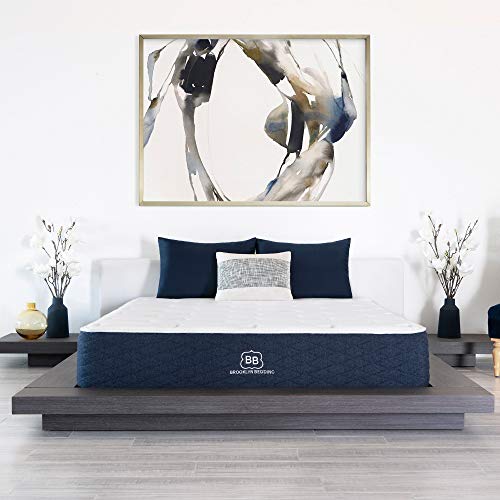
1. Brooklyn Bedding Signature Hybrid 11″ (Full, Soft) — the wall-breaker
Who it suits: Side sleepers — above all lighter ones — who have spent five tiers being told the soft hybrid they want is not verifiable in a full, and who will check the live price on Amazon and confirm the variant before checkout.
Start with the evidence, because the evidence is the story. The Signature Hybrid’s full-size Soft variant (ASIN B076MKH3LD, model BBS46S) has one of the longest Amazon price records in this series — which makes it the first DTC hybrid in six tiers to clear the bar the Lucid, Siena and SweetNight fulls never could: an identifiable, buyable full-size listing at the top of this budget. Check price on Amazon before you buy, because it sits right at the tier’s ceiling and its price moves. The bed is an 11-inch hybrid — TitanFlex pressure-relieving foam over individually encased coils (the listing copy says “up to 1,024” coils across the size range; the full carries fewer), CertiPUR-US certified foams, a true 75 x 54 full. Through the three tests: depth is mid-pack at 11 inches; the surface is the softest comfort stack in the line, letting a shoulder and hip sink without giving up spring movement; and the encased coils yield point by point, so the shoulder’s row can drop further than the hip’s. It is the only pick that passes all three tests in the soft direction.
Now the fine print, at full strength, because this pick needs it. This bed’s price moves across this budget’s line: on plenty of days the live listing sits above this tier, so the soft option exists only when the listing still reads within budget. If it sits above budget when you check, wait or take the Bliss below — do not stretch, and do not settle for the DreamCloud’s firmness in the opposite direction. Second: only the Soft sits within this budget. The Medium (B076MLJLYS) and Firm (B076MGDTCH) full variants are positioned above this tier, so they are named here without links; never let a listing page quietly swap you onto one — for a side sleeper the Medium is also the wrong feel. Third: no sleep trial could be verified in this listing’s copy. Brooklyn’s own store advertises a 120-night trial, but that is a direct-purchase term; treat an Amazon purchase as covered by Amazon’s standard return policy unless the listing itself says otherwise at checkout.
- The first DTC hybrid to verify in this series — check price on Amazon, as it sits at the top of this budget
- The only true Soft variant in the guide: TitanFlex foam over individually encased coils that yield point by point at the shoulder
- True full footprint (75 x 54 in on the listing’s figures) — no cut-small surprise
- Three firmness levels exist in the line, so “Soft” is a measured position, not a marketing word
Honest limitation: A line-sitter — positioned right at this budget’s ceiling, with a live price that regularly moves above the tier. Only the Soft variant qualifies, and no in-listing trial was verifiable, so its Amazon return safety net is thinner than the DreamCloud’s advertised one.
Choose it if: You sleep on your side, run light or medium, and will buy only when the live listing still sits within this budget — check price on Amazon first. This is the most substantial verified full this series has published for a side sleeper.
Skip it if: The live price has drifted above this budget, you need a medium or firm feel (those variants sit above this tier), or you need a guaranteed trial — the Bliss or the DreamCloud below is the better buy, for opposite reasons.
2. DreamCloud Classic Hybrid 12″ (Full) — the trial finally comes with the listing
Who it suits: Heavier side sleepers — roughly the 130–230 lb range Sleep Foundation’s lab work fits to this bed — who like a firmer surface, and combination sleepers who spend part of the night on their back. It does not suit a light side sleeper looking for a soft landing.
The DreamCloud Classic Hybrid is a 12-inch, six-layer hybrid: a quilted CloudQuilt top in a cashmere blend, gel memory foam, and a core of individually wrapped coils. Its published full dimensions are a true 54 x 75 inches and it weighs about 66 pounds in full — a manageable two-person carry. It is a premium pick in this guide: check price on Amazon for the live figure, and note that Amazon itself is the seller. DreamCloud’s own store often positions the full lower, but direct terms and Amazon terms are different purchases — what makes this a pick here is that the Amazon listing’s own title advertises the 365-night trial and Forever Warranty. For a side sleeper, that trial is not a footnote: firmness cannot be verified from a listing, and a long in-listing trial is the one mechanism that lets your own shoulder settle the label argument below.
The feel needs a translator, and the translation runs against this reader. DreamCloud rates the Classic Hybrid at 6.5 out of 10 — medium-firm. Tom’s Guide’s testers experienced it at 7.5 to 8 out of 10, which is genuinely firm, and Sleep Foundation’s lab work fits it best to back sleepers under 230 lb and side sleepers in the 130–230 lb range who like a firmer surface. Believe the testers over the label. Through the three tests: depth is real — 12 inches, the joint-deepest stack in this guide — and the wrapped coils yield point by point, so the mechanism for local give exists. But the surface is where it fails a light side sleeper: a firm comfort stack holds a light shoulder up instead of letting it sink, and depth you cannot get into is depth you do not have. A heavier side sleeper loads the surface enough to reach the give; a lighter one mostly sleeps on top of it. The gel memory foam deserves the usual discount, doubled for this reader: gel is a first-contact effect, and a side sleeper’s shoulder is the most stationary load on the bed — the cool feel saturates toward body temperature under the spot that stays put all night. The listing copy also states the bed is made without fiberglass (“fiberglass free” appears in its title and bullets) — the brand’s claim, printed here as a claim.
- Premium listing positioned comfortably inside this tier — check price on Amazon
- Listing title advertises a 365-night trial and Forever Warranty (confirm at checkout) — the real firmness test for a pick whose label and testers disagree
- Amazon itself is the seller on the listing
- True 54 x 75 full; 12-inch stack with wrapped coils that yield point by point — for sleepers heavy enough to reach the give
Honest limitation: It sleeps firmer than its 6.5 label — plan on a 7.5–8 feel — the wrong direction for light side sleepers. Check the live listing before purchase; if the full has moved above this budget there, it stops being this guide’s pick. The brand’s own store also often undercuts Amazon on the full.
Choose it if: You are a heavier side sleeper who likes a firmer surface, a combination sleeper who rolls to your back, and you value a trial printed in the listing itself over a softer first impression.
Skip it if: You are a light side sleeper who needs real cushion — the Brooklyn Soft above is your bed, and this one will feel like sleeping on a well-made lid.
3. Novilla Bliss 12″ (Full) — still the value benchmark, now with expensive company
Who it suits: Side sleepers who prefer foam’s whole-surface contour to hybrid bounce, couples who need motion isolation in a 54-inch bed, and anyone asking the correct question: what do I actually give up by choosing the value pick instead?
The Bliss 12-inch full (B083YWMX49) has anchored this series since the lower tiers, and nothing at this tier displaces it as the value pick — the DTC hybrids beat it on coils, trials and brand, not on the simple proposition of a verified 12-inch full positioned in the budget-to-mid-range band, comfortably inside budget on an ordinary day. Check price on Amazon for the live figure. Through the three tests: depth is the full 12 inches, joint-deepest in this guide — stack for a shoulder and hip to travel into. The surface is a gel-infused memory foam comfort layer over transition and support foams, CertiPUR-US certified, in a fiberglass-free design per the listing copy — reported, as always here, as the maker’s claim. The feel is the classic memory foam trade: a slow, close contour that foam lovers describe as cradling and restless sleepers describe as wading. Coil yield: there is none, because there are no coils — foam’s give is a whole-surface contour rather than a point-by-point drop, which many side sleepers honestly prefer and which isolates a partner’s movement better than any spring in this guide. The gel infusion carries the side sleeper’s asterisk: a first-contact effect that saturates at body temperature under a stationary shoulder, so expect neutral across the night, not cool.
- Budget-to-mid-range positioning, comfortably in budget — check price on Amazon
- Full 12-inch profile — the depth a shoulder asks for first — at well under the DTC picks’ positioning
- CertiPUR-US foams; the strongest motion isolation in this guide for a shared full
- The known quantity of this series: consistent evidence across tiers
Honest limitation: No verified in-listing sleep trial, no coils — edge support and bounce are foam-grade, heavier sleepers reach the support core sooner, and the brand’s direct-store policies do not transfer to an Amazon purchase.
Choose it if: You prefer foam’s contour to hybrid bounce, you share the bed and value stillness, or you’d rather put what you save toward the frame, bedding and protector a new full actually needs.
Skip it if: You run hot and heavy, sit on the edge to dress, or specifically want the coil yield and trial terms the top two picks carry.
4. Ashley Chime 12″ Hybrid (Full) — the budget hybrid, cut about an inch small
Who it suits: Side sleepers on a foam budget who want individually pocketed coils — this lens’s third test — a quilted top and a real furniture brand behind the listing, and who can live with a full that is not quite full-size.
The Chime 12-inch Hybrid full (B07BNS7WFG) has been the budget-hybrid benchmark of this series since the lower tiers — a budget pick, at well under half the DreamCloud’s premium positioning, for the same basic architecture of foam over pocketed coils. Check price on Amazon for the live figure. Ashley’s current retail copy describes the line as fiberglass-free, which we report as the maker’s claim. Through the three tests: depth is the full 12 inches; the surface is a quilted top over the comfort stack; and the coil yield is genuinely local — pocketed coils compress under a shoulder without asking the hip’s row to move, which is the mechanism the Zinus below cannot offer. What the extra money does not change is the Chime’s defining quirk: by Ashley’s own figures, the full is cut about an inch small — roughly 74.5 inches long and 53 inches wide rather than 75 x 54. Argue it both ways, because both are true. The lost length costs a curled side sleeper least of any reader: side sleepers sleep bent and diagonal, few use the full 75 inches. The lost width costs a side-sleeping couple most: a true full gives two sleepers about 27 inches each, and the Chime’s 53 inches gives about 26.5 — half an inch each, taken from the reader who spends width on knees and elbows all night. A solo side sleeper will never find either inch; a couple should count the width inch as a real, if small, charge.
- Pocketed-coil hybrid from a national furniture brand at a budget positioning — check price on Amazon
- Quilted top and 12-inch profile — the fullest-featured cheap hybrid in this series
- Fiberglass-free per the maker’s current retail copy (brand claim)
- Verified in the same budget band across three tiers of this series
Honest limitation: The maker’s own dimensions make it about an inch short and an inch narrow for a “full” — the width inch is the one a side-sleeping couple actually pays — and there is no sleep trial to fall back on. Measure your frame and fitted sheets before you order.
Choose it if: You want real pocketed coils on a budget, you sleep solo or your frame has a little tolerance, and nobody tall is depending on the full 75 inches of length.
Skip it if: You need an exact 54 x 75 (the Bliss and both DTC picks are true fulls), you are a couple who already finds a full narrow, or a trial period is non-negotiable.
5. Zinus 12″ Foam and Spring Hybrid, New Version (Full) — twelve inches, interconnected coils
Who it suits: The most budget-conscious hybrid buyer in this guide: someone who wants a full 12 inches with a spring core at a basic foam mattress’s positioning, and who understands exactly which kind of spring core the money buys — for a side sleeper, the kind is the whole story.
This pick joined the series at a lower tier and its evidence has only firmed up since: the full (ASIN B0CKYSB6WY) is a budget pick whose typical positioning costs less than most foam beds in this guide — check price on Amazon for the live figure. The construction word matters and we use the listing’s own: its coils are interconnected — a linked spring unit — and this guide will not call them pocketed, because they are not; Zinus’s pocketed-coil line is a different product family. Judge that honestly through the third test. A linked unit moves more as one piece: press a shoulder into it and the neighbouring coils come along, which spreads the load but blunts the local drop a side sleeper is shopping for. That makes this the weakest shoulder mechanism among the hybrids in this guide — weaker than the Chime’s pocketed coils at a similar positioning, much weaker than the Brooklyn’s encased coils — alongside genuinely easier movement and airflow than any all-foam bed here, and a surface a back-leaning combination sleeper may honestly prefer. Depth (12 inches) and positioning are this pick’s case; local yield is not. Link discipline matters: the ASIN above is the current [New Version] listing, and it must not drift to Zinus’s legacy Green Tea hybrid full, a different and older listing. The current listing copy describes a fiberglass-free build — the maker’s claim — and as with every foam-topped bed here, keep the cover on and intact.
- Budget positioning — check price on Amazon; among the cheapest 12-inch hybrids in this guide
- Spring core airflow and bounce at an all-foam tier; the full 12-inch depth
- The current [New Version] listing, not the legacy one
- Fiberglass-free per current listing copy (brand claim)
Honest limitation: Interconnected coils are the budget end of spring construction and the weakest shoulder mechanism among this guide’s hybrids — more motion transfer, less point-by-point give — and there is no verified in-listing trial.
Choose it if: Your real budget was always at the budget end of this tier, you are a combination sleeper who values easy movement, and you want springs and height more than local give.
Skip it if: You are a dedicated side sleeper whose shoulder is the point of the purchase — the Chime above gives point by point for a small step up — or you share the bed with a restless partner, since linked coils carry movement.
6. EGOHOME 10″ Dreamer (Full) — the cheapest pick, with the only budget trial (and its processing fee)
Who it suits: Side sleepers furnishing a first apartment or a spare room, teenagers outgrowing a twin, and any buyer who needs the bed decent, cheap and returnable-with-conditions rather than perfect — the floor of this guide, and a respectable floor.
The Dreamer 10-inch full (B0FJRRRRJ7) is the budget floor of this guide — check price on Amazon — which makes it the pick that leaves most of the budget unspent for the frame, protector and bedding the expensive picks assume you already own. It is a CertiPUR-US memory foam build in a fiberglass-free design per its listing copy (the maker’s claim), medium-firm in the way budget foam usually is: supportive enough for back sleeping, light on deep contour. Judge it through this lens without flinching: at 10 inches it is the shallowest stack in the guide, and depth is the first test — a heavier side sleeper will feel the support core sooner here than in any other pick, and there are no coils to add local yield beneath the foam. What it offers instead is contractual: its listing carries a 100-night trial with a processing fee — the fee is part of the term, printed here as it should be printed everywhere — which makes it the only budget pick whose listing offers any trial at all, and for a reader buying firmness blind, a fee-carrying trial beats no trial. One warning carried from our lower-tier research: an earlier sighting noted very low stock, so availability can flicker; if it is unorderable when you shop, the Bliss is the fallback foam pick.
- Budget-floor positioning — check price on Amazon; leaves most of the budget for everything else a bed needs
- 100-night trial in the listing, with a processing fee — the only trial among the budget picks
- CertiPUR-US foam; fiberglass-free per listing copy (brand claim)
- Light, simple, first-apartment-friendly 10-inch build
Honest limitation: Ten inches of budget foam is the shallow end of full-size comfort, where a side sleeper’s shoulder notices first — heavier sleepers feel the support core sooner, edge support is minimal, the trial carries a processing fee, and stock has been fragile before.
Choose it if: The bed is for a first apartment, a teen, or a spare room, the sleeper runs light, or your budget was really a whole-bedroom budget rather than a mattress budget.
Skip it if: It is your own every-night bed for the next decade and you can stretch to the Bliss — the step up buys two inches and a better comfort stack, which is exactly the currency a shoulder spends.
Comparison Table
| Model | Type | Price | Trial (listing terms only) | Side-sleeper read |
|---|---|---|---|---|
| Brooklyn Signature Hybrid 11″ Soft | Hybrid | Check price on Amazon — premium, at the top of this budget | None verified in listing | The only true Soft; line-sitter — its live price moves in and out of this budget |
| DreamCloud Classic Hybrid 12″ | Hybrid | Check price on Amazon — premium | 365 nights + Forever Warranty, per listing title | Testers rate it 7.5–8 against a 6.5 label — firm; for heavier side sleepers who like it that way |
| Novilla Bliss 12″ | Memory foam | Check price on Amazon — budget-to-mid-range | None verified | Deepest foam contour; whole-surface give, best motion isolation, gel is first-contact only |
| Ashley Chime 12″ Hybrid | Hybrid | Check price on Amazon — budget | None verified | Pocketed coils give point by point; maker’s full is ~74.5 x 53 in — the width inch charges couples |
| Zinus 12″ Foam and Spring [New Version] | Hybrid | Check price on Amazon — budget | None verified | Interconnected coils — the weakest shoulder mechanism of the hybrids; don’t drift to the legacy listing |
| EGOHOME Dreamer 10″ | Memory foam | Check price on Amazon — budget | 100 nights, with a processing fee | Shallowest stack — a heavier shoulder finds the core sooner; stock has flickered |
How to Choose a Full Mattress for Side Sleepers Under $700
Judge in the guide’s order: depth, surface, coil yield. Start with verified thickness — a shoulder cannot sink into inches that do not exist, which is why the 10-inch Dreamer starts behind every 12-inch pick here. Then the surface: a genuinely soft variant (exactly one pick), a contouring foam stack, or a firm comfort layer wearing a medium label? Then the coil question: individually encased or wrapped coils give point by point; an interconnected unit gives as a piece. Know which compromise you are making.
If you buy the Brooklyn, buy the listing, not the name — and buy the variant, not the line. The Signature Soft is a pick when its live listing sits within this budget and not a pick when it has moved above it, and its own record says both positions are normal. Check price on Amazon, confirm the variant says Soft and the size says Full, and treat a live price above this budget as a signal to wait — its history says lower positions return — or to take the Bliss instead. Never let the page substitute the Medium or Firm variant, both positioned above this tier: the wrong variant is both over budget and the wrong feel, the only pick that can fail you twice at once.
Match firmness to your weight, using tester numbers over labels. This guide spans a real range: the Brooklyn Soft at the plush end, the Bliss’s medium foam contour in the middle, the DreamCloud at a tester-rated 7.5–8 despite its 6.5 label. The pattern that matters is load: the heavier you are, the more surface you can press through to reach a bed’s give — which is why lab work fits the firm DreamCloud to side sleepers at 130–230 lb, and why a light side sleeper should read the same bed as a lid. Where a listing advertises a trial, that trial is the real firmness test, which is why its terms (and its fees) matter.
Count the width honestly if you share the bed. A true full is 54 inches wide: about 27 inches per sleeper. The Chime’s maker-measured 53 inches makes it about 26.5 each. Solo, none of this binds; as a couple, half an inch each is a real charge — one quiet advantage of the true-full picks (Brooklyn, DreamCloud, Bliss).
Discount every gel claim to first contact. Gel-infused foam feels cool when a shoulder first lands on it; a side sleeper’s shoulder then stays in roughly one place for hours, and the gel under it warms to body temperature like any other foam. Buy gel beds for their contour and depth, which are real; do not pay a premium for all-night cooling the physics of a stationary shoulder will not deliver.
Budget the whole bed. A premium mattress on a failing frame sleeps worse than a budget mattress on a sound one. Full-size slats should be close enough together to support foam (gaps over about 3 inches invite sagging and warranty arguments), a protector from night one is cheaper than any warranty claim, and the Dreamer’s entire pitch is that it leaves most of the budget for exactly these things.
The Wall at $700: What Cracked, What Held
Everyone else held. The Rolanstar failed its sixth straight featured-offer check and stays unlinked. Lucid’s 10-inch hybrid full still exists only as a list-table figure with no pinnable Amazon listing behind it. Siena’s full still shows premium list positioning in reviews; its lower figure remains brand-direct, not an Amazon one. The Novilla and Linenspa 10-inch hybrid fulls have had pinned ASINs and unpinned full listings for three straight tiers. EGOHOME’s Black foam full exists on Amazon under the brand’s storefront, but its freshest listing crawl still reports no featured offer, and its Black hybrid full remains brand-store-only with no pinnable Amazon figure. SweetNight’s Twilight full still scatters widely by channel with no pinnable full ASIN, Serta’s Sleeptrue hybrid verifies in queen but not in a pinnable full child, and Nectar’s Classic — a hero of our queen guides — has no pinnable Amazon full listing at all. Several names behind the wall are exactly the plush-leaning hybrids this reader keeps being recommended; until a source pins their Amazon full listings, this series will describe them and not link them — a link we cannot aim is worse than an honest absence.
Fiberglass: What Each Listing Actually Says
Several listings state a fiberglass position, and every one is a maker’s claim from listing copy — none comes from independent laboratory testing. The DreamCloud’s title and bullets state “fiberglass free”; Ashley’s current retail copy describes the Chime line as fiberglass-free; the Zinus [New Version], EGOHOME and Novilla listings each describe fiberglass-free designs. For the Brooklyn, no fiberglass statement was verified in the listing copy captured during this research, so none is made on its behalf. The safe behaviour is identical whichever pick you buy: never unzip or remove a mattress’s inner cover to inspect it — if a fiberglass-containing barrier is present, that is how fibres get into your room — and use a protector from the first night. A side sleeper spends the night with shoulder and face closer to the surface, for longer in one place, than any other position — an argument for the protector and the intact cover, stated as hygiene, not a health claim.
Common Buying Mistakes
Buying the Brooklyn when its live price sits above this budget and calling it a pick of this tier. Its price moves; the over-budget position is as normal as the in-budget one. Check price on Amazon, and be willing to wait or switch.
Letting the variant drift. The Brooklyn’s Medium and Firm fulls, the DreamCloud’s premium Premier line, Zinus’s legacy hybrid listing — every pick in this guide has a neighbouring variant that costs more or delivers less. For a side sleeper the Brooklyn drift is the cruelest: the Medium is both over budget and firmer than the bed you came for. Confirm size, firmness and model on the listing before checkout.
Assuming brand-store terms follow an Amazon purchase. Brooklyn’s 120 nights is a direct-store term; the DreamCloud’s 365 nights is printed in its Amazon listing title — that difference is the whole game. Read the terms attached to the listing you are actually buying from, including the Dreamer’s processing fee.
Removing the cover to check for fiberglass. Never unzip or remove a mattress’s inner cover — if a fiberglass-containing barrier is present, that is how fibres get into your room. Every fiberglass statement here is a maker’s claim from listing copy; keep covers intact, use a protector, and follow the maker’s care instructions.
Final Recommendation
For a side sleeper, this tier finally has a headline answer — with a clock on it. If its live listing still sits within this budget when you check — check price on Amazon — the Brooklyn Signature Hybrid Soft is the most substantial verified full this series has ever published for this reader — the only genuine soft variant, on encased coils that yield point by point, in a true 54 x 75. Buy the listing, not the name, and walk away if the live price has drifted over this budget. If the Brooklyn is sitting above this budget on the day you need a bed, the Novilla Bliss 12″ is the honest buy — the deepest foam contour in the guide, comfortably in budget, with the savings left for frame and bedding. The DreamCloud Classic Hybrid is the premium pick only for a specific sleeper: heavier, firmer-preferring, or a combination sleeper who values the trial printed in its listing title — a light side sleeper should let its 7.5–8 tester rating talk them out of it. Below those, the Chime is the budget route to real pocketed-coil give, the Zinus is the budget floor with the weakest shoulder mechanism of the hybrids, and the Dreamer is the cheap bed whose trial, processing fee and all, at least lets a shoulder vote. (Publisher’s note, in the open: if either DTC pick fails its live check at publication, the displaced Novilla Bliss 10-inch and Ashley Chime 10-inch Hybrid, both verified in our lower-tier guides, are the documented alternates.)
Still deciding between tiers? Compare this guide with Best Full Mattress For Side Sleepers Under $400 to see exactly what the step up adds, or look ahead to Best Full Mattress For Side Sleepers Under $1000 if the Premier-class beds are calling. The same budget judged for every sleeping position appears in Best Mattress For Side Sleepers Under $700, the twin-size version of this exact argument is in Best Hybrid Mattress For Side Sleepers Under $700, and if your current mattress needs help rather than replacing, start with Best Mattress Topper For Side Sleepers Under $200 and a sound base from Best Headboard For Apartments Under $200.
FAQ
Can you really buy a good full mattress for side sleepers for under $700?
Yes — for the first time in this series, including a genuinely soft one. The Brooklyn Signature Hybrid’s Soft full verifies as an identifiable, buyable Amazon listing positioned at the top of this budget, the DreamCloud Classic Hybrid full pins as a premium pick in dated review tables, and below them the budget beds that won the lower tiers are all still here — check price on Amazon for the live figure on each. The honest asterisk: the soft pick is a line-sitter whose live price regularly moves above this budget, so “under $700” describes the day you buy it as much as the bed.
Which of these is actually soft enough for a light side sleeper?
One, unambiguously: the Brooklyn Soft, whose firmness name sits on a real scale (its Medium and Firm siblings exist, positioned above this budget, named and unlinked here). After that, the Bliss’s medium memory-foam contour is the softest verified landing in the guide. The DreamCloud is the trap answer — labelled 6.5, measured by testers at 7.5–8 — treat it as a firm bed, because it is one.
Why is only the Soft Brooklyn Bedding Signature in this guide?
Because only the Soft full has a verified Amazon listing positioned under this budget; the Medium and Firm fulls sit above the cap, so they are named but not linked. If the Soft reads over this budget when you check, wait for it to come back down or choose another pick.
Is a 12-inch mattress actually better than a 10-inch for a side sleeper?
Depth is the first of this guide’s three tests, not the only one. Twelve inches gives a shoulder and hip more stack to travel through before the support core answers, which is why the 10-inch Dreamer starts with a handicap. But surface outranks raw depth once a minimum is met: the 11-inch Brooklyn Soft gives a light shoulder more usable sink than the firmer 12-inch DreamCloud does.
Foam or hybrid — which gives better at the shoulder?
They give differently. A hybrid with individually encased or wrapped coils (Brooklyn, DreamCloud, Chime) yields point by point — the shoulder’s coil row drops further than the waist’s. Memory foam (Bliss, Dreamer) contours as a continuous surface — less point-specific, but the best motion isolation here, which matters in a shared 54-inch bed. The exception: the Zinus hybrid’s coils are interconnected per its listing, a linked unit that moves as one piece — the weakest shoulder mechanism among this guide’s hybrids.
Does the DreamCloud’s 365-night trial apply when I buy on Amazon?
The trial and Forever Warranty are advertised in the Amazon listing’s own title, which is why we count them as listing terms — but confirm them at checkout, because terms change and the brand’s direct-store version is a separate offer. For a side sleeper deciding whether a firm-leaning bed will work, that trial is the real firmness test; at the premium end it is unique here, apart from the Dreamer’s 100 nights with its processing fee.
Are the Ashley Chime fulls really smaller than a standard full — and does it matter for side sleepers?
Not quite full, by Ashley’s own figures: roughly 74.5 inches long and 53 inches wide, about an inch small in each direction versus a true 54 x 75. The two inches charge differently: a curled side sleeper rarely spends the full length, so the lost length costs least here; two side sleepers share the width, and 53 inches is about 26.5 each against a true full’s 27 — the lost width inch is the real one.
Why is the Rolanstar 8-inch full still not a pick?
It is still famous, still quoted at a low headline price in roundups, and its Amazon listing still showed “No featured offers available” in the freshest crawl we could check — the sixth straight tier with that result. A price you cannot buy at is not a price. It stays named and unlinked here; the day a featured offer verifies, it gets promoted.
Is a full mattress big enough for two side sleepers?
It is the tightest mainstream size two adults share: 54 inches is about 27 inches each, and side sleepers spend width on bent knees and elbows as well as shoulders. Plenty of couples sleep well on a full; light, still sleepers manage best. If width is already the argument in your house, no pick here settles it — the honest next step is the queen guides, not a firmer full.
Will one of these mattresses fix my shoulder pain?
No mattress in this guide is presented as treating shoulder pain, back pain or any other condition — a bed can feel more or less comfortable to you, and that is all. If you have persistent pain, numbness or weakness, or pauses in your breathing during sleep, see a clinician; those are medical questions, not shopping questions.
Do these mattresses contain fiberglass?
Several listings say they do not — the DreamCloud’s title and bullets, the Chime’s retail copy, the Zinus [New Version], EGOHOME and Novilla listings — reported here as makers’ claims, because listing copy is what we can verify; no fiberglass statement could be verified for the Brooklyn, so none is made for it. No claim here comes from independent laboratory testing, and the safe practice is identical either way: never remove a mattress’s inner cover, and use a protector from the first night.