Disclosure: topratedkitchenware.com is reader-supported. When you buy through links on our site, we may earn an affiliate commission from Amazon and other retailers, at no extra cost to you.
Where to buy
The six models below are the verified picks for this guide to best grills for starters. Each name links to its Amazon listing, where you can check the latest price on Amazon, confirm the current configuration, and read the newest owner feedback before you decide.
- Char-Broil Performance Series 4-Burner Cabinet Grill
- IdeaMaxx 3-Burner Gas Grill with Cast Iron Grates
- Nexgrill 4-Burner Gas Grill, 52,000 BTU
- Nexgrill 4-Burner Gas Grill with Side Burner
- Weber Spirit E-425 Gas Grill
- Monument Grills Mesa II 4-Burner Gas Grill
Read the full guide ↓ for the ranking logic, the honest limitations of every pick, and the buying checks that matter more than any headline claim.
Choosing the best grills for starters is really choosing how you want to learn. A first grill should light easily, behave predictably, forgive the mistakes every beginner makes, and be simple to clean, because a grill that is a chore gets used three times and then becomes patio furniture. All six picks here are gas grills, deliberately: gas removes fire-building from the lesson plan so a new cook can concentrate on the food itself, temperatures, timing, and when things are done. Charcoal is a wonderful second chapter, and this guide will say where it fits, but the first chapter should be push-button and calm.
The six are ordered by learning curve, not by size or glamour. At the top sit well-organised four-burners that do exactly what a beginner asks, no more, and further down are sear-zone and broil-zone models, plus one very large machine, that a starter can grow into for years. None of them requires assembly heroics beyond the usual, none hides its controls behind confusing systems, and every one has the two features beginners underrate most: a lid thermometer or a clear upgrade path to one, and grates that clean up without a battle. If your household is already sure it wants high-heat work, Best Grills For Steak Cooking applies the same thinking with the sear turned up.
A starter grill also has to fit the life around it. Measure your space before falling for a big cart, think about where the propane tank will live, and be honest about how many people you cook for in an ordinary week, not on the one big holiday. The right first grill is the one still being used, happily and often, two summers from now, and every section below is written to help you pick that grill rather than the most impressive one.
Key Takeaways
- Gas is the beginner fuel: push-button lighting removes fire management so you can learn the food first.
- Start with the size you will use weekly; a compact grill used fifty times beats a huge one used five times.
- A lid thermometer and easy-clean grates matter more to a beginner than extra burners.
- Two-zone cooking, one side hot, one side gentle, is the first skill to learn and prevents most beginner disasters.
- Buy for your space and storage honestly; measure the patio before you measure the grill.
- Every pick here can be checked on Amazon for current configuration before you commit.
In this guide
Quick Picks
| Pick | Badge | Why it earns its place | Listing |
|---|---|---|---|
| Char-Broil Performance Series 4-Burner Cabinet Grill | Best Overall for Beginners | Cabinet storage keeps a new griller’s growing kit in one place. | Check on Amazon |
| IdeaMaxx 3-Burner Gas Grill with Cast Iron Grates | Best Compact Step-Up | Cast iron grates reward early practice with proper grill marks. | Check on Amazon |
| Nexgrill 4-Burner Gas Grill, 52,000 BTU | Best Room to Grow | Family capacity with push-button ignition and a thermometer to learn by. | Check on Amazon |
| Nexgrill 4-Burner Gas Grill with Side Burner | Best for Ambitious Beginners | The biggest classroom here: 626 sq. in. and full features for beginners who host early. | Check on Amazon |
| Weber Spirit E-425 Gas Grill | Best Premium Starter | Sear Zone teaches heat management; support network if anything goes wrong. | Check on Amazon |
| Monument Grills Mesa II 4-Burner Gas Grill | Most Beginner-Friendly Features | Fast preheat and a broil zone make early wins easy to repeat. | Check on Amazon |
How These Picks Were Chosen
The pool for this guide was filtered through a beginner’s eyes. We favoured gas ignition and predictable burner control, moderate sizes that do not punish a small patio, and designs where the everyday routine, light, cook, brush the grates, close the lid, takes minutes rather than half an hour. We also weighed how a grill behaves when things go wrong, because beginners flare up food, overcook chicken, and forget a burner on, and a forgiving grill with clear zones lets you rescue dinner instead of ordering pizza.
Specification honesty matters doubly for first-time buyers, who have no experience to catch an inflated claim. Every figure in the reviews below comes from the verified listing data for that model: burner counts, output ratings, cooking areas, grate materials, and named features. Where the verified data does not state a figure, we say so rather than fill the gap with a guess. Our research is comparative and desk-based, reading maker documentation and owner reports; we do not claim hands-on testing, and we think a guide that admits that is more useful to a beginner than one that performs certainty.
Finally, we considered the second year, not just the first month. A starter grill should have available spare parts, a brand that answers its phone, and enough capability that growing skill does not immediately outgrow it. That is why the list reaches up to a premium Weber at one end while still crowning a straightforward cabinet grill at the other: different beginners, different budgets, same principle. Readers comparing sheer value can cross-check the thinking in Best Grills For Under $300 Dollard, where the budget lens leads.
The 6 Best Options for Best grills for starters

Char-Broil Performance Series 4-Burner Cabinet Grill
Badge: Best Overall for Beginners
Strengths
- Enclosed cabinet hides the tank and stores tools out of sight and out of the rain
- Four burners allow genuine two-zone cooking on gas
- Side burner adds a stovetop job without lighting the whole firebox
Trade-offs
- Cabinet carts are heavier and slower to move, and assembly takes longer than an open cart
- Black finish shows dust and pollen clearly between cooks
- No cooking area or output figure is stated in the verified listing title, so confirm dimensions on the listing before buying
At a glance
- Fuel: gas
- Burners: 4, plus side burner
- Format: enclosed cabinet cart, black
- Model: 463253925
The Char-Broil Performance Series model 463253925 is a four-burner gas grill in a black cabinet format, with a side burner set into one shelf. The enclosed cabinet is the distinguishing feature at this level: the propane tank and your tools live behind doors instead of hanging in the open, which keeps a patio looking tidy and keeps gear out of the weather between cooks. Four main burners give you proper zone control, so one side can sear while the other side finishes food gently, and the side burner covers sauces, beans, or a skillet of onions. It is a full-size family grill in the classic mould, sized for regular weeknight cooking plus weekend gatherings.
A family starter needs to survive family life, and the Performance cabinet is built for that reality. The tank and the growing tangle of tools, brushes, and trays disappear behind doors, the four burners let a parent run burgers hot on one side and keep corn gentle on the other, and the side burner handles the beans without a trip indoors. It is the biggest commitment of space in the top half of this list, and in return it is the pick least likely to be outgrown by a household whose cooks and appetites are both expanding.
Best for: Families learning together / Not suited for: anyone whose needs run against that job — see the trade-offs above before you buy.

IdeaMaxx 3-Burner Gas Grill with Cast Iron Grates
Badge: Best Compact Step-Up
Strengths
- Cast iron grates hold searing heat and produce strong grill marks
- Foldable side shelves shrink the storage footprint between cooks
- Strong output for a three-burner makes preheats quick
Trade-offs
- Cast iron needs seasoning and a light oil routine to stay rust-free
- Three burners and a compact box limit how much you can cook at once
- Fold-down shelves are less sturdy as work surfaces than fixed cabinet shelves
At a glance
- Fuel: propane gas
- Burners: 3
- Total output: 38,200 BTU (maker rating)
- Grates: cast iron
- Extras: foldable side shelves
The IdeaMaxx three-burner runs cast iron grates, which is the detail steak and burger cooks care about most, because cast iron holds heat through contact with cold food and lays down the deep, dark marks that thin steel grates struggle to match. Total output is rated at 38,200 BTU across the three burners, a healthy figure for a grill of this size, and the side shelves fold down, which makes the grill easier to store against a wall, in a garage corner, or under a cover between sessions. The format suits smaller households and tighter spaces that still want real grate material rather than the lightest possible build.
The IdeaMaxx is the starter pick for the beginner who already knows they care about the sear. Cast iron grates are a small daily discipline, oil them lightly, keep them dry, in exchange for the deep marks and crust that make a new griller feel like a natural. Its output is strong for its size, so preheats are short, and the folding shelves mean it stores against a wall while you are still deciding whether grilling is your thing. It asks slightly more care than porcelain grates and gives noticeably more satisfaction per steak.
Best for: Beginners who care about sear marks / Not suited for: anyone whose needs run against that job — see the trade-offs above before you buy.
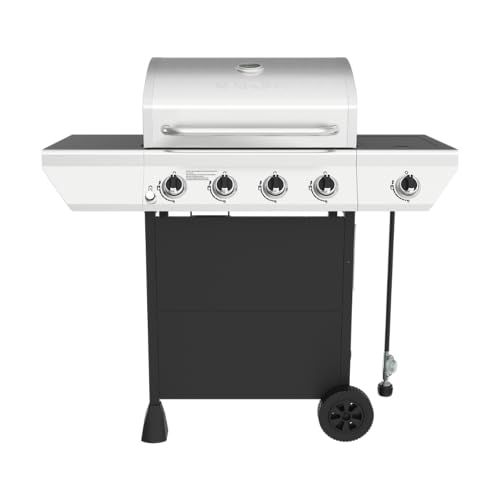
Nexgrill 4-Burner Gas Grill, 52,000 BTU
Badge: Best Room to Grow
Strengths
- Cast iron grates and strong output make it a confident searing grill
- 526 sq. in. is a genuine family-plus-guests capacity without the largest footprint here
- Electronic ignition and built-in thermometer simplify the daily routine
Trade-offs
- Cast iron grates need oiling and care to avoid surface rust
- Less cooking room than the biggest Nexgrill when the whole street comes over
- Stainless lid still needs wiping to keep water spots and fingerprints at bay
At a glance
- Fuel: propane gas
- Burners: 4, plus side burner
- Total output: 52,000 BTU (maker rating)
- Cooking space: 526 sq. in.
- Grates: matte-finish cast iron
- Extras: built-in thermometer, electronic ignition, stainless steel lid
This second Nexgrill pairs four burners and a side burner with a maker rating of 52,000 BTU and 526 square inches of cooking space. The grates are matte-finish cast iron, which puts real searing mass under the food, and the lid is stainless steel over a cart the listing describes as portable, a combination aimed at owners who may need to wheel the grill in and out of a garage or around a patio. Electronic ignition and a built-in thermometer are both present, so the everyday routine is push-button lighting and lid-closed cooking with a temperature reference instead of guesswork. It sits in the middle of this pool on size, which for many households is exactly the point.
This Nexgrill suits the starter who cooks for a crowd from day one, the team coach, the big-family house, the social patio. Electronic ignition and a built-in thermometer remove the two fumbles beginners hate most, lighting and guessing, and the cast iron grates teach proper searing on 526 square inches of room. The honest caution is size: it is a lot of grill to clean after two burgers. If your ordinary Tuesday is four people and your ordinary Saturday is fourteen, though, its capacity will save you from batch cooking while you are still learning everything else.
Best for: Starters cooking for groups early / Not suited for: anyone whose needs run against that job — see the trade-offs above before you buy.

Nexgrill 4-Burner Gas Grill with Side Burner
Badge: Best for Ambitious Beginners
Strengths
- Largest cooking area in this pool at 626 sq. in., so big batches cook in one round
- High total output recovers heat quickly after the lid opens for turning and basting
- Electronic ignition, thermometer, side burner, and double-door cabinet cover the everyday checklist
Trade-offs
- Big and heavy; it dominates a small patio and is not a move-it-often grill
- More burners and parts mean more to clean and more to maintain over the years
- Heat output is wasted on small weeknight cooks for one or two people
At a glance
- Fuel: propane gas
- Burners: 4, plus side burner
- Total output: 60,000 BTU (maker rating)
- Cooking space: 626 sq. in.
- Body: stainless steel
- Extras: built-in thermometer, electronic ignition, double-door cabinet
This Nexgrill is the big-output option in the pool: four main burners plus a side burner, a maker rating of 60,000 BTU in total, and 626 square inches of cooking space under a stainless steel body. Size changes what a grill can do. On 626 square inches you can cook for a party in one round instead of three, run a whole tray of vegetables beside the meat, or hold finished food warm at the edge while the centre keeps working. Electronic ignition and a built-in thermometer remove two small frictions that add up over a season, and the double-door cabinet underneath swallows the tank and the spare tools. It is a lot of grill, and it asks for a patio that can hold it.
This Nexgrill suits the beginner whose life is already big: the household that hosts, the team parent, the patio everyone gathers on. Electronic ignition and a built-in thermometer remove the two fumbles new cooks hate most, and 626 square inches mean a whole gathering’s burgers cook in one round while you are still learning. The honest cautions are size and upkeep: it is a lot of grill to clean after a small dinner, and its appetite for propane matches its burners. If your ordinary week genuinely feeds a crowd, learning on the big machine beats outgrowing a small one by August.
Best for: Starters cooking for groups from day one / Not suited for: anyone whose needs run against that job — see the trade-offs above before you buy.

Weber Spirit E-425 Gas Grill
Badge: Best Premium Starter
Strengths
- Sear Zone with Boost Burners creates a genuinely hotter zone for crusts on steaks and chops
- Porcelain-enamelled cast-iron grates balance searing mass with easier cleaning
- Strong brand support and parts availability suit buyers keeping a grill for the long term
Trade-offs
- Premium-tier positioning in this pool, so it asks the biggest commitment of the six
- Four-burner footprint is more grill than a couple or a small balcony needs
- Accessory rails tempt add-on spending that is nice to have, not essential
At a glance
- Fuel: propane gas
- Burners: 4
- Searing: Sear Zone with Boost Burners
- Grates: porcelain-enamelled cast iron
- Extras: Weber Works accessory rails
The Weber Spirit E-425 is the premium four-burner in this pool, and its headline feature is a dedicated Sear Zone with Boost Burners, built to push one section of the grate far hotter than the rest for steakhouse-style crusts. The cooking grates are porcelain-enamelled cast iron, the combination most experienced grillers ask for by name: cast iron mass for searing, enamel for easier release and cleaning. Weber Works rails along the front accept the brand’s snap-on accessories, and behind the badge sits the practical advantage Weber owners talk about most, which is a deep spare-parts and support ecosystem that keeps a grill cooking for many seasons instead of a few.
The Spirit is the buy-once starter: more money, more capability, and a support network that matters when you are new and something confuses you. The Sear Zone teaches the single most valuable beginner lesson, that heat is a tool with settings, not a bonfire, because you can compare a steak seared in the zone with one cooked on the standard burners and taste the difference immediately. Porcelain-enamelled cast iron is the most forgiving grate material here. If the budget stretches, this is the grill least likely to be replaced as skills grow.
Best for: Buy-once starters with a bigger budget / Not suited for: anyone whose needs run against that job — see the trade-offs above before you buy.

Monument Grills Mesa II 4-Burner Gas Grill
Badge: Most Beginner-Friendly Features
Strengths
- Advanced Broil Zone gives a dedicated high-heat area for steaks and burgers
- Maker-claimed fast preheat suits weeknight cooking on a schedule
- Foldable shelves and highlighted fast assembly reduce the usual setup friction
Trade-offs
- Broil-zone designs reward learning; the hot area is intense and unforgiving of distraction
- Stainless finish needs regular wiping to look its best outdoors
- As with any feature-led model, confirm shelf and grate dimensions on the listing for your pans and trays
At a glance
- Fuel: propane gas
- Burners: 4
- Searing: Advanced Broil Zone
- Body: stainless steel
- Maker claim: reaches 500°F in 5 minutes
- Extras: foldable side shelves, fast assembly
- Model: Mesa II 410FBZ
The Monument Mesa II 410FBZ is a stainless steel four-burner built around an Advanced Broil Zone, the brand’s take on a high-heat searing area, and the maker claims the grill reaches 500°F in five minutes, which is a preheat speed claim worth noting because weeknight grilling lives and dies on how fast the grate is ready. Foldable side shelves keep the storage footprint smaller than the cooking capacity suggests, and the listing highlights fast assembly, a small mercy anyone who has spent a Saturday with a parts tray will appreciate. In this pool it is the design-forward stainless option for cooks who care about sear first and footprint second.
The Monument’s beginner appeal is momentum: a grill that preheats fast, by the maker’s claim in about five minutes to cooking temperature, gets used on weeknights when a slow grill would lose to the oven. The Broil Zone gives new cooks a clearly marked hot area instead of a guessing game, the foldable shelves keep it storable, and the highlighted fast assembly shortens the distance between the box arriving and the first burger. It rewards attention, the broil zone is properly hot, but for an enthusiastic starter that responsiveness is exactly the fun.
Best for: Impatient beginners, fast weeknight starts / Not suited for: anyone whose needs run against that job — see the trade-offs above before you buy.
Comparison Table
| Pick | Format | Best use | Listing |
|---|---|---|---|
| Char-Broil Performance Series 4-Burner Cabinet Grill | Gas, cabinet cart | Families learning together | Check on Amazon |
| IdeaMaxx 3-Burner Gas Grill with Cast Iron Grates | Gas, cast iron grates | Beginners who care about sear marks | Check on Amazon |
| Nexgrill 4-Burner Gas Grill, 52,000 BTU | Gas, 526 sq. in. | Starters cooking for groups early | Check on Amazon |
| Nexgrill 4-Burner Gas Grill with Side Burner | Gas, 626 sq. in., side burner | Starters cooking for groups from day one | Check on Amazon |
| Weber Spirit E-425 Gas Grill | Gas, sear zone | Buy-once starters with a bigger budget | Check on Amazon |
| Monument Grills Mesa II 4-Burner Gas Grill | Gas, broil zone | Impatient beginners, fast weeknight starts | Check on Amazon |
How to Choose the Right Grill for Best grills for starters
Gas first, and here is why
Beginners quit grilling over friction, not flavour. Charcoal adds lighting, waiting, ash, and temperature guesswork on top of learning the food itself, and that stack defeats a lot of first summers. Gas lights in seconds, holds a temperature with a knob, and shuts off cleanly, so every early session can focus on one skill at a time. Nothing in this guide is anti-charcoal; a kettle makes a superb second grill once the food basics are habits. Start where success is easiest, and let confidence compound.
Size for your Tuesday, not your biggest Saturday
The grill industry sells capacity, but beginners should buy frequency. A compact grill that fires up for two burgers on a Tuesday teaches more, faster, than a six-burner that only earns its space twice a year. Count your usual eaters, add two, and let that decide. Every pick above 500 square inches in this list is there for households whose usual number is genuinely large. Remember the hidden size costs too: bigger grills preheat longer, use more propane, and take longer to clean, all of which tax a beginner’s enthusiasm.
The thermometer is a teacher
Cooking by time alone is how beginners serve raw chicken and grey steak in the same meal. A built-in lid thermometer teaches the relationship between knob settings, weather, and actual heat, and it makes recipes transferable between sessions. Pair it with an inexpensive instant-read food thermometer, the single most useful accessory a starter can own, and doneness stops being a guess. Several picks here include lid thermometers; on those that do not highlight one, check the listing and budget for the accessory from day one.
Cleaning decides whether you grill in August
Every beginner is enthusiastic in May. The grills still in use in August are the ones whose grates brush clean in two minutes and whose drip trays empty without a production. Porcelain-coated and porcelain-enamelled grates are the forgiving options while you learn; raw cast iron asks for oiling discipline and rewards it with searing. Whichever you choose, adopt the routine in the how-to section below from the first cook, because habits formed early are the ones that survive. The comparison in Best Grills For Steaks And Burgers shows how the same cleaning logic applies when the menu gets more ambitious.
Your First Month of Grilling: Setup, Basics, and Cleaning
A starter grill rewards a calm first session. Assemble it on a level surface, check every gas connection with soapy water for bubbles before the first lighting, and burn it in empty, lid down, to clear manufacturing oils while you read the manual with a cold drink. Then cook something forgiving first: sausages, burgers, or chicken thighs, not the expensive steak.
- Season the routine, not just the grill: preheat with the lid down, brush the hot grates, oil the food rather than the grate, and set up a hot zone and a gentle zone before anything cooks.
- Learn the lid: grilling with the lid down cooks evenly and faster, and it is how the thermometer becomes meaningful; open it to turn food, not to admire it.
- Master three foundation cooks in order: burgers for timing, chicken thighs for temperature patience, and vegetables for zone management, before attempting thick steaks.
- Use the instant-read thermometer every time until internal temperatures are second nature; confidence built on measurement is real confidence.
- After cooking, run the burners briefly to burn off residue, brush the grates while warm, close the lid, and turn off the tank valve as well as the knobs.
- Empty the drip tray regularly and check it before long cooks; most beginner flare-up stories are really full-tray stories.
- Cover the grill once it is cool, and store the tank valve closed; small habits protect the ignition system and burners through the seasons.
- Keep a simple log for the first month: what you cooked, knob settings, timing, and result. Ten lines of notes will teach you your specific grill faster than any video.
Problem: Food sticks to the grates → The grill was not fully preheated, the grates were dirty, or the food was moved too early. Preheat longer, brush clean, and let food release naturally before turning.
Problem: Flare-ups scorch everything → Fat is dripping onto open flame, often from a full drip tray or food parked over the hottest zone. Move food to the gentle zone, close the lid briefly to calm flames, and clean the tray before the next cook.
Problem: One side cooks much faster → Most grills have a warmer side; learn yours by toasting bread slices across the grate once, and then use the map deliberately instead of fighting it.
By the end of a first month built on these habits, the average starter has quietly learned heat zones, lid discipline, and doneness, which is ninety percent of grilling. The remaining ten percent is recipes. When the travel bug bites, the compact end of the family is surveyed in Best Grills For Tailgaiting, and it is a pleasant surprise how much of your new skill transfers to a small grill in a car park.
The Five Skills That Make a Beginner Look Experienced
Skill one is preheating patience: a properly hot grate prevents sticking and creates marks, and it costs only a few lid-down minutes. Skill two is zoning: arranging burners so food can move between sear and safety turns most disasters into footnotes. Skill three is leaving food alone: proteins release when they are ready, and constant poking tears crusts and loses juice. Skill four is measuring doneness by temperature, not by colour, prayer, or the time a video suggested.
Skill five is resting: five quiet minutes off the heat redistributes juices through steaks, chops, and chicken, and it is the difference between a plate of juice and meat that holds its moisture. None of these requires talent, equipment beyond a thermometer, or experience; they require only that your grill makes them easy to practise, which is precisely how the six picks above were chosen and ordered.
What to Buy Alongside a First Grill
Buy less than the internet suggests. The essential kit is short: long tongs, a wide spatula, a stiff grate brush suited to your grate material, an instant-read thermometer, and heat-resistant gloves. Add a chimney of patience before adding gadgets. A cast iron pan that fits your grill quietly doubles its talents, handling onions, smash burgers, and delicate fish that would challenge a beginner on open grates.
Skip, for now, the novelty tools, the branded everything, and the injector kits. Money saved there funds the two upgrades that actually change outcomes: a good cover that fits your exact model, and a second propane tank, because running out of gas mid-cook is the most common and most preventable beginner heartbreak of all.
A Beginner’s Four-Week Practice Plan
Week one is burgers and sausages, twice. The goal is not cuisine; it is calibration. Learn how long your grill takes to preheat, where its hot side lives, and how the lid thermometer reads against the food’s actual progress. Take the ten lines of notes. Week two adds chicken thighs, the patience teacher: skin that renders slowly, meat that forgives an extra few minutes, and a doneness check that the thermometer makes unambiguous.
Week three is vegetables and zoning: peppers, onions, corn, and zucchini arranged across hot and gentle zones, moved as they finish, teaching the choreography every mixed grill night needs. Week four, cook a full meal for people you like: a protein you have practised, vegetables you have practised, and one new thing only. This plan works on every pick in this guide, and by its end the word starter describes your grill’s price tier, not your cooking.
Propane Basics Every New Owner Should Know
A standard exchange tank holds enough fuel for many hours of grilling, but ‘many’ depends on burner count and settings, which is why a spare tank is the veteran’s first accessory. Store tanks upright, outdoors, and never in a closed garage with the valve open; check connections with soapy water whenever you swap a tank, and treat any persistent gas smell as a stop-and-check event, not a quirk. Most grills here run on refillable exchange tanks, and the little portable formats in the wider family may use small canisters instead.
At season’s end, close the tank valve, run the burners out, disconnect if your manual advises it, clean the grates properly once, and cover the grill. In spring, inspect burner tubes for blockages, spiders love them, before the first lighting. These unglamorous rituals are the difference between a starter grill that lasts two seasons and one that lasts ten, and they take less time than one takeaway order.
How to Read a Grill Listing Without Being Fooled
Beginners are the target audience for inflated listing language, so learn the translations. Total BTU is a sum across burners, not a quality score; cooking area may include warming racks; ‘stainless’ may describe only the lid or the front panel. The honest signals are specific ones: named grate materials, burner counts with clear zoning, a stated thermometer, and a model number that leads to a parts catalogue. Every pick in this guide was chosen because its verified listing speaks in those specifics rather than in adjectives.
When a listing will not say what the grates are made of, assume the lightest material and price the grill accordingly in your head. When it names cast iron, porcelain enamel, or a cleaning system, that specificity is worth money, because it predicts both your cooking and your cleaning for years. This single habit, reading for materials before features, will serve you on every appliance purchase after this one.
Safety Habits to Build From the First Cook
Grilling is safe cooking when three habits are automatic. First, the leak check: soapy water on gas connections whenever a tank changes, watching for bubbles. Second, placement: the grill on level ground, away from siding, railings, and overhangs, with children and pets given a boundary everyone respects. Third, the shutdown ritual: burners off, tank valve closed, lid down, in that order, every time, until it is muscle memory. None of this is fear; it is the quiet professionalism that lets everyone relax around the fire.
Add food safety to the same list: separate raw and cooked trays, a thermometer for poultry and burgers, and cooked food served promptly rather than basking outdoors. Beginners who build these habits in month one never have to unbuild the sloppy versions, and their grills, and their guests, last noticeably longer for it.
When to Upgrade, and What to Upgrade To
You will know it is time when the same limitation annoys you three cooks in a row: the grate is too small for your actual guest list, the single temperature cannot run your menu, or cleaning has become the reason you grill less. Name the limitation precisely, because the upgrade that fixes size is different from the one that fixes heat control, and buying the wrong upgrade is how garages fill with grills. The picks further down this list, the sear-zone and broil-zone models, exist as pre-mapped answers to the heat-control limitation.
Keep the starter grill when you upgrade, if space allows: it becomes the second station for sides, the travel grill, or the loaner that converts a neighbour. A well-kept beginner grill has a long second life, which is the final argument for buying a decent one, like the six here, instead of the cheapest box in the store.
The Two-Tray Rule and Other Table Manners
Never let the tray that carried raw meat carry the cooked food back. Two trays, or one tray washed in between, is the simplest food-safety habit in grilling and the one beginners most often skip because nobody told them. Colour-code them if your household is busy: raw in, cooked out, no exceptions even for ‘just a second’.
The same thinking covers tongs: the pair that placed raw chicken does not plate the finished chicken without a wash. Build these separations into your setup from the first cook and they will never feel like rules, just like how your kitchen works.
Grilling for One or Two Without Waste
Small households hesitate over big grills for good reason, and the compact end of this list exists for them. Cook in components rather than meals: a protein and a vegetable sharing the grate, with leftovers planned into tomorrow’s lunch rather than apologised for. Batch-cooking a sauce or a tray of onions on the side burner turns a small grill into a week’s head start.
The deeper point is frequency: a grill sized for two gets used on Tuesdays, and Tuesday reps are where beginners become grillers. Buy the size that matches your ordinary appetite and let guests be the occasional, happy exception handled in rounds.
Apartment and Balcony Realities
Many starters grill where rules apply: balconies with fuel restrictions, buildings that ban charcoal or open flame, patios measured in feet rather than yards. Check the rules before the purchase, because the best grill in this guide is worthless if your lease forbids it. Gas compacts are the usual survivors of such rules, which is another reason this list is gas-led.
Where a full grill is impossible, the skills still transfer: zoning, thermometers, and resting work identically on the smallest permitted format. Start where you are allowed to start, and let the first home with a yard inherit a cook who already knows what they are doing.
Keeping a Starter Grill Through Its Second Winter
The second winter kills more starter grills than the first, because novelty has faded and the cover routine slipped. Counter it with a fixed autumn ritual: deep clean, burner check, grates oiled or washed as their material asks, tank valve closed, cover on, and the manual filed where you can find it. Twenty minutes, once a year, in exchange for a grill that lights first time in spring.
If something has failed by spring, price the part before the replacement grill. The brands in this list support their starters, and a burner or igniter is a fraction of a new machine. Repair is the value tier’s quiet superpower.
Inviting People Over Before You Feel Ready
Do not wait to feel ready; readiness is a rumour. Invite the forgiving people, cook the practised menu, burgers, thighs, vegetables, and let the grill do what it has already done for you three times. Guests remember hot food and a calm cook, not the absence of a showpiece dish. Keep the menu inside your practice and the evening will feel easy.
The first gathering also teaches the social geometry of your setup: where people stand, where trays land, what the cook keeps reaching for indoors. Fix those frictions once, on paper, and every later gathering inherits the improvement.
Common Buying Mistakes
- Buying the biggest grill in the shop. Oversized first grills preheat slowly, eat propane, and intimidate; most stand unused by the second summer.
- Learning on expensive food. Practise on burgers, thighs, and sausages; save the thick ribeye for when your zones and timing are habits.
- Grilling with the lid up. Lid-up cooking dries food, wastes heat, and makes temperatures meaningless; the lid is a tool, use it.
- Skipping the thermometer. Guessing doneness is the fastest route to a bad first impression of your own cooking; measure instead.
- Never cleaning the drip tray. A neglected tray is a flare-up waiting for a fatty cook; two minutes of maintenance prevents the drama.
Final Recommendation
For most beginners, start with the Char-Broil Performance cabinet: it is the calmest teacher here, organised for real family life, and it will make you a competent griller within a month. Step up to the Weber Spirit E-425 if the budget allows and you want the grill that grows with you for years, or to the Char-Broil Performance cabinet if family life demands storage and four burners from the start. The Monument is the pick for the impatient enthusiast who will grill three weeknights a week.
Whichever you choose, judge it after ten cooks, not one: the learning curve is short, and the grill that fits your routine will carry you through it. Readers who expect their starter grill to travel as well as teach should look at Best Grills For Tailgai, where portability joins the checklist.
Quick links to the top three: Char-Broil Performance Series 4-Burner Cabinet Grill, IdeaMaxx 3-Burner Gas Grill with Cast Iron Grates, Nexgrill 4-Burner Gas Grill, 52,000 BTU.
Frequently Asked Questions
Should a beginner start with gas or charcoal?
Gas, for most people, most of the time. It removes fire-building and ash from the learning stack so your first month teaches food skills: zones, timing, and doneness. Charcoal offers deeper flavour and a satisfying ritual, and it makes an excellent second grill or a first grill for someone who specifically wants that ritual and accepts the slower routine. The picks in this guide are all gas for exactly that reason.
How many burners does a starter actually need?
Two burners are enough to learn zoning; three give a comfortable hot, medium, and off arrangement and suit most households. Four burners make sense when you regularly cook for six or more or want a dedicated sear area. More burners than your household needs mostly means more preheat time, more propane, and more cleaning, which is why this guide crowns a well-organised four-burner.
What is the first thing I should cook on a new grill?
Something forgiving and inexpensive: burgers, sausages, or chicken thighs. They tolerate timing errors, teach you your grill’s hot spots, and still taste great while you calibrate. Save thick steaks and delicate fish for the third or fourth session, when your preheat and zoning habits exist. A cheap, cheerful first cook builds more confidence than an expensive, stressful one.
Do I need a side burner as a beginner?
No, but it becomes useful sooner than expected: beans, sauces, onions in a pan, and keeping sides warm while the main event finishes. Treat it as a tiebreaker between similar grills rather than a reason to buy. If your kitchen stove is steps away, you may rarely use it; if your grill is your outdoor kitchen, you will use it weekly.
How do I stop food sticking while I am learning?
Preheat fully with the lid down, brush the grates clean, lightly oil the food, and then leave it alone until it releases on its own. Sticking is usually a heat or patience problem, not a food problem. Porcelain-coated grates, like those on the top pick here, are the most forgiving surface while these habits form.
When will I outgrow a starter grill?
Usually when your guest list grows or your ambitions do, often after a season or two of regular use. The better picks in this list delay that day: four-burner models with sear features can serve a household for many years. Outgrowing a grill is a happy milestone, and a well-kept starter grill sells, gifts, or becomes the travel grill easily.


