Disclosure: topratedkitchenware.com is reader-supported. When you buy through links on our site, we may earn an affiliate commission from Amazon and other retailers, at no extra cost to you.
Where to buy
The six models below are the verified picks for this guide to the best handicap can openers — “handicap” in the practical kitchen sense: openers that ask as little as possible of hands that are arthritic, weak, painful, one-handed, or working from a seated position. Every pick is electric, every pick starts with a touch, a press, or a lever rather than a squeeze-and-crank, and each name links to its Amazon listing, where you can check the latest price on Amazon and confirm the current configuration before you decide.
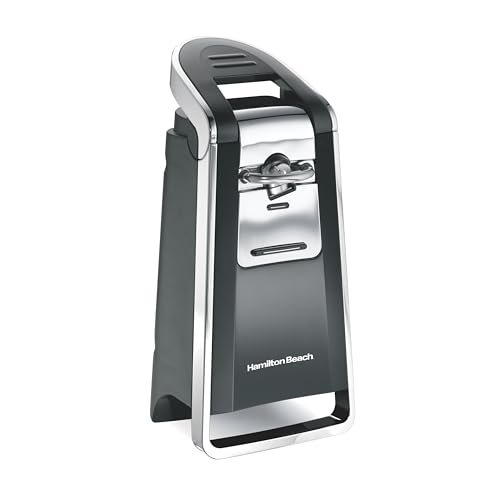
- Hamilton Beach Smooth Touch Electric Can Opener, Easy Push Down Lever, 76606AG — Check on Amazon
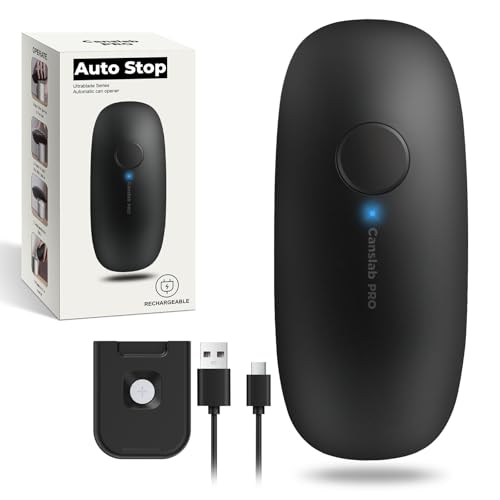
- Canslab Ultrablade PRO Electric Can Opener, for Seniors with Arthritis, Handsfree
- Kitchen Mama Auto Electric Can Opener, Battery Operated, Hands Free, Red
- KITCHENMUH One Touch Electric Can Opener, for Seniors with Arthritis
- KORSKR Electric Can Opener, Hands Free, for Seniors and Left Handed People
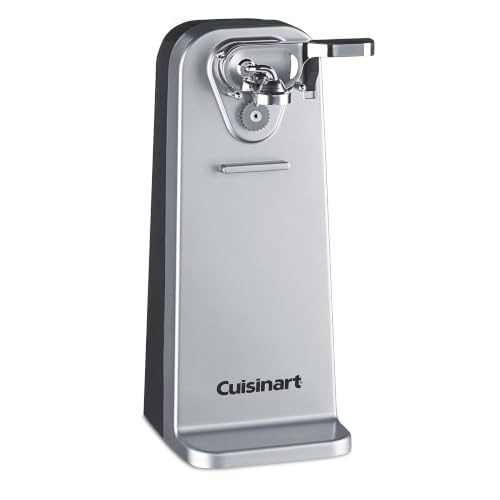
- Cuisinart CCO-55 Deluxe, Chrome Electric Can Opener, One-Touch Press and Release
Read the full guide ↓ for how each pick distributes the work between the hand, the machine, and the counter — because for this brief, that distribution is the whole product.
Finding the best handicap can openers starts with an honest inventory of what a conventional opener demands. A manual opener demands a grip strong enough to puncture steel, a wrist that can crank under resistance for a full circuit, and a second hand to hold the can still — three demands, any one of which can be the one a person’s hands can no longer meet. Even many electric openers quietly keep one demand in reserve: a lever to hold down, a can to lift and seat precisely, a sharp lid to fish out with weakened fingers. The six picks in this guide were chosen because their listings describe designs that retire those demands one by one: push-down levers worked by palm weight instead of finger grip, one-touch starts, hands free travel, magnetic lid holders that keep the lid out of the food and out of weakened fingers’ way, and smooth edges that remove the sharpest object from the whole transaction.
This guide compares the six side by side with the effort budget as the ranking currency. It explains which pick suits which kind of hand — arthritic, post-surgery, one-handed, left handed, seated — and it is frank about what no opener can fix, including crushed rims and the charging routines that cordless tools require. You will find a buying guide organised by limitation rather than by feature, a how-to section written for one-handed and low-grip technique, and answers to the questions carers and buyers with disabilities ask most. The budget side of equipping an accessible kitchen is covered in Best Inexpensive Battery Operated Can Openers, and heritage-brand options for arthritic hands are gathered in Best Made American Made Can Openers Arthritis for readers who shop that way.
Key Takeaways
- Rank by effort, not features: the right opener is the one whose hardest required action — its start, its seating, its lid — is an action your hands can still do comfortably.
- Three picks state an arthritis or senior brief in their own listings: the Canslab (seniors with arthritis, handsfree), the KITCHENMUH (seniors with arthritis, one touch), and the KORSKR (seniors, and left handed users).
- Hands free rim-riders retire the most demands at once; countertop stations like the Hamilton Beach and the Cuisinart CCO-55 retire grip but ask the can to be lifted and seated.
- A stated magnetic lid holder and a stated smooth edge are safety features for reduced grip and reduced sensation alike: the lid stays out of the food, and the edge that remains is blunt.
- No opener in this guide makes medical promises; these are kitchen tools that reduce effort and sharp edges, chosen from what their listings actually state.
In this guide
Quick Picks
| Pick | Badge | Effort profile | Link |
|---|---|---|---|
| Hamilton Beach Smooth Touch, 76606AG | Best Countertop for Weak Grip | Easy push down lever worked by palm weight; opens standard, extra-tall and pop-top cans | Check on Amazon |
| Canslab Ultrablade PRO | Best Overall for Arthritis | Handsfree side cut with smooth edge, smart auto stop, cordless; listed for seniors with arthritis | Check on Amazon |
| Kitchen Mama Auto, Red | Best Hands-Free Simplicity | Battery operated, automatic, hands free, smooth edge; the shortest ritual here | Check on Amazon |
| KITCHENMUH One Touch | Best One-Touch for Arthritis | One touch, battery operated, smooth edge, fits all can sizes; listed for seniors with arthritis | Check on Amazon |
| KORSKR Electric Can Opener | Best for Left-Handed and One-Handed Use | Battery powered, hands free, smooth edge, any size cans; listed for seniors and left handed people | Check on Amazon |
| Cuisinart CCO-55 Deluxe, Chrome | Best Countertop One-Touch | One-touch press and release, magnetic lid holder, removable lever for easy washing | Check on Amazon |
The badges are written as effort profiles deliberately. “Best overall” means little to a reader whose left hand is the strong one, or whose kitchen work happens from a wheelchair, or whose grip fails in the morning and returns by lunch. Read your own situation into the badge column, then confirm it in the detailed profile, where each pick’s hardest required action is named out loud.
How These Picks Were Chosen
This is a research-led guide built from verified Amazon listing data, not a hands-on lab test and not a medical assessment. Each candidate’s listing title was read for the actions it requires and the aids it states: the start mechanism (one-touch, single press, push-down lever, hands free), the lid management (a stated magnetic holder), the edge (a stated smooth edge), and any stated audience (seniors, arthritis, left handed users). All six picks in this pool are electric, which is the first accessibility decision made for you: no pick here asks for a cranking wrist. Within the six, ranking weighs how many of the classic demands each design retires, and how honestly its listing says so.
Two disciplines run through the profiles. First, nothing is claimed that the listing does not state: where a title is silent about a lid magnet or an edge, the review says so, because a buyer planning around a disability cannot use a feature that exists only in a reviewer’s imagination. Second, no medical claims are made. An opener can reduce the force, reach, and sharpness a task involves; it cannot treat a condition, and this guide does not pretend otherwise. No prices or fixed ratings appear here either, because both change constantly — the listing carries the current figure, and the qualitative tier notes in the profiles carry the rest.
The 6 Best Handicap Can Openers

Hamilton Beach Smooth Touch Electric Can Opener, 76606AG
Badge: Best Countertop for Weak Grip
Strengths
- Easy push down lever stated in the listing: the cut starts under palm or heel-of-hand weight, not finger grip.
- States it opens all standard, extra-tall and pop-top cans, so one station covers the household’s whole range.
- A planted countertop body: the machine braces itself, and the user supplies pressure, not stability.
Trade-offs
- The can must still be lifted and seated under the cutter, which is a two-handed moment for most people.
- No magnetic lid holder and no smooth-edge claim are stated in the listing title; lids are handled manually and treated as sharp.
- The largest footprint here; the station needs its permanent corner.
Mini spec box
- Type: Electric can opener, countertop
- Operation: Easy push down lever
- Can range stated: All standard, extra-tall and pop-top cans
- Finish: Black and chrome
- Model: 76606AG
The Hamilton Beach earns its badge on the strength of one honest mechanism: the push down lever. Where a button asks for a fingertip and a crank asks for a fist, a broad lever asks only for downward weight, and weight is the one force almost every hand can still supply — through the palm, the heel of the hand, or even a forearm on a bad morning. Seated at its station, the machine does the travelling and the cutting; the user’s job is to place the can, lean, and let go of the worry. Its stated range is the other half of its accessibility case: a household that must not maintain two openers for two can sizes gets standard, extra-tall, and pop-top coverage from the one appliance its user has already learned.
Who it suits: users with weak or painful grip who retain arm strength and a settled counter, and households whose cans vary in size. The honest limitations are the seating and the lid. Seating a can under a standing cutter is the one genuinely two-handed moment in its routine, and with no lid magnet stated, the cut lid is a manual retrieval — with tongs, never with fingertips, and treating the rim as sharp, because no smooth edge is claimed. If either of those is your deciding constraint, the rim-riding picks below remove both. The retail landscape for this kind of station, for shoppers who prefer to handle one in a store first, is surveyed in Best Manual Can Openers At Bed Bath And Beyond from the manual side.
Best for: weak grip with good arm weight, one station for all can sizes / Not suited for: users who cannot lift and seat cans, or who need a stated lid magnet

Canslab Ultrablade PRO Electric Can Opener, USB Rechargeable
Badge: Best Overall for Arthritis
Strengths
- Listing states it is an automatic can opener for seniors with arthritis, with a handsfree side cut — the brief, in the maker’s own words.
- Smooth edge stated: neither the lid nor the can keeps a sharp rim for sore fingers to meet.
- Smart auto stop stated, and the unit is cordless and wall mountable, so it can live within seated reach.
Trade-offs
- No magnetic lid hold is stated; the separated lid rests on the can until lifted by its face.
- Side cutting needs a readable rim; crushed cans can defeat it.
- USB recharging is a routine someone must keep — the user, or a household member on a schedule.
Mini spec box
- Type: Electric can opener, handheld
- Power: USB rechargeable, cordless
- Cut: Side cut, smooth edge, handsfree
- Stop: Smart auto stop
- Storage: Wall mountable
- Colour: Black
The Canslab Ultrablade PRO is the pick that retires the most demands in a single design. It is placed on the can rather than the can being lifted to it. It travels handsfree rather than asking a hand to guide or hold anything. It stops itself, via the stated smart auto stop, rather than asking the user to judge the end of the cut. And its side cut leaves a smooth edge, so the final act of the routine — lifting the lid — presents a blunt disc to fingers that may have reduced sensation as well as reduced strength. Its listing names its audience directly: seniors with arthritis. In a category full of implied accessibility, a stated audience is a commitment a buyer can hold the maker to, and it is why this pick carries the arthritis badge.
Practical notes matter as much as features here. Wall mountable storage, stated in the listing, lets the tool live at seated elbow height rather than in a high cupboard or a deep drawer, and cordless use means it works at the table as readily as at the counter — a real consideration for a user who opens cans where they eat. Who it suits: arthritic hands, one-handed cooks who can seat a light tool, and seated users who plan their kitchen around reach. The honest limitation is the pair it shares with all side-cut designs — rim dependence — plus a charging routine that must belong to somebody. If neither is manageable, the corded stations in this list remove the second and the top-cut designs soften the first.
Best for: arthritis, one-handed and seated use, smooth lids / Not suited for: crushed rims, or a household with no charging routine

Kitchen Mama Auto Electric Can Opener, Battery Operated, Red
Badge: Best Hands-Free Simplicity
Strengths
- Automatic, hands free operation stated in the listing: seat it, press once, and the tool does the circuit alone.
- Smooth edge and food-safe positioning stated, so the lid it leaves is blunt and the cut is clean.
- Battery operated: no cord to route, no outlet to reach, and it works at the table or the feeding corner.
Trade-offs
- No auto stop is stated; a user with attention or memory constraints should have the routine supervised until it is familiar.
- Batteries fade gradually, and a slowing tool can be mistaken for a failing one; spares belong in its drawer.
- No can-size range is stated in the listing title.
Mini spec box
- Type: Auto electric can opener, handheld
- Power: Battery operated
- Edge: Smooth edge
- Operation: Automatic, hands free
- Colour: Red
The Kitchen Mama is the accessibility of routine. Its entire interaction is: place the tool on the can, press, wait, lift a blunt lid. There is no lever to sustain, no can to hoist, no cord to manage, and no sharp edge waiting at the end. For a user whose difficulty is as much about sequencing and confidence as about strength — the post-stroke cook relearning the kitchen, the person with tremor who dreads the fiddly moment — a tool with one step and no sharp aftermath rebuilds independence in a way a complicated appliance cannot. The red body helps more than it should: it is findable in a drawer by eye and by a hand that recognises shapes, at the low-vision end of accessibility that spec sheets never mention.
Who it suits: users who need the fewest possible steps, carers setting up a simple kitchen for someone else, and anyone whose cans get opened in more than one place. The honest limitations are the unstated auto stop — the tool should be run within earshot — and the battery fade, which a carer can manage by swapping batteries on a schedule rather than waiting for symptoms. Priced as a mainstream gadget rather than a specialist aid, it is also the gentlest first step into powered opening; the wider value picture is in Best Inexpensive Can Openers.
Best for: fewest steps, carer-set-up kitchens, confidence rebuilding / Not suited for: unsupervised use where an auto stop is essential

KITCHENMUH One Touch Electric Can Opener, Battery Operated
Badge: Best One-Touch for Arthritis
Strengths
- Listing states it is for seniors with arthritis, with one touch operation — a stated audience and a stated mechanism.
- Smooth edge stated, and a stated fit for all can sizes, so the household needs one tool, not a rotation.
- Battery operated and food safe per the listing; the tool goes to the can, never the reverse.
Trade-offs
- No auto stop and no magnetic lid hold are stated in the listing title.
- Replaceable batteries are a routine: spares in the drawer, swapped at the first slowing.
- A one-touch start can trigger if the tool is stored loose and knocked; store it button-protected.
Mini spec box
- Type: Electric can opener, handheld
- Power: Battery operated
- Edge: Smooth edge
- Operation: One touch, automatic
- Fit: Fits all can sizes
- Colour: Black and grey
The KITCHENMUH shares the Canslab’s stated audience — seniors with arthritis — and answers it with a different mechanism: one touch, battery powered, riding the rim, with the broadest fit claim in this pool. For arthritic hands the one-touch start is the headline, because it replaces the two actions arthritis punishes most, gripping and sustaining, with a single press that even a stiff morning hand can manage with a knuckle or the side of a thumb. The all-sizes fit matters for independence in a way that is easy to miss: a tool that opens most cans but not the big Sunday tin still sends its user to ask for help once a week, and it is the asking, as much as the effort, that an accessibility tool exists to retire.
Who it suits: arthritic users who want one battery tool for the whole cupboard, and households equipping a parent’s kitchen with a single, learnable device. The honest limitations are its unstated extras — no auto stop and no lid magnet are claimed — and the storage quirk of an exposed one-touch button. Neither is a flaw so much as a setup instruction: run it within earshot, lift the resting lid by its face, and store it in its box corner or a pouch. Buyers who prefer established domestic brands for this brief will find the parallel shortlist in Best Made American Made Can Openers Arthritis.
Best for: arthritis, one tool for all sizes, knuckle-friendly starts / Not suited for: users who need a stated auto stop or lid magnet

KORSKR Electric Can Opener, Battery Powered, Hands Free
Badge: Best for Left-Handed and One-Handed Use
Strengths
- Listing explicitly addresses left handed people, alongside seniors and women — a stated welcome most tools never extend.
- Battery powered and hands free with a stated smooth edge: seat, press, and neither hand has an assigned job.
- Stated to suit any size cans, so the one-handed user’s single tool covers the cupboard.
Trade-offs
- No auto stop or magnetic lid hold is stated in the listing title.
- Battery routine applies, with the usual spares habit.
- Rim-riding geometry shares the category’s dented-rim limitation.
Mini spec box
- Type: Electric can opener, handheld
- Power: Battery powered
- Edge: Smooth edge
- Operation: Automatic, hands free
- Fit: Suitable for any size cans
- Colour: Black
Left handed cooks are the kitchen’s forgotten minority: manual openers assume a right-handed crank, many levers assume a right-handed approach, and the adaptations are usually an afterthought. The KORSKR’s listing does something rarer — it names left handed people in its own description of who the tool is for. The design backs the welcome up structurally. A rim-riding tool has no crank and no handedness: it sits on top of the can, its control is on top, and whichever hand is strong, dominant, or simply present does the placing and the pressing while the motor does the rest. For the one-handed user — the other arm in a sling, the other hand holding a rail, a child, or a phone — hands free travel means the single available hand is needed only at the start and the end of a cut that takes seconds.
Who it suits: left handed cooks, one-handed users, and seniors who want an any-size battery tool without a countertop commitment. The honest limitations are the familiar pair for this class: unstated auto stop and lid magnet, and a battery routine to keep. Within those, it is the most explicitly inclusive listing in this pool, and for the users it names, that explicitness is the difference between a tool that tolerates them and a tool that was made with them in mind. The misspelled-retailer variant of the same shopping trip is covered in Best Manual Can Openers At Bet Bath And Beyond for the manual aisle.
Best for: left-handed and one-handed cooks, any-size battery opening / Not suited for: users who need a stated auto stop or lid magnet

Cuisinart CCO-55 Deluxe, Chrome Electric Can Opener
Badge: Best Countertop One-Touch
Strengths
- One-touch press and release stated in the listing: press to start, and the release logic removes the need to sustain pressure.
- Magnetic lid holder stated — the lid leaves with the machine’s help, not the fingers’.
- Removable lever stated, so the cutting head washes properly — hygiene a carer can actually maintain.
Trade-offs
- A standing station: the can must be lifted and seated, the one two-handed moment in its routine.
- No smooth-edge claim is stated in the listing title; treat the rim as sharp.
- Chrome shows every splash; the finish rewards a wipe-down habit.
Mini spec box
- Type: Electric can opener, countertop
- Operation: One-touch press and release
- Lid: Magnetic lid holder
- Lever: Removable
- Finish: Chrome, silver
The CCO-55 is the countertop answer for hands that can manage a press but not a hold. Its stated press and release operation matters more than it may appear: many levers and buttons quietly require sustained pressure through the whole cut, which is exactly what a weak or painful hand cannot promise, while a press-and-release design asks for one deliberate action and then takes the job away entirely. Add the stated magnetic lid holder — the feature that keeps small lids out of food and out of the reach-and-pinch that weakened fingers dread — and a removable lever that lets a carer wash the cutting head like a utensil, and the result is the most carer-friendly station in this pool.
Who it suits: users with a settled counter and a helper’s eye on hygiene, hands that can press but not sustain, and households where the lid-in-the-food problem has caused real distress. The honest limitations are the seating moment, which remains two-handed for most people, and the unstated edge, which means the removed lid is a sharp object to be magnet-lifted and binned without finger contact. Set the station at a height where cans can be slid rather than lifted into place, and both limitations shrink to footnotes.
Best for: press-not-hold hands, magnetic lid control, washable hygiene / Not suited for: users who cannot seat cans at a station
Comparison Table
| Pick | Format | Hardest action required | Lid management stated | Edge stated | Link |
|---|---|---|---|---|---|
| Hamilton Beach 76606AG | Countertop | Lift and seat the can; palm-press the lever | Not stated | Not stated | Check on Amazon |
| Canslab Ultrablade PRO | Handheld, wall mountable | Place the tool on the rim; keep a charge | Not stated (lid rests in place) | Side cut, smooth edge | Check on Amazon |
| Kitchen Mama Auto | Handheld | Place the tool; one press | Not stated (lid lifts by hand) | Smooth edge | Check on Amazon |
| KITCHENMUH One Touch | Handheld | Place the tool; one touch | Not stated (lid lifts by hand) | Smooth edge | Check on Amazon |
| KORSKR Electric | Handheld | Place the tool with either hand; one press | Not stated (lid lifts by hand) | Smooth edge | Check on Amazon |
| Cuisinart CCO-55 | Countertop | Lift and seat the can; one press | Magnetic lid holder | Not stated | Check on Amazon |
Read this table by the “hardest action” column; it is the column that predicts whether a tool will still be in use in six months. Features can be compared forever, but a tool whose hardest action exceeds the user’s hands is a tool that migrates to the back of a cupboard, whatever its other virtues.
How to Choose a Can Opener When Hands Are the Constraint
Choose by limitation, in this order. First, grip: if gripping and sustaining are the problem, eliminate anything that asks for either. That leaves one-touch starts (KITCHENMUH, Cuisinart CCO-55), hands free travel (Canslab, Kitchen Mama, KORSKR), and the Hamilton Beach’s palm-weight lever — every pick in this guide survives this filter, which is why they are here. Second, lifting: if lifting a full can to a station is the problem, eliminate the stations. The three handheld rim-riders ask only that a light tool be placed on a can that stays where it stands. Third, handedness and one-handedness: if one hand does everything, the rim-riders’ top-mounted controls and hand-neutral travel win, and the KORSKR’s stated welcome to left handed users becomes the tiebreaker. Fourth, the lid: if fingers cannot safely manage a sharp, slippery lid, require a stated smooth edge (the three handheld picks) or a stated magnetic holder (the Cuisinart), and ideally the routine where the lid never has to be pinched at all.
Fifth, the routine around the tool. Cordless picks need power management by someone: the Canslab’s USB charging suits a household with a charging corner and a helper’s schedule; the battery picks suit a spares-in-the-drawer habit that any family member can service in seconds. The corded stations need nothing but their corner. Be honest about which support actually exists in the house, because an accessibility tool that depends on a routine nobody keeps is an independence plan with a hole in it. Finally, position: a station should be installed where cans can be slid to it at elbow height, and a wall-mounted handheld should hang at seated reach. The best tool in the wrong place is the wrong tool.
One more placement thought, because it decides more outcomes than any feature comparison: put the opener where the cans are stored, not where the cooking happens, if the two differ. The walk to the tool is part of the task for a user with limited mobility, and a tool kept with the cans removes the walk from every single use. Stations can live on a pantry counter with a short cord run; handheld tools can live in the pantry drawer itself. Geography is an accessibility feature, and it is free.
How to Open Cans with Limited Grip: Technique, Setup, and Troubleshooting
Technique for low-grip opening is mostly setup. Work at the height that suits you — seated at a table is not a compromise but a legitimate workstation, and handheld openers work there exactly as they do at a counter. Put the can on a non-slip mat or a damp cloth so the surface, not your hand, supplies the stability. Dry the rim. For a rim-rider, seat the tool squarely with the heel of the hand rather than the fingertips, press the control with a knuckle, the side of the thumb, or the heel — whichever joint is happiest — and let the tool walk while your hands rest. For a station, slide the can into place along the counter instead of lifting it, and use body weight through a straight arm on the lever rather than finger force.
- Set the workstation first: non-slip mat, can at a comfortable height, everything within reach.
- Dry the rim and the can’s base; stability from the surface replaces stability from grip.
- Seat the tool or the can with the heel of the hand, not the fingertips.
- Start the cut with the joint that hurts least — knuckle, thumb side, or palm.
- Let the machine complete the circuit; rest both hands while it works.
- Manage the lid by its face or with the magnet, never by pinching its edge; tip it straight into the bin.
Cleaning, for users and carers alike, should be designed as carefully as opening. The Cuisinart’s removable lever is the easiest arrangement here: the cutting head lifts off and washes like a utensil, which a carer can do on a normal kitchen round. Rim-riders need their wheels wiped with a damp cloth after messy cans — a job that takes seconds but does ask for a pinch grip on the cloth; a soft brush under a tap-adjacent rinse of the cloth, or a wipe done by a household member on a weekly round, covers it. Never immerse any powered unit. Store the tool where the routine says it lives: mounted at reach, in a shallow drawer, or at its station — never in a high cupboard, which converts a solved problem back into a request for help.
Troubleshooting, in the pattern that covers most accessibility-related problems:
- Problem: the tool will not start or stalls → check power before technique. Swap the batteries or charge the unit; a fading tool mimics a failing hand, and the fix belongs to the tool.
- Problem: the can rotates instead of cutting → the surface is doing too little. Add the non-slip mat, dry the base, and let the mat supply the hold your hand should not have to.
- Problem: the lid ends up in the food → the cycle was lifted early, or the model has no stated magnet. Let the cut finish fully, lift the lid by its face with the tool still seated, and use a fork — never fingers — for any retrieval.
Buying for Someone Else: A Carer’s Checklist
Many of these openers are bought by one person for another, and that changes what “best” means. Buy for the recipient’s worst morning, not their best afternoon: the tool that works when hands are stiffest is the tool that preserves independence on the days it is most at risk. Prefer the fewest steps over the most features — every extra mode is a thing to remember, mis-set, or ask about. Prefer stated claims over hopeful ones, because you will not be there to improvise around a missing magnet. Set the tool up before you gift it: batteries fitted or charge full, storage place agreed, the manual backup in the drawer, and one supervised practice can opened together. Then leave the packaging and the receipt where the recipient can find them, because the dignity of returning a wrong tool oneself is part of independence too. The budget for this kind of thoughtful equipping stretches further than most carers expect, as Best Inexpensive Battery Operated Can Openers shows — none of the designs in this guide is specialist-priced medical equipment; they are mainstream gadgets whose listings happen to take effort seriously.
Temporary Accessibility: Recovery, Injury, and the Borrowed Weeks
Not every reader of this guide has a permanent condition. A great many arrive here for a season: a wrist in a cast, a shoulder after surgery, a hand healing from a burn or a bite, a parent recovering at home for six weeks with strict instructions about what the good arm may not do. Temporary accessibility has its own buying logic, and it is worth stating plainly. The tool does not need to be the household’s forever opener; it needs to be the opener that works this month, with the hand that works this month, without turning every meal into a negotiation. That argues for the simplest rituals in this pool — the Kitchen Mama’s place-and-press, the KORSKR’s either-hand indifference — and against any setup that requires installation, learning, or a second person’s daily help.
It also argues for thinking about the handover at the end of recovery. A battery handheld bought for a convalescence becomes the household’s travel opener, the caravan opener, the spare that lives at a relative’s house; a corded station bought for the same weeks has to justify a permanent counter corner or be passed on. Neither is a mistake, but the household that plans the second life at the moment of purchase spends once and benefits twice. And there is a quieter point worth making to the temporarily injured reader directly: needing a tool that asks less of your hands is not a concession. Kitchens are full of tools that exist to retire effort — that is what a food processor is — and a can opener that retires grip is simply one more of them, bought for exactly as long as it is useful.
Common Buying Mistakes
- Buying for the diagnosis instead of the action. Conditions vary daily; actions are concrete. Match the tool’s hardest required action to the hand, not the label to the condition.
- Forgetting the lid. Opening is half the task; a sharp, slippery lid defeats weakened fingers at the final step. Require a stated smooth edge or a stated magnet.
- Installing the station at standing height for a seated user. Place stations and mounts where the user actually works, with sliding room for cans.
- Choosing a power routine nobody will keep. A flat rechargeable or a battery tool without spares converts an aid into an errand.
- Skipping the practice can. The first use should be supervised and unhurried, whatever the buyer’s confidence in the listing.
- Assuming “electric” automatically means accessible. Sustained-pressure levers and fiddly seating exist in electric designs too; read for one-touch, hands free, and press-and-release language.
Final Recommendation
For arthritic hands and the broadest retirement of effort, start with the Canslab Ultrablade PRO (Check on Amazon): handsfree travel, a stated smooth edge, a smart auto stop, and a listing that names seniors with arthritis as its audience. For left-handed and one-handed cooks, choose the KORSKR (Check on Amazon), the one listing here that welcomes left handed users by name. If the kitchen is a settled one-station kitchen, the Cuisinart CCO-55’s press-and-release action and magnetic lid holder make it the carer-friendly station, the Hamilton Beach’s palm-weight lever suits weak grip with strong arms, and the Kitchen Mama and KITCHENMUH remain the simplest rituals in the pool for anyone equipping a parent or rebuilding confidence after illness. Match the hardest action to the hand, set the tool up where the hand works, and the can stops being the hardest part of the meal.
Frequently Asked Questions
Which can opener is best for arthritic hands?
The picks whose listings say so: the Canslab Ultrablade PRO and the KITCHENMUH both position themselves for seniors with arthritis, pairing one-touch or handsfree operation with a stated smooth edge. Between them, the Canslab adds a smart auto stop and USB recharging; the KITCHENMUH adds a stated fit for all can sizes and runs on replaceable batteries. Either removes gripping and cranking from the task entirely.
Can these openers be used one-handed?
The handheld rim-riders come closest: the available hand places the tool and presses once, the motor does the circuit, and the lid is lifted by its face. The KORSKR is listed with left handed users in mind, and its top-mounted, hand-neutral design suits whichever hand is available. Countertop stations still ask for a two-handed moment when the can is seated, unless cans are slid into place along the counter.
Why does a smooth edge matter for disability?
Because the lid is the last step and the sharpest one. Reduced grip makes a thin lid hard to hold; reduced sensation makes its edge hard to judge. A stated smooth edge turns the lid into a blunt disc that can be lifted by its face and set down safely, and a magnetic holder achieves a similar end by keeping the lid attached to the tool. One or the other should be a requirement, not a bonus, in this brief.
Is a countertop or a handheld opener better for a wheelchair user?
It depends on the kitchen’s heights. A handheld rim-rider works wherever the can is, including a table, and a wall-mounted design like the Canslab can be installed at seated reach. A countertop station can also serve well if it is placed where cans slide to it at a comfortable height. The wrong answer is any tool installed at standing eye level; the right answer is the one placed where the user actually works.
What if the user cannot manage batteries or charging?
Choose a corded station — the Hamilton Beach or the Cuisinart CCO-55 in this guide — which asks for nothing between uses. If a handheld format is otherwise right, make the power a household routine with a named owner: batteries swapped on a schedule by a family member, or the rechargeable unit charged on the same day each week. Independence fails at the routine, not at the tool, so assign the routine explicitly.
What should a carer check on the listing before buying?
Four phrases do most of the work: one touch or hands free for the start, magnetic lid holder or smooth edge for the lid, removable lever if a station’s hygiene will be yours to maintain, and a stated audience — seniors, arthritis, left handed — that matches the person you are buying for. If a listing states none of those, it is a general-purpose opener wearing hopeful language, and a carer’s money is better spent on a listing that commits itself in writing.
Do these openers help with limited vision?
Indirectly, yes. One-touch and hands free designs reduce the number of alignments that must be judged by eye, a magnetic lid holder removes the need to spot and fish for a small lid, and a brightly finished body like the red Kitchen Mama is easier to locate in a drawer. None of these is a vision aid, but a routine with fewer visual judgements is a safer routine for low vision.