Disclosure: topratedkitchenware.com is reader-supported. When you buy through links on our site, we may earn an affiliate commission from Amazon and other retailers, at no extra cost to you.
Where to buy
If you are shopping for the best high heat grills, the six verified picks below are ranked by one criterion first: how hard and how fast they can sear. Each linked name opens its Amazon listing, where you can check the latest price on Amazon and confirm the current specification. Expect a broil-zone specialist, the pool’s raw-output leader and a dedicated sear-zone Weber at the top of the order.
- Monument Grills Mesa II 4-Burner Propane Gas Grill with Advanced Broil Zone — Best Overall
- Nexgrill 4-Burner Propane Gas Grill with Stainless Steel Body and Side Burner — Best for Raw Power
- Weber Spirit E-425 Gas Grill — Best Sear Zone
- Nexgrill 4-Burner Propane Gas Grill with Side Burner and Stainless Steel Lid — Best Family High-Heat Pick
- Char-Broil Performance Series 4-Burner Gas Grill Cabinet with Side Burner — Best Cabinet Pick
- IdeaMaxx 3-Burner Propane Gas Grill with Cast Iron Grates — Best Compact High-Heat Pick
Read the full guide ↓
The best high heat grills are not simply the grills with the biggest BTU numbers on the box, and this guide exists to separate the two ideas. Real high-heat performance is a system: enough output per square inch to keep a grate scorching when cold food lands on it, grate mass that stores that heat and stamps it into the food, and — on the best designs — a dedicated zone that concentrates the fire instead of spreading it thin. The six verified picks below were ranked on exactly that system, using their verified listing data.
Why chase heat at all? Because crust is flavour. The deep browning of a steak, the blister on a pepper, the crisp skin on a chicken thigh — all of them happen at temperatures a gentle grill never reaches, and all of them happen fast, which is why high-heat grilling is also weeknight-friendly once the hardware is right. Readers comparing the wider premium field will find the same hardware discussed at Best Highend Gas Grills and Best Higher End Gas Grills; this guide is the specialist cut, ranked for heat alone.
Every specification here traces to the pick’s verified listing title, confirmed on 2026-11-20 — including the Monument’s verified 500°F-in-5-minutes heat-up claim, the only pick whose title states a temperature performance figure outright. Where titles leave a figure unstated, the guide flags it rather than estimating. No prices or ratings are printed; check the latest price on Amazon through the links when a pick earns your shortlist.
Key Takeaways
- Heat per square inch beats headline BTU: the big Nexgrill’s 60,000 BTU over 626 sq. in. is the pool’s strongest whole-grate ratio.
- Dedicated zones beat averages: Monument’s Advanced Broil Zone and Weber’s Sear Zone with Boost Burners concentrate heat where it matters.
- Cast iron grates (Nexgrill G, IdeaMaxx) store heat and stamp sear marks; porcelain-enameled cast iron (Weber) adds rust resistance.
- Preheat discipline is half the result: a fully heat-soaked grate sears; a merely warm one steams.
- High heat is unforgiving — thin foods, sugary marinades and distracted cooks are its natural victims.
In this guide
Quick Picks
Ranked for searing first, all-round cooking second. The badge tells you which kind of heat each pick does best.
- Best Overall: Monument Grills Mesa II 4-Burner Propane Gas Grill with Advanced Broil Zone — Advanced Broil Zone and a verified 500°F in 5 minutes — the fastest, most concentrated heat story in the pool.
- Best for Raw Power: Nexgrill 4-Burner Propane Gas Grill with Stainless Steel Body and Side Burner — 60,000 BTU across 626 sq. in. in a stainless body: the strongest whole-grate heat ratio here, at party scale.
- Best Sear Zone: Weber Spirit E-425 Gas Grill — A dedicated Sear Zone with Boost Burners over porcelain-enameled cast-iron grates — the refined sear instrument.
- Best Family High-Heat Pick: Nexgrill 4-Burner Propane Gas Grill with Side Burner and Stainless Steel Lid — 52,000 BTU over 526 sq. in. with a matte cast iron grate: family-scale heat density done right.
- Best Cabinet Pick: Char-Broil Performance Series 4-Burner Gas Grill Cabinet with Side Burner — Four burners and a side burner in a cabinet format; confirm its output on the listing, as the title leaves it unstated.
- Best Compact High-Heat Pick: IdeaMaxx 3-Burner Propane Gas Grill with Cast Iron Grates — 38,200 BTU feeding cast iron grates in a three-burner frame — compact heat with folding storage.
How These Picks Were Chosen
These picks come from a verified pool: brand, listing title and headline specifications were confirmed against Amazon’s catalogue data on 2026-11-20 for every linked model. High-heat claims are the most exaggerated in grill marketing, so this guide’s rule was strict — a pick’s heat story had to be visible in its own verified title, as output, as area, as a named sear or broil feature, or as an explicit heat-up claim. The Char-Broil Performance is included with its gap stated openly: its title does not publish output, so it ranks on configuration and is flagged for a listing check rather than credited with numbers it never claimed.
The ranking method divided output by area wherever both were verified, then credited dedicated heat hardware — sear zones, boost burners, broil zones — as a multiplier on the zone it serves, because concentrated heat is what a steak actually experiences. Grate material was scored for heat storage: cast iron first, porcelain-enameled cast iron a close second with better manners, coated steel last for pure searing. This is research-led guidance from verified specifications, not a claim of hands-on testing, and it prints no prices or ratings. The temperature-obsessed reader will also want Best High Temp Grills open for the adjacent shortlist.
The 6 Best High Heat Grills, Reviewed

Monument Grills Mesa II 4-Burner Propane Gas Grill with Advanced Broil Zone
Badge: Best Overall
Strengths
- Advanced Broil Zone is purpose-built for high-heat finishing and searing
- Verified heat-up claim of 500°F in 5 minutes means fast weeknight starts
- Foldable shelves and fast assembly reduce the usual setup and storage friction
Trade-offs
- Broil-zone cooking is intense and unforgiving of distraction; thin foods overcook fast
- The verified title does not state total cooking area, so confirm it on the listing
- Foldable shelves carry less weight than fixed steel shelves
Key specs (from the verified listing title)
- Burners: 4 propane burners
- Heat feature: Advanced Broil Zone
- Heat-up: 500°F in 5 minutes (per verified title)
- Construction: stainless steel (per verified title)
- Shelves: foldable side shelves
- Model: Mesa II 410FBZ
The Mesa II is the speed-and-sear specialist of this pool. Its Advanced Broil Zone concentrates heat for the kind of top-down intensity that finishes steaks, blisters peppers and crisps chicken skin, and the verified heat-up figure — 500°F in 5 minutes — tells you the burners are not shy: this grill is ready to cook before a charcoal chimney would even be lit. Monument sells it as a stainless steel outdoor grill, and the foldable side shelves plus fast-assembly design show a welcome respect for the buyer’s time and storage space. The broil zone is a specialist’s tool, and that is the honest caveat: concentrated high heat is unforgiving, and the cook who wanders off for a drink will come back to scorched edges on anything thin. The verified title also leaves total cooking area unstated, so confirm the area on the listing if capacity is your deciding factor. For weeknight cooks who want steakhouse heat without a long preheat, and who will stay at the grill while the broil zone works, the Mesa II makes a distinctive and convincing case.
For the high heat brief, the Mesa II is the headline act: it is the only pick that sells heat as its identity, with a broil zone for finishing and a verified five-minute run to 500°F. If your cooking starts from ‘how hot, how fast’, this is your grill.
Best for: high-heat searing, fast weeknight starts and broil-style finishing / Not suited for: distracted cooks or buyers who need stated capacity before shortlisting

Nexgrill 4-Burner Propane Gas Grill with Stainless Steel Body and Side Burner
Badge: Best for Raw Power
Strengths
- 60,000 BTU across 626 sq. in. is the strongest output-to-area combination in this pool
- Stainless steel body resists weather better than painted finishes
- Double-door cabinet, thermometer and electronic ignition make it feel fully equipped
Trade-offs
- The verified title scopes the stainless steel to the body; it does not claim stainless grates
- A 626 sq. in. cart is a big footprint for small patios
- High total output drinks propane faster when all burners run at full tilt
Key specs (from the verified listing title)
- Burners: 4 propane burners plus side burner
- Output: 60,000 BTU (per verified title)
- Cooking space: 626 sq. in.
- Body: stainless steel
- Extras: built-in thermometer, electronic ignition, double-door cabinet
On verified numbers alone, the big Nexgrill is the heavyweight of this pool: 60,000 BTU of total output over 626 square inches of cooking space, in a stainless-bodied cabinet cart with a side burner, a built-in thermometer and electronic ignition. Output per square inch is what decides whether a grill sears or steams when the lid opens and a tray of cold steaks goes down, and this grill’s ratio is the strongest here, which shows up as faster recovery and harder sear marks on thick cuts. The stainless body is the durability story: it tolerates uncovered weeks and coastal air far better than painted steel, though note the title scopes the stainless claim to the body and does not promise stainless grates. The double-door cabinet keeps the tank and gear out of sight, and 626 square inches is genuine party capacity — the kind of area where burgers for a crowd cook in one wave instead of three. The trade-offs are size and appetite: this is a large cart that will dominate a small patio, and running four burners plus a side burner at full power empties a propane tank noticeably faster than a compact grill. For a household that cooks for groups, those are the right compromises to accept.
The Nexgrill’s high-heat case is arithmetic at scale: the strongest verified output-to-area ratio in the pool, sustained across a party-sized grate. Most grills can sear two steaks; this one sears a tray of them without the grate going cold.
Best for: crowd cooking, hard searing and buyers who want stainless weather resistance / Not suited for: small patios or light propane use

Weber Spirit E-425 Gas Grill
Badge: Best Sear Zone
Strengths
- Dedicated Sear Zone with Boost Burners is built for steakhouse-style crusts
- Porcelain-enameled cast iron combines cast iron’s heat with a rust-resistant coating
- Weber’s parts and support ecosystem is the deepest in this pool
Trade-offs
- Porcelain enamel can chip under metal-tool abuse, like any coated grate
- Accessory rails invite extra purchases to fill them out
- Premium positioning within this pool’s tier range
Key specs (from the verified listing title)
- Burners: 4 propane burners
- Sear: Sear Zone with Boost Burners
- Grates: porcelain-enameled cast-iron
- Extras: Weber Works rails for accessories
The Spirit E-425 is the refinement pick: a four-burner Weber whose headline is a dedicated Sear Zone with Boost Burners, designed to push one section of the grate far hotter than the rest so steaks and chops get a proper crust while the remaining burners handle gentler work. The grates are porcelain-enameled cast iron, which is the experienced buyer’s compromise — cast iron’s heat retention and sear, wrapped in an enamel layer that resists the rust plain cast iron invites, at the cost of needing reasonable care with metal tools. Weber Works rails along the front accept the brand’s accessory system, which matters if you like a prep-and-serve workflow built around the grill rather than trips back to the kitchen. The less visible advantage is ownership depth: Weber’s parts availability and documentation are the strongest in this pool, and grills live or die on whether a burner, igniter or grate can be replaced in year six. The E-425 sits at the premium end of this pool’s positioning, and the enamel asks for the same no-chipping respect as any coated surface. For cooks who sear seriously and keep grills for a long time, it is the most complete package here.
The E-425 approaches heat as a scalpel rather than a hammer: the Boost Burners pour extra output into one zone so a steak gets a competition crust while the rest of the grill runs at civilised temperatures. It is the thinking cook’s high-heat pick.
Best for: sear-focused cooks, long-term owners and Weber ecosystem buyers / Not suited for: buyers who are rough on coated grates with metal tools
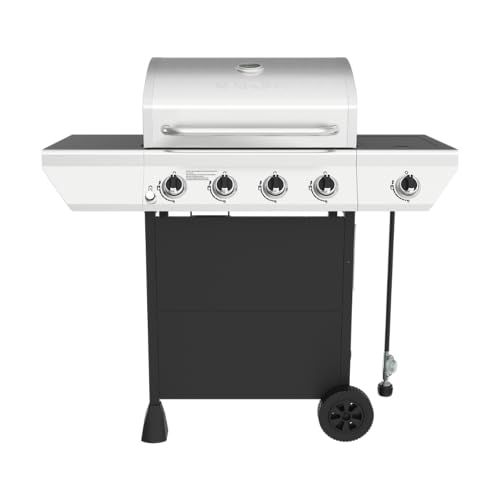
Nexgrill 4-Burner Propane Gas Grill with Side Burner and Stainless Steel Lid
Badge: Best Family High-Heat Pick
Strengths
- 52,000 BTU over 526 sq. in. gives strong heat density for searing
- Matte cast iron grate holds heat and marks food well
- Stainless lid resists weather on the surface that faces the sky
Trade-offs
- Stainless is scoped to the lid in the verified title, not the whole body
- Cast iron grate needs seasoning and dry habits
- 526 sq. in. is mid-size: fine for families, snug for big events
Key specs (from the verified listing title)
- Burners: 4 propane burners plus side burner
- Output: 52,000 BTU (per verified title)
- Cooking space: 526 sq. in.
- Lid: stainless steel
- Grates: matte finish cast iron
- Extras: built-in thermometer, electronic ignition
This Nexgrill splits its material budget intelligently: a stainless steel lid where weather hits hardest, and a matte cast iron grate where heat matters most. The numbers support the cooking side of that bargain — 52,000 BTU across 526 square inches is a strong output-to-area ratio, so the cast iron gets properly hot and stays hot when food lands, producing the deep marks cast iron is bought for. Four burners plus a side burner cover the standard family repertoire with room to run two temperature zones, and the built-in thermometer and electronic ignition remove the two most common small annoyances of older cart grills. The limits are written in the same title: the stainless claim covers the lid rather than the full body, so the painted parts still deserve a cover, and the cast iron grate carries the usual seasoning-and-dry-storage obligations. At 526 square inches it is a family-size grill rather than an event grill. Within those honest boundaries it is one of the best-balanced packages in this pool, pairing real searing power with sensible weather protection where it counts most.
This Nexgrill brings the family version of the heat formula — strong density over a mid-size area, with cast iron to hold it. For households that sear four nights a week and host rarely, its ratio is the sweet spot of the pool.
Best for: families wanting strong sear power and a weather-resistant lid / Not suited for: buyers wanting full stainless construction or event-size capacity

Char-Broil Performance Series 4-Burner Gas Grill Cabinet with Side Burner
Badge: Best Cabinet Pick
Strengths
- Enclosed cabinet hides the propane tank and stores tools out of sight
- Four burners plus a side burner cover the full weeknight-to-weekend range
- Cabinet format looks tidy on a finished patio compared with open-frame carts
Trade-offs
- The verified title does not state BTU output or cooking area, so confirm both on the listing before comparing numbers
- Black painted finishes need a cover to stay ahead of weather over the years
- Cabinet doors add assembly steps compared with open carts
Key specs (from the verified listing title)
- Burners: 4 propane burners plus side burner
- Format: cabinet-style cart, black finish
- Model: 463253925 (per verified title)
The Performance Series cabinet grill is Char-Broil’s answer to a very common complaint about cart grills: the exposed tank and the clutter of tools hanging off the frame. The enclosed cabinet swallows the propane tank and gives tongs, brushes and a drip-pan stash a home, which makes a visible difference on a tidy patio. Four main burners plus a side burner is the configuration most households actually use well: enough zones to cook a mixed menu at two or three temperatures, and a side burner for the pan work that keeps the kitchen cool in summer. In this guide the Performance is covered on the strength of that format and configuration. One honesty note matters here: the verified title for this model does not publish its BTU output or total cooking area, and this guide does not invent specifications. If you are cross-shopping it against the numbered picks in this list, open the listing and compare its confirmed output and area figures directly — that check takes a minute and prevents the most common disappointment with this class of grill, which is buying a cabinet that looks big and cooks smaller than expected.
The Performance is this guide’s transparency pick: a well-configured four-burner cabinet whose title does not state output, ranked here on format and flagged honestly. If its listing figures confirm strong output, it climbs; the guide will not pretend to know them.
Best for: tidy patios and anyone who wants the tank and tools hidden in a cabinet / Not suited for: spec-first shoppers who want output and area confirmed before shortlisting

IdeaMaxx 3-Burner Propane Gas Grill with Cast Iron Grates
Badge: Best Compact High-Heat Pick
Strengths
- Cast iron grates hold heat and lay down deep sear marks
- Foldable side shelves shrink the storage footprint between cooks
- 38,200 BTU over a three-burner area gives strong heat density for its class
Trade-offs
- Cast iron needs seasoning and dry storage habits to stay rust-free
- Three burners mean fewer temperature zones than the four-burner picks
- No side burner for pan and sauce work
Key specs (from the verified listing title)
- Burners: 3 propane burners
- Output: 38,200 BTU (per verified title)
- Grates: cast iron
- Shelves: foldable side shelves
The IdeaMaxx is built around the oldest sear technology in grilling: cast iron grates. Cast iron’s mass is its magic — it absorbs heat while the grill preheats and gives it back into the food on contact, which is why cast iron lays down the kind of dark, defined sear marks that thin steel grates struggle to match. With 38,200 BTU feeding a three-burner cooking area, the heat density here is strong for the class, so the grates actually reach and hold searing temperature rather than merely getting hot. The foldable side shelves are a quietly practical touch: working space when you cook, a slimmer profile when the grill rolls back against the wall. The obligations of cast iron are the honest limitation. It must be kept seasoned and dry; leave it damp under a closed lid for a month and you will meet surface rust that a stainless or porcelain grate would have shrugged off. Three burners also mean you are managing two or three zones at most, and there is no side burner for sauces. Buyers who sear often and will maintain the grates get the best of this design; buyers who want zero-fuss storage should look at the coated or stainless options instead.
The IdeaMaxx proves high heat is about density, not size: 38,200 BTU under cast iron in a three-burner frame produces searing intensity that larger, lazier grills miss. Compact cooks who sear seriously should start here.
Best for: sear-focused cooks who will maintain cast iron and want folding shelves / Not suited for: set-and-forget storage or anyone needing a side burner
Comparison Table
| Pick | Badge | Format | Headline verified spec | Check |
|---|---|---|---|---|
| Monument Grills Mesa II 4-Burner Propane Gas Grill with Advanced Broil Zone | Best Overall | 4-burner propane cart | Advanced Broil Zone; 500°F in 5 mins; stainless steel | Check on Amazon |
| Nexgrill 4-Burner Propane Gas Grill with Stainless Steel Body and Side Burner | Best for Raw Power | 4-burner propane cabinet cart | 60,000 BTU; 626 sq. in.; stainless steel body | Check on Amazon |
| Weber Spirit E-425 Gas Grill | Best Sear Zone | 4-burner propane cart | Sear Zone with Boost Burners; porcelain-enameled cast-iron grates | Check on Amazon |
| Nexgrill 4-Burner Propane Gas Grill with Side Burner and Stainless Steel Lid | Best Family High-Heat Pick | 4-burner propane cart | 52,000 BTU; 526 sq. in.; matte cast iron grate | Check on Amazon |
| Char-Broil Performance Series 4-Burner Gas Grill Cabinet with Side Burner | Best Cabinet Pick | 4-burner propane cabinet cart | Cabinet format with side burner; output not stated in title | Check on Amazon |
| IdeaMaxx 3-Burner Propane Gas Grill with Cast Iron Grates | Best Compact High-Heat Pick | 3-burner propane cart | Cast iron grates; 38,200 BTU; foldable shelves | Check on Amazon |
How to Choose a High Heat Grill That Actually Sears
Do the division first. Total BTU divided by primary cooking area gives a working heat-density figure: grills around 85–100 BTU per square inch and above sear confidently and recover after the lid opens; below that band, preheats stretch and crusts disappoint. In this pool the arithmetic flatters the two Nexgrills and the IdeaMaxx, while the dedicated-zone models — Weber and Monument — must be read differently: their whole-grate average hides a zone engineered to run far hotter than the average, which is precisely what a steak experiences.
Weigh grate mass next, because the grate is the battery of the system. Burners make heat; the grate stores it and delivers it into food on contact. Thick cast iron stores the most, which is why the cast-iron picks stamp such deep marks, and why porcelain-enameled cast iron is the connoisseur’s compromise — nearly the same storage, far better rust manners. Thin coated steel stores little and shows it the moment a cold, thick steak lands. If searing is your first priority, grate material is not a detail; it is half the product.
Then decide your heat architecture. Whole-grate power (the big Nexgrill) suits cooks who sear in volume — a tray of steaks, a dozen thighs. A dedicated sear or broil zone suits cooks who sear in focus — two perfect steaks while the rest of dinner cooks gently elsewhere. Both are legitimate high-heat philosophies; the mistake is buying one while cooking the other. And keep the supporting cast in mind: sustained high heat is hard on finishes, which is why the care topics at Best High Heat Paint For Grills and Best High Temp Paint For Grills matter to owners of hard-working grills.
Finally, respect the operating costs of heat. High-output grills drink propane faster at full tilt, preheat best with the lid down and the patience to heat-soak the grates, and punish sugary marinades and unattended thin foods. None of that is a defect; it is the physics of the category. Buy the heat you will actually use, learn its timing on forgiving foods first, and the category’s rewards — crust, blister, char — are entirely repeatable.
Balance the heat brief against your second-most-common cook before finalising. A grill bought for searing that cannot hold a gentle zone will frustrate the roasts, the vegetables and the keep-warm holding that fill most real menus. Every pick here can run a low zone beside the fire, but their temperaments differ: the zone specialists change temperature across a few inches of grate, while the whole-grate powerhouses change it across burner settings. Picture your full menu — protein, sides, holding, serving — and choose the temperament that cooks all of it, not only the thirty seconds of searing glory.
How to Sear Properly: Setup, Timing and High-Heat Technique
Setup is a preheat ritual, and it is not optional. Open the lid, check the grease tray is not full, light all burners, close the lid and give the grill a full ten to fifteen minutes — longer for cast iron — until the grates are heat-soaked through, not merely warm on the surface. While it heats, take the chill off your protein, pat it completely dry (surface moisture is the enemy of crust; it must boil off before browning can start), and season assertively. Oil the food, not the grate, to reduce sticking and smoke.
Cooking at high heat is a sequence of commitments. Lay the protein on the hottest zone and do not move it: the first minutes build the crust and the natural release. Turn once, finish to temperature — using the gentle zone or the lid to carry thick cuts through without burning the exterior — and rest the meat at least as long as your patience allows, on a warm plate, while the grates get a hard brush while still hot. For vegetables and peppers, high heat is a blistering tool: direct, brief and watched constantly. For anything sugary — glazes, sweet marinades — apply late or finish indirectly, because sugar scorches at temperatures the meat needs.
Care scales with heat. After high-heat sessions, burn off residue for five minutes, brush, and check the grease tray: hard searing renders fat fast, and a full tray under a hot grill is a fire with an appointment. Inspect heat tents and burner ports monthly during heavy use, since high heat accelerates their wear, and keep cast iron seasoned — a thin oil coat after hard use keeps the surface building rather than stripping. Done consistently, this routine keeps a high-heat grill performing at its specification for years.
Resting deserves its place in a high-heat manual, because heat this intense keeps cooking after the food leaves the grate. Pull thick cuts a few degrees early, rest them on a warm rack or plate — never wrapped tight in foil, which steams the crust you worked for — and use the resting minutes to finish sides on the still-hot grates. The crust you built at full heat survives a proper rest and dissolves in a careless one; in this category, the last five minutes protect the first fifteen.
Cool-down discipline closes the routine. After the last item leaves the grate, run the burners on high for five minutes to burn off residue, brush the grates clean while the metal is still hot and responsive, then shut down burner by burner and close the tank valve. Leave the lid open until the grill is merely warm — trapping intense residual heat against a closed, greasy cook box bakes odours into the next cook — and only then fit the cover. A grill that is put away clean and dry heats honestly the next time; a grill put away dirty spends its first ten minutes burning off the last session instead of cooking this one.
Troubleshooting
Problem: Steaks steam instead of searing → the grate was not heat-soaked or the meat was wet. Extend the preheat with the lid down, pat the protein dry, and cook fewer pieces at once so the grate stays hot.
Problem: The outside chars before the inside cooks → the cut is thick and the heat is one-dimensional. Sear hard on the hot zone, then move the meat to a low or unlit zone with the lid down to finish gently.
Problem: Flames keep flaring from the grease tray → rendered fat has accumulated. Empty the tray, scrape the cook box, and move fatty items to a zone over an unlit burner while they render.
Broil Zones and Sear Zones: Two Answers to the Same Question
A sear zone pushes extra burner output upward through the grate, concentrating bottom-up heat for crusts. A broil zone, as on the Monument, adds intense top-down heat that behaves like a professional salamander: it finishes, melts, blisters and crisps from above. Steak purists tend to sear zones; cooks who finish gratins, crisp chicken skin and char peppers tend to broil zones. The sophisticated answer is that they are complementary, and the buyer should choose by menu: if your high-heat cooking is mostly what happens under the food, sear; if it is mostly what happens on top of it, broil.
Whichever architecture you choose, the zone only performs if the rest of the technique holds: dry surfaces, soaked grates, committed timing. Hardware concentrates heat; it cannot concentrate attention, which remains the cook’s contribution to every great crust in this category.
The Honest Limits of High Heat
High heat is a tool with a narrow temperament. It burns garlic in seconds, turns honey glazes to carbon, dries out lean fish and punishes any cook who treats the grill as a place to leave things. It also consumes fuel and finish: grills run hard and hot age their heat tents, burners and coatings faster than gentle grills do, which is a maintenance budget to accept knowingly rather than discover resentfully.
None of this argues against buying heat — it argues for buying it deliberately. The cooks who love this category are the ones who wanted crust enough to learn its timing. If that is you, the picks above will not disappoint you; if your cooking is mostly gentle and unattended, a calmer grill will make you happier, and there is no honour lost in knowing it.
High Heat and Cast Iron Pans: The Hybrid Technique
The most versatile high-heat technique in this category uses the grill as a burner for cast iron cookware rather than only as a grate. A heavy skillet or plancha on a high-output zone gives you smash burgers with total crust contact, blackened fish without flare-up drama, and vegetables that char at the edges while staying intact — results the open grate alone cannot produce because it only touches food in lines. Every pick in this guide has the output to drive a skillet properly; the dedicated-zone models do it best, because the pan can sit over concentrated heat while the rest of the grill runs the remainder of the menu.
The technique’s rules are simple: preheat the pan with the grill, not on it afterwards; oil the food or the pan lightly at the last moment; and respect the smoke, which is the honest by-product of real blackening. A grill that can run a cast iron pan at full song effectively contains a second cooker, and for many households that doubles the value of the high-heat investment more than any other single skill.
Judging Heat by Results: A Simple Home Test for Any Grill
Specifications rank this guide, but a ten-minute test verifies any grill you own or can trial. Preheat fully, then cook three identical test pieces across the grate — thick slices of white bread are the classic instrument, toasting in a map that photographs beautifully: dark where the grill runs hot, pale where it runs cool, in ninety seconds. Follow with the hand test at grate level and a single sacrificial steak cooked to your usual timing, and you will know your grill’s heat map, recovery and honesty better than any brochure describes them.
Run the bread test again after any burner service, grate change or disappointing cook. Grills drift — ports clog, tents thin, regulators tire — and the test separates a dirty grill from a dying one in minutes. High-heat cooking is a feedback sport; this is how you collect the feedback cheaply, before the guests arrive and the steaks are expensive.
Heat, Smoke and Neighbours: The Social Side of Searing
A practical word that no specification sheet will give you: serious high-heat cooking makes serious smoke, especially in the first minute when fat meets a scorching grate, and smoke has a social radius. Site a high-heat grill with the prevailing wind and your neighbours’ windows in mind, warn the household before a blackening session sets off indoor alarms through an open door, and consider the timing of the smokiest work the way you would consider any other powerful tool’s noise. None of this is a reason to buy less heat — it is a reason to deploy it considerately, the way you would run a loud saw at a civilised hour. The cooks who get the most from this category treat smoke as information as much as by-product: a thin blue wisp means clean, complete combustion and a well-managed fire, while thick white billows mean fat is burning where it should not. Learn to read it and your high-heat grill becomes a more precise instrument, your neighbours stay friendly, and the crust — the entire point of the exercise — arrives exactly as intended.
Common Buying Mistakes
- Comparing headline BTU across different cooking areas and concluding the bigger number is the hotter grill.
- Skipping the full preheat, then blaming the grill when the first steak steams grey instead of searing.
- Putting wet or cold-from-the-fridge meat on the grate and expecting crust; moisture and chill are the two silent sear killers.
- Applying sugary glazes at the start of a high-heat cook instead of the end.
- Overloading the grate so densely that stored heat drains and recovery never happens.
- Ignoring the grease tray during a high-heat season, until the flare-up makes the decision for you.
Final Recommendation
The Monument Mesa II is the first choice for the heat-first buyer: its broil zone and verified five-minute run to 500°F make it the most purpose-built high-heat instrument in the pool, and its stainless construction and folding shelves keep it practical the rest of the week. If your searing happens at party scale, the big Nexgrill is the alternative first choice — the strongest whole-grate heat ratio here, sustained across 626 square inches.
Take the Weber if you want the refined sear-zone instrument, the smaller Nexgrill for family-scale density, the IdeaMaxx for compact cast-iron intensity, and the Char-Broil Performance if the cabinet format suits your patio — checking its listing output first, as this guide has flagged throughout. Heat is the most honest specification in grilling when it is read properly, and every pick above was ranked by reading it properly.
Start your shortlist here: Monument Grills Mesa II 4-Burner Propane Gas Grill with Advanced Broil Zone, Nexgrill 4-Burner Propane Gas Grill with Stainless Steel Body and Side Burner, Weber Spirit E-425 Gas Grill. Open the listing for each, confirm the specifications that matter to you, and check the latest price on Amazon before you decide.
Frequently Asked Questions
How hot does a grill need to be to sear a steak properly?
What matters is grate temperature and heat recovery rather than a single air-temperature figure. A grill whose output-per-area sits in the strong band of this guide, fully preheated with the lid down until the grates are heat-soaked, will sear confidently. The Monument’s verified claim — 500°F in 5 minutes — is a useful benchmark for how quickly a purpose-built high-heat grill gets to work.
Is more BTU always better?
No — BTU only means something divided by cooking area, and concentrated in the right place. A moderate-output grill with a dedicated sear zone can out-sear a higher-output grill that spreads its burners thin across a huge grate. Read output, area and zone design together, the way this guide’s ranking does.
Why do cast iron grates sear better?
Mass. Cast iron absorbs a large store of heat during preheating and delivers it into the food on contact, so the surface browns instead of cooling the grate. That stored heat is also why cast iron stamps such defined marks. The trade is maintenance: cast iron needs seasoning and dry storage, or porcelain-enameled cast iron if you want most of the benefit with easier manners.
Can a high heat grill also cook gently?
Yes, if its burners throttle smoothly and it has enough zones to run one low or off. Every pick here can hold a gentle zone beside the hot one; that two-temperature layout is the standard technique. What a high-heat grill cannot do is make gentle cooking its whole personality as efficiently as a small grill — it will always burn more fuel idling a big firebox.
What foods should not be cooked at maximum heat?
Anything thin and lean (fish fillets, asparagus near the end), anything sugary from the start (glazes, sweet marinades, sugared rubs), and anything you cannot watch. High heat rewards thick cuts, skin-on poultry, sturdy vegetables and peppers; it punishes distraction more than any other variable.
How do I stop flare-ups when searing fatty meat?
Start with a clean grease tray and cook box, trim hard excess fat, and keep an unlit or low zone as a refuge to move food into while fat renders. Do not use a water spray on a grease fire in a gas grill; moving the food and closing the lid to cut oxygen is the safe answer.


