Disclosure: topratedkitchenware.com is reader-supported. When you buy through links on our site, we may earn an affiliate commission from Amazon and other retailers, at no extra cost to you.
Where to buy
The six models below are the verified picks for this guide to the best high temp grills. Each name links to its Amazon listing, where you can check the latest price on Amazon, confirm the current configuration, and read the newest owner feedback before you decide.
- Nexgrill 4-Burner Gas Grill with Side Burner
- Monument Grills Mesa II 410FBZ 4-Burner Gas Grill
- AMERLIFE 6-Burner Propane Gas Grill with Side Burner
- Charbroil Portable 1-Burner Propane Gas Grill
- Royal Gourmet CC1830S Charcoal Grill and Offset Smoker
- Weber Original Kettle Premium Charcoal Grill, 22-Inch
Read the full guide ↓ for the ranking logic, the honest limitations of every pick, and the heat checks that matter more than any headline BTU claim.
Shoppers hunting for the best high temp grills usually want one thing above all else: a hard, fast sear. They want steakhouse-style crust on a ribeye, blistered edges on burgers, skin that crisps instead of steaming, and a grill that recovers its heat quickly when a cold batch of food lands on the grate. That sounds simple, but headline numbers hide more than they reveal. A big BTU figure spread across a huge cooking area can produce a gentler grill than a smaller burner total concentrated under a compact grate, and a lid thermometer reading is not the same thing as grate temperature where your food actually cooks. This guide sorts the six verified picks by how their designs concentrate, hold, and recover heat, so you can tell which models genuinely cook hot and which ones only advertise hot.
The list deliberately mixes fuel types, because high heat is not owned by one design. Four of the picks burn propane, which gives you push-button heat and fast preheats, and two burn charcoal, which remains the simplest route to ripping-hot direct cooking when the coals are banked correctly. Every pick is reviewed with the same lens: how hot the cooking surface gets in real use, how evenly that heat spreads, how much working room you have at searing temperature, and what you give up in exchange. You will also find a comparison table, a full buying guide that explains the math behind BTU density, and a how-to section on preheating, two-zone setups, cleaning, and troubleshooting weak sears. If your search started with a finish problem rather than a heat problem, our notes on Best High Temp Paint For Grills cover the restoration side of the same ownership question.
Key Takeaways
- Judge heat by BTU density and grate material, not by the biggest BTU number on the box; concentrated heat sears, diluted heat steams.
- Cast iron grates hold a sear better than thin wire grates because they store heat and return it to the food on contact.
- Charcoal banked in a tight pile still delivers the most intense direct heat in this group, while propane wins on speed and repeatability.
- Preheat with the lid closed until the grate itself is fully heat-soaked; opening early and rushing the first batch is the top cause of pale food.
- Keep a cooler zone on every cook, even on a high-heat grill, so thick cuts can finish gently after the crust is built.
- Check the latest price on Amazon for each pick before deciding, and confirm burner counts and cooking area against your own patio measurements.
In this guide
Quick Picks
| Pick | Badge | Why it earns its place | Listing |
|---|---|---|---|
| Nexgrill 4-Burner Gas Grill with Side Burner | Best Overall | Strong burner output across a mid-size grate, with a side burner for sauces while the main box sears. | Check on Amazon |
| Monument Grills Mesa II 410FBZ | Best for Fast Searing | A dedicated broil zone and a fast claimed preheat make it the sprinter of the group. | Check on Amazon |
| AMERLIFE 6-Burner Propane Gas Grill | Best for Big Crowds | The largest cooking area here, with six burners to keep multiple heat zones running at once. | Check on Amazon |
| Charbroil Portable 1-Burner Propane Gas Grill | Best Portable | A single burner under a small grate concentrates its modest output where it counts, and it travels easily. | Check on Amazon |
| Royal Gourmet CC1830S Charcoal Grill and Offset Smoker | Best for Heat Plus Smoke | Charcoal heat for searing plus an offset smoker box for low-and-slow work in one footprint. | Check on Amazon |
| Weber Original Kettle Premium Charcoal Grill, 22-Inch | Best Charcoal Sear | The classic kettle shape focuses charcoal heat beautifully and controls it with simple dampers. | Check on Amazon |
Badges reflect design strengths, not laboratory rankings. A smaller grill with the right badge for your cooking can easily outperform a bigger grill used the wrong way, especially when the goal is a fast, hard sear on weeknight food.
How These Picks Were Chosen
This is a research-led guide. The picks were drawn from a verified product pool, and every specification quoted in the reviews below comes from the manufacturer’s listing data for that exact model: burner counts, total BTU output where the listing states it, cooking area, grate material, and named features such as a broil zone, an adjustable charcoal pan, or a warming rack. Where a listing does not state a figure, this guide leaves it out rather than filling the gap with a guess, and you should treat any review elsewhere that quotes suspiciously precise maximum temperatures for these models with caution.
The ranking weighs four things. First, heat concentration: total output divided by cooking area gives a rough density figure, and designs that add a dedicated high-heat zone score well because they concentrate energy instead of spreading it. Second, grate material and mass: cast iron stores heat and brands food with real sear marks, while thinner grates recover more slowly between batches. Third, control: multiple burners, adjustable charcoal pans, and well-sealed dampers all let you build a hot zone and a safe zone side by side, which is how experienced grillers actually cook. Fourth, honesty about trade-offs: a portable single-burner grill cannot feed a crowd no matter how hot it gets, and a six-burner grill is wasted on a balcony, so each review names who should skip the pick as plainly as who should buy it.
One limit deserves stating clearly. This guide does not claim hands-on lab testing, and it prints no invented temperature readings, star scores, or owner counts. Heat performance also depends on your fuel, your weather, and your technique, which is why the how-to section matters as much as the pick list. Readers comparing top-tier propane designs more broadly may also want our overview of Best Highend Gas Grills, which looks at the premium end of the gas market with a different set of trade-offs.
The 6 Best High Temp Grills, Reviewed for Searing Power
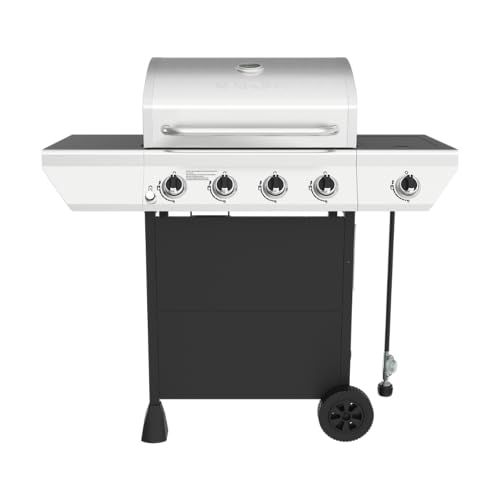
Nexgrill 4-Burner Gas Grill with Side Burner
Badge: Best Overall
Strengths
- Four main burners plus a side burner give you a true two-temperature kitchen outdoors: hard sear in the main box, gentle sauce work on the side.
- Matte finish cast iron grate stores heat and returns it on contact, which is exactly what a good crust needs.
- Electronic ignition and a built-in thermometer remove the two most common friction points in weeknight high-heat cooking.
Trade-offs
- The stainless steel lid looks sharp but shows heat discoloration over time if you run it hot often.
- Four burners across a mid-size area means heat density is strong rather than extreme; thick steaks still benefit from a rest-and-return technique.
- Assembly is a real project, and the footprint suits a patio better than a small balcony.
Mini spec box: Burners: 4 main plus side burner · Output listed as 52,000 BTU · Cooking space listed as 526 sq in · Grate: matte finish cast iron · Lid: stainless steel · Ignition: electronic · Thermometer: built-in.
This Nexgrill earns the top badge because it balances the three things high-heat cooking actually needs: enough burner output to matter, a grate with the mass to hold a sear, and enough burners to run zones. With four burners you can light the left half for searing and keep the right half low for finishing, which is the single most useful technique on any gas grill. The cast iron grate is the quiet hero here. Thin steel grates flash hot and then sag the moment cold meat lands; cast iron absorbs the preheat and gives that energy back, so your first batch and your third batch brown far more evenly. The side burner is easy to dismiss as a gimmick until you have kept a chimichurri warm, boiled corn, or reduced a pan sauce without leaving the grill.
The honest limitation is heat density. The listed output spread over the listed cooking area is healthy, but this is not a dedicated steakhouse broiler, and the centre of the grate will always run hotter than the edges. Work with that instead of against it: sear in the centre, finish at the edges, and let the built-in thermometer guide your preheat rather than your cooking, because lid air temperature always lags grate temperature. For households that grill three or four nights a week and want one grill that sears well without demanding charcoal rituals, this is the most complete answer in the group.
Best for: households that want strong, repeatable gas heat with real zone control / Not suited for: anyone who needs extreme single-zone broiler heat or a truly portable grill
Check on Amazon to see the current configuration and confirm the burner layout before you buy.

Monument Grills Mesa II 410FBZ 4-Burner Gas Grill
Badge: Best for Fast Searing
Strengths
- The Advanced Broil Zone concentrates heat for the part of the cook where crust is made, instead of asking the whole box to run at maximum.
- The listing highlights a fast heat-up, reaching cooking temperature in minutes, which suits weeknight grilling.
- Foldable side shelves give you landing space while you cook and a smaller stored footprint afterwards.
Trade-offs
- A focused broil zone means a focused searing area; large batches of steaks will still cook in rounds.
- Stainless steel construction needs regular wiping if you want it to keep looking like stainless steel.
- Fast assembly is promised, but any four-burner grill deserves a careful, unhurried build and a leak check.
Mini spec box: Burners: 4 · Feature: Advanced Broil Zone · Heat-up highlighted in listing: 500°F in 5 mins · Shelves: foldable side shelves · Body: stainless steel · Model: Mesa II 410FBZ.
The Monument takes a different route to high heat: instead of spreading maximum output everywhere, it gives you a broil zone that runs harder than the rest of the box. That is a smart design for how people actually sear. Most of a grill session is not searing; it is warming, finishing, toasting, and holding. A concentrated zone lets you build crust at full intensity for two or three minutes a side, then slide food to a gentler part of the grate without juggling burner knobs or moving to a second appliance. The fast heat-up claim in the listing also matters more than it sounds, because the biggest enemy of weeknight grilling is the twenty idle minutes while a big box slowly soaks.
Be realistic about the broil zone’s size, though. It is a zone, not the whole grate, so a dozen steaks for a party will still move through in batches, and the stainless exterior rewards owners who wipe it down after greasy cooks. Treat the five-minute figure as a best-case preheat to cooking temperature, not as permission to skip grate soak time entirely; give the grates a few extra minutes and your first sear will thank you. If your grilling is mostly fast, hot, and after work, this design fits your life better than a bigger box.
Best for: weeknight grillers who sear often and hate long preheats / Not suited for: hosts who regularly sear very large batches all at once
Check on Amazon to see the current configuration and confirm the broil zone layout before you buy.

AMERLIFE 6-Burner Propane Gas Grill with Side Burner
Badge: Best for Big Crowds
Strengths
- Six burners and the largest listed cooking area in this group let you run a sear zone, a finishing zone, and a holding zone at the same time.
- Cast iron grates give the large surface the heat storage that big-batch searing needs.
- A warming rack and a side burner complete the picture for full outdoor meals, not just the main event.
Trade-offs
- The highest total output here is spread over the largest area, so heat density is about coverage and zones, not a single extreme hotspot.
- It is a big, heavy grill that claims serious patio space and is not a move-it-weekly appliance.
- More burners mean more parts to clean, inspect, and eventually service.
Mini spec box: Burners: 6 main plus side burner · Output listed as 60,000 BTU · Cooking area listed as 650 sq in · Grates: cast iron · Extras: warming rack, built-in thermometer, regulating valve.
Size is this grill’s argument, and for the right household it is a convincing one. When you cook for ten people, the limiting factor is rarely peak temperature; it is how much food you can sear before the first batch overcooks while waiting for the last. Six burners across a wide box solve that with geography: burgers searing on the left, chicken finishing in the middle, vegetables holding on the right, buns warming on the rack. The cast iron grates matter even more at this scale, because a big grate loaded with cold food is exactly where thin grates give up and steam instead of sear.
The limitation is the mirror image of the strength. Total output is the highest in this guide, but it is spread across the most area, so do not expect a small, ferocious hotspot; expect broad, capable heat that you shape with zones. It also asks for commitment in space and upkeep, and a two-person household will simply never use most of it. Buy this grill if your gatherings are real and regular. Readers weighing bigger propane layouts against premium builds may also find our notes on Best Higher End Gas Grills useful before they commit to a footprint this large.
Best for: regular hosts cooking for crowds who need zones more than a single hotspot / Not suited for: small households, small patios, or anyone who moves their grill often
Check on Amazon to see the current configuration and confirm dimensions against your patio before you buy.

Charbroil Portable 1-Burner Propane Gas Grill
Badge: Best Portable
Strengths
- A single burner under a small cooking surface concentrates modest output instead of diluting it across a big box.
- Genuinely portable format suits camping, tailgating, balconies, and small households that grill in small batches.
- Simple one-burner design means fast setup, fast preheat, and very little to go wrong.
Trade-offs
- One burner means one zone; there is no cooler corner to rescue food that is browning too fast.
- Capacity is strictly small-batch, so family-size cooks become assembly-line work.
- No built-in thermometer or side burner is listed, so an instant-read thermometer becomes essential kit.
Mini spec box: Burners: 1 · Output listed as 11,000 BTU · Body: aluminized steel · Colour: black · Model: 465133010 · Format: portable convective propane grill.
This little Charbroil is the clearest proof in the guide that BTU totals mislead. Its listed output is a fraction of the big grills here, but it fires into a small space, so the grate gets properly hot and a pair of steaks, a few burgers, or a skewer load of vegetables sear convincingly. Portability is the real headline: this is the grill you take to the campsite, the beach car park, or the apartment balcony where a four-burner cabinet simply cannot live. Preheat is quick, cleanup is quick, and the single control keeps the learning curve at zero.
The compromises are structural and you should accept them before buying. With one burner there is no two-zone cooking, so manage heat by moving food and by timing rather than by geography, and expect to cook in batches for more than two or three people. There is no listed lid thermometer, so judge doneness with an instant-read thermometer rather than by colour alone. Judged as a portable that gets respectably hot, it succeeds; judged as a family grill, it was never trying to be one.
Best for: campers, tailgaters, and small households grilling in small batches / Not suited for: families, parties, or anyone who relies on multi-zone cooking
Check on Amazon to see the current configuration and confirm the size suits your trips before you buy.

Royal Gourmet CC1830S Charcoal Grill and Offset Smoker
Badge: Best for Heat Plus Smoke
Strengths
- Charcoal in the main barrel delivers intense direct heat for searing, while the offset smoker box adds genuine low-and-slow capability.
- The adjustable charcoal pan lets you raise coals toward the grate for searing or drop them for gentler cooking.
- The largest charcoal cooking area in this group, with front and side tables that make big cooks manageable.
Trade-offs
- Charcoal heat takes time to build and asks for active management; there is no push-button preheat.
- Offset smokers are famously hands-on, needing fire checks and vent adjustments through a long cook.
- Barrel grills need ash management and covered storage to stay ahead of rust.
Mini spec box: Fuel: charcoal · Cooking space listed as 783 sq in total · Features: offset smoker, adjustable charcoal pan, side door, lid thermometer, front and side tables · Colour: black.
If your definition of high heat includes smoke, this Royal Gourmet is the only pick that honestly covers both ends of the thermometer. In the main barrel, a full chimney of lit charcoal with the pan raised gives you fierce direct heat for steaks and chops, and the side door makes adding fuel mid-cook straightforward. Move the fire to the offset box and the same appliance becomes a smoker for ribs and shoulders, with the lid thermometer keeping a rough eye on chamber temperature. The work surfaces sound like a minor detail until you are juggling a tray of raw chicken and a sauce bowl with nowhere to put either.
The price of that versatility is attention. Charcoal rewards cooks who enjoy the process and frustrates cooks who want dinner in twenty minutes, and offset smoking in particular is a skill built over several cooks, not a setting. Ash removal and dry storage are not optional if you want the barrel to last. For the hobbyist who wants one footprint that sears on Saturday and smokes on Sunday, though, nothing else in this group attempts as much. Our wider survey of Best Home Barbecue Grills shows how this dual-role design compares with dedicated single-purpose grills.
Best for: charcoal hobbyists who want searing heat and offset smoking in one grill / Not suited for: anyone who wants fast, hands-off, push-button cooking
Check on Amazon to see the current configuration and confirm the footprint before you buy.

Weber Original Kettle Premium Charcoal Grill, 22-Inch
Badge: Best Charcoal Sear
Strengths
- The kettle shape and a tight bank of coals produce the most intense, focused direct heat in this group.
- Heat control dampers and a built-in thermometer give simple, proven control without electronics.
- The One-Touch cleaning system sweeps ash into a catcher, making frequent high-heat cooking far less messy.
Trade-offs
- Capacity is one family’s dinner, not a party; big cooks run in batches.
- Charcoal setup and ash handling are part of every cook, every time.
- There is no side burner, shelf system, or gas convenience, and that is entirely the point of the design.
Mini spec box: Fuel: charcoal · Size: 22-inch · Features: built-in thermometer, heat control dampers, One-Touch cleaning system · Colour: black.
Ask experienced grillers where the hardest sear in this guide comes from and most will point at the kettle. A full chimney of charcoal banked to one side of a 22-inch kettle creates a zone so hot that steaks crust in a couple of minutes, while the empty side of the grate waits as a finishing zone. That two-zone arrangement, invented by decades of backyard practice rather than by a marketing team, is why this simple bowl of enamelled steel still anchors so many patios. The Premium version’s built-in thermometer and ash catcher remove the two classic kettle annoyances, and the dampers give you real control over how hard the coals run.
Its limits are the familiar charcoal ones: time to light, ash to manage, and a grate that feeds four to six people comfortably rather than a crowd. It also asks you to learn fire management, although the kettle is the friendliest classroom ever built for that skill. If searing quality per session matters more to you than convenience, this is the pick that will still be teaching you new tricks years from now.
Best for: charcoal lovers who prize sear quality and simple, durable design / Not suited for: cooks who want instant gas convenience or party-size capacity
Check on Amazon to see the current configuration before you buy.
Comparison Table
| Pick | Badge | Fuel and heat note | Listing |
|---|---|---|---|
| Nexgrill 4-Burner Gas Grill | Best Overall | Propane; 52,000 BTU listed over 526 sq in; cast iron grate | Check on Amazon |
| Monument Grills Mesa II 410FBZ | Best for Fast Searing | Propane; dedicated broil zone; fast heat-up highlighted in listing | Check on Amazon |
| AMERLIFE 6-Burner Gas Grill | Best for Big Crowds | Propane; 60,000 BTU listed over 650 sq in; six-burner zoning | Check on Amazon |
| Charbroil Portable 1-Burner | Best Portable | Propane; 11,000 BTU listed into a small portable box | Check on Amazon |
| Royal Gourmet CC1830S | Best for Heat Plus Smoke | Charcoal; adjustable pan; offset smoker; 783 sq in listed total | Check on Amazon |
| Weber Original Kettle Premium 22-Inch | Best Charcoal Sear | Charcoal; damper control; banked-coal two-zone searing | Check on Amazon |
How to Choose a Grill That Actually Cooks Hot
Start with heat density, the most useful number nobody prints. Divide the listed total BTU output by the listed cooking area and you get a rough sense of how concentrated the firepower is. A compact grill with modest output can post a density figure close to a giant grill with a huge total, which is exactly why the little Charbroil in this guide sears better than its headline number suggests. Density is not the whole story, because burner design, grate mass, and lid seal all shape real performance, but it stops you paying for size you mistake for heat.
Next, look at the grate. Cast iron is the high-heat buyer’s friend: it stores energy during the preheat and spends it into the food, producing defined sear marks and better recovery between batches. Porcelain coatings over cast iron ease cleaning, while bare cast iron asks for seasoning and dry storage. Thin wire or lightweight steel grates heat fast and cool fast, which shows up as weak first-batch browning. After the grate, count your zones. Two burners are the minimum for a hot side and a safe side on gas; four burners make zoning effortless. On charcoal, zoning comes from coal placement, so a hinged grate or an adjustable pan earns its keep.
Then be honest about fuel. Propane gives you repeatable heat in minutes, easy shutoff, and simple weeknight cooking, and modern gas grills with dedicated sear or broil zones close much of the old gap with charcoal. Charcoal gives you the highest direct heat, real fire flavour, and lower appliance complexity, at the cost of time, ash, and attention. Neither answer is wrong; the wrong answer is buying the fuel you will resent using. Finally, measure your space and your typical cook. A grill that fits your patio and your headcount gets used hot and often; an oversized grill that crowds the deck gets used rarely, and rarely-used grills are never hot when you need them. Shoppers whose priority is everyday family cooking rather than maximum heat may prefer the broader shortlist in Best Home Bbq Grills.
How to Get a Hard Sear: Preheat, Zones, Cleaning, and Troubleshooting
Technique decides more sears than hardware does. Follow this sequence on any pick in this guide. First, start with a clean grate, because old residue smokes, sticks, and insulates the metal from your food. Second, preheat with the lid closed and all burners on high, or with charcoal fully lit and spread, until the grate has had several minutes to soak after the air temperature stabilises; the grate, not the lid gauge, does the searing. Third, dry the food. Surface moisture is the enemy of crust, so pat steaks and chops dry, salt them in advance where time allows, and oil the food lightly rather than flooding the grate. Fourth, lay the food down and leave it alone long enough for the crust to form and release naturally. Fifth, finish thick cuts in your cooler zone with the lid down until an instant-read thermometer confirms your target, then rest the meat before slicing so the juices stay in the food.
Cleaning protects heat. After cooking, run the grill hot for a few minutes, brush the grate while it is warm, and empty grease trays and ash catchers before they overflow; built-up grease is both a flare-up risk and a flavour problem. Oil cast iron lightly while it is still warm if the maker recommends it, and store charcoal grills dry with the vents closed. Once a season, check gas hoses and connections with soapy water, clear spider webs from burner tubes, and confirm the igniter clicks strongly.
Problem: food browns slowly and steams instead of searing → the grate was not fully soaked, the food went on wet, or the batch was too large for the hot zone; preheat longer, dry the surface, and cook in smaller rounds. Problem: everything flares and chars outside while staying raw inside → the hot zone is doing the whole cook; build the crust fast, then move food to the cooler zone to finish. Problem: one side of the grill runs much hotter than the other → on gas, check for a clogged burner port or a failing regulator; on charcoal, redistribute the coals evenly and check that dampers are not blocked with ash.
Gas Heat Versus Charcoal Heat: Which Runs Hotter in Practice?
On paper, charcoal wins the peak-temperature argument. A concentrated bed of fully lit charcoal radiates intense direct heat, and kettle and barrel designs focus that heat in a way that produces exceptional crusts, which is why two charcoal picks sit comfortably in a guide about high temperatures. In practice, the gap narrows fast. A good propane grill preheats in a fraction of the time, holds its temperature through door openings and batch changes, and repeats the same result on a wet Tuesday that it produced on a calm Saturday. The Monument’s broil zone and the Nexgrill’s cast iron grate exist precisely to close the searing gap with design rather than with fuel changes.
The practical answer is to choose by session, not by ideology. If most of your cooks are fast weeknight sears for a family, gas will be hot more often because you will actually use it. If your favourite cooks are weekend steak sessions where the ritual is part of the pleasure, charcoal’s peak heat and flavour reward the effort. Many households end up owning both styles at different sizes, and the portable picks in this guide make that pairing far easier to justify.
Reading Heat Claims Without Being Fooled
Grill marketing loves a maximum temperature, but a single peak number tells you almost nothing about dinner. Ask instead: how much of the grate reaches searing heat, how fast does it recover after cold food lands, and how evenly does it hold heat at the edges where the last burgers always end up? A grill that spikes a thermometer in an empty, closed box may still steam a full load of chicken thighs. BTU density, grate mass, and zone control, the three factors this guide ranks by, predict real cooking far better than any single hero figure.
Your own first cooks are the most honest review you will ever read. When a new grill arrives, run two or three simple test cooks before the big occasion: a batch of burgers to map the hot and cool spots, a pair of steaks to judge the sear, and a load of chicken to see how the zones behave with fatty food. Take notes on where food browns fastest and where it lags, because every grill, even two of the same model, has its own map. That small investment turns the manufacturer’s claims into your own knowledge, and it is worth more than any single specification when the guests are hungry and the light is fading.
Apply the same scepticism to accessories and finishes.
A warming rack adds holding space, not searing space. A side burner adds a saucepan station, not grill heat. And when a finish fails after years of hot cooks, that is a maintenance question with its own product category, covered in our companion notes on Best High Temp Paint For Grills, rather than a reason to replace a grill whose burners and grates still perform.
Searing Different Foods on a High Temp Grill
Steaks are the headline act, and they reward the full ritual: a thoroughly soaked grate, a dry and seasoned surface, a hard sear over the hottest zone, and a gentle finish in the cooler zone for anything thicker than your thumb. Turn once if you want clean grill marks, or turn often if you prefer an even, edge-to-edge crust; both schools work when the grate is genuinely hot. Resting is not optional. A steak sliced the moment it leaves the grill spills the juices you worked to keep, while a rested steak stays moist to the last bite.
Chicken is where high heat needs the most respect. Skin-on pieces crisp beautifully over direct heat, but rendered fat flares, and flare-ups char skin long before the centre is cooked. The reliable pattern is to sear skin-side down briefly for colour, then move the pieces to the cooler zone with the lid down and let them finish gently, checking with an instant-read thermometer rather than by colour or by cutting into the meat. Boneless breasts are the opposite problem: they are lean, thin, and quick to dry out, so pound them to an even thickness, sear them fast, and pull them the moment they reach temperature instead of giving them a safety minute they do not need.
Burgers want a hot grate and a light hand. Press each patty once, when it first lands, if you like a flat contact crust, then leave it alone; repeated pressing squeezes juice onto the coals and trades flavour for smoke. Cheese goes on in the last minute with the lid down, and buns toast in the final moments over the gentlest part of the grate, because a bun goes from golden to burnt while you are reaching for the spatula. For vegetables and seafood, heat management matters more than peak heat. Dense vegetables such as corn, peppers, and halved onions love direct high heat and honest char, while asparagus, prawns, and fish fillets cook so quickly that the cooler edge of the hot zone is their friend, and a clean, well-oiled grate matters more than another few degrees. The pattern across all of these foods is the same one this guide keeps returning to: build the hot zone, respect the cool zone, and let the thermometer, not the clock or the colour, make the final call.
Common Buying Mistakes
The first mistake is buying the biggest BTU total instead of the best heat density,
and ending up with a large, lukewarm box. The second is ignoring the grate: a powerful burner under a flimsy grate still produces pale food. The third is forgetting the cool zone, then burning the outside of thick cuts while the centre catches up. The fourth is sizing for the biggest party of the year instead of the typical week, which leaves you preheating a cavern for two burgers. The fifth is neglecting the unglamorous checks: hose condition, grease management, ash disposal, and a cover or dry storage, all of which decide whether a hot grill stays a hot grill in its third year.
Final Recommendation
Start with the Nexgrill 4-Burner Gas Grill (Check on Amazon) if you want one grill that sears strongly, zones easily, and asks little of you on a weeknight; its cast iron grate and four-burner layout cover the widest range of high-heat cooking in this group. If your cooks are fast and steak-led, the Monument Grills Mesa II (Check on Amazon) and its broil zone are the sharper tool. If sear quality matters more than convenience and you enjoy tending a fire, the Weber Original Kettle Premium (Check on Amazon) delivers the most intense direct heat here. Hosts should step up to the AMERLIFE for its zoning space, travellers should take the Charbroil portable, and anyone who wants smoke as well as heat should choose the Royal Gourmet. Whichever you pick, spend as much attention on preheat and zoning technique as on the hardware, because that is where great sears actually come from.
Frequently Asked Questions
What temperature counts as high heat for grilling?
For searing, you want the grate surface hot enough to brown meat quickly on contact, which in practice means a fully preheated grill with the lid closed until the grate is thoroughly soaked. Judge by behaviour, not by a single gauge reading: food should sizzle aggressively on contact and release cleanly once the crust forms. Lid thermometers measure air near the lid and always lag the grate, so use them for preheat guidance and an instant-read thermometer for doneness.
Does a higher BTU rating always mean a hotter grill?
No. Total BTU output has to be weighed against cooking area and grate material. A large total spread across a large box can cook more gently than a modest total concentrated under a small, heavy grate. Use BTU density as a starting point, then look for cast iron grates, dedicated sear or broil zones, and burner layouts that let you concentrate heat where the food is.
Is charcoal really hotter than gas?
A concentrated bed of lit charcoal produces extremely intense direct heat, and kettle designs focus it especially well. Gas counters with speed, consistency, and zone control, and designs with broil zones narrow the searing gap considerably. In everyday cooking, the grill you preheat properly and use often will cook hotter than the theoretically hotter grill you rush.
How long should I preheat for searing?
Preheat with the lid closed until the grill reaches cooking temperature, then give the grate several additional minutes to soak; heavy cast iron rewards patience. Charcoal is ready when the coals are fully lit and lightly ashed over. Rushing this step is the most common reason home sears disappoint, and no burner upgrade fixes it.
Why does my food stick to a hot grate?
Sticking usually means the grate was dirty, the food went on before the grate was fully hot, or you tried to move the food before the crust formed and released. Clean and preheat thoroughly, oil the food rather than the grate, and wait for the natural release. Delicate foods such as fish benefit from a well-oiled, very hot grate and a confident, single turn.
Can a portable grill really sear?
Yes, within its batch size. A small burner under a small grate concentrates heat effectively, so a portable like the single-burner pick in this guide sears a couple of steaks or burgers convincingly. What it cannot do is volume or multi-zone cooking, so plan batches and expect to manage timing actively.
How do I keep a high-heat grill performing for years?
Brush the grate after cooks, empty grease and ash before they build up, check hoses and burner ports each season, and store the grill covered and dry. Heat itself is not the enemy; grease fires, clogged ports, and rust from trapped moisture are what quietly turn a hot grill into a lukewarm one.


