Disclosure: topratedkitchenware.com is reader-supported. When you buy through links on our site, we may earn an affiliate commission from Amazon and other retailers, at no extra cost to you.
Where to buy
The best highend cooktops are not always the built-in slabs in showroom kitchens. For a growing number of households, the high end of the category now means precision: induction burners with temperature control fine enough to hold a sauce without a thermometer, commercial-grade portable units built for daily professional punishment, and surfaces that clean in a single wipe. This guide’s verified pool reflects that reality — six induction cooktops, from dual-power commercial portables to an established consumer classic — and every one of them is linked below, because every one genuinely is a cooktop competing on the qualities this keyword cares about.
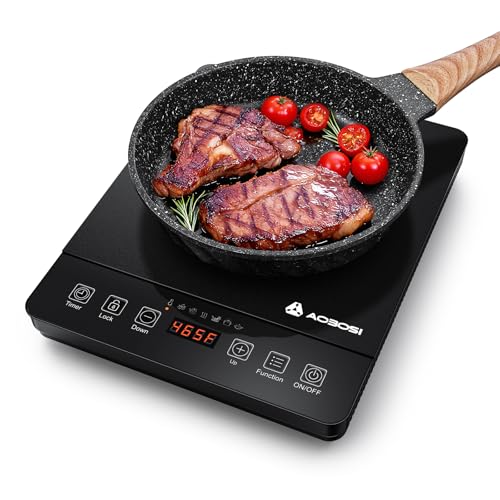
- AAOBOSI Portable Induction Cooktop — Most Versatile Portable. Twenty levels, four presets and a four-hour timer in a compact body.
- OneSetNuf 1800W Portable Induction Cooker — Best Commercial Style. Dual IGBT power control, push buttons and a 10-hour timer.
- ChangBERT Induction Cooktop — Best Professional Grade. NSF certified, stainless countertop burner with a 10-hour timer.
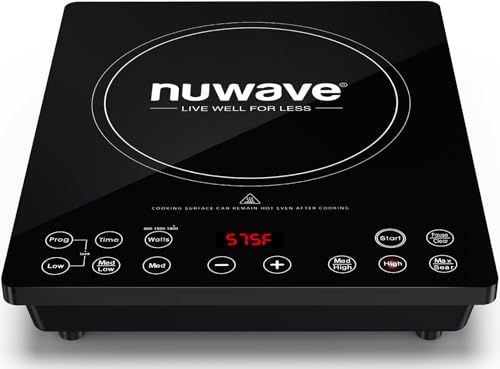
- Nuwave Double Pro Cooktop — Best Overall Temperature Control. A 50°F to 575°F range with dynamic wattage technology.
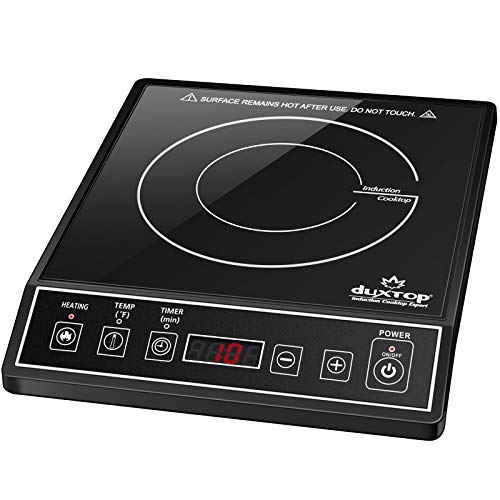
- Duxtop 1800W Portable Induction Cooktop 9100MC — Best Established Classic. The long-running benchmark of portable induction.
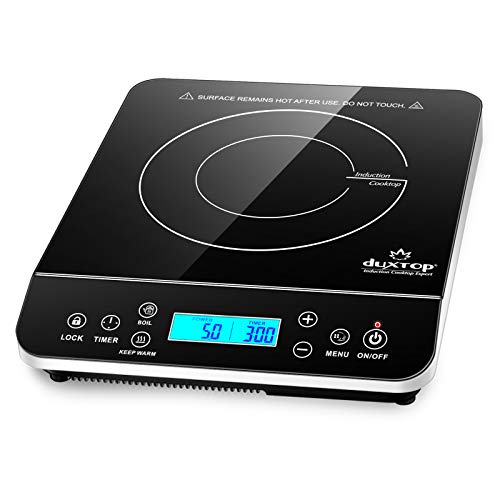
- Duxtop Portable Induction Cooktop 9610LS — Best Touch Control. LCD sensor touch panel on the proven 1800W platform.
Read the full guide ↓ for detailed reviews, a comparison table, and a buying guide that explains what actually separates a high-end cooktop from a merely expensive one.
Let us define the territory honestly. When most people picture a high-end cooktop, they picture a wide built-in unit with heavy grates or a sheet of black glass. Those exist, and the fuel-specific versions of this search are covered in companion guides such as Best Home Propane Cooktops for gas households. But the verified pool for this keyword tells a different, equally legitimate story about where premium engineering currently concentrates in products you can actually order today: portable and countertop induction, refined to a level where temperature can be set in fine steps, held for hours, and reproduced exactly tomorrow. If your idea of high end is control, consistency and build — rather than sheer width — these six products are the conversation. This guide judges them on those terms, in depth, and helps you decide which expression of “high end” belongs in your kitchen.
Key Takeaways
- High end in this pool means precision and build: fine temperature steps, long timers, commercial-grade construction and certified designs — not width or burner count.
- The Nuwave Double Pro offers the widest stated temperature range, 50°F to 575°F, with three wattage settings for different circuits and tasks.
- The ChangBERT and OneSetNuf bring commercial cues — NSF certification on one, dual IGBT power control and push-button controls on the other.
- The two Duxtop models are the established consumer benchmarks: one classic, one touch-controlled, both on a proven 1800W platform.
- Every pick here is induction, so a magnetic-base cookware audit is the mandatory first step before buying any of them.
- Portable high-end units supplement or even replace a stove for small households, but a family needing four burners at once should look at built-in formats.
In this guide
Quick Picks
| Pick | Badge | Power | Standout feature | Link |
|---|---|---|---|---|
| AAOBOSI Portable Induction Cooktop | Most Versatile Portable | 1800W | 20 levels, 4 presets, 4-hour timer | Check on Amazon |
| OneSetNuf Portable Induction Cooker | Best Commercial Style | 1800W | Dual IGBT, push buttons, 10-hour timer | Check on Amazon |
| ChangBERT Induction Cooktop | Best Professional Grade | 1800W | NSF certified, stainless body | Check on Amazon |
| Nuwave Double Pro Cooktop | Best Overall Temperature Control | 900/1500/1800W | 50°F–575°F range, dynamic wattage | Check on Amazon |
| Duxtop 9100MC | Best Established Classic | 1800W | Long-running benchmark design | Check on Amazon |
| Duxtop 9610LS | Best Touch Control | 1800W | LCD sensor touch panel | Check on Amazon |
Notice what the quick picks are really sorting: not good from bad, but philosophy from philosophy. Commercial or domestic? Buttons or touch? Presets or manual precision? The detailed reviews below take each philosophy seriously, because the right answer depends on how you cook — and readers leaning toward a fixed installation can cross-check the electric built-in angle in Best Highend Electric Cooktops.
How These Picks Were Chosen
These picks were chosen by research, not hands-on testing, and no sentence in this guide should be read as a claim that we cooked on these units. The pool was verified through Creators API listing data: exact titles, brands, power figures, temperature ranges, timers, control types and certifications were taken from the listings themselves, and only facts present there appear as specifications in the reviews. Where a listing did not state a figure, the review leaves it out rather than borrowing one from a sibling model or a memory of the category.
Selection weighed the markers that genuinely separate premium induction cooktops from basic ones. Temperature granularity came first — how many steps, across what range, in what increments — because holding heat precisely is induction’s signature advantage. Power management came second: headline wattage matters less than how a unit delivers and sustains it, which is why features like dynamic wattage selection and dual IGBT control are highlighted where listings name them. Build and certification came third: stainless bodies, shatter-proof ceramic glass and NSF certification are verifiable, checkable claims. Controls, timers and intended environment — home counter, commercial counter, RV, apartment — completed the picture.
Prices and ratings were excluded from the evidence entirely. Both change too quickly to anchor a durable guide, and neither measures precision, build or fit. What remains is a comparison of stated engineering, which is the comparison a careful buyer can actually verify before ordering.
The 6 Best Highend Cooktops, Reviewed in Detail

AAOBOSI Portable Induction Cooktop
Badge: Most Versatile Portable
Strengths
- Twenty temperature and power levels give finer adjustment than the coarse steps of basic portables.
- Four preset modes cover common jobs for cooks who would rather press once than dial precisely.
- A four-hour timer and a compact, easy-clean body suit apartments, RVs and outdoor cooking with power, as its listing intends.
Trade-offs
- A single burner remains a single burner: multi-pan meals need planning or a second unit.
- Preset-led design will feel indirect to cooks who want purely manual, step-by-step control.
- Like all induction, it ignores non-magnetic pans entirely.
Mini spec box
- Format: Portable countertop single burner
- Fuel: Induction (electric)
- Power: 1800W
- Levels: 20 temperature and power levels
- Modes: 4 preset modes
- Timer: 4-hour
The AAOBOSI’s proposition is balance. Twenty levels is enough granularity to feel like control rather than approximation — the difference between “somewhere near a simmer” and a repeatable simmer you can return to — while the four presets acknowledge that much real cooking is routine: boiling, frying, keeping warm, the jobs a household repeats weekly. A four-hour timer extends that practicality to the long, low jobs — a stock, a slow braise — where a portable burner earns its counter space by working patiently without supervision from the cook’s attention, even if the cook stays nearby in the responsible sense.
Its intended environments, named in the listing, sketch its ideal owner: the apartment cook whose installed stove is feeble, the RV traveller with a hookup, the household that cooks outdoors on a counter with power. In each case the pattern is the same — real cooking, one serious pan at a time, in a space where a built-in cooktop is impossible or absent. The easy-clean surface matters disproportionately in those settings, because small kitchens forgive nothing: a flat glass top that wipes in seconds is a daily quality-of-life feature, not a cosmetic one.
Its honest limitation is the category ceiling. Versatility of levels and modes cannot manufacture a second burner, and a household whose signature meal is a four-pan production will experience this unit as a superb supporting actor miscast in a leading role. Buy it as the versatile portable it is — arguably the most rounded in this pool — and it will not disappoint. The wider portable field is surveyed in Best Inductin Cooktops for readers comparing across brands.
Best for: apartment, RV and small-space cooks wanting fine levels plus friendly presets in one portable / Not suited for: households that routinely cook with three or four pans at once

OneSetNuf 1800W Portable Induction Cooker
Badge: Best Commercial Style
Strengths
- Dual IGBT power control, named in the listing, signals attention to how power is delivered and sustained, not just its headline figure.
- Push-button controls work with wet hands, gloves and haste — the conditions of real service cooking.
- A 10-hour timer and stainless steel body suit holding, catering and demonstration work measured in shifts.
Trade-offs
- The 8-inch coil caps the pan sizes it can heat evenly; oversized pans will show cool edges.
- Eighteen temperature settings is respectable rather than class-leading granularity.
- Its equipment aesthetic will not blend into a design-led domestic kitchen.
Mini spec box
- Format: Portable countertop single burner
- Fuel: Induction (electric)
- Power: 1800W
- Coil: 8-inch
- Power control: Dual IGBT
- Settings: 18 temperature settings
- Controls: Push-button
- Timer: 10-hour
- Body: Stainless steel
Some products are styled for kitchens; this one is styled for work, and the specification coheres around that purpose. The dual IGBT detail is the sort of line most listings omit and most buyers skip — yet power electronics are where an induction cooker’s consistency is actually decided, and a maker who names its control architecture is at least inviting the right question. Push buttons continue the theme: in a catering or buffet environment, controls must work first time, with damp hands, without a tutorial. A ten-hour timer finishes the argument — nobody’s home dinner needs ten hours of timed holding, but a service counter’s day genuinely can.
Picture its natural habitats: a buffet line keeping a chafing pan at temperature, a market stall cooking to order, a demonstration bench, a very serious home-preservation kitchen running long batches. In each, the stainless body shrugs off the knocks that would mark glass minimalism, and the unit reads as replaceable professional equipment rather than a precious object. That is a compliment in its category.
For a domestic buyer, the honest limitation is fit of a different kind: the coil size disciplines your pan choice, the temperature granularity trails the precision specialists in this pool, and the look is unapologetically industrial. If your kitchen is a workplace, those are non-issues and the strengths dominate. If your kitchen is a showpiece that also cooks, other picks here will sit happier in it.
Best for: catering, buffet holding, demonstrations and utility-first cooks who value physical controls / Not suited for: design-led kitchens or cooks needing very fine temperature steps

ChangBERT Induction Cooktop
Badge: Best Professional Grade
Strengths
- NSF certification is named in the listing — a verifiable, third-party marker rarely seen in consumer portable listings.
- Premium stainless steel countertop construction matches its commercial-grade positioning.
- A large 8-inch heating coil, 1800W of power and a 10-hour timer complete a coherent professional specification.
Trade-offs
- Commercial-grade size and intent may be more appliance than a small home counter wants.
- A single burner, like every portable here, caps meal complexity.
- Its professional focus means fewer domestic presets and conveniences than home-oriented rivals.
Mini spec box
- Format: Portable commercial countertop burner
- Fuel: Induction (electric)
- Power: 1800W
- Coil: Large 8-inch heating coil
- Body: Premium stainless steel
- Certification named in listing: NSF Certified
- Timer: 10 hours
Certification is the least glamorous word in appliance marketing and one of the most meaningful. NSF certification means a design has been assessed against public-health and safety standards used in professional food environments; it is paperwork, testing and accountability, and manufacturers pursue it for commercial customers who require it. Finding it on a portable induction burner immediately reframes the product: this is equipment aimed at professional counters that happens to be purchasable by anyone, rather than a home gadget with professional adjectives.
The rest of the specification behaves accordingly. Stainless construction, a large coil for even contact with professional pans, full household-circuit power and a timer that spans a working day — each element serves durability and repeatability, the two currencies of professional cooking. A café adding a soup station, a caterer building a mobile setup, or a home cook who runs a micro-bakery or preserves in serious batches will recognise the intent at once.
Its honest limitation is that professional virtues are not domestic ones. There are no friendly presets to lean on, the unit’s presence is utilitarian, and a cook who wants a light, occasional burner for a dorm room is buying far more machine than the job requires. Within this guide’s definition of high end — engineering you can verify — the ChangBERT makes one of the strongest cases in the pool, and professional-leaning readers will find its natural peer group discussed further in Best Induction 36 Cooktops for the built-in end of the spectrum.
Best for: professional counters, caterers and serious batch cooks who value certification and stainless build / Not suited for: casual users wanting a light, preset-led home burner

Nuwave Double Pro Cooktop
Badge: Best Overall Temperature Control
Strengths
- The widest temperature range in this pool: 50°F to 575°F, spanning gentle holding to serious searing in one unit.
- Dynamic wattage technology with 900W, 1500W and 1800W settings adapts the burner to different circuits and tasks.
- Shatter-proof ceramic glass and a seamless touch panel combine durability with a wipe-clean surface.
Trade-offs
- The 8-inch heating coil still disciplines pan size, whatever the temperature range promises.
- Touch panels and steamy, splashy cooking remain uneasy partners.
- Its breadth of settings rewards cooks who will actually use them; casual users may never leave the middle of the dial.
Mini spec box
- Format: Portable countertop induction cooktop
- Fuel: Induction (electric)
- Temperature range: 50°F–575°F
- Wattage: 900W / 1500W / 1800W with Dynamic Watt Technology
- Coil: 8-inch heating coil
- Surface: Shatter-proof ceramic glass
- Controls: Seamless IMD touch panel
Temperature range is the specification that tells you what a cooktop thinks cooking is. A range beginning at 50°F is not about cooking at all in the usual sense — it is about holding, warming and gentle work at the edge of refrigeration’s neighbourhood, the territory of proofing, melting and keeping delicate foods exactly where they were put. A range ending at 575°F is about conviction: real searing heat for crusts and char. A single burner credibly spanning both extremes is a statement of intent, and it is why the Double Pro takes this guide’s overall temperature-control badge.
The dynamic wattage system is the second, quieter intelligence. Different settings let the unit behave in different electrical environments — a heavily loaded circuit, an RV supply, a demonstration venue — and let the cook match power delivery to the task rather than accepting one fixed character. Combined with the seamless touch panel and shatter-proof glass, the design reads as the most technologically complete in this pool: the high end expressed as range, adaptability and surface engineering.
Its honest limitation is that range cannot repeal geometry. An 8-inch coil heats an 8-inch circle well; a 12-inch pan will still show a cooler rim, whatever the display says. And the very breadth that delights a precision cook can overwhelm a beginner who wants dinner, not a laboratory. For the cook who will use the extremes — the chocolatier, the sous-vide finisher, the sauce perfectionist — this is the pool’s most compelling instrument. Built-in comparisons for the same temperament appear in Best Induction Cooktops 30 Inch.
Best for: precision cooks who exploit very low and very high temperatures and need wattage flexibility / Not suited for: cooks using mostly oversized pans or wanting purely simple controls
Duxtop 1800W Portable Induction Cooktop 9100MC
Badge: Best Established Classic
Strengths
- One of the longest-running, most widely owned portable induction designs on the market — maturity is a feature.
- Full 1800W power in a compact black countertop unit that stores easily.
- A known quantity: accessories, advice and replacement decisions around this model are all well-trodden ground.
Trade-offs
- Its specification predates the finer temperature granularity of newer rivals in this pool.
- A single burner with a standard coil size, like the other portables here.
- Black glass minimalism is handsome but shows dust and smears readily.
Mini spec box
- Format: Portable countertop single burner
- Fuel: Induction (electric)
- Power: 1800W
- Model: 9100MC / BT-M20B
- Finish: Black
Every mature category has a benchmark — the product a thousand forum answers mean when they say “just get the standard one.” In portable induction, the Duxtop 9100MC has held that role for years. There is a specific kind of confidence that only longevity confers: the design’s behaviour is understood, its quirks are documented by a generation of owners, and buying one is the opposite of an experiment. In a guide about the high end, that earns its place on a different axis from raw specification — the axis of provenness.
Judged purely on paper against its newer pool-mates, the 9100MC is outgunned in granularity and garnish. It does not offer the widest temperature range, the longest timer list or a certification headline. What it offers is the full, honest core of induction cooking — fast, responsive, flat-topped, efficient — in the format that defined the category, from a brand that sells little else. For many households, particularly those adding a first induction burner beside an existing stove, that core is precisely the requirement, and the premium they value is the absence of surprise.
Its honest limitation is generational: cooks who have tasted fine-step temperature control elsewhere will feel the coarser steps here, and anyone whose cooking leans on very low, very precise holding should look at the precision specialists above. But as the classic against which the category is measured — and as the safest recommendation to hand a newcomer — the 9100MC remains, quietly, a high-end choice of the proven kind.
Best for: first-time induction buyers and anyone valuing a proven, widely understood design / Not suited for: precision specialists needing the finest temperature steps
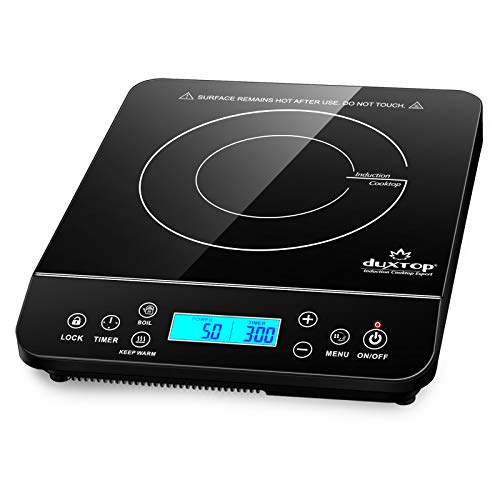
Duxtop Portable Induction Cooktop 9610LS
Badge: Best Touch Control
Strengths
- LCD sensor touch controls on a flat panel: no knobs, no crevices, one-wipe cleaning.
- The established Duxtop 1800W platform, in a black finish that suits modern counters.
- Digital level-setting suits cooks who like returning to an exact, repeatable setting.
Trade-offs
- Touch controls can be finicky with wet hands, steam and splashes — real cooking conditions.
- Like its classic sibling, it is out-specced on temperature range by the pool’s precision models.
- Single burner, standard coil: the category ceiling applies.
Mini spec box
- Format: Portable countertop single burner
- Fuel: Induction (electric)
- Power: 1800W
- Controls: LCD sensor touch
- Model: 9610LS / BT-200DZ
- Finish: Black
If the 9100MC is the category’s classic, the 9610LS is its modern face. The LCD sensor touch panel changes the daily experience in two ways that matter more than they sound. First, cleaning: a completely flat surface, controls included, wipes down in one pass with nothing to unscrew, soak or scrub around — and on a portable that lives on the counter, that is a daily dividend. Second, repeatability: a digital level is a number you can note, remember and return to, which suits methodical cooks building a repertoire of settings for their regular dishes.
The trade-offs are the known ones of touch technology in a kitchen. Steam rolling off a boiling pot, a splash across the panel, a hand wet from rinsing vegetables — each can confuse a sensor that a physical button or knob would shrug off. Experienced touch-panel cooks develop small habits — dry hands, deliberate presses — and for them the panel is a pleasure. Cooks who work fast and messy often prefer the commercial push-button philosophy represented elsewhere in this pool, and neither preference is wrong; they are temperaments.
Its honest limitation mirrors its sibling’s: the underlying platform is the established one rather than the precision frontier, so the temperature-range crown belongs to the Nuwave. But for the buyer whose high-end priority is a sleek, exact, wipe-clean interface on a proven burner, the 9610LS is the pool’s natural answer, and it closes the six as the modern expression of a classic design.
Best for: tidy, methodical cooks who want digital touch control on a proven portable platform / Not suited for: fast, wet-handed cooking styles or seekers of the widest temperature range
Comparison Table
| Pick | Power | Temperature story | Controls | Timer | Link |
|---|---|---|---|---|---|
| AAOBOSI Portable | 1800W | 20 temp/power levels | Presets + levels | 4-hour | Check on Amazon |
| OneSetNuf Cooker | 1800W | 18 temp settings | Push-button | 10-hour | Check on Amazon |
| ChangBERT | 1800W | Commercial-grade control | Professional panel | 10 hours | Check on Amazon |
| Nuwave Double Pro | 900/1500/1800W | 50°F–575°F range | Seamless touch | See listing | Check on Amazon |
| Duxtop 9100MC | 1800W | Established level control | Classic panel | See listing | Check on Amazon |
| Duxtop 9610LS | 1800W | Established level control | LCD sensor touch | See listing | Check on Amazon |
Read the temperature column first if you are a precision cook, the controls column first if you know your own hands, and the timer column first if your cooking runs long. The table rewards the reader who knows which question they are actually asking. It also quietly demonstrates the thesis of this guide: at the high end of this category, the specification sheet stops being a list of bigger numbers and becomes a set of deliberate design decisions — about power electronics, about interfaces, about who the cook is expected to be. Two units can share a wattage and share almost nothing else, and the table is where that stops being an abstraction and becomes a choice you can point at.
How to Choose a High-End Cooktop
Begin by deciding what “high end” means in your kitchen, because the market sells at least four different definitions. There is high end as precision — the finest temperature steps and the widest ranges. There is high end as construction — stainless bodies, certified designs, components built for professional hours. There is high end as interface — seamless touch, digital repeatability, surfaces that clean instantly. And there is high end as provenness — the mature design a decade of owners has debugged. Every pick in this guide leads on one of those definitions. Naming your definition first turns a confusing six-way comparison into a short argument you can actually settle.
Next, audit your cookware with a magnet. Induction heats only pans with a magnetic base — cast iron, enamelled steel and induction-ready stainless qualify; aluminium, copper and glass do not, unless fitted with a magnetic base layer. Run the magnet over every pan you love. If the casualties include your favourite cookware, price its replacement into the decision, or reconsider the fuel. This five-minute test is the single most-skipped step in induction buying and the source of most first-week disappointment.
Then match the burner to your pans and your meals. Coil diameter decides which pans heat evenly; an 8-inch coil under a 12-inch skillet guarantees a pale rim. Timer length decides which of your dishes can run unattended by your attention. Wattage flexibility decides whether the unit can travel between a kitchen circuit, an RV and a venue. And burner count — the honest ceiling of every portable here — decides whether this is your main cooktop, your second cooktop, or your specialist station. Small households cooking one-pan meals can genuinely live on a premium portable; family production cooking cannot, and should take the built-in path instead.
Finally, think about controls as a physical relationship. Buttons forgive wet hands; touch panels reward dry, deliberate ones and clean beautifully; presets serve routine; manual steps serve craft. You will touch these controls thousands of times. Choose the interaction you will still enjoy on the thousandth use, in the middle of a steamy, splashy, real dinner.
How to Get the Best From an Induction Cooktop
Setup is simple but not thoughtless. Give the unit ventilation space around its vents, place it on a stable, heat-resistant surface, and keep its circuit in mind: an 1800W burner is a serious load, and sharing a circuit with a kettle and a microwave is how breakers trip mid-dinner. Centre pans on the coil marking, use flat-based pans for full contact, and lift rather than slide heavy cast iron across glass surfaces to protect the finish.
Technique rewards a short learning curve. Induction responds instantly — faster than gas habits expect — so preheat gradually, especially with cast iron, which can develop a fierce hotspot before its mass evens out. Use temperature settings for repeatable work like eggs, sauces and chocolate, and power levels for brute work like boiling. Keep a lid on boiling pans; the efficiency gains are real and the steam you do not make is steam your touch panel never meets.
Care is mostly a cloth. The surface never bakes spills the way a hot radiant or gas top does, because the glass itself stays comparatively cool — most messes wipe off after cooking rather than carbonising during it. Use non-abrasive cleaners for sugary spills, which are the one enemy of glass tops if left to harden, and keep the vents dust-free so the electronics breathe.
Troubleshooting, in the usual pattern. Problem: the unit will not start or shows an error with a pan on it → the pan is almost certainly non-magnetic or too small for the coil; test with cast iron. Problem: heat seems uneven in a large pan → the pan overhangs the coil; match pan base to coil size or accept a cooler rim. Problem: the unit shuts down during long cooking → check ventilation clearance and circuit load before assuming a fault; thermal protection and shared circuits explain most cases.
Portable Versus Built-In: Placing These Cooktops Honestly
Every pick in this guide is portable or countertop, and a responsible guide should place that fact in context rather than let it pass quietly. Built-in cooktops — the 30-inch and 36-inch formats covered in Best Induction 30 Inch Cooktops and the 36-inch guide — are the right answer for a permanent kitchen cooking multi-burner meals daily. They cost more, install permanently and serve for a decade or more.
Premium portables answer a different set of questions brilliantly: the renter who cannot remodel, the small household that cooks one pan at a time, the professional who needs a station that travels, the keen cook adding precision or overflow capacity beside an existing stove, and the household mid-renovation that needs to eat for six weeks without a kitchen. Judged inside those questions, the six products here are not compromises — several are the best tools available at any format. Judged outside them, as substitutes for a family built-in, they would disappoint. The whole art of buying well is knowing which question is yours.
Temperature Precision, Explained Without the Marketing
Precision is the word every premium induction listing reaches for, so it is worth slowing down and asking what it physically consists of. There are three separate things a buyer might mean. The first is granularity: how many distinct settings exist between minimum and maximum, and how small the step between neighbours is. A cooktop with fine steps lets you park a sauce just below simmering rather than oscillating between too hot and too cool. The second is range: the distance between the lowest holdable temperature and the highest searing temperature, which decides how many different kinds of work one burner can honestly attempt — from keeping butter melted to putting a serious crust on a steak. The third, and the least advertised, is stability: whether the burner, having been set, actually stays there as the pan’s contents change, rather than drifting as a pot fills, boils or reduces.
The six products in this guide distribute themselves across those three virtues in instructive ways. The widest stated range belongs to the Nuwave Double Pro, whose figures span from gentle warming territory to full searing heat. The finest stated step structure in the wider pool’s family — settings counted in the dozens with small increments — shows what granularity marketing looks like when it is real. The commercial models compete instead on the third virtue: power electronics and construction aimed at holding a working temperature through a long service, which is stability expressed as engineering rather than as a number. A thoughtful buyer decides which of the three precisions their cooking actually uses. The sauce cook needs granularity. The versatile single-burner household needs range. The caterer needs stability. Paying for the one you will use is the entire discipline of buying at the high end.
There is also a humble truth to keep in view: precision features only pay when the cook’s habits are precise. A burner that can be set in fine steps rewards the cook who notices, adjusts and remembers settings from one session to the next. If your style is gloriously improvisational — heat by eye, adjust by instinct — a simpler, robust unit may serve you better than a laboratory instrument, and there is no shame in that match. High end is a fit between a tool’s character and a cook’s character, not a ladder everyone must climb to the same rung.
Six Kitchens, Six Answers: Matching the Pick to the Household
Consider the studio flat first. Its cook has one counter, no oven worth the name, and a pan collection that fits in a single cupboard. For that kitchen, a versatile portable with friendly presets and a timer is not a compromise but the entire stove, and the AAOBOSI’s balance of levels, modes and compactness fits the brief like a key. Add a kettle and a microwave and that household eats properly, every night, from one burner — provided its menu is honest about the one-pan pattern.
Consider the caterer next, loading a van at dawn. Their burners must survive transport, run all day, accept gloved and hurried hands, and hold food safely through a service. That is the ChangBERT and OneSetNuf brief exactly: stainless bodies, physical or professional controls, timers measured in shifts, and certification that venues and insurers respect. The same units that look austere in a domestic shortlist look like relief in a professional one.
Consider the precision hobbyist — the cook fermenting, tempering, poaching eggs to a standard, finishing sous-vide with a sear. Their currency is the degree and the minute, and the Double Pro’s range and wattage flexibility is the instrument built for their bench. Consider, finally, the established household adding one burner beside a tired stove: they do not need a revolution, they need the known, proven thing that will simply work for years, and that is the Duxtop classic’s entire argument — with its touch-controlled sibling waiting for the household member who wipes the counter twice a day and wants a panel that rewards the habit. Six products, four philosophies, and a household in this list that sounds like yours: that recognition, more than any badge, is how the right choice gets made.
Common Buying Mistakes
The classic mistake is skipping the magnet test and discovering, on delivery day, that half the pan cupboard is invisible to the new cooktop. The second is buying by headline wattage alone, when every serious unit here shares the same ceiling and the real differences live in temperature control, power management and build. The third is mismatching pan and coil sizes and blaming the technology for a geometry problem. The fourth is choosing controls by photograph — touch panels look premium in pictures and behave very differently under steam. The fifth is expecting a single portable burner, however premium, to run a four-pan family dinner; that is a format error no specification can fix.
Final Recommendation
For most readers, the Nuwave Double Pro (Check on Amazon) is the fullest expression of high end in this pool: the widest temperature range, flexible wattage and a shatter-proof seamless surface. Professional and catering readers should start instead with the ChangBERT (Check on Amazon), whose certification and stainless build speak their language. And the buyer who values provenness over novelty will be happiest with the Duxtop classic (Check on Amazon). Run the magnet test, name your definition of high end, and buy the philosophy that matches your cooking.
Frequently Asked Questions
What makes a cooktop “high end” if it is portable?
Engineering you can verify: finer temperature control across a wider range, smarter power delivery, stronger construction, recognised certification and an interface built for daily use. Portability is a format, not a quality tier — a precision portable can be a more sophisticated instrument than a basic built-in, while serving a different purpose.
Will my existing pans work on these cooktops?
Only if their bases are magnetic. Cast iron, enamelled steel and induction-ready stainless steel work; plain aluminium, copper and glass do not. Test each pan with a fridge magnet — if it sticks firmly to the base, the pan will heat. Do this before ordering, not after.
Why do several models share the same 1800W power?
Because 1800W is roughly the ceiling of a standard household circuit in North America, and every serious single-burner design runs up against the same electrical reality. The meaningful differences are therefore in how power is controlled and delivered — temperature steps, wattage flexibility and power electronics — rather than in the headline figure.
Are long timers actually useful on a cooktop?
For the cooking these units are bought for, yes. Stocks, braises, buffet holding and batch work run for hours, and a timer that spans the job lets the burner manage itself while the cook does something else. A four-hour timer covers most home uses; the ten-hour timers on the commercial models here serve working days.
Can a premium portable replace my stove?
For a single person or a couple cooking mostly one-pan meals, it genuinely can — many small households do exactly that. For a family running three or four burners through a weeknight dinner, it cannot, and a built-in format is the honest recommendation. The deciding factor is your real menu, not the product’s quality.
Which control style should I choose: buttons, presets or touch?
Buttons if your hands are often wet or you cook in a working, service style. Presets if your cooking is routine-heavy and you value one-press simplicity. Touch if you prize a flat, wipe-clean surface and cook with dry, deliberate hands. All three appear in this pool precisely because the right answer is personal.
Do induction cooktops need special care or make noise?
Care is light: the glass surface wipes clean, sugary spills should be removed promptly before they harden, and the cooling vents should be kept clear so the electronics can breathe. As for noise, most induction units have a small cooling fan, and some pans buzz faintly at high power — a property of the pan’s construction more than the cooktop’s. In a normal kitchen both sounds disappear under the noise of cooking itself, but very light sleepers cooking in a studio flat may notice the fan after shut-off while the unit cools.
How do I know if my kitchen circuit can handle a premium portable?
Check what else shares the circuit you intend to use. An 1800W burner alongside a kettle or microwave on the same breaker is the classic recipe for a mid-dinner trip. If your wiring is older or your circuits are busy, a model with selectable wattage settings gives you a graceful fallback — slightly slower cooking instead of no cooking. When in doubt, test the arrangement with a full-power boil before the day it matters, and let an electrician, not optimism, settle any persistent tripping.
What size pan suits these burners best?
Match the pan’s base to the coil. Most portables in this pool use an 8-inch class coil, so pans with a flat base around that diameter heat most evenly. Much smaller pans may not register on some units, and much larger pans will cook with a cooler rim — usable for gentle work, disappointing for searing. When in doubt, measure your favourite pan’s base before ordering; it is the dimension that decides your daily experience.
Is induction really faster than gas?
For boiling water and heating pans, induction is typically the fastest common technology, because energy goes directly into the pan rather than around it. More important for most cooks is its low-end control: holding a gentle, exact temperature is where induction quietly outperforms flame, and that is the advantage the precision models in this guide are built around.