Leafy greens such as kale, spinach and chard are light and fluffy, so fast centrifugal blades often fling them aside and leave wet pulp. Slow masticating and twin-gear juicers crush and squeeze them instead, which usually extracts far more liquid. If you juice greens often, the type of juicer matters more than almost any other feature. A juicer for greens should also be easy to clean, since fine screens trap fibers that dry hard if left overnight.
The six picks below are slow or twin-gear designs known for handling greens, from compact vertical models to heavy-duty stainless steel. We have not used these products ourselves, so confirm sizes, parts and warranty terms on the current listing before you buy. Yield and durability claims are the makers’ own.
As an Amazon Associate we earn from qualifying purchases. Links below are affiliate links, and they do not change the product information we give.
What to Look For
| Feature | Why it matters |
|---|---|
| Type | Slow and twin-gear designs extract more from kale, spinach and wheatgrass |
| Auger | A strong auger squeezes leaves instead of pushing them through |
| Feed | Greens tend to bunch, so a feed tube that accepts rolled leaves helps |
| Pulp dryness | Drier pulp usually means more juice from the same bunch |
| Cleanup | Fine screens trap leaf fibers, so a brush and simple parts save time |
In this guide
Specs at a Glance
| Juicer | Type | Style | Notes |
|---|---|---|---|
| Omega NC900HDC | Slow masticating | Horizontal | Long-running favorite for greens |
| Omega VRT350 | Slow masticating | Vertical | Smaller footprint than horizontal models |
| Tribest Greenstar Elite | Twin gear | Horizontal | Heavy-duty design |
| Tribest Slowstar | Slow masticating | Vertical with mincer | Doubles as a mincer |
| Hurom H-AA Slow Juicer | Slow masticating | Vertical, compact | Quiet running |
| Kuvings B6000S | Slow masticating | Vertical, large chute | Strong with fibrous produce |
The 6 Best Juicers for Leafy Greens
Top pickBest for greens and wheatgrass
1. Omega NC900HDC Juicer
A horizontal slow juicer known for good yield with leafy produce, plus extras such as pasta and nut butter attachments. It suits households that juice greens often. It is a long-running design with a loyal following among home juicers. Check which screens ship in the box.
Suits: greens and wheatgrass. Strengths: strong yield. Weaknesses: a longer feed time. Skip it if you want a compact, fast machine.
Best for tight counters
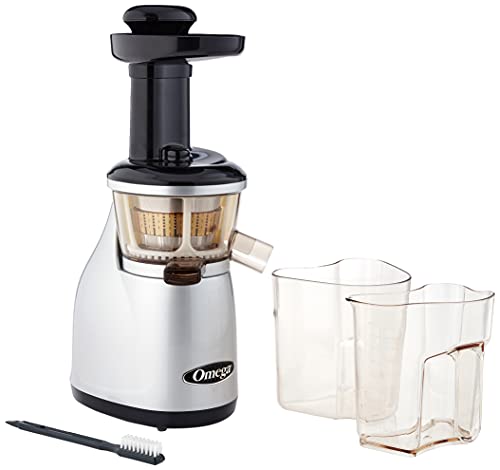
2. Omega VRT350 Vertical Juicer
A vertical slow juicer with a smaller footprint than a horizontal design. It is useful for people who want a slow juicer for greens that does not take over the counter. The vertical layout also makes it easier to move and store.
Suits: tight counters. Strengths: a vertical build. Weaknesses: a smaller feed opening. Skip it if you juice mostly whole fruit.
Best for serious green juicing
3. Tribest Greenstar Elite Twin Gear Juicer
A twin-gear juicer that uses two interlocking gears to crush produce. It is aimed at dedicated juicers who want high yield from greens and wheatgrass. It is a niche, heavy-duty tool rather than an all-purpose machine. Expect it to be a slower workflow.
Suits: serious green juicing. Strengths: very dry pulp. Weaknesses: more parts to clean. Skip it if you want fast prep.
View Tribest Greenstar Elite on Amazon
Best for versatile prep
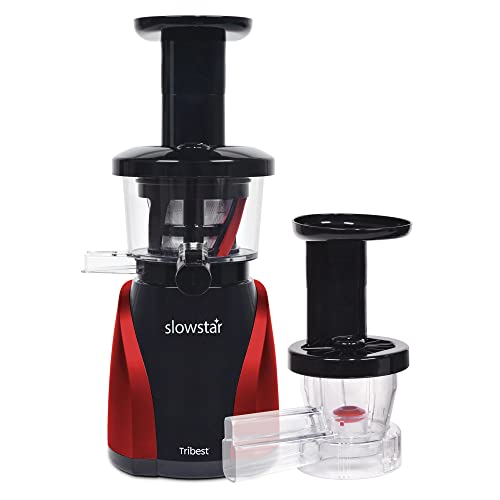
4. Tribest Slowstar Vertical Slow Juicer
A slow vertical juicer that also minces, designed with fibrous produce in mind. The extra mincer attachment adds value for baby food or sorbet. The mincer attachment lets one appliance cover more kitchen jobs.
Suits: versatile prep. Strengths: greens plus extras. Weaknesses: a larger footprint. Skip it if you want only juice.
View Tribest Slowstar on Amazon
Best for small kitchens
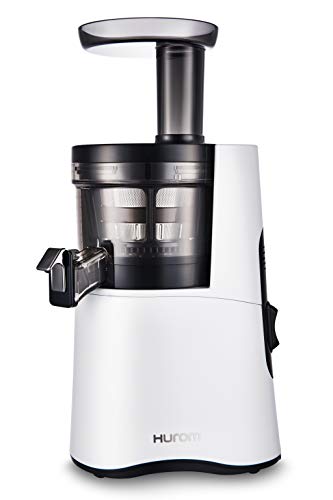
5. Hurom H-AA Slow Juicer
A vertical slow juicer from a Korean brand known for pioneering the style. Its compact body and calm operation suit smaller kitchens. It handles spinach and kale without much fuss in normal use. Check the included brush and parts on the listing.
Suits: small kitchens. Strengths: low noise. Weaknesses: a narrower feed than some. Skip it if you want a wide chute.

Best for mixed fruit and greens
6. Kuvings B6000S Cold Press Juicer
A slow cold-press juicer with a large feed chute and a design made to extract well from both soft and fibrous produce. It balances prep time and yield. The generous feed saves time on mixed fruit and vegetable batches. Check the pulp container capacity.
Suits: mixed fruit and greens. Strengths: a wide chute. Weaknesses: a bulkier body. Skip it if you have limited counter space.
Care and Setup
- Roll leaves into tight bundles before feeding them.
- Alternate leaves with firm produce such as apple or carrot.
- Rinse right after use so chlorophyll does not stain parts.
- Dry parts completely before storing them.
Mistakes to Avoid
- Feeding loose leaves one by one.
- Choosing a fast centrifugal juicer and expecting dry pulp.
- Ignoring the maker’s guidance on wheatgrass.
- Letting green pulp dry on the screen.
How Leafy Greens Behave Inside a Juicer
Leafy greens are light, thin and mostly water, but they have very little bulk. Unlike an apple or carrot, a leaf has no firm flesh to push against, so many machines struggle to hold it in place long enough to squeeze. A spinning blade can toss a leaf aside instead of cutting it, and a rotating basket can leave wet leaf fragments that still contain juice.
Slow juicers solve this by pressing the leaves between an auger and a screen. As the auger turns, it drags the leaves forward and compresses them, squeezing the liquid out gradually. Twin-gear designs use two interlocking gears, which crush and grip the leaves more firmly, and are often described as suited to leafy produce and grass-like plants.
The type of green also matters. Soft leaves such as spinach and lettuce collapse easily, while sturdy ones such as kale and collards have thick ribs that need more crushing. Herbs like parsley and cilantro are small and delicate, and grass-like produce such as wheatgrass is thin and fibrous. A machine that works well for one may behave differently with another.
Because leaves are light, it helps to feed them in bundles or sandwich them between firmer ingredients. A handful of leaves tends to be pushed through more evenly than single leaves. Read product pages for mentions of leafy produce, and check whether the maker provides guidance on greens, as some machines are designed with them in mind and others are not.
This is why the machine type matters more than most extras. A juicer with a nice design but a poor squeezing mechanism will leave you with wet pulp and a thin glass.
Single Auger Versus Twin-Gear Designs
Within slow juicers, the two main styles are single-auger and twin-gear, and they suit different kinds of users.
- Single-auger juicers use one rotating screw. They come in vertical and horizontal forms. They are generally simpler, more compact and easier to clean. They handle a wide range of produce and are a good all-round choice for people who juice greens along with fruit and vegetables.
- Twin-gear juicers use two gears that turn against each other. They are valued for extracting from leafy produce and grasses, and may produce very dry pulp. They tend to be heavier, have more parts, take longer to clean and work more slowly. They suit committed juicers who focus on greens.
Horizontal single-auger models lay the auger on its side, which works well for leaves and fibrous items and often supports extra attachments. Vertical models stand upright, take up less counter space and let you pour in produce from above. They can be easier to load with mixed ingredients, but leafy greens may need a little extra guidance with a pusher.
Consider the effort. If you juice greens daily, the added yield of a twin-gear machine might justify the extra cleaning. If you juice a few times a week, a single-auger machine may be more practical.
Think about versatility too. Some single-auger machines include attachments for nut butters, sorbets or pasta. Twin-gear machines may have similar accessories but are often built primarily for juice. Choose according to what you will actually use, not what looks impressive on paper.
Feeding Technique for Better Yield
How you feed greens can matter as much as the machine. A few habits make a clear difference.
- Roll or bundle leaves into a tight cluster before feeding them. Rolled leaves have more body and are drawn into the auger more evenly.
- Alternate with firm produce such as apple, cucumber or carrot. The firm items help push leaves through and carry out the last bits of liquid.
- Feed slowly and let the auger work. Pushing hard can cause stalls and does not increase the yield.
- Remove tough ends from thick stems, and cut very long stems to a length that fits the chute.
- Start with a small amount to test how the machine behaves, then add more.
Wash greens well and shake off excess water. Wet leaves dilute the juice and can clump together. Crisp, fresh leaves yield more than wilted ones, so use them soon after buying and store them in the refrigerator, wrapped loosely.
Stringy stems, such as chard stalks or kale ribs, can wrap around the auger. Cut them shorter or alternate them with soft ingredients. If the machine labors, use the reverse function if it has one, then continue with smaller amounts.
Look at the pulp as a guide. If it comes out wet and clumpy, try slower feeding, tighter bundles or different pairings. Dry, crumbly pulp suggests you are extracting well. You can adjust your technique until you find a rhythm that suits your machine and produce.
Cleanup, Staining and Maintenance
Greens leave fine fibers and pigment behind, and clean-up decides whether a juicer stays in use. Rinse the parts right after juicing, before the pulp dries. Use the brush supplied to clean the screen from the inside out, and get into the grooves of the auger and chute. Fibers that dry on the screen are much harder to remove later.
Deeply colored juices can stain plastic parts over time, particularly with repeated use. This is cosmetic, and regular washing limits it. A soak in warm water and mild soap helps, and some makers advise against certain cleaners that can damage plastic. Follow the manual, and avoid harsh abrasives.
Check which parts are dishwasher safe. Many makers recommend hand washing for screens and augers, because heat and detergent can wear them. Let all parts dry fully, then store the juicer with the lid off or loosely placed so air can circulate.
Inspect the screen regularly for clogged holes or damage. A soft toothbrush can clear small blockages. Replace worn seals and gaskets as the maker recommends, because leaks reduce efficiency and make a mess. Keep the motor base dry, wipe it with a damp cloth and never submerge it.
Plan for the time cleaning takes. A twin-gear machine with more parts will take longer than a single-auger model. If you know you will skip cleaning on busy mornings, a simpler machine is the better choice. Warranty terms and spare part availability are also worth checking before you buy.
Choosing by Kitchen Space, Noise and Budget
Once you have decided on a type, practical considerations narrow the field. Measure the space where the juicer will live. Vertical models have a smaller footprint but are taller, so check the clearance under cabinets. Horizontal models are longer and need more depth. Twin-gear machines are often heavy, so consider where you will store them if they are not left out.
Noise varies. Slow juicers are generally quieter than centrifugal ones, which suits early mornings and shared homes. Check the listing for any noise comments, and remember that makers’ descriptions are their own.
Think about feed chute width. A wide chute reduces prep for mixed ingredients but is not essential for greens, which you will usually roll or bundle. If you plan to juice whole apples or large carrots as well, a wider chute saves time.
Consider capacity. The pulp container and juice jug sizes determine how much you can make before emptying. If you juice for a household, larger containers help.
Budget tiers are easier to understand in qualitative terms. Entry-level slow juicers can handle greens but may have smaller feed openings and lighter construction. Mid-range models usually offer sturdier builds, more attachments and better support. Premium and twin-gear models target dedicated juicers and tend to use heavy-duty materials. Higher cost does not always mean a better fit for your habits.
Ask yourself a few questions: how often will I juice, how much time will I spend cleaning, which greens will I use most, and do I want extras? Honest answers point to the right machine more reliably than any feature list.
Preparing Leafy Greens So They Juice Well
Leafy greens behave differently from carrots or apples, so a little preparation pays off. Wash them thoroughly and shake off excess water, since very wet leaves make pulp soggy. Cut tough stems and roots if the manual suggests it, and tear large leaves into manageable pieces. Roll leaves into a loose bundle before feeding them in, which gives the auger something firm to grip.
Alternate soft leaves with firmer produce, such as cucumber, celery or apple. The firmer pieces help push the greens through and extract more juice. Feed slowly and let the machine finish each piece before adding the next.
Which Machine Style Suits Which Greens
| Style | Strength with greens | Consideration |
|---|---|---|
| Single auger vertical | Compact and easy to store | Needs patience and bundling of leaves |
| Single auger horizontal | Handles leaves and herbs well | Takes more counter space |
| Twin gear | Presses leaves and wheatgrass thoroughly | More parts to clean |
| Centrifugal | Fast on firm produce | Less suited to thin leaves |
Check the maker’s list of suitable produce, since not every juicer is designed for wheatgrass or very fibrous stalks.
Cleaning Habits That Prevent Clogs
Green fibers cling to screens, so rinse the parts as soon as you finish. Disassemble the juicer as shown in the manual and use the cleaning brush that came with it to clear the screen. Soak parts in warm soapy water if bits remain, and rinse until the water runs clear. Dry the parts fully before storage, and check that the screen holes are free of pulp.
- Run a little water through the machine after juicing if the manual allows.
- Do not use hard scouring pads on screens.
- Watch for stains from green pigments and treat them with a gentle cleaner suited to the plastic.
Storing Greens for Juicing Through the Week
Store washed, dried greens in a container lined with paper towel in the refrigerator, and use them in a few days. Buy amounts you will use soon rather than a huge bag. Fresh juice is best consumed soon after pressing; for any storage, follow guidance from official food safety sources.
Adjust the recipe by taste. Some people soften the earthy flavor of greens with apple or lemon, while others like them on their own. Keep notes of combinations you enjoy.
Mistakes That Waste Greens and Time
A few habits make leafy juicing more frustrating than it needs to be. Knowing them in advance helps.
- Feeding wet leaves: water dilutes juice and makes pulp soggy. Shake leaves dry first.
- Pushing too fast: forcing produce through can jam the auger or overload the motor.
- Juicing greens alone: thin leaves can pass through with little juice. Mix with firmer produce.
- Ignoring the pulp: if the pulp is still wet and green, run it through again if the manual allows.
- Letting parts dry with residue: dried pulp sticks to screens and becomes harder to clean.
- Overloading the chute: add a few pieces at a time and keep a steady pace.
Each of these has a simple fix, and after a few sessions, the routine becomes automatic.
Troubleshooting Noise and Jams
If the machine slows or makes a labored sound, stop feeding, switch to reverse if available and clear the chute. Turn off and unplug before removing any part. Check that the parts are assembled correctly and the lid locks in place. If a problem repeats, consult the manual or the maker’s support team. Do not force pieces down with fingers or utensils not supplied with the machine.
Leafy Greens Juicer FAQ
Why do greens work better in slow juicers?
They are pressed rather than flung aside, so more liquid comes out of light leaves.
Can any of these juice wheatgrass?
Some are designed for it, so check the listing for the maker’s wheatgrass guidance.
Is twin-gear better than a single auger?
It can extract more, but it usually has more parts and a slower workflow.
Do I need to chop leaves?
Rolling leaves into bundles often works better than chopping.
Which greens are the hardest to juice?
Thin, light leaves like spinach can be slippery, while tough kale ribs and stringy chard stalks can tangle. Rolling leaves and alternating with firm produce helps in most machines.
Should I remove the stems?
Thick or tough ends are best trimmed, and very long stems should be cut to fit the chute. Many softer stems can be juiced, but follow the maker's guidance.
Can I juice greens in a centrifugal juicer?
You can, but many produce less juice and wetter pulp from leaves than slow juicers do. If greens are your main use, a slow or twin-gear type is usually a better match.
Why does my green juice separate?
Separation is common in fresh juice, particularly with fibrous or pulpy produce. Stir or shake before drinking, and drink it soon after making it.
Do I need to wash greens before juicing?
Yes. Rinse them thoroughly to remove dirt and residue, and shake off the water. Wet leaves can dilute the juice and clump in the chute.
Can I juice herbs with a juicer?
Often yes, in small amounts, especially when bundled with other produce. Check the listing or manual for guidance on herbs and grasses.
How often should I replace the screen?
It depends on use and care. Replace it if holes are damaged, the mesh is bent or juice quality drops after thorough cleaning, and follow the maker's advice.
Why Leaves Are the Hardest Test in Juicing
A leaf is mostly water held in a delicate structure, wrapped in fibres that would rather tangle than press. That is why leafy greens expose a juicer more honestly than any fruit: a machine can shred an apple by violence, but a leaf must be gathered, rolled, gripped and squeezed, and every weakness in the feeding path shows up as leaves emerging barely touched in a wet pulp. The machines in this guide exist because they solve that gathering problem in different ways. The horizontal Omega NC900HDC draws produce through a long pressing path that suits leaves and gives the user attachments and adjustments to tune the result. The Tribest Greenstar Elite’s twin gears grip and crush with the most deliberate action in the guide, which is why wheatgrass and leaf specialists gravitate to it. The vertical machines, the Omega VRT350, the Tribest Slowstar, the Hurom H-AA and the Kuvings B6000S, fold leaves into a compact auger system that suits smaller counters and mixed baskets.
Technique matters as much as machinery. Leaves juice best when they are rolled or bunched into a compact parcel, fed steadily, and followed by something firmer that pushes the parcel through and clears the screen. A handful of loose leaves tossed in alone will ride over the auger and emerge insulted but intact. Cold, crisp leaves press better than warm, wilted ones, and a mixture built as a rhythm, leaf, firm, leaf, juicy, will outperform the same ingredients fed in a block. Learn that rhythm on your machine and the difference between a good greens juicer and a great one narrows; ignore it and even the twin gears will seem to underperform.
Horizontal, Vertical and Twin-Gear: Choosing a Layout
Layout is destiny in this category. A horizontal machine such as the Omega NC900HDC occupies a long footprint and rewards the user with a versatile, unhurried press that handles leaves, celery and many kitchen tasks beyond juice; it suits a household with counter length to spare and a juicing practice that is a settled ritual. A twin-gear machine such as the Greenstar Elite is the specialist’s instrument, heavier in every sense, chosen when greens and wheatgrass are the centre of the practice and yield from expensive leaves is a serious consideration. The verticals are the modern compromise: they stand where a kettle stands, feed from the top, and handle a mixed basket, greens included, with the least ceremony, which is why they dominate ordinary kitchens.
Choose by the centre of your practice. If greens are an ingredient, a good vertical will serve you for years and its convenience will keep the habit alive. If greens are the practice, the horizontal and twin-gear machines repay their size and their slower rituals every single day, in drier pulp and in glasses that taste like the leaves cost. The error is buying the specialist for an ingredient or the convenience machine for a discipline; both errors end with a capable juicer in a cupboard and a household that believes juicing greens does not work.
Building Green Juices That People Actually Drink
The finest juicer in this guide cannot rescue a badly composed green juice, and composition follows a forgiving grammar. Every successful green juice has a watery base, usually cucumber or celery, a leaf or two for the green heart, something sweet to carry the palate, usually apple or pear, and something bright, usually lemon or ginger, to lift the whole. Build in that order and adjust one element at a time. A juice that tastes like a lawn was built with leaves and virtue only; a juice that tastes like a drink was built with the grammar. New drinkers should let the sweet and bright elements speak loudly at first and let the leaves take a larger share across the weeks, as the palate learns the flavour the way it learns any strong, good taste.
Serve green juice cold, promptly and in a glass that shows it off, because the colour is half the pleasure and the first sign of quality. If the juice must wait, fill its container to the brim, seal it, and keep it cold and dark; green juices fade faster than fruit juices and should be treated as the day’s production rather than the week’s. Households that juice greens successfully tend to juice little and often, which is another argument for the machine whose cleanup you can face daily, over the machine whose yield impresses you monthly.
Shopping and Storing Greens for the Juicer
Greens for juicing should be bought as you would buy them for a salad that matters: crisp, deeply coloured, and free of slime and yellowing, because the juicer concentrates whatever it is given, including tiredness. Wash them well, since leaves carry grit and the field with them, and dry them enough that they do not dilute the juice with rinse water. Store them cold, wrapped so they neither dry out nor sweat, and juice the most delicate leaves first across the week: tender herbs and baby leaves early, sturdy kale and chard later. A household that plans its greens in that order wastes little and juices everything at its best.
Growers and market shoppers have an advantage worth using: greens bought in season and locally tend to be juicier and sweeter than greens that have travelled and waited. Frozen greens, by contrast, are a poor juicing ingredient, since their structure collapses on thawing and they surrender their water before they reach the press; save them for cooking and for blended drinks. If your supply of good greens is unreliable, build the routine around the sturdy, widely available leaves, and treat the exotic ones as guests rather than as foundations.
Cleaning a Greens Juicer Without Dreading It
Leaf fibres dry into a green cement that can make a screen feel like a permanent sculpture, so the cleaning rule in this niche is absolute: rinse everything immediately, while the fibres are soft, and brush the screen under running water before anything else in the kitchen is touched. The few minutes this takes are the rent a greens juicer charges, and paying it promptly is what separates owners from former owners. Parts should be dried before reassembly, since a closed, damp machine grows the very flavours the next juice will be accused of. Once a week, or whenever a film builds, give the screen and the pressing parts a longer soak and a careful inspection, and check the seals that keep the juice where it belongs.
Staining is cosmetic and should be treated calmly. Greens and their colourful partners will tint plastic parts over time, and while a soak can soften the tint, a stained juicer that works perfectly is not a dirty juicer. What matters is residue, not colour: a part that is smooth, odourless and free of buildup is clean, whatever shade it has become. Owners who accept that distinction keep their machines for years; owners who chase a showroom finish tend to scrub seals and screens into early retirement.
More Questions From Greens Juicers
Which leaves should a beginner start with?
Start with the mild and the juicy: cucumber is not a leaf but it is the beginner’s best friend, carrying spinach, romaine and soft lettuces into a glass that tastes fresh rather than stern. Add kale and chard gradually, in partnership with apple and lemon, and let herbs arrive as seasoning rather than as bulk. Wheatgrass, the most demanding of the common greens, belongs to the stage where your machine and your technique are known quantities, and to the machines in this guide that were built with it in mind. A beginning built on success will reach the serious leaves in its own time and stay there.
Why is my pulp wet and full of recognisable leaves?
Because the leaves were never gathered into the press. Roll or bunch the leaves tightly, feed them steadily rather than in a loose shower, and follow each parcel with a firmer piece of produce that drives it through. Check also that the leaves were fresh and crisp, since wilted leaves slide rather than grip, and that the screen was clean at the start, since a half-blocked screen turns every later leaf away. If recognisable leaves persist after those corrections, your machine may be a generalist being asked for a specialist’s work, which is a buying conclusion rather than a technique failure.
Can I juice herbs in meaningful amounts?
Yes, with the parcel technique: gather herbs such as parsley, mint or coriander into the centre of a leaf parcel or feed them sandwiched between firmer produce, so the press takes them rather than scattering them. Herbs are potent, and a meaningful amount is smaller than enthusiasm suggests; begin with a modest handful in a full juice and adjust across batches. The twin-gear and horizontal machines handle herb parcels with particular authority, while the verticals manage well when the sandwiching is done carefully.
Wheatgrass and the Specialist Case
Wheatgrass deserves its own paragraph because it is the ingredient that most often drives the purchase of a specialist machine. It is all fibre and intensity, juiced in small, potent amounts, and it punishes any juicer whose grip is casual. The twin-gear design’s reputation rests largely here, and the horizontal machines with the right setup also handle it with authority. The verticals can manage small amounts folded into other produce, but a household whose practice centres on wheatgrass should be honest about that centre and buy accordingly. Grow or buy the grass fresh, cut it just before juicing, feed it in small, steady handfuls, and expect a modest yield of a very concentrated juice, which is normally mixed or taken in small servings rather than in a tumbler of its own.
If wheatgrass is an occasional guest rather than a resident, do not let it choose your machine. A generalist vertical, fed carefully, will produce the occasional serving without complaint, and the money and counter saved can go toward the greens you juice every day. Machines, like menus, should be built around the regulars and stretch for the guests, not the other way around.
A Week of Greens: Planning the Rotation
A workable greens week has a shape. Early in the week, juice the delicate leaves bought at the weekend market, in bright, simple mixtures that show them at their best. Midweek, move to the sturdy leaves, kale, chard and the outer leaves of cabbages, in juices with more apple and ginger to carry their strength. Late in the week, build the clean-out juice, where the remaining cucumber, celery, herbs and citrus are gathered into one generous glass, and let the pulp from the week go to compost or stock as it suits. Shop again with the week’s evidence in hand: which leaves were finished eagerly, which lingered, which mixture the household requested again. That evidence, accumulated over a month, is a better buying guide for both produce and machines than any general advice, because it describes your kitchen’s actual green economy.
Keep the rotation written where the shopping list lives. A rotation that exists only as an intention will be defeated by the first busy week, and the greens will wilt in the drawer while the intention is admired. Written, shopped and juiced in order, the same greens become a practice, and a practice is what every machine in this guide is waiting to serve.
How do I make green juice taste good to children?
Lead with the fruit and the cucumber, keep the leaf share modest at first, serve it very cold in a favourite glass, and let the child help choose and feed the ingredients. The colour will do half the persuading if the flavour is gentle, and a juice named by the child has a way of being finished. Increase the greens gradually across the weeks rather than announcing a new regime, and never let the juicer become an instrument of negotiation at the table; a green juice that arrives as a treat will be drunk as one, while a green juice that arrives as a duty will be resisted as one.
Is it better to juice greens daily or in larger batches?
Daily, in the amount the household drinks that day, wherever the routine allows it, because green juice is at its best within hours and because a daily small session keeps the machine clean, the produce fresh and the habit warm. Larger batches suit the household whose mornings are impossible, provided the juice is stored full, sealed and cold, and drunk within a day or so. Choose the pattern your calendar can keep; a modest daily glass kept for a year is worth more than a heroic batch kept for a fortnight.
Roll the leaves, feed them steadily, follow them with something firm, and clean the screen before you sit down. Those four habits, practised for a month, will make any machine in this guide look like the right purchase, and they will make the right purchase look inspired.
What should I do with the large amount of green pulp?
Treat it as a harvest rather than a waste stream. Fine, well-pressed green pulp can disappear into soups, stocks, omelettes and baked goods in modest amounts, where it adds body without announcing itself; coarser pulp belongs in the compost, where it returns to the soil quickly and gratefully. Households with gardens often find the loop satisfying enough to justify the juicing on its own: leaves grown, juiced, composted and grown again. What pulp should not do is sit in the bin beside the machine for days, scenting the kitchen and arguing against the next session; clear it the same day, as part of the cleanup, and the machine’s corner stays a pleasant place to work.
A pleasant corner, a clean screen and a stocked crisper: the greens juicer’s whole infrastructure, and none of it appears in a specification table. Build the infrastructure and the machine will do the rest, which is the closest thing this demanding, rewarding category has to a guarantee.
How can I tell if a juicer is genuinely good with greens before buying?
Look for evidence about the pulp and the feeding, not about the motor. Accounts that describe dry, compressed pulp from kale and spinach, that mention feeding leaves in bunches without them escaping, and that discuss wheatgrass without changing the subject are describing a machine that grips. Accounts that praise speed and fruit while treating greens as an afterthought are describing a generalist. Both machines may be excellent; only one of them is excellent at the thing this guide is about. Match the evidence to your practice, and let the leaf, as always in this category, cast the deciding vote.
Evidence about pulp sounds humble, and it is, but in a category where the entire product is what comes out of two spouts, the humble evidence is the honest evidence. Trust it over every superlative, including the ones in guides that mean well.
Should I remove kale stems before juicing?
The thick central stem of mature kale is the toughest part of the leaf and the part most likely to emerge under-pressed, so many juicers strip the leaves from the largest stems and juice the stems separately in a mixed feed, or send them to the stock pot. Young, tender stems can go through whole in the stronger machines here. Judge by the stem’s thickness and your machine’s temperament, and let the pulp tell you whether your choice was right: stems that appear intact in the pulp are stems to strip next time.
Let the pulp be your teacher in this as in everything: it records, faithfully and without flattery, exactly what the machine did with what you fed it, and a juicer who reads it regularly will improve faster than a juicer who only tastes the glass.
How do I keep green juice from separating in the glass?
Some separation is natural in a drink with no stabilisers, and a gentle stir or a swirl of the glass restores it instantly. You can slow it by juicing the ingredients in an interleaved order rather than in blocks, so the mixture leaves the machine already married, and by serving the juice promptly over a little ice in a cold glass. A juice that separates into a clear layer and a green layer within a minute is usually telling you it was mostly watery produce with the leaves riding on top, which is a composition note rather than a defect: build the next glass with the leaves pressed between the firmer ingredients and the marriage will hold.
Composition, order and prompt serving: the green juice’s whole etiquette, and a fitting summary of this guide, in which the machine is only ever one of three partners, alongside the produce and the person feeding it.
What is the best first green juice to make in a new machine?
Cucumber, spinach, apple and lemon, in proportions that favour the cucumber and apple, made with the parcel technique and drunk immediately. It is forgiving of a new user’s feeding, kind to a new machine’s screen, and honest about what the machine does with leaves, since spinach will show in the pulp if it was not gathered properly. Make it twice before judging anything, adjust the feeding between the two, and you will have both a house juice and a working knowledge of your machine by the end of the first weekend.
A house juice and a known machine: two modest assets that, between them, are worth more than the most capable juicer in this guide standing untested in its box.
How often should I replace the screen or other pressing parts?
Replace them on evidence rather than on a calendar: a screen that no longer cleans to a free-flowing mesh, that is visibly worn or distorted, or that leaves the pulp suddenly wetter despite correct feeding has finished its service. Pressing parts that have cracked, warped or lost their fit should be replaced as a set where the maker advises it, since a worn part makes its neighbours work harder. Keep the model details recorded and the spares sourced from the maker’s own channels where you can, because in this category the fit of a pressing part is its function.
Evidence over calendar, fit over force, freshness over everything: a greens juicer maintained on those principles will still be pressing dry pulp years after a neglected one has been replaced twice.
Choose the machine that fits your practice, then give it a season of good leaves and honest technique before you judge it. Greens are a long game, and they reward the patient in juice and in everything else.
Patience, in this corner of the kitchen, is not a virtue added to the process. It is the process, and the leaf is its teacher.
Learn its lessons, and every glass that follows will show it.
That is a promise any of the six machines here can keep, in a kitchen that keeps its side of the bargain.
Keep your side, beginning with the next bunch of leaves you bring home.
Begin there, and begin soon.
The Short Version
For horizontal versatility, the Omega NC900HDC. For a vertical footprint, the Omega VRT350. For serious yield, the Tribest Greenstar Elite. For a mincer too, the Tribest Slowstar. For quiet operation, the Hurom. For a large chute, the Kuvings.
Related Guides
- 6 Best Wheatgrass Juicers: Manual and Twin Gear
- 6 Best Masticating Juicers for Greens and Wheatgrass
- 6 Best Juicers: Centrifugal and Slow Masticating (2026)
- 6 Best Juicers for Celery Juice: Slow and Fast (2026)
- 6 Best Masticating Juicers for Celery: Slow and Cold Press

