Disclosure: topratedkitchenware.com is reader-supported. When you buy through links on our site, we may earn an affiliate commission from Amazon and other retailers, at no extra cost to you.
Where to buy
The six sinks below are the verified shortlist for this guide to best kitchen sinks with granite countertops. Every pick is an undermount model, which is the mounting style granite rewards most, and each name links to its Amazon listing so you can check the latest price on Amazon, confirm dimensions against your cabinet and stone cutout, and read current owner feedback before you commit.
- cozhao 30 Inch Undermount Kitchen Sink
- MAYESAR 28 Inch Undermount Kitchen Sink
- KRAUS KWU110-32 Workstation Undermount Sink
- KRAUS KHU100-32 Undermount Kitchen Sink
- Oxwiser 30×18 Inch Undermount Sink Bundle
- Delironexu 30 Inch Undermount Kitchen Sink
Read the full guide ↓ for the ranking logic, the granite-specific checks that matter more than any headline feature, and the honest limitations of every pick.
Choosing the best kitchen sinks with granite countertops is really two decisions made at once. The sink has to work as a sink — deep enough for sheet pans, quiet enough for daily use, easy enough to keep clean — and it also has to respect the stone it sits under. Granite is cut once, and the cutout your fabricator makes is effectively permanent, so the sink you choose now decides the size, the reveal, and the faucet layout you will live with for as long as the counters stay. That is why this guide treats the pairing as the product: every pick below is an undermount stainless steel sink, because undermounting lets you wipe crumbs and water straight from the granite into the bowl with no rim in the way, and because a clean undermount line is the look most people are paying for when they choose stone in the first place.
The six models here span the sizes that cover almost every granite installation, from a 28-inch bowl for a compact run of cabinets to 32-inch bowls for islands and wide family kitchens. You will find a workstation design with an integrated ledge for households that prep heavily over the sink, two bundled sets that arrive with grids and drain parts in the box, and straightforward handmade bowls for buyers who want the stone, not the sink, to be the visual event. Along the way we explain how the order was decided, how to choose a reveal with your fabricator, how the silicone joint and support system actually carry the load, and how to care for the granite-to-steel seam so it still looks deliberate years from now. If your search started from a slightly different angle, our coverage of Best Kitchen Ss Sinks looks at this same stainless category without the stone-pairing filter.
Key Takeaways
- Undermount is the natural partner for granite: it keeps the stone edge visible, removes the rim that traps grime, and lets you sweep the counter straight into the bowl.
- Decide the sink before the stone is cut. The cutout, the reveal, and the faucet holes all follow the sink template, and changing your mind after fabrication is expensive or impossible.
- Gauge is the quiet quality signal in stainless steel: the 16-gauge picks here feel more solid and resist denting better than the 18-gauge picks, which in turn keep the overall project lighter.
- A single deep bowl suits granite islands and stone runs best, because it keeps the cutout simple and gives unobstructed room for roasting pans and tall pots.
- Support and sealing matter as much as the bowl itself: the sink is carried by clips, rails, or a cradle under the stone, and the thin silicone joint at the rim is a maintenance item, not a one-time event.
- Match the sink finish to the stone’s mood: brushed stainless sits calmly under both busy, veined granite and quiet, uniform slabs.
In this guide
Quick Picks
| Pick | Badge | Size and mount | Standout detail | Link |
|---|---|---|---|---|
| cozhao 30 Inch Undermount Kitchen Sink | Best Overall | 30 inch, undermount, single bowl | 18 gauge 304 stainless steel, drain assembly included | Check on Amazon |
| MAYESAR 28 Inch Undermount Kitchen Sink | Best for Compact Granite Runs | 28 x 18 inch, undermount, single bowl | 16 gauge steel, 9 inch deep handmade bowl | Check on Amazon |
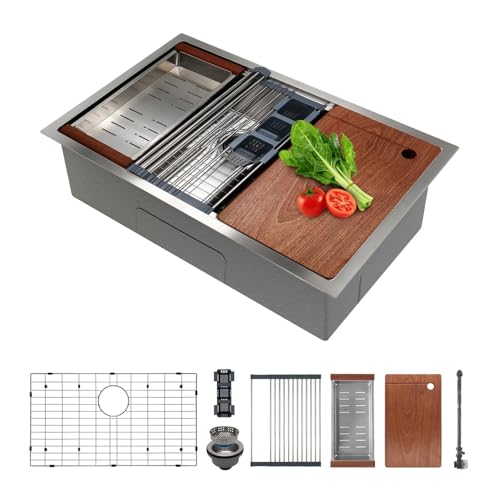
| KRAUS KWU110-32 Workstation Undermount Sink | Best Workstation | 32 inch, undermount | Integrated ledge, cutting board and roll-up rack included | Check on Amazon |
| KRAUS KHU100-32 Undermount Kitchen Sink | Best for Large Batches | 32 inch, undermount | 16 gauge TRU16 steel, NoiseDefend pads | Check on Amazon |
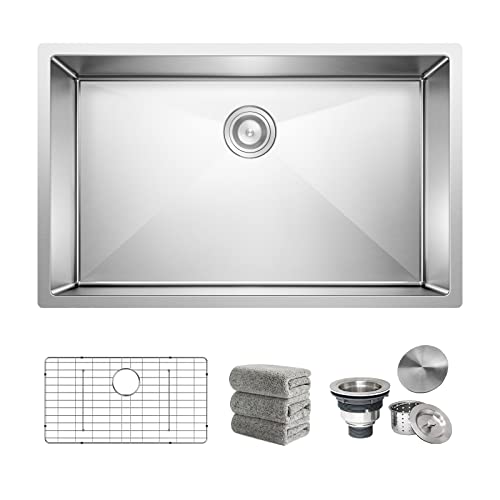
| Oxwiser 30×18 Inch Undermount Sink Bundle | Best Complete Bundle | 30 x 18 inch, undermount, single bowl | Five-item set with bottom grid and drain assembly | Check on Amazon |
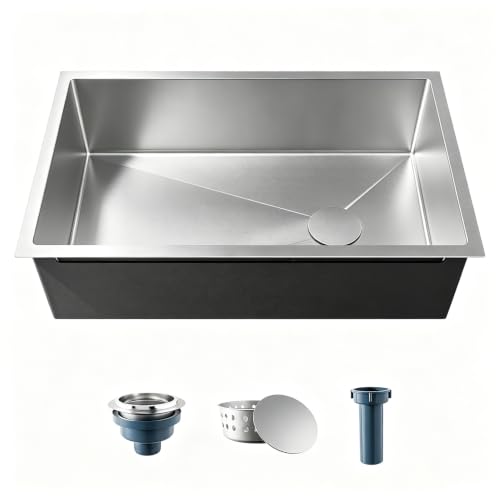
| Delironexu 30 Inch Undermount Kitchen Sink | Best Simple Setup | 30 x 18 x 9 inch, undermount, single bowl | 18 gauge handmade bowl, drain kit included | Check on Amazon |
How These Picks Were Chosen
This guide was built from verified listing data rather than showroom impressions. Each pick in the pool was confirmed through the site’s research pipeline against its Amazon listing: brand, model identity, mounting type, bowl configuration, dimensions, steel gauge, and included parts were all taken from the listing itself, and only confirmed details appear in the spec boxes below. That discipline matters for a granite pairing in particular, because a sink that turns out to be a top-mount model, or two inches wider than its headline suggested, is not a small disappointment when the stone has already been cut around it — it is a project problem.
From the verified pool, picks were ranked for this specific job: living under granite. Undermount compatibility was a hard filter, not a preference. Beyond that, the ranking weighs bowl depth and usable flat bottom area, because granite kitchens tend to be cooking kitchens; steel gauge, because a sink under stone is hard to replace and should be built to stay; drainage behaviour, including the channel grooves several of these bowls use to move water toward the drain; sound dampening, because a stone counter transmits less vibration than laminate but a bare thin bowl still rings; and the completeness of what arrives in the box, since a bundle with a grid and drain assembly removes two separate ordering decisions from a remodel that already has too many.
Two honesty notes. First, this is research-led guidance: we compared specifications, listing data, and the patterns in owner feedback rather than bolting each sink under a test slab, and we say so plainly. Second, no pick here is presented as a granite product in itself — granite compatibility comes from the undermount format, correct sizing, and correct installation, and the sections after the reviews explain those installation decisions in detail so you can judge any sink, including these six, against your own fabricator’s advice. Readers comparing drain layouts as well as stone pairings may also want our notes on Best Kitchen Sinks With Offset Drain, which approach the shortlist from the plumbing side.
The 6 best kitchen sinks with granite countertops, reviewed one by one
Six sinks follow, in the order this guide recommends them for a typical granite installation. Each review covers the specs confirmed from its listing, three strengths, three honest trade-offs, and a plain statement of who should choose it and who should look elsewhere in the list.

cozhao 30 Inch Undermount Kitchen Sink
Badge: Best Overall
Strengths
- Made from 304 stainless steel, the grade buyers look for when a sink has to live under stone for the long term.
- Arrives with a drain assembly included, so the granite install is not held up by a separate parts order.
- The 30-inch single bowl is the most forgiving size in this guide: wide enough for roasting pans, standard enough to suit the cutouts fabricators cut most often.
Trade-offs
- Built in 18 gauge steel, so the bowl feels lighter and sounds tinnier under a running disposal than the 16-gauge picks here.
- Handmade styling means squarer, more modern lines that can look severe under traditional, heavily veined granite.
- No workstation ledge or included grid, so accessories are a separate decision.
- Mount: undermount
- Material: 304 stainless steel, 18 gauge
- Configuration: single bowl
- Size: 30 inch
- Included: drain assembly
- Style: handmade, modern
For most granite kitchens, this is the sink that asks the fewest questions. Thirty inches is the size granite fabricators see every week, which means templates are familiar, cabinet fit is predictable, and the finished reveal looks proportionate on both island and perimeter runs. The single bowl swallows a half-sheet pan flat, takes a tall stockpot without a balancing act, and keeps the stone cutout to one clean opening — every extra opening in granite is extra cost and extra edge to seal, so simplicity here is a genuine feature. The 304 stainless construction is the right alloy family for a wet, salty, acidic workspace, and the included drain assembly removes the small but real risk of ordering a strainer that does not match the drain opening on installation day.
The honest limitation is the gauge. Eighteen gauge is entirely serviceable and common at this tier, but set it beside the 16-gauge Kraus and MAYESAR bowls in this guide and the difference is audible: more flex when you press the bottom, more ring when the faucet runs at full flow. Under granite, where the rim is hidden and the bowl is well supported, that matters less than it would in a top-mount, and many owners will never think about it after week one. If your household runs a powerful disposal for long stretches or tends to drop heavy cast iron into the bowl, one of the thicker picks below is the calmer long-term choice. For everyone else, this is the balanced default: the right size, the right alloy, the right mount, with the drain already in the box.
Best for: most granite remodels that want a dependable 30-inch undermount without extra decisions / Not suited for: buyers who prioritise the heaviest, quietest bowl above all else

MAYESAR 28 Inch Undermount Kitchen Sink
Badge: Best for Compact Granite Runs
Strengths
- 16 gauge steel in a compact footprint, so smaller kitchens do not have to accept a thinner bowl.
- A full 9 inches of bowl depth, which contains splashing and stacks dishes out of sight below the granite line.
- Rounded corners and a brushed finish that wipe clean easily and sit quietly under patterned stone.
Trade-offs
- At 28 inches wide it is the smallest bowl here; large sheet pans will sit at an angle rather than flat.
- The depth that contains splashes also means more reaching down for shorter users and small children.
- Handmade proportions need an accurate template — there is less margin for a sloppy cutout than with a mass-produced rim.
- Mount: undermount
- Material: stainless steel, 16 gauge
- Configuration: single bowl
- Size: 28 x 18 inch
- Depth: 9 inch
- Finish: brushed, round corner design
Granite is not only for big kitchens. Galley layouts, condos, and older homes with short counter runs get the same stone upgrade, and they need a sink that respects a smaller cabinet without feeling like a bar sink. The MAYESAR is built exactly for that case: 28 by 18 inches outside, a genuinely deep 9-inch bowl inside, and 16-gauge steel that gives it the solid, muted feel buyers associate with far larger sinks. Under a compact granite run, that depth is doubly useful — dirty dishes drop below the sight line of the stone, and the tall bowl walls keep faucet spray off the granite and out of the silicone joint.
The trade-off is pure geometry. A 28-inch bowl will not lay a large roasting pan or a full-size sheet pan flat, and cooks who regularly wash oversize trays will feel that limit weekly. The rounded corners are the right call at this size, though: they give back a little usable bottom area compared with tight zero-radius corners, and they make the daily wipe-down faster, which matters when the sink is also the only prep basin in the kitchen. Paired with a pull-down faucet, this is the pick that makes a small granite kitchen feel intentional rather than compromised. Households working through the size question in both directions will find our guide to Best Large Small Kitchen Sinks useful alongside this one.
Best for: compact granite kitchens, galleys, and condos that still want a deep, heavy-gauge bowl / Not suited for: cooks who need to soak full-size sheet pans flat

KRAUS KWU110-32 Workstation Undermount Sink
Badge: Best Workstation
Strengths
- An integrated ledge turns the bowl into a prep station, with a cutting board and roll-up rack included in the box.
- 16-gauge TRU16 steel and NoiseDefend soundproofing give it the most substantial feel and sound profile in this guide.
- At 32 inches it uses a granite island properly, creating a work zone that keeps prep mess off the stone.
Trade-offs
- The ledge narrows the top opening slightly, so the usable width for the very largest pans is less than the headline size suggests.
- Accessories live on the sink when in use and need a home in a cabinet when they are not.
- It is the most committed installation here — the cutout and reveal need to suit the ledge, so discuss it with your fabricator early.
- Mount: undermount
- Material: stainless steel, 16 gauge TRU16
- Size: 32 inch
- Feature: integrated ledge for accessories
- Included: cutting board, roll-up rack
- Sound: NoiseDefend soundproofing
A workstation sink changes what the granite around it has to do. Instead of chopping on the stone, rinsing produce in a colander balanced on the rim, and drying glasses on a towel beside the faucet, the work moves onto the ledge: the board slides over the bowl for prep, scraps sweep straight down, and the roll-up rack holds washed items over the bowl so water drains where it should instead of pooling on granite. For households that cook seriously, that workflow protects the stone twice over — fewer knife-adjacent tasks on its surface, and far less standing water creeping toward the seam and the faucet base.
Kraus builds this one from its TRU16 steel with NoiseDefend padding, and in daily use the combination reads as calm: the bowl does not boom when a pot lands, and the faucet stream does not drum. The limitation to plan around is the ledge itself. It is a horizontal shelf inside the bowl’s top edge, so measure your widest pan against the clear opening below the ledge, not the full 32 inches, and expect to store the board and rack in a cabinet on days you need the whole bowl open. None of that diminishes the concept; it just rewards buyers who think through their two or three most common sink tasks before the stone is cut. If your granite project centres on an island where prep, cooking, and cleanup all happen in one place, this is the most capable sink in the guide.
Best for: keen cooks with a granite island or wide run who want prep to happen over the bowl / Not suited for: buyers who want the simplest possible cutout and no accessories to store

KRAUS KHU100-32 Undermount Kitchen Sink
Badge: Best for Large Batches
Strengths
- A full 32-inch bowl in 16-gauge TRU16 steel, sized for roasting pans, big pots, and batch cooking cleanup.
- Channel grooves in the bowl floor move water toward the drain instead of letting it sheet and pool.
- Rounded corners and NoiseDefend pads make a big bowl easier to clean and quieter to use.
Trade-offs
- Needs a wide cabinet and a confident cutout; it is too much sink for short granite runs.
- A bowl this size uses more water when you fill it for soaking, and takes longer to wipe down.
- No ledge, grid, or drain bundle headline — it is a bowl-first design, so check what is in the box before install day.
- Mount: undermount
- Material: stainless steel, 16 gauge TRU16
- Size: 32 inch
- Drainage: channel grooves
- Corners: rounded, for easy cleaning
- Sound: NoiseDefend pads
Where the workstation above is about workflow, the KHU100-32 is about volume. This is the classic large single bowl executed in heavy steel: a holiday roasting pan goes in flat, a canning pot sits stable, and a day of batch cooking produces a stack the bowl can actually hold. Under granite, that capacity pairs with the stone’s strengths — you can set a hot, heavy pan down on a trivet beside the sink, slide it in for a soak, and never feel the bowl flex or complain. The channel grooves in the floor are a small detail with daily value: rinse water is guided to the drain rather than spreading across a flat bottom, so the bowl dries faster and shows fewer water marks between cleanings.
The cautions are about fit and habit. A 32-inch undermount needs a cabinet with real width beneath it and enough granite on either side of the cutout to keep the stone comfortable; your fabricator will confirm both, and their word overrules any headline measurement. Big bowls also change behaviour: filling one for a soak uses noticeably more water, and a quick rinse of a single mug feels like a long walk across the bowl. Households that mostly wash a few items at a time may be happier with the 30-inch picks. But for family kitchens where the sink is the cleanup engine of the house, this is the straightforward, heavy-gauge answer, and readers who started by searching Best Large Kitchen Sinks will recognise it as the size class that search is really about.
Best for: family kitchens and batch cooks who need a big, quiet, heavy-gauge bowl under granite / Not suited for: narrow cabinets or short counter runs

Oxwiser 30×18 Inch Undermount Sink Bundle
Badge: Best Complete Bundle
Strengths
- Sold as a five-item set: sink, bottom grid, drain assembly, drain cap, and towel arrive together.
- The bottom grid protects both the bowl floor and, indirectly, the routine around the granite by giving heavy pans a stable landing.
- 16 gauge steel at the most versatile size in the guide, 30 x 18 inches.
Trade-offs
- The grid that protects the bowl also needs lifting and rinsing itself, or it traps debris underneath.
- Bundle value depends on wanting every included piece; buyers with an existing disposal flange plan should confirm compatibility.
- A towel and cap are pleasant extras, not reasons to choose a sink — the bowl and grid carry this pick.
- Mount: undermount
- Material: stainless steel, 16 gauge
- Configuration: single bowl
- Size: 30 x 18 inch
- Included: bottom grid, drain assembly, drain cap, towel (five-item bundle)
Remodels fail in the small gaps: the sink arrives, the stone is ready, and the drain assembly or grid is a separate order still in transit. The Oxwiser bundle exists to close that gap. The 30 x 18 bowl is the same versatile footprint as our top pick, but it is built in 16-gauge steel and shipped with the parts a complete install actually consumes — a bottom grid sized to the bowl, the drain assembly, a drain cap for soaking, and a towel. The grid deserves special mention in a granite kitchen: it keeps heavy cookware from grinding grit across the bowl floor, it lets washed items drain above the surface, and it softens the landing of the cast iron and stoneware that granite owners tend to own.
Live with a grid honestly, though. It adds a lift-out-and-rinse step to thorough cleanings, and crumbs that fall through it still need the grid raised to reach them. Some households try a grid for a month and retire it to a cabinet; the good news is the bowl underneath is a sound 16-gauge single bowl either way, so the bundle does not punish experimentation. If your project plan values one delivery, one inventory check, and no accessory errands during install week, this is the most organised way to buy a 30-inch undermount for granite. Shoppers comparing brand-led alternatives in the same size class often cross-check Best Kitchen Stainless Steel Sinks Kraus 30 before deciding.
Best for: remodelers who want the sink, grid, and drain parts in a single delivery / Not suited for: buyers who dislike cleaning around a bottom grid

Delironexu 30 Inch Undermount Kitchen Sink
Badge: Best Simple Setup
Strengths
- Fully specified dimensions in the listing — 30 x 18 x 9 inches — which makes template conversations with a fabricator easier.
- Handmade construction with a brushed finish that hides everyday marks well under stone.
- Drain kit included, with no forced bundle of accessories you did not ask for.
Trade-offs
- 18 gauge steel, so it gives up some solidity and sound dampening to the 16-gauge picks.
- The listing is explicit that no additional accessories are included — no grid, no board, no rack.
- A newer, less established name than Kraus, so long-term owner history is thinner.
- Mount: undermount
- Material: stainless steel, 18 gauge
- Configuration: single bowl
- Size: 30 x 18 x 9 inch
- Style: handmade design, brushed finish
- Included: drain kit (no additional accessories)
The Delironexu makes a virtue of plainness. It is a handmade 30-inch undermount bowl, 9 inches deep, brushed so that the small scratches of daily life blend into the finish instead of announcing themselves, and sold with its drain kit and nothing else. In a granite kitchen where the stone is busy and beautiful, that restraint can be exactly right: the sink disappears under the slab, does its work, and leaves the visual attention on the counter. The fully stated dimensions are a practical kindness — 30 by 18 by 9 leaves your fabricator and cabinet supplier nothing to guess about, which is more than many listings offer.
Judge it on the same terms as the cozhao at the top of this list, since the two are close in spirit: both are 18-gauge, 30-inch, single-bowl undermounts with drain parts included. The Delironexu’s handmade depth is stated outright, while the cozhao leans on its 304 alloy callout; either is a reasonable value-tier route under granite, and neither will feel as planted as the 16-gauge bowls when a heavy pot lands. Choose this one if the simple, accessory-free purchase appeals and the brushed finish suits your stone; choose a thicker pick if the sink will take daily punishment from a large household. Brand-focused shoppers sometimes arrive here after browsing Best Kohler Kitchen Sinks and deciding that verified undermount fit matters more than the badge on the bowl.
Best for: buyers who want a deep, plainly specified 30-inch bowl and no accessory bundle / Not suited for: buyers who want a grid or workstation ledge included
Comparison Table
| Sink | Badge | Size | Gauge | What stands out | Link |
|---|---|---|---|---|---|
| cozhao 30 Inch Undermount | Best Overall | 30 inch | 18 gauge, 304 steel | Drain assembly included | Check on Amazon |
| MAYESAR 28 Inch Undermount | Best for Compact Granite Runs | 28 x 18 inch, 9 inch deep | 16 gauge | Deep handmade bowl, brushed finish | Check on Amazon |
| KRAUS KWU110-32 Workstation | Best Workstation | 32 inch | 16 gauge TRU16 | Ledge, cutting board, roll-up rack | Check on Amazon |
| KRAUS KHU100-32 | Best for Large Batches | 32 inch | 16 gauge TRU16 | Channel grooves, NoiseDefend pads | Check on Amazon |
| Oxwiser 30×18 Bundle | Best Complete Bundle | 30 x 18 inch | 16 gauge | Grid, drain assembly, cap, towel included | Check on Amazon |
| Delironexu 30 Inch Undermount | Best Simple Setup | 30 x 18 x 9 inch | 18 gauge | Handmade, drain kit included | Check on Amazon |
How to Choose a Sink That Suits Your Granite
Start with the cabinet, because the cabinet decides everything else. As a working rule, the base cabinet needs to be wider than the bowl it carries, with room for the mounting hardware and the stone’s support structure; fabricators commonly want a few inches of cabinet beyond the bowl on each side. Measure the cabinet’s interior width, not its door front, and give that number — plus the granite thickness and overhang plan — to your fabricator before you fall in love with a 32-inch bowl. Every pick in this guide is an undermount between 28 and 32 inches, which covers the cabinet sizes found in most American kitchens, but the final word always belongs to the person cutting the stone.
Next, choose the reveal, because it changes both looks and cleaning. With a positive reveal, a small ledge of the sink’s rim shows inside the cutout; it is forgiving to cut and gives the silicone joint a sheltered home, but the exposed rim collects crumbs. With a negative reveal, the granite overhangs the bowl slightly, hiding the rim and the joint entirely; it looks seamless, but the stone edge takes the knocks from pots and the joint is harder to inspect. A zero or flush reveal splits the difference and demands the most precise cutting. None of these is wrong — but you must choose with your fabricator, using the actual sink’s template, before the slab is cut. The handmade sinks in this guide, with their straighter walls, tend to show reveals more crisply; the rounded-corner Kraus bowls soften the line.
Then weigh gauge against lifestyle. Sixteen-gauge bowls — the MAYESAR, both Kraus models, and the Oxwiser — resist dents better, deaden sound better, and feel immovable when you lean on the front edge of the granite and press down into the bowl. Eighteen-gauge bowls — the cozhao and Delironexu — are lighter to handle during installation and entirely adequate for most households, especially under stone where the rim is fully supported. What you should not do is pay for thickness while ignoring drainage: a bowl whose floor is shaped to move water, like the channel-grooved Kraus designs, will look cleaner between washings than a thicker bowl with a dead-flat floor that holds a film of water.
Finally, think about the faucet as part of the granite decision. Most granite installations drill the faucet holes through the stone behind the sink, so the faucet’s reach must suit the bowl you choose: a deep 9-inch bowl with the faucet set back behind a wide slab needs a spout that lands water near the middle of the bowl, not against its back wall. Decide the faucet hole count before fabrication, confirm the disposal and soap dispenser plan at the same time, and remember that every hole in granite is permanent. The sink is the cheapest part of this assembly to change your mind about — until the stone is cut, at which point it becomes the most expensive.
How to Prepare for Installation and Care for the Granite-to-Sink Joint
Undermount installation under granite is professional work, but informed owners get better results, and the preparation steps are yours to own. First, have the physical sink on site before templating — not the listing, not a PDF, the actual bowl — so the fabricator can verify the template against the real rim. Second, agree the reveal in writing and check the cutout against the bowl before the slab leaves the shop. Third, discuss support explicitly: a heavy steel bowl full of water and dishes is a serious load, and it should be carried by a proper system of clips, rails, or a cradle tied to the cabinet, never by adhesive and the stone alone. Fourth, plan the plumbing sequence: faucet and disposal decisions made before install day prevent the most common delays. Fifth, once the sink is set and the silicone joint is tooled, respect the cure time before filling the bowl or running the disposal.
Day-to-day care is mostly about the joint and the stone edge. Wipe the reveal dry after heavy use rather than letting water sit against the silicone. Clean the bowl with a soft cloth or sponge and mild detergent; the brushed and rounded-corner designs in this guide forgive a lot, but scouring powders and steel wool will eventually dull any stainless finish and can scratch the polished granite edge at the cutout. Reseal your granite on the schedule your fabricator recommends, and inspect the silicone line whenever you do: the joint is a wear item, and catching a tired seal early is a small job, while water that has been reaching the cabinet interior is not.
Three common problems, and what to do about each. Problem: water pools on the bowl floor and leaves marks → check that nothing is blocking the drain, clean the grooves or floor with a soft brush, and dry the bowl after the last use of the evening for a week to reset the habit. Problem: the silicone joint shows dark staining or a gap → the seal is at end of life; have it cut out and renewed rather than smearing new sealant over old. Problem: a hollow or drumming sound when the faucet runs → confirm the bowl’s pads are intact and the mounting hardware is snug; a sink that has shifted slightly on its mounts should be re-set by the installer, not shimmed from above.
Granite Colours, Veining, and the Stainless Question
One reason stainless steel dominates under granite is that it refuses to argue with the stone. A busy slab — heavy veining, strong movement, multiple minerals — already supplies the kitchen’s visual drama; a brushed steel bowl underneath it reads as a calm, professional shadow line. A quiet, uniform granite, by contrast, can carry more presence from the sink area, which is where the workstation’s ledge line and the handmade sinks’ crisp geometry earn their place: the sink becomes part of the composition instead of disappearing. In both cases, the undermount format is what makes the pairing work, because the eye reads the stone edge as a continuous frame around the bowl.
Practically, brushed finishes are the forgiving choice under stone. They diffuse reflections from under-cabinet lighting, hide the micro-scratches that any working sink collects, and blend the small water spots that hard water leaves behind. The two brushed, handmade picks in this guide — the MAYESAR and the Delironexu — lean into that practicality, while the Kraus bowls add sound treatment that suits open-plan kitchens where the granite island doubles as a social surface and a clattering sink carries across the room.
What a Granite Installation Adds to the Budget Picture
Without naming figures — sink prices move too fast for print, and you should check the latest price on Amazon for any pick here — it is worth understanding where the money in a granite-and-sink project actually goes, because the sink itself is rarely the largest line. The stone, its fabrication, and its installation dominate; then come the faucet and any stone drilling, the plumbing labour, and the support and sealing materials. That shape has a buying implication: economising hard on the bowl while spending freely on the slab is usually the wrong trade, because the bowl is the part you touch a hundred times a day and the hardest part to swap later. The sensible economy is the one the value-tier picks here represent — a simpler bowl with fewer accessories — rather than a thinner, noisier sink in a size you will outgrow.
The reverse also holds. If the budget is tight, a 30-inch undermount from this list under a well-chosen granite will satisfy most households for years, and money saved by not upsizing the bowl can go toward the faucet, which is the other component whose quality you feel daily. Treat the tiers in this guide qualitatively: the workstation and heavy-gauge bundles sit at the premium end of this particular shortlist, the straightforward 18-gauge bowls at the accessible end, and the right choice is the one whose compromises you will notice least.
Common Buying Mistakes
The most expensive mistake is ordering the stone cut before the sink is chosen and on site; templates differ, and a cutout made for one bowl rarely suits another. Second is choosing by headline width alone, without checking cabinet interior width, bowl depth, and the clear opening a workstation ledge leaves. Third is ignoring the reveal decision until install day, when it becomes the installer’s guess instead of your choice. Fourth is assuming the sink hangs from the granite: support is a system, and it should be specified, not assumed. Fifth is forgetting the faucet’s reach and hole count until the slab is drilled. Sixth is buying a bundle without checking what it actually includes — or, just as common, buying a bare bowl and discovering on install morning that the drain assembly was a separate purchase all along.
Final Recommendation
For most granite kitchens, start with the cozhao 30 Inch Undermount Kitchen Sink: the versatile 30-inch size, the 304 stainless construction, and the included drain assembly make it the pick that fits the widest range of cabinets, stones, and cooking styles. If your granite run is compact, the MAYESAR 28 Inch Undermount Kitchen Sink gives you heavy 16-gauge steel and real depth without overwhelming a smaller cabinet. If your island is where the cooking happens, choose the KRAUS KWU110-32 Workstation and let its ledge keep prep work off the stone. Batch cooks with wide cabinets should look at the KHU100-32, remodelers who want everything in one box should take the Oxwiser bundle, and buyers who want the plainest deep bowl should take the Delironexu. Any of the six will sit correctly under granite; the best one is the one whose size and compromises match your kitchen.
Frequently Asked Questions
Can any of these sinks be installed with granite countertops?
Yes — all six picks are undermount sinks, which is the mounting style designed for stone counters. The sink mounts beneath the slab, the granite edge is finished around the cutout, and the bowl is carried by clips, rails, or a support cradle in the cabinet. Confirm your cabinet width and reveal choice with your fabricator before the stone is cut.
Should I choose 16 gauge or 18 gauge steel for a sink under granite?
Sixteen gauge is thicker: it resists dents better, sounds more muted, and feels more solid, which is why four of the six picks here use it. Eighteen gauge is lighter and entirely workable, especially under stone where the rim is well supported. If the sink will see heavy pots, a hardworking disposal, and daily family use, lean 16 gauge; for lighter use, 18 gauge is a reasonable economy.
What reveal should I ask my fabricator for?
It depends on your priorities. A positive reveal shows a sliver of rim and shelters the silicone joint; a negative reveal hides the rim for a seamless look but exposes the stone edge to knocks; a flush reveal splits the difference and needs the most precise cutting. Decide using the actual sink’s template, and decide before fabrication — the reveal cannot be changed afterwards.
Is a single bowl or a double bowl better with granite?
For most granite kitchens, a single bowl — the configuration of every pick in this guide — is the simpler and more flexible choice: one cutout, one unobstructed space that takes sheet pans and tall pots flat. Double bowls divide that space and add a second drain to plumb. Households that hand-wash delicate items separately sometimes prefer a divider, but the trend under stone is strongly toward one generous bowl plus a grid or ledge for organisation.
How do I maintain the seam between the sink and the granite?
Keep it dry when you can, wipe up standing water at the reveal, and inspect the silicone joint whenever you reseal the granite. The joint is a wear item: if it stains dark, cracks, or pulls away, have it removed and renewed. Never let a failed joint keep admitting water into the cabinet — early resealing is a small job, cabinet repair is not.
Do I need a bottom grid with a granite installation?
A grid is optional but genuinely useful: it protects the bowl floor from heavy cookware, gives washed items a draining surface above the bowl, and softens impacts. The Oxwiser bundle includes one sized to its bowl. If you buy a bare bowl, you can add a correctly sized grid later — measure the bowl’s flat bottom area, not its headline dimensions, before ordering.
When should the sink arrive during a granite remodel?
Before templating. Your fabricator should verify the physical sink against its template, agree the reveal, and confirm the faucet hole plan with the bowl in hand. Ordering the sink early also lets you check the drain assembly, grid, or workstation accessories against your plumbing plan while there is still time to fix a mismatch calmly.