Disclosure: topratedkitchenware.com is reader-supported. When you buy through links on our site, we may earn an affiliate commission from Amazon and other retailers, at no extra cost to you.
Where to buy
This guide to the best low cost toasters follows one money rule from its first line to its last: no static prices are printed anywhere in it, because toaster prices move with seasons, sellers and coupons, and a figure printed here would mislead you within weeks. Instead, every pick is positioned by tier — what its design and feature set say about where it sits in the market — and the links let you check the latest price on Amazon at the moment you are actually shopping. Five of the six verified picks are linked as genuine low-cost-tier machines. The sixth, the Hommater smart toaster, is reviewed in full as prose-only: it is this pool’s feature flagship, with an LCD countdown, nine shade settings and a smart-display positioning a clear tier above the basic two-slice brief this keyword describes, and a low-cost guide that linked it as a budget pick would be bending its own definition. Everything else here earns its place the honest way — by doing the whole basic job for the lowest tier of money, with the specifications to prove it and the ownership details to last.
- Hommater 2 Slice Wide Slot Smart Toaster — The Pool’s Feature Flagship (prose-only). A display-led, nine-setting machine positioned a tier above this guide’s brief.
- Amazon Basics 2 Slice Toaster — Best Overall Low-Cost Pick. The complete basic specification: labelled buttons, tray, cord wrap, 900W.
- Elite Gourmet ECT1027B Cool-Touch Toaster — Best Low-Cost Pick With a Measured Slot. 1.25-inch slots, cool-touch body, cancel listed.
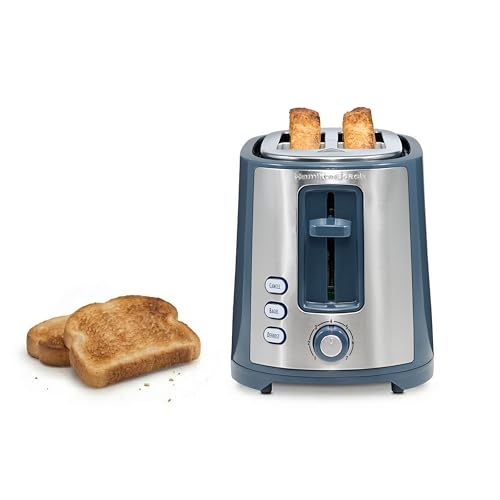
- Hamilton Beach 22634 Extra-Wide Slot Toaster — Best Low-Cost Feature Value. Toast Boost and auto shutoff at a value tier.
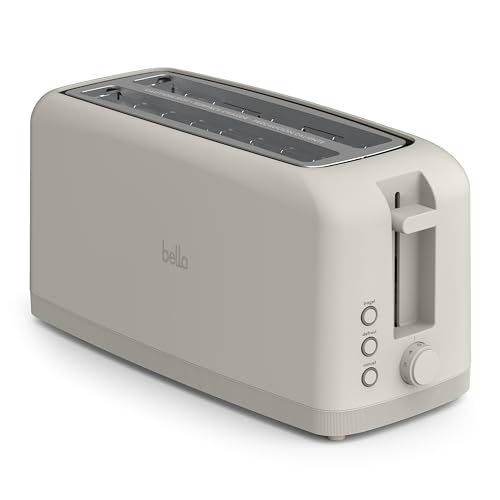
- bella Fits-Anywhere Slim Toaster — Best Low-Cost Way to Get a Long Slot. Four slices and an extra long slot from a value design brand.
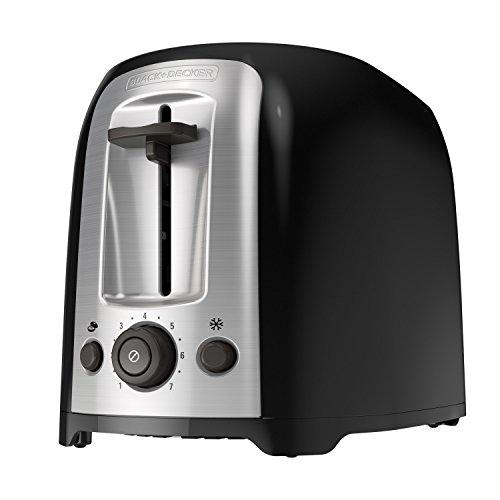
- BLACK+DECKER 2-Slice Toaster with Extra-Wide Slots — Best Low-Cost Traditional Pick. Seven shades and an extra lift lever in the classic format.
Read the full guide ↓ for what “low cost” should and should not mean in a toaster, tier-by-tier reviews of all six machines, and the total-cost thinking that outlasts any single price tag.
The search for the best low cost toasters is really a search for the floor of competence: the point below which a toaster stops being a bargain and starts being a false economy. That floor is knowable, and this guide’s five linked picks all stand on the right side of it — a claim the reviews below justify machine by machine, specification by specification, rather than asking you to take on trust. A competent basic toaster centres bread in its slots, browns both sides respectably, offers enough shade range for a household, retrieves small slices safely, empties its crumbs without a wrestling match and survives years of daily levers. Everything above that floor — displays, countdowns, nine-step ranges, designer finishes — is genuine pleasure but optional, and the art of low-cost buying is refusing to pay the optional tier for a job the floor already does. This guide applies that art strictly, which is why its one prose-only pick is the pool’s most feature-loaded machine: not because it is a bad toaster, but because a low-cost guide must mean what it says. Readers curious about the tier above can see the same pool argued from the top down in our Best Luxury Toasters coverage, where the flagship’s virtues get their proper hearing.
Key Takeaways
- No prices are printed in this guide, deliberately: check the latest price on Amazon through each pick’s links, and judge the tier positioning here against the live figure there.
- Five picks sit honestly in the low-cost tier: the Amazon Basics, Elite Gourmet, Hamilton Beach, bella and BLACK+DECKER, each doing the complete basic job with a different strength.
- The Hommater is prose-only as this pool’s feature flagship — an LCD countdown and nine shades position it a tier above the low-cost brief, however keenly it may be discounted on any given day.
- Low cost is a tier, not a number: the right question is whether a machine’s design targets the value end of its category, which these five demonstrably do.
- The cheapest toaster to own is the one bought once: crumb trays that get emptied, levers that feel solid and slots that fit your bread decide the real cost per year.
- Surprise of the pool: the bella brings a four-slice long-slot format — normally a premium shape — from a value design brand, making it the low-cost route to artisan bread.
In this guide
Quick Picks
Badges match the detailed reviews. Tier positions are qualitative judgements from each model’s design and feature set, as this guide’s no-static-price rule requires.
| Pick | Badge | Tier position | Working headline | Link |
|---|---|---|---|---|
| Hommater 2 Slice Smart Toaster | The Pool’s Feature Flagship | A tier above the low-cost brief | LCD countdown, 9 shades | Prose-only — see review |
| Amazon Basics 2 Slice Toaster | Best Overall Low-Cost Pick | Core value tier | 6 settings, 900W, cord wrap | Check on Amazon |
| Elite Gourmet ECT1027B | Best Low-Cost Pick With a Measured Slot | Core value tier | 1.25-inch slots, cool-touch | Check on Amazon |
| Hamilton Beach 22634 | Best Low-Cost Feature Value | Value tier, feature-rich | Toast Boost, auto shutoff, 7 shades | Check on Amazon |
| bella Fits-Anywhere Slim | Best Low-Cost Way to Get a Long Slot | Value design tier | 4 slice, extra long slot | Check on Amazon |
| BLACK+DECKER 2-Slice | Best Low-Cost Traditional Pick | Core value tier | 7 shades, extra lift lever | Check on Amazon |
How These Picks Were Chosen
This is a research-led guide, not a laboratory report, and its money discipline deserves a plain explanation. The pool was verified through Amazon’s own catalogue tools on 2026-11-20. From those verified titles we know each machine’s format, slot claims, shade range, named functions and finish — the raw material of tier positioning. What we deliberately did not do is print prices: not the listings’ prices on the check date, and not invented “typical” figures, because a low-cost guide that hard-codes numbers becomes a liar on a schedule. Instead, each pick is placed by the evidence of its own design. A house-brand two-slice with six settings and a cord wrap is a value-tier machine by construction. A smart-display toaster with a countdown, nine shades and four named functions is a feature flagship by construction, whatever this week’s coupon says — and when a flagship is discounted into value territory, the listing link is where you will discover that happy fact, with this guide’s review still telling you the truth about which tier it was built for.
That is also why the Hommater is prose-only here while being linked in several sister guides: link decisions follow the keyword’s lens, and this keyword’s lens is tier. The remaining five are linked with their value credentials stated per machine — a measured slot at a basic tier, a Toast Boost at a value tier, a long-slot format from a value design brand — so the reader can match a budget philosophy to a breakfast. Build quality, the other half of real cost, is treated in depth in our Best Made Toasters guide; this page’s reviews flag the specific details — trays, levers, carriages — where a cheap toaster reveals whether it is inexpensive or merely cheap.
The 6 Best Low Cost Toasters in Detail
Hommater 2 Slice Wide Slot Smart Toaster
Badge: The Pool’s Feature Flagship (prose-only)
Strengths
- LCD digital countdown timer: the most advanced control interface in this pool, turning browning into a timed process.
- Nine shade settings — the widest range here — with Bagel, Defrost, Cancel and Reheat functions all named.
- Wide slot handles thick slices and bagels in a two-slice body.
Trade-offs
- Its feature set positions it a tier above this guide’s low-cost brief, so it is reviewed prose-only with no link.
- No wattage is stated in the title.
- More interface than a basic brief needs — the definition of paying for the optional tier.
Mini spec box
- Format: 2 slice, wide slot
- Display: LCD digital countdown timer
- Shade settings: 9
- Functions: Bagel, Defrost, Cancel, Reheat
- Tier: feature flagship of this pool
Every low-cost guide needs its boundary marker — the machine that shows where the brief ends — and in this pool the Hommater draws that line with unusual clarity. Nothing about it is basic: a countdown display, nine browning steps, four named functions including a Reheat most value machines omit. It is, by the evidence of its own title, the pool’s attempt at a smart toaster, positioned the way flagships are always positioned, a clear step above the two-slice essentials. A low-cost guide that linked it would be telling you that “low cost” means “whatever is in the pool,” and words would stop meaning anything. So it is reviewed here in full and praised accurately — if your budget stretches a tier and you value timing information, it is a genuinely attractive machine, and sister guides link it gladly — but in this guide it carries no link and no image, and its presence serves to define, by contrast, what the five linked picks achieve: the complete basic job, without the flagship’s layer of delightful, payable extras.
Best for: buyers whose budget quietly stretches a tier and who value a countdown and fine shade control / Not suited for: this guide’s brief — a strict low-cost purchase
Prose-only pick: no Amazon link and no image, because its feature set positions it as this pool’s flagship tier, above the low-cost brief.

Amazon Basics 2 Slice Toaster
Badge: Best Overall Low-Cost Pick
Strengths
- The complete basic specification with nothing missing: Defrost, Cancel and Bagel buttons, six browning settings, extra wide slots.
- Removable crumb tray and cord wrap — the two ownership features that decide whether a cheap toaster stays pleasant.
- 900W is the pool’s one stated wattage, and it sits at the modest end, which also makes its running-cost story the easiest to reason about.
Trade-offs
- Six settings is the joint-narrowest shade range here, so fine browning distinctions are coarser.
- Black and Silver utility styling contributes nothing to a designed kitchen.
- Extra wide slots address thickness only; long artisan slices need the bella’s format.
Mini spec box
- Format: 2 slice, extra wide slots
- Power: 900W
- Browning settings: 6
- Buttons: Defrost, Cancel, Bagel
- Extras: removable crumb tray, cord wrap
- Finish: Black and Silver
- Tier: core value
The Amazon Basics is what the floor of competence looks like when a house brand builds it without apology. Every element of the basic job is present and labelled: a button for frozen bread, a button to stop, a button for bagels, a dial with six stops, slots wide enough for the thick end of ordinary bread, a tray that comes out to be emptied and a cord that wraps for the cupboard. That completeness is the entire low-cost argument — the savings come from what is absent (no display, no colour programme, no ninth shade) rather than from anything being done badly. The 900W figure deserves its sentence: it is the only wattage this pool states, it is modest for the format, and it means the machine’s browning ramp is a touch gentler, which beginners experience as forgiveness when a new loaf browns faster than the last. For a first flat, a rental, a second toaster for the holiday let, or simply a household that regards a toaster as a tool rather than a hobby, this is the pool’s most defensible purchase — the machine our Best Low Energy Toasters guide also leans on, since its stated wattage is the only firm ground in that conversation too.
Best for: first kitchens, rentals and anyone who wants the complete basic job at the core value tier / Not suited for: shade perfectionists, or long-slice households

Elite Gourmet ECT1027B Cool-Touch Toaster
Badge: Best Low-Cost Pick With a Measured Slot
Strengths
- Slot width stated as a figure — 1.25 inches — a specification honesty rarely found at the value tier.
- Cool-touch body adds a family-safety virtue that basic toasters usually charge more for.
- Cancel is listed, with six shades and a stated fit for bagels and thick bread.
Trade-offs
- Six shades, and no display to time a cycle by.
- Slot length is standard; long slices need the flip method or a different pick.
- All-black finish shows dust and flour readily.
Mini spec box
- Format: 2 slice, cool-touch body
- Slot width: 1.25 inches, extra-wide
- Shades: 6
- Named feature: Cancel
- Model: ECT1027B, Black
- Tier: core value
The Elite Gourmet’s low-cost distinction is that it specifies like a dearer machine. A measured slot width is the kind of detail value-tier titles usually skip in favour of adjectives, and its presence here means a buyer can verify the one dimension that decides bagel mornings — thickness — before spending anything. The cool-touch body is the second above-tier touch: in a family kitchen, an exterior that stays comfortable is a safety feature parents otherwise hunt in mid-range models. Around those two virtues sits a complete basic specification — six shades, a listed cancel, an explicit brief for bagels and thick bread — in a plain black body that asks nothing of any kitchen’s scheme. Its limits are the tier’s usual ones: a standard-length slot and a six-step range. Judged as what it is, a value machine with two specifications borrowed from the tier above, it is one of the easiest recommendations in this guide, and a standing rebuke to dearer titles that cannot be bothered to measure their own slots. The mid-market context for that rebuke is developed in our Best Mid Range Toasters coverage, where several costlier machines offer less information than this one does.
Best for: families wanting a cool-touch body and a verifiable slot at the value tier / Not suited for: long-slice bakers, or households wanting a wide shade range
Hamilton Beach 22634 Extra-Wide Slot Toaster
Badge: Best Low-Cost Feature Value
Strengths
- Toast Boost — a genuinely thoughtful retrieval feature — at a value tier where it is rarely found.
- Auto shutoff adds a safety layer most basic machines omit.
- Seven shades, bagel and defrost buttons, and a slide-out crumb tray complete the strongest feature-per-tier package here.
Trade-offs
- No cancel function is named in the title.
- The Kitchen Makeover Blue finish is a colour commitment, and coloured finishes show wear sooner than black.
- Extra-wide is width only; long slices are served by the bella.
Mini spec box
- Format: 2 slice, extra-wide slot
- Browning control: 7 shades
- Buttons named: Bagel, Defrost
- Features: auto shutoff, Toast Boost, slide-out crumb tray
- Finish: Kitchen Makeover Blue
- Model: 22634
- Tier: value, feature-rich
If the Amazon Basics defines the floor, the Hamilton Beach shows how much headroom the value tier can have. Toast Boost is the headline: a mechanism that lifts small slices clear after the cycle, solving the daily fingertip problem that basic toasters usually leave to forks and prayer. Auto shutoff is the second above-tier inclusion, a safety behaviour more often marketed as a premium virtue. Seven shades widen the household spread beyond the tier’s usual six, and the slide-out crumb tray is the easiest-cleaning design in the pool at any tier. Even the blue finish participates in the value argument, delivering the colour-pop effect that designed kitchens pay dearly for, from a mainstream value brand. The honest debits are a missing named cancel and a coloured coat that will show its years sooner than black. On a features-per-tier reckoning, though, this is the pool’s overachiever — the pick for the low-cost buyer who reads spec sheets and enjoys finding the one machine in the row that gives more than its station promises.
Best for: feature-hunting value buyers, small-slice households, and neutral kitchens wanting a cheerful accent / Not suited for: buyers who need a named cancel function, or long-slice households

bella Fits-Anywhere Slim Toaster
Badge: Best Low-Cost Way to Get a Long Slot
Strengths
- An extra long and wide slot — a format usually sold at a premium — from a value design brand, in a four-slice body.
- Slim Fits-Anywhere profile solves the counter problem that makes long-slot machines impractical in small kitchens.
- The Oatmilk finish delivers a designed look that the value tier almost never attempts.
Trade-offs
- No shade count or wattage is stated in the verified title; both must be confirmed on the listing before judging its full value.
- A pale finish needs a weekly wipe to stay fresh.
- Households with standard loaves are buying a format they do not need, however keen the tier.
Mini spec box
- Format: 4 slice, slim body
- Slot: extra long and wide
- Design line: Fits-Anywhere
- Finish: Oatmilk
- Tier: value design
The bella is this guide’s plot twist: the machine that breaks the low-cost category’s usual bargain, in which saving money means accepting the standard format. Long slots and four-slice capacities are the shapes the premium end of the market reserves for its flagships, and design-led finishes are its other toll — yet here is a value design brand offering the long format, the family capacity, a slim body engineered for small counters and a contemporary Oatmilk finish in a single product. For the sourdough household on a budget, that combination is close to unique in this pool: it is the only route to single-pass long-slice toasting that does not climb tiers. The cautions are documentary — the title states neither shade count nor wattage, so the listing must be read before the value verdict is final — and practical, since a pale design finish asks for its weekly wipe. Neither dents the central fact: if your bread is long and your budget is not, this is the pick the whole guide bends toward, and its metal-and-finish presentation is further examined in our Best Metal Toasters discussion of what surfaces at each tier actually deliver.
Best for: budget-conscious artisan-bread households and design-minded small kitchens / Not suited for: standard-loaf households, or buyers who will not verify unstated specifications
BLACK+DECKER 2-Slice Toaster with Extra-Wide Slots
Badge: Best Low-Cost Traditional Pick
Strengths
- Seven shade settings at the value tier — one more stop than the tier’s usual six.
- Extra lift lever brings safe small-slice retrieval to the classic format.
- Bagel mode and a removable crumb tray complete a specification with no holes in it.
Trade-offs
- No cancel function is named in the title.
- No display; timing is by eye, in the traditional manner.
- Extra-wide slots only — long slices belong to the bella.
Mini spec box
- Format: 2 slice, extra-wide slots
- Shade settings: 7
- Mode: bagel
- Features: extra lift lever, removable crumb tray
- Tier: core value
The BLACK+DECKER closes the reviews as the traditionalist’s value pick, and its argument is longevity of design. The classic two-slice format, refined over decades, arrives here with every basic virtue present — width for bagels, seven shades for the household, a lift lever for the short slice, a tray that comes out — and nothing experimental to go wrong or go out of fashion. In low-cost buying, that conservatism is a financial strategy: a proven format from a high-volume maker is the profile least likely to surprise its owner in year two, and cost-per-year is the only cost that finally matters. Its debits are the familiar ones in this pool — no named cancel, no display, no length — and they are stated as plainly here as everywhere else in this guide. For the buyer who wants the value tier’s safest pair of hands, in the format their parents’ kitchen already proved, this is the pick; it asks only that your bread be standard and your expectations be set to “competent, daily, for years,” which is the most honourable promise a low-cost toaster can make.
Best for: traditionalists who want proven, complete basics at the value tier / Not suited for: buyers needing a named cancel, a display, or a long slot
Comparison Table
| Pick | Tier position | Capacity | Shades | Value headline | Link |
|---|---|---|---|---|---|
| Hommater 2 Slice Smart | Flagship of this pool | 2 slice | 9 | Countdown display — above this brief | Prose-only |
| Amazon Basics 2 Slice | Core value | 2 slice | 6 | Complete basics, cord wrap, 900W | Check on Amazon |
| Elite Gourmet ECT1027B | Core value | 2 slice | 6 | Measured 1.25-inch slot, cool-touch | Check on Amazon |
| Hamilton Beach 22634 | Value, feature-rich | 2 slice | 7 | Toast Boost and auto shutoff | Check on Amazon |
| bella Fits-Anywhere Slim | Value design | 4 slice | Not stated in title | Long slot at a value tier | Check on Amazon |
| BLACK+DECKER 2-Slice | Core value | 2 slice | 7 | Proven format, extra lift | Check on Amazon |
How to Choose a Low Cost Toaster: Tier Thinking, Not Price Tags
Choose by tier and by job, in that order. The job comes first because it is free to define: write down your bread (standard, thick, long, frozen), your household’s shade spread, and your retrieval reality (small slices daily, or never). Then let the tier follow from the job. If the job is standard bread for a household with settled tastes, the core value tier — Amazon Basics, Elite Gourmet, BLACK+DECKER — does it completely, and every step up buys pleasure rather than competence. If the job includes small slices constantly, the Hamilton Beach’s value-tier feature richness is the rational upgrade that stays inside the brief. If the job includes long bread, the bella is the brief’s one legitimate stretch, because format is competence, not luxury: a standard toaster does not do that job at any shade setting. What the tier discipline forbids is the unexamined upgrade — the display bought because it was there, the ninth shade bought for a household of two settings. Those purchases are how low-cost intentions quietly become mid-range spending, and they are exactly what this guide’s prose-only flagship exists to make visible.
The second discipline is verification at the live listing. Because this guide prints no prices, your final step is always the same: follow the link, read the current figure, and set it against the tier story you have just read. A core-value machine listed at a flagship figure is no longer a low-cost pick whatever its badge says, and a flagship discounted into the value tier — the Hommater on a good week — can be a legitimate bargain provided you wanted its features in the first place. Prices move; tiers are stable; buy the tier with the price as the confirmation, never the other way round. Compact kitchens with a value brief may also cross-check our Best Mini Toasters coverage, where the same discipline is applied to the smallest formats.
How to Get the Most From a Basic Toaster: Technique and Troubleshooting
A basic toaster rewards technique more than a feature-rich one, because the technique is doing the work the features would have done. Calibrate in the first week: one loaf, three adjacent settings, the winner written down, and a separate note for frozen slices. Centre slices in wide slots rather than letting them lean, since a leaning slice browns unevenly and gets blamed on the machine. Manage the second-batch effect by dropping a shade when the elements are already hot — on a basic dial that single habit replaces a countdown display for most households. For long slices in a standard slot, use the flip method: halfway through, turn the slice end-for-end and finish lighter, accepting the compromise as the price of the format you chose. And keep the crumb tray on a weekly rhythm, because a basic toaster’s most common failure — a carriage that will not stay down — is usually a crumb problem wearing a mechanical disguise.
- Problem: toast is uneven at every setting → check centring first, then slice thickness consistency; wide slots forgive thickness but not lean.
- Problem: the carriage pops up immediately or will not latch → unplug, empty the tray, and shake out the cooled machine; crumbs under the carriage are the usual cause, long before any electrical fault.
- Problem: one household member’s toast keeps burning → the dial was left at the previous user’s shade; agree a reset-to-middle house rule after every use, the cheapest feature in this entire guide.
The Real Cost of a Cheap Toaster: Cost Per Year, Not Cost Per Box
The mature way to read “low cost” is across time. A toaster’s true price is its purchase figure divided by the years it serves, plus the breakfasts it ruins on the way. That arithmetic rehabilitates some value machines and condemns others, and the reviews above were written to feed it: trays that slide or lift out get emptied, and emptied trays prevent the crumb failures that kill basic toasters early; levers and carriages from high-volume proven formats (the BLACK+DECKER’s classic layout, the Amazon Basics’ simplicity) have the statistical calm of designs built in the millions; a cool-touch body (Elite Gourmet) reduces the knocks and haste that age a family appliance. Conversely, the arithmetic warns against the false floor: a machine below this pool’s competence line — uneven elements, a tray that cannot be emptied, a slot that fits nothing you eat — costs its full price every time it is replaced, and it will be replaced. The five linked picks are this guide’s answer to that arithmetic: the lowest tiers at which the job is still done completely, by designs with the ownership details that let a cheap toaster become an inexpensive one — which, over a decade of breakfasts, is the only kind of cheap that matters.
What the Value Tier Gives Up — and Why It Rarely Matters
Honesty about a tier means naming its sacrifices, so here they are, drawn from the five linked machines themselves. You give up browning granularity: six or seven shades instead of nine, which in practice means your household’s pale and dark camps sit one stop closer together than a flagship would let them — a compromise most families resolve in a week of calibration and never revisit. You give up information: no countdown, no display, so timing is learned by ear and eye, the way toast was judged for a century, with the second-batch effect managed by habit rather than by readout. You give up a measure of finish theatre: utility black-and-silver, plain black, one cheerful blue, and a single design-led exception in the bella, instead of the metal-and-glass wardrobe of the tiers above. And you give up, in most of these titles, a named cancel on some models and a defrost programme’s sophistication on others — small, specific absences this guide has flagged per machine rather than smoothing over. What you do not give up is the toast: centred, browned on both sides, retrieved safely, from slots sized for real bread, in machines whose trays empty and whose levers latch. The value tier’s bargain, stated plainly, is that everything it withholds is a refinement of an experience it still delivers whole — which is precisely what separates a low-cost toaster from a cheap one, and why this guide can recommend five of them without a single asterisk on the breakfast itself.
Low Cost, Household by Household
The right value pick depends on who is eating, so here is the pool re-sorted by household. For the first flat and the student house, the Amazon Basics is the answer almost by definition: complete basics, a cord wrap for a cupboard life, and a gentle 900W ramp forgiving of beginners — the toaster as solved problem, bought in an afternoon and forgotten by the weekend, exactly as it should be at that stage of life. For the young family, the Elite Gourmet’s cool-touch body and listed cancel move it ahead, because small hands and interrupted mornings are its design brief, and its measured slot settles the bagel question with a number. For the busy shared house, the Hamilton Beach earns its place on retrieval and safety — Toast Boost ending the fork-fishing era, auto shutoff insuring the mornings when everyone leaves at once — with the blue finish as the house’s small daily joke of colour. For the baking household on a budget, the bella is the only honest route in the pool: the long slot is not an indulgence but the difference between their bread toasted and their bread compromised, and its four-slice round serves the weekend table in one pass. And for the traditional household replacing a faithful old machine, the BLACK+DECKER’s proven format minimises the one cost nobody prices — relearning — arriving as the toaster they already know how to use. Five households, five different “best” answers, one tier: that is what a low-cost guide is for, and why its rankings are always conditional in a way a flagship ranking never needs to be.
Reading a Value-Tier Listing Like an Engineer
Since this guide sends you to live listings for the final verdict, it owes you a method for reading them. Read a value toaster’s listing in this order. First, the slot: find a dimension or a defensible claim — a stated width like the Elite Gourmet’s 1.25 inches beats a paragraph of adjectives — and set it against your thickest regular slice. Second, the shade range and the named buttons: you are checking for holes in the basic job (no defrost if you freeze bread, no cancel if your household rescues toast), not collecting features. Third, the crumb arrangement: a named removable or slide-out tray is a durability feature wearing a cleaning costume, and its absence from a listing is information. Fourth, the wattage, where stated: it will not change your breakfast, but it completes the running-cost picture and, at this tier, usually confirms the modest-draw pattern. Fifth and last, the price — read only after the first four have told you what the machine is, so the figure lands as a judgement on a known object rather than as a substitute for one. Listings are written to reverse that order, price first and loudest; the whole discipline of low-cost buying is refusing the reversal. Do it in this guide’s order and the value tier becomes what it should be: the calmest, most rational purchase in the kitchen, made with better information than most flagship buyers ever gather.
Common Buying Mistakes
- Chasing a printed price. Any figure in any article is stale on arrival. Judge the tier here; confirm the live price through the link.
- Buying the flagship for a basic job. Displays and nine shades are pleasures, not competence. If the job is standard toast, the value tier already does it.
- Going below the competence floor. The cheapest toaster is the one bought once; a machine that browns unevenly or cannot be cleaned will be bought twice.
- Ignoring the tray and the lever. At the value tier, ownership details — an emptied tray, a solid carriage — are the durability specification.
- Paying for format you do not eat. A long slot is competence for sourdough households and dead money for sandwich-loaf ones. Let the bread decide.
- Forgetting running costs entirely. They are small for any toaster, but the one stated figure in this pool — the Amazon Basics’ 900W — shows the value tier is also the modest-draw tier.
- Judging a value machine by a flagship’s checklist. A countdown display is a delight, not a duty. The basic job — centred bread, even browning, safe retrieval, cleanable crumbs — is the standard a low-cost toaster must meet, and every linked pick in this guide meets it on the evidence of its own title.
Final Recommendation
For most low-cost shoppers, start with the Amazon Basics 2 Slice Toaster: the complete basic specification at the core value tier, with the tray and cord wrap that make cheap ownership pleasant. If your household has children or a crowded counter, the Elite Gourmet ECT1027B Cool-Touch Toaster adds a measured slot and a cool-touch body at the same tier. If you want the value tier’s fullest feature set, choose the Hamilton Beach 22634 Extra-Wide Slot Toaster for its Toast Boost and auto shutoff. And if your bread is long, the bella Fits-Anywhere Slim is the one stretch this brief endorses — a premium format at a value tier. Check the live price on each through its links, hold it against the tier story, and buy the machine whose cost per year, not cost per box, is genuinely lowest. That discipline — tier first, job second, price last and live — is the whole method of this guide in a single sentence, and it will serve you in every appliance category long after this particular breakfast decision is forgotten.
Frequently Asked Questions
Why are there no prices in this guide?
Because toaster prices move constantly with sellers, seasons and promotions, and a printed figure would be wrong soon enough to mislead. Instead, each pick is positioned by tier from its verified design and feature set, and every link lets you check the latest price on Amazon at the moment you shop — the only moment a price is true.
Why is the Hommater prose-only if it might be discounted?
Because this guide classifies by the tier a machine was built for, and the Hommater’s LCD countdown, nine shades and four functions are a feature-flagship specification, a tier above the low-cost brief. If its live price falls into value territory when you check, its full review here still tells you exactly what you would be getting — a flagship at a discount is a bargain only if you wanted the flagship.
What is the cheapest toaster here to own over five years?
Ownership cost is purchase tier divided by years served, plus ruined breakfasts. The strongest candidates are the complete, simple designs with cleanable trays and proven formats — the Amazon Basics and the BLACK+DECKER — because durability at the value tier comes from simplicity and maintenance, not from features. Keep the tray emptied and either should out-serve machines a tier above it.
Can a low cost toaster really handle bagels and thick bread?
Yes — width is standard at this tier. Every linked pick here offers wide or extra-wide slots, and the Elite Gourmet quantifies its slot at 1.25 inches with an explicit brief for bagels and thick bread. What the value tier does not offer is length: long artisan slices need the bella’s extra long slot, the one format upgrade this guide endorses.
Should a low cost toaster be my second toaster instead of my only one?
For many households that is the tier’s smartest role: a complete basic machine like the Amazon Basics or BLACK+DECKER as the daily driver is not a compromise at all, but households with a main toaster elsewhere — a holiday let, a caravan, an office kitchen, a student room at term’s start — will find the value tier’s combination of completeness, storability and modest draw exactly fitted to the job, with nothing expensive sitting idle between uses.
Is six shade settings enough?
For one or two consistent preferences, entirely — most households live on two adjacent settings. Seven, as on the Hamilton Beach and BLACK+DECKER, covers a wider family spread. Nine is the flagship’s refinement, pleasant but unnecessary for the basic job, which is why it marks this guide’s tier boundary.
When does a low cost toaster become a false economy?
At the moment it stops doing the basic job completely. The warning signs are a slot that fits neither your thick nor your long bread, browning so uneven that technique cannot rescue it, a crumb arrangement that cannot be emptied, or a carriage that begins failing within ordinary use. Every linked pick in this guide clears that floor on the evidence of its title — complete basics, cleanable trays, defensible slots — which is the line this guide draws between low cost, a virtue, and cheap, a repeat purchase.
What should I check on the bella’s listing before calling it a bargain?
Its shade settings and wattage, which its verified title does not state, plus its dimensions against your counter. Its long-slot format at a value tier is established by the title; those two figures complete the value verdict, and this guide prints neither rather than guessing at them.