Disclosure: topratedkitchenware.com is reader-supported. When you buy through links on our site, we may earn an affiliate commission from Amazon and other retailers, at no extra cost to you.
Where to buy
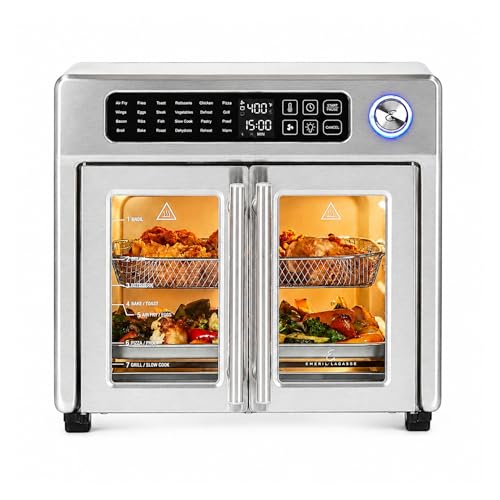
The six models below are the verified picks for this guide to the best low fat and healthy air fryers. Each name links to its Amazon listing, where you can check the latest price on Amazon and confirm the functions and dimensions of the exact variant before you order.
- Breville Smart Oven Air Fryer Pro BOV900
- Chefman XL 14-Quart Multifunctional Air Fryer
- Cuisinart French-Door Air Fryer Toaster Oven TOA-FD70
- Cuisinart Air Fryer Toaster Oven TOA-55
- Gourmia French Door Toaster Oven Air Fryer
- Ninja Prestige Smart XL Countertop Oven DT501
Read the full guide ↓ for the detailed review of every pick, an honest account of what air frying can and cannot do for lower-fat cooking, and the techniques that matter more than the machine.
The appeal of the best low fat and healthy air fryers is easy to state and easy to exaggerate, so this guide will do neither. The honest version is this: air frying cooks food in fast, circulating hot air, so crisping that once required immersion in oil can be done with a light coating of oil or, for many foods, none at all, and excess fat from the food itself drains away onto crisper plates and racks instead of being reabsorbed. That is a real and useful difference in how much fat ends up in a meal. It is not a medical intervention, it does not make fried food into health food, and no machine in this guide is credited with claims its own listing does not make. What the right machine does is make lower-fat cooking the convenient default, big enough for real meals, versatile enough for vegetables and proteins alike, and pleasant enough that the habit survives past January. Readers comparing the makers behind these designs will find background in Best Manufacturer Of Air Fryers.
All six verified picks here are oven or hybrid formats, and that suits the lens. Lower-fat cooking is mostly not about nuggets; it is about the meals around them, trays of vegetables that roast sweet instead of steaming, fish and chicken cooked through with crisp skins, homemade snacks dehydrated instead of bought fried. Cavity machines with racks, trays, and wide temperature control serve that cooking better than a narrow basket, and the picks below, from the Breville’s 13 functions to the Ninja DT501’s family-size cavity, are judged on exactly that: how well each one supports a lower-oil kitchen across a whole week of real food.
A note on evidence, because this keyword attracts inflated claims. None of the six verified listings used here states a specific oil-reduction percentage, so this guide quotes none. Where a design feature genuinely matters to fat, a raised crisper plate that lets drippings fall away, a rotisserie that turns food out of its own fat, a dehydrate function that replaces fried snacks, the review names the mechanism and lets you judge it. Everything else is technique, and the how-to layer of this guide is therefore as important as the picks.
Key Takeaways
- Air frying lowers the fat in crisped foods by cooking with hot air and little or no added oil, and by letting the food’s own fat drain away; it does not transform the food itself.
- Design features that matter for lower-fat cooking: raised crisper plates or racks, rotisserie, wide temperature control, and capacity for full trays of vegetables.
- All six picks are linked; none of their listings states a specific oil-reduction figure, so this guide quotes none.
- The Chefman XL’s rotisserie and 14-quart chamber suit big, lean family batches; the DT501 and Gourmia suit tray-based vegetable and protein cooking.
- Technique decides more than hardware: dry surfaces, light oil, single layers, and smart seasoning deliver the results.
In this guide
Quick Picks
| Pick | Badge | Lower-fat relevant design | Check |
|---|---|---|---|
| Breville Smart Oven Air Fryer Pro BOV900 | Best Premium All-Rounder | 13 functions including dehydrate; convection cooking | Check on Amazon |
| Chefman XL 14-Quart Multifunctional Air Fryer | Best for Big Lean Batches | Rotisserie turns food out of its fat; 14-quart chamber | Check on Amazon |
| Cuisinart French-Door Air Fryer Toaster Oven TOA-FD70 | Best for Family Favourites, Lighter | 7 functions; fits a 12-inch pizza for homemade versions | Check on Amazon |
| Cuisinart Air Fryer Toaster Oven TOA-55 | Best Mainstream Choice | Convection to 450°F; removable crumb tray for clean cooking | Check on Amazon |
| Gourmia French Door Toaster Oven Air Fryer | Best for Tray Cooking | 9-slice tray space; FryForce 360° air circulation | Check on Amazon |
| Ninja Prestige Smart XL Countertop Oven DT501 | Best for Whole Meals | 10-in-1 cavity that fits a 12 lb turkey; 1800W | Check on Amazon |
Read the design column as mechanisms, not promises. A rotisserie genuinely keeps a chicken out of its drippings. A crisper plate genuinely separates fries from the fat they shed. A dehydrate function genuinely replaces a category of bought, fried snacks with homemade ones. None of these mechanisms knows anything about your overall diet, and this guide will not pretend otherwise; what they do is tilt the daily defaults, meal after meal, toward less added fat and more home-cooked food, which is the level at which kitchen equipment can honestly claim to help. Households working at a smaller scale will find the same mechanisms assessed in Best Medium Size Air Fryers.
How These Picks Were Chosen
Picks come from the verified air fryer pool, with brand, model, and listing title confirmed against Amazon catalogue data, and all six are air fryers, so all six are linked under this keyword’s rule. They were then assessed against the lower-fat brief using only design evidence from their own listings: whether fat can drain away from food during cooking, whether the format handles vegetables and lean proteins at family scale, whether temperature control supports both gentle and fierce cooking, and whether functions like dehydrate widen the repertoire of foods you can make at home instead of buying prepared.
Two disciplines governed the writing. First, no health claim appears in this guide that a listing does not state, and since none of the six listings states an oil-reduction figure or a health outcome, the guide discusses mechanisms and methods instead. Second, no medical advice is offered: readers managing a condition should follow their clinician’s guidance, and this guide’s role is limited to cooking. Specifications are quoted only as verified listings state them, and prices and ratings are not printed, because both change constantly.
The 6 Best Low Fat and Healthy Air Fryers, Reviewed
Breville Smart Oven Air Fryer Pro BOV900
Badge: Best Premium All-Rounder
Strengths
- 13 functions spanning roast, bake, dehydrate, and more, the widest repertoire for home-prepared food
- Convection cooking for even results with minimal added oil
- Dehydrate function supports homemade snacks in place of bought fried ones
- Brushed stainless build from a premium oven specialist, made for daily use
Trade-offs
- Premium tier; the healthiest cooking here does not require this spend
- Verified listing states no capacity figure; confirm size on the listing
- Breadth of functions asks for a learning investment
Mini spec box
- Format: countertop smart oven air fryer, model BOV900BSS
- Functions: 13, including roast, bake, dehydrate
- Air system: convection setting
- Finish: brushed stainless steel
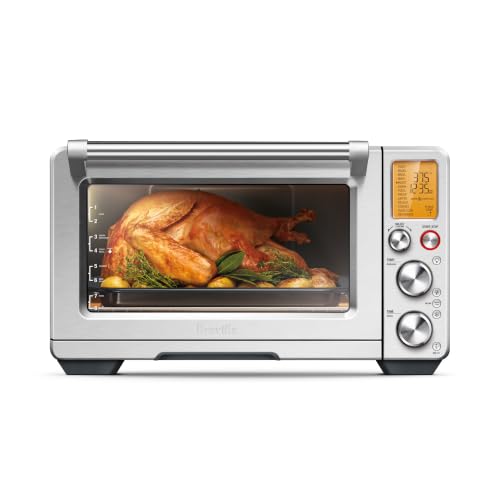
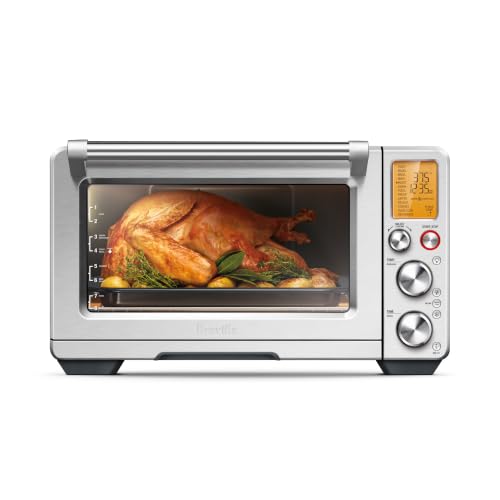
The Breville leads this guide because lower-fat eating, sustained over years, is a repertoire problem before it is a gadget problem. Thirteen functions mean the machine roasts the vegetables, bakes the fish, dehydrates the apple chips and kale, reheats the leftovers, and air fries the Friday treat, all in one cavity, which is how a household actually drifts toward cooking more and frying less. Its convection system is the listing’s own emphasis, and even, moving air is precisely what lets a light film of oil, or none, produce food people want to eat, because the enemy of low-fat cooking is not fat itself but the soggy, pale results that send cooks back to the fryer.
Who it suits: keen cooks building a lower-oil kitchen for the long term, who will use the breadth weekly. The honest limitation is that none of this requires a flagship; the mechanisms that matter, drainage, airflow, versatility, appear throughout this guide at lower tiers. Buy the Breville for the cooking life it enables, not for a health halo, and it will earn its place daily.
Best for: building a varied lower-oil repertoire / Not suited for: budget briefs or crisping-only households

Chefman XL 14-Quart Multifunctional Air Fryer
Badge: Best for Big Lean Batches
Strengths
- Rotisserie cooks whole items turning out of their own dripping fat
- XL 14-quart chamber takes family-size batches of vegetables and proteins
- Dehydrator function for homemade, unfried snacks
- Windowed door lets you monitor without opening and losing heat
Trade-offs
- Single chamber, one temperature at a time
- Substantial footprint, as with all big-chamber machines
- Hybrid format’s crisping differs from sealed baskets
Mini spec box
- Format: multifunctional air fryer, convection oven, black
- Capacity: XL 14-quart
- Functions: 6-in-1, including rotisserie, dehydrate, bake, broil, reheat
- Controls: touchscreen, windowed door
The Chefman’s lower-fat case rests on two honest mechanisms. The first is the rotisserie: a chicken turning on a spit cooks in moving air while its fat renders and falls away, rather than the bird sitting in a pan of its own drippings, and the result is the classic rotisserie profile, crisp skin, moist meat, and a tray of separated fat you can simply discard. The second is scale: a 14-quart chamber cooks the whole family’s vegetables and proteins in one run, which is what makes the lower-oil method practical on a Tuesday rather than aspirational on a Sunday. Add the dehydrator, for fruit, vegetables, and homemade snacks that displace fried ones, and the window that keeps you from bleeding heat while checking, and the package is coherent.
Who it suits: big households, rotisserie fans, and batch cooks building a leaner weekly routine. The honest limitation is sequencing: one chamber means one temperature, so mixed meals need planning. Within that constraint, this is the volume pick of the guide, and volume, for family health habits, is the feature that decides whether the method survives contact with real life. Its versatility is examined from another angle in Best Multi Function Air Fryers.
Best for: rotisserie cooking and big lean batches / Not suited for: simultaneous two-temperature meals

Cuisinart French-Door Air Fryer Toaster Oven TOA-FD70
Badge: Best for Family Favourites, Lighter
Strengths
- 7 functions including air fry, roast, and pizza, covering the family repertoire
- Fits a 12-inch pizza per the listing, enabling homemade versions of a takeaway staple
- French doors make tray handling easy for every cook in the house
- Stainless build from a heritage brand
Trade-offs
- Premium, design-led tier
- Single cavity, one temperature at a time
- No dehydrate function for the snack-making route
Mini spec box
- Format: air fryer toaster oven, artisan French-door design, model TOA-FD70
- Functions: 7, including air fry, toast, bake, broil, roast, pizza, warm
- Capacity note: fits a 12-inch pizza, per listing
- Finish: stainless steel
The FD70’s contribution to a lower-fat kitchen is substitution, and substitution is how family eating actually changes. A machine that fits a 12-inch pizza and carries a dedicated pizza function makes the homemade version, where you control the base, the cheese, and the toppings, the easy version, on a Friday night, for the whole family. The same logic runs through its roast and air fry functions: the favourites stay on the menu, cooked at home in moving air with a fraction of the added oil of their takeaway or deep-fried forms. The French doors and the warm function are domestic details, but domestic details are what habits are made of.
Who it suits: families whose goal is lighter versions of the food they already love, in a machine handsome enough to live on the counter. The honest limitation is the absence of a dehydrate function, which closes the homemade-snack route the Breville and Chefman open. If your lower-fat plan is mostly about main meals rather than snacks, that absence will never be felt.
Best for: homemade, lighter versions of family favourites / Not suited for: dehydrating or budget briefs

Cuisinart Air Fryer Toaster Oven TOA-55
Badge: Best Mainstream Choice
Strengths
- 7-in-1 convection platform with a 450°F maximum temperature for proper crisping with little oil
- 1800W of power in a 0.6 cu. ft. cavity that fits a 12-inch pizza
- Removable crumb tray keeps the oven clean, which keeps flavours fresh
- Mainstream tier from a heritage brand
Trade-offs
- Single cavity, standard for the format
- No rotisserie or dedicated dehydrate emphasis
- Stainless finish shows daily use
Mini spec box
- Format: air fryer toaster oven combo, model TOA-55
- Functions: 7-in-1, convection capable
- Power: 1800W; maximum temperature 450°F
- Capacity: 0.6 cu. ft., fits a 12-inch pizza
- Cleanup: removable crumb tray
The TOA-55 is the balanced, central choice of this guide: a 7-in-1 convection oven with enough power and a high enough ceiling, 450°F, to crisp food properly with a light hand on the oil, in a cavity sized to the universal family benchmark of a 12-inch pizza. Crisping quality is not a vanity metric in lower-fat cooking; it is the whole ballgame, because food that crisps convincingly is food the household will choose again, and food that emerges pale is a habit-killer. The removable crumb tray plays its part too, since an oven that stays clean-tasting encourages the daily use on which any eating pattern depends.
Who it suits: most households, honestly, those who want one mainstream machine that air fries, roasts, bakes, and reheats a family’s food with less oil and no drama. The honest limitation is specialisation: no rotisserie for the Chefman’s drip-away poultry, no 13-function breadth for the Breville’s repertoire. What it offers instead is the centre of the category, well executed, which is where sustainable habits usually live.
Best for: everyday lower-oil family cooking / Not suited for: rotisserie or dehydrate specialists
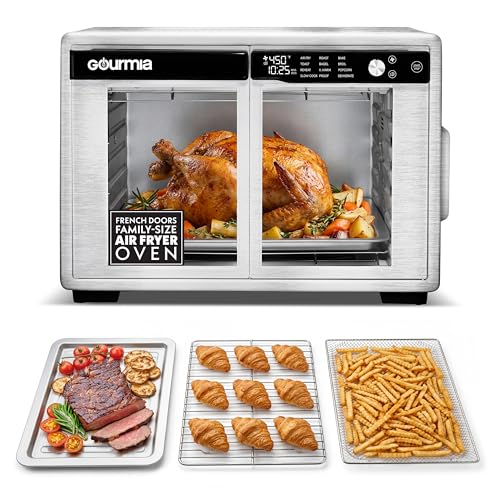
Gourmia French Door Toaster Oven Air Fryer
Badge: Best for Tray Cooking
Strengths
- 9-slice tray space lays vegetables and proteins in the single layer air frying rewards
- FryForce 360° air circulation for even cooking with light oil
- 12 cooking presets with adjustable time and temperature
- Dishwasher-safe trays keep the daily habit easy to sustain
Trade-offs
- Oven format crisps small loads more gently than a sealed basket
- French doors need front and side clearance
- Single cavity, one temperature at a time
Mini spec box
- Format: countertop toaster oven air fryer combo, French doors
- Capacity: 9-slice, per listing
- Presets: 12 cooking presets, adjustable time and temperature
- Air system: FryForce 360°
- Cleanup: dishwasher-safe trays
If lower-fat cooking has a home position, it is the sheet tray: a single layer of vegetables, chickpeas, fish, or chicken pieces, spread out so the hot air can reach every surface, seasoned boldly, with a whisper of oil to carry the seasoning and encourage browning. The Gourmia is built for exactly that position. Its 9-slice cavity is tray space first and foremost, its FryForce 360° circulation is aimed at evenness across that tray, and its dishwasher-safe trays remove the cleanup friction that quietly kills tray cooking in real households. Twelve presets cover the rotation from toast to bake to air fry without ceremony.
Who it suits: tray-meal households, vegetable-forward cooks, and anyone whose lower-fat plan is built on roasting more and frying less. The honest limitation is intensity: for a small load of fries, a sealed basket crisps harder. For the family tray dinner, which is the meal this guide cares most about, the Gourmia’s shape is the right one, and its ease of cleaning may do more for your long-term habits than any specification in this article.
Best for: tray-based vegetable and protein cooking / Not suited for: maximum crisping of small loads

Ninja Prestige Smart XL Countertop Oven DT501
Badge: Best for Whole Meals
Strengths
- XL cavity that fits a 12 lb turkey and bakes 20 cookies, per the listing, for whole-meal cooking at home
- 10-in-1 functions covering air fry, bake, toast, pizza, and reheat
- 1800W for strong, even convection across large trays
- Stainless build suited to permanent, daily use
Trade-offs
- Premium tier and a large footprint
- Single cavity, so mixed-temperature meals need sequencing
- Oversized for one- and two-person households
Mini spec box
- Format: countertop oven, model DT501
- Capacity: fits a 12 lb turkey; bakes 20 cookies, per listing
- Functions: 10-in-1, including air fry, bake, toast, pizza, reheat
- Power: 1800W
- Finish: stainless steel
The DT501’s lower-fat argument is about the whole meal. A cavity that roasts a bird, bakes twenty cookies, and air fries the sides is a cavity in which the entire dinner, not just its garnish, is cooked at home, in moving air, with the cook controlling the oil at every stage. That control is the deepest sense in which an appliance supports healthier eating: not a claim on a box, but the practical ability to produce a full, satisfying, home-cooked meal on a weeknight, at the moment when the alternative is a delivery app. Its 1800W and 10-in-1 set exist to make that moment easy, and its reheat function rescues leftovers into second meals instead of second orders.
Who it suits: families who cook whole meals at home and want one cavity that carries them, plus hosts whose gatherings are home-cooked by preference. The honest limitation is scale and tier: it is a premium, permanent appliance, wasted on a household that cooks for one. For the family kitchen it was designed for, it is the most complete lower-oil platform in this guide, a judgement our Best Multi Tasking Air Fryers guide reaches independently when ranking for whole-meal versatility.
Best for: whole home-cooked meals at family scale / Not suited for: small households or budget briefs
Comparison Table
| Pick | Format | Key lower-fat mechanism | Standout feature | Check |
|---|---|---|---|---|
| Breville BOV900 | Oven | Repertoire: 13 functions incl. dehydrate | Convection system | Check on Amazon |
| Chefman XL | Hybrid chamber | Rotisserie drains fat as it turns | 14-quart chamber, window | Check on Amazon |
| Cuisinart TOA-FD70 | Oven | Substitution: homemade family favourites | Fits 12-inch pizza | Check on Amazon |
| Cuisinart TOA-55 | Oven | Crisping quality at 450°F with light oil | Crumb tray, 1800W | Check on Amazon |
| Gourmia Oven | Oven | Single-layer tray cooking | Dishwasher-safe trays | Check on Amazon |
| Ninja DT501 | Oven | Whole-meal home cooking | Fits 12 lb turkey | Check on Amazon |
How to Choose a Low Fat Air Fryer: Mechanisms Over Marketing
Shop for mechanisms, in this order. First, drainage: food should cook raised, on a crisper plate, rack, tray, or spit, so the fat it sheds falls away instead of pooling around it. Every pick in this guide cooks raised in some form; treat any design that fries food sitting in its own juices as working against the brief. Second, airflow quality: even, fast-moving air is what produces browning and crispness with little oil, so convection design and a respectable temperature ceiling, the TOA-55’s 450°F is a good benchmark, matter more than preset counts. Third, repertoire: the more of your actual cooking the machine absorbs, vegetables, proteins, bakes, reheats, homemade snacks, the more of your diet it can influence, which is why the ovens dominate this particular guide.
One further mechanism deserves a place in the order, between airflow and repertoire: temperature range. Gentle heat matters to this brief more than outsiders expect, because dehydrating, slow roasting, and keeping cooked food warm without drying it are all lower-fat kitchen jobs, and fierce heat matters because browning is flavour, and flavour is what makes a lighter meal feel complete rather than corrected. Machines whose listings state a wide, usable range, and ovens whose functions span from warm to a proper crisping ceiling, give the cook both ends of that bargain. When a listing is vague about its range, treat the vagueness itself as information.
Fourth, capacity for real meals. A lower-fat method that only works for snacks will not survive; the machine must cook the family’s dinner, in one run, at the standard the family enjoys. Fifth, cleanability, the unglamorous decider: trays that go in the dishwasher and crumb trays that slide out are what make the method a habit rather than a resolution. Judge any candidate, here or elsewhere, against those five mechanisms and you will choose well, because they are the difference between a machine that supports a pattern of eating and a machine that merely advertises one. Newer models enter this field constantly, and our roundup of Best New Air Fryers applies the same mechanism test to the latest arrivals.
How to Cook Low Fat in an Air Fryer: Technique That Matters More Than Hardware
- Dry the surface. Pat proteins and vegetables dry before cooking; surface moisture steams instead of browning, and dry food crisps with far less oil.
- Oil lightly and late-season boldly. A thin, even film, brushed or sprayed, is enough to carry seasoning and encourage browning; season generously, since flavour, not fat, is what makes the food satisfying.
- Keep the single layer. Spread food on the tray or rack with gaps; crowding traps steam and is the main cause of disappointing, greasy-feeling results.
- Use the rack and the spit. Raised cooking lets fat drip away; on rotisserie models, let the drippings collect below and discard them rather than basting with them.
- Shake, turn, rotate. Move food halfway through so every surface meets the airstream; even cooking is what makes light-oil food taste intentional.
- Rest and drain. Lift cooked food onto a rack or fresh tray for a minute so surface fat drains before serving, the quiet final step of the method.
Troubleshooting is mostly about moisture and crowding. Problem: vegetables emerge limp → they were wet, crowded, or both; dry them, spread them, and raise the heat. Problem: coating turns soggy on chicken → the surface was damp or the layer stacked; dry, space, and cook in batches. Problem: food tastes flat → the oil was cut but the seasoning was not raised to compensate; acid, herbs, and spice are the low-fat cook’s real toolkit. None of these fixes requires a different machine, which is the point: the machine enables the method, and the method delivers the result.
What Air Frying Cannot Do: An Honest Boundary
This guide would fail its readers if it ended on the sales pitch, so here is the boundary, plainly. An air fryer does not change what food is: breaded, processed items cooked in one remain breaded, processed items, merely cooked with less added oil than deep frying. It does not offset the rest of a diet, and it carries no medical authority; anyone managing cholesterol, blood pressure, diabetes, or any other condition should take guidance from their clinician and dietitian, not from an appliance guide. What air frying honestly offers is narrower and still valuable: a convenient way to cook fresh food at home, crisply, with little added fat, often enough that home cooking becomes the default. Households that understand the offer in those terms tend to keep both the machine and the habit. Households sold a miracle tend to abandon both, which is why this guide insists on the narrower claim.
A Week of Lower-Fat Cooking in These Machines
Notice, reading that week back, how little of it depends on willpower at the moment of cooking. Each meal was decided by what the kitchen made easy: the tray was ready, the machine was out, the leftovers reheated well, the snacks were already made. That is the deepest reason to choose the machine carefully from this guide, because you are not really choosing an appliance; you are choosing which week becomes your household’s normal.
Picture the method as a week rather than a demo. Monday is a Gourmia or DT501 tray: chicken pieces and a full sheet of vegetables, one layer, bold seasoning. Wednesday is the TOA-55 or FD70 handling fish and a homemade pizza night where the family builds its own. Friday is the Chefman’s rotisserie bird or a batch of wings, crisped in air while the fat collects below. Across the weekend, the Breville’s dehydrate function turns fruit and vegetables into the snacks that used to come from a packet, and every machine’s reheat function turns leftovers into lunches instead of waste. No single meal in that week is a health intervention. The week itself, home-cooked, varied, and light on added oil, is the entire honest promise of this category, and it is enough.
Reading Health Claims Like a Skeptic
This category’s marketing deserves a short field guide, because you will meet its claims everywhere even though none of the six listings in this article makes them. Percentage claims about oil or fat reduction are usually true only against a specific comparison, typically deep frying a specific food under laboratory conditions, and they say nothing about the meal you will actually cook. “Guilt-free,” “clean,” and similar words are not measurements at all. Before-and-after imagery proves lighting. The claims worth trusting are the boring ones, the kind this guide is built on: a stated temperature range, a named function like dehydrate or rotisserie, a crisper plate in the specification, a cavity dimension you can check against your pans. A brand confident in its machine states mechanisms; a brand selling a feeling states adjectives. Learning to hear that difference will protect you in every appliance category, and it is the real skill this keyword should leave you with.
The same skepticism applies, gently, to this guide. Its recommendations rest on verified specifications and cooking logic, not on laboratory fat analysis, and its claims are deliberately limited to mechanisms: food raised above its drippings, air moving fast enough to crisp with little oil, repertoires wide enough to cook whole meals at home. If a future edition of any of these listings adds a specific, substantiated figure, the honest place for it is the listing itself, checked at purchase time, not a guide written to remain true for years.
Making Lower-Fat Cooking Work for Kids and Reluctant Eaters
Households rarely fail at lower-fat cooking because of the adults; they fail at the family negotiation. The machines in this guide help in specific, practical ways. Homemade versions of the foods children actually request, wedges, nuggets, pizza on the FD70’s pizza function or in the DT501’s cavity, keep the ritual while changing the cooking. Dehydrated fruit from the Breville or the Chefman gives lunchboxes something sweet that is not fried or bought. Tray cooking in the Gourmia lets each person find something on the sheet they will eat, which is how vegetable exposure actually accumulates. And the reheat function, everywhere in this guide, revives leftovers crisply enough that yesterday’s virtuous dinner becomes today’s acceptable lunch. None of this is a trick played on children; it is the same food culture, cooked in air instead of oil, and families report that the transition succeeds precisely when nobody announces it as one.
Designing the Kitchen So the Habit Survives
Habits follow friction, and a lower-fat kitchen is mostly a friction problem. The machine must live out, plugged in, with its trays clean and ready, because a fryer stored in a cupboard is a fryer used monthly. Seasonings should live beside it, since bold seasoning is what makes light-oil food satisfying, and a small oil sprayer or brush within reach replaces the pour that adds more than intended. A rack by the machine for draining cooked food, a habit of patting proteins dry as part of prep, and a weekly rhythm, tray night, rotisserie night, pizza night, do more for a household’s fat intake than any single specification in this article. The picks above were chosen to minimise that friction: dishwasher-safe trays on the Gourmia, a crumb tray on the TOA-55, windows and doors that make checking effortless. Choose the machine whose daily friction is lowest for your household, and the method will take care of itself.
Proteins, Vegetables, and Snacks: Where the Method Wins and Where It Does Not
A clear-eyed map helps. The method wins outright with vegetables, where roasting in moving air concentrates sweetness and crisps edges with a fraction of the oil a pan of sautéing would drink, and with skin-on proteins, where the skin renders and crisps while the meat stays moist and the surplus fat drains. It wins with reheating, where it restores texture that a microwave destroys, and with homemade snacks, where dehydrating replaces frying entirely. It is neutral with foods that were never fatty, where it is simply a good oven. It loses, honestly, with wet-battered foods, which belong to hot oil, and with very lean, thin items cooked carelessly, which dry out and give the method an unfair reputation. A household that cooks mostly from the winning columns will love any machine in this guide; a household devoted to battered food should keep its expectations, and perhaps its fryer, where they are.
Oil, Used Well: A Practical Note
Since the method uses so little oil, the oil you do use matters more, not less. A high-heat-suitable oil suits the 450°F ceilings in this guide; delicate finishing oils are better saved for dressing cooked food, where their flavour survives. Application matters as much as choice: a sprayer or brush lays down the thin, even film that browns uniformly, while pouring concentrates oil in puddles that fry some spots and leave others dry. Measure once, out of curiosity, how little a sprayed film actually is compared with the pour it replaces, and the entire low-fat mechanism of this category becomes tangible. The goal is not zero oil; it is oil demoted from cooking medium to seasoning, which is where it does its best work anyway.
Keeping Score Without Obsessing: Simple Signs the Method Is Working
Households that sustain lower-fat cooking tend to track it loosely and practically rather than nutritionally. The signs are mundane: the oil bottle empties more slowly than it used to; the takeaway apps open less often on weeknights; leftovers get eaten because reheating makes them good again; vegetables move from side obligation to the tray everyone picks at first. None of these requires an app or a target, and all of them are visible within a month of owning a machine from this guide and using the technique section above. If those signs are absent, the diagnosis is usually friction or repertoire, the machine is stored away, or its functions do not match the household’s food, rather than a failure of willpower, and the fix is environmental: move the machine out, widen the rotation, and let the defaults do the work.
A Note for Readers Cooking for Someone Else
Many of these machines are bought by one person hoping to change how a household eats, and the equipment strategy that works is invitation rather than announcement. Cook the favourite meals first, in their lighter homemade form, and let the food argue. Use the machine’s crowd-pleasing talents, the rotisserie bird, the pizza night, the tray of wedges, before its virtuous ones. Keep the deep fryer conversation out of it entirely; nobody’s habits were ever improved by a lecture delivered beside a new appliance. The picks in this guide were chosen with that social reality in mind: every one of them can produce a meal that a sceptic will simply enjoy, and enjoyment, repeated, is the only mechanism by which kitchens actually change.
Common Buying Mistakes
- Believing the halo. Air-fried processed food is still processed food; the machine changes the cooking fat, not the food.
- Buying on a percentage claim. Prefer stated mechanisms, drainage, airflow, repertoire, over marketing numbers no listing here even makes.
- Choosing a snack-size machine for a meal-size goal. If the machine cannot cook dinner, it cannot change dinner.
- Skipping the technique. Wet, crowded food in the best machine tastes worse than dry, spaced food in a modest one.
- Expecting the appliance to be the plan. The machine supports a pattern of eating; it is not a substitute for one, or for medical advice.
Final Recommendation
For most households, the Breville Smart Oven Air Fryer Pro BOV900 offers the broadest lower-oil repertoire, while the Chefman XL 14-Quart Multifunctional Air Fryer is the volume and rotisserie pick and the Cuisinart French-Door Air Fryer Toaster Oven TOA-FD70 leads on family-favourite substitution. The TOA-55 is the mainstream centre, the Gourmia the tray cook’s machine, and the Ninja DT501 the whole-meal flagship. Choose by the mechanism your cooking needs most, drainage, repertoire, substitution, or scale, and cook with the technique section above; that combination, not any claim on any box, is what lower-fat air frying actually is.
Frequently Asked Questions
Does air frying really use less oil than deep frying?
Yes, by the nature of the method: food crisps in circulating hot air with a light coating of oil or none, instead of being submerged in oil, and fat from the food itself drains onto plates and trays below. The exact difference depends on the food and how you cook it, which is why this guide discusses the mechanism rather than quoting a universal figure.
Can I cook with no oil at all?
Many foods, yes: vegetables with natural moisture, fatty proteins that render their own fat, and anything reheated. Lean, dry items and most coatings benefit from a very light film of oil for browning and to help seasoning adhere. Treat oil as a seasoning tool measured in teaspoons, not a cooking medium measured in cups.
Is air-fried food automatically healthy?
No, and this guide does not claim otherwise. Air frying changes how food is cooked, reducing added fat compared with deep frying; it does not change what the food is. A pattern of home-cooked meals built on fresh ingredients is where the benefit lives, and anyone with a medical condition should follow their clinician’s advice rather than an appliance guide.
Which design feature matters most for lower-fat cooking?
Raised cooking: crisper plates, racks, trays, and rotisseries that let fat drip away from the food as it cooks. After that, even airflow for crisping with little oil, and enough capacity to cook the whole meal, because a method that only handles snacks will not shape how a household eats.
What foods work best for low-fat air frying?
Vegetables of almost every kind, chicken and turkey, fish and seafood, tofu and chickpeas, and homemade versions of family favourites like pizza and wedges. Foods with some natural structure and surface area crisp best; very wet batters are the classic exception, since they need the setting power of hot oil and tend to drip through racks.
Can air frying help with a clinician-advised eating plan?
It can support the cooking side of one, by making it easier to prepare fresh food at home with little added fat, which is what many eating plans ask for. The plan itself, its targets and its suitability for you, belongs to your clinician or dietitian. Bring them your questions; bring this guide only your cooking.
Why do my air-fried vegetables sometimes taste bland?
Usually because the oil was reduced but nothing replaced its role as a flavour carrier. Dry the vegetables well, use a light even film of oil, season more boldly than you would for roasting in a pan, and finish with acid, citrus, vinegar, or a sharp sauce. Blandness is a seasoning problem, not a fat problem, and it is the easiest one in this guide to fix.
Does a rotisserie make chicken lower in fat?
A rotisserie keeps the bird turning out of its own drippings, so rendered fat collects below instead of the meat sitting in it, and that fat can be discarded. The chicken itself is unchanged; the cooking arrangement simply separates more of its fat before serving, which is a fair, mechanical claim rather than a health promise.
How do I keep lean proteins from drying out?
Lean items dry when they are overcooked or cooked naked at full blast. Use a light oil film, avoid exceeding the time the food needs, rest proteins before cutting so juices redistribute, and use a thermometer for thick pieces rather than guessing. A slightly lower temperature for a slightly longer time is often kinder to lean fish and chicken breast than the maximum setting.