Disclosure: topratedkitchenware.com is reader-supported. When you buy through links on our site, we may earn an affiliate commission from Amazon and other retailers, at no extra cost to you.
Where to buy
Every sink in this guide to the best low maintenance kitchen sinks was chosen because it asks less of you week after week: corners that wipe clean instead of trapping grime, surfaces that shrug off stains, and drainage that does not leave puddles sitting in the bowl. You can order any of the six picks below online and have it delivered before a weekend install. Prices change often, so use the links to check the latest price on Amazon rather than relying on any number printed in a guide.
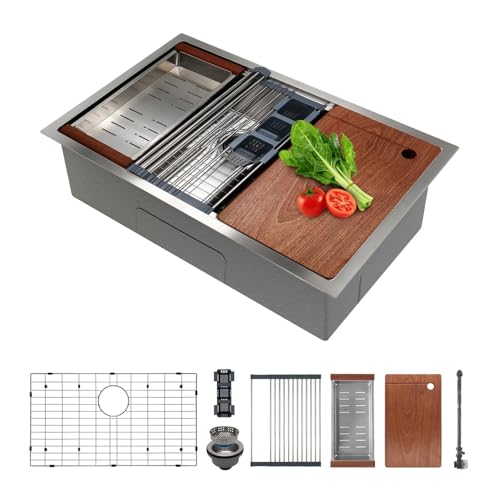
- Oxwiser 32×18 Inch Undermount Kitchen Sink, 16 Gauge Single Bowl Bundle — Check on Amazon
- KRAUS KHU640-33 Stainless Steel 33 in 18 Gauge Undermount Kitchen Sink
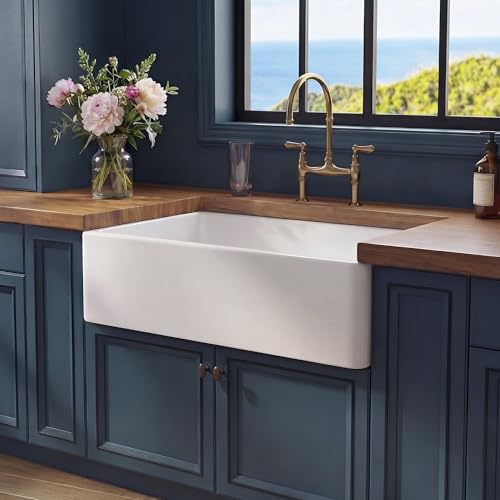
- Miuara Farmhouse Sink 30 x 18 Inch White Fireclay Apron Front Kitchen Sink
- Miuara Farmhouse Sink 33 x 18 Inch White Fireclay Apron Front Kitchen Sink
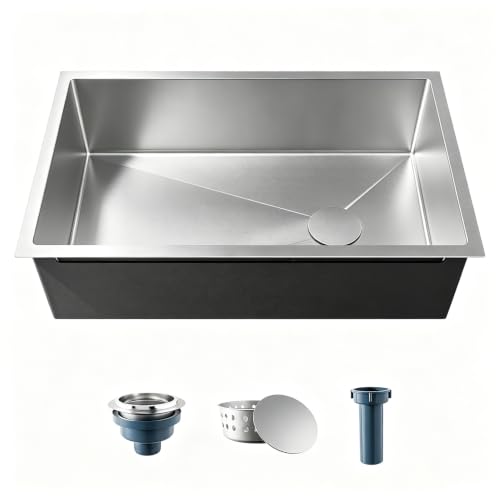
- SANYCASA 30 Inch Undermount Kitchen Sink, 11 Gauge Stainless Steel Workstation
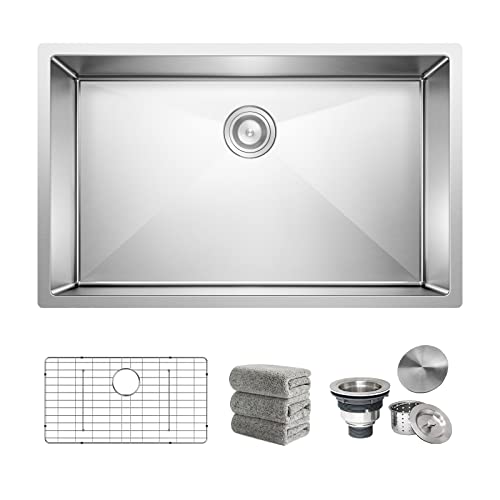
- KRAUS KHU100-30 Stainless Steel 30 in 16 Gauge Undermount Kitchen Sink
Read the full guide ↓ for the maintenance thinking behind each pick, the cleaning routines that actually matter, and the mistakes that turn an easy-care sink into a chore.
A sink is the hardest-working surface in most kitchens, and it is also the one people think about least until it starts annoying them. Water spots that never quite wipe away, corners where grey grime builds into a permanent shadow, a bowl floor so flat that dirty water pools instead of draining — these small frictions add up to real daily irritation. That is exactly why the search for the best low maintenance kitchen sinks has become so common: buyers have learned, often from a previous sink they disliked, that the cheapest hour in a sink’s life is the hour you spend choosing it, and the most expensive hours are the thousands you spend cleaning it afterwards.
Low maintenance is not a material or a brand. It is a set of design decisions. Rounded interior corners instead of sharp ones, because a cloth can follow a curve but cannot dig into a right angle. A bowl floor with real slope and drainage grooves, because water that leaves on its own cannot leave mineral deposits behind. A surface — whether brushed stainless steel or glazed fireclay — that tolerates a quick wipe rather than demanding polishing. Sound-dampening pads matter too, in a quieter way: a sink that does not boom every time a pan lands in it is a sink you treat more gently, and gentle treatment is half of easy upkeep.
This guide compares six sinks that approach low maintenance from different directions. Two are fireclay farmhouse models whose glazed surface resists staining outright. Four are stainless steel undermounts, but they differ in gauge, corner design, drainage help and the accessories bundled in the box. One arrives as a five-item bundle with a bottom grid that keeps cookware off the bowl floor — a small thing that prevents a large share of everyday scratching. By the end you will know which design philosophy fits your kitchen, your cooking habits and, honestly, your tolerance for wiping things down.
Key Takeaways
- Rounded corners are the single biggest low-maintenance feature in a stainless sink: they wipe clean in one pass and never grow a grime line.
- Fireclay’s glazed surface resists stains, cracks, heat and scratches, making the two Miuara farmhouse picks the lowest-effort surfaces here — if your cabinets can take an apron front.
- A bottom grid, like the one bundled with the Oxwiser picks, keeps pots off the bowl floor and prevents most cosmetic scratching before it starts.
- Gauge is a maintenance issue, not just a quality one: thicker steel (the SANYCASA’s 11 gauge, the 16-gauge Kraus and Oxwiser models) dents less, and dents are where water and grime collect.
- Drainage grooves and a sloped floor matter daily; standing water is what leaves spots, rings and odours.
- No sink is zero-maintenance. The realistic goal is a two-minute daily wipe and a ten-minute weekly clean, and every pick here can live on that routine.
In this guide
Quick Picks
| Pick | Badge | Why it is low maintenance | Link |
|---|---|---|---|
| Oxwiser 32×18 Undermount Bundle | Best Overall | Bottom grid protects the floor; complete 5-item bundle means nothing extra to source | Check on Amazon |
| KRAUS KHU640-33 33 in | Best Wide Bowl | Rounded corners resist buildup; channel grooves move water to the drain | Check on Amazon |
| Miuara Farmhouse 30 x 18 Fireclay | Best Stain Resistance | Glazed fireclay resists stain, crack, heat and scratch; reversible front | Check on Amazon |
| Miuara Farmhouse 33 x 18 Fireclay | Best Farmhouse Pick | Same easy-wipe glaze in a wider apron-front format | Check on Amazon |
| SANYCASA 30 Inch Workstation | Best Heavy-Duty | Very thick 11-gauge steel shrugs off dents; integrated ledge keeps work above the bowl | Check on Amazon |
| KRAUS KHU100-30 30 in | Best Easy-Clean Stainless | 16-gauge TRU16 steel with rounded corners designed for easy cleaning | Check on Amazon |
Badges are consistent through the detailed reviews below, so if one row already matches your kitchen — a wide cabinet run, a farmhouse style, a household that drops heavy pans — you can jump straight to that review and then come back for the care routines later in the guide.
How These Picks Were Chosen
This is a research-led guide, not a lab test. We compared manufacturer specifications, verified product data and the design details that predict upkeep: corner radius, bowl slope, drainage features, surface type, steel gauge and what is included in the box. We weighted those maintenance predictors more heavily than styling, because the keyword here is not “prettiest” — it is the sink that stays pleasant with the least effort. Where a specification was not available in the verified product data, we left it out rather than guessing; you will never see an invented dimension or an un sourced claim in the spec boxes below.
We also thought about failure modes. Stainless steel fails cosmetically first — fine scratches, water spots, a duller patch where pans always land — long before it fails structurally, so scratch prevention (grids, thicker gauge) scored highly. Fireclay fails differently: its glaze is extremely hard and stain-resistant, but the material is heavy and an apron-front install is a bigger cabinet project, so we flagged the installation effort honestly rather than pretending the lowest-upkeep surface is also the easiest to fit. Finally, we favoured single-bowl designs throughout this list. One large bowl has fewer corners, no divider to scrub around, and no second basin quietly growing a ring while you mostly use the other side — all of which is the quiet arithmetic of low maintenance.
If your shortlist started at a big-box store, our companion guide to Best Lowes Kitchen Sinks covers the same category through a retail-shopping lens, and readers who want construction quality above all else should also see Best Made Kitchen Sinks after this one.
The 6 Best Low Maintenance Kitchen Sinks

Oxwiser 32×18 Inch Undermount Kitchen Sink Bundle
Badge: Best Overall
Strengths
- Five-item bundle (sink, bottom grid, drain assembly, drain cap, towel) covers the accessories that prevent scratches and simplify draining from day one.
- 16-gauge stainless steel is thick enough to resist the casual dents that later become grime traps.
- The bottom grid keeps heavy cookware hovering above the bowl floor, so the most-scratched surface in most kitchens stays protected.
Trade-offs
- Stainless steel still shows water spots in hard-water homes; it is low maintenance, not no maintenance.
- The grid itself needs a lift-and-rinse underneath every few days, or it becomes the thing collecting debris.
- At 32 inches wide it needs a cabinet run that can accept it; measure before ordering.
Mini spec box: Size: 32 x 18 inch · Mount: undermount · Material: stainless steel · Gauge: 16 · Bowl: single · Bundle: sink, bottom grid, drain assembly, drain cap, towel.
The Oxwiser bundle earns the top spot because it treats low maintenance as a system rather than a surface. Most stainless sinks get their tired look from one habit: heavy pots and sheet pans sliding directly across the bowl floor thousands of times. The included bottom grid interrupts that habit completely. Cookware rests on the grid, water and debris pass underneath, and the steel below keeps its brushed finish far longer. When the grid gets grubby, it lifts out and rinses in seconds — a replaceable, washable layer doing the dirty work instead of the sink itself.
The rest of the package supports the same idea. A drain assembly and cap are in the box, so there is no mismatched aftermarket strainer with a slightly different finish quietly corroding at the centre of your bowl. The 16-gauge shell gives the bowl a solid, muted feel under running water and dropped cutlery. For a busy family kitchen that wants one purchase, one install and then years of two-minute wipe-downs, this is the most complete answer in the guide. Check the latest price on Amazon before you commit, because bundle pricing moves around.
Best for: families who want scratch prevention built in from day one / Not suited for: anyone whose cabinet cannot fit a 32-inch undermount

KRAUS KHU640-33 Stainless Steel 33 in Undermount Kitchen Sink
Badge: Best Wide Bowl
Strengths
- Rounded corners are specifically designed to resist buildup — a cloth follows the curve and lifts residue instead of leaving it in a seam.
- Channel grooves in the bowl floor guide water toward the drain, reducing the standing puddles that leave mineral rings.
- NoiseDefend pads soften the clang of pans and running water, which makes the sink pleasanter to use hard every day.
Trade-offs
- 18-gauge steel is thinner than the 16-gauge models here, so it asks for slightly gentler treatment with the heaviest cast iron.
- The 33-inch width is a genuine constraint in smaller kitchens.
- No bottom grid is listed in the verified product data, so scratch protection is an add-on decision.
Mini spec box: Size: 33 inch · Mount: undermount · Material: stainless steel · Gauge: 18 · Bowl: single · Features: rounded corners, channel grooves, NoiseDefend sound pads.
Ask experienced cleaners what makes one stainless sink easier than another and they rarely mention the finish first — they mention corners. Sharp internal corners are where a grey paste of food residue and limescale sets up permanent residence. The KHU640-33’s rounded corners remove that hiding place entirely, and its channel grooves handle the other half of the problem by keeping the floor draining instead of ponding. In practice the daily routine shrinks to a rinse and a wipe, and the weekly deep clean stops being an excavation.
The wide single bowl swallows roasting pans and stockpots flat, which is itself a maintenance feature: cookware that fits inside the sink gets soaked and washed in the sink, instead of shedding greasy water across your counters. If you are comparing construction-focused shortlists, this model also appears in discussions of Best Made Stainless Steel Kitchen Sinks, because the corner and drainage engineering is a build-quality story as much as a cleaning one.
Best for: large kitchens and anyone whose current sink grows grime in its corners / Not suited for: narrow cabinet runs or buyers who want the thickest available steel
Miuara Farmhouse Sink 30 x 18 Inch White Fireclay
Badge: Best Stain Resistance
Strengths
- Fireclay’s glazed surface is resistant to stain, crack, heat and scratch — the four horsemen of sink upkeep — in a way brushed steel cannot match.
- Tomato sauce, turmeric, coffee and red wine rinse off a glazed white surface instead of shadowing it.
- Reversible design lets you choose a plain or styled apron front at install time.
Trade-offs
- Fireclay is heavy, and an apron-front install usually means cabinet modification — the low maintenance starts after a higher-effort fitting day.
- A white bowl shows every coffee ground and tea splash before you wipe it; it cleans easily but asks to be wiped.
- Apron front or drop-in/undermount flexibility still needs confirming against your countertop material.
Mini spec box: Size: 30 x 18 inch · Mount: apron front (also drop-in/undermount per listing) · Material: fireclay · Bowl: single, reversible · Surface: glazed white, resistant to stain, crack, heat and scratch.
If your definition of low maintenance is “nothing ever stains it,” fireclay is the strongest answer in this guide. The Miuara’s glaze is a fired, glass-like skin: pigments sit on it rather than in it, so the curry-night and jam-making disasters that permanently tint lesser sinks become a rinse-and-forget event here. There is no brushed grain to trap residue and no finish to polish back to life. A soft sponge and ordinary washing-up liquid are the whole maintenance programme.
The honest cost is front-loaded. Fireclay sinks are substantial pieces of ceramic, the apron front needs a cabinet front cut to suit, and you will want a second pair of hands on install day. Households mid-renovation absorb that easily; households swapping a sink into finished cabinetry should read the how-to section below carefully first. This same fireclay design is also judged on looks and presence in our guide to Best Luxury Kitchen Sinks, where it holds its own against far more expensive-looking competition.
Best for: keen cooks whose food stains everything, and renovators who can plan the cabinet work / Not suited for: a quick like-for-like sink swap into unmodified cabinets

Miuara Farmhouse Sink 33 x 18 Inch White Fireclay
Badge: Best Farmhouse Pick
Strengths
- The same stain-, crack-, heat- and scratch-resistant glaze as the 30-inch model, across a wider bowl that swallows baking sheets flat.
- The apron front itself is an easy-clean feature: splashes land on a vertical glazed face that wipes down, not on a cabinet door.
- Reversible single bowl lets you pick the front profile that suits your kitchen.
Trade-offs
- The heaviest install in this guide; plan support and help.
- Needs a 33-inch farmhouse base setup — not a casual replacement for a standard undermount cutout.
- White glaze rewards a quick daily wipe; households that never wipe will see temporary marks between cleans.
Mini spec box: Size: 33 x 18 inch · Mount: apron front (also drop-in/undermount per listing) · Material: fireclay · Bowl: single, reversible · Surface: glazed white, resistant to stain, crack, heat and scratch.
Everything said about the 30-inch Miuara’s glaze applies here, scaled up. The extra width changes the daily experience in one specific way: big flat items — rimmed baking sheets, roasting racks, the grill pan — go into the bowl flat instead of being wrestled at an angle, and flat items are quicker to wash, quicker to rinse and far less likely to splash the surrounding counter. The apron front also shortens the reach into the bowl, which sounds like an ergonomics point but is really a cleaning one: a sink that is comfortable to stand at is a sink that gets wiped after use instead of “later.”
Choose this over its smaller sibling if your kitchen is being built or rebuilt around the sink, if farmhouse styling is the look you actually want, and if stain-proofing outranks every other concern. It is the lowest-effort surface in the guide once installed — the effort is simply all spent on day one.
Best for: farmhouse renovations with wide cabinetry and stain-heavy cooking / Not suited for: renters or anyone avoiding cabinet modification
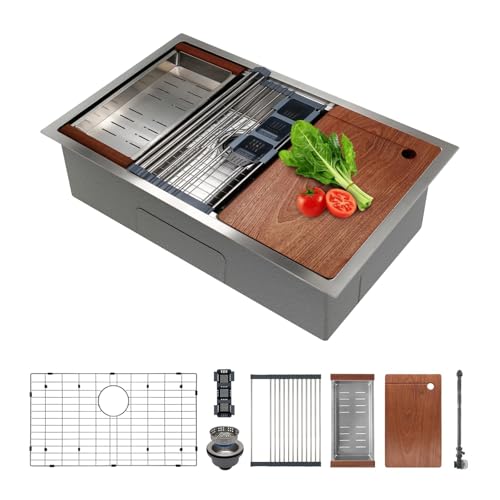
SANYCASA 30 Inch Undermount Workstation Sink, 11 Gauge
Badge: Best Heavy-Duty
Strengths
- 11-gauge (3mm) stainless steel is dramatically thicker than standard, so the bowl resists the dents that collect water and grime.
- The integrated ledge turns the sink into a workstation — prep happens over the bowl, so mess falls into the sink instead of onto counters.
- Single-bowl undermount format keeps the counter-to-bowl transition seamless and wipeable.
Trade-offs
- Thick steel means a heavier unit to handle and support during installation.
- Workstation accessories live on the ledge; if you will not use them, you are paying in complexity for a feature that sits in a drawer.
- Brushed steel still wants a wipe in hard-water areas to stay spot-free.
Mini spec box: Size: 30 inch · Mount: undermount · Material: stainless steel · Gauge: 11 (3mm) · Bowl: single with integrated ledge · Style: multifunctional workstation set.
The SANYCASA attacks maintenance from the direction of damage prevention. Most stainless sinks age through accumulation of small insults — a dropped Dutch oven here, a dragged cast-iron skillet there — each leaving a mark that holds water a little longer and shines a little duller. An 11-gauge bowl simply refuses most of that damage. The steel is closer to a commercial kitchen’s expectations than a domestic one, and the “superior drain” positioning in its design brief points at the same philosophy: water should leave, surfaces should stay true, and the sink should look after itself as much as a sink can.
The integrated ledge adds a second, subtler benefit. Chopping, rinsing and draining over the bowl means the surrounding counters stay dry and clean, and the total kitchen wipe-down shrinks even though the sink itself is the same size as its rivals. Readers cross-shopping premium shortlists will meet this model again in Best Made Stainless Steel Undermount Kitchen Sinks, where its gauge is the headline act.
Best for: heavy cookware, keen prep cooks, and anyone whose current sink is visibly dented / Not suited for: buyers who want the lightest, simplest possible install

KRAUS KHU100-30 Stainless Steel 30 in Undermount Kitchen Sink
Badge: Best Easy-Clean Stainless
Strengths
- Rounded corners are explicitly designed for easy cleaning — no grime seams anywhere in the bowl.
- 16-gauge TRU16 steel gives a solid, dent-resistant shell in the most standard 30-inch footprint.
- Channel grooves keep the floor draining, and NoiseDefend pads keep the bowl quiet under daily abuse.
Trade-offs
- No bundle accessories are listed in the verified data, so a bottom grid is a separate decision.
- The 30-inch bowl is the smallest here alongside the SANYCASA; keen entertainers may want the 33-inch Kraus instead.
- Like all brushed steel, it rewards a quick dry-wipe in hard-water homes.
Mini spec box: Size: 30 inch · Mount: undermount · Material: stainless steel, TRU16 · Gauge: 16 · Bowl: single · Features: rounded corners, channel grooves, NoiseDefend pads.
If the KHU640-33 is the wide version of Kraus’s easy-clean philosophy, the KHU100-30 is the concentrated one. The same rounded corners, the same drainage grooves, the same sound dampening — but in a 30-inch footprint that fits the cabinet size most American kitchens actually have, and in thicker 16-gauge TRU16 steel. For a like-for-like replacement of a tired standard sink, this is the lowest-risk route to a noticeably easier cleaning life: same hole in the counter, completely different Sunday-morning experience with a sponge.
It is also the pick we would hand to someone who has been burned by a “statement” sink before and now just wants a well-made bowl that disappears into the routine. Nothing about it is exotic, and that is precisely its maintenance charm — standard size, standard fittings, proven design, nothing bespoke to source or match later.
Best for: standard 30-inch replacements and buyers who value proven, simple design / Not suited for: cooks who regularly wash oversized pans and want maximum width
Comparison Table
| Pick | Material | Size | Gauge / Surface | Standout upkeep feature | Link |
|---|---|---|---|---|---|
| Oxwiser 32×18 Bundle | Stainless steel | 32 x 18 in | 16 gauge | Bottom grid in the box | Check on Amazon |
| KRAUS KHU640-33 | Stainless steel | 33 in | 18 gauge | Rounded corners + channel grooves | Check on Amazon |
| Miuara 30 x 18 | Fireclay | 30 x 18 in | Glazed | Stain-resistant glaze | Check on Amazon |
| Miuara 33 x 18 | Fireclay | 33 x 18 in | Glazed | Stain-resistant glaze, wider bowl | Check on Amazon |
| SANYCASA Workstation | Stainless steel | 30 in | 11 gauge (3mm) | Dent resistance + ledge | Check on Amazon |
| KRAUS KHU100-30 | Stainless steel | 30 in | 16 gauge TRU16 | Rounded corners for easy cleaning | Check on Amazon |
How to Choose a Low Maintenance Kitchen Sink
Start with corners, not colour. Run your eyes around the inside of any sink you are considering: if the internal corners are tight and square, that sink will grow a grime line no matter how disciplined you are, because neither cloth nor sponge can reach the last millimetre. Generously rounded corners — the Kraus models here advertise them by name — are the closest thing stainless steel has to a self-cleaning feature. After corners, look at the floor. A bowl floor should slope visibly toward the drain and ideally carry grooves that shepherd water that way; a dead-flat floor leaves a shallow lake after every use, and that lake is what dries into spots and rings.
Then decide your surface philosophy. Brushed stainless steel hides fine scratches by blending them into the grain, forgives dropped cutlery, and asks only for a wipe and an occasional dry to stay presentable — but it will show hard-water spotting if you never dry it. Glazed fireclay inverts the bargain: it essentially cannot be stained by food, shrugs off heat and resists scratching, but it is heavy, its installation is a project, and a white bowl displays every splash until wiped. Neither is “better”; they suit different households. Stain-prone cooks with a renovation underway lean fireclay. Everyone else usually lands on steel with rounded corners and, ideally, a grid.
Gauge deserves a plain-English translation. Gauge runs backwards — lower number, thicker steel. The 11-gauge SANYCASA is exceptionally thick, the 16-gauge Kraus and Oxwiser models are solidly premium, and 18-gauge bowls like the wide Kraus are lighter and ask for a touch more care with the heaviest pans. Thickness matters for maintenance because dents are not just cosmetic: every dent is a tiny basin where water sits and residue collects. Size, finally, is a cleaning decision too. A bowl wide enough for your largest pan means that pan gets washed inside the sink; a bowl too small means greasy water across the counter and a longer clean-up of everything around the sink, which is maintenance by another name. Measure your cabinet, measure your biggest pan, and let those two numbers narrow the list before style gets a vote.
Bowl depth is the last quiet variable. A deeper bowl contains splashing, which keeps the surrounding counter — and the faucet base, a notorious grime crescent — drier and cleaner; a shallow bowl throws rinse water outward and quietly doubles the surface area you wipe every day. Depth also hides a stack of soaking dishes from view, which does not reduce cleaning but does reduce the visual pressure that makes a kitchen feel untidy between washes. When you compare the picks above, treat depth, corner shape and drainage as one combined “effort score,” and let that score outrank styling every time — you will look at the sink’s silhouette for a month, but you will clean its geometry for a decade.
How to Keep a Kitchen Sink Low Maintenance: The Routine That Works
The routine below is deliberately small, because routines that survive are small. It applies to every pick in this guide, with the material-specific notes flagged.
- The daily two minutes. After the last wash-up, rinse the bowl, wipe the floor and corners with a soft cloth or sponge, and — for stainless — dry the bowl quickly. Drying is the whole secret against water spots; it takes twenty seconds and replaces every polishing product ever sold.
- The weekly ten minutes. Wash the bowl with warm water and a drop of washing-up liquid. For stainless, wipe in the direction of the brushed grain, never across it. For fireclay, a soft sponge is all the glaze ever needs. Lift out any bottom grid and rinse beneath it; debris collects under grids quietly.
- The monthly reset. Check the drain area and strainer for buildup, wipe the faucet base and the counter-to-bowl seam, and look honestly at the corners: if anything is starting to shadow, a paste of baking soda and water on a soft cloth, worked gently, lifts it without scratching either steel or glaze.
- Protect the floor. Use the bottom grid if your sink has one. If it does not, avoid leaving heavy pans sitting in the bowl for days, and never use the bowl as a storage shelf for cast iron.
- Mind what goes down. Scrape plates into the bin first. Grease wiped with a paper towel before washing keeps the drain — the least pleasant maintenance job of all — rare.
Troubleshooting. Problem: white chalky spots on stainless that keep returning → what to do: they are mineral deposits from evaporated water, not damage; wipe with a cloth dampened with white vinegar, rinse, and then dry the bowl after use for a week to break the cycle. Problem: a grey line forming in the corners → what to do: soften it with warm soapy water for ten minutes, then work it out with a soft brush; if your sink has square corners, accept a fortnightly corner detail as part of ownership, or let it be the argument for rounded corners next time. Problem: the bowl smells even when it looks clean → what to do: the odour lives in the drain, not the bowl; flush with very hot water, clean the strainer and the drain cap, and check under the bottom grid for trapped debris.
Stainless Steel vs Fireclay: Which Is Really Easier to Live With?
This is the decision most buyers in this category are actually making, so it deserves its own section. Stainless steel’s upkeep is frequent but trivial: rinse, wipe, dry, done — a minute or two, most days, with zero special products. Its weakness is cosmetic drift over years: fine scratching that softens the finish, spotting in hard-water homes, and the occasional dent in thinner gauges. Fireclay’s upkeep is rarer but more visible day to day: the glaze needs almost nothing beyond ordinary washing, stains simply do not take hold, yet a white bowl announces every splash until you pass a cloth over it, and the installation effort is real.
A useful way to choose: think about which annoys you more — doing a tiny task often, or seeing mess until you do a slightly bigger task occasionally. The first personality thrives with steel; the second with fireclay. Households that cook with turmeric, tomato, beetroot and berries lean fireclay for good reason. Households with teenagers who leave pans “to soak” for a day lean steel with a grid, because the grid forgives the habit. Either way, both materials in this guide are dramatically easier than the scratched, square-cornered, flat-floored sinks most people are replacing.
Accessories That Quietly Do the Maintenance For You
A surprising share of “sink maintenance” is actually accessory management, and the right accessories convert daily effort into occasional effort. The bottom grid is the headline example, and it is why the Oxwiser bundles score so well here: a grid is a sacrificial surface. It takes the scratches, it lifts out for a rinse, and one day — years from now — it can be replaced for a fraction of a sink’s cost while the bowl beneath still looks presentable. If your chosen sink does not include one, a correctly sized grid is the first accessory to add, before any cleaning product.
Drain accessories matter more than their size suggests. A well-fitting drain assembly and cap, like the ones bundled with the Oxwiser, seat properly and seal cleanly; a cheap, slightly wrong strainer leaves a raised lip that catches residue on every rinse and slowly discolours at its edge. The humble towel in that same bundle points at the other great accessory: a dedicated drying cloth kept at the sink. Households that keep one within arm’s reach actually dry the bowl; households that have to fetch one do not, and the difference shows up as water spots within a month in hard-water postcodes. Roll-up racks and ledge accessories on workstation models like the SANYCASA play a supporting role too — draining glasses and boards above the bowl keeps wet items off the counter and funnels their drips into the sink, shrinking the total wipe-down of the whole worktop zone.
What not to buy: abrasive “miracle” pads, powdered scourers and bleach-heavy sprays marketed for sinks. On brushed stainless they cut across the grain and leave bright scratch patches; on fireclay glaze they are simply unnecessary, since the glaze releases soil with ordinary detergent. The low-maintenance philosophy is subtraction — fewer products, fewer steps, better geometry — not a cupboard of chemicals compensating for a badly designed bowl.
What Low Maintenance Really Means After Five Years
It is worth being honest about the long game, because sinks are decade-long purchases. After five years, a well-chosen stainless sink on the routine in this guide will show a soft, even patina of fine lines — most owners read it as character, and it is invisible at conversational distance — while its corners, floor and drain area still clean up fully with soap and water. A badly chosen one shows the opposite pattern: permanently shadowed corners, a dull scratched basin in the centre of the bowl, and spots that have etched from deposits left too long. The difference is rarely the alloy or the brand badge; it is the geometry and the grid.
Fireclay’s five-year report is different again: the glaze, if it has not been chipped by a genuinely violent impact, looks essentially as it did on install day, because there is no finish to wear through — the surface is the material. That is why the Miuara picks are so compelling for a “fit it and forget it” renovation, and why their trade-off is concentrated entirely in installation rather than ownership. Whichever material you choose, the five-year outcome is decided in the first five weeks: establish the wipe-and-dry habit while the sink is new and motivating, protect the floor before the first cast-iron landing, and the sink will repay you by never becoming a project again.
Hard Water, Soft Water and Your Sink
Your water supply quietly decides which maintenance battle you will fight, and it is worth knowing your side before you choose a surface. In hard-water areas, tap water carries dissolved minerals that stay behind every time a droplet evaporates. On stainless steel they appear as white or faintly rainbow spots, worst on the flat floor around the drain where puddles linger; on white fireclay they are far less visible, though they can dull the glaze’s shine over time if never wiped. The countermeasures are the same for both — drainage that does not pond, and the quick dry-wipe — but hard-water households get visibly more benefit from channel grooves and sloped floors, which is one reason the two Kraus models rank so well here.
Soft water flips the problem. It leaves almost no mineral trace, so stainless stays bright with minimal effort, but it can make rinsing feel endless because soap films linger, and standing soapy water in a flat-floored bowl leaves its own grey residue in corners. Again, geometry rescues you: rounded corners have nowhere for film to accumulate, and a bowl that drains fully shortens every rinse. If you have a water softener, be honest that your “low maintenance” experience will be better than a hard-water neighbour’s with the identical sink — and if you do not, weight drainage features and the drying habit even more heavily in your choice. Either way, none of the six picks needs special treatment for either water type; they simply reward slightly different habits.
Common Buying Mistakes
- Choosing by finish photos instead of corner geometry. Corners decide your cleaning life; finishes just decide your first impression.
- Buying a bowl too small for your largest pan and then washing that pan half on the counter for a decade.
- Skipping the bottom grid on stainless to save a little money, then paying for the omission in scratches every single week.
- Ignoring cabinet width and countertop cutout — especially with apron-front fireclay, which is a cabinet project, not a drop-in swap.
- Expecting zero maintenance. Every sink needs the two-minute daily wipe; “low maintenance” means that wipe is all it needs.
- Using abrasive pads or powdered scourers on brushed steel or glaze, manufacturing the very scratches and dullness you bought the sink to avoid.
Final Recommendation
For most kitchens, the answer is the Oxwiser 32×18 bundle: the grid, drain assembly and cap in the box turn good intentions into a working scratch-prevention system from the first day, and the 16-gauge bowl underneath is built to stay easy. If your corners are your current sink’s crime scene and your cabinets allow the width, the KRAUS KHU640-33 is the stainless alternative we would choose. Pick fireclay — either Miuara size — if staining is your core problem and your project can absorb the install. Pick the SANYCASA if heavy cookware has dented every sink you have owned. And if you simply want a standard-size, proven, easy-clean bowl, the KHU100-30 is the quiet professional of the list.
One last piece of advice whichever pick you choose: photograph your cabinet interior and measure the existing cutout before ordering, and keep the bottom grid and drain parts together if you ever remove them for a deep clean. Most “difficult” sink ownership stories begin with a measuring surprise or a lost fitting, not with the sink itself. Choose the geometry first, install it once, and let the two-minute routine do the rest for years.
Frequently Asked Questions
What makes a kitchen sink “low maintenance”?
Design, mostly: rounded internal corners a cloth can follow, a sloped floor with drainage grooves so water leaves on its own, a surface that resists staining or hides fine wear, and enough thickness to resist dents. Accessories like a bottom grid add a protective layer. No material is maintenance-free, but these features cut the daily work to a rinse and a wipe.
Is stainless steel or fireclay easier to maintain?
Fireclay’s glaze resists stains outright and needs only ordinary washing, but it is heavy to install and a white bowl shows splashes until wiped. Stainless asks for a quick dry after use in hard-water areas to prevent spots, but installs easily and forgives rough treatment — especially thicker gauges with a grid. Choose based on whether stains or water spots are your bigger annoyance.
Does a bottom grid really make a difference?
Yes — it is the single most effective scratch-prevention accessory for stainless steel. Cookware rests on the grid instead of sliding across the bowl floor, water drains beneath it, and the grid itself lifts out for rinsing. The Oxwiser bundles include one, which is a large part of why they top this guide.
How do I stop water spots on a stainless sink?
Dry the bowl with a soft cloth after the last use of the day. Spots are minerals left behind when water evaporates; removing the water removes the spots. Existing deposits lift with a vinegar-dampened cloth, a rinse, and a dry. No specialty product is required.
Are single bowls lower maintenance than double bowls?
Generally yes. One bowl means fewer corners, no divider to scrub around, and no second basin quietly developing a ring while you favour the other side. A single wide bowl also fits large pans flat, which keeps washing mess inside the sink.
Can I install an apron-front fireclay sink in existing cabinets?
Usually it requires modifying the cabinet front and adding support for the sink’s weight, which is why we describe fireclay as a renovation-friendly choice rather than a quick swap. Measure carefully, plan the support, and consider professional fitting if your cabinetry is finished and staying.
How often should a low maintenance sink be deep-cleaned?
With the daily wipe in place, a ten-minute weekly wash and a monthly drain-and-seam check keep every sink in this guide looking close to new. If you find yourself scrubbing hard more often than that, the issue is almost always a skipped daily wipe or debris trapped under a grid — both easy to fix.