Disclosure: topratedkitchenware.com is reader-supported. When you buy through links on our site, we may earn an affiliate commission from Amazon and other retailers, at no extra cost to you.
Where to buy
The six models below are the verified picks for this guide to best microwaves at target. Each name links to its Amazon listing, where you can check the latest price on Amazon, confirm the current configuration, and read the newest owner feedback before you decide — the natural cross-check for a general-retail shopper.
- BLACK+DECKER Countertop Microwave Oven, 0.9 Cu.Ft, 900W, Stainless Steel
- TOSHIBA Microwave Oven, 0.9 Cu.Ft, 900W, Black Stainless Steel
- TOSHIBA Countertop Microwave Oven, 1.2 Cu.Ft, 1000W, Black
- COMFEE’ Countertop Microwave Oven, 0.7 Cu.Ft, 700W, Black, ECO Mode
- Farberware Countertop Microwave Oven 1.1 cu.ft, 1000 Watts, Stainless Steel
- Chefman Countertop Microwave Oven 0.9 Cu. Ft., 900 Watts – Black
Read the full guide ↓ for how to shop a curated general-retail shelf intelligently — dorm season, first homes, registries, and replacements — and where each of these six verified models fits that shelf.
General retail has its own gravity, and best microwaves at target is the search of the shopper who feels it: the person furnishing a life in a handful of big, well-organised trips. The dorm kit in August, the first apartment in a weekend, the registry, the replacement bought on the same run as everything else the household needs. A curated general retailer does not stock forty microwaves; it stocks a shelf that has already been edited — a compact for small spaces, a family all-rounder, a design-led option, a value anchor — and the shopper’s skill is not finding the shelf but reading it: knowing which slot each model occupies, which slot your household actually needs, and when the edited shelf’s answer is genuinely your answer versus when the wider market, one click away, holds the machine your kitchen described. That is the honest framing of this guide. It does not pretend a general retailer’s rotating assortment is frozen in place, and it links every pick to a live listing where configuration and current price can be verified whether the final purchase happens in the aisle or online.
The six verified picks map the shelf’s real slots. Two are the classic 0.9 cu ft compacts in the two finishes the category lives in — stainless for the traditional kitchen, black stainless for the modern one. One is the family step-up with a sensor, for households whose reheating queue is a nightly event. One is the dorm and small-space specialist, sized for the room it will actually serve. One is the cook’s versatile mid-sizer with staged programming, and one is the feature-complete value balancer that general retail does better than any other channel. Each is reviewed against the occasions that bring shoppers to this shelf — first homes, dorms, registries, family upgrades, and the mid-week breakdown replacement — with the trade-offs stated as plainly as the virtues. You will also find a slot-by-slot reading guide, a dorm-season section, a registry section, and the cross-check discipline that turns a big-box trip into a well-bought appliance. Shoppers comparing the general retailers against each other will find the same method applied to the neighbouring shelf in Best Microwaves At Walmart, where the assortment runs broader and the reading skill matters even more.
Key Takeaways
- A curated shelf is an edited shortlist: shop by slot — compact, family, dorm, design, value — and match the slot to your household, not to the display.
- The 0.9 cu ft class is the general-retail centre of gravity for first homes, couples, and small families.
- Dorm and small-space buying is a different slot entirely: 0.7 cu ft, low output, and full sound control beat any family feature.
- Registries and gift purchases should favour the balanced, foolproof models over the specialised ones — the recipient’s kitchen is unknown territory.
- Assortments rotate seasonally; verify the specific model, configuration, and current price at a live listing before the trip or the click.
- The balanced picks travel best across households — which is why the overall badge here sits in the classic class with the complete feature set.
- Name your slot before the trip — anchor, design, family, dorm, versatile, or value — and let the display argue with a decision already made.
In this guide
Quick Picks
| Pick | Badge | Capacity | Power | Why it earns its place |
|---|---|---|---|---|
| BLACK+DECKER 0.9 Cu.Ft | Best Classic Value | 0.9 cu ft | 900W | The shelf’s anchor compact — push-button door, six presets, stainless |
| TOSHIBA 0.9 Cu.Ft Black Stainless | Best Overall | 0.9 cu ft | 900W | Complete features and a modern finish in the classic class |
| TOSHIBA 1.2 Cu.Ft Black | Best for Families | 1.2 cu ft | 1000W | Sensor cooking and 12 menus for the nightly queue |
| COMFEE’ 0.7 Cu.Ft ECO | Best for Dorms | 0.7 cu ft | 700W | Sound on/off, ECO mode, one-touch simplicity |
| Farberware 1.1 cu.ft | Most Versatile | 1.1 cu ft | 1000W | Multi-stage cooking and defrost by weight |
| Chefman 0.9 Cu. Ft. | Best Feature Balance | 0.9 cu ft | 900W | Express cook, eco mode, mute, and lock in one value cabinet |
How These Picks Were Chosen
This is a research-led guide built from verified Amazon listings; every specification in the spec boxes comes from that verified data, and no hands-on testing is claimed. The selection mirrors how a good general-retail buyer edits a shelf. First, slot coverage: the picks were chosen so that each genuine household occasion this channel serves — first home, dorm, family upgrade, design-led refresh, cook’s upgrade, and all-round value — has exactly one clear answer, because a shelf with three near-identical compacts and no dorm model is a shelf edited by a spreadsheet rather than by a person. Second, cross-household safety: general-retail purchases are disproportionately gifts, registry items, and household-first purchases, so models were favoured whose controls a stranger can operate and whose size fits the median counter — the balanced over the specialised, wherever the two competed for a slot. Third, the standing criteria of this series: verified specifications only, trade-offs in print, features weighed by daily repetition. The overall badge went to the model that would serve the widest range of unknown households best, which is the specific excellence a curated shelf exists to deliver. Readers who want the quality-first reading of the same category — criteria before channels — will find it in Best Microwaves By Quality.
The 6 Best Microwaves at Target Shoppers Compare — Detailed Reviews
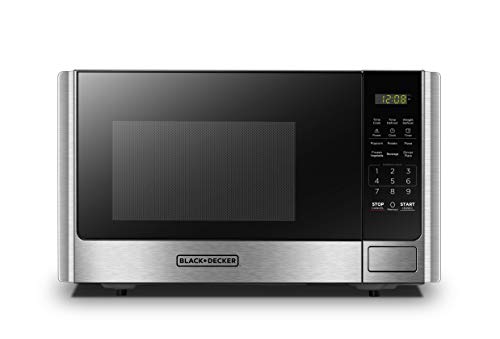
BLACK+DECKER Countertop Microwave Oven, 0.9 Cu.Ft, 900W, Stainless Steel
Badge: Best Classic Value
Strengths
- The anchor compact of the category: standard size, standard wattage, standard finish
- Push-button door and six presets — the registry-safe, guest-safe control scheme
- 900W calibration means packaged directions behave for a first-time owner
Trade-offs
- No sensor and no mute — the classic’s standing omissions
- Nothing specialised; cooks with ambitions will outgrow it happily
- Stainless finish is the safe choice, not the striking one
Mini spec box
- Capacity: 0.9 cu ft
- Power: 900W
- Controls: 10 power levels, 6 auto cook presets
- Door: Push-button
- Features: Child safety lock
- Finish: Stainless steel
Every edited shelf needs an anchor — the model a shopper can buy with confidence for almost any ordinary household — and this BLACK+DECKER is the category’s. It is the first-apartment purchase, the registry staple, the landlord’s refresh, and the parental care-package microwave, all in one stainless cabinet, because its virtues are the portable kind: a size that fits median counters, a wattage the food supply is calibrated to, a door that opens under full hands, and controls that need no explanation to any housemate or guest. Its limits are equally portable knowledge: no sensor supervises, no mute silences, and a household that cooks seriously will eventually shop upward with this machine’s blessing. As the value anchor of a general-retail shelf it has no real rival in this guide, and the shopper who needs the standard article, bought once and understood instantly, should stop reading here and check the listing. There are worse strategies in appliance buying than choosing the anchor and spending the saved research hours on the rest of the home — in a channel built around furnishing whole lives in single trips, it may be the most characteristic good decision there is.
Best for: first homes, registries, rentals, and any standard household / Not suited for: feature seekers or silent-running requirements

TOSHIBA Microwave Oven, 0.9 Cu.Ft, 900W, Black Stainless Steel
Badge: Best Overall
Strengths
- The classic class with the complete modern feature set — mute, LED light, child lock
- Black stainless finish is the design-led slot’s answer in a practical size
- 10.6-inch removable turntable: dinner-plate legitimacy, sink-friendly cleaning
Trade-offs
- Six auto menus, the compact library
- Black stainless commits the kitchen’s tone; bright suites should take the classic
- Conventional power delivery at low settings, as with all non-inverters here
Mini spec box
- Capacity: 0.9 cu ft
- Power: 900W
- Turntable: 10.6 inch, removable
- Menus: 6 auto menus
- Features: Mute function, child lock, LED lighting
- Finish: Black stainless steel
Best Overall on a curated shelf belongs to the model that answers the most households with the fewest caveats, and this Toshiba’s case is completeness in the classic form. Same class-standard size and wattage as the anchor, but the daily details are finished: the beeps can be silenced, the cavity is lit well enough to cook by, the lock covers the family years, and the finish speaks the current design language for the kitchens — dark-toned, matte-hardware, quietly modern — that general retail’s home aisles are busy furnishing. It is the registry upgrade and the design refresh in one box, and the model a gift-buyer can send to an unknown kitchen with the least imaginable risk of mismatch. Its caveats are a compact’s caveats, stated in the trade-offs. For the median shopper on this shelf, it is simply the one to buy — the machine the edited assortment, at its best, exists to point at.
Best for: the median household, design-led refreshes, and confident gifting / Not suited for: bright traditional suites or family-volume cooking

TOSHIBA Countertop Microwave Oven, 1.2 Cu.Ft, 1000W, Black
Badge: Best for Families
Strengths
- Humidity sensor supervises the family’s nightly reheating without guesswork
- 12 auto menus and a 12.4-inch turntable cover family dishes and the full rotation
- Mute and ECO mode keep an open-plan family home civilised and efficient
Trade-offs
- The deepest footprint among the family picks — measure the counter
- More machine than couples or singles will ever engage
- Black finish shows dust and splatter contrast
Mini spec box
- Capacity: 1.2 cu ft
- Power: 1000W
- Turntable: 12.4 inch, removable
- Sensor: Smart humidity sensor
- Menus: 12 auto menus
- Features: Mute function, ECO mode, easy clean interior
- Finish: Black
The family slot on the shelf belongs to the machine that understands the nightly queue, and this Toshiba is specified by it: a sensor that reheats a mixed plate by measurement, menus enough for the whole rotation from popcorn to vegetables, a turntable that takes the family’s real dishes, and the manners — mute for the sleeping baby, eco for the idle hours, an interior that wipes clean after the inevitable — that family throughput demands. It is the upgrade the anchor compact’s household buys in year three, when the children are bigger, the plates are fuller, and the microwave has become the hardest-worked appliance in the house. The cautions are footprint and proportion: it wants a full-depth counter and a household that will actually use its supervision. Both present, it is the family answer on this shelf and the one the upgrade path leads to, year after satisfied year.
Best for: families reheating nightly and upgrading from a compact / Not suited for: singles, couples with light use, or shallow counters


COMFEE’ Countertop Microwave Oven, 0.7 Cu.Ft, 700W, Black, ECO Mode
Badge: Best for Dorms
Strengths
- Built for the dorm slot: smallest footprint, one-touch operation, complete sound control
- ECO mode suits an appliance that idles in a small room all day
- Child safety lock doubles as the shared-kitchen lock for communal spaces
Trade-offs
- 700W pace with the usual added time on frozen items
- Mugs and bowls only — dinner plates need not apply
- A specialist that a graduate will replace, by design
Mini spec box
- Capacity: 0.7 cu ft
- Power: 700W
- Features: ECO mode, sound on/off, one-touch buttons, child safety lock
- Positioning: Dorm, apartment, office
- Finish: Black
August’s most-purchased microwave slot is the dorm slot, and this COMFEE’ is its correct occupant. It fits the dresser or the desk-side shelf a dorm actually offers, it operates by one obvious touch at any hour of consciousness, it can be silenced completely — the feature that decides whether a roommate relationship survives the semester — and it sips standby power in a building full of identical small rooms. Its cooking brief is the dorm’s real one: noodles, mugs, bowls, popcorn for a floor of new friends. The honest limits are the slot’s limits, and the review names them so no family mistakes this for a household machine: plates do not fit the brief, frozen family portions are a patience exercise, and graduation will retire it to a first office or a younger sibling, which is not a flaw but the slot’s natural lifecycle. Bought for the room it describes, it is the most exactly-right purchase in this guide — and the one whose box, kept in a closet corner, will make its next move as easy as its first semester, its second room as natural as its first.
Best for: dorms, first small rooms, offices, and guest spaces / Not suited for: any household’s primary family microwave


Farberware Countertop Microwave Oven 1.1 cu.ft, 1000 Watts, Stainless Steel
Badge: Most Versatile
Strengths
- Multi-stage cooking: the shelf’s one true cook’s feature, defrost-then-cook in a program
- Defrost by weight or time serves ingredient cooking properly
- 1.1 cu ft and 1000W is family-capable without family bulk
Trade-offs
- No sensor — versatility by programming, not measurement
- Six presets is modest beside its ambitions
- Stainless finish asks for the wiping habit
Mini spec box
- Capacity: 1.1 cu ft
- Power: 1000W
- Controls: 10 power levels, multi-stage cooking, 6 preset options
- Defrost: By weight or by time
- Display: LED, with express cooking
- Finish: Stainless steel
The versatile slot serves the household whose microwave is a cooking appliance rather than a reheating one, and the Farberware fills it with the feature that changes the category’s possibilities at this tier: multi-stage programming, which lets a single unattended cycle carry a dish from frozen to cooked while the cook does everything else dinner requires. Add defrost by weight for ingredient work, express cooking for the trivial jobs, and a size-wattage pairing that handles a small family’s main dishes, and the result is the most capable machine on this shelf for a cook. The familiar caveat applies — no sensor measures, so the machine’s intelligence is the cook’s, programmed in — and for its intended buyer that is not a limitation but the definition of the tool. On a general-retail shelf dominated by reheating appliances, this is the one that respects the person who actually cooks, and it earns its slot outright, without apology to the reheating majority it serves alongside. Project shoppers comparing across channels will meet the same model anchoring the capability discussion in Best Microwaves Builtin, where format and function are weighed together.
Best for: home cooks who program, defrost by weight, and cook in the microwave / Not suited for: set-and-forget buyers wanting sensor supervision

Chefman Countertop Microwave Oven 0.9 Cu. Ft., 900 Watts – Black
Badge: Best Feature Balance
Strengths
- Every everyday feature in one value cabinet: express cook, eco mode, mute, child lock
- Class-standard 0.9 cu ft and 900W — the calibration the food supply assumes
- Ten power levels give real control at a value position
Trade-offs
- No sensor and no staged programming — breadth over depth
- Plain black finish, the shelf’s least decorative
- Six presets cover the essentials and stop there
Mini spec box
- Capacity: 0.9 cu ft
- Power: 900W
- Controls: 10 power levels, 6 cooking presets, one-touch express cook
- Features: Eco mode, child safety lock, mute button
- Finish: Black
The value slot, done properly, is not the cheapest machine on the shelf but the one with nothing missing — and this Chefman is the guide’s exemplar. Compare its checklist against the regrets owners of lesser compacts report by month two: the beep that cannot be silenced (it can), the standby draw with no eco answer (answered), the missing lock in a house with a toddler (present), the express key for the morning mug (present). All of it sits in the class-standard cabinet at the class-standard wattage, which is why this model recurs across this site’s guides wherever balance is the criterion — the budget discussion in Best Microwaves Between 50 100 Dollarws reaches the same conclusion from the wallet’s direction. Its limits are depth limits: no sensor, no stages, a plain finish. A household whose life is the classic rotation will never invoice them, and will own the most frictionless inexpensive microwave on the shelf. There is a broader lesson in its badge, worth stating as this guide’s reviews close: on a curated shelf, the winning product is rarely the one with a superlative — fastest, largest, smartest — and usually the one with no absence where daily life goes looking. Balance is not the boring option. At this end of the market, balance is the engineering achievement, and this machine is its proof.
Best for: value shoppers who refuse to give up the everyday features / Not suited for: cooks wanting sensor or staged capability
Comparison Table
| Model | Capacity | Power | Shelf slot | Link |
|---|---|---|---|---|
| BLACK+DECKER 0.9 | 0.9 cu ft | 900W | Classic value anchor | Check on Amazon |
| TOSHIBA 0.9 Black Stainless | 0.9 cu ft | 900W | Design-led all-rounder | Check on Amazon |
| TOSHIBA 1.2 Black | 1.2 cu ft | 1000W | Family sensor model | Check on Amazon |
| COMFEE’ 0.7 ECO | 0.7 cu ft | 700W | Dorm and small-space specialist | Check on Amazon |
| Farberware 1.1 | 1.1 cu ft | 1000W | Cook’s versatile mid-sizer | Check on Amazon |
| Chefman 0.9 | 0.9 cu ft | 900W | Feature-complete value pick | Check on Amazon |
How to Choose on a Curated Shelf: Read the Slots, Not the Display
A curated assortment is an argument, and the skilled shopper reads it as one. Each slot exists because the retailer’s buyers decided a household type was worth serving: the anchor compact for the standard household, the design model for the style-led refresh, the family machine, the dorm specialist, the value balancer. Your task is not to evaluate forty machines — the shelf has done that — but to identify your household’s slot honestly and then verify that the slot’s occupant deserves it, using the criteria this series applies everywhere: cavity and turntable against your dishes, wattage against the calibration your food assumes, the daily features — mute, express, lock, eco — against your household’s actual frictions, and the finish against the room it will live in. Where the shelf’s occupant fails your criteria, the wider market is one verification away, and the listing links in this guide exist precisely so the comparison costs you a minute rather than a second trip. The mistake the curated shelf invites is slot drift: standing in the aisle, a household talks itself from the compact it needs into the family machine on promotion, or from the family machine into the dorm model because the box is lighter. Name your slot before the trip, and let the display argue with a decision already made.
It helps to know what a slot’s occupant had to survive to earn its place, because it explains both the shelf’s strengths and its blind spots. A general retailer’s buyers choose for the median of millions of households, under constraints of shelf space, return rates, and the season’s story — which means the occupant is almost always a genuinely competent, broadly suitable machine, and almost never the perfect machine for an unusual household. That is not a criticism; it is the definition of curation, and it is why the verification minute matters more here than in a specialist channel: the shelf guarantees the class, while your kitchen must confirm the instance. The shoppers who understand this get the best of both worlds — the retailer’s editing labour, done for them free, and their own criteria, applied where curation cannot reach. The ones who misunderstand it in either direction — trusting the shelf completely or dismissing it entirely — both pay for the misunderstanding, one in mismatched appliances and the other in endless, unassisted research. Read the slots, verify the occupant, and the middle path buys itself.
Dorm Season and First Homes: Buying for a Room You Have Barely Seen
Two of this channel’s defining occasions share a difficulty: the room is new, small, and measured mostly by hope. The discipline that survives both is footprint humility. For a dorm, assume the smallest plausible surface and buy the specialist — the 0.7 cu ft class exists because it fits the shelf, the dresser, and the mini-fridge’s top that constitute dorm real estate, and its sound control will matter more by October than any cooking feature. Check the institution’s appliance rules before the trip; residences commonly restrict wattage or appliance types, and the low-output class here is the one most likely to be welcome everywhere. For a first home, resist furnishing the imagined kitchen and buy for the measured one: the classic 0.9 cu ft class, a tape-measured counter, and the balanced feature set will serve the first two years of real cooking better than a family machine bought for a household that does not yet exist. Both occasions reward the same virtue — buying the room you have — and punish the same error, buying the room in the brochure.
Registries and Gifts: Buying for Someone Else’s Kitchen
Gift logic inverts normal shopping: the best machine is not the one matched to a known kitchen but the one safest across unknown ones. That argues for the classic class over every specialist — the 0.9 cu ft size that fits median counters and median dishes, the calibrated wattage, the controls a recipient’s least technical housemate will operate correctly, and a finish chosen for neutrality unless the couple’s taste is genuinely known, in which case the black stainless pick is the confident design gift. It argues against the dorm specialist (too small for a household), against the family machine (too big for a first counter), and against the cook’s versatile model unless the recipients are known cooks who will program it. Include the practical courtesies: keep the receipt accessible to the recipient through the retailer’s registry or gifting system, favour the channel whose return logistics the recipient can actually use, and remember that a microwave is a decade-scale object in a new household’s life — the balanced classic given without drama will be used three times a day long after more theatrical gifts are shelved. The premium end of gifting, for the couple whose kitchen ambitions are known and serious, is surveyed in Best Microwaves Bosch, where the flagship brands make their case.
How to Set Up and Live With a General-Retail Microwave
Setup is the series standard, and it is short enough to do properly even on moving day: remove all transit packaging from the cavity, seat the roller ring and turntable until they rotate freely, place the unit with the ventilation clearances its manual specifies, plug it directly into a wall outlet — never a power strip — and run the mug-of-water test to confirm even steaming. Then the first-week habits that decide the appliance’s decade: cover food as a rule, use power levels rather than full-blast timing for mixed plates, grant standing time, wipe the cavity weekly and after boil-overs, and wash the turntable and roller ring monthly in the sink, with a lemon-steam clean for anything stubborn. Troubleshooting follows the pattern used throughout this series: Problem: a reheated plate is hot at the rim and cold in the centre → stir or rearrange halfway, drop one power level, and add standing time. Problem: the machine seems slow against package directions → check your wattage class against the carton’s assumption and adjust by the inverse ratio. Problem: the door area steams and drips in a small kitchen → wipe the seal surfaces dry and keep them clean; a seal that meets cleanly is a seal that works. None of this requires a manual’s second reading — it requires a household that treats the first week as calibration, after which the machine disappears into the routine it was bought to serve.
The Cross-Check Habit: Aisle, Listing, and the Minute That Saves the Return
General retail’s one structural risk is the confident impulse: the shelf is edited, the display is persuasive, and the box is already in the cart. The antidote is a habit that costs a minute. Before any microwave leaves the aisle — or the cart page — open its live listing and confirm three things: the configuration matches what the box describes (capacity, wattage, the features that decided you), the current price is the one you believe you are paying, and the owner feedback does not reveal a pattern your household would hate. That minute converts the curated shelf from a persuasion environment into what it should be — a shortlist you verify rather than a verdict you accept. It is the same discipline this series recommends at the warehouse and the home-improvement store, because the channel changes and the shopper’s job does not: decide the slot, verify the model, and let the facts, refreshed at the moment of purchase, have the final word.
The Seasonal Shelf: Back-to-School, Holidays, and the January Replacement
A general retailer’s microwave shelf breathes with the calendar, and the shopper who understands the seasons reads it better. Late summer is dorm season: the compact and low-output slots expand, bundles appear, and the stock of the small specialists turns over fastest — the moment to buy the dorm model early rather than in the final weekend, when the slot’s occupant may be whatever the warehouse sent last. The autumn and holiday season tilts the shelf toward gifting and the family upgrade: design finishes and the balanced all-rounders take the endcaps, and the registry logic in this guide applies at full strength. January is the replacement season, when the holiday-worked old machine fails and the shelf’s anchor compact does its quiet annual heroism — the household that has already decided its slot buys in ten minutes while its neighbours begin their research in the aisle. None of this requires gaming the calendar; it requires knowing which season’s argument you are standing inside, so the display’s emphasis reads as information about the retailer’s calendar rather than as advice about your kitchen. Your slot does not change with the season. The shelf’s costume does, and the disciplined shopper — slot named, model verified — is immune to costume.
Couples and Singles: The Shelf’s Quiet Majority
It is worth pausing on the households a general retailer serves most and flatters least: the one- and two-person homes whose microwave life is a rotation of plates, bowls, mugs, and the occasional shared dish. Marketing aims at families, but the shelf’s centre of gravity — the 0.9 cu ft class in two finishes and a value twin — exists because this quiet majority buys it, year after year, for kitchens where the microwave is used more per person than in any family home. For these households the criteria sharpen to a short list. The plate must fit, because a single person’s dinner is a plate, not a portion of a family dish. The express key must exist, because the morning mug is a daily sacrament. The mute matters out of proportion, because small homes put the kitchen near the bedroom. And the footprint must leave a counter, because a small kitchen’s surface is a shared resource among cooking, working, and living. Every one of those criteria is met by the classic-class picks at the head of this guide, which is why the overall badge sits where it does — and why the couple or single shopper should feel entirely unembarrassed about ignoring the larger machines the display keeps suggesting. The right size for a household is the size of its dinners, and for the shelf’s quiet majority, dinner is a plate.
When the Shelf’s Answer Is Not Your Answer
A curated shelf earns its keep by being right for most households, and intellectual honesty requires the corollary: sometimes it will not be right for yours, and recognising that moment is a shopping skill, not a betrayal of the store that raised you. The signals are specific. Your dishes refuse every cavity on the shelf — the casserole-driven household, the meal-prep rectangles — and the wider market’s flatbed and family classes exist for you. Your cooking needs a capability the shelf’s rotation does not currently stock, like inverter defrosting for a freezer-led kitchen. Your space is genuinely unusual — the boat, the tiny-home, the studio with one shallow shelf — and the specialist classes online fit it better. Or the shelf’s slot occupant fails the verification minute: the configuration differs from the guide, the feedback reveals a pattern your household cannot live with. In each case the correct move is the one this guide’s links make easy — take the criteria the shelf taught you, verify the wider market’s answer against them, and buy where the facts point. The households that shop general retail best are not the most loyal or the most sceptical; they are the ones who treat the edited shelf as the excellent first draft it is, and their own measured kitchen as the final editor.
Common Buying Mistakes
The first mistake is slot drift — arriving for the dorm specialist and leaving with the family machine because it was displayed better, or the reverse because the box was lighter. The second is buying for an unmeasured room, the dorm and first-home error this guide flags by name. The third is gifting a specialist: the dorm model to a new household, the cook’s programmer to a couple who reheats. The fourth is skipping the one-minute listing cross-check and discovering the configuration difference at home. The fifth is ignoring the institution’s rules on a dorm purchase — wattage and appliance restrictions are real, and the low-output class exists partly to satisfy them. The sixth is treating the seasonal assortment as permanent: the shelf rotates, the model you researched in spring may wear a different badge by autumn, and the verification habit is what makes rotation harmless. The seventh is measuring the kitchen after the purchase because the trip was already long — the tape measure takes less time than the return, and the households in the returns queue are, disproportionately, the ones who estimated a counter they could have measured in a minute at home.
Final Recommendation
For the median shopper on this shelf, the recommendation is the TOSHIBA 0.9 Cu.Ft in black stainless steel: the classic class, completely featured, in the finish modern kitchens are choosing. For the standard article at the value end, the BLACK+DECKER 0.9 Cu.Ft remains the anchor no household regrets. And for the family whose queue has outgrown the compact class, the TOSHIBA 1.2 Cu.Ft in black is the shelf’s family answer, sensor and all. Name your slot before the trip, verify the model in a minute at the listing, and the curated shelf will do what it was edited to do: make a good decision easy. That ease, honestly used, is the channel’s real product — a household furnished in a weekend, a dorm equipped in a trip, a replacement installed the same evening — and the picks above were chosen so that the easy decision and the right one are, for once, the same decision.
Frequently Asked Questions
What size microwave should a first apartment buy?
The 0.9 cu ft class, in almost every case: dinner-plate capacity, calibration-standard wattage, and a footprint that fits a first counter with room to live beside it. Measure the counter anyway — depth and door swing — and step down to 0.7 cu ft only if the room genuinely refuses the standard class. First kitchens punish optimism about space more reliably than any other buying error, and the classic class is popular precisely because it was designed, over decades, to fit the counters first kitchens actually have.
Are dorm microwaves different from regular ones?
In the ways that matter to a dorm, yes: smaller cavities around 0.7 cu ft, lower output around 700 watts, one-touch controls, and — critically — full sound control for shared rooms. Many residences also restrict appliance wattage or types, so check the institution’s rules first; the low-output class is the safest fit. Buy it early in the season while the slot is stocked, and plan its second life from the start — a first office, a younger sibling, a guest room — because a dorm microwave bought well serves three rooms across five years.
Which microwave makes the safest registry gift?
A balanced 0.9 cu ft model with foolproof controls and a neutral finish — the class that fits unknown counters, unknown dishes, and unknown housemates. Avoid specialists: dorm models are too small for a household, family models too big for a first counter, and programmable cooks’ models presume habits you cannot know. If the couple’s taste is known and modern, the black stainless all-rounder in this guide is the confident upgrade from safe to personal, and it is the gift most likely to still be the kitchen’s hardest-working object at their fifth anniversary.
Why verify a store model against an online listing?
Because assortments rotate and configurations vary. One minute at the listing confirms the capacity, wattage, and features are what the box and display claim, shows the current price, and surfaces owner feedback at a scale no aisle can. It is the cheapest insurance in appliance shopping — and the habit generalises: any big-ticket item bought in a persuasive environment deserves the same sixty seconds of quiet verification before the receipt prints.
Is a sensor worth it for a family buying at a general retailer?
If reheating is the household’s dominant microwave job — as it is for most families — yes: a humidity sensor ends cycles when food is ready and removes the guesswork from the nightly queue. If the household mostly boils, pops, and reheats mugs, the balanced classic class serves as well and costs the budget less. The deciding evidence is your own last week of dinners: count the mixed plates, and let that number, not the display, make the sensor decision.
How long should a microwave from this class last in a first home?
With ventilation respected and the cavity kept clean, years of daily service is the normal expectation across the classic class; door latches, turntable motors, and keypads are the parts that age first. First-home buyers should weight cleanability and a removable turntable more than any single cooking feature, because maintenance habits, not specifications, decide most of the lifespan they will actually get. A first home is also where the appliance’s second education happens — the household learns its power levels, its house times, its cleaning rhythm — and a straightforward classic teaches those lessons fastest, which is one more reason it anchors this shelf.
What should I check before buying a microwave for a rental?
The lease’s appliance clauses, the counter’s measured depth and door swing, and the outlet’s circuit companions. Countertop models need no installation and travel with you at move-out, which is why the classic and balanced compacts in this guide are the rental defaults. Add one more check for shared housing: the household’s noise situation, because a microwave without a mute in a thin-walled rental is a complaint waiting for its evening, and two of this guide’s classic-class picks can be silenced completely.


