Disclosure: topratedkitchenware.com is reader-supported. When you buy through links on our site, we may earn an affiliate commission from Amazon and other retailers, at no extra cost to you.
Where to buy
All six picks in this guide to best safety can openers are listed on Amazon, where you can check the latest price on Amazon, confirm the exact variant, and read the current listing details before ordering. Listings and bundles change, so match the full model name on the listing to the pick reviewed below. Orders are placed on Amazon under its normal delivery and returns terms.
- Best Overall: Kitchen Mama Auto Electric Can Opener (Red) — Check on Amazon
- KITCHENMUH One Touch Electric Can Opener — Check on Amazon
- KORSKR Electric Can Opener — Check on Amazon
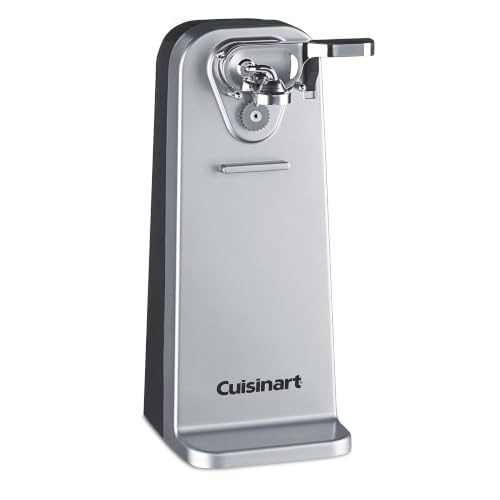
- Cuisinart Deluxe Electric Can Opener (CCO-55, Chrome) — Check on Amazon
- BELLA Electric Can Opener (Oatmilk) — Check on Amazon
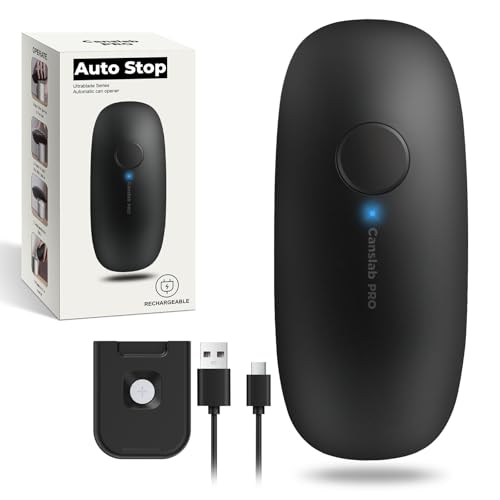
- Famawo Electric Can Opener (USB-C Rechargeable) — Check on Amazon
Read the full guide ↓
Search for the best safety can openers and you will find two different products wearing the same label: openers that cut safely, and openers that are safe to operate. This guide insists on both. The six picks below were ranked on the full safety picture — the edge left on the lid, the way the lid is handled after the cut, the force the user’s hands must supply, and how forgiving the machine is when a can is dented or a battery runs low.
The ranking mixes designs deliberately. A battery handheld with a smooth-edge cut leads for most households; a one-touch countertop Cuisinart serves those who want the machine fixed in place and always ready; and the rechargeable options suit kitchens that have standardised on USB charging. Each review states plainly which safety the pick provides and which it does not.
If you are buying for someone else — a parent, a partner with arthritis, a teenager’s first kitchen — read the angle notes under each pick; they translate the safety features into the situations those buyers actually face.
The sister guide to the Best Safe Can Openers ranks a near-identical pool on the lid-safety criterion.
Key Takeaways
- Safety has two halves: a smooth-edged lid, and operation that keeps hands clear and force-free.
- The Kitchen Mama leads this ranking with a hands-free, smooth-edge battery design.
- One-touch and auto-stop features are safety features — they remove grip and judgement from the task.
- The countertop Cuisinart is the always-ready option, with a magnetic lid lift as its safety layer.
- Keep batteries and charges topped up: a stalled opener mid-rim is the least safe outcome of all.
In this guide
Quick Picks
Six picks, six different reasons to buy. Scan the badges for the short answer, then read the detailed reviews for the honest trade-offs — every pick here has at least one.
| Pick | Badge | Standout points | Check it |
|---|---|---|---|
| Kitchen Mama Auto Electric Can Opener (Red) | Best Overall | Power: battery operated; Operation: automatic, hands free | Check on Amazon |
| KITCHENMUH One Touch Electric Can Opener | Best for Weak Grips | Operation: one touch; Can range: fits all can sizes (listing) | Check on Amazon |
| KORSKR Electric Can Opener | Best Budget Pick | Operation: automatic, hands free; Can range: suitable for any size cans (listing) | Check on Amazon |
| Cuisinart Deluxe Electric Can Opener (CCO-55, Chrome) | Best Countertop Pick | Operation: one-touch press and release; Lid handling: magnetic lid holder | Check on Amazon |
| BELLA Electric Can Opener (Oatmilk) | Best Compact Pick | Operation: automatic one-touch; Finish: oatmilk | Check on Amazon |
| Famawo Electric Can Opener (USB-C Rechargeable) | Best Rechargeable Pick | Power: USB-C rechargeable; Operation: automatic, one-touch | Check on Amazon |
How These Picks Were Chosen
Each pool model was scored against a four-part safety chain: the cut, the lid’s journey after the cut, the demands on the user’s hands, and failure behaviour. Listings were cross-checked against the verified pool, and the spec boxes print only what those listings state — a pick described as smooth-edge here is one whose listing says so.
Design knowledge did the rest of the work: side-cut mechanisms, magnetic holders and auto-stop cycles behave in well-understood ways, and the reviews apply that understanding to each model without claiming hands-on testing. This is a research-led guide and says so.
The pool’s colour variants and finishes were ignored entirely — this ranking is about safety only — and one near-duplicate set of handhelds was spread across the rankings by their genuine differences: charging standard, lid handling and stated can range.
For red-finish options and how to verify them, see the Best Red Electric Can Openers guide.
The Picks: best safety can openers in detail

Kitchen Mama Auto Electric Can Opener (Red)
Badge: Best Overall
Strengths
- One of the best-known names in battery handheld openers
- Smooth-edge cut with hands-free automatic travel
- A true red finish — the colour is the listed variant, not an accent
Trade-offs
- Battery operated, so power management is part of ownership
- Handheld format rides the can — very light cans may need steadying
- Popular models attract lookalike listings; check the seller carefully
Key specs (from the verified listing)
- Power: battery operated
- Operation: automatic, hands free
- Edge: smooth edge (listing)
- Finish: red
- Positioning: food-safe contact design (listing)
Kitchen Mama built its name on exactly this format: a battery handheld that sits on the can, travels the rim hands-free, and leaves a smooth edge behind. This red variant is a true, full-body red — relevant in a guide where colour is the whole point — and the brand’s popularity means usage tips, troubleshooting videos and replacement guidance are easier to find than for most handheld labels.
The ownership notes are standard for the format: batteries are a routine, not an emergency purchase; the can should sit on a flat surface; and because the model is popular, listings imitate it, so check that the seller and the product title match the genuine article before ordering. None of that changes the core verdict — for a hands-free smooth-edge opener in red, this is the reference design in this pool.
The Kitchen Mama tops a safety ranking for a simple reason: it removes the user from the process. Hands-free travel, a smooth edge, and nothing to grip or judge — for a household buying safety first, this is the complete package.
Kitchen Mama’s popularity creates one specific ownership advantage: answers. Whatever odd can or behaviour you encounter, someone has filmed or written the fix for this exact format, which quietly extends the product’s useful life. The red finish also does a small practical favour — a bright opener is easy to spot in a crowded drawer, which matters more than it sounds for an appliance used in short, frequent bursts. Batteries, as ever, are the standing routine: fresh cells at the first slow can, not after a stall.
Best for: anyone wanting a proven handheld with a genuine red finish / Not suited for: corded-countertop loyalists

KITCHENMUH One Touch Electric Can Opener
Badge: Best for Weak Grips
Strengths
- One-touch start with no lever force or grip strength required
- Sized for all standard can sizes, so one opener covers the whole pantry
- Battery handheld format stores in a drawer, not on the counter
Trade-offs
- Battery operated — keep spare batteries or a routine, or it will be flat when needed
- Handheld openers need the can on a flat, stable surface to walk cleanly
- One-touch simplicity means no manual override if a rim is dented
Key specs (from the verified listing)
- Operation: one touch
- Can range: fits all can sizes (listing)
- Power: battery operated
- Positioning: for seniors with arthritis (listing)
The KITCHENMUH is a one-touch battery handheld aimed squarely at the arthritis use case: place it on the can, press once, and let it walk the rim while you do something else. That positioning matters because the real barrier with manual openers is rarely the cutting — it is the sustained squeeze-and-turn grip, which is exactly what this format removes. The listing’s all-sizes claim covers the standard pantry range, from small paste tins to family soup cans.
As with every battery handheld, the ownership rule is simple: the day it feels sluggish, change or charge the batteries, because a half-powered opener can stall mid-rim and leave a harder job than a manual opener would have. It also wants a flat surface and an undamaged rim to walk cleanly. Within those ordinary limits, it delivers the core promise well — cans opened with effectively zero hand strength.
The KITCHENMUH’s safety contribution is access: it fits all can sizes and asks for one touch, which means the user with the weakest grip in this guide’s audience can still open cans unassisted. Independence is a safety outcome too.
The KITCHENMUH’s simplicity cuts both ways in ownership: there is almost nothing to learn, and almost nothing to adjust. That makes it an excellent gift — the recipient’s first can will go exactly like their fiftieth — provided the giver sets up the battery situation in advance. Keep the next set of batteries in the same drawer, and the opener’s one real failure mode is designed out. On dented rims it may stall where a lever machine could be forced; treat that as the design declining a bad job, not failing a good one.
Best for: arthritis-friendly, drawer-stored opening for everyday cans / Not suited for: kitchens that open oversized catering cans regularly

KORSKR Electric Can Opener
Badge: Best Budget Pick
Strengths
- Smooth-edge cut is the headline — lids come away without a sharp rim
- Hands-free automatic travel once started
- Battery format with a black finish that suits modern kitchens
Trade-offs
- Generic-brand support and documentation are thinner than the legacy names
- Battery powered, so the usual charge discipline applies
- Smooth-edge side action needs a clean rim to start reliably
Key specs (from the verified listing)
- Operation: automatic, hands free
- Can range: suitable for any size cans (listing)
- Edge: smooth edge (listing)
- Power: battery powered
- Finish: black
The KORSKR combines the two features most buyers in this category ask for: an automatic hands-free walk around the can, and a smooth-edge result. Its cut separates the lid at the side of the rim, so both the lid and the can top avoid the razor edge a top-cut leaves behind — the difference you feel when you wipe out a can or a child handles the recycling. Battery power keeps it drawer-sized, and the black finish is neutral enough for most kitchens.
The cautions are about the brand rather than the design: documentation, spare-part availability and long-term support from newer labels are less certain than from Cuisinart or Hamilton Beach, so the listing details and the seller’s current terms deserve a careful read before ordering. Functionally, keep the rim clean and the batteries fresh and it does the job it promises — press, walk, lift away a smooth lid.
The KORSKR states a smooth edge and delivers it in a battery handheld at the budget end of this pool. In safety terms it matches the leader’s cut; the compromises live in brand support, not in the edge.
With newer labels, the pre-purchase routine is part of the review: confirm the box contents, the battery type and the seller’s support terms on the current listing, because those details change between production runs more often than with legacy brands. In use, the KORSKR asks for the standard handheld habits — flat surface, clean rim, fresh batteries — and returns a genuinely smooth lid. The black finish hides the splashes that pale openers advertise, which suits a hard-working drawer.
Best for: smooth-edge results in a compact battery handheld / Not suited for: buyers who want a long-established brand’s support network

Cuisinart Deluxe Electric Can Opener (CCO-55, Chrome)
Badge: Best Countertop Pick
Strengths
- Press-and-release one-touch cycle is about as simple as countertop opening gets
- Magnetic lid holder lifts the cut lid clear of the food
- Chrome finish suits kitchens where appliances stay on display
Trade-offs
- Top-cut design leaves a conventional cut lid edge, not a smooth rolled one
- Chrome shows fingerprints and splashes more than matte finishes
- Corded and countertop-sized — not a drawer appliance
Key specs (from the verified listing)
- Operation: one-touch press and release
- Lid handling: magnetic lid holder
- Finish: chrome / silver
- Format: countertop electric
- Model: CCO-55
The CCO-55 is Cuisinart’s chrome take on the classic countertop opener: press the lever and the machine takes the can around, release and it stops, with the magnet holding the severed lid so it comes up with the head instead of dropping into the food. It is the kind of appliance that disappears into a routine — which is precisely its appeal for households that open cans every day and do not want to think about it.
Two honest notes. First, this is a top-cut machine, so the lid edge is a cut edge; handle and dispose of it as you would any sharp tin lid, and choose a side-cut model from this list if a smooth edge is your deciding factor. Second, chrome is a display finish: it looks smart on the counter and shows every splash, so it rewards a quick wipe. Neither point undermines it as a durable, simple, mainstream choice.
The Cuisinart is this ranking’s countertop anchor: its safety is the magnet and the one-touch cycle. Buyers must accept a conventional cut lid — the review is explicit — in exchange for an always-ready machine that never needs charging.
The CCO-55’s chrome body is best treated like any display appliance: a quick wipe after a splashy can keeps it looking like the listing photo. Mechanically it asks for nothing beyond counter space and an outlet, and its press-and-release cycle is the easiest in this guide to teach a new user — which is why this format persists in family kitchens where several people, of several ages, all open cans. Keep the cutting head wiped and the magnet face clean, and its routine is measured in years.
Best for: display-counter kitchens wanting a proven one-touch countertop opener / Not suited for: smooth-edge purists or drawer-only storage

BELLA Electric Can Opener (Oatmilk)
Badge: Best Compact Pick
Strengths
- Automatic one-touch cycle keeps hands away from the cutting action
- Oatmilk finish is a deliberate soft-neutral look few openers offer
- BELLA’s small-appliance styling suits counter-display kitchens
Trade-offs
- Light finishes show tomato and turmeric splashes readily
- One-touch simplicity leaves little manual control for problem rims
- Colour-matched ranges can be harder to replace like-for-like later
Key specs (from the verified listing)
- Operation: automatic one-touch
- Finish: oatmilk
- Format: electric can opener
- Brand: BELLA
BELLA sells small appliances as much on looks as on function, and this opener’s oatmilk finish is the point: a soft, warm neutral that sits comfortably in the pale-wood, matte-ceramic kitchens that stainless and black appliances clash with. Functionally it is an automatic one-touch electric — start the cycle and the machine does the walking and cutting, keeping fingers away from the wheel and the lid.
The practical notes follow from the positioning. A pale finish will show a tomato-sauce splash that a black body hides, so it wants a wipe as part of the routine. And like most one-touch automatics, it is designed for standard, undamaged rims; a badly dented can is a job for patience, not force. If your kitchen is curated and your can volume is ordinary household level, it is a legitimate way to stop hiding the can opener in a cupboard.
BELLA’s automatic cycle keeps hands clear, which is a genuine if partial safety story. It ranks here as the compact, style-led option for careful households rather than as a smooth-edge contender.
BELLA’s oatmilk finish is the ownership story: it will show a tomato splash that a black body hides, so this is an opener for cooks who wipe as they go and enjoy how their counter looks. Functionally, the one-touch cycle suits the way most people actually open cans — one or two at a time, mid-recipe, with other things on the stove — and the automatic action keeps hands out of the process at exactly the distracted moment when lid accidents usually happen.
Best for: style-conscious kitchens wanting an automatic opener in a soft neutral / Not suited for: heavy-use households indifferent to finish

Famawo Electric Can Opener (USB-C Rechargeable)
Badge: Best Rechargeable Pick
Strengths
- USB-C charging matches modern cables — no proprietary charger to lose
- Smooth-edge cut plus a magnetic lid hold covers both halves of lid safety
- One-touch automatic operation suits low-grip hands
Trade-offs
- Rechargeable handhelds still need charge discipline for heavy sessions
- Newer label — check current listing terms and support before ordering
- Magnetic hold helps most on standard steel lids
Key specs (from the verified listing)
- Power: USB-C rechargeable
- Operation: automatic, one-touch
- Edge: smooth edge (listing)
- Lid handling: magnetic lid hold
- Format: handheld electric
The Famawo pairs the two safety features this category has converged on — a smooth-edge cut and a magnetic lid hold — with the charging standard buyers now expect: USB-C. That combination makes it a tidy modern handheld: press once, let it walk the rim, and lift away a lid that is both smooth-edged and held by the magnet rather than balanced on your fingertips over the food.
Its limits are the familiar handheld ones. A rechargeable battery is a consumable habit — top it up on a routine rather than discovering it is flat mid-meal — and a newer label means the sensible pre-purchase checks apply: read the current listing carefully, confirm what is in the box, and note the seller’s support terms. For everyday cans in a household that values the smooth result, it is a well-judged package.
The Famawo is the safety completist’s handheld: smooth edge plus magnetic hold plus one-touch, with USB-C removing the proprietary-charger failure mode. Its ranking reflects the fullest feature chain in a rechargeable body.
USB-C charging sounds like a footnote until you live with the alternative: no proprietary brick to lose, and the same cable that charges a phone revives the opener. Build a monthly top-up into an existing routine — the day you descale the kettle, say — and the battery never becomes the story. The magnetic hold deserves a clean face to grip properly, so add a one-second wipe of the magnet to your post-can habit and the lid lift stays reliable.
Best for: smooth-edge opening with modern USB-C charging / Not suited for: households that open many cans daily and prefer corded certainty
Comparison Table
The table below puts the six best safety can openers picks side by side on the attributes that decide daily satisfaction. It deliberately carries no prices and no ratings — both change too often to print honestly; use the links to check the current listing.
| Pick | Badge | Format | Key detail | Check it |
|---|---|---|---|---|
| Kitchen Mama Auto Electric Can Opener (Red) | Best Overall | Power: battery operated | Operation: automatic, hands free | Check on Amazon |
| KITCHENMUH One Touch Electric Can Opener | Best for Weak Grips | Operation: one touch | Can range: fits all can sizes (listing) | Check on Amazon |
| KORSKR Electric Can Opener | Best Budget Pick | Operation: automatic, hands free | Can range: suitable for any size cans (listing) | Check on Amazon |
| Cuisinart Deluxe Electric Can Opener (CCO-55, Chrome) | Best Countertop Pick | Operation: one-touch press and release | Lid handling: magnetic lid holder | Check on Amazon |
| BELLA Electric Can Opener (Oatmilk) | Best Compact Pick | Operation: automatic one-touch | Finish: oatmilk | Check on Amazon |
| Famawo Electric Can Opener (USB-C Rechargeable) | Best Rechargeable Pick | Power: USB-C rechargeable | Operation: automatic, one-touch | Check on Amazon |
How to Choose the Right Option for Best safety can openers
Decide the cut style first, because it determines what the lid and the can feel like afterwards. Top-cut openers slice the lid inside the rim: fast, familiar, and they leave a cut edge that should be handled with care. Side-cut (smooth-edge) openers separate the lid at the rim bead, leaving smooth edges on both parts — the safer result, and the one to choose if children handle cans or if lids go into household recycling by hand.
Next, choose the format honestly. Countertop corded models are always ready and suit households opening cans daily, but they claim permanent counter space. Battery and rechargeable handhelds live in a drawer and ask only for power discipline — batteries changed or a charge topped up on a routine. Neither is better in the abstract; the right answer is the one that matches your can volume and your tolerance for charging.
Finally, match the machine to the hands that will use it. Push-down levers and one-touch buttons exist because grip strength is the real barrier for many users, including anyone with arthritis. If the opener is a gift for an older relative, weight, button size and auto-stop behaviour matter more than any other specification on the box.
The cut style behind most of these picks is compared in the Best Smooth Edge Can Openers guide.
How to Use an Electric Can Opener Safely and Cleanly
Electric openers are simple machines, and most problems come from seating and cleaning rather than from the motor. The routine below applies to every format in this guide.
- Put the can on a flat, dry surface (for handhelds) or seat it squarely against the drive (for countertop models), with the rim clean and free of label overhang.
- Seat the cutting wheel on the rim as the manual shows — on the bead for side-cut models, inside the rim for top-cut models — until it feels located rather than balanced.
- Start the cycle and let the machine travel without forcing it. Support a tall or lightweight can lightly with one hand if it begins to tip or spin.
- When the cut completes or the auto-stop engages, lift the lid away using the magnet or the lid itself, holding it by its face, not its edge.
- Tip the contents out, then deal with the lid immediately: into the bin or recycling, edge contained, rather than left on the counter where hands sweep.
- Wipe the cutting head after use — a damp cloth or an old toothbrush around the wheel — and let it dry before storing, especially on handhelds that live in drawers.
Troubleshooting
Problem: the opener chews the label or slips off the rim → what to do: the wheel was not seated on the rim bead — stop, reseat it squarely, and restart the cut a little further around the can
Problem: the cut stops halfway and the lid hangs on → what to do: usually a dented rim or fading battery power — support the can, finish the last section slowly, and charge or replace the batteries before the next can
Problem: the lid falls into the food → what to do: the magnet was dirty or the lid was released too early — clean the magnet face and let the cycle fully complete before lifting
Safety by Design: The Four-Link Chain Explained
Think of every can opening as four links: cutting, lid removal, disposal, and the user’s own effort throughout. A traditional manual opener is weak at all four — a sharp lid, pinched out by hand, dropped in a bin someone later presses down, after a bout of squeezing that tires the hand into carelessness. Each feature in this guide exists to strengthen one link.
Side-cutting fixes link one. Magnets fix link two. Rigid bins and lid-to-bin habits fix link three. One-touch automatics fix link four. When you compare openers, ask which links each model strengthens — a machine strong at all four, like the leaders here, is what ‘safety opener’ should mean.
Electric side-cut models are gathered in the Best Smooth Open Electric Can Openers round-up.
Buying a Safety Opener for Someone Else
Gift-buying an opener for an older parent or a partner with arthritis has one rule: do not make them learn a new physical skill to be safe. The right gift is the model whose safe operation is its only operation — press, wait, lift a smooth lid. Auto-stop handhelds fit that rule best, because there is no technique to get wrong.
Also consider the failure conversation: batteries. A rechargeable model on a visible charging spot, or a battery model with spares kept in the same drawer, prevents the one unsafe scenario — a stalled opener and a determined user with a knife. Set the system up when you give it, and the safety lasts.
Can Openers and Arthritis: What the Evidence of Use Shows
The barrier in can opening is rarely sharpness or power — it is the sustained squeeze-and-twist a manual opener demands, applied to a small handle, often with wet hands. Electric one-touch designs remove exactly that motion, replacing it with positioning and a single press. That is why occupational therapists so often suggest them: the task becomes about placement, not strength.
When choosing for arthritic hands, look past the motor to the details: a button that can be pressed with a knuckle, an auto-stop so nothing must be held, a body light enough to place without gripping hard, and a lid magnet so the sharp part never needs pinching. The picks in this guide were assessed on those details, not on headline power.
Why Lids Matter: Recycling, Pets and Small Hands
A cut lid is one of the most common minor kitchen injuries, and the risk concentrates in predictable moments: fishing a lid out of food, sweeping a counter, emptying a recycling bin, or a child ‘helping’. Smooth-edge opening does not just feel nicer — it removes the sharp object from all of those moments at once.
Pet feeding deserves a mention too: part-used tins are often covered with their own lid between meals. A smooth-edge lid can be pressed back onto the can as a cover without a sharp rim against fingers or fridge shelves — a small, daily convenience that owners of side-cut openers mention constantly.
Countertop Versus Handheld: Living With the Choice
Countertop openers are infrastructure: always plugged in, always ready, always in the same place — and always visible. They suit households that open cans daily and have the counter to spare. Handhelds are tools: they appear when needed and vanish into a drawer, at the price of batteries or charging and a slightly more deliberate setup per can.
The deciding question is frequency. Daily openers earn a countertop machine its space within a month. Weekly openers usually regret the footprint and prefer the drawer. Be honest about your real can count — most households overestimate it.
The Anatomy of a Can: Why Rims Decide Everything
A food can is three pieces of metal folded into one: body, base and lid, joined by rolled seams called beads. Every opener in this guide is really a bead-cutting or lid-cutting tool, and every failure mode in the troubleshooting notes — slipping, chewing, stalling — is a story about that seam: dented, dirty, or met at the wrong angle. Understanding the bead explains the whole category, including why a crushed rim defeats even the best machine.
It also explains the smooth edge. The bead is rolled metal, so cutting through the fold separates along already-rounded surfaces. A top-cut bypasses the bead and slices flat sheet metal instead — strong, quick, and sharp by geometry. When you choose an opener, you are choosing which part of the can’s anatomy to cut, and the edge you live with follows from that single fact.
Openers in Rental Kitchens, Offices and Shared Houses
Shared kitchens change the buying maths. An opener there must be findable (a fixed countertop spot or a bright colour), teachable in one sentence, and forgiving of users who will never read its manual. That is why one-touch automatics dominate workplace kitchens, and why the model a household buys for a single careful cook is often the wrong model for a house-share of five.
Durability also scores differently in shared use: the cutting head gets wiped less, the batteries get changed by nobody in particular, and the lid magnet collects grime. If your kitchen is shared, weight the ownership criterion — brand support, simple cleaning, standard batteries — as heavily as the cut itself, and agree the power routine out loud, because unowned routines are unkept routines.
Top-Cut Versus Side-Cut: What Actually Changes
A top-cut opener drives its wheel inside the rim and slices the lid across the top. It is quick, tolerant of odd rims, and leaves two things behind: a lid with a cut edge, and a can whose rim is usually smooth enough. A side-cut opener drives through the rim bead itself, separating the lid whole, so both lid and can end up with rolled, finger-safe edges.
Neither is universally better. Top-cut suits speed and difficult cans; side-cut suits safety and clean handling. Most households that switch to side-cut do so after one lid cut too many — and most who switch back do so because a favourite oversized can would not seat. Knowing which household you are is the whole decision.
Care, Cleaning and Making It Last
The cutting head is where hygiene is won or lost. Food residue around the wheel and magnet breeds smells and dulls the cut, so wipe the head after every use, work an old toothbrush around the wheel weekly if you open cans daily, and never immerse a handheld’s motor body — a damp cloth is the limit. Countertop models should be unplugged before any cleaning around the head.
For battery and rechargeable models, treat power as maintenance: swap batteries or top up the charge on a schedule rather than after a failure, and store handhelds dry in a drawer away from the sink splash zone. A cutting wheel that starts tearing instead of cutting is a wear item on many models — check the listing for replaceable heads before assuming the whole opener is finished.
Wider cross-brand favourites appear in the Best Tested Can Openers comparison.
Common Buying Mistakes
- Buying ‘safety’ on the label without checking the cut. only a side-cut or stated smooth-edge design removes the sharp lid — the word safety alone guarantees nothing
- Giving an opener without setting up its power routine. spares in the drawer or a charging spot agreed on day one prevents mid-rim stalls later
- Choosing countertop when the user cannot spare counter space. an opener stored away is an opener bypassed for the old manual one — match format to the kitchen
- Forgetting dented cans. every design struggles on a crushed rim; teach the user to stop and ask for help rather than force it
- Neglecting the cutting head. a dirty wheel tears rather than cuts, and a torn edge is a sharp edge — wipe the head as routine
- Keeping the old manual opener ‘just in case’. in a weak moment it is the one that gets used; retire it to the back of a cupboard or out of the house
At a Glance: Who Each Pick Suits
If you have read this far and want the whole guide compressed into one screen, this map matches each pick to the buyer it serves and the buyer it would frustrate. It repeats the verdicts from the detailed reviews in shorthand — use it to confirm a choice, not to skip the trade-offs entirely.
- Best Overall — Kitchen Mama Auto Electric Can Opener (Red): best for anyone wanting a proven handheld with a genuine red finish; not suited for corded-countertop loyalists.
- Best for Weak Grips — KITCHENMUH One Touch Electric Can Opener: best for arthritis-friendly, drawer-stored opening for everyday cans; not suited for kitchens that open oversized catering cans regularly.
- Best Budget Pick — KORSKR Electric Can Opener: best for smooth-edge results in a compact battery handheld; not suited for buyers who want a long-established brand’s support network.
- Best Countertop Pick — Cuisinart Deluxe Electric Can Opener (CCO-55, Chrome): best for display-counter kitchens wanting a proven one-touch countertop opener; not suited for smooth-edge purists or drawer-only storage.
- Best Compact Pick — BELLA Electric Can Opener (Oatmilk): best for style-conscious kitchens wanting an automatic opener in a soft neutral; not suited for heavy-use households indifferent to finish.
- Best Rechargeable Pick — Famawo Electric Can Opener (USB-C Rechargeable): best for smooth-edge opening with modern USB-C charging; not suited for households that open many cans daily and prefer corded certainty.
Final Recommendation
The Kitchen Mama is the safety pick to beat: hands-free, smooth-edged, and proven in the format. If your household prefers a machine that lives on the counter and never needs charging, the Cuisinart is the deliberate trade — process safety in exchange for a conventional lid.
The Famawo is the modern middle: every safety feature in the chain, in a USB-C handheld. The KORSKR and KITCHENMUH bring the same ideas to lower tiers, and the BELLA serves style-led kitchens that will pair it with careful lid habits.
Judge any opener — in this guide or beyond it — by the four-link chain: cut, lid, disposal, effort. A model that strengthens all four is a safety opener; anything less is a compromise you should choose knowingly.
To revisit the top of the list: Kitchen Mama Auto Electric Can Opener (Red) and KITCHENMUH One Touch Electric Can Opener — confirm the exact model and variant on the listing before ordering.
And the Best Under Cad Can Openers guide covers budget-tier options for Canadian shoppers.
Consider the recycling run as part of opener safety. Lids and cans travel — in a bag, in a bin, in a truck — and a smooth-edge lid is safer at every handoff, including for the people who collect and sort. It is a small externality of a kitchen purchase, but it is real, and it costs nothing to choose.
Last, a note on confidence: for many older users, the true safety gain from these openers is that they keep cooking independently for longer. A task that stays easy stays theirs. When a pick in this guide is described as independence-preserving, that is a safety judgement, not a soft one.
There is also a household-systems point worth making: safety features compound when they are consistent. A kitchen where the opener is automatic, the lid is smooth, the bin is rigid and the batteries are always fresh is not five small decisions — it is one system in which the sharp-lid accident has been designed out at every step. Bought individually the picks in this guide each help; adopted together with their routines, they change the category of the risk itself, from ‘be careful’ to ‘there is nothing sharp to be careful with’.
Frequently Asked Questions
What is the safest type of can opener?
A one-touch electric with a side-cut (smooth-edge) mechanism and a magnetic lid hold. It removes the sharp edge, keeps hands clear during the cut, and lifts the lid without fingers.
Are battery handheld openers safe for seniors?
They are often the safest choice: no cord to manage, no grip required, and auto-stop models need no judgement about when the cut is done. The condition is power discipline — keep batteries fresh or the charge topped up.
Do safety can openers work on all cans?
They handle standard cans well. Very large catering cans and badly dented rims challenge every design; check the listing’s stated can range and treat crushed rims as a stop-and-help case.
Why does this guide include a top-cut opener?
Because safety is a chain, not a single feature. The Cuisinart’s one-touch operation and magnetic lid lift make its process safe, and some households need a countertop format. Its lid still needs careful handling, and the review says so.
How do I dispose of lids safely?
Drop the lid into a rigid bin or place it inside the empty can before recycling, and never press waste down by hand. Smooth-edge lids are far more forgiving at every step.
Can a safety opener still cut me?
The mechanism is guarded in normal use, but a stalled, half-cut lid from any opener is sharp and awkward. Prevent stalls with fresh power and undamaged rims, and handle any half-cut lid with a utensil, not fingers.