Disclosure: topratedkitchenware.com is reader-supported. When you buy through links on our site, we may earn an affiliate commission from Amazon and other retailers, at no extra cost to you.
Where to buy
This guide to the best types of blankets for sleeping outsode starts with a quick note on the name: ‘outsode’ is how this search is typed thousands of times, and it means exactly what you think — sleeping outside the house. Every pick below is a verified fleece, sherpa or faux fur blanket from this guide’s product pool, matched to a real outdoor sleeping spot around the home. Use the links to check the latest price on Amazon, and read the full guide ↓ before you buy.
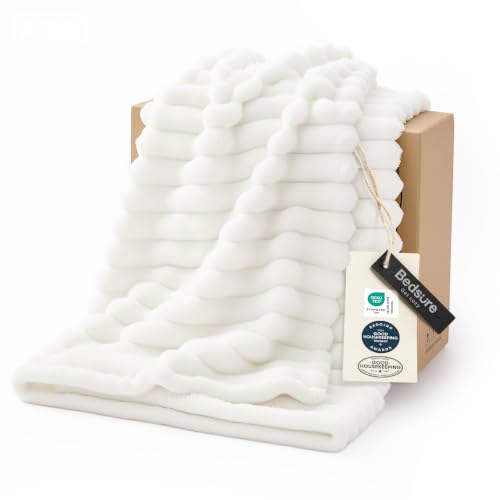
- Bedsure GentleSoft Throw Blanket (Off White) — Best Overall — Check on Amazon
- blunique Ultra Soft Faux Fur Throw Blanket (Cream White) — Best for Guest-Ready Outdoor Beds
- Bedsure Faux Fur Sherpa Blanket (Grey) — Best for Cool Nights Out
- BEDELITE Ribbed Fleece Throw Blanket (Cream) — Best Textured Everyday Pick
- Bedsure GentleSoft Sherpa Fleece Throw Blanket (Grey) — Best Warmth for the Weight
- Bedsure Cloud Bubble Blanket (Beige) — Best Lightweight Nap Blanket
Read the full guide ↓
The best types of blankets for sleeping outsode are not expedition gear. Sleeping outside the house — on the porch, the balcony, the garden daybed, the deck lounger — is a domestic pleasure with its own rules: the bed is usually a real bed or a padded lounger, a roof or open sky is overhead, the kitchen is ten steps away, and the blanket’s job is comfort across a long mild evening that cools slowly toward dawn. Fleece, sherpa and faux fur throws dominate this kind of sleeping because they are warm enough, washable enough and pleasant enough to use every single night, not just on trips.
This guide takes the six verified blankets in the pool and assigns each one to the outsode job it does best — the smooth light throw for warm nights, the grey sherpa for the cold shoulder seasons, the bubble fleece for naps. It also covers the setup habits that make outdoor beds work: what goes underneath, how to handle dew, and how to layer when the temperature drops after midnight. If some of your outdoor sleeping happens further from home, the companion guide to Best Ultralight Down Blankets For Camping covers the campsite end of outdoor sleeping in more depth.
One honest boundary applies to everything that follows: these are soft household blankets being used outdoors, not waterproof or expedition equipment. On a dry surface, under a roof or a clear sky, in mild to cool weather, they are wonderful. On wet ground or in frost, they are layers inside a bigger system, and the buying guide below explains where that line falls.
Key Takeaways
- Outsode sleeping is mostly porch, balcony and garden sleeping — choose for comfort and washability, not expedition specs.
- Smooth light fleece wins warm nights; sherpa wins the cold shoulder seasons; bubble fleece wins the afternoon nap.
- What is under you — cushion, mattress, pad — decides comfort more than the blanket on top.
- Keep the blanket dry until bedtime and shake it out in the morning; those two habits prevent most outdoor blanket problems.
- All six picks are non-heated and machine-washable-class throws, made to live by the back door and be used nightly.
In this guide
Quick Picks
| Pick | Badge | Size | Material / build |
|---|---|---|---|
| Bedsure GentleSoft Throw Blanket (Off White) | Best Overall | 50″ x 60″ | GentleSoft fleece, smooth light face |
| blunique Ultra Soft Faux Fur Throw Blanket (Cream White) | Best for Guest-Ready Outdoor Beds | 50″ x 60″ | Faux fur bubble plush, thick fluffy build |
| Bedsure Faux Fur Sherpa Blanket (Grey) | Best for Cool Nights Out | 50″ x 60″ | Faux fur fleece face with sherpa reverse |
| BEDELITE Ribbed Fleece Throw Blanket (Cream) | Best Textured Everyday Pick | 50″ x 60″ | Ribbed fleece, plush warm build, machine washable |
| Bedsure GentleSoft Sherpa Fleece Throw Blanket (Grey) | Best Warmth for the Weight | 50″ x 60″ | GentleSoft sherpa fleece, non-heated, thick warm build |
| Bedsure Cloud Bubble Blanket (Beige) | Best Lightweight Nap Blanket | 50″ x 60″ | Lightweight bubble-textured fleece throw |
How These Picks Were Chosen
Picks were selected from the verified product pool maintained for this blanket programme: ASINs, titles and images were confirmed against pool data before any writing, and each review states only the specs that data supports — size, material build and colour. We then sorted the six by the outdoor jobs around a home: warm nights, cold nights, naps, guests, hammocks and everyday porch use, and assigned badges by those jobs rather than by marketing order.
The method is research-led and honest about its limits. This guide does not claim laboratory testing; it combines the confirmed product data with the established behaviour of each material class — how fleece handles damp air, how sherpa traps warmth, how deep pile collects garden debris — and flags every limitation we would want to know before buying, from pale colours near soil to pile that dries slowly after dew.
The 6 Best Types of Blankets for Sleeping Outsode, as Specific Picks

Bedsure GentleSoft Throw Blanket (Off White)
Badge: Best Overall
Strengths
- Smooth fleece face feels cool at first touch on warm evenings
- Light weight makes it easy to carry out to the porch nightly
- Washes clean easily after outdoor use
Trade-offs
- Off white shows garden dirt quickly if it touches the ground
- Too light for cool autumn nights on its own
- Smooth face can slide on glossy air mattresses unless tucked
| Spec | Detail |
|---|---|
| Size | 50″ x 60″ |
| Material | GentleSoft fleece (per API title) |
| Colour | Off white |
| Heating | Non-heated |
Most outsode sleeping — and yes, this guide keeps the spelling many people actually type when they search for sleeping outside — happens within twenty steps of a back door: a porch daybed, a balcony lounger, a garden swing. For that territory, this smooth GentleSoft throw is the most useful blanket of the six. Its face feels cool when you first lie down on a warm evening, it breaks the light night breeze that makes bare skin goose-pimple after midnight, and it is light enough that carrying it out each evening never feels like a chore worth skipping.
On a clean outdoor bed — sheet down, mattress or cushion beneath — the off-white colour is no handicap at all, and the blanket reads as part of the furniture rather than camping kit. Its limits are equally clear: it is a warm-night blanket, it should never meet bare soil, and once autumn arrives it becomes the top sheet of a layered bed rather than the bed’s main warmth. Within those honest borders, it is the pick that will get used the most nights of the year.
Best for: porch daybeds, balconies and warm-night garden sleeping / Not suited for: bare ground or cold nights as the only layer

blunique Ultra Soft Faux Fur Throw Blanket (Cream White)
Badge: Best for Guest-Ready Outdoor Beds
Strengths
- Bubble plush texture grips the sheet instead of sliding off
- Feels luxurious for guests sleeping on a porch or in a glamping tent
- Thick pile adds real warmth once the evening cools
Trade-offs
- Cream white demands a clean platform bed, never bare ground
- Bulky to carry further than the garden
- Deep pile dries slowly after a dewy night
| Spec | Detail |
|---|---|
| Size | 50″ x 60″ |
| Material | Faux fur bubble plush (per API title) |
| Colour | Cream white |
| Use noted in listing | Couch, sofa, bedroom, living room |
If the outdoor bed is one you make up for other people — the porch bed for visiting family, the glamping platform, the garden room daybed — this blunique faux fur throw is the blanket that makes the bed look and feel intentional. The raised bubble texture is not just decorative: it keys into the sheet beneath and stays where you put it through the night, while the thick pile delivers the warm, tucked-in feeling guests remember.
Treat it as the finishing layer rather than the workhorse. A plain fleece beneath it handles the washing burden, and the faux fur goes on top for comfort and looks. It is too bulky and too pale for campsites or lawns, and a dewy night will leave its deep pile needing a long morning in the sun. On a roofed porch or platform, though, nothing else in this line-up turns sleeping outsode into such an occasion.
Best for: guest porch beds, glamping platforms and garden rooms / Not suited for: campsites, lawns or wet weather

Bedsure Faux Fur Sherpa Blanket (Grey)
Badge: Best for Cool Nights Out
Strengths
- Sherpa reverse grips cots, hammocks and cushions so the bed stays made
- Grey finish hides dust and ash marks between washes
- Thick build is the warmest-feeling option for cool evenings
Trade-offs
- Too warm for midsummer nights
- Textured faux fur face is not for sleepers who dislike pile
- Needs a barrier over damp surfaces, like every pick here
| Spec | Detail |
|---|---|
| Size | 50″ x 60″ |
| Material | Faux fur fleece with sherpa reverse (per API title) |
| Colour | Grey |
| Heating | Non-heated |
Cool evenings are where outsode sleeping either becomes a habit or gets abandoned, and this two-faced Bedsure is the blanket that carries a porch bed through spring and autumn. Lay it sherpa-side down and the pile grips cushions, cots and hammock beds so the whole arrangement stops migrating in the night; sleep under the faux fur face and the top of the bed feels plush rather than utilitarian. The grey colour is a quiet practical win outdoors, shrugging off the dust film that settles on everything left outside.
It is a substantial blanket, so expect it to be too much in high summer and just right the rest of the year. In a hammock it does double duty as the in-hammock layer that softens the chill of compressed insulation beneath you, especially with a lighter top layer added. Like all six picks it is not waterproof and not a ground cloth; give it a dry surface and it will give you the longest outdoor sleeping season of the group.
Best for: cool spring and autumn nights, hammocks and cots / Not suited for: hot humid nights or ultralight travel

BEDELITE Ribbed Fleece Throw Blanket (Cream)
Badge: Best Textured Everyday Pick
Strengths
- Ribbed texture holds pockets of warm air along the body
- Machine washable — important for a blanket living near the garden
- Cream colour suits porch furniture and reads as decor by day
Trade-offs
- Ribs can trap grass seeds that need a good shake-out
- Mid-weight: not the warmest here, not the lightest either
- Cream still shows soil faster than the grey picks
| Spec | Detail |
|---|---|
| Size | 50″ x 60″ |
| Material | Ribbed fleece (per API title) |
| Care | Machine washable |
| Colour | Cream |
Texture is an underrated outdoor feature, and this BEDELITE throw shows why. The ribbed surface creates long channels of trapped air along the body, so the blanket feels warmer than a flat fleece of similar weight, and the ribs give it a slight structure that stops it bunching into a rope around your legs when you turn over on a narrow daybed or lounger. By day it sits on porch furniture looking like decor; by night it is a genuinely capable mid-weight layer.
It sits in the middle of this line-up on almost every axis — warmer than the smooth light throws, lighter than the sherpa builds — which makes it the easiest recommendation for someone whose outdoor sleeping spans the whole mild season rather than one extreme of it. Shake it well before washing, because the rib channels collect seeds and grit outdoors, and keep it off wet grass. For balcony and terrace sleepers especially, this is the balanced pick.
Best for: balconies, terraces and all-season porch loungers / Not suited for: freezing nights alone or muddy campsite use

Bedsure GentleSoft Sherpa Fleece Throw Blanket (Grey)
Badge: Best Warmth for the Weight
Strengths
- Thick sherpa pile feels warm immediately on cold nights
- Grey hides the dust and pollen film outdoor blankets collect
- Non-heated, so no cords across the porch or batteries to charge
Trade-offs
- Deep pile collects leaves and needs shaking after garden use
- Bulky in a storage box compared with flat fleece
- Overkill for warm summer nights
| Spec | Detail |
|---|---|
| Size | 50″ x 60″ |
| Material | GentleSoft sherpa fleece (per API title) |
| Heating | Non-heated |
| Colour | Grey |
This grey sherpa is the cold-night specialist of the outsode set: the blanket you fetch when the evening has turned properly chilly and the lighter throws have stopped being enough. Sherpa’s deep pile holds the thickest layer of still air in this group, and still air is warmth. Pulled up over a base layer on a porch bed or a cabin veranda, it extends comfortable outdoor sleeping weeks further into autumn than fleece alone can manage.
The grey finish is the other half of its appeal — pollen, dust and the faint grime of outdoor life simply disappear against it, so the blanket can live by the back door without looking neglected. It is bulky, it collects leaf litter in its pile, and it will swamp you in July; those are the honest costs of the warmest pick here. For households whose outdoor bed gets used in the shoulder seasons, they are costs worth paying.
Best for: shoulder-season porch beds and cold-sensitive sleepers / Not suited for: summer heat or anyone short on storage space

Bedsure Cloud Bubble Blanket (Beige)
Badge: Best Lightweight Nap Blanket
Strengths
- Lightweight build is effortless to carry out and shake off
- Bubble texture adds air pockets without adding bulk
- Beige tones blend with outdoor furniture and rattan
Trade-offs
- Least insulation of the six — a nap and warm-night blanket
- Light fabric can blow off an empty lounger in a breeze
- Not a substitute for a real blanket once nights cool
| Spec | Detail |
|---|---|
| Size | 50″ x 60″ |
| Material | Fleece with bubble texture (per API title) |
| Weight class | Lightweight (per API title) |
| Colour | Beige |
Not all outsode sleeping is overnight. The afternoon nap on a shaded lounger, the doze in a hammock after lunch, the child asleep on the porch swing — these need a blanket that covers without cooking, and that is exactly the Cloud Bubble’s job. Its bubbled fleece is feather-light, the raised texture keeps most of the fabric off the skin so air can move, and the small air pockets take the edge off a light breeze without building heat.
Keep expectations matched to that role: this is the warm-weather, short-sleep pick, the first layer in autumn rather than the main one, and the blanket most likely to live permanently on the outdoor furniture. It will not carry anyone through a cold night, and its light fabric needs a tuck or a clip on breezy days so it does not end up on the lawn. For the nap-and-lounge end of sleeping outside, it is the most pleasant option here.
Best for: outdoor naps, hammock dozes and warm afternoons / Not suited for: overnight cold or as a sole winter layer
Comparison Table
| Pick | Badge | Size | Standout trait | Shop |
|---|---|---|---|---|
| Bedsure GentleSoft Throw Blanket (Off White) | Best Overall | 50″ x 60″ | Light, smooth cover that suits warm nights on clean outdoor beds | Check on Amazon |
| blunique Ultra Soft Faux Fur Throw Blanket (Cream White) | Best for Guest-Ready Outdoor Beds | 50″ x 60″ | Plushest surface here for dressed porch and glamping beds | Check on Amazon |
| Bedsure Faux Fur Sherpa Blanket (Grey) | Best for Cool Nights Out | 50″ x 60″ | Two faces — plush on top, grippy sherpa beneath | Check on Amazon |
| BEDELITE Ribbed Fleece Throw Blanket (Cream) | Best Textured Everyday Pick | 50″ x 60″ | Ribbed channels trap air and keep the throw from feeling flat | Check on Amazon |
| Bedsure GentleSoft Sherpa Fleece Throw Blanket (Grey) | Best Warmth for the Weight | 50″ x 60″ | Deep sherpa warmth in the most forgiving outdoor colour | Check on Amazon |
| Bedsure Cloud Bubble Blanket (Beige) | Best Lightweight Nap Blanket | 50″ x 60″ | Feather-light bubbled fleece for afternoon naps outdoors | Check on Amazon |
How to Choose a Blanket for Sleeping Outside the House
Begin with the spot, not the blanket. A roofed porch bed is the most forgiving outdoor sleeping place there is: no dew falls, rain rarely reaches, and the surface is a real mattress — so plush, pale, comfort-first blankets are entirely practical there. An open deck or garden daybed adds dew and dust, which pushes the choice toward darker colours and fleece that dries fast. A balcony sits between the two, usually roofed by the balcony above but open to wind, which rewards a blanket with some grip or weight so it stays on the lounger. A hammock is its own case, favouring a grippy sherpa layer inside the sling.
Then choose by night temperature, honestly assessed at the coldest hour rather than at bedtime. Warm nights need coverage more than insulation — a smooth or bubble fleece that breaks the breeze. Mild nights suit a mid-weight ribbed fleece. Cool nights, and the whole shoulder season, belong to sherpa. Most households that sleep outside regularly end up with two of these types rather than one: a light throw that lives on the furniture all summer, and a warm sherpa that comes out when the evenings turn. That pairing costs less than one technical camping blanket and gets used ten times as often.
Size is the final check. A 50 x 60 inch throw is the right scale for one adult on a daybed, lounger or cot, and for two people sharing an outdoor bed the practical answer is two throws, one each, rather than a single blanket that becomes a midnight negotiation. Readers setting up layered beds indoors as well will find the same logic in Best Under Blankets, and those kitting out a vehicle for overnight stops can compare Best Van Blankets.
Setting Up an Outdoor Bed: A Simple Evening Routine
Step 1: Make the base dry. Run a hand over the mattress, cushion or lounger before anything goes on it; if it feels cool-damp, give it time in the last sun or lay a dry sheet first. Step 2: Lay the grip layer. If you use two blankets, the sherpa or textured one goes down first, pile against the surface, so the bed stays assembled. Step 3: Keep the top blanket indoors until bedtime on dewy evenings, so it goes on warm and dry rather than pre-chilled. Step 4: Tuck the shoulders. Outside, cold enters at the neck; a blanket long enough to fold under the pillow or wrap the shoulders is worth more than extra thickness at the feet. Step 5: Morning shake-out. Shake the blanket outside, fold it, and store it dry — two minutes that prevent mustiness all season.
Troubleshooting: Problem: you wake at 3 a.m. with cold feet although the blanket felt warm at bedtime → feet cool first as circulation slows; fold the bottom of the throw double, or keep socks by the bed. Problem: the blanket keeps sliding off the lounger → the surface is too smooth for flat fleece; switch the grippy sherpa side down or use the bubble/ribbed texture against the cushion. Problem: the bed smells musty after a week of outdoor nights → moisture has been folded in; wash the blanket, dry it completely in sun, and restart the morning shake-out habit. Problem: insects bother you through the evening → a light top layer over exposed skin, tucked at the edges, is the blanket’s oldest outdoor job; the smooth light pick here does it without overheating.
Why Porch Sleeping Rewards Different Blankets Than Camping
Camping blankets are designed around absence: no roof, no mattress, no washing machine, no spare. Porch sleeping is designed around presence: all of those things exist, so the optimisation flips. Weight stops mattering, which frees you to choose deep-pile comfort. Washability matters more, because the blanket will be used nightly and washed weekly rather than aired twice a season. Looks matter, because the blanket is visible furniture for half the year. And price-per-night collapses, because a throw used two hundred nights a year is cheap at almost any price in this class, while a technical blanket used twice is expensive at any price.
This is also why pale colours, forbidden at campsites, are perfectly sensible on a roofed porch where the blanket never touches soil — context, not colour, is the rule. The one camping habit worth importing is layering: two adaptable layers beat one fixed-weight blanket in a climate you do not control, and the second habit is the dry reserve — a spare light throw indoors for the night the main one gets rained on mid-evening. Households that entertain outdoors can extend the same thinking to guest beds with Best Vintage Wool Blankets for the classic indoor pairing.
The Outdoor Sleeping Spots Around a House, Ranked by Blanket Demands
Not every outsode spot asks the same of a blanket, and walking the typical house from most to least sheltered shows why this guide spreads its badges the way it does. The screened porch is the easiest berth in the outdoor world: roof overhead, screens against insects, a real bed or deep-cushioned sofa as the base. There, the blanket is pure comfort, and the pale plush picks — the off-white GentleSoft, the cream faux fur — are not indulgences but correct choices, because the two forces that destroy pale blankets, soil and dew, are both locked out. The covered deck or pergola is one step wilder: rain stays off, but wind-driven dust and pollen arrive freely, and the blanket collects a fine film that shows on cream within a fortnight. Mid-grey and beige earn their keep here, and a blanket that washes without drama matters more than a luxurious hand-feel.
The open terrace and the garden daybed are the honest outdoors: dew falls on whatever the sky can see, so the top blanket will be damp by dawn on clear nights unless it goes on late and comes off early. Fast-drying fleece is the only sensible main layer in this zone, with sherpa reserved for the coldest, driest nights of autumn. The hammock strung between trees is the most technical spot in the garden, because the sleeper is suspended in air that cools from below; a grippy sherpa layer inside the hammock and a light top blanket is the classic two-piece answer. Finally, the balcony — often overlooked — is many apartment dwellers’ only outsode territory, and its narrow loungers reward exactly the throw size in this guide: a full bed blanket would swamp the furniture, while a 50 x 60 inch throw covers the sleeper and folds away into a storage box that fits the space. Match the blanket to the spot’s exposure, and every pick in this guide is in its element somewhere around the house.
Seasons of the Outdoor Bed: Spring Through Autumn
An outdoor bed has a season, and the blanket wardrobe should turn with it. Spring nights are the deceptive ones — warm evenings that fall off a cliff after midnight, and damp air that makes everything feel colder than the thermometer claims. This is sherpa season with a fleece reserve folded at the foot of the bed, and the season when the under-layer matters most, because porch mattresses and cushions hold winter’s chill long after the air has warmed. Summer inverts the problem: the blanket’s job shrinks to breaking the breeze, covering skin against insects and giving the sleeper something to hold onto in the small hours when the temperature finally dips. The smooth and bubble fleeces own this season, and the heavy picks should be washed and stored rather than left to fade on the furniture.
Autumn is the connoisseur’s season for sleeping outside — cool, dry, insect-free air and the deepest sleep of the year — and it is also when layering stops being a theory. The winning autumn bed runs three deep: a cushion or mattress that blocks ground cold, a sherpa layer as the bed’s warm heart, and a lighter fleece on top that can be pulled up or pushed off as the night’s temperature wanders. Households that keep the outdoor bed made through autumn usually report it outlasting the indoor bed for popularity well into the first frosts. Winter, for most homes, is when the outdoor bed is honestly retired — these throws are layers inside a winter system, not a winter system — and the blankets come indoors to sofa duty until spring. That annual rotation, outside in the mild months and inside in the cold ones, is precisely the working life this class of blanket is built for.
Making an Outdoor Bed Welcoming: The Details Guests Notice
Because so much outsode sleeping involves guests — the visiting grandparent on the porch bed, the teenager’s sleepover on the deck — the finishing details deserve a section of their own. Guests notice temperature first and forgive everything else, so the generous move is layers they can adjust without asking: a fitted sheet on the mattress, the warm blanket, and a lighter throw folded across the foot as the obvious adjustment layer. They notice light second: a blanket in a pale colour reads clean and intentional in a way that helps a guest trust an unconventional bed, which is the practical case for the cream and off-white picks on roofed porches. They notice smell third, and this is where outdoor blankets fail silently — a blanket that has absorbed a month of dew and pollen smells of the outdoors in the wrong way. The wash-and-sun routine in this guide’s care advice is what keeps a guest bed fresh; a spare clean throw indoors, swapped in for guests, is the belt-and-braces version.
Finally, guests notice whether the bed was clearly meant. A pillow with a proper pillowcase, a small light within reach, and a blanket wide enough to tuck — these signal that sleeping outsode is a pleasure the household offers, not a couch it apologises for. The blankets in this guide, chosen by spot and season and kept clean, supply the largest part of that signal. Hosts who also keep a vehicle ready for overnight guests or road trips will find the same layering logic applied to bunks in Best Van Blankets.
Blanket Care for the Outsode Life: Washing, Drying and Storing
A blanket that sleeps outside lives harder than one that never leaves the bedroom, and its care routine should be built for that life rather than borrowed from indoor bedding. The first rule is the threshold rule: nothing comes inside unshaken. A firm shake over the lawn or deck removes the grit, seeds, pollen and occasional insect that outdoor blankets collect, and it takes twenty seconds; skipping it grinds that grit into the pile in storage and seeds it into the washing machine’s filter. The second rule is wash frequency matched to exposure rather than to the calendar. A porch blanket under a roof might wash every few weeks; a garden daybed blanket in pollen season earns a wash weekly, and any blanket that has been rained on, slept on by the dog, or used at a fire pit goes straight to the machine. These fleece and sherpa throws are built for exactly that rhythm — follow the care label, wash cool and gentle, and resist fabric softener overload, which coats synthetic pile and dulls the softness people bought the blanket for.
Drying is where outdoor blankets are most often ruined, quietly. Deep sherpa and faux fur piles can feel dry at the tips while the base still holds the night’s moisture, and a blanket folded in that state will smell musty within days and keep the smell through later washes. Give pile blankets extra time — on a line in moving air, or in the dryer per the label — and do the wrist test: press the back of your wrist into the base of the pile, and if it feels cool-damp, it is not done. Storage completes the routine. Fold loosely rather than compressing, because loft is warmth and long compression flattens pile; store indoors rather than in a damp deck box; and keep one inexpensive light throw as the designated rough-use blanket for fire pits and lawns, so the good porch blankets are not sacrificed to sparks and grass stains. Households that run this routine find their outdoor blankets lasting for years of nightly service; households that fold damp blankets into a box each morning are buying replacements by the second season, and blaming the blankets.
When the Answer Is Not a Throw: Knowing the Limits
Honesty about limits is what separates a buying guide from a catalogue, so this section states plainly where the six picks in this guide stop being the right answer. If the outdoor sleeping involves real weather — rain without a roof, wind without shelter, temperatures falling toward freezing — the correct equipment is a tent, a sleeping bag rated for the conditions and a proper insulated pad, and no throw blanket at any price changes that. If the sleeping is in a vehicle, the constraints change again: space, condensation and bunk dimensions dominate, and Best Van Blankets addresses that case directly. If the goal is a heated bed outdoors, the safe version of that idea lives on roofed porches with proper outdoor outlets, never with cords trailing across wet decks. And if the sleeper runs genuinely cold indoors as well as out, the layered approach in Best Velvet Blankets may be the better starting point. Within their territory — the porches, balconies, decks and gardens where most outsode sleeping actually happens, in the mild half of the year — the throws in this guide are not a compromise at all. They are the right tool, priced for nightly use, and the rest of this guide exists to help you pick the right one of the six.
Common Buying Mistakes
Leaving the blanket outside permanently. Sun fades it, dew soaks it nightly and insects move in. Bring it in or store it in a dry box by the door.
Judging warmth at bedtime. Outdoor beds are chosen at 10 p.m. and judged at 4 a.m. Always layer for the coldest hour.
One blanket for a couple. Two throws end the tug-of-war and let each sleeper run their own temperature.
Skipping the shake-out. Grit folded into a stored blanket grinds the pile and seeds the musty smell people blame on the fabric.
Buying expedition gear for a porch. Technical camping blankets are worse porch blankets — crinkly, narrow and overpriced for nightly domestic use.
Final Recommendation
For sleeping outsode, the best blanket is the one matched to your spot and your season. Start with the Bedsure GentleSoft Throw Blanket (Off White) if you want the safest all-round choice, and look at the Bedsure Faux Fur Sherpa Blanket (Grey) if the runner-up profile described in its review fits your situation better.
Pick the smooth GentleSoft for warm nights on a clean porch bed, the grey sherpa for the long shoulder seasons, and the Cloud Bubble for the nap habit that starts it all. Add a second layer before you add thickness, keep the top blanket dry until bedtime, and the outdoor bed will quietly become the most contested sleeping spot in the house.
Frequently Asked Questions
What does ‘sleeping outsode’ mean in this guide?
It is the spelling many searchers type for sleeping outside — and this guide uses it deliberately so the people who search that way find the advice they were looking for: blankets for porches, balconies, gardens and decks rather than expedition camping. The recommendations themselves are identical in spirit to any sleeping-outside guide, tuned to sleeping outside the house.
What blanket type is best for a porch bed?
For a roofed porch bed, a plush sherpa or faux fur throw is hard to beat for comfort, with a lighter fleece as the warm-night alternative. The porch roof removes dew and rain from the equation, so you can choose on feel and washability rather than weatherproofing.
How do I keep an outdoor bed from getting damp overnight?
The roof does most of the work on a porch. On open decks, keep the top blanket indoors until bedtime, lay a dry sheet over the mattress first, and shake and air everything in the morning sun. Fleece tolerates the remaining humidity best because it dries fastest of the types here.
Is a 50 x 60 inch throw big enough for an adult outdoors?
Yes for one adult on a daybed, lounger or cot, especially laid with the long side along the body and tucked at the shoulders. Tall or restless sleepers should layer two throws, and couples should use one throw each rather than sharing a single blanket.
Can these blankets be left on outdoor furniture during the day?
They can sit out for the day as decor, and the ribbed and bubble picks here are styled for exactly that, but bring them in or box them at night and in rain. Permanent outdoor storage fades colours, flattens pile and invites insects into the folds.
What should I layer under a blanket on a cold porch night?
A second blanket used as an under-layer — sherpa side up — plus a mattress or thick cushion beneath the body. Cold from below defeats top blankets, so the under-layer matters more than extra thickness on top; Best Under Blankets explores that layer in detail.
Is sleeping outside restful, and does the blanket matter to that?
Many people simply sleep more deeply outside – cooler air, darkness without indoor light leaks and the psychological unwinding of leaving the house’s routines behind are the reasons most often given, and this guide makes no medical claims beyond that common experience. The blanket’s contribution is practical: it keeps body temperature steady through the night’s cooling curve, which is what prevents the wake-ups that fragment sleep. Choose the layer that matches the season, keep it clean and dry, and the comfort itself does the rest.
How many blankets should an outdoor bed have?
Two is the working number for most households: one light fleece that lives on the furniture through summer for warm nights and naps, and one warm sherpa that comes out for spring, autumn and every unexpectedly cold evening between. A third, inexpensive throw kept purely for rough use – fire pits, lawns, children’s dens – protects the other two and costs little. More than three and storage becomes the problem; fewer than two and you will spend the season either too hot under the sherpa or too cold under the light throw, because no single blanket weight matches a climate that swings twenty degrees between bedtime in June and bedtime in September. The pairs recommended in this guide’s final recommendation are chosen to cover that whole swing between them.
Should an outdoor blanket be a different colour from indoor blankets?
Practically, yes, and the reason is laundry rather than looks. A blanket in a colour your household associates with the outdoors – grey and beige do this naturally – will be grabbed for the porch without thought and, just as importantly, will not be grabbed for the guest bedroom by mistake after a weekend of fire-pit duty. Colour-coding by zone sounds fussy until the first time a smoke-scented throw ends up on a visitor’s bed. Within the outdoor set itself, let exposure choose the shade: pale cream and off-white for roofed, screened, soil-free spots where they stay beautiful; mid-grey for open decks and gardens where dust is a fact of life; beige as the middle path for covered terraces. The six picks in this guide span exactly that range, which is one reason the set works as a household system rather than six unrelated throws, each one earning its place in the rotation across the whole long outdoor season, from the first warm spring evening to the last crisp night of autumn.