Disclosure: topratedkitchenware.com is reader-supported. When you buy through links on our site, we may earn an affiliate commission from Amazon and other retailers, at no extra cost to you.
Where to buy
This shortlist is deliberately short. Of the six products in the verified pool, only three are actually waterless toilets — two Nature’s Head composting structure kits (foot-spider and standard spider handle versions) and the Laveo dry flush — and only those three are linked here. The pool’s three macerating systems were excluded entirely: a macerator is a plumbed, water-flushing pump toilet, the opposite of waterless, and listing one under this keyword would mislead exactly the readers this guide serves. The exclusion is documented in the sources file.
- Nature’s Head Structure Kit with Composting Toilet — Foot Spider Handle — check the latest price on Amazon
- Nature’s Head Structure Kit with Composting Toilet — Spider Handle — check the latest price on Amazon
- Laveo Dry Flush Toilet — check the latest price on Amazon
Read the full guide ↓
The best waterless composting toilets share one defining act: they separate liquid from solid waste at the source, vent moisture and odour away, and let a dry medium do slowly what a flush does instantly. No water in, no black water out, no holding tank to pump. That is the technology that serves cabins, tiny homes, boats, and off-grid sites where a septic system is impossible, illegal, or simply unwanted — and it is a specific technology, which is why this guide refuses to pad its shortlist with products that merely sit near it.
So the honest shape of this guide is three real picks, examined deeply. Two are versions of the same respected design: the Nature’s Head structure kit, a complete self-contained composting system sold here in a foot-spider-handle configuration and a standard spider-handle configuration — the handle being the crank that turns the composting agitator in the solid chamber. The third, the Laveo Dry Flush, is not a composter at all in the biological sense: it is a waterless dry-flush system that seals each use in a bag cartridge, included because shoppers for waterless toilets consistently weigh it against composters, and because its own listing positions it exactly there — ‘easier to use than an incinerating or composting toilet’ is the maker’s own comparison.
The wider waterless category is mapped in Best Waterless Toilets, which covers dry-flush and portable designs beyond the composting brief. This guide stays on the composting core — how separation works, what the medium does, how venting is installed, what emptying really involves — because those operational details, not the brochure, decide whether a household thrives with a composting toilet or rips it out within a season.
A note on the two Nature’s Head listings: they are the same composting toilet system in two handle configurations, verified as separate listings in the pool. This guide reviews them as the two purchasable variants they are, is explicit about their shared platform, and lets the head-to-head comparison in their reviews do the useful work — which handle suits which installation and user — rather than pretending they are rival inventions.
Key Takeaways
- Only 3 of the 6 pool products are genuinely waterless; the 3 macerating systems were excluded and documented, not disguised as picks.
- Nature’s Head is the true composting option: urine separation, a vented solid chamber, and a hand-cranked agitator (foot-spider or standard spider handle) working in a dry medium.
- The Laveo Dry Flush is the waterless alternative for people who want no compost management at all: each use is sealed away in a cartridge, at the cost of ongoing consumables.
- Venting is the make-or-break installation detail for a composter — a correctly routed vent is what makes the system effectively odourless in normal use.
- Composting toilets trade plumbing for routine: separating, cranking, and periodic emptying of a dry, earthy solid chamber replace the flush entirely.
- All specifications here come from the verified listings; where the two Nature’s Head variants differ only in handle, this guide says so.
- A waterless toilet also protects the building it serves: with no supply line, tank, or flush valve, there is nothing to burst, crack, or run silently while a cabin or boat sits empty through a freeze.
In this guide
Quick Picks
| Pick | Badge | Standout trait | Check |
|---|---|---|---|
| Nature’s Head Structure Kit with Composting Toilet — Foot Spider Handle | Best Composting Toilet | Complete self-contained waterless composting kit; foot spider handle agitator | Check on Amazon |
| Nature’s Head Structure Kit with Composting Toilet — Spider Handle | Best Classic Composting Pick | Same complete composting kit with the standard spider hand-crank agitator | Check on Amazon |
| Laveo Dry Flush Toilet | Best No-Compost Waterless Alternative | Waterless dry flush, portable and self-contained, LDPE body — no compost management | Check on Amazon |
Choose between the two philosophies first, then between the two handles. Composting (Nature’s Head) suits a permanent installation with a vent route and an owner happy to manage medium and emptying on a cycle of weeks. Dry flush (Laveo) suits anyone who wants waterless sanitation with zero biological management — boats, vans, occasional cabins — and accepts a per-use consumable cost as the price of that simplicity.
Readers arriving from the macerating side of the waterless conversation — the trail behind Best Watet Macerating Composting Toilets — should note the distinction this guide enforces: macerating toilets grind and pump waterborne waste to a drain; composting toilets never introduce water at all. They solve different problems for different sites.
How These Picks Were Chosen
The verified pool contained six products. Each was tested against the keyword’s two core attributes — waterless operation and, for the composting claim, an actual composting mechanism. Three passed: the two Nature’s Head structure kits (self-contained waterless composting systems, stated in their own listings) and the Laveo Dry Flush (waterless and self-contained, stated; a dry-flush rather than a composter, and labelled as such throughout this guide). Three failed both attributes: the Simple Project 750W PRO, the SUPERFLO 750W, and the Simple Project 600W upgrade are macerating upflush toilets — plumbed, water-flushing, pump-driven. They were excluded from the picks entirely rather than carried as prose-only filler, because a water-flushing pump toilet cannot be honestly reviewed as a waterless composter in any framing. The exclusion, with ASINs, is recorded in this article’s sources file.
The three surviving picks were then compared on the criteria that decide real composting-toilet ownership: the separation design, the venting arrangement the kit supports, the agitation mechanism and its ergonomics, what the kit includes at purchase, the emptying routine each design creates, and the ongoing consumables each commits you to. This is research-led guidance from verified listing data; it claims no field testing, and it quotes no ratings or review figures.
One methodological note on the duplicate-platform pair: where two listings represent variants of one design, this guide treats the shared engineering once, thoroughly, and spends the comparison on the genuine difference — the handle — and on which buyer each variant serves. That is more useful than manufacturing artificial differences, and it models the honesty the rest of the guide asks of manufacturers.
The 3 Best Waterless Composting Toilets (and One Dry-Flush Alternative)
Two composting variants of one proven platform first — read them together, because the choice between them is an ergonomics choice — then the dry-flush alternative that competes for the same buyers on a completely different principle.
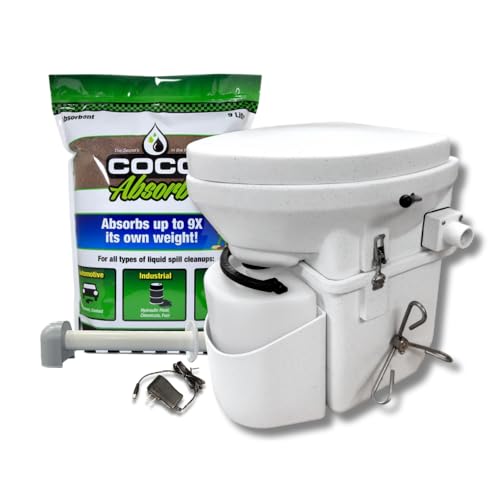
Nature’s Head Structure Kit with Composting Toilet — Foot Spider Handle
Badge: Best Composting Toilet
Strengths
- A complete, all-inclusive structure kit: the whole self-contained composting system arrives as one purchase, not a parts hunt.
- The foot spider handle works the agitator without bending or hand-cranking — a genuine daily-ergonomics advantage, and kinder for users with limited grip or mobility.
- True composting process: urine separation plus a vented, agitated solid chamber means no water, no chemicals, and no black-water tank at all.
Trade-offs
- Needs a vent route to the outside — the one real installation job, and the step that decides whether the system stays odour-free.
- Composting is a routine, not an appliance: medium management, cranking after use, and periodic emptying are the owner’s job forever.
- The liquids bottle needs emptying far more often than the solids chamber — plan its rhythm into household habits.
At a glance: Type: self-contained composting toilet, structure kit; Water use: none — 100% self-contained waterless system (stated); Agitator: foot spider handle; Kit: complete all-inclusive kit (stated); Stated uses: cabins, tiny homes, off-grid living.
The Nature’s Head platform is the reference design for self-contained composting toilets, and this foot-spider variant is its most ergonomic form. The principle is separation: urine is diverted at the bowl to its own bottle, while solids drop into a vented chamber holding a dry organic medium. A small vent fan draws air continuously across the chamber and out of the building, which does two jobs at once — it carries away moisture so the contents dry rather than stew, and it keeps the bathroom at negative pressure, which is why a correctly vented composting toilet is, in normal use, effectively odourless. After each solid use, the agitator is turned to bury the deposit in the medium, where the slow biological process does its work without water, chemicals, or a sewer.
The foot spider handle is the variant’s whole argument, and it is a good one. Agitation is the action a composting toilet asks of its owner most often, and doing it with a foot mechanism rather than a hand crank changes the posture, the effort, and the willingness of every user in the household — including older users, users with limited grip strength, and guests who might otherwise skip the step and degrade the system. In a full-time tiny home or cabin, where this action happens daily for years, that ergonomic difference compounds into the difference between a system that is maintained and one that is resented.
The honest limitations are the category’s, plus one kit consideration. Venting must be routed outside — through a wall or roof — and a buyer without a viable vent path should solve that before purchase, not after. The liquids bottle empties on a rhythm of days, not weeks, and becomes part of the household routine. And composting asks for a medium supply and a plan for the finished material, handled per local rules. None of this is hidden cost so much as the actual technology: what you are buying is a small, well-designed biological system, and the foot-spider kit is its most complete and most usable expression in this pool.
Best for: full-time cabins, tiny homes, and off-grid installations — especially households valuing foot-operated agitation / Not suited for: anyone unwilling to manage venting, medium, and a regular emptying routine

Nature’s Head Structure Kit with Composting Toilet — Spider Handle
Badge: Best Classic Composting Pick
Strengths
- The classic hand-crank spider handle: simple, direct, and the configuration most existing owners and advice are written about.
- The same complete all-inclusive structure kit and self-contained waterless system as the foot variant.
- A hand crank gives tactile feedback on the chamber’s contents — experienced users judge medium moisture by feel.
Trade-offs
- Hand-cranking after each solid use requires bending and grip — the exact effort the foot variant exists to remove.
- Shares every platform requirement: vent route, medium management, frequent liquids emptying.
- As a near-identical variant, its value case rests entirely on preferring the crank — compare both listings before buying.
At a glance: Type: self-contained composting toilet, structure kit; Water use: none — 100% self-contained waterless system (stated); Agitator: spider handle (hand crank); Kit: complete all-inclusive kit (stated); Stated uses: cabins, tiny homes, off-grid living.
Everything said about the platform in the previous review applies here unchanged — the same urine-separating bowl, the same vented solids chamber, the same complete structure kit for cabins, tiny homes, and off-grid living — because this is the same composting toilet in its original handle configuration. The spider handle is a hand crank: after a solid use, you turn it to work the agitator arms through the medium, burying the deposit and aerating the chamber. It is the configuration around which the composting-toilet community’s accumulated advice, troubleshooting, and ownership lore has largely been written, and there is real value in owning the version everyone else owns when you go looking for answers at midnight.
The crank also returns information the foot mechanism does not. Turning it by hand, you feel the chamber: resistance tells you about medium level and moisture in a way experienced composters rely on, the way a gardener judges soil by touch. For the hands-on owner — the cabin keeper who treats the system as part of the homestead’s machinery — that feedback loop is a feature, and the crank’s mechanical simplicity is another: one handle, no linkage, nothing to adjust.
The trade-off is purely ergonomic, and it is real. The crank asks for a bend and a grip, several turns, after every solid use, forever. Households with older users, sore backs, or weak hands should weigh the foot-spider variant seriously; households of keen, able owners may never miss it. This guide’s badges reflect that split honestly: the foot variant takes Best Composting Toilet on daily usability, while this classic configuration remains the pick for owners who prefer the established, tactile, simplest mechanism — and either way, you are buying the same sound composting system underneath.
Best for: hands-on owners who prefer the classic crank, tactile feedback, and the most documented configuration / Not suited for: users with limited grip, back trouble, or any household likely to skip a bending-and-cranking routine

Laveo Dry Flush Toilet
Badge: Best No-Compost Waterless Alternative
Strengths
- Genuinely waterless with zero biological management: no medium, no venting, no cranking, no compost cycle to tend.
- Portable and self-contained in an LDPE body — moves between van, boat, cabin, and campsite as the trip demands.
- The maker positions it explicitly against composting and incinerating toilets on ease of use, and the design backs the claim.
Trade-offs
- Not a composter: waste is sealed and disposed of, not transformed — buyers seeking actual composting should choose the Nature’s Head.
- Dry-flush operation depends on proprietary refill cartridges, an ongoing consumable cost and supply dependency composters do not have.
- Each use carries a per-use material cost, so heavy full-time use is its least economical setting.
At a glance: Type: dry flush toilet (not a composter); Water use: none — waterless, self-contained (stated); Body: LDPE, white; Format: portable; Stated uses: tiny homes, vans, boats, camping, RVs, off-grid.
The Laveo earns its place in this guide by answering the objection that stops most composting-toilet purchases: ‘I do not want to manage compost.’ A dry flush toilet borrows the logic of a diaper system scaled for adults — each use is wrapped and sealed into an internal cartridge bag at the press of the flush mechanism, containing odour and sight completely, with no water, no medium, no vent, and nothing biological happening inside the unit at all. When the cartridge is spent, it is removed and disposed of as solid waste per local rules. The toilet is portable, self-contained, and built in LDPE, a tough, light polymer suited to being moved between the van, the boat, and the cabin as life requires.
That simplicity is a genuine technology choice with real winners. Occasional-use settings — the weekend cabin, the boat, the camper van, the emergency backup — are where composters struggle most, because a biological system prefers steady use and steady tending, while a dry flush is indifferent to being used twice a month. Users with any physical limitation that makes cranking, carrying medium, or emptying a compost chamber difficult will also find the Laveo’s sealed-cartridge routine categorically easier. The maker’s own positioning — easier than an incinerating or composting toilet — is, on the evidence of the design, a fair claim.
The costs are the mirror image of the composters’ virtues. Nothing is transformed: waste leaves in a bag, which some buyers philosophically oppose and some jurisdictions restrict. The cartridge is a proprietary consumable, so ownership includes a standing supply question and a per-use cost that makes heavy, full-time, multi-person use the Laveo’s weakest setting — exactly where the Nature’s Head is strongest. Choose by your actual pattern: daily and permanent points to composting; intermittent, mobile, and simplicity-first points here.
Best for: vans, boats, occasional cabins, and any user who wants waterless sanitation with no compost to manage / Not suited for: buyers who specifically want composting, or heavy full-time households watching per-use costs
Comparison Table
| Pick | Type | Water use | Mechanism | Standout | Check |
|---|---|---|---|---|---|
| Nature’s Head Structure Kit with Composting Toilet — Foot Spider Handle | Composting | None — fully waterless | Foot spider handle | Complete structure kit | Check on Amazon |
| Nature’s Head Structure Kit with Composting Toilet — Spider Handle | Composting | None — fully waterless | Spider hand crank | Complete structure kit | Check on Amazon |
| Laveo Dry Flush Toilet | Dry flush (not composting) | None — fully waterless | Sealed cartridge | Portable LDPE body | Check on Amazon |
How to Choose a Waterless Composting Toilet
Decide first whether you want a biological system or a containment system, because that single choice organises everything else. A composting toilet (the Nature’s Head pattern) transforms waste on site: it needs urine separation, a vent to the outside, a supply of dry medium, an owner’s hand on the agitator, and a plan for finished material. In exchange it asks for no water, no chemicals, no consumables beyond medium, and it serves full-time use for years. A dry flush toilet (the Laveo pattern) transforms nothing: it needs no vent, no medium, and no routine beyond changing cartridges, and in exchange it creates a sealed waste stream and a permanent consumable dependency. Neither is the ‘advanced’ option; they are different contracts with the owner.
Then audit your site’s venting, because for a composter it is the gating item. The vent must carry moist air from the solids chamber to outside the structure — through a wall, a roof, or an existing chase — and the fan that drives it needs a small continuous power supply, trivial for a cabin with any electrical system and a real consideration for a truly power-free site. No viable vent route means no composter, whatever the brochures promise; that buyer should take the Laveo seriously rather than install a composter badly. Boat and van buyers should think about venting while moving and about where the vent exits relative to open windows and neighbours at anchor or in camp.
Size the routine to the household honestly. Liquids capacity is the short-cycle item on any separator toilet — the bottle fills in days with full-time use — while the solids chamber works on a cycle of weeks. Guest load matters too: visitors must be taught the two rules (sit for liquids diversion to work as designed; nothing but paper goes in) and a household that hosts often should weigh the teaching burden as a real cost. The rankings conversation in Best Toilets Ranked rarely touches any of this, which is exactly why composting purchases disappoint when they are made on rankings alone: this category is chosen by routine-fit, not by league table.
Cost the ownership, not the purchase, in whichever currency each design charges. The composter charges attention: medium is cheap and infrequent, electricity for the fan is trivial, and the real price is the owner’s minutes — cranking, topping up, emptying on rhythm. The dry flush charges money: the unit is simple and the routine is minutes a month, but every use consumes a portion of a proprietary cartridge, so a household can predict its running cost almost exactly by counting uses. Neither profile is superior in the abstract. A retired cabin owner with time and a garden will feel the composter is nearly free; a working family running a van on weekends will feel the cartridge cost is the cheapest convenience they buy. The error is not choosing either — it is choosing one while budgeting for the other.
Finally, plan the end of the process before the beginning. Finished compost material must be handled under your local rules — continued composting, burial where permitted, or disposal — and dry-flush cartridges go out as solid waste, which some facilities restrict. Neither pathway is difficult, but both are regulated differently by place, and the time to learn your area’s answer is before the toilet is installed, a piece of diligence the community discussions collected under Best Toilets Reddit return to constantly, usually from someone who learned it late.
How to Install, Use, and Maintain a Waterless Composting Toilet
For a composting installation (either Nature’s Head variant), the sequence is short but unforgiving of shortcuts:
- Position the unit where its vent can run to the outside by the straightest available route, and where the liquids bottle can be removed without gymnastics — you will do that reach hundreds of times.
- Install the vent hose and fan housing per the kit instructions, seal the exterior exit against weather and insects, and confirm the fan runs and draws air inward at the bowl — a tissue held at the vent path tells you the direction honestly.
- Charge the solids chamber with the maker-specified amount of dry medium before first use; an uncharged chamber is the most common cause of a bad first month.
- Connect the fan’s power and test the separator: liquids must divert cleanly to the bottle with the user seated — separation is positional, which is why everyone, of every anatomy, sits on a composting toilet, every time.
- Teach the household the routine on day one: liquids need nothing; solids get the agitator treatment (foot pedal or crank, several turns) after each use; paper only, and only modest amounts.
- Set the emptying rhythm: liquids bottle on its short cycle, solids chamber on its long one, medium topped up as the level and the crank’s feel dictate.
One commissioning habit separates smooth first months from rough ones: run the system gently at the start. A new compost chamber’s biology establishes over its first weeks, so early on, be generous with medium, disciplined about separation, and prompt with the agitator — the habits are easiest to build before the household’s traffic peaks, and a chamber that starts dry and aerated tends to stay that way. If the toilet serves a property that hosts a crowd early — a cabin’s opening weekend — consider handling that first surge with a backup plan rather than overwhelming a brand-new chamber, and brief every guest before, not after, their first visit.
For the Laveo, installation is placement: a stable, level spot, a loaded cartridge, and a supply of refills stored where they will be found. Its maintenance is the cartridge change and a wipe-down — which is, of course, the entire point of choosing it. For both designs, keep a small kit beside the unit: spare medium or cartridges, gloves for emptying day, and the manual. A waterless toilet’s reliability is mostly the reliability of its owner’s supplies.
Troubleshooting
Problem: odour from a composting toilet → check the vent fan first (running? drawing inward?), then medium moisture: a chamber that smells is usually too wet, which means liquids are reaching it (separation discipline) or the medium needs topping up and turning. Fix the cause, not the symptom.
Problem: fruit flies around the unit → they arrive with moisture and exposed contents. Confirm the vent screen is intact, keep the trap door closed between uses, add dry medium, and break the breeding cycle by emptying and cleaning the chamber if they persist.
Problem: the crank or pedal feels stiff → the chamber is over-full or the medium has compacted. Empty the solids chamber and recharge with fresh medium rather than forcing the mechanism; agitator parts are strong, but they are not pry bars.
Composting vs Dry Flush: The Real Decision in This Category
Strip away the marketing and the two technologies in this guide disagree about one thing: what should happen to waste after you stand up. Composting says it should be transformed — dried, aerated, and biologically processed in place, by a system the owner tends. Dry flush says it should be contained — sealed instantly and removed, by a service routine of cartridges. Every other difference flows from that fork: venting versus none, medium versus cartridges, transformation versus disposal, a routine of tending versus a routine of replacing.
The practical tiebreakers are use pattern and owner temperament. Daily, permanent, single-site use rewards composting’s near-zero consumables and punishes dry flush’s per-use cost. Intermittent, mobile, multi-site use rewards dry flush’s indifference to neglect and punishes composting’s need for steady tending. Owners who garden and think in systems tend to love composters; owners who think in appliances tend to love the Laveo. Neither temperament is wrong, and this guide’s badges are deliberately split across the fork — because a guide that crowned one technology for every site would be selling, not advising. The broader context in Best Waterless Toilets covers the remaining waterless designs for readers whose site fits neither pattern neatly.
Where Waterless Composting Toilets Earn Their Keep: Cabins, Boats, and Tiny Homes
The cabin is the category’s heartland, and the reasons are regulatory as much as practical. A remote cabin often cannot have a septic system at all — soil, setbacks from water, or sheer distance forbid it — and a conventional toilet without a septic destination is not a toilet but a problem in a bowl. A self-contained composter answers the regulator and the owner at once: nothing enters the ground as liquid effluent, nothing needs a pump-out, and the installation is a vent hole rather than an excavated field. That is why the Nature’s Head listings aim themselves at cabins and off-grid living by name, and why the structure-kit format exists: a remote site punishes a missing part with a day’s travel, so the complete kit is not a luxury but the product.
Boats invert the cabin’s problem: space and motion replace distance as the constraints, and the marine holding-tank routine — pump-out stations, chemicals, and the odour that lives in permeated hoses — is the incumbent misery a composter replaces. A separator toilet eliminates the holding tank and its plumbing entirely, freeing the tank space and ending the pump-out schedule, at the cost of the liquids bottle’s shorter rhythm, which on a boat is a harbour-side task of moments. Tiny homes split the difference: stationary like a cabin, space-poor like a boat, and usually occupied full-time, which is the use pattern composting rewards most and the one where the foot-versus-crank handle choice stops being trivia and becomes a daily quality-of-life decision.
Across all three settings, the same secondary benefit appears in owner accounts and follows from the physics: a waterless toilet cannot leak water. There is no supply line to burst in a frozen cabin, no tank to crack in an unheated boat, no flush valve to run silently into a bilge or a floor. For buildings that sit empty between visits — the cabin in winter, the boat on its mooring — that absence of plumbing risk is worth as much as the sanitation itself, and it is a benefit no water-flushing alternative, macerators included, can offer a site that freezes.
Venting, Medium, and the Physics of an Odourless Bathroom
New buyers fixate on the toilet; experienced owners fixate on the air. A composting toilet is odourless for physical reasons, not chemical ones: the vent fan holds the chamber at negative pressure so air always moves from the bathroom into the toilet and out of the building, and the same airflow strips moisture from the solids so the chamber’s contents dry toward an earthy, inert state. Break either condition — a dead fan, a kinked vent hose, a chamber flooded by poor separation — and the physics reverses. This is why the installation section above treats the tissue test at the vent as a real commissioning step rather than a folksy tip.
Medium management is the second half of the physics. The dry medium is not a deodoriser sprinkled on a problem; it is the working body of the process — absorbing moisture, providing structure and air gaps, and hosting the biology. Too little medium and the chamber goes wet and anaerobic; too much and the agitator cannot turn. The crank’s resistance, which the classic spider-handle review discusses, is the owner’s gauge for all of this. Learn to read it, keep medium in stock, and the system’s famous odourlessness stops being a promise and becomes a routine observation — the outcome that separates the category’s happy owners from its cautionary tales, a split visible in any honest trawl through Best Toilets Ratings discussions of alternative sanitation.
Common Buying Mistakes
Mistake one: buying a ‘waterless toilet’ that is not one. Macerating systems — including the three excluded from this guide’s pool — flush with water and pump to a drain. If your site has no drain and no water to spare, only a true separator-composter or a dry flush serves you; check the mechanism, not the marketing category a listing was filed under.
Mistake two: installing a composter without a real vent route. The vent is not an accessory; it is half the technology. A composter vented into a wall cavity or not vented at all will smell, and the toilet will be blamed for the installation’s failure.
Mistake three: skipping the medium charge, or letting medium run out. The chamber’s process is the medium’s process; an uncharged or exhausted chamber is the single most common cause of a miserable first month and an unfair reputation.
Mistake four: letting guests guess. A composting toilet needs thirty seconds of instruction — sit always, paper modestly, crank after solids, nothing else in. Households that skip the briefing get the blockages and the smells, and then blame the toilet.
Mistake five: forgetting the second user. Every composting toilet eventually serves someone who did not buy it — a partner, a parent, a renter, a guest — and the system’s real-world success is set by its least instructed user. Choose the variant your whole household can operate (the foot handle exists precisely for households where cranking is a barrier), leave the routine written inside the lid or on the wall, and treat a visitor’s confusion as a design input, not a personal failure. A toilet that only its purchaser can use correctly is a toilet one busy weekend away from a fouled chamber.
Mistake six: choosing dry flush for heavy full-time use without costing the cartridges, or composting for a twice-a-month cabin without costing the tending. Match the technology to the use pattern using the fork in the buying guide — and if resale or rental is in the property’s future, check how the category is viewed in your market, a question the listings behind Best Toilets Sale will not answer for alternative sanitation.
Final Recommendation
For a permanent waterless installation, buy a Nature’s Head — the platform is the category’s reference design, sold here as a complete kit with the venting-and-separation system that makes composting work. Choose the foot spider handle variant if the toilet will serve a household daily for years, or any user who would struggle with bending and cranking; choose the classic spider handle if you prefer the simplest, most documented mechanism and the tactile feedback of the crank. That handle is the only real decision between them, and this guide has tried to make it an informed one.
Choose the Laveo instead if your honest self-assessment says you will not tend a biological system — for vans, boats, occasional cabins, and simplicity-first households, its sealed-cartridge routine is the waterless answer that actually gets used, and a used toilet beats a resented one every time. What you should not do is buy a water-flushing macerator under a waterless keyword and discover the difference at installation; the three exclusions documented in this guide’s sources are there to close that door explicitly.
Start here: Nature’s Head composting toilet, foot spider handle, Nature’s Head composting toilet, spider handle, Laveo dry flush toilet.
Frequently Asked Questions
Do waterless composting toilets smell?
A correctly installed and maintained one does not, in normal use — and the reason is mechanical, not chemical. The vent fan keeps the solids chamber at negative pressure and continuously dries its contents, so odour is carried outside and the material trends toward an earthy, inert state. Smell is diagnostic: it almost always means the fan or vent path has failed, liquids are reaching the solids chamber, or the medium needs attention. The troubleshooting section above works through those causes in order.
How often do you empty a composting toilet?
On two different rhythms. The liquids bottle fills on a cycle of days under full-time use and is emptied into a toilet, a drain, or diluted onto ground where local rules allow. The solids chamber works on a cycle of weeks for a household, and its contents — largely dried medium and processed material — are removed for continued composting or disposal per local regulations. Exact intervals depend on household size and use, which is why this guide describes rhythms rather than inventing a universal number of days.
What is the difference between the two Nature’s Head variants here?
The handle. Both are the same self-contained composting toilet sold as a complete structure kit; one works its agitator with a foot spider handle, the other with the classic hand-turned spider crank. The foot version suits daily full-time use and anyone who finds bending and gripping difficult; the crank version offers tactile feedback on the chamber and the simplest mechanism. Everything else — separation, venting, medium, emptying — is shared platform, and the reviews above compare them on exactly that basis.
Is the Laveo a composting toilet?
No, and this guide labels it carefully for that reason. The Laveo is a waterless dry flush toilet: each use is sealed into a cartridge bag and later disposed of as solid waste. Nothing composts inside it. It belongs in this guide because it competes for the same buyers and sites — its own listing positions it against composting toilets on ease of use — but a buyer who specifically wants composting, with its transformation of waste and near-zero consumables, should buy the Nature’s Head.
Can a composting toilet serve a full-time household?
Yes — that is the Nature’s Head pattern’s home ground: cabins, tiny homes, and off-grid houses use separator-composters as their only toilet. The conditions are a correct vent installation, medium kept in stock, the agitator used after every solid deposit, and guests briefed on the sitting-and-paper rules. Households unwilling to keep those routines are better served by the Laveo’s appliance-like model, at least for intermittent use.
What can and cannot go into a composting toilet?
In: human waste and modest amounts of toilet paper — most owners use a basic, quick-dissolving paper and keep quantities sensible. Out: everything else. No wipes of any kind, including those sold as flushable; no sanitary products; no food scraps; no chemicals or disinfectant cleaners inside the chamber, because the process you would be disinfecting is the product. The liquids side is equally simple — it is a bottle, and it should receive only what the separator sends it, which is why the sitting rule for every user is absolute: separation is positional, and standing defeats the design.
Do composting toilets need electricity?
The vent fan needs a small continuous power supply, which the kit is designed around — modest enough for cabin and off-grid electrical systems, but a real requirement to plan for on a truly power-free site. The composting process itself needs no power, and the toilet functions mechanically without the fan in a pinch, but odour and moisture control depend on that airflow, so treat the fan’s supply as part of the installation, not an optional extra.


