Disclosure: As an Amazon Associate, topratedkitchenware.com earns from qualifying purchases. Links on this page are affiliate links; they cost you nothing extra. Prices and availability change often, so check the current Amazon listing before you buy.
A good chef knife buying guide starts with a simple truth: the chef knife is the one tool you will reach for in almost every cooking session, from dicing an onion to breaking down a chicken, and choosing the right one changes how fast, how safely, and how happily you cook. This chef knife buying guide walks you through the types, the steel, the handles, the sizes, and the trade-offs that actually matter, so you can pick one knife that fits your hand, your board, and your budget tier and then stop thinking about knives for years.
Key Takeaways
- The standard chef knife is around eight inches long; that size suits most hands, most boards, and most ingredients.
- German-style knives are heavier, tougher, and more forgiving; Japanese-style knives are lighter, harder, and sharper but need gentler handling.
- Handle fit matters more than almost any specification. A knife that feels secure in your grip is a safer knife.
- Budget tier buys you honest stamped or entry forged steel; premium tier buys balance, finish, and edge retention, not magic.
- Plan for storage and maintenance from day one: a magnetic strip or block, hand washing, and regular honing keep any chef knife performing.
- One excellent chef knife plus a paring knife covers the large majority of home cooking tasks.
In this guide
What a Chef Knife Does and the Main Types
The chef knife is the general-purpose workhorse of the kitchen. Its gently curved blade lets you rock the tip against the board for mincing herbs and garlic, while the straighter section near the heel pushes cleanly through root vegetables, squash, and large cuts of meat. Unlike a paring knife, which works in the hand, or a bread knife, which saws, the chef knife is designed for board work: slicing, dicing, chopping, and mincing at volume. If you cook from raw ingredients several times a week, this is the knife that decides whether prep feels like a chore or a pleasure.
Within the category there are several distinct families, and understanding them is the foundation of any sensible chef knife buying guide.
German-Style Chef Knives
German-style knives, from makers in the Solingen tradition, are built around toughness. The blade is typically thicker behind the edge, the steel is formulated to resist chipping, and the edge angle is relatively wide, which means the knife tolerates contact with bones, frozen squash rinds, and the occasional twist or scrape against the board. These knives usually have a pronounced curve toward the tip, which suits the rocking motion many European-trained cooks use. They are heavier in the hand, and that weight does some of the work for you when you push through dense vegetables. If your cooking involves winter squash, whole chickens, and hard cheese rinds, the German pattern is the forgiving choice.
Japanese-Style Chef Knives (Gyuto)
The gyuto is the Japanese counterpart to the Western chef knife, and it takes the opposite approach: thinner blades, harder steel, and a finer edge angle. The result is a knife that glides through onions without wedging, slices tomatoes without crushing them, and holds a keen edge through long prep sessions. The trade-off is fragility. Hard, thin edges chip if you twist the blade, pry at a joint, or let the edge strike bone or a steel tray. Japanese-style knives also tend to have a flatter profile, favouring push-cutting and up-and-down chopping over rocking. Cooks who value precision and lightness, and who are willing to handle a knife with a little more care, often end up preferring this family.
Hybrid and Modern Fusion Knives
Many modern knives blend the two traditions: a Japanese-style thin blade with a Western handle, or a German maker producing a slimmer, harder line. These hybrids suit cooks who want most of the glide of a gyuto with a familiar handle shape and a little more forgiveness. When you read listings, look past the marketing label and compare the things that matter: blade thickness, weight, handle shape, and how the maker describes the intended use.
Santoku as a Close Cousin
The santoku is shorter, with a flatter edge and a sheep’s-foot tip. It excels at push-cutting vegetables and slicing boneless proteins, and its shorter length feels less intimidating to smaller hands or on smaller boards. It is not a chef knife, but many households happily use one as their main knife. If your cooking is vegetable-heavy and your board is small, try both shapes before you decide; our comparison in chef knife vs knife set covers how a single great knife stacks up against buying a whole block, and shape choice is part of that decision.
Top Picks at a Glance
The picks below are real, widely available models that represent each tier and style honestly. Because this guide was prepared while our live verification feed was unavailable, each pick is presented in prose with its tier positioning; check price on Amazon for the current listing before you buy.
| Pick | Badge | Style | Tier |
|---|---|---|---|
| Victorinox Fibrox Pro 8-Inch | Best Value Workhorse | Western, stamped | Entry |
| Mercer Culinary Millennia 8-Inch | Best Budget Starter | Western, stamped | Entry |
| Wüsthof Classic 8-Inch | Best German Classic | German, forged | Premium |
| Tojiro DP Gyutou 8.2-Inch | Best Japanese Value | Japanese, layered | Mid |
| Mac Knife Professional 8-Inch | Best Lightweight Performer | Japanese, monosteel | Mid to premium |
| Zwilling Pro 8-Inch | Best Modern German | German, forged | Premium |
Every one of these knives can be the right answer for somebody. The sections that follow explain how to tell which one is the right answer for you, and the mini-reviews later in this chef knife buying guide give each pick its honest strengths and trade-offs. For a deeper single-product evaluation, see our full chef knife review and the broader roundup in chef knife reviews.
How Long Should Your Chef Knife Be?
Length is the first decision most buyers face, and it is mostly about leverage and board space. The classic eight-inch blade is the standard for a reason: it is long enough to slice a cabbage or a melon in smooth strokes, short enough to stay nimble at the tip, and matched to the size of most home cutting boards. Longer blades, around nine or ten inches, reward experienced cooks who prep in volume; the extra length means fewer sawing strokes and better knuckle clearance, but the tip gets harder to control and the knife needs a bigger board and more storage room. Shorter blades around six inches feel friendly and precise, and they suit smaller hands, but they run out of edge quickly on large vegetables and make rocking cuts cramped.
A practical test: your knife should be able to slice through the widest ingredient you regularly cook, such as a large onion or a butternut squash, without the tip or heel leaving the food mid-stroke. For most households that test lands exactly on the eight-inch class. If you share the kitchen with a smaller-handed cook, a slightly shorter or lighter knife may get used more, and a knife that gets used is worth more than a theoretically better one that stays in the block. Size also interacts with weight: a long, heavy German knife is a very different tool from a long, light Japanese one, so treat length and weight as one decision, not two.
Which Steel and Construction Should You Choose?
Knife steel is a balance of three properties: hardness, toughness, and corrosion resistance. Harder steel holds a fine edge longer but chips more easily; tougher steel survives abuse but needs sharpening more often; stainless steel resists rust, while carbon steel can take a superb edge but demands drying after use and develops a patina. Most home cooks are best served by a good stainless steel, because the maintenance is forgiving and modern stainless alloys perform very well.
Construction matters as much as alloy. Forged knives are shaped from a single piece of steel under pressure, which usually gives them a substantial feel, a bolster, and good balance. Stamped knives are cut from sheet steel and are lighter and less expensive; the best stamped knives, like the Victorinox Fibrox Pro below, perform far above their tier because the geometry is right. Layered Japanese blades wrap a hard core in softer cladding, protecting the core while keeping the edge keen. None of these constructions is automatically superior. A well-made stamped knife with good geometry will out-cut a poorly ground forged knife every time, which is why this chef knife buying guide keeps returning to geometry and fit rather than labels.
One more construction detail worth checking is the edge profile and grind. A thin grind passes through dense vegetables with less wedging; a thicker grind survives harder work. If a listing or review mentions food sticking to the blade or carrots cracking apart instead of slicing, that is geometry talking, and it matters more than the steel’s name.
How Should the Handle and Balance Feel?
You hold the handle for every second of every cut, so handle comfort is a safety feature, not a luxury. Western handles are contoured, often with a palm swell and rivets, and they fill the hand; Japanese handles are often lighter, sometimes octagonal or oval, and they favour a pinch grip where your thumb and forefinger grip the blade itself just ahead of the handle. Neither is better, but they suit different grips. If you use a pinch grip, a lighter handle and a blade-forward balance will feel natural. If you use a full handle grip, a shaped Western handle with some weight in the hand will feel more secure.
Balance point is easy to test: rest the knife on one finger at the point where blade meets handle. Most well-balanced chef knives settle near that junction. A blade-heavy knife feels eager and does work in the cut; a handle-heavy knife feels controlled and precise at the tip. Also check the bolster, the thick section between blade and handle on many German knives. A full bolster protects fingers and adds weight but makes sharpening the heel section harder over the years; a half bolster or no bolster keeps the whole edge usable and easier to maintain. Finally, consider wet-hand grip. Textured polymer handles stay secure when wet, smooth polished wood can get slippery, and that difference matters when you are rinsing produce and cutting in the same minute.
How Much Edge Care Are You Willing to Do?
Every knife dulls; the only question is how you maintain it. Honing with a rod realigns a slightly bent edge and is safe to do often, ideally before each serious prep session. Sharpening removes metal to create a new edge and is needed a few times a year for a home cook, done on a whetstone, with a guided system, or by a professional service. Japanese-style hard edges respond best to whetstones and gentle honing or none at all with a steel rod, while German-style edges tolerate a honing steel happily.
Be honest about your habits before you buy. A hard, thin Japanese blade in the hands of someone who throws knives in the dishwasher and never hones will end up chipped and dull, while a tougher German blade will survive the same household for years. Our step-by-step guide how to clean chef knife covers the daily habits that protect any edge, and the live roundup of best whetstones for kitchen knives is worth reading when you are ready to sharpen at home. Maintenance willingness is a genuine buying criterion, and matching the knife to the cook is the whole point of a chef knife buying guide.
How to Prioritise by Use Case
The Weeknight Family Cook
You prep dinner most nights: onions, carrots, chicken breasts, the occasional squash. Prioritise toughness, a secure wet grip, and easy maintenance. A German-style knife or a robust stamped Western knife fits best, with honing-steel-friendly steel and a handle you can hold comfortably for twenty minutes. Weight is an asset here because it helps through dense vegetables at the end of a long day.
The Precision-Loving Hobby Cook
You enjoy knife work itself: fine dice, paper-thin garlic, clean slices of raw fish for home sushi nights. Prioritise a thin grind, a hard edge, and lightness. A Japanese-style gyuto is your natural home. Accept the care contract that comes with it: hand wash, dry immediately, store on a strip, sharpen on stones.
The Small-Kitchen Cook
Counter space and board size are your constraints. Prioritise a standard or slightly shorter blade, magnetic-strip storage instead of a block, and one versatile knife rather than a set. The discussion in is a chef knife worth it is written for exactly this calculation, and best knife storage for small kitchens covers storage that keeps edges safe without eating counter space.
The New Cook Building Skills
You are learning grip, claw hand, and rocking cuts. Prioritise a mid-weight knife with a forgiving edge and a comfortable handle at an entry or mid tier, then spend your remaining budget on a good board and a honing rod. Skill grows faster on a decent, well-maintained knife than on an expensive one you are afraid to use. The balanced assessment in chef knife pros and cons will help you set expectations honestly.
The Picks in Detail

Victorinox Fibrox Pro 8-Inch — Best Value Workhorse
This stamped Western knife has been a default recommendation for years because the geometry is right and the textured handle stays grippy in wet, busy kitchens. It is light, easy to sharpen, and inexpensive enough that you will actually use it hard instead of babying it.
Strengths: secure textured grip; easy to hone and sharpen; light enough for long prep sessions. Trade-offs: stamped blade feels less substantial than forged rivals; edge needs more frequent honing than harder Japanese steel; plain appearance.
Best for: first serious knife, busy family kitchens, anyone who values function over finish. Not suited for: cooks who want heirloom heft and premium handle materials. Tier: entry — check price on Amazon.
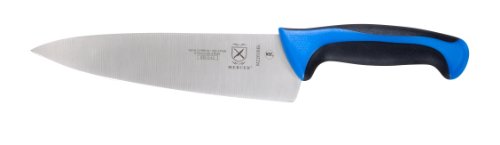
Mercer Culinary Millennia 8-Inch — Best Budget Starter
Built for culinary students and line cooks, the Millennia pairs a stamped blade with a grippy, comfortable handle at the lowest tier in this guide. It is the knife to learn on: good enough to teach real skills, inexpensive enough to replace without tears if your sharpening practice goes wrong.
Strengths: very accessible tier; comfortable, secure handle; sharpens easily while you learn. Trade-offs: edge retention is modest; fit and finish are workmanlike; not a lifetime knife.
Best for: students, first apartments, backup knife for guests and heavy jobs. Not suited for: buyers who want one knife for a decade. Tier: entry — check price on Amazon.
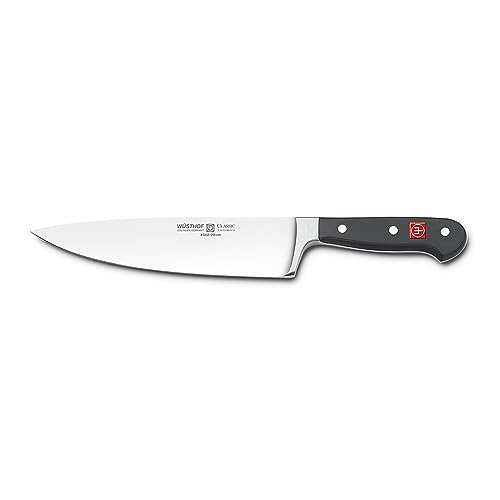
Wüsthof Classic 8-Inch — Best German Classic
The archetypal forged German chef knife: substantial, balanced, with a curved profile that rocks beautifully and steel tough enough for squash, chicken joints, and hard work. If your cooking is hearty and your style is rock-chopping, this is the reference point.
Strengths: excellent balance and heft; tough edge that tolerates hard boards work; comfortable contoured handle. Trade-offs: full bolster complicates heel sharpening over time; heavier than Japanese rivals; premium tier.
Best for: rock-choppers, hearty home cooking, cooks who like weight doing the work. Not suited for: small hands that fatigue quickly, or precision push-cutters. Tier: premium — check price on Amazon.

Tojiro DP Gyutou 8.2-Inch — Best Japanese Value
A layered Japanese blade with a hard core and stainless cladding, the Tojiro DP delivers the glide and edge life of the gyuto style at a mid tier that undercuts most rivals. It is the classic first step into Japanese knives.
Strengths: thin, keen edge that holds well; light and precise; stainless cladding eases care. Trade-offs: harder edge can chip on bone or frozen food; handle is plain; needs whetstone sharpening to shine.
Best for: vegetable-heavy cooking, precision cuts, cooks ready for Japanese care habits. Not suited for: prying, jointing chickens carelessly, or dishwasher households. Tier: mid — check price on Amazon.

Mac Knife Professional 8-Inch — Best Lightweight Performer
The Mac Professional is famously light and thin, with an edge that seems to fall through produce. Its simple handle and understated looks hide one of the best pure cutting performances in this guide, which is why so many working cooks keep one in the roll.
Strengths: exceptionally light; very thin grind with minimal wedging; edge holds well for its class. Trade-offs: light weight gives less help through dense squash; thin edge demands respect; minimalist handle divides opinion.
Best for: high-volume vegetable prep, cooks with wrist fatigue, precision work. Not suited for: heavy-duty jointing or anyone who equates weight with quality. Tier: mid to premium — check price on Amazon.

Zwilling Pro 8-Inch — Best Modern German
Zwilling’s modern take on the German pattern pairs a forged blade with a curved bolster design that encourages a proper pinch grip, bridging old-school toughness and modern ergonomics. It is a refined, confidence-inspiring knife for cooks who want German durability without the old full-bolster compromises.
Strengths: thoughtful ergonomics; tough forged construction; versatile profile for rocking and chopping. Trade-offs: premium tier; still heavier than Japanese options; profile suits some grips better than others.
Best for: one-knife households wanting forged German quality with modern comfort. Not suited for: strict traditionalists or ultralight-knife fans. Tier: premium — check price on Amazon. For brand-focused shortlists, see also best Zwilling chef knife and best professional chef knives.
First Setup and Care Essentials
When your knife arrives, wash it by hand in warm soapy water, dry it immediately, and store it before its first cut. Decide storage now: a magnetic wall strip keeps edges visible and safe, an in-drawer tray works if a strip is impossible, and a block is fine if counter space allows. Never store a chef knife loose in a drawer, where the edge bangs against other tools and becomes a hazard to reaching hands. Before your first big prep, practise the pinch grip and the claw hand on something forgiving like a cucumber. Hone lightly before sessions, wash and dry right after use, and never put the knife in a dishwasher: heat, detergent, and rattling against racks dull and damage edges and handles alike. The full routine, including safe washing technique around the edge, is in how to clean chef knife. Pair your knife with a board that is kind to edges — wood or quality plastic — and avoid glass, stone, and ceramic boards entirely; the overview in best end grain cutting boards explains why board material changes edge life.
Mistakes to Avoid
The most common buying mistake is choosing by looks or by a famous name while ignoring handle fit; order from somewhere with easy returns and hold the knife before committing if you can. Second is buying a whole block set to get a chef knife, paying for steak knives and shears you may not need; chef knife vs knife set works through that maths in detail. Third is ignoring maintenance: a buyer who will not hand-wash should not buy a delicate hard-edged blade. Fourth is chasing the hardest steel or the thinnest grind as a beginner, when a forgiving mid-tier knife builds skill faster. Fifth is neglecting the board and storage, which can ruin a fine edge faster than cooking ever will. Finally, do not let tier anxiety decide for you: the entry-tier picks in this chef knife buying guide genuinely cook well, and the premium picks earn their place through balance, finish, and longevity rather than through any single specification.
How Blade Profile and Grind Shape Every Cut
Two knives with identical length and steel can feel completely different on the board, and the reason is profile and grind. Profile is the silhouette of the edge when you look at the blade from the side. A pronounced belly, the curved section toward the tip on German knives, keeps a section of edge in contact with the board as you rock, which is why rock-chopping herbs feels so natural on them. A flatter profile, typical of Japanese gyuto and santoku patterns, puts more edge on the board at once and rewards push-cutting and vertical chopping, where the whole edge meets the food and separates it cleanly in one motion.
Grind is the cross-section: how the blade tapers from spine to edge. A thin grind slips through a carrot with a clean snap-free cut and leaves onion slices intact instead of shattering them. A thicker grind wedges slightly but shrugs off hard work. Some blades use an asymmetrical grind, finer on one side, which can steer slightly in tall, dense food until you adapt your technique. None of this appears in headline specifications, yet it decides whether a knife feels like it is helping you or fighting you. When reviews describe a knife as a laser or a workhorse, they are describing grind. When home cooks say a new knife made carrots fly apart, they are describing wedging from a thick grind behind the edge.
There is also the question of the tip. A fine, low tip gives precision for coring tomatoes, trimming fat, and detail work. A higher, sturdier tip survives clumsy moments better. And the heel, the rear section of the edge, does the heavy work on root vegetables; a tall heel with good knuckle clearance lets you use your whole hand safely. As you read product descriptions, translate adjectives into these concrete features and you will rarely be surprised by what arrives.
Budget Tiers, Explained Honestly
Because prices change constantly, this chef knife buying guide talks in tiers rather than numbers. At the entry tier you get honest stamped blades, functional handles, and edges that sharpen easily. These knives are not toys; they are what many professionals actually use on the line, because they work and because nobody cries when one is dropped. What you give up is refinement: balance is approximate, handles are plain, and edges need frequent honing.
The mid tier is where most home cooks should aim. Here you find well-ground Japanese blades, better stainless steels, noticeably improved balance, and edges that stay keen through a week of dinners. The jump in daily pleasure from entry to mid is the largest in the whole category. Above that, the premium tier buys forged construction, beautiful handles, meticulous finish, and small ergonomic gains. The cutting difference between mid and premium is real but modest; the ownership difference — how the knife feels in your hand every single day — is the true product. Heritage tier and handmade knives add craft, story, and individuality, which are legitimate pleasures, but they are not necessary for excellent cooking.
One honest warning about tiers: a set can disguise a weak chef knife behind a crowd of mediocre companions, while a single knife at the same total spend is usually far better. That is the core argument explored in chef knife vs knife set, and it is why this guide recommends allocating most of a knife budget to the one blade you will use daily.
Chef Knife Buying Guide: A Simple Fit Test Before You Commit
If you can hold a knife before buying, run this five-minute test. Grip it with a pinch grip and mime chopping on an imaginary board: your knuckles should clear the surface comfortably. Rest the blade flat and rock it gently: the motion should feel controlled, not tippy. Hold it at arm’s length for thirty seconds: early fatigue in the wrist predicts a knife that will annoy you during holiday prep marathons. Check that the handle fills your hand without forcing your fingers open, and that there are no sharp edges on the spine or the front of the handle where your pinch grip lands; a slightly rounded spine is a mark of thoughtful finishing.
Buying online, approximate the test with measurements and weight. Compare the listed weight with a knife you already own by adding or removing small items from your hand to simulate the difference. Read the returns policy and treat the first week as a trial: cook real dinners, notice what your hand says, and exchange without guilt if the fit is wrong. A chef knife is a ten-year relationship; a week of testing is cheap insurance.
Bolsters, Tangs, Coatings and Other Details Worth Understanding
Product listings are full of construction vocabulary, and most of it matters less than sellers suggest, but a few terms genuinely affect ownership. The tang is the part of the blade steel that extends into the handle. A full tang runs the whole length and width of the handle and is traditionally associated with strength and balance; a partial or hidden tang makes a lighter knife and is standard on many excellent Japanese blades. In a kitchen knife, tang style is mostly about weight and feel, because a well-made hidden tang does not fail in normal cooking use. Judge the result in the hand rather than the diagram.
The bolster deserves more attention because it changes maintenance. A full bolster, the thick finger-guard section on classic German knives, means the last portion of the edge near the handle cannot easily be sharpened on a flat stone, and over many years of sharpening the edge can develop a curve that stops the heel from contacting the board. A half bolster or an angled bolster design keeps the safety and the grip guidance while leaving the edge accessible. If you plan to keep a knife for a decade and sharpen it yourself, this detail quietly matters a great deal.
Coatings and finishes are mostly cosmetic on chef knives. Dark or patterned finishes can look striking and may reduce glare, but they do not make a blade sharper, and heavy food-release coatings are rare on quality knives because a polished, well-ground blade releases food adequately on its own. Hammered or textured finishes, common on Japanese blades, are claimed to reduce sticking by breaking the food’s contact with the blade; in practice the effect is modest and varies by food, so treat texture as a style choice with a small functional bonus rather than a deciding feature.
Finally, consider the spine. A thick spine adds the strength and weight that workhorse knives rely on, and a spine with slightly softened edges is far more comfortable when you press down on it to help a cut through a hard squash. Sharp, square spines are a finishing shortcut you will feel every time you bear down. These small tactile details separate knives that are pleasant for ten years from knives that are merely sharp.
Matching the Knife to Your Board, Grip and Habits
A chef knife does not work alone; it works against a board, in a hand, inside a routine. Board material changes edge life dramatically. End-grain wood is the kindest common surface because the edge slips between fibres rather than striking them head-on; quality plastic boards are a close second and go in the sink for easy washing; both are good partners for any knife in this guide. Glass, granite, bamboo, and ceramic surfaces punish edges, and a hard Japanese blade on a glass board is a chipped edge waiting to happen. If your board is due for replacement anyway, choose it together with the knife rather than after.
Grip is the second partner. The pinch grip, where thumb and forefinger hold the blade just in front of the handle, gives the best control and suits lighter knives and Japanese handles. The full handle grip gives power and suits heavier German patterns. Neither grip is wrong, but a knife chosen for the other grip will always feel slightly foreign. If you are unsure which grip you use, watch yourself dice an onion tonight; your hands already know.
Habits are the third partner, and honesty here saves money. If knives in your house get left in the sink, washed by whoever is on duty, and stored wherever they land, choose the tough, entry or mid-tier Western knife and enjoy it without anxiety. If you are the kind of cook who dries a blade before plating dinner, the Japanese options will reward that care every single day. There is no moral ranking between these households, only matching. The most expensive knife in this chef knife buying guide is the wrong purchase for a careless routine, and the cheapest is the wrong purchase for a cook who will sharpen it weekly and resent its soft edge. Buy for the cook you are, and let the knife make that cook faster and happier.
Edge Angles and Sharpness, in Plain Language
Sharpness is not a substance a knife has; it is a geometry you maintain. The edge angle is the angle at which the two sides of the blade meet. Narrow angles slice with less resistance and feel dramatically sharper, but the thin metal behind them is more fragile. Wider angles feel a little less effortless and survive far more. Japanese knives are typically ground to narrower angles on harder steel, which is the whole source of their reputation: they genuinely are sharper in use, and they genuinely do demand more care. German knives use wider angles on tougher steel, which is why they feel indestructible but need a few more honing passes to stay keen.
Out-of-the-box sharpness also misleads many buyers. Almost any decent knife arrives sharp enough to impress; the real test is the edge after three months of dinners. That is why this guide keeps emphasising steel, grind, and your maintenance habits over first impressions. A knife that arrives merely good but sharpens easily and holds a working edge for weeks will serve you better than a razor that dulls in a fortnight and frustrates you into reaching for a dull old backup.
One practical consequence: buy the sharpening method with the knife, not after the disappointment. A honing rod suits tougher Western edges for daily alignment. A basic whetstone suits everything and is close to mandatory for hard Japanese edges. Guided systems suit anyone who wants consistent angles without a learning curve. Whichever you choose, the system you will actually use beats the theoretically best system gathering dust, exactly as with the knife itself.
How to Read Knife Reviews Without Being Misled
Knife reviews, including ours, are most useful when you read them for fit rather than for verdicts. When a reviewer praises a knife’s heft, ask whether your wrist wants heft. When they criticise a handle as small, ask whose hand it was small for. Translate every claim into your kitchen: your board size, your grip, your ingredients, your tolerance for maintenance. Ignore any review that leans on fixed star scores or popularity counts, because those numbers drift and say nothing about whether the knife suits your hand; judge the reasoning in the text instead. Pay special attention to the honest limitation every good review names — how the edge behaves on hard squash, whether food sticks, how the handle feels when wet — because limitations are where your own deal-breakers hide. Finally, beware superlatives without comparisons. A knife described only as amazing tells you nothing; a knife compared against two named rivals, with the situations where each wins, gives you a decision you can trust. That comparative approach is what we use in chef knife reviews and in the head-to-head chef knife review.
When a New Knife Beats Repairing the Old One
Sometimes the buying decision is really a replacement decision. A professional sharpening can rescue most dull knives, straighten minor tip damage, and restore a working edge for a modest cost, so it is always worth trying once before you shop. Replace rather than repair when the handle is cracked or loose, when the blade has a deep chip that would require removing a lot of steel, when years of sharpening have worn the edge up into the thick part of the grind so the knife wedges in everything, or when the knife never fit your hand in the first place and no sharpening will fix that. Also replace when your cooking has changed: the cook who now breaks down whole fish or preps for a crowd has outgrown a small, soft first knife, and that is progress, not failure. Keep the old knife as a beater for melons, squash rinds, and guests; a two-knife household, one fine and one forgiving, is a genuinely practical setup.
One last buying habit worth adopting: keep the packaging and receipt until you have cooked several real meals with the knife, and write down what you notice — where your hand tires, which foods wedge, how the edge feels after a week. Those notes make your second knife purchase, whenever it comes, dramatically smarter, and they make you immune to marketing in the meantime. Knife skill and knife knowledge compound together; a cook who pays attention to their tools for one year knows more about what they need than any specification chart can tell them. That attention, more than any tier or brand, is what this chef knife buying guide is really trying to hand you.
Before You Order: A Fit-and-Routine Worksheet for the Chef knife
Start this worksheet with the space, not the product page: measure the exact spot where the chef knife will live, including the clearance above it, the swing or reach you need in front of it, and the route you will take to move it for cleaning. Write down the largest item you realistically expect to use with it, because that single measurement settles more sizing arguments than any capacity figure printed in a listing headline. Check the nearest outlet and be honest about whether a cord will cross a walkway, a sink edge, or another appliance that also needs that socket on busy mornings. Count the people the chef knife must serve on an ordinary weekday, then count again for the busiest gathering you host in a typical year, and notice whether those two numbers point to the same size.
List the three jobs you will ask of it every week and the one job you will ask only a few times a year, because the weekly jobs should drive the decision and the rare job should not. Decide where the accessories, attachments, and spare parts will be stored before you order, since a chef knife whose extras live in a distant cupboard quietly becomes a chef knife with fewer features. Where a shortlist names specific examples, such as Victorinox Fibrox Pro 8-Inch, run these same checks against that listing line by line rather than assuming the general verdict transfers unchanged. Apply the identical test to Mercer Culinary Millennia 8-Inch as well, on the same day and under the same conditions, because a fair comparison needs one ruler rather than two moods.
- Measure the working spot and the clearance around it
- Count weekday servings and the biggest gathering
- List the three weekly jobs in writing
- Decide storage for every accessory in advance
- Name the one compromise you accept knowingly
- Set the return deadline in your calendar
If Wüsthof Classic 8-Inch is also in contention, give it the same worksheet and let the three sets of answers sit side by side before anyone reaches for a checkout button. Think about who else in the household will use it, including anyone shorter, anyone with less grip strength, and anyone who will clean it without reading the manual first. Note the surfaces it will touch in normal use and whether heat, moisture, weight, or vibration from the chef knife could mark, stain, or stress those surfaces over months of daily contact. Plan the cleaning position as carefully as the working position, because a chef knife that is awkward to carry to the sink or to open fully will be cleaned less often than it should be.
Write the three questions you still cannot answer from listings and guides, and treat those unanswered questions as your shortlist filter rather than as details to discover after delivery. Compare the footprint against the appliance or tool it replaces, and decide in advance what leaves the room if the new arrival is larger than the old one. Consider the noise, steam, heat, or light it produces in use and whether that output lands in a room where someone sleeps, works, or studies at the same hours. Check how it behaves at the smallest task, not only the largest, because many households abandon oversized gear that feels clumsy for the quick everyday job.
Think through the second week of ownership, when the novelty has faded, and ask which features you will still touch daily and which were only interesting in the showroom sense. Decide what good enough looks like in writing: the result you would accept without complaint, the result that would delight you, and the result that would send the box back. Look at the controls with fresh eyes and imagine using them with wet hands, greasy hands, or gloves, depending on the work, because small controls punish exactly those moments. Ask how the chef knife fails gracefully: whether a worn part, a lost attachment, or a single broken control ends its usefulness or merely removes one mode you rarely used.
Check whether replacement parts and consumables are ordinary, widely stocked items or proprietary pieces tied to one maker, since that difference compounds over years of ownership. Measure the storage shelf, drawer, or cupboard you intend to use with the door closed and other contents in place, not the optimistic empty version of that space. Think about guests and helpers who will meet the chef knife without your habits, and whether its safe, correct use is obvious to a newcomer within a minute of looking at it. Write down the one compromise you are consciously accepting, so that when it shows up in daily use it reads as a chosen trade rather than a nasty surprise.
Revisit your shortlist after the worksheet is done and delete any option that fails a measurement, because a tape measure is a cheaper teacher than a returns process. Whatever the category, photograph your intended spot with the neighbouring items in place, because a picture exposes crowding that measurements alone politely ignore. Keep every measurement, tally, and note from these checks in one place, ideally with the receipt, so the next decision in this category starts from your evidence rather than from scratch. Involve the household early where the product is shared, since a decision everyone helped measure is a decision nobody relitigates at the first inconvenience.
Frequently Asked Questions
What size chef knife should a beginner buy?
The eight-inch class is the right starting point for almost every beginner. It matches standard cutting boards, handles everything from garlic to cabbage, and teaches the full range of grips and cuts. Smaller-handed cooks can consider a slightly shorter blade, but avoid going very short: you lose the rocking geometry and slicing length that make a chef knife versatile, and you will likely outgrow it within a year of regular cooking.
Is a forged chef knife always better than a stamped one?
No. Forging usually brings weight, a bolster, and refined balance, but blade geometry and heat treatment decide how a knife actually cuts. The best stamped knives in this guide cut beautifully and sharpen easily, and they dominate professional kitchens where tools are used hard and replaced without sentiment. Choose forged for feel, longevity, and balance; choose stamped for lightness, value, and low-stress ownership. Both are legitimate, and fit matters more than the label.
German or Japanese chef knife: which should I choose?
Choose German if your cooking is hearty, your technique includes rocking cuts, and you want a tough edge that forgives contact with bones and hard squash. Choose Japanese if you prize light, precise cutting, do a lot of vegetable prep, and will commit to gentler handling and whetstone care. Many cooks eventually own one of each. If you must pick one today, match it to your most common dinner, not your most aspirational one.
How often does a chef knife need sharpening?
For a home cook who hones regularly, true sharpening is typically needed a few times a year. Honing on a rod before prep sessions keeps the edge aligned day to day, while sharpening on a whetstone or by a professional restores the edge when honing stops helping and the knife starts slipping on tomato skins or onion surfaces. Harder Japanese edges hold longer between sharpenings; tougher German edges ask for more honing but forgive more.
Can a chef knife go in the dishwasher?
It should not. Dishwasher heat and detergent damage handle materials, the jostling against racks and other items chips and dulls the edge, and reaching into a machine for a loose sharp blade is a safety risk. Hand washing takes under a minute: warm soapy water, wipe from spine toward edge with care, dry immediately, and store on a strip or in a block. That single habit extends the life of any knife more than any other.
What else should I buy with my first chef knife?
Three companions matter: a board that is kind to edges, a honing rod matched to your knife’s style, and safe storage such as a magnetic strip. Add a small paring knife later for in-hand work. Storage options are compared in best magnetic knife strips, and those three purchases together protect your main investment and make daily prep smoother from the first week.
Related Reading
chef knife review · chef knife reviews · chef knife pros and cons · is a chef knife worth it · best stainless steel chef knives


