Disclosure: As an Amazon Associate, topratedkitchenware.com earns from qualifying purchases. Links on this page are affiliate links; they cost you nothing extra. Prices and availability change often, so check the current Amazon listing before you buy.
Weighing chef knife pros and cons honestly is the fastest way to decide whether a serious chef knife belongs in your kitchen, because the same qualities that make this tool extraordinary for one cook make it wrong for another. This balanced look at chef knife pros and cons covers what a good chef knife genuinely does better than any alternative, where it honestly falls short, and how the trade-offs land for different kinds of cooks, so you can decide with clear eyes instead of marketing fog.
Quick Verdict and Key Takeaways
A chef knife is worth it for anyone who cooks from raw ingredients regularly and is willing to hand-wash, store it properly, and hone it. It is a poor fit for households that rely on the dishwasher, store knives loose in drawers, or mostly reheat prepared food. The pros are speed, control, safety through sharpness, and versatility; the cons are care demands, fragility at the premium end, a learning curve, and the fact that one knife, however good, cannot do everything.
- Pro: one sharp chef knife replaces a drawer of dull specialty tools for most prep work.
- Pro: a keen edge is safer than a dull one because it goes where you aim it instead of slipping.
- Con: quality edges demand hand washing, careful storage, and periodic sharpening.
- Con: thin, hard premium blades can chip on bone, frozen food, and hard surfaces.
- Pro: cost per year of service is low because a good knife lasts a decade or more.
- Con: the best knife for your household depends on hands, habits, and board — there is no universal winner.
In this guide
The Pros
One Knife Handles Most of Cooking
The single biggest advantage is consolidation. A chef knife dices onions, slices chicken, minces herbs, crushes garlic with its flat, halves squash, trims fat, and portions cheese. In a typical week of home cooking, the large majority of knife tasks are chef knife tasks. That means one good tool, kept sharp, replaces the rummage through a drawer of mediocre knives, each dull in its own way. Cooks who upgrade from a cheap set to one real chef knife consistently describe prep as transformed, not because the knife is magical but because every cut in every meal gets better at once. This consolidation also simplifies care: maintaining one edge well is easier than neglecting eight.
A Sharp Edge Is a Safer Edge
It sounds backwards, but experienced cooks and safety instructors agree: dull knives cause injuries because they demand force, and force plus a slipping blade is how cuts happen. A keen chef knife bites into a tomato skin or an onion surface exactly where you place it and travels in the direction you push. You use less pressure, keep your guiding hand in the claw position, and stay in control. The chef knife’s height also protects you: the tall blade keeps your knuckles above the board and gives the guiding hand a flat surface to rest against, which smaller knives cannot offer. Sharpness is a habit, not a purchase, but the chef knife format rewards the habit better than any other.
Speed and Consistency Once Skill Builds
With a little practice, a chef knife is dramatically faster than small knives or gadgets for volume work. The long edge processes a pile of onions in continuous strokes; the rocking or push-cutting rhythm becomes automatic; slices come out even, which means food cooks evenly. Consistency is an underrated pro: uniform dice brown at the same rate, uniform slices of potato crisp together, and a roast carved in clean strokes looks and eats better. Gadgets promise speed but deliver washing-up; the chef knife’s speed arrives with one blade to rinse.
Versatility Across Cuisines and Techniques
Few tools cross cuisines like a chef knife. It stir-fry preps, breaks down a chicken for a curry, chiffonades basil, cubes mango, and slices a crusty loaf’s soft interior crumb-side tasks without complaint. Its curved tip handles detail work; its heel handles force. That range is why professional kitchens organise around this knife and why our chef knife buying guide treats it as the first serious purchase. A cook who travels, rents, or cooks in other people’s kitchens can carry one chef knife and be equipped almost anywhere.
Long Service Life and Low Cost per Year
A quality chef knife is one of the few kitchen purchases measured in decades. There are no motors to burn out, no batteries, no coatings to wear through. Sharpening restores the edge essentially forever, and a handle that loosens can often be repaired. Spread across ten or fifteen years of daily use, even a premium-tier knife costs very little per year of service — far less than repeatedly replacing cheap knives that dull, bend, and frustrate. This long view is the core of the value case explored in is a chef knife worth it.
Better Food, Honestly
Clean cuts are not vanity. An onion sliced cleanly releases less of the gas that makes you cry than one crushed by a dull blade. Herbs cut rather than bruised stay green and fragrant. Meat sliced against the grain with a long, smooth stroke is more tender than meat sawn into submission. A sharp chef knife also makes vegetables more appealing to prepare, which quietly changes what a household cooks: more fresh prep, fewer shortcuts. The pros compound, because a tool that makes cooking pleasant gets used, and a tool that gets used justifies every bit of its care.
One Edge to Learn Deeply
There is a skill dividend to committing to one main knife. Your hands learn its exact balance, its tip position becomes instinctive, and your technique improves faster than it would across a rotating cast of tools. Cooks often find that after a year with one good chef knife, their knife skills have quietly jumped a level — and those skills transfer to every kitchen they will ever cook in, long after any particular knife is retired.
The Cons
It Demands Hand Washing and Immediate Drying
The most common deal-breaker is real: a good chef knife should never go in the dishwasher. Heat and detergent attack handles, and blades chip and dull as they rattle against racks and cutlery. That means every use ends with a hand wash, a careful wipe, and drying before storage — under a minute of work, but a non-negotiable minute, every single time. In households where dishes are a shared, rushed chore, this rule will be broken, and the knife will suffer for it. Our routine in how to clean chef knife makes the habit as fast and safe as possible, but it cannot make it optional.
Edges Are Fragile in the Wrong Moments
Especially at the sharp, hard, Japanese end of the spectrum, a chef knife edge can chip if it twists in a hard squash, strikes a bone or a pit, meets a frozen lump, or is used to pry, scrape sideways across the board, or open packaging. Even tougher German edges roll or dull quickly on glass and stone boards. A chef knife is a precision instrument with a working tool’s job, and treating it like a cleaver, a screwdriver, or a can opener will damage it. Households with enthusiastic but careless co-cooks should factor this in honestly.
Storage Takes Thought and Space
You cannot toss a chef knife loose into a drawer: the edge destroys itself against other tools, and a hand reaching in blind is at real risk. Proper storage means a magnetic strip on a wall, an in-drawer tray with slots, a sheath, or a block — each requiring a little space, money, or wall. Small kitchens feel this most. The options in best knife storage for small kitchens and best magnetic knife strips solve it for most homes, but it is a genuine extra step that a drawer of cheap knives never asked of you.
There Is a Real Learning Curve
A big, sharp knife intimidates beginners, and the first weeks involve slower, more deliberate cutting while grip and claw hand become habits. Rocking cuts, push cuts, and safe handling of an eight-inch blade are learnable by anyone, but they are learned, not instant. Some new cooks also discover that their old habits — scraping food off the board with the edge, cutting toward the hand, gripping the handle like a hammer — have to be unlearned. The curve is measured in weeks, not months, and the payoff is permanent, but pretending it does not exist would be dishonest.
It Cannot Literally Do Everything
A chef knife is a generalist, and generalists have edges of competence. Serrated bread, in-hand peeling and coring, boning around joints, and filleting fish all have better-suited tools. A chef knife can improvise most of these, but a household that bakes crusty bread weekly will still want a bread knife, and anyone breaking down whole fish will want flexibility the chef knife lacks. This is the honest limit behind the set question, examined fully in chef knife vs knife set: the chef knife first, specialists later, as your cooking actually demands them.
Quality Costs More Up Front
While the cost per year is low, the day-one cost of a genuinely good chef knife is higher than a supermarket knife or a big-box set on sale. For tight budgets, that upfront step can sting, and the entry tier exists precisely to soften it. There is also a risk asymmetry: damaging a premium knife through a careless moment hurts more than damaging a cheap one. Budget honestly, consider the excellent entry and mid tiers first, and remember that a mid-tier knife you use fearlessly beats a premium knife you are afraid to touch.
Maintenance Is a Skill of Its Own
Beyond washing, a chef knife asks you to hone regularly and sharpen periodically, and sharpening itself is a small craft. Whetstones reward practice and punish early attempts with scratched finishes and uneven edges; guided systems and professional services cost money instead. Neglect is not neutral: a chef knife left dull for a year becomes the dangerous, frustrating tool it was bought to replace. Buyers should budget a little time and a little money for upkeep from the start, the same way they would for a good bicycle or a cast iron pan.
What the Trade-Offs Mean for You
For the daily home cook, the pros dominate decisively: you prep constantly, so speed, safety, and consistency pay you back every evening, and the care routine folds into the washing-up you already do. For the occasional cook who reheats and assembles more than they chop, the cons loom larger; a decent mid-tier knife and a paring knife may be all the cutlery your actual life requires, and there is no shame in that answer. For the enthusiastic hobbyist, the fragility and maintenance cons are not costs but part of the pleasure — the care ritual is the hobby. For shared households and rentals, the deciding factor is other people: a knife is only as safe as the least careful person who uses it, which argues for tougher German-style steel and a magnetic strip everyone can manage. Students and first apartments sit in between: an entry-tier chef knife delivers most of the pros with cons softened by easy replacement, which is why it anchors our recommendations for beginners.
The pattern across all these profiles is the same: the pros scale with how much you cook from scratch, and the cons scale with how chaotic your kitchen habits are. Score your own household on those two axes and the decision usually makes itself.
How a Chef Knife Compares With the Alternatives
| Option | Where It Wins | Where It Loses |
|---|---|---|
| Single quality chef knife | Daily prep speed, edge quality, long-term value | Upfront cost, care demands, no specialists included |
| Knife set in a block | Everything matches, specialists included, one purchase | Budget spread thin, chef knife in the set is often mediocre |
| Santoku as main knife | Vegetable prep, smaller boards and hands, friendly feel | Less rocking ability, less length for big items |
| Cheap supermarket knife | Lowest upfront cost, zero anxiety | Dulls fast, unsafe when dull, false economy over time |
Read the table as a map of priorities rather than a ranking. If your cooking is vegetable-led and your board is small, the santoku row may describe your happiest outcome. If you want one decision that covers a decade, the single chef knife row wins. The set row makes sense mainly when the set’s chef knife is genuinely good, which is rarer than marketing suggests; check the detailed breakdown in chef knife reviews before assuming any set clears that bar.
How to Buy Smart
Buying smart means matching the knife to the cons you can live with. If dishwasher habits are unchangeable in your house, choose a tough, entry-tier Western knife and accept more frequent honing. If you want the Japanese pros — lightness, glide, edge life — commit to the care contract in writing, so to speak: strip storage, hand washing, a whetstone plan. Check handle comfort above all specifications, prefer retailers with easy returns, and treat the first week of real cooking as a trial. Representative models at each tier, presented in prose while our verification feed is unavailable, include the following.

Victorinox Fibrox Pro 8-Inch — The Low-Anxiety Pro
Most of the pros, fewest of the cons: a grippy handle, an edge that sharpens easily, and an entry tier that forgives accidents. Best for busy and shared kitchens. Not suited for cooks chasing premium feel. Tier: entry — check price on Amazon.
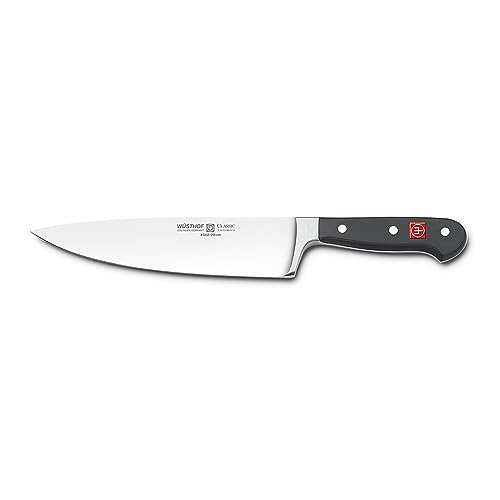
Wüsthof Classic 8-Inch — The Traditional Pro
Forged German weight and toughness for cooks who rock-chop and tackle hearty ingredients. Its cons are heft and a full bolster that complicates heel sharpening. Best for committed home cooks. Tier: premium — check price on Amazon.

Tojiro DP Gyutou 8.2-Inch — The Precision Pro
Japanese glide and edge retention at a mid tier, with the fragility con in its honest form: no bones, no twisting, stones for sharpening. Best for careful, vegetable-forward cooks. Tier: mid — check price on Amazon. Brand shortlists live at best professional chef knives and best stainless steel chef knives.
Setup and Care That Reduce the Cons
Most cons shrink dramatically with four habits. First, storage: mount a magnetic strip where the knife returns after every wash, because a visible, dedicated home is what makes the routine automatic. Second, washing: wash by hand immediately after use, wipe from the spine side, dry fully, and put it away — sixty seconds that prevent rust spots, chips, and accidents. Third, honing: a few light strokes before big prep sessions keeps the edge aligned so sharpening stays rare. Fourth, board discipline: wood or quality plastic only, and use the spine, never the edge, to scrape food off the board. Add a rule for other users — the knife gets hand-washed or left for you — and even the shared-household con mostly evaporates. The complete cleaning routine, including safe handling around a wet edge, is laid out step by step in how to clean chef knife, and sharpening options are compared in best whetstones for kitchen knives.
German vs Japanese Chef Knives: A Pros-and-Cons Split
Because the two great traditions sit at opposite ends of the hardness-versus-toughness spectrum, the chef knife pros and cons change character depending on which family you choose. Splitting them out helps if you have already narrowed your style.
German-Style Pros
Toughness is the headline: a German edge shrugs off chicken joints, hard squash rinds, and the accidental twist that would chip a harder blade. The weight works for you through dense food, the curved profile makes rocking cuts effortless, and the steel responds beautifully to a honing rod, so daily maintenance is a ten-second habit rather than a project. German knives are also the most forgiving of imperfect boards and busy shared kitchens, and their contoured handles feel immediately familiar to anyone raised on Western cutlery.
German-Style Cons
The same toughness costs keenness: wider edge angles never glide quite like a fine Japanese edge, and the softer steel needs honing more frequently to stay at its best. Weight becomes fatigue on very long prep sessions, especially for smaller hands. Full bolsters, where fitted, obstruct sharpening at the heel over the years. And thick grinds can wedge in tall, dense vegetables, splitting a carrot rather than slicing it — a small daily annoyance that precision cooks notice.
Japanese-Style Pros
The glide is real: thin grinds and hard, fine edges pass through produce with so little resistance that prep feels calmer and more precise. Edge retention is excellent, so the knife feels sharp for weeks of dinners rather than days. Lightness reduces fatigue and increases tip control, which shows up in finer dice, cleaner fish work, and thinner slices of everything. For cooks who treat knife work as a craft, the Japanese style offers the highest ceiling of performance in the category.
Japanese-Style Cons
Fragility is the honest price: chips from bones, pits, frozen food, twisting, and hard boards are a matter of when, not if, for careless users. Sharpening belongs on whetstones, which is a skill and a purchase. Some Japanese handles feel sparse or unfamiliar to Western hands at first, and the flatter profile gives less help to committed rock-choppers. In a chaotic shared kitchen, a Japanese knife is a beautiful tool in the wrong home.
Pros and Cons by Budget Tier
Entry Tier
Pros: the lowest barrier to real performance, easy sharpening, minimal anxiety about damage, and honest working geometry from the best makers. Cons: edges need frequent honing, handles and balance are functional rather than refined, and the knife will not feel special. For many households this tier is not a compromise at all but the correct engineering answer, because the format’s main pros — consolidation, safety, versatility — are fully present.
Mid Tier
Pros: the largest jump in daily cutting pleasure, better steels and grinds, balance you can feel, and edge retention that changes your maintenance rhythm from constant to occasional. Cons: enough money invested that damage stings, and the tier includes both superb knives and merely decorated ones, so choosing well matters. Most cooks who cook daily should land here, particularly in the Japanese and modern hybrid styles where the mid tier is exceptionally strong.
Premium Tier
Pros: forged construction, beautiful materials, meticulous finish, balance refined to the gram, and the quiet pride of a tool made to be kept for decades. Cons: cutting performance improves only modestly over the mid tier, the fear of damaging it can paradoxically reduce how much you enjoy it, and replacement cost makes lending it to guests an act of trust. Premium is a pleasure purchase and a longevity purchase, and it is most satisfying when bought after your habits and preferences are already formed.
The Small Print: Pros and Cons Nobody Mentions
A few trade-offs rarely appear in marketing or in short reviews, yet they shape daily satisfaction. On the pro side, a single good knife simplifies travel and cooking away from home: one blade in a sheath makes you competent in any rental kitchen. A chef knife also ages gracefully in a way gadgets never do; a ten-year-old knife with a maintained edge performs like new, while a ten-year-old food processor is landfill. And there is a subtle confidence dividend: cooks who trust their knife attempt more ambitious recipes, because the prep no longer looks like the hard part.
On the con side, a tall blade needs a tall storage solution and a big enough board; in genuinely tiny kitchens the format itself can feel oversized, and a shorter knife may serve better. A chef knife also concentrates risk: drop your one good knife on a tile floor and dinner prep is compromised in a way that a drawer of spares never is. Edge maintenance has a noise and mess factor too — whetstones need soaking, bench space, and cleanup. And finally, a very sharp knife demands respect from everyone in the home, including teenagers and guests; households need a house rule, not just a purchase. None of these small-print items should decide the purchase alone, but together they explain why two cooks can both be right about this tool — one delighted, one relieved to return it.
A Week of Dinners: The Pros and Cons in Daily Life
Abstract lists become clearer across a week of real cooking. Monday is a stir-fry: the chef knife turns peppers, onions, and chicken into even pieces in minutes, and the pro of speed is obvious — but so is the con of washing and drying a big blade while the wok is already on the heat, a rhythm you solve by washing during the thirty seconds the aromatics bloom. Tuesday is soup: the heel of the blade powers through leeks, carrots, and a stubborn squash, and you feel the German-style pro of toughness if that is your knife, or the Japanese pro of glide if the squash is peeled and the cuts are many. Wednesday is a salad night where the knife mostly slices tomatoes and cucumbers; a keen edge makes the tomato slices clean instead of crushed, and you notice the con that such an edge must be honed back to life after Tuesday’s board work.
Thursday brings guests and a roast: carving with long strokes shows off the blade length, while a guest who offers to help and reaches for the knife reminds you of the shared-household con — you hand them the older beater instead and feel slightly precious about it, which is a real social cost of owning one fine tool. Friday is pizza night and the chef knife rests; the cons take the evening off too. Saturday is project cooking, perhaps a curry from whole spices and a whole chicken, where versatility shines and the knife does everything except the finest boning, which you improvise carefully and note as the one moment a specialist would have helped. Sunday is batch prep for the week, the session where fatigue, balance, and edge retention stop being specifications and become the difference between finishing cheerfully and rushing the last onion with tired, unsafe hands.
Across that ordinary week, the pattern holds: the pros appear at every meal, quietly, in speed and quality; the cons appear in moments — the wash, the storage, the guest, the one specialist task. Whether the balance delights you depends on how much you value the daily quiet wins against the occasional friction, and most people who cook daily choose the wins.
Safety Around Children and Guests
One con deserves its own honest section: a sharp chef knife raises the stakes for everyone who shares the kitchen. Children must never have access, which means storage out of reach and never a knife left in a sink of soapy water where small hands fish for cups. Guests are the other variable; a well-meaning helper who treats your knife like their own dull one — scraping the board with the edge, dropping it in the dishwasher, cutting on a plate — can undo a year of care in an evening. The practical fixes are simple: a visible home for the knife on a strip, a house rule explained without drama, and a decent backup knife you are happy to hand over. Households that set these norms report that the safety con shrinks to nearly nothing, while households that ignore it tend to blame the knife for what was really a systems problem.
The Environmental Ledger
There is a quieter pro worth naming: a durable chef knife is one of the least wasteful purchases in the kitchen. One blade, maintained for decades, replaces a stream of cheap knives, dull gadgets, and disposable sharpeners. It has no electronics to obsolesce and no proprietary parts. On the con side, quality steel and wooden handles carry their own production footprint, and shipping a heavy forged knife is not free of impact — but amortised over a decade or more of daily service, the per-meal footprint is tiny. For buyers who weigh sustainability, buy once, buy repairable, and maintain is the strongest position available in this category, and the chef knife fits that philosophy better than almost any powered appliance.
How the Balance Shifts as Your Skill Grows
The pros and cons are not static; they move as you do. In the first month, the cons lead: the knife feels big, the washing rule feels fussy, honing feels like one more thing to learn, and your cuts are slower than they were with the little knife you knew. This is the valley every new owner crosses, and it is where most returns happen — usually just before the turn. By the third month, grip and claw hand are automatic, the wash-and-strip routine takes under a minute without thought, and the speed pro quietly doubles because your hands stop supervising every stroke. The fragility con also shrinks with skill: experienced users stop twisting blades in squash, stop scraping with edges, and stop leaving knives in sinks, not from fear but from habit.
A year in, the ledger looks different again. Maintenance becomes the remaining honest con, and even it changes character: many cooks come to enjoy the two quiet minutes at a whetstone, the way gardeners enjoy tasks that outsiders call chores. Meanwhile a new pro appears that nobody lists on a box — judgement. You can pick up any knife in any kitchen and know within three cuts whether it is well made, well kept, and right for the task. That literacy is permanent and transfers everywhere. The fair conclusion is that the chef knife’s cons are front-loaded and its pros are back-loaded, which is precisely why short trial periods mislead: judge this tool at ninety days, not at nine.
Gifting, Handing Down and Resale
A final, practical corner of the ledger: a quality chef knife is one of the few kitchen tools that works as a serious gift and keeps working as one. It marks weddings, first homes, and graduations without the disposability of most presents, and a knife given at twenty-five can still be the main knife at fifty. The con is that knives are personal: handle fit and style preference make a surprise knife a gamble, so gift the shopping trip or choose a widely loved mid-tier model with easy exchange. On resale and handing down, forged knives from established makers hold their usefulness completely and some of their value, while worn entry knives simply become excellent beaters and garage knives. Nothing in the kitchen rewards buying quality with continued service quite like this category does.
Chef Knife Pros and Cons: A Pre-Purchase Checklist
Run the cons as a checklist before you buy, and each one you can answer comfortably is a con neutralised. Can the knife live on a magnetic strip or in a slotted tray in your kitchen as it is actually arranged? Will everyone who cooks agree to hand-wash it, or can you keep it as your personal tool without friction? Do you own, or will you buy, a board that will not punish the edge? Are you willing to spend a few minutes a month on honing and a few sessions a year on sharpening, or to pay a service to do it? Does your cooking include the hard, twisty jobs — frozen squash, jointing, prying lids — often enough that you should choose the tougher German pattern, or are you free to enjoy the finer Japanese edge? And finally, is there a smaller-handed or less confident cook in the house whose comfort should shape the size and weight you choose? Six honest answers turn the abstract pros and cons into a specific knife, which is the only version of this decision that matters.
What Long-Term Owners Report
Ask people who have owned a good chef knife for years and a pattern emerges that short reviews cannot capture. Almost none of them talk about the purchase price; many cannot remember it exactly. They talk about the onion that no longer makes them cry because the slices are clean, the winter of soups that stopped being a wrestling match, and the small ceremony of honing before a big cook that now feels like sharpening a pencil before writing. Their complaints, when they have them, are specific and survivable: a chip from the year they knew less, a handle that aged faster than the blade, a wish that they had bought the lighter knife for their partner’s sake. Notably, almost none of them have gone back to a drawer of cheap knives, and most describe the purchase the way people describe good boots or a good mattress — an unglamorous object that improved every single day a little. That long-view testimony is the strongest pro in this entire article, and it comes with the standing caveat that these are the people whose habits fit the tool; the ones who returned theirs in week two are telling the truth about their kitchens too.
A Self-Audit Against Your Current Setup
If you are still undecided, audit the knives you already own, because they hold the evidence. Pull out the knife you reach for most and look at its edge against the light: a wavy reflection means a dull, damaged edge that you have been compensating for with force. Notice whether you avoid certain ingredients — whole squash, big onions, raw meat — because prep feels like labour; avoidance is the hidden cost of a bad main knife and the clearest sign the pros would pay off for you. Check your storage honestly: if your current knife lives loose in a drawer and comes out fine because it is too dull to matter, understand that a real edge changes the storage requirement, not just the cutting. Finally, count how many dinners a week begin with chopping something. Three or more, and the chef knife’s pros are not theoretical in your house; they are a daily dividend waiting to be collected. One or fewer, and the honest recommendation is a good entry-tier knife, a paring knife, and your money spent elsewhere in the kitchen where your life actually happens.
Edge Cases: Small Hands, Left-Handers and Limited Grip Strength
Three groups deserve specific honesty. Smaller-handed cooks often find standard handles and heavier German knives tiring, and for them the pros tilt toward lighter Japanese or hybrid knives, sometimes in a slightly shorter length; the con of reduced heft through squash is a fair trade for control. Left-handers should know that most chef knives are ground symmetrically and work perfectly well in either hand, but strongly asymmetrical Japanese grinds are handed, so check the listing before choosing one. Cooks with limited grip strength or wrist issues benefit most from a sharp edge — because sharpness is force you do not have to supply — paired with a handle that fills the hand without needing a squeeze, and a lighter blade overall. For all three groups, the general pros and cons hold; only the weighting changes, and the right model choice can move a knife from the con column to the pro column entirely.
Bottom Line
The chef knife pros and cons resolve into a simple test. If you cook from raw ingredients several times a week and can keep four small habits — hand wash, dry, store on a strip, hone — the pros are overwhelming and a good chef knife will be among the best purchases you ever make for your kitchen. If your cooking is mostly assembly and reheating, or your household cannot protect an edge, the cons win and a modest knife plus a sharpener is the honest answer. Either way, you now know exactly which side of the line you stand on, and the deep-dive in our chef knife review can take you from decision to specific model.
One closing observation ties the whole ledger together: almost every con in this article is a con of ownership, while almost every pro is a pro of use. Ownership happens in moments — washing, storing, honing, paying — while use happens at every meal. Tools whose costs are concentrated in moments and whose benefits are spread across every day tend to be the ones people keep for decades and recommend without hesitation. The chef knife is the kitchen’s clearest example of that pattern, provided the owner’s habits clear the modest bar the tool sets. If yours do, buy with confidence, choose the style that matches your cooking from chef knife buying guide, and let the next decade of dinners make the argument for you.
The One-Week Diary: Stress-Testing the Chef knife Trade-Offs
Treat this diary as the practical sequel to the ledger above: for one ordinary week, note each time the chef knife delights you and each time it irritates you, in the moment rather than from memory at the end. Record the jobs where the advantages felt largest, because a strength that only appears on tasks you rarely do is worth less than the summary tables suggest. Record the irritations with equal honesty, and mark whether each one came from the product itself, from your space, or from a habit you could change once and forget. Pay attention to the setup and put-away minutes, since trade-offs that look trivial on paper become the deciding factor when they repeat twice a day for years.
Note who else used the chef knife during the week and what they struggled with, because a drawback that only affects the most patient person in the house is easy to underestimate. Watch for the workaround you invent by day three, and judge it fairly: a painless workaround retires a con, while a fiddly one confirms it. Where a shortlist names specific examples, such as Victorinox Fibrox Pro 8-Inch, run these same checks against that listing line by line rather than assuming the general verdict transfers unchanged. Apply the identical test to Wüsthof Classic 8-Inch as well, on the same day and under the same conditions, because a fair comparison needs one ruler rather than two moods.
- Log delights and irritations as they happen
- Time the setup and the put-away honestly
- Test the worst job, not the easiest one
- Note the workaround you invent by day three
- Ask a second user for their verdict
- Write the sentence you would tell a friend
If Tojiro DP Gyutou 8.2-Inch is also in contention, give it the same worksheet and let the three sets of answers sit side by side before anyone reaches for a checkout button. Test the loudest, messiest, or slowest mode at the time of day you would actually use it, not at a forgiving hour chosen to make the product look good. Check the cleaning burden after the worst realistic job rather than the easiest one, since the honest version of that chore is the one you will live with. Notice whether the headline strength survives ordinary ingredients, ordinary timing, and an ordinary tired evening, because strengths that need perfect conditions are narrower than they appear.
Write down any benefit you had not expected, since unlisted advantages discovered in use are often the ones that keep a product in the house for a decade. Write down any drawback that no review mentioned, and consider whether it is specific to your space, your water, your power supply, or your household size. Compare the week against the tool or appliance the chef knife replaced, task by task, instead of against an idealised version of what ownership would feel like. Ask whether the cons cluster at the start of each session, in the middle of the work, or in the cleanup, because that pattern tells you whether habit can fix them.
Decide which single con you would pay to remove and which single pro you would refuse to give up, since that pair of answers is the real verdict of the week. If the diary shows the balance tilting on one recurring job, re-read the sections above with that job in mind rather than averaging your impressions across everything. Finish the week by writing the sentence you would say to a friend who asked about the chef knife, and check whether it sounds like the summary you believed before the diary began. Keep the diary somewhere you will find it before a future replacement decision, because your own recorded week outweighs any general verdict, including the ones in this guide.
Notice, too, whether your standards moved during the week: some apparent cons are simply the feeling of a new routine replacing an old one, and they fade on their own. Mark the moment you stopped thinking about the trade-offs and just got on with the task at hand, because that moment is when the balance quietly settled itself. If no such moment arrived, that absence is data as well, and it usually points at one specific friction worth naming precisely rather than blaming the whole product. Whatever the category, photograph your intended spot with the neighbouring items in place, because a picture exposes crowding that measurements alone politely ignore.
Keep every measurement, tally, and note from these checks in one place, ideally with the receipt, so the next decision in this category starts from your evidence rather than from scratch. Involve the household early where the product is shared, since a decision everyone helped measure is a decision nobody relitigates at the first inconvenience. Prefer the option that fits your existing routine with the fewest new habits, because each new habit is a small tax collected every single day. Be wary of solving a storage problem by creating a carrying problem, since distance between storage and use is where good equipment goes to be forgotten.
Check the return conditions before the trial period begins, and calendar the last safe decision day, so the deadline works for you instead of surprising you. Judge the packaging and unboxing only once, briefly, and then ignore them, because they are the one part of ownership guaranteed never to repeat. Let the second week arbitrate disputes from the first, since novelty inflates both delight and irritation beyond their durable values. When two options remain tied after honest testing, choose the one whose weaknesses fall on your rarest jobs rather than your commonest ones.
Remember that the best outcome of a careful check is sometimes a confident no, which costs an afternoon and saves a cupboard, a counter, and a slow resentment. Write your verdict where you will see it before any future upgrade, because the most expensive purchases are the ones that re-buy a lesson already learned. Treat measurements taken in your own rooms as senior to any general guidance, including this guide, whenever the two disagree about fit. Think ahead to the first replacement part, however small, and picture where you would get it, how long the wait would be, and what you would use in the meantime.
Frequently Asked Questions
What is the biggest advantage of a chef knife?
Consolidation with quality: one sharp, tall, well-balanced blade handles the large majority of kitchen prep faster, more consistently, and more safely than a drawer of dull alternatives. Because it is used constantly, its quality is felt in every meal rather than occasionally, which is why cooks rate it the highest-impact tool they own. The advantage grows with skill, since the format rewards good grip and cutting technique more than any smaller knife.
What is the biggest disadvantage of a chef knife?
The care contract. Hand washing, immediate drying, protected storage, honing, and periodic sharpening are not optional extras; they are the price of the performance. In households where that contract will be broken — dishwashers, loose drawers, careless co-users — the knife dulls or chips and the advantages disappear. The second disadvantage is fragility at the premium Japanese end, where hard, thin edges chip under twisting, bones, and frozen food.
Is a chef knife safer or more dangerous than other knives?
Both, depending on its condition and the user’s habits. Kept sharp and used with a pinch grip and claw hand, it is safer than a dull small knife because it cuts where aimed with less force and keeps knuckles clear. Left dull, stored loose, or used carelessly, its size and sharpness make it hazardous. The knife itself is neutral; the system around it — sharpness, storage, technique — decides the safety outcome.
Do the pros still apply at the entry tier?
Mostly, yes. A good entry-tier chef knife delivers the consolidation, safety-through-sharpness, and versatility pros in full, because those come from the format and geometry. What softens at the entry tier is refinement: balance is less polished, edges need honing more often, and handles are functional rather than beautiful. For many households the entry tier is the sweet spot of the entire pros-and-cons calculation, especially in shared or busy kitchens.
Can a chef knife replace a whole knife set?
For most cooking, nearly. A chef knife plus an inexpensive paring knife covers the overwhelming majority of tasks. Genuine gaps are bread with hard crusts, delicate boning and filleting, and in-hand garnish work. Most cooks are better served buying the chef knife first and adding specialists only when a repeated task proves the need, rather than buying a set up front and discovering which pieces gather dust.
Who should skip a premium chef knife?
Anyone whose kitchen routine cannot protect it: dishwasher households, loose-drawer storage, cooks who pry and twist, and beginners who have not yet built handling habits. Also anyone who cooks from scratch only rarely, since the pros scale with use. These cooks lose nothing by choosing a tough entry or mid-tier knife; they gain a tool matched to their real life, which is the entire point of weighing the trade-offs honestly.
Related Reading
chef knife buying guide · chef knife review · chef knife vs knife set · is a chef knife worth it · how to clean chef knife


