Disclosure: topratedkitchenware.com is reader-supported. When you buy through links on our site, we may earn an affiliate commission from Amazon and other retailers, at no extra cost to you.
Where to buy
If you are shopping for comforter vs duvet insert and want the short version first: all six picks below are genuine, verified matches for this guide, each linked so you can check the latest price on Amazon. They differ in format, size, and feel rather than in legitimacy, so the right choice is the one whose inches and construction fit your bed and your habits — the full reviews underneath exist to make exactly that call. Start with the first pick if you want the safest all-round answer.
- Bedsure Comforter Duvet Insert, Queen — Best Queen Insert; check the latest price on Amazon
- DOWNCOOL Queen Duvet Insert — Best Lightweight Insert; check the latest price on Amazon
- Amazon Basics Down Alternative Comforter and Duvet Insert — Best Simple Value Insert; check the latest price on Amazon
- Utopia Bedding Duvet Insert, Queen — Best Family Workhorse; check the latest price on Amazon
- CozyLux Queen Duvet Insert, 300 GSM — Best Substantial All-Season Insert; check the latest price on Amazon
- Maple&Stone Feather Down Comforter, Queen — Best Real Down Pick; check the latest price on Amazon
Read the full guide ↓
Finding comforter vs duvet insert you can trust is harder than it should be, because this category’s listings all use the same warm words — soft, cozy, all-season, hotel quality — for products that differ enormously in size, fill, construction, and care. Two products can share every adjective on the page and share almost nothing on the bed. This guide exists to cut through that: six verified picks, compared on stated facts, with the differences that will actually reach your sleep or your storage spelled out in plain language.
The confusion is understandable, because the products genuinely overlap: several inserts in this pool are sold as comforters, and several comforters are built to work as inserts. The honest way through it is to stop asking which product is better and start asking which system fits your bed. A comforter is the finished layer — colored, styled, ready to be seen. A duvet insert is a component — plain, washable, and designed to live inside a removable cover that carries the style and takes the weekly laundry.
This comparison works through six verified products that sit on both sides of that line, shows you exactly where each one belongs, and gives you a decision you can make in minutes. If you are shopping the insert side specifically, Best Duvet Insert Under $100 and Best Duvet Insert For Guest Rooms Under $100 cover the neighboring picks, while this page settles the comforter vs duvet insert question itself.
Key Takeaways
- All six picks in this guide are verified matches for comforter vs duvet insert, with links so you can check the latest price on Amazon — no filler picks and no invented specifications.
- Dimensions in inches, not size names, are the most reliable comparison in this category; the picks here differ by inches that matter.
- The Bedsure Comforter Duvet Insert, Queen is our first recommendation for most readers, earning its Best Queen Insert badge on the balance of its stated specifications.
- Format comes before fill: decide the system you want to live with first, then compare warmth, weight, and care inside that decision.
- Care is part of the purchase — every pick here has a laundry or setup routine, and the right pick is the one whose routine fits your home.
In this guide
Quick Picks
These six picks are the whole field for this guide. The table gives the badge, the defining format fact, and a link for each; the detailed reviews that follow earn — or qualify — every badge. If you are comparing by room or use case, Best Duvet Insert Under $100 is a useful companion shortlist.
| Pick | Badge | Format | Price |
|---|---|---|---|
| Bedsure Comforter Duvet Insert, Queen | Best Queen Insert | Size: Queen, 88 x 88 inches; Fill: down alternative | Check on Amazon |
| DOWNCOOL Queen Duvet Insert | Best Lightweight Insert | Size: Queen, 88 x 92 inches; Fill: down alternative, lightweight quilt positioning | Check on Amazon |
| Amazon Basics Down Alternative Comforter and Duvet Insert | Best Simple Value Insert | Size: Full/Queen; Fill: down alternative, light weight positioning | Check on Amazon |
| Utopia Bedding Duvet Insert, Queen | Best Family Workhorse | Size: Queen, 88 x 88 inches; Fill: down alternative | Check on Amazon |
| CozyLux Queen Duvet Insert, 300 GSM | Best Substantial All-Season Insert | Size: Queen, 88 x 88 inches; Fill weight: 300 GSM down alternative | Check on Amazon |
| Maple&Stone Feather Down Comforter, Queen | Best Real Down Pick | Size: Queen, 90 x 90 inches; Fill: feather and down — the only natural-fill pick in this pool | Check on Amazon |
How These Picks Were Chosen
Every pick in this guide comes from a verified pool: each product’s identity, brand, and image were confirmed against its listing before writing began, and no specification appears in these reviews unless the listing itself states it. That discipline sounds basic, but it is what separates a guide from a collage — when this page gives you dimensions, a fill weight, a drawer count, or an attachment count, it is because the product’s own verified data carries that fact. Where a listing is silent, the review says what can still be judged honestly — format, positioning, and fit — and leaves the rest alone.
Because this is a versus guide, we deliberately included products from both camps — finished-feeling comforters, pure inserts, and one natural-fill insert — and judged each against the job its own format claims to do, rather than penalizing a comforter for not being an insert or an insert for needing a cover.
We should be plain about method: this is research-led guidance, not a laboratory test program. We do not claim to have slept under, washed, or assembled these exact units. What we have done is compare verified specifications across the pool, weigh the trade-offs each design implies in daily use, and write the reviews we would want to read before spending our own money — including the honest limitation of every pick, stated in its own section rather than buried. Readers who want the wider field can cross-check against Best Duvet Insert For Apartments Under $100, which covers neighboring picks in this category.
The 6 Picks in Detail: Comforter vs duvet insert, Reviewed One by One
Each review below follows the same structure — badge, strengths, trade-offs, the specifications the listing actually states, and a plain verdict — so you can compare unlike formats fairly. One structural note before you start: every pick here is linked, because every pick genuinely matches this guide’s subject; there are no prose-only passengers in this list. For a differently-framed view of the same category, Best Duvet Insert For Guest Rooms Under $100 is worth a look after these reviews.
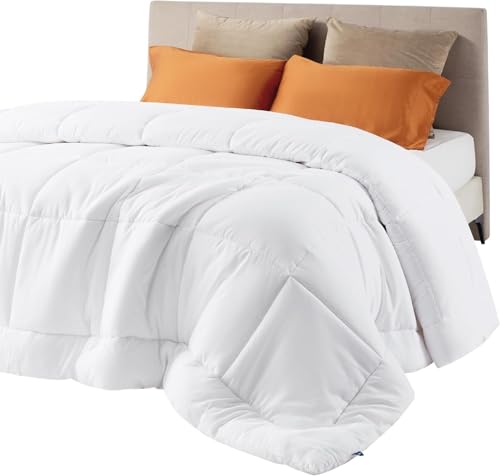
Bedsure Comforter Duvet Insert, Queen
Badge: Best Queen Insert
On the comforter vs duvet insert question, the Bedsure Comforter Duvet Insert, Queen plants its flag through one telling trait: down alternative. That single fact decides which camp it cooks in — whether it expects a cover, how it will be washed, and what else you need to own for it to work — and the detailed section below scores it strictly by the standards of the camp it chose.
Strengths
- Queen 88 x 88 inch sizing matches the most common queen duvet covers
- 8 corner tabs keep the insert anchored inside the cover through the night
- Machine washable, OEKO-TEX certified, and free of natural down
Trade-offs
- Square 88 x 88 cut gives less side drape than oversized queen comforters
- Needs a duvet cover for a finished look and to stay clean
- All-season weight may feel light to very cold sleepers in unheated rooms
Specifications (from the verified listing)
- Size: Queen, 88 x 88 inches
- Fill: down alternative
- Attachment: 8 corner tabs
- Care: machine washable
- Certification: OEKO-TEX
- Color: White
If your bed is a queen and your plan is a duvet cover, this is the straightforward, correctly-sized insert in the pool. It suits people who change their bedding look with the seasons — the insert stays constant while covers rotate — and anyone who wants washable, down-free fill with a documented fabric-safety certification behind it.
The quilted construction keeps the down-alternative fill spread across the full 88 x 88 inches, and the 8 tabs tie to the loops or ties inside a compatible cover so the whole assembly moves as one piece when you shake the bed made. In use, a good insert should disappear: no cold corners, no bunching, no rustling shell drawing attention to itself at 2 a.m. This one’s spec sheet is aimed at exactly that invisibility.
When you first unpack any compressed insert, give it time and air. Shake it out, lay it flat, and let it recover loft for a day before judging its thickness; judging an insert in its first hour out of the packaging is the most common source of unfair first impressions.
Best for: queen beds with duvet covers, and cover-swapping seasonal decorators / Not suited for: cold sleepers wanting a heavyweight winter insert
Check on Amazon — check the latest price on Amazon for the Bedsure Comforter Duvet Insert, Queen.

DOWNCOOL Queen Duvet Insert
Badge: Best Lightweight Insert
Versus comparisons are won on telling details, and for the DOWNCOOL Queen Duvet Insert the telling detail is down alternative, lightweight quilt positioning. Read it as a declaration of intent: this product knows which side of the comforter vs duvet insert line it lives on, and everything else in its review follows from that declaration.
Strengths
- 88 x 92 inch cut adds length over square queen inserts — useful for taller sleepers
- Lightweight fill suits warm rooms and warm sleepers
- Corner tabs make it cover-ready out of the package
Trade-offs
- Lightweight positioning will not satisfy cold sleepers in winter without layering
- White insert needs a cover to stay presentable
- Less stated certification detail than some rivals in this pool
Specifications (from the verified listing)
- Size: Queen, 88 x 92 inches
- Fill: down alternative, lightweight quilt positioning
- Attachment: corner tabs
- Season: all-season
- Style positioning: hotel comforter
- Color: White
Taller sleepers and anyone whose feet find the cold end of the bed should look closely at this one: its 92-inch length is the longest queen dimension in the duvet pool. It also suits warm sleepers who want an insert that works inside a cover without turning the bed into a sauna, and guest rooms that need a dependable, washable, mid-weight layer.
DOWNCOOL positions this as a lightweight quilt-style insert with a hotel-comforter feel, and the down-alternative fill keeps care simple. Inside a cover, the corner tabs hold the insert’s corners where they belong; used uncovered for a trial night, the extra length is immediately noticeable at the foot of the bed compared with a square 88 x 88 insert.
That extra length is also a sizing trap: a queen duvet cover cut exactly 88 x 88 will fight this insert. Pair it with a cover whose stated dimensions equal or slightly exceed 88 x 92, and the tabs will do the rest.
Best for: taller sleepers and warm sleepers using a duvet cover / Not suited for: cold sleepers wanting a heavyweight winter fill
Check on Amazon — check the latest price on Amazon for the DOWNCOOL Queen Duvet Insert.
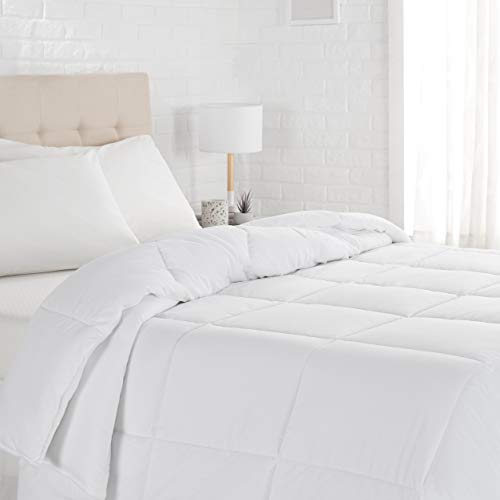
Amazon Basics Down Alternative Comforter and Duvet Insert
Badge: Best Simple Value Insert
On the comforter vs duvet insert question, the Amazon Basics Down Alternative Comforter and Duvet Insert plants its flag through one telling trait: down alternative, light weight positioning. That single fact decides which camp it cooks in — whether it expects a cover, how it will be washed, and what else you need to own for it to work — and the detailed section below scores it strictly by the standards of the camp it chose.
Strengths
- One Full/Queen size covers the two most common bed sizes in rentals and guest rooms
- Light positioning makes it an easy summer or layered-winter insert
- Machine washable with corner tabs — the essential features, without extras you may not need
Trade-offs
- Full/Queen compromise sizing is not a perfect match for either bed at the extremes
- Light fill is not a standalone winter solution for cold sleepers
- A deliberately basic spec sheet: no stated GSM or certification detail
Specifications (from the verified listing)
- Size: Full/Queen
- Fill: down alternative, light weight positioning
- Attachment: corner tabs
- Care: machine washable
- Color: White
This is the utility pick: a first duvet insert, a rental or guest-room insert, or a light summer layer for a bed that already has a heavier winter option. The Full/Queen sizing is a practical compromise for households that genuinely have both bed sizes in play, and the feature list covers the essentials — down-alternative fill, corner tabs, machine washable — without dressing them up.
In use, a light insert like this earns its place in the months when a full-weight comforter is too much. Inside a cover it adds structure and a thin, even layer of warmth; the corner tabs keep it from collapsing to one side of the cover, which is the main failure mode of cheap inserts. Expect competence rather than luxury, and it delivers competence.
Because the size spans Full and Queen, check your cover’s inches rather than its size name. A full-size cover will make this insert feel fuller; a queen cover gives it a lighter drape. Either can be right — but it should be a choice, not a surprise.
Best for: guest rooms, rentals, and light summer layering / Not suited for: buyers wanting a precisely sized, heavyweight primary insert
Check on Amazon — check the latest price on Amazon for the Amazon Basics Down Alternative Comforter and Duvet Insert.

Utopia Bedding Duvet Insert, Queen
Badge: Best Family Workhorse
Versus comparisons are won on telling details, and for the Utopia Bedding Duvet Insert, Queen the telling detail is down alternative. Read it as a declaration of intent: this product knows which side of the comforter vs duvet insert line it lives on, and everything else in its review follows from that declaration.
Strengths
- Soft microfiber shell feels smooth against a cover and quiet in use
- Square queen sizing matches standard queen covers without a fight
- Machine washable down alternative suits busy family laundry routines
Trade-offs
- Microfiber shells can feel warmer than cotton shells to hot sleepers
- No stated tab count in the verified listing title — check the ties before pairing with a cover
- White shell needs a cover for long-term appearance
Specifications (from the verified listing)
- Size: Queen, 88 x 88 inches
- Fill: down alternative
- Shell: soft microfiber
- Care: machine washable
- Color: White
Families, shared households, and anyone whose bedding gets washed often and without ceremony should have this insert on their shortlist. Utopia Bedding positions it broadly — for women, men, kids, and teens — and that breadth is honest: a washable, mid-weight queen insert with a soft microfiber shell is the closest thing bedding has to a household appliance. It does its job every night and goes in the wash when asked.
The microfiber shell is the distinguishing choice here. Microfiber tends to feel smooth and slightly warm, which many sleepers like in cooler rooms; the quilted down-alternative fill underneath keeps the warmth even across the 88 x 88 inches. In a cover, it behaves like the other square queen inserts in this pool — the shell difference is what you will actually notice night to night.
Microfiber rewards a proper wash routine: wash it with room to move, dry it fully before it goes back in the cover, and avoid overheating it in the dryer. A microfiber shell put away even slightly damp will tell you about it the next night.
Best for: family beds and frequent-washing households / Not suited for: hot sleepers who prefer the cooler hand of a cotton shell
Check on Amazon — check the latest price on Amazon for the Utopia Bedding Duvet Insert, Queen.

CozyLux Queen Duvet Insert, 300 GSM
Badge: Best Substantial All-Season Insert
On the comforter vs duvet insert question, the CozyLux Queen Duvet Insert, 300 GSM plants its flag through one telling trait: 300 gsm down alternative. That single fact decides which camp it cooks in — whether it expects a cover, how it will be washed, and what else you need to own for it to work — and the detailed section below scores it strictly by the standards of the camp it chose.
Strengths
- 300 GSM is a stated, substantial fill weight — no guessing about what all-season means here
- Box-stitch quilting keeps fill in its own compartments for even warmth
- 8 tabs plus OEKO-TEX certification cover both mechanics and materials
Trade-offs
- The heaviest-feeling queen insert in this pool — warm sleepers may find it too much in summer
- Box-stitch compartments give a more structured look and feel than loose, billowy fills
- White shell, like all white inserts, is cover-dependent for appearance
Specifications (from the verified listing)
- Size: Queen, 88 x 88 inches
- Fill weight: 300 GSM down alternative
- Construction: box-stitch quilting
- Attachment: 8 tabs
- Certification: OEKO-TEX certified
- Color: White
Choose this insert if you want one insert, all year, and you sleep on the cooler side of average. The stated 300 GSM fill weight is the most concrete warmth claim in the duvet pool, and box-stitch construction backs it up mechanically: each compartment holds its fill in place, so the warmth you start the winter with is still evenly distributed at the end of it.
Where lighter inserts disappear, this one is present — you feel the weight settle, which many sleepers find genuinely comforting and others find oppressive; know which sleeper you are. The 8 tabs match the best attachment count in the pool, and inside a well-fitted cover the box-stitched structure keeps the whole assembly calm and even through the night.
A 300 GSM insert plus a heavy flannel cover can overshoot in a warm bedroom. Pair it with a breathable cover fabric if your room runs warm, and keep a light blanket as your adjustment layer instead of swapping the whole insert by season.
Best for: cool sleepers wanting one substantial all-season insert / Not suited for: warm sleepers in warm rooms, who should take a lighter insert
Check on Amazon — check the latest price on Amazon for the CozyLux Queen Duvet Insert, 300 GSM.

Maple&Stone Feather Down Comforter, Queen
Badge: Best Real Down Pick
Versus comparisons are won on telling details, and for the Maple&Stone Feather Down Comforter, Queen the telling detail is feather and down — the only natural-fill pick in this pool. Read it as a declaration of intent: this product knows which side of the comforter vs duvet insert line it lives on, and everything else in its review follows from that declaration.
Strengths
- Real feather-down fill gives the loft, drape, and temperature behavior synthetic fills imitate
- 100% cotton shell breathes and feels crisp, in the classic hotel tradition
- 8 loops and box stitching keep the natural fill anchored and evenly spread
Trade-offs
- Natural fill is not the choice for households avoiding animal-derived materials or with down sensitivities
- Feather-down needs more careful washing and fuller drying than down alternative
- Natural fill can have a faint characteristic scent when new that takes airing to fade
Specifications (from the verified listing)
- Size: Queen, 90 x 90 inches
- Fill: feather and down — the only natural-fill pick in this pool
- Shell: 100% cotton
- Construction: box stitch
- Attachment: 8 loops
- Color: White
This is the pick for the sleeper who has tried down alternative and keeps missing the real thing: the way natural fill drapes over the body instead of tenting, the loft that recovers with a shake, the warmth that adjusts as the room cools. The cotton shell completes the traditional package, and the 90 x 90 inch cut is a touch more generous than the square queen inserts around it.
Feather and down behave differently from polyester fills in ways that matter over a whole night. The fill conforms, so there are fewer cold gaps at the edges of the body; the cotton shell lets moisture vapor move instead of trapping it. Box stitching is doing real work here too, because natural fill migrates more willingly than synthetic clusters, and the compartments keep the distribution honest.
Budget the care honestly. A feather-down insert wants a large-capacity washer or professional laundering, low-heat drying until completely dry, and regular shaking and airing. Looked after that way, natural fill is also the longest-lived fill in this pool — the care buys years.
Best for: sleepers who specifically want real down drape and a cotton shell / Not suited for: households avoiding natural down, or anyone wanting the simplest possible laundry
Check on Amazon — check the latest price on Amazon for the Maple&Stone Feather Down Comforter, Queen.
Comparison Table
| Pick | Badge | Size / Format | Key Detail | Price |
|---|---|---|---|---|
| Bedsure Comforter Duvet Insert, Queen | Best Queen Insert | Size: Queen, 88 x 88 inches | Attachment: 8 corner tabs | Check on Amazon |
| DOWNCOOL Queen Duvet Insert | Best Lightweight Insert | Size: Queen, 88 x 92 inches | Attachment: corner tabs | Check on Amazon |
| Amazon Basics Down Alternative Comforter and Duvet Insert | Best Simple Value Insert | Size: Full/Queen | Attachment: corner tabs | Check on Amazon |
| Utopia Bedding Duvet Insert, Queen | Best Family Workhorse | Size: Queen, 88 x 88 inches | Shell: soft microfiber | Check on Amazon |
| CozyLux Queen Duvet Insert, 300 GSM | Best Substantial All-Season Insert | Size: Queen, 88 x 88 inches | Construction: box-stitch quilting | Check on Amazon |
| Maple&Stone Feather Down Comforter, Queen | Best Real Down Pick | Size: Queen, 90 x 90 inches | Shell: 100% cotton | Check on Amazon |
Read the table by columns, not rows: find the size or format column entry that fits your space first, then let the badge column rank what remains. A pick eliminated by its dimensions is eliminated no matter how strong its badge — which is why the How to Choose section next starts with measurement. The category’s wider landscape is covered in Best Duvet Insert For Small Bedrooms Under $100 for readers still widening the field.
How to Choose the Right Duvet insert for Your Home
Fill type is the first and biggest decision
Down alternative fills — used by five of the six picks here — are washable, down-free, and consistent, with warmth that scales by fill weight. Real feather and down, represented here by the Maple&Stone insert, drapes differently, conforms to the body, and can last many years with proper care, at the cost of fussier washing and a natural material some households avoid. Neither is universally better. Choose down alternative for easy care and a down-free home; choose natural fill if you specifically love how down behaves and will care for it properly.
Use stated fill weight, not season words
All-season appears on nearly every insert sold, which makes it useless as a comparison. A stated weight such as 300 GSM is a real signal you can compare across brands. Lighter inserts suit warm sleepers and summer use or layering; heavier inserts suit cold sleepers and cool rooms. If a listing gives no weight, its own words — lightweight versus plush versus substantial — are the honest guide, read against your own sleeping temperature.
Match the insert’s inches to your cover’s inches
This is the single most practical rule in the category. Queen inserts in this pool alone come in 88 x 88, 88 x 92, and 90 x 90 inches, and covers vary just as much. An insert a few inches smaller than its cover swims and bunches; one a few inches larger looks overstuffed and will not lie flat. Measure the cover you own — or choose the pair together — and buy the insert that matches its actual dimensions, not just its size name.
Count the tabs or loops
Attachment points are what make an insert and a cover behave as one object. Eight tabs or loops, as on the Bedsure, CozyLux, and Maple&Stone picks, anchor the corners and the mid-edges; four corner tabs are the workable minimum. An insert with no stated attachment can still work in a snug cover, but expect more nightly migration. If your cover has ties, confirm the insert has something for them to tie to before you order.
Weigh the shell fabric
The shell is the surface that touches the cover and shapes the insert’s feel and sound. Cotton shells, like the Maple&Stone’s, feel crisp and breathe in the classic way. Microfiber shells, like the Utopia Bedding insert’s, feel smooth and slightly warmer. Brushed and prewashed finishes feel soft immediately. None of these is a defect or a virtue in itself — but hot sleepers generally lean cotton, and people who love a smooth, quiet shell often lean microfiber.
Be honest about laundry capacity
Every insert here is described as machine washable, but a queen insert still needs a machine it fits in loosely and a dryer that can dry it completely. Natural down needs the most thorough drying of all. If your home machines are compact, a laundromat’s large machines a few times a year is a perfectly good plan — as long as it is the plan before you buy, not a surprise after the first spill.
How to Put a Duvet Insert in Its Cover, Wash It, and Keep It Even
The duvet system is simple — insert, cover, ties — but two techniques make the difference between a bed that stays neat for a week and one that lumps up by Tuesday: the roll method for fitting the cover, and a drying routine that respects the fill.
- Lay the cover inside out. Spread the duvet cover flat on the bed, inside out, with the opening at the foot. Lay the insert flat on top of it, aligned corner to corner.
- Tie every tab or loop. Fasten the insert’s tabs or loops to the cover’s internal ties at the corners and along the edges where provided. This step, done now, is what prevents a week of bunching later.
- Roll from the head end. Starting at the closed end, roll the cover and insert together toward the opening like a sleeping bag, then reach into the opening, pull the roll through so the cover turns right side out around the insert, and unroll it back up the bed.
- Shake from the closed end. Fasten the opening, lift the whole duvet by the closed end, and shake it firmly so the insert settles evenly into every corner of the cover.
- Wash the cover weekly, the insert seasonally. The cover is your weekly laundry; the insert usually needs washing only a few times a year, or after spills. Wash the insert alone, with room to move, in mild detergent.
- Dry completely and re-fluff. Dry the insert until the fill is dry throughout — longer than feels necessary — then shake it out and let it air before it goes back into its cover.
Troubleshooting: Three Common Problems
Problem: The insert keeps bunching in one corner → check that every tab is tied and that the insert and cover dimensions match. Bunching that survives re-tying is almost always an insert several inches smaller than its cover.
Problem: There are cold spots with no fill → shake the duvet from the closed end, then work fill by hand through the shell toward the thin compartment. Box-stitched inserts should hold their distribution; persistent empty compartments after shaking suggest the insert was stored compressed for a long period and needs airing and repeated fluffing.
Problem: A down insert smells musty after washing → it went back into the cover before it was fully dry. Re-dry it until completely dry, then air it. Natural fill holds moisture deep in the cluster, so drying always takes longer than the shell suggests.
Most of this routine becomes invisible within a month — which is rather the point. Products in this category reward small, regular habits and punish neglect in slow, obvious ways, so the household that builds the routine early is the household still happy with its purchase years later. If your setup questions run more specific than this, Best Duvet Insert For Small Bedrooms Under $75 covers a neighboring slice of the category in comparable depth.
Comforter vs Duvet Insert: The Differences That Actually Matter
Strip away the marketing and four differences remain. First, appearance: a comforter is finished and colored; an insert is plain white and expects a cover. Second, laundry: a comforter is washed whole, a duvet system washes its cover weekly and its insert rarely. Third, flexibility: one comforter is one look, while one insert plus several covers is a wardrobe of looks. Fourth, mechanics: inserts carry tabs or loops to anchor inside covers, and comforters used without covers do not need them.
Everything else — fill type, warmth, size, washability — exists on both sides of the line, which is why arguing about which category is warmer or softer goes nowhere. A 300 GSM insert and a 300 GSM comforter are equally warm. The decision is about your laundry habits, your appetite for changing the room’s look, and whether you want one purchase or a small system. Answer those three honestly and the category chooses itself.
When a Set Beats an Insert — and When It Does Not
A comforter set wins when the bed needs to be finished quickly and completely: a guest room before visitors, a first apartment, a child’s room where the bedding will be washed whole and often. There is nothing to pair, nothing to tie, and nothing to measure against a cover. The cost of that simplicity is rigidity — the look is the look, and the whole comforter is the laundry every time.
An insert wins when the bed is a long-term project: you want to change looks seasonally, you prefer washing a light cover to wrestling a bulky comforter, or you have found an insert whose warmth and drape you love and want to keep it for years under rotating covers. The cost is the cover itself and a few minutes of tying tabs whenever it is changed. Neither cost is large; the mistake is paying one of them without noticing you chose it.
The Hybrid Move: One Insert, Two Covers, Every Season
The strongest argument for the insert side is a setup worth naming: one well-chosen all-season insert and two covers of different weights. A light, breathable cover for summer and a heavier cover for winter change the feel of the bed far more than most people expect, while the insert — the expensive, bulky part — stays constant. It is the cheapest way to own what feels like two different beds.
Making it work is mostly sizing discipline: both covers must match the insert’s actual inches, and the insert needs enough tabs to anchor in either. The CozyLux and Bedsure inserts in this pool, with 8 tabs each, are built for exactly this rotation; a tab-free insert in a rotating-cover life will spend its nights migrating.
A Few More Things Worth Knowing
Keep a spare cover. The duvet system’s hidden advantage is laundry logistics: when one cover is in the wash, the bed is not bare, and the insert can go straight into the spare. Two covers and one good insert beat two inserts and one cover for most households.
If you run hot and cold across the year, consider the insert as your constant and the cover fabric as your seasonal adjustment — a breathable cotton cover in summer, a warmer flannel-style cover in winter changes the feel of the same insert more than most people expect.
Store an off-season insert loose and dry, never compressed in a sealed bag for months. Fill — synthetic or natural — recovers best from storage when it was stored with air around it, and a day of airing after storage is always time well spent.
Judge an insert on its third night, not its first. Fresh from packaging it is still recovering loft, and inside a new cover the whole system settles over a couple of nights of use and shaking.
Common Buying Mistakes
Buying by size name instead of inches. The single most expensive habit in this category. Size names are marketing; inches are facts, and the picks in this very guide prove how far apart two products with the same size name can be. Measure your space or your bed, measure the product’s stated dimensions, and let those two numbers negotiate.
Comparing across formats as if they were one product. A set against an insert, a tall dresser against a wide one, a lightweight fill against a heavyweight — these are different answers to different questions. Decide the format that fits your life first, then compare within it; most ‘disappointing’ purchases in this category are good products bought for the wrong format.
Ignoring the care routine until the first wash day. Every product here asks something of your home — washer capacity, drying time, an outlet, a wall anchor. None of it is unreasonable, and all of it is a surprise if you discover it after delivery. Read the care and setup sections of this guide as part of the price.
Judging on day one. Compressed bedding is still recovering, new furniture is still being leveled, and your own habits are still adjusting. Give a purchase a fair settling period — days for bedding, a week of real use for furniture — before you decide it has failed you, unless a genuine defect shows itself.
Final Recommendation
Start where this guide starts: the Bedsure Comforter Duvet Insert, Queen is our first recommendation for most readers, because its balance of format, stated specifications, and everyday practicality is the hardest in this pool to argue with. It is the pick we would hand to a friend who asked for one answer and trusted us to have done the reading.
The honest alternatives depend on your situation, and the top three linked picks frame them: Bedsure Comforter Duvet Insert, Queen, DOWNCOOL Queen Duvet Insert, Amazon Basics Down Alternative Comforter and Duvet Insert. Choose the second if its format matches your room or bed better than the first; choose the third if its particular strength — the trait its whole review turns on — is the one your household actually needs. Beyond those three, every remaining pick in this guide is a specialist: read its verdict line, and if the ‘best for’ describes you precisely, it outranks the general recommendation for your home. That is not indecision; that is how a six-pick guide is supposed to end — with the right pick matched to the right reader.
Related guides
- How To Choose A Duvet Insert
- How To Clean Duvet Insert
- Duvet Insert Buying Guide
- Duvet Insert Review
Frequently Asked Questions
What is the difference between a comforter and a duvet insert?
Functionally they are close cousins, and several products here are sold as both. The working distinction is that a duvet insert is designed to live inside a removable duvet cover — plain white, with tabs or loops to anchor it — while a comforter is usually the finished visible layer. If you own or want covers, buy an insert; if you want one piece that is the look, buy a comforter.
How many tabs or loops should a duvet insert have?
Eight is the strongest setup in this pool, anchoring corners and mid-edges; four corner tabs are the workable minimum. What matters most is that the insert’s attachment points line up with ties inside your cover. An eight-tab insert in a cover with only corner ties still works — you simply use the four that match.
Is down alternative as warm as real down?
At comparable fill weights, a good down alternative is warm enough for most sleepers in heated homes, and it wins on washing ease. Real down tends to drape closer, conform better, and last longer with care. The honest trade is behavior and care, not a simple warmth winner.
What size insert should I buy for a queen cover?
The one whose stated inches match your cover’s stated inches. Queen inserts here run 88 x 88, 88 x 92, and 90 x 90 inches. Measure the cover, then choose. Size names alone will eventually pair you with an insert that bunches or swims.
How often should I wash the insert itself?
A few times a year is typical when a cover is doing the weekly work, plus promptly after any spill. Wash it alone with room to move, and dry it completely — incomplete drying is the root of most odor and clumping complaints.
Can I use a duvet insert without a cover?
You can, and many people trial an insert that way. But plain white inserts show marks quickly and are not finished textiles in the way a colored comforter is. A cover protects the insert, carries the style, and takes the weekly washing — the system works best as a system.