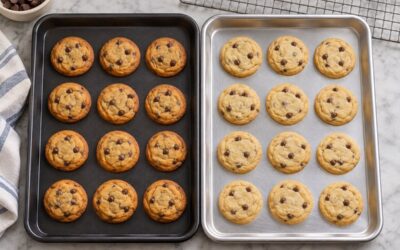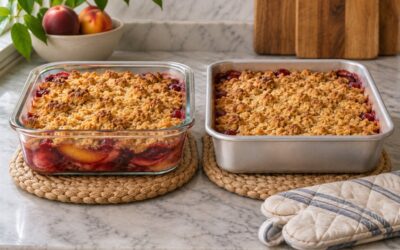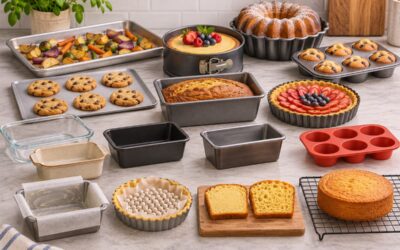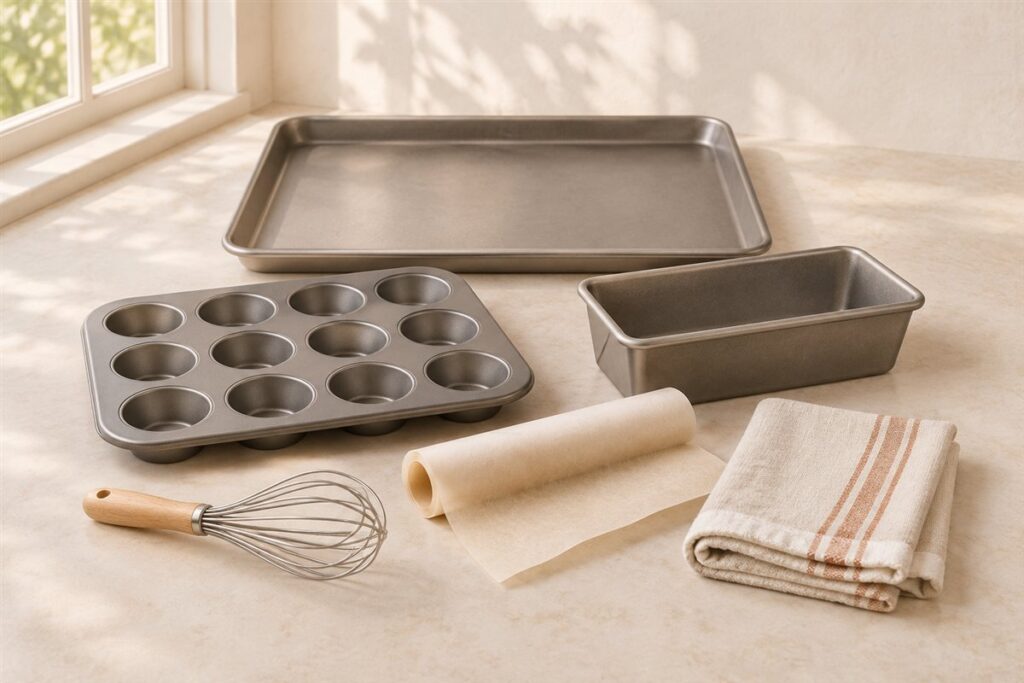
Bakeware warps when one part of the pan heats or cools faster than another, causing the metal to flex. You can reduce the risk by avoiding sudden temperature changes, choosing sturdier pans and following the maker’s oven limits. Some pans still bend with age, but good habits help.
Why Pans Warp
Metal expands when hot. If the center warms before the edges, or if cold water hits a hot pan, the pan flexes and may stay bent, often with a pop or click. Thin pans without a rolled rim are more prone because they have less stiffness.
Everyday Habits That Help
- Let a hot pan cool on a rack or trivet before washing it. Never plunge it into cold water.
- Fill the pan evenly. A large pan with a small clump of food in one corner heats unevenly.
- Do not place a cold pan into an oven that is far above the recipe’s temperature.
- Use the oven rack position the recipe suggests so heat reaches the pan evenly.
- Check the maker’s guide for the highest oven temperature the pan can take.
What to Look for When Buying
| Feature | Why it helps | What to check |
|---|---|---|
| Thicker gauge metal | Resists flexing under heat | Compare weight and stiffness in the hand |
| Rolled or reinforced rim | Adds rigidity around the edge | Look at the edge profile |
| Corner construction | Strong corners hold the shape | Check for welded or folded corners |
| Fits the oven | Prevents crowding and hot spots | Measure oven width and depth |
Storing and Fixing Bends
- Stack pans with care and avoid heavy items on top.
- Dry them fully before storing.
- If a sheet pan has a small warp, it may flatten again as it heats, which is normal.
- A pan that rocks badly on a flat surface can make food bake unevenly; you may prefer to replace it.
Avoid trying to bend a pan back by force, since this can crack coatings or weaken seams.
A Quick Routine
After baking, set the pan on a rack and leave it alone until it is cool enough to handle. Wash it with warm, not freezing, water, and dry it right away. Over time this simple routine does more to protect the shape of the pan than any special product. If your oven has strong hot spots, rotate the pan halfway through baking so heat is shared more evenly.
Material and Gauge Differences
How a pan is made affects how it handles heat stress. Aluminum is light and heats evenly, and thicker gauges resist flexing better than thin ones. Steel pans are stiff and can be strong, but they conduct heat differently and may need care to avoid rust. Aluminized steel combines a steel core with an aluminum coating. Glass and ceramic do not warp in the same way but can crack if shocked by sudden temperature change.
Gauge, or thickness, is often not listed in exact terms, so use weight and stiffness as a guide. Flex the pan gently in your hands if you can; a pan that bends easily under light pressure is more likely to warp. Heavier is often sturdier, but check the construction.
- Thin and light: more likely to flex.
- Thick and heavy: usually more stable, though slower to heat.
- Reinforced rims: help hold shape.
Read the product listing for construction details and the maker’s oven limits.
Oven Habits That Reduce Stress
What happens in the oven matters. Preheat fully so the pan is not exposed to a rapid jump in temperature while the oven is still heating. Avoid placing a cold pan directly over a very hot element or against the oven wall. Keep pans centered on the rack so heat reaches all sides evenly.
Do not overload one end of the pan with heavy food, since uneven weight and uneven heating add to stress. If you are roasting at high temperature, use a pan rated for it. Check the maker’s guide for the maximum safe temperature, as some coatings and constructions have limits.
Cooling is as important as heating. Take the pan out and set it on a rack or trivet to cool gradually. Avoid putting it on a cold, wet surface, since that can create sudden contrast. Broiler use deserves extra care, because intense direct heat can distort thin pans quickly.
Pan Size and Oven Crowding
Pans that are too big for the oven restrict airflow, create hot spots and can touch the oven walls. Measure your oven interior before buying, and leave space around the pan. A pan that fits snugly can block heat circulation, so edges brown faster than the center.
When baking two pans at once, stagger them on separate racks and leave space so air flows. Rotate them partway through if your oven heats unevenly.
- Measure oven width, depth and rack spacing.
- Leave a gap between the pan and the oven wall.
- Do not stack pans in the oven.
Larger pans are more likely to warp because they have a greater span that can flex. If you often bake big batches, choose a sturdy pan, or use two smaller pans. A pan sized to fit your oven and your typical recipe gives better results with less stress.
Handling and Cooling After Baking
What you do right after baking can make or break a pan. Always use mitts when handling hot pans, and place them on a rack or trivet. Do not run cold water over a hot pan, and avoid placing it on a cold stone countertop, which can be a cold surface and may be damaged by heat.
Let the pan cool until it is warm to the touch before washing. If food is stuck, soak after cooling, not before. Dry thoroughly before storing.
If the pan pops or clicks, give it a moment. This is often the metal relaxing as temperatures even out. After cooling, check that it lies flat. If you notice a new bend, review what changed in your routine. Different recipes, higher temperatures or a different oven position might explain it. Making small changes can prevent repeat warping, and keeping notes helps you spot a pattern.
Deciding When to Replace a Warped Pan
Some warping is minor. A pan that flexes during heating and returns to flat when cool is usually fine. A permanent bend that makes the pan rock on a flat surface can cause uneven baking, with oil or batter pooling to one side.
Consider replacing a pan when it no longer sits flat, when the warp affects food results, or when it has cracked seams or coating. A pan with a bent rim that does not fit in your oven or rack also falls into this group.
Do not try to flatten a warped pan by hammering or pressing, since this can damage the finish and weaken the metal. If your pan is still under warranty, check the terms. When you replace it, consider a thicker pan with a reinforced rim, and apply the habits above to protect the new one. A pan with a small warp can still be used for tasks that do not need a flat surface, such as roasting vegetables, if it is safe and stable.
FAQ
Is a popping sound a problem?
Usually not. It often means the metal is flexing as it heats, and many pans return to shape as they cool.
Do heavier pans warp less?
Generally, thicker metal resists warping better, but all pans can bend if mishandled.
Can a warped pan be fixed at home?
Forcing a pan flat can damage coatings and seams, so it is generally not advised. If the warp is small, you may be able to keep using it, otherwise consider replacing it.
Do dark pans warp more than light ones?
Dark pans absorb more heat and may brown faster, but warping depends mostly on thickness, construction and temperature changes. Check the maker's guide.
Is it safe to put a hot pan on a cold stovetop?
Setting it on a rack or trivet is better. A hot pan on a cold, wet or stone surface can cause sudden temperature shock.
Does preheating the pan cause warping?
Some recipes call for a preheated pan, and sturdy pans handle it. Thin pans may flex, so follow the maker's guidance.
How can I tell if a pan is too thin?
A pan that bends under light pressure or feels flimsy is likely thin. Compare weight and stiffness against other pans.
Can glass bakeware warp?
Glass does not warp like metal, but it can crack or shatter with sudden temperature changes. Follow the maker's care instructions.
The Short Version
Keep temperature changes gradual, let pans cool before washing, and choose thick pans with reinforced rims. Follow the maker’s temperature limits and replace any pan that no longer sits flat.