Seasoning a wok means baking thin layers of oil onto bare metal until the surface turns dark and slick. After that, care is mostly about washing gently, drying right away and adding a light film of oil. Follow your wok maker’s directions, since the exact method differs between brands and materials.
Before the First Seasoning
New carbon steel woks often come with a protective factory coating. Many makers ask you to scrub it off with hot water, soap and a sponge. Rinse, then dry the wok over low heat until every drop of moisture has gone.
In this guide
Seasoning, Step by Step
- Open a window or turn on the vent fan, because smoke is normal.
- Heat the dry wok on medium until the metal changes color slightly.
- Turn off the heat and let it cool a little.
- Wipe a very thin coat of high-heat cooking oil across the whole inside using a folded paper towel.
- Heat again until the oil stops smoking, then let it cool.
- Repeat the oiling and heating a few times, building each layer thin.
Thick oil turns sticky rather than hard, so use less than you think you need. Handle with oven gloves, because the whole wok gets hot.
Everyday Cooking and Cleaning
- Cook fatty foods first in the early days to help the layer build.
- Avoid long simmers of acidic sauces, which can dull the surface.
- Wash with hot water and a soft brush. Some cooks skip soap, though a drop of mild soap will not ruin a well-built layer.
- Dry on the burner for a minute, then rub in a whisper of oil.
Fixing Common Problems
| Problem | Likely cause | Remedy |
|---|---|---|
| Orange spots | Moisture left on the metal | Scrub lightly, dry, re-season |
| Sticky patches | Oil layer too thick | Heat the wok longer or scrub and redo |
| Flaking | Layer applied unevenly | Scrub loose bits and rebuild |
Heat control is part of wok care. Because the shape concentrates heat at the bottom, small amounts of food move around the base quickly while the sides stay cooler. Add ingredients in small batches, keep them moving, and give the pan a moment to regain heat between rounds. A crowded wok steams instead of searing, and it can strip the seasoning faster.
If you store the wok for a long time, apply a slightly heavier film of oil, wrap it loosely in a cloth or paper towel and keep it somewhere dry. Check it occasionally for damp spots. A wok that has rusted is not ruined: scrub the rust off with a nylon pad, dry it and season it again from the first step.
Wok Materials and How Each Is Treated
Not every wok needs seasoning, so it helps to know what yours is made of before you pick up the oil. Carbon steel is the classic choice for seasoning. It starts as bare metal and gradually develops a dark, slick layer. Cast iron woks are similar but heavier and hold heat longer, and they also develop a seasoned layer. Both need regular drying and light oiling to prevent rust.
Stainless steel woks are not seasoned in the traditional way, though many cooks still preheat and oil them to reduce sticking. Nonstick woks have a factory coating that should not be seasoned with high heat, and the maker will usually warn against metal utensils and empty preheating. Enameled and aluminum woks have their own care routines. If you are unsure, check the packaging, the product listing or the manufacturer’s guide to confirm.
- Carbon steel and cast iron: seasoned over time, need drying and oiling after washing.
- Stainless steel: washes more simply, but benefits from careful preheating.
- Nonstick: follow the maker’s heat limits and use gentle tools.
The shape matters for care as well. Round-bottomed woks need a ring stand or a suitable burner, and flat-bottomed woks suit many flat cooktops. If the base does not sit flat on an induction or electric element, heating may be uneven and the seasoning will build up unevenly too. Check the compatibility notes for your cooktop before use.
Handles come in wooden, metal and helper-loop styles. Wooden handles can scorch if the flame wraps around the side, and some should not be soaked. Riveted handles need occasional checking for looseness. Weigh the pan in your hand: you will lift and toss it, so comfort matters as much as material.
Cooking Habits That Build the Surface
Seasoning does not stop after the first few oven or stovetop coats. Everyday cooking is what builds a durable surface. Each time you cook with oil, a very thin layer is added, and the surface gradually darkens and gets smoother. Use your wok often rather than saving it for special meals, because regular use does more for it than occasional intensive treatments.
Some practices help. Preheat the empty wok before adding oil so the metal is hot and the oil spreads thinly. Add enough oil to coat the surface, and keep food moving so it does not scorch. Cooking fatty foods, such as meats with some fat, helps to build the layer in the early days. Frying vegetables in a little oil does as well.
A few habits can set you back. Cooking highly acidic dishes, like tomato-based or vinegar-heavy braises, for a long time can strip a developing layer. Boiling or steaming for extended periods can have a similar effect, though a short steaming session is generally fine on an established surface. Using metal utensils roughly can scratch it, though many carbon steel woks are designed for metal spatulas, so check the guide.
- Preheat gradually to avoid warping, especially on a strong burner.
- Do not leave an empty wok on high heat unattended.
- Rotate the wok on the burner so heat reaches the sides.
If food sticks, resist the urge to scrub aggressively. Add a little water, simmer to loosen it, scrape gently and re-oil. Over time, patches will fill in. The surface reaches its best condition after months of regular cooking, not after one session.
Handling Rust, Warping and Damage
Even careful cooks occasionally find rust, and in most cases it is fixable. Orange spots or a rough brown patch mean moisture was left on bare metal. Scrub the area with a nylon pad or a stiff brush until the rust is gone and bare metal shows, rinse, dry completely over low heat and apply a thin coat of oil. Then reseason the affected area following the earlier steps. If rust is widespread, the whole wok may need to be stripped and seasoned from the start.
Warping is more serious. Rapid temperature changes, such as plunging a hot wok into cold water, can bend the metal, and a warped base wobbles on the burner and heats unevenly. Let the wok cool before washing, and avoid exposing it to sudden changes. Some mild warping on thin pans is normal under heat and may settle as it cools. Persistent warping that prevents stable use may be a reason to replace the pan.
Check handles regularly. Loose rivets or screws can make a heavy, hot wok unsafe, and some can be tightened according to the maker’s guidance. Wooden handles that crack or char should be replaced if possible.
- Peeling or flaking on a coated wok means the coating has failed and the pan should be replaced.
- Deep cracks in cast iron are a safety concern and the pan should be retired.
- A persistent bitter smell even after cleaning may signal burnt-on oil that needs scrubbing.
Keep a simple repair routine in mind: scrub, dry, oil, heat. It solves most problems, and it costs only time. If the damage goes beyond cosmetic, be willing to replace the wok rather than risk uneven or unsafe cooking.
Cooktop and Burner Considerations
How you heat a wok changes how you care for it. On a gas burner with a ring stand, a round-bottomed wok can sit low and take in heat across the base. On an electric coil or a smooth-top range, contact matters, so a flat-bottomed wok usually performs better. Induction cooktops need a magnetic base that sits flat on the surface, and many round woks are not suitable, so check the compatibility details in the listing.
Burner size also plays a role. A very large burner can heat the sides unevenly, and a small one can leave much of the pan cool. Ideally, the heat source should be close to the size of the base. If your burner is weak, cook in smaller batches so the pan can recover temperature, and preheat the wok thoroughly before the first ingredient goes in.
When seasoning, the heat source matters as well. Gas burners allow you to tilt and rotate the wok to heat the sides, while electric surfaces limit that. In an oven, seasoning is more even, but some woks, especially those with wooden handles, cannot go in. Check the guide before putting a wok in the oven.
- Use a stable ring if recommended, and keep the handle clear of open flame.
- Ventilate well: high heat and oil produce smoke.
- Keep a lid or splatter guard within reach.
If you are shopping for a wok to match a specific cooktop, check the base diameter, the flat area of the base, and the maker’s notes for induction or glass tops. A mismatch makes both cooking and care harder.
Long-Term Storage and Knowing When to Start Over
A wok that sees regular use needs only a dry spot and a light film of oil. If you store it for weeks or months, extra steps help. Wash, dry thoroughly over low heat, and rub in a slightly thicker film of oil than usual, then wipe off any pools. Wrap it loosely in a cloth or paper, without sealing it in plastic, which can trap moisture. Hang it or place it on a shelf where it will not be crushed by heavy items.
Check stored woks occasionally for damp spots, a rancid oil smell or early rust. If you notice a stale or sour smell, wash and reoil. Oil can go rancid on the surface after a long time, though a quick scrub and reseasoning will restore it.
Know when to start over. A seasoned layer that is flaking widely, thick and sticky across the surface, or covered in rust patches is easier to strip and rebuild than to patch repeatedly. Scrub with hot water, soap and a firm brush until the metal is bare, then repeat the seasoning steps. It takes an afternoon but returns a clean slate.
- Do not stack heavy items inside the wok.
- Keep it away from damp cupboards and sink areas.
- Label the date you last reseasoned if you like to track it.
Eventually, any wok can wear out. Consider replacement if the metal is thin, warped past use, cracked or if a coating has failed. Otherwise, a well-kept wok is a long-term tool.
Tools and Supplies for the First Seasoning
Seasoning a wok is a simple job, but it goes more smoothly when everything is ready before the heat goes on. Collect your supplies, and make sure your kitchen is ventilated, because the process can create smoke.
- A wok, washed and dried according to the maker instructions, especially if it comes with a protective coating.
- A high-heat cooking oil, chosen from those the maker or a trusted source suggests.
- Paper towels or a lint-free cloth for wiping.
- Tongs to hold the cloth and keep your fingers away from heat.
- A heat-safe surface where the wok can rest after seasoning.
- Oven mitts, and a kitchen with an exhaust fan or an open window.
Read the instructions that came with your wok first. Carbon steel, cast iron, stainless and nonstick woks each ask for different care, and only some of them need seasoning at all.
Which Wok Materials Need Seasoning
Not every wok needs the same routine, and treating them all alike can cause damage. The table summarizes the general picture, but the maker guidance always takes priority.
| Material | Seasoning | Care notes |
|---|---|---|
| Carbon steel | Yes, to build a protective layer | Dry thoroughly after washing; avoid long soaking |
| Cast iron | Yes | Heavy, retains heat; oil lightly after cleaning |
| Stainless steel | Not needed | Needs good heat control to avoid sticking |
| Nonstick coated | Not needed and usually not advised | Avoid very high heat and metal tools |
| Enameled | Not needed | Avoid sudden temperature changes |
If you are unsure what your wok is made of, check the packaging or the maker website.
Heat Control and Cooking Habits That Protect the Surface
A seasoned wok responds to how you cook. Preheat it gradually, and add oil only when the pan is warm. Avoid leaving acidic foods such as tomatoes or vinegar-based sauces in the wok for long periods, since they can strip seasoning. Use wooden, bamboo or silicone tools that will not scratch.
Cook with enough oil to coat the surface, and move the food as the recipe directs. If food sticks, do not scrape hard. Let the pan cool a little, add a splash of water to loosen the residue, and wipe clean. Cooking fatty foods such as bacon or sausage in a new wok can help build seasoning naturally. Over time, your wok will darken, and that is normal.
Cleaning and Drying After Every Use
Good cleaning habits matter more than elaborate seasoning rituals. After cooking, wash the wok while it is still warm, using hot water and a soft brush or sponge. Many cooks avoid soap on a seasoned wok, though a little mild detergent is fine according to some makers, so check yours. Never put a seasoned wok in a dishwasher.
- Rinse with hot water, scrubbing off food with a brush.
- Dry immediately with a towel.
- Place on low heat for a minute to evaporate any remaining moisture.
- Wipe a very thin film of oil over the surface with a cloth.
- Let it cool before storing.
This quick routine takes a minute and prevents rust.
Handling Rust, Sticky Spots and a Stuck Seasoning
Even careful cooks occasionally face a problem. Light rust spots can often be scrubbed off with a non-metal scouring pad, then washed, dried and re-oiled. A sticky or tacky surface usually means too much oil was left on, and the wok may need a gentle wipe and a short heating to harden the layer. Flaking seasoning can happen if the layer was too thick, and may need scraping and re-seasoning.
If rust is widespread or the wok is deeply pitted, you may decide to strip it and begin again according to the maker or a reliable source. When in doubt, replace a wok that is cracked or warped. Never use a damaged cooking vessel on a gas flame or an electric element.
Matching the Wok to Your Cooktop
A wok works best when it suits the heat source. Round-bottomed woks sit well on a gas burner with a wok ring, where the flame wraps around the bowl. On flat electric or glass tops, a flat-bottomed wok keeps full contact with the surface. Induction cooktops need a magnetic base, so check the product details if you own one.
Always follow the maker instructions for your cooktop, particularly on glass surfaces, where a heavy pan can scratch. Do not use a ring on an induction top unless the maker allows it. Keep the handle turned away from the front of the stove and from other burners. If you are unsure about the compatibility of a wok with your range, ask the retailer or the cooktop maker before buying.
Simple Stir-Fry Habits That Keep the Surface Healthy
Good cooking habits help the surface as much as seasoning does. Cut ingredients into similar sizes so they cook evenly, and have everything ready before you heat the pan. Stir-frying moves fast, and pausing to chop mid-cooking can scorch food. Add ingredients in order, beginning with those that take longer, and move them around often.
- Preheat gradually until the pan feels hot over the surface.
- Add oil along the sides so it coats the wok as it runs down.
- Cook in batches if the pan is crowded, since too much food steams instead of sears.
- Use a long spatula or ladle to keep your hand clear of heat.
- Clean right after cooking while the pan is warm.
Following official food-safety guidance on meat and eggs remains important, whatever method you use.


Ready to Buy? Start Here
If this guide helped you decide what to look for, these products are a place to start.

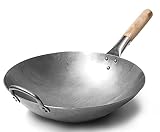
View Craft Wok Traditional Hand Hammered Carbon Steel Wok on Amazon

As an Amazon Associate we earn from qualifying purchases. Prices and availability are shown on Amazon.
Reading the Surface: What a Healthy Wok Looks Like Over Time
A seasoned wok rarely looks like the glossy black pan in a product photo, and learning to read its real appearance saves a lot of unnecessary stripping and re-seasoning. In the first weeks the surface is usually a patchwork: darker in the centre where the heat concentrates, lighter and slightly golden up the sides where food rarely reaches, and sometimes faintly streaked where oil pooled during a seasoning round. None of that is a fault. The centre darkens first because that is where oil polymerises most often, and the sides catch up gradually as you toss food higher and cook a wider range of dishes. What matters is behaviour, not colour. A healthy surface sheds water in beads, lets an egg slide with only a modest amount of oil once the pan is properly hot, and releases noodles or rice without leaving a welded crust behind.
Trouble has its own visual language. A surface that looks matte and feels slightly tacky when a fingertip is dragged across it usually carries oil that was applied too thickly and never fully hardened; that layer will feel gummy under a spatula and can turn rancid in storage. Shiny black flakes lifting away from the metal suggest the opposite problem: seasoning built up too fast over a dirty or greasy base, so it never bonded and is now peeling in sheets. A pale grey, almost silvery patch in the middle often means the seasoning burned off during an enthusiastic preheat on maximum power, which is cosmetic rather than fatal. Once you can tell these apart, your response becomes calmer: cook through the cosmetic issues, gently fix the tacky ones, and only strip the pan when seasoning is genuinely flaking into food.
A simple weekly check
Once a week, before you cook, hold the cold wok under your kitchen light and tilt it slowly. Look for rust freckles along the rim and around the handle rivets, where water hides. Run a dry paper towel over the interior; it should come away almost clean, with at most a faint brown tint. If the towel picks up black, sooty residue meal after meal, the surface is carrying loose carbon that a firm wash and a fresh stovetop seasoning round will settle. This two-minute habit catches small problems while they are still small, and it builds the familiarity that makes every later decision easier.
Seasoning in a Real Kitchen: Ventilation, Timing and Patience
Most seasoning guides describe the steps but skip the logistics, and the logistics are what make people abandon the job halfway. Seasoning produces smoke, so plan for it: open the nearest window, switch on the extractor before the oil goes in rather than after the room fills, and, if your smoke alarm sits close to the kitchen, expect it to have opinions. Many cooks find the job pleasanter on a dry day when windows can stay open, and some take a portable burner outdoors or into a garage with the door up, which removes the smoke problem entirely as long as the burner is stable and the surface beneath it is heatproof.
Timing matters as much as airflow. Give the whole process an unhurried slot when nobody needs the stove for dinner, because rushing the cooling between coats is how thick, soft layers happen. Each coat needs the pan hot, the oil thin to the point of near invisibility, and a few minutes of heating past the smoke point so the layer hardens rather than stays slick. Between coats, let the wok cool just enough that the next wipe of oil does not instantly boil and spatter. Four patient thin coats beat eight hurried ones, and the wok will tell you when a coat has taken: the surface loses its wet shine and settles into an even, satin finish.
Choosing the working oil by behaviour, not fashion
Home cooks argue about seasoning oils endlessly, but the practical test is simpler than the debate. You want a refined oil with a high smoke point, a neutral smell, and a texture that wipes out thin without beading. Grapeseed, refined avocado, plain vegetable oil and traditional flaxseed all appear in wok kitchens, and each has loyal defenders. The honest differences show up in handling: some oils form a hard layer that can flake if laid over a greasy base, while others build a slightly softer but more forgiving film. Whichever you choose, consistency helps, because you learn how that oil behaves at heat and stop guessing. What you cook with daily matters more than what you season with occasionally, since every stir-fry adds its own microscopic contribution to the surface.
Cooking Sequences That Build Seasoning Fastest
Not all cooking treats a young wok equally. The fastest seasoning builders are dishes that combine high heat, a generous film of oil and plenty of movement: stir-fried onions, fried rice tossed constantly, seared mushrooms, and batches of roasted peanuts or cashews moved around the pan. Aromatic bases are especially kind, because onions and scallions release moisture that lifts stuck bits while their sugars and the hot oil lay down fresh polymer. Many wok traditions deliberately begin a new pan’s life with a big batch of scallion oil, and the logic holds up: you season the pan and produce a flavourful cooking oil in the same session.
By contrast, a few habits slow a young surface down. Long, wet braises in the first weeks soften fresh seasoning, and acidic sauces simmered at length — tomato-based dishes, vinegar-heavy reductions — can dull a new layer noticeably. None of this is forbidden forever; a mature wok shrugs off an occasional braise. The point is sequencing. Give a newly seasoned wok a few weeks of mostly dry, hot, oily cooking before asking it to simmer a curry for an hour, and park acidic long cooks in another pan during that early period. Steaming is the exception that confuses people: steaming in a wok with a rack is gentle on seasoning because the water sits below the food and the pan’s walls stay mostly dry, so it can stay in the rotation from the start.
A gentle first fortnight of meals
If you want a rough plan, cook fried rice, a vegetable stir-fry with plenty of scallions, pan-fried dumplings finished with a splash of water and a lid, seared tofu with a sauce added only at the end, and noodles tossed at high heat. Each of those meals is a seasoning session in disguise. By the end of a fortnight of near-daily cooking, most woks have settled into the easy, semi-slick behaviour people hope for, and from then on the pan mostly maintains itself.
Washing Decisions: Water, Soap, Brushes and Soaking
Cleaning advice for woks tends to be given as commandments, but it makes more sense as a ladder of escalation. Start with the gentlest thing that works. Most nights that is hot water and a bamboo brush or a soft sponge while the pan is still warm, which lifts the evening’s residue without touching the seasoning. Dried-on starch, such as the film rice leaves, responds to a short soak in hot water far better than to aggressive scrubbing; ten minutes of patience replaces a minute of damage. A small amount of ordinary dish soap is not the catastrophe older advice suggests, because modern detergents are far milder than the lye soaps that created the rule, and a well-bonded seasoning layer is a hard polymer, not a coating of grease waiting to dissolve. Use soap when the pan cooked something fatty or strongly flavoured that you do not want in tomorrow’s breakfast.
Reserve the heavy tools for genuine trouble. A chainmail scrubber or a firm paste of salt and a little oil can shift carbonised patches without gouging, and a brief boil of water in the pan loosens burnt sauce remarkably well. What to avoid is the long overnight soak, which invites rust along every scratch, and the dishwasher, whose detergents, prolonged heat and rattling racks combine everything a carbon steel pan dislikes. After any wash, the non-negotiable steps are the same: dry the wok completely on the burner, let it cool a little, and wipe in the thinnest possible film of oil if it will sit unused for days.
Drying is the real rust prevention
More woks rust from damp storage than from washing. Water hides in the seam where the handle meets the body, under the rim, and in any helper handle, so tilt and turn the pan over the heat rather than just warming the base. If your kitchen is humid, or the wok lives in a cupboard against an outside wall, that final whisper of oil matters more, not less. Cooks in coastal climates often store the wok with a sheet of paper towel inside to absorb ambient moisture, a humble trick that works.
Matching Technique to Dish: Heat, Oil and Movement
Caring for a wok and cooking well in it are the same skill viewed from two sides, because good technique is what keeps the surface improving. The classic sequence — heat the wok first, then add oil, then food — prevents sticking in a way that protects seasoning, since food that does not weld itself to the metal does not need to be scraped off later. Give the oil a moment to shimmer and just begin to smoke before the ingredients go in, and resist crowding: an overloaded wok drops in temperature, food steams in its own juices, and the resulting stuck layer is what sends people reaching for abrasive pads. Cooking in two smaller batches is kinder to both dinner and pan.
Movement is the other half. A wok is designed for food to travel — up the curved walls, back through the hot centre — and that constant motion evens out the seasoning as it cooks, polishing the centre and gradually darkening the sides. If your stove or confidence does not suit tossing, a long spatula used in a folding, lifting rhythm achieves nearly the same result. The one habit to retire is dragging metal utensils flat and hard across the surface as scrapers; use them to lift and turn, and let hot water do the cleaning work afterwards.
Teaching Someone Else: Passing On a Seasoned Wok and Its Habits
A wok is one of the few kitchen tools that improves with age, which makes it a common hand-me-down — and a common source of confusion for the person receiving it. If you pass a seasoned wok to a family member or a friend moving into their first kitchen, the most valuable thing you can send with it is not the pan but the routine: wash warm, dry on heat, oil lightly if it will sit. Write it on a card and tape it inside a cupboard at the new home if you must. Without that knowledge, a well-meaning new owner will often soak the pan overnight or run it through a dishwasher in the first week, undoing years of patient cooking in a single cycle, and conclude wrongly that seasoned pans are fragile and fussy.
The receiving end has its own etiquette of assessment. A gifted or second-hand wok should be inspected before its first meal: check for rust patches, especially under the rim and around the handle fixings, test whether the base sits flat or rocks, and smell the interior — old, rancid oil announces itself clearly. A wok that passes those checks usually needs nothing more than a firm wash, a dry on the heat and one fresh stovetop seasoning round before it cooks beautifully again. Seasoning is renewable in a way that few kitchen surfaces are, which is the deep reason these pans stay in families for decades.
Buying a used wok with confidence
Second-hand woks appear in charity shops and market stalls regularly, and they can be excellent value because the material is nearly indestructible. What you are really buying is the metal: sound, unwearped carbon steel with tight handles can always be cleaned and re-seasoned back to life. What should make you walk away is deep pitting from rust, a crack near a handle rivet, or a base so warped that the pan spins on a flat surface. Surface rust, blackened patches and ugly seasoning are cosmetic and temporary; structural damage is forever. Price your effort accordingly — a sound old wok plus one afternoon of restoration is one of the best bargains in cooking.
When the cook changes: adapting an established wok to a new kitchen
Sometimes the wok stays and the kitchen changes. Moving from gas to induction, or from a powerful burner to a modest one, changes how the same pan behaves: the seasoning may darken unevenly for a while, the centre may need longer preheats, and dishes that relied on fierce heat need adjusting rather than the pan needing re-seasoning. Give an established wok a month in its new home before judging it. The polymer layer you built is tougher than it looks, and in almost every move it adapts — because seasoning was never a coating applied once, but a living surface that each kitchen continues to write on.
Seasoning Myths That Refuse to Die
A few durable myths send wok owners in circles, and it is worth retiring them plainly. The first is that a wok must be seasoned a great many times before its first meal. In truth, a few thin, well-baked coats plus ordinary cooking will outperform a marathon of coats applied to a pan that then sits idle, because cooking is seasoning continued by other means. The second myth is that any use of soap strips the pan to bare metal. As this guide explains, modern detergents are mild, and a bonded seasoning layer is a hard polymer film, not a layer of grease; the wok that is washed sensibly and dried properly keeps its surface for years. The third myth is that a blotchy wok is a failed wok. Colour evens out slowly and unevenly, and performance arrives long before beauty does.
The fourth myth causes the most actual damage: that sticking food means the seasoning is ruined and the pan must be stripped. Sticking is usually a technique report — the pan was not hot enough before the oil, the oil was not hot enough before the food, or the food was crowded and steamed — and the cure is adjusting the cooking, not punishing the pan. Strip a wok for flaking, for deep rust, or for a gummy layer that never hardened; for everything else, wash it, dry it, season it lightly on the stove and cook dinner. Patience is the whole secret, and it has the advantage of being free.
A calm troubleshooting order
When something seems wrong, work through the same order every time: look, touch, smell, then act. Look for rust, flaking or pooled grease. Touch for tackiness. Smell for rancid oil. Most problems announce themselves to one of those three checks, and each has a modest remedy somewhere in this guide. Acting in a fixed order stops the common spiral of stripping first and diagnosing later, and it keeps a good pan in service while you solve a small problem.
FAQ
Which oil is used for seasoning?
People commonly use oils with a high smoke point. Your maker’s guide may name a preference, so check it.
Does a wok need to look perfect?
No. Uneven dark patches are normal and the surface keeps improving with use.
Do all woks need to be seasoned?
No. Carbon steel and cast iron woks are seasoned, while nonstick and some other types are not. Check what your wok is made of and follow the maker's guide.
Why did my wok turn brown or blotchy?
Uneven color is normal and comes from heat and oil reacting on the metal. It usually evens out with use and is not a fault.
Can I use soap on a seasoned wok?
A drop of mild soap is generally acceptable on an established layer, but follow the maker's guide. Rinse well and dry on the burner.
Can I put my wok in the dishwasher?
Carbon steel and cast iron should not go in the dishwasher, because it strips the seasoning and causes rust. Check the guide for other materials.
How do I clean a wok that has burnt-on food?
Add water and simmer to loosen it, then scrape with a wooden or flat utensil. Reoil lightly afterward.
Is smoke during seasoning normal?
Yes, some smoke is expected as oil heats. Ventilate the room and keep the oil layer thin to limit it.
Can I cook with an oven-seasoned wok straight away?
Usually yes, once it has cooled and you have followed the maker's instructions. Expect the surface to improve with use.
How long does it take for a new wok to feel properly non-stick?
With near-daily cooking, most carbon steel woks feel noticeably easier within two to three weeks, and genuinely settled after a couple of months of regular use. The timeline depends far more on what you cook than on the calendar: fatty, high-heat dishes build the surface quickly, while frequent wet or acidic cooking slows it down. Judge progress by behaviour — eggs releasing, noodles not welding — rather than by chasing a uniform black colour, which can take much longer and is not required for good performance.
My seasoning looks streaky after the first round. Should I start again?
Almost never. Streaks usually mean the oil was slightly thicker in places, and the cure is cooking, not stripping. Use the wok normally for a week or two, letting everyday meals even the surface out, and add one thin stovetop seasoning round if a particular patch still feels tacky. Starting over is reserved for seasoning that is flaking into food, rust that has pitted the surface, or a layer so thick and gummy that food sticks worse than it did on bare metal.
Can I season a wok on an induction hob?
Yes, with a flat-bottomed wok that makes full contact with the glass. Work in shorter bursts and move the pan occasionally, because induction heats the contact patch intensely and can overheat one ring of the pan while the sides lag. Oven seasoning is often the easier route for induction owners, since the heat surrounds the whole wok evenly, and stovetop touch-ups afterwards are perfectly possible on the flat base.
What should I do if I will not use the wok for a month or more?
Wash and dry it thoroughly on the heat, let it cool slightly, and wipe in a thin film of oil over the whole interior. Store it somewhere dry with the lid off or ajar so air can circulate, and consider a sheet of paper towel inside to absorb ambient moisture in humid homes. When you return, give it a quick rinse, dry it on the burner, and cook something forgiving first; the surface will wake up within a meal or two.
Is it normal for the outside of the wok to look rough?
Yes. The exterior collects baked-on oil splashes and heat discolouration, and it does not need to be pretty. Keep it clean enough that old grease does not smoke excessively, scrub off anything flaking, and make sure the base that meets the burner stays flat and free of thick build-up so the wok sits steadily. Cosmetic effort belongs on the inside, where it affects your food.
Should I oil the outside of the wok too?
Lightly, yes, especially around the base and any bare patches where the factory finish has worn. The exterior does not need seasoning coats, but a whisper of oil after washing protects it from the rust that starts where splashes and steam reach bare metal. Wipe it almost dry; a heavy exterior coat only bakes into a sticky film that smokes against the burner. The handles and their fixings benefit from the same brief attention, since water hides there after every wash.
Why does food stick in one ring of the pan but not elsewhere?
A sticking ring usually maps to a cool ring: on some burners the flame pattern or the induction coil leaves an annulus that runs cooler than the centre and the edges, so food there never gets the quick sear that releases it. It can also mark where a previous seasoning coat pooled and stayed soft. The remedies are a longer, more even preheat, moving food through the ring rather than parking it there, and one thin stovetop seasoning round worked patiently over the whole surface. If the ring persists across many meals, it is the burner’s signature, not the pan’s failure.
The Short Version
Clean the new wok, bake on several thin coats of oil, and then cook often. Wash gently, dry on heat and oil lightly to keep rust away.