Disclosure: As an Amazon Associate, topratedkitchenware.com earns from qualifying purchases. Links on this page are affiliate links; they cost you nothing extra. Prices and availability change often, so check the current Amazon listing before you buy.
This loaf pan buying guide is for the buyer who wants the whole category explained before choosing: every material, every size question, every coating claim, translated into plain language and tied to the loaves you actually bake. A good loaf pan buying guide should leave you able to walk past a wall of near-identical pans and pick the right one in minutes, confident about why it is right. That is the standard this one sets itself. It surveys the types, puts the leading pans on the table early with honest badges, works through the deciding questions one by one, matches pans to baker profiles, reviews each pick properly, and finishes with setup, care, and the mistakes that turn good pans into disappointments. Read it once and the category is yours.
Loaf Pan Buying Guide: Key Takeaways
Key takeaways. Material is the master decision: pale metal for gentle, even bakes; dark coated metal for assertive browning and easy release; glass for visibility and versatility; stoneware for steady heat and oven-to-table service; silicone for specialist release jobs where browning matters less. Size is the second decision, and it belongs to your recipes, not to the shelf: match the pan your anchor formulas specify, fill it about two-thirds, and scale the pan when you scale the batch. Coating is a lifestyle decision — glorious for sticky batters, mortal under rough handling — while bare metal and stoneware trade a little preparation for a very long life. Construction details reward attention: heavier gauge metal resists warping, rolled rims add strength, and generous handles make the hot, full lift safer. Tier follows frequency: occasional bakers are well served at the entry tier, weekly bakers belong in the mid tier, and daily bakers and hosts can justify premium stoneware and heavyweight pans. Everything else in this guide is commentary on those five sentences. If you remember nothing else, remember the order of operations — recipes, material, coating, construction, tier — because buyers who decide in that order rarely regret the pan that comes home with them, while buyers who start with tier or with a photograph routinely do.
In this guide
What a Loaf Pan Does and the Main Types
Standard Metal Loaf Pans
The standard metal loaf pan is the category’s reference design: a deep, narrow rectangle in aluminium or aluminised steel, sometimes coated, sometimes bare, made to shape everything from sandwich bread to pound cake. Its virtues are responsiveness and predictability — metal heats quickly, browns honestly, and lets you correct a bake in progress — and its variations are where the buying interest lies. Pale bare metal is the traditional bakery surface, gentle on crust colour and essentially immortal. Coated metal adds easy release for sugary batters and faster, deeper browning that flatters crusty loaves. Within this family, gauge is destiny: substantial pans stay flat and heat evenly for decades, while flimsy ones warp, hot-spot, and teach their owners to distrust their own recipes. If you buy one loaf pan and no other, it will almost certainly come from this family, and the rest of this guide is largely about choosing well inside it.
Glass Loaf Pans
Glass pans trade metal’s responsiveness for visibility and versatility. You can watch a loaf’s sides and base colour as it bakes, which observant bakers love, and the same dish moves gracefully between sweet loaves, meatloaf, terrines, and frozen desserts. Glass holds heat after the oven, so loaves keep setting in the pan and should be rested briefly and turned out rather than left to steam. It also asks for thermal courtesy: sudden temperature shocks, such as a hot dish set on a cold wet surface or cold liquid added to a hot dish, are glass’s known weakness and are easily avoided with a trivet and a moment’s thought. For households that want one vessel doing sweet, savoury, and chilled work at an entry tier, glass is a rational and popular answer.
Stoneware and Ceramic Loaf Pans
Stoneware bakes the way a good oven cooks: slowly, steadily, and evenly, with a gentle heat that produces moist crumbs and handsome, well-coloured crusts. Its defining trait is presentation — the pan is the serving dish, travelling from oven to table and then to the fridge with the leftovers — which makes it the natural choice for bakers who entertain and for gift loaves delivered in their pan. The costs are weight, which is considerable when the pan is full and must be lifted with both gloved hands, and the same dislike of sudden temperature change that glass has, managed the same way. Stoneware sits at the premium tier and justifies itself to hosts, regular bakers, and anyone who values a bake that stays warm at the table.
Silicone Loaf Pans
Silicone pans are the specialists of the family: flexible walls that release even sticky, delicate loaves with almost no preparation, light weight, and easy storage. Their trade-offs are structural — soft walls give rising doughs less support and can bulge, crusts brown less because the material insulates rather than conducts, and a full silicone pan is a wobbly lift that wants a supporting tray underneath. They also carry manufacturer heat limits that must be respected as a matter of course; follow the maker’s guidance for your specific pan rather than treating silicone as indestructible. For bakers whose priority is release above all — sticky fruit loaves, delicate cakes — silicone earns a place, usually as a second pan beside a metal standard rather than as the household’s only loaf vessel.
Pullman and Specialty Loaf Pans
The pullman pan, with its sliding lid, exists to produce the perfect sandwich loaf: straight sides, a fine and even crumb, and a thin crust that slices without tearing. It is a genuine specialist — superb at its one job, unnecessary for every other — and regular sandwich-bread households find it transformative while occasional bakers find it ornamental. Around it orbit the other specialties: long narrow pans for elegant tea loaves, mini pans that turn one batch into several fast-baking gifts or freezer portions, and perforated designs that chase crisper crusts. The buying rule for all of them is sequence: standard pan first, proven habit second, specialty third. Bought in that order, specialties delight; bought first, they gather dust.
Top Picks at a Glance
The table below badges the guide’s picks by the job each does best. All are presented prose-only in this guide, as type examples of their material families; check the current listing for the size and finish you need before you buy.
| Pick | Badge | Tier | Best For |
|---|---|---|---|
| USA Pan Bakeware Loaf Pan | Best Overall | Mid | Weekly quick breads and loaf cakes |
| Nordic Ware Natural Aluminum Loaf Pan | Best for Longevity | Entry to mid | Yeast loaves and buy-once bakers |
| Le Creuset Stoneware Loaf Pan | Best for Serving | Premium | Oven-to-table bakers and hosts |
| OXO Good Grips Non-Stick Pro Loaf Pan | Best Coated Alternative | Mid | Sticky batters, easy cleanup |
| Pyrex Basics Glass Loaf Pan | Best Versatility | Entry | Sweet, savoury, and chilled loaves |
| Wilton Perfect Results Loaf Pan | Best Budget Starter | Entry | New and occasional bakers |
Badges are starting points, not verdicts: the sections that follow explain the criteria behind them, and the mini-reviews later in the guide give each pick its honest strengths, trade-offs, and best-for line. Readers who want the single-product deep dive can continue to our in-depth loaf pan review, and those still deciding whether the category belongs in their kitchen at all should start with is a loaf pan worth it. Note also what the table quietly demonstrates: this category has no single winner, because it is not one job. Six pans, six different households perfectly served — and somewhere in that spread is the pan whose description reads like a portrait of your own baking life. Finding it is a matter of recognising your habits in print, which is a more reliable method than chasing a universal champion that does not exist.
How Much Capacity Do You Need?
Capacity is the question buyers most often answer by eye and regret by loaf. A pan’s job is to hold your batter at the right depth: filled about two-thirds, a loaf has room to rise, wall support to climb, and enough thermal mass around it to bake the centre before the crust over-colours. Underfill a large pan and the same batter spreads thin, bakes fast and dry, and domes poorly; overfill a small one and it spills, mushrooms, or stays gummy in the middle. The practical method is unglamorous: read your three favourite loaf recipes, note the pan they specify, and buy that size first. If you scale recipes, scale pans — half batches belong in smaller pans, not rattling around in big ones. Households that bake for crowds or freezers should consider a matched pair in the standard size before they consider a giant, because two standard loaves bake more evenly, freeze in better portions, and give you a gift loaf and a house loaf from a single mixing. Capacity, in short, is a recipe question wearing a shopping costume. Treat any urge to buy the largest pan on the shelf as a prompt to re-read your recipes, not as a strategy.
Which Material Suits Your Baking?
Ask what your loaves need from heat. Sweet, pale, tender bakes — tea breads, pound cakes, sandwich loaves — want moderation, and pale metal gives it, reflecting some heat and letting centres finish before crusts darken. Assertive browning — burnished banana bread tops, firm yeast crusts — is dark coated metal’s gift, provided sugary batters are watched and the bake adjusted as the pan maker suggests. Bakers who cook by eye and serve from the dish should weigh glass and stoneware: glass for visibility and versatility, stoneware for steadiness and presentation, both asking for gentle thermal handling and prompt turning-out so retained heat does not steam a crust soft. Bakers whose nemesis is sticking should look honestly at coated metal and silicone, accepting their care terms. And bakers who want the question settled for decades should look at bare metal and stoneware, the two materials with effectively no surface to wear out. There is no wrong answer here, only mismatches — and the wider bakeware context in glass bakeware sets for oven use and non-stick bakeware sets compared can help you place your household on the material map.
Coated or Uncoated: How Will You Actually Treat It?
This is the question where honesty outperforms aspiration. A quality coating, treated as its maker directs — non-metal tools, gentle washing, no cutting in the pan, respect for the maker’s heat guidance — will release sticky loaves beautifully for years and make washing up a minor event. The same coating in a household where pans are scrubbed by rotation, stacked unprotected, and portioned with a steel knife will look tired quickly, and its owner will conclude, wrongly, that coated pans are a con. Uncoated metal inverts the bargain: it asks for greasing, flouring, or a parchment sling on every sticky bake, and in return it is nearly indestructible, indifferent to utensils, and content with a firm scrub. Stoneware and glass stand outside the argument, releasing well when greased and never peeling. Decide by picturing your sink on a tired Tuesday, not your intentions on a bright Sunday, and the coating question answers itself. If your household contains both careful and careless washers, let the careless ones set the specification — pans are washed by whoever is standing at the sink, not by whoever read the care label.
How Much Does Construction Quality Matter?
More than the price gap suggests, because construction is where a pan’s decade is decided. Gauge — the substantial feel of the metal — predicts flatness under heat, evenness of browning, and resistance to the dents that make pans rock on racks. Rolled or reinforced rims are a small detail with an outsized effect, stiffening the pan and giving gloved hands a secure edge. Seamless or smoothly finished interiors clean faster and release better than creased ones. Handles deserve a hard look: extended, well-shaped grips are a safety feature on a vessel that is lifted full and hot, always with proper oven gloves, onto a landing space cleared in advance. None of this requires the premium tier; it requires reading listings for construction specifics rather than adjectives, and preferring makers who describe their pans in concrete terms. A well-built mid-tier pan will out-bake and out-last a flimsy pan at any tier of marketing. Construction is also the quality least visible in a photograph and most visible in the hand, which is why experienced buyers weigh a pan — literally — before they read its claims.
How to Prioritise by Use Case
For the weekly sandwich-bread baker, priorities run: correct size for the house formula, sturdy pale metal, straight sides, and a pullman as the one upgrade worth planning. Release barely matters — yeasted dough is obliging — while structure and evenness decide every slice. For the quick-bread and loaf-cake baker, priorities invert: release and browning control lead, so coated or pale metal with a parchment habit, in the size the favourite recipes name. For the host and gift baker, stoneware or handsome glass leads, because the pan’s second job at the table is half its value, and weight is accepted as the price of presentation. For the small-kitchen all-rounder, one versatile glass or coated metal pan in the standard size, chosen for the household’s dominant bake, beats a stable of specialists. And for the new baker, the priority is forgiveness: a sound entry or mid-tier pan in the standard size, a forgiving first recipe, and permission to learn the pan’s personality over a few bakes. Each profile is a different shopping list drawn from the same category — which is why this guide insists on profiles before products. Profiles also protect you from the commonest reviewing trap: envying a pan that suits a stranger’s baking life beautifully and your own hardly at all.
The Picks, Reviewed in Miniature
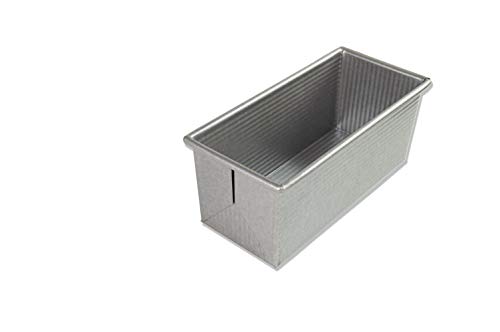
USA Pan Bakeware Loaf Pan — Best Overall
The corrugated, coated design brief here is release plus evenness, and for the centre of the market — weekly quick breads, loaf cakes, the occasional yeast loaf — it is the most complete answer in the category. Sugary batters let go cleanly, crusts colour evenly, and washing is brief. Strengths: excellent release, even browning, sturdy feel. Trade-offs: a coating to treat kindly, and browning assertive enough that delicate pale bakes want watching. Best for: the weekly all-round baker. Not suited for: households that scrub first and read care labels later.

Nordic Ware Natural Aluminum Loaf Pan — Best for Longevity
Bare aluminium, honestly made, is the pan your grandchildren could argue over. It heats evenly, browns gently, shrugs off utensils and firm cleaning, and asks only for greasing or a parchment sling in return. Strengths: gentle even heat, near-immortal surface, entry-to-mid tier value. Trade-offs: sticky batters need preparation, and it will never have a coating’s zero-effort release. Best for: yeast bakers and buy-once households. Not suited for: bakers who want sticky loaves to fall out untouched.
Le Creuset Stoneware Loaf Pan — Best for Serving
Stoneware’s steady heat gives moist crumbs and handsome crusts, and the pan then walks to the table looking like it belongs there. Strengths: even, gentle baking; oven-to-table presentation; leftovers store in the dish. Trade-offs: real weight when full — lift with both gloved hands — and a need to avoid sudden temperature changes. Best for: hosts, gift bakers, bake-and-serve households. Not suited for: bakers who want the lightest, fastest pan for batch baking.
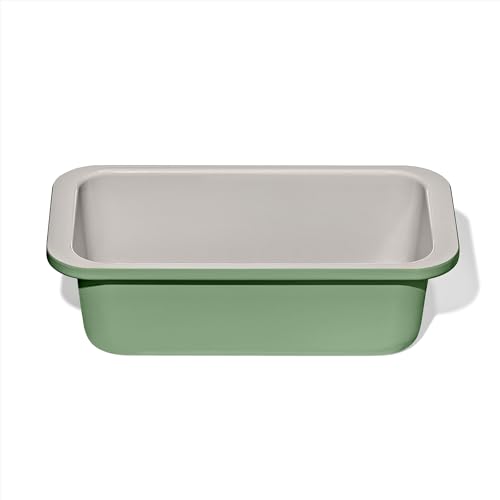
OXO Good Grips Non-Stick Pro Loaf Pan — Best Coated Alternative
A thoughtfully finished coated pan with the grip-conscious design its maker is known for, aimed squarely at bakers whose repertoire runs sticky and frequent. Strengths: confident release, comfortable handling, even results. Trade-offs: the standard coating terms apply in full — gentle tools, gentle washing, maker’s heat guidance respected. Best for: quick-bread regulars who are careful with coatings. Not suited for: shared kitchens with communal scrubbing.

Pyrex Basics Glass Loaf Pan — Best Versatility
The see-through all-rounder covers loaves, meatloaf, terrines, and frozen desserts in one entry-tier dish, and lets you judge browning by eye. Strengths: versatility, visibility, easy tier. Trade-offs: retained heat means prompt turning-out, and glass must be spared thermal shock — a trivet, never a cold wet counter. Best for: small kitchens wanting one dish for many jobs. Not suited for: bakers chasing the crispest metal-baked crusts.

Wilton Perfect Results Loaf Pan — Best Budget Starter
The sensible first pan: a widely available coated design at the entry tier that lets a new baker learn the category — sizing, preparation, browning behaviour — without a premium commitment. Strengths: accessible tier, easy release while the coating is young, forgiving for learners. Trade-offs: not the pan to plan a decade around; treat it as a well-priced apprenticeship. Best for: new and occasional bakers. Not suited for: daily bakers, who should start a tier up.
First Setup and Care Essentials
A new loaf pan needs almost no ceremony: wash it before first use, dry it thoroughly, and bake something familiar as a probation loaf so you learn its browning personality on a recipe you can judge. Metal pans want thorough drying to stay bright; coated pans want soft sponges and non-metal tools from day one, because coating care is a habit that is easy at the start and impossible to retrofit; stoneware and glass want a trivet habit and protection from sudden temperature swings. Grease and line according to your batter — a parchment sling across the width, ends overhanging, makes unmoulding a lift rather than a negotiation — and rest loaves briefly before turning them out so the crumb sets. Always lift a hot, full pan with dry oven gloves on both hands, onto a surface cleared before the oven door opens; the lift is part of the bake. Store pans stacked only with a cloth or paper layer protecting coated surfaces, and your pan will look and behave like itself for years. Bakers building the wider kit around the pan will find kindred guidance in the best USA Pan bakeware range and Nordic Ware bakeware favourites.
Mistakes to Avoid When Buying
Buying by photograph instead of by recipe size is the category’s signature error, followed closely by treating dark and pale pans as interchangeable when their browning behaviour is materially different. Buying a bargain bundle of shapes instead of the one right pan leaves cupboards full and the anchor loaf unserved. Ignoring the lift — choosing a heavy pan with a minimal rim and discovering the problem at a hot oven door — is the mistake with the sharpest consequences. Overvaluing coating headlines and undervaluing gauge, rim, and construction inverts the pan’s real longevity equation. And buying a specialty first — the pullman before the standard pan, the minis before the habit — puts the cart precisely where experience says the horse minds it most. Every one of these errors is visible in advance to a buyer who has read this far, which is the entire point of a buying guide. For the parallel view of the category’s honest drawbacks, continue to loaf pan pros and cons in full, and for the choosing method applied step by step, how to choose a loaf pan.
How the Tier Ladder Really Works
Because buyers reasonably ask what more money buys, here is the ladder without the marketing. At the entry tier you get the shape and the basic bake, in lighter construction and simpler finishes: entirely sufficient for occasional baking and for learning the category, with longevity the main thing traded away. The mid tier buys substance — heavier gauge that stays flat, coatings that release better and endure longer, rims and handles designed rather than merely present — and it is where weekly bakers should live, because every one of those improvements is felt weekly. The premium tier buys materials and dual roles: stoneware that serves at the table, heavyweight pans that will be handed down, finishes chosen for a lifetime of looking at them. What no tier buys is a different loaf: the same recipe, competently baked, is recognisably itself from any sound pan in this guide, which is why the ladder should be climbed by frequency and affection rather than by anxiety. Decide how often the pan will work, and the tier decides itself.
Reading Sizes and Listings Without Being Misled
Two listing habits cause most size regret. The first is dimension ambiguity: some listings headline outer measurements including handles and rims, while recipes care about the interior that holds batter, so compare interior to interior and treat a listing that will not say which it means as a listing to pass over. The second is capacity vagueness, where a pan is described by the loaf it supposedly produces rather than by any measure you can check against your recipe’s yield. Your defence is the method used throughout this guide: anchor on your recipes, match the size they name, and confirm that exact size in the listing before buying. While you are there, read the care paragraph as the maker’s honest confession of how the pan wants to live, and the heat guidance for coated and silicone pans as instructions to follow, not challenges to test. A buyer who reads listings this way — size, material specifics, construction, care — will choose well even among brands this guide has never mentioned, which is the real graduation a buying guide should offer.
Your Oven Is Half the Purchase
Guides talk about pans as if ovens were identical, and they are not, which is why the same pan can delight one household and puzzle another. Ovens differ in how honestly their dial tells the truth, in whether their heat arrives evenly or in hot zones, and in how much room they leave around a pan for air to move. A loaf pan is a forgiving partner in all of this — its deep batter mass smooths out minor unevenness — but the wise buyer factors the oven in. If your oven browns aggressively from above, pale pans and a lower shelf position will serve your sweet loaves better than any coating upgrade. If it runs uneven front to back, a mid-bake turn with proper gloves becomes part of your method, and a pan with a confident rim to grip earns its keep every single bake. If your oven is compact, interior measurements outrank every other specification, and a pan that fits with clearance will out-bake a theoretically superior pan that crowds the walls. None of this requires new equipment; it requires the two minutes of observation that turn a generic purchase into a matched one.
The Batter’s Point of View
It helps, when choosing, to think like the batter. A batter wants four things from its pan: room to rise without spilling, walls firm enough to climb, heat arriving evenly from all sides, and a farewell clean enough that the loaf leaves whole. Different batters weight those wants differently. A lean yeast dough cares most about wall support and steady heat, because its structure is built during the bake; it is otherwise the easiest tenant a pan can host. A rich pound batter cares about even heat above all, since its dense crumb shows every hot spot as a colour variation. A sticky fruit batter cares about the farewell, and will forgive almost anything else if the release is clean. A meatloaf mixture cares about easy cleaning and a pan that will not be harmed by juices, portioning, and a firm wash afterwards. When you read a pan’s description, translate it into those four wants and ask which of your batters it serves best; the translation cuts through marketing faster than any feature list, and it explains why experienced bakers describe pans in terms of the loaves they bake in them rather than the materials they are made from.
Cleaning and Storage, Considered Properly
A pan’s life is mostly spent not baking but waiting — in sinks, in cupboards, in stacks — and buying well means picturing those hours too. In the sink, the questions are corners and coatings: corners collect baked-on batter and reward pans with smooth, seamless interiors and owners willing to soak before scrubbing; coatings reward soft tools and punish haste. Glass and stoneware forgive most washing sins but ask not to be dropped or thermally startled, and their weight in a full sink is part of their ownership cost. In the cupboard, the questions are stacking and separation: loaf pans nest beautifully, which is their storage genius, but coated surfaces should meet only cloth or paper, never another pan’s metal, and stoneware should not live at the bottom of a heavy stack. Bakers who buy with the sink and the shelf in mind — as this guide’s companion piece, loaf pan pros and cons, argues in detail — find their pans ageing gracefully instead of mysteriously, and the difference between those two ageing paths is almost never the price paid.
The Small Accessories That Complete the Pan
A buying guide owes you the supporting cast, because a loaf pan’s performance in a real kitchen depends on a handful of inexpensive companions. Baking parchment is the first: cut as a sling, it transforms release for sticky batters in any material and makes lifting a finished loaf out a calm, two-handed pleasure. Proper oven gloves are the second, and they are safety equipment rather than an accessory — a full loaf pan is heavy, deep, and hot, and it deserves dry gloves on both hands and a landing place prepared in advance. A serrated bread knife is the third, because the finest loaf in the world can be crushed by a dull straight blade pressing where it should saw; the options surveyed in knives for cutting crusty bread suit loaf work admirably. A simple cooling rack is the fourth, letting air reach the loaf’s base so the crust you baked stays the crust you serve. None of these is a significant purchase, all of them outlast many pans, and together they are the difference between owning a loaf pan and operating a small, reliable loaf system.
What Changes Between Your First Pan and Your Forever Pan
Many households buy this category twice: once to learn, once to settle. The first pan teaches the lessons no guide can fully transmit — how your oven browns, how your favourite batter behaves, how your household washes up, how often you truly bake. The second purchase, made with that knowledge, is the one that lasts, and it is worth recognising the pattern so the first pan is bought as the teacher it is: sound, standard-sized, at a tier you will not mourn. The forever pan is then chosen with unusual precision, because its owner can name, from experience, the exact size, material, and finish their baking wants. Bakers who skip the learning purchase and go straight to premium occasionally guess right; bakers who treat the first pan as tuition almost always end up, by the second purchase, with a small collection that fits their kitchen like a glove. Either route is respectable — what matters is that the final pans are chosen from knowledge, whether that knowledge came from a guide like this one or from a year of banana bread.
A Note on Baking for Others
A meaningful share of loaf pans are bought, sooner or later, for other people’s tables: the bake sale, the new-parent meal train, the neighbour recovering from surgery, the office that runs on Friday cake. Baking for others changes the buying calculus in two gentle ways. First, it rewards reliability over brilliance — the pan that releases cleanly every time and browns evenly on an off day is worth more, when a loaf is promised, than a temperamental specialist. Second, it rewards owning the standard size, because recipes written for sharing assume it, and it rewards, eventually, a second pan, because generosity often arrives in pairs. If your baking life includes a public, the dependable mid-tier standard pan is your instrument, and the handsome stoneware is your presentation upgrade when the loaf travels in its dish. It is a pleasant corner of the category: the pans that serve others best are, without exception, the ones chosen by the unglamorous criteria this guide has insisted on from the first page.
Sustainability and the Long View
There is a quiet environmental argument for buying this category well, and it deserves a place in a complete guide. A loaf pan is one of the few consumer objects that can plausibly be bought once: no consumables, no upgrades, no planned obsolescence, and materials — metal, glass, stoneware — that endure for decades and recycle cleanly at the end of a very long life. The flimsy pan is the wasteful one, replaced repeatedly and disappointing throughout, while the sound pan at any tier removes itself from the waste stream almost permanently. Home loaf baking extends the same logic to food: fewer packaged loaves, fewer emergency purchases, more rescued ingredients, and a freezer working as a buffer against waste. None of this requires premium spending; it requires the opposite — buying the right pan, at the tier your frequency justifies, and then stopping. In a kitchen culture of churn, the loaf pan bought deliberately is a small model of how the rest might work.
The Guide in One Shopping Trip
To make the whole guide portable, here is the purchase as a single sequence of decisions, in the order a good shopper makes them. First, name your anchor loaves — the two or three recipes this pan exists to serve — and let them fix the size, checking the size your recipes specify rather than the size that catches your eye. Second, choose the material by crust and by role: pale metal for gentle versatility, coated metal for sticky repertoires, glass for visibility and crossover work, stoneware for serving, silicone as a release specialist beside a firmer standard. Third, settle the coating question by picturing your household’s real washing habits, and choose the surface those habits will keep beautiful. Fourth, inspect construction — gauge, rim, handles, interior finish — and prefer the pan whose maker describes it concretely. Fifth, set the tier by your honest baking frequency, and confirm the exact size and finish in the current listing before you buy. Five decisions, each small, each grounded in your own kitchen: that is the entire method, and a pan chosen by it will feel less like a purchase and more like a correction — the loaf-shaped gap in your kitchen, finally and properly filled.
After the Purchase: The First Month
A buying guide should not abandon you at the checkout, because the first month decides whether a good pan becomes a habit. Bake your most familiar loaf first, exactly as its recipe directs, and treat the result as calibration: note how this pan browns compared with whatever you used before, how the release behaved, and whether the timing shifted, and write those notes on the recipe itself. In the second week, bake the loaf at the opposite end of your repertoire — if the first was sweet and sticky, make the second lean and yeasted — so the pan’s range is mapped while your curiosity is high. By the third bake, introduce the parchment sling if you have not already, and notice how much of the category’s supposed difficulty was only ever a lining question. Keep the pan somewhere reachable, wash it the way its material prefers from the very first sink, and store it separated from anything that can scratch it. A month of that rhythm and the pan stops being new equipment and becomes what it was bought to be: the obvious, unremarked vessel your hand reaches for whenever the word loaf is mentioned in your kitchen.
Loaf Pan: A Hands-On Fit Check Before You Commit
Start with the space, storage and everyday routine this {p} has to fit into. Most coverage of a loaf pan concentrates on the first week of ownership, yet the decisions that matter most tend to surface later, once the loaf pan has to earn its place in an ordinary weekday routine rather than a carefully staged first attempt. Write down the three jobs you expect it to do most often, in the order you actually do them, and judge every claim you read against that short personal list instead of against a generic ideal.
Maintenance decides how long the good results last. Set a simple rhythm: a quick wipe or rinse after each use, a deeper clean on a fixed day, and a periodic check of the parts that move, seal or bear weight. A loaf pan that needs fiddly disassembly for basic care will be cleaned less often, and performance drifts long before anything actually breaks. Prefer designs where the parts that get dirtiest are the parts that are easiest to reach, and be honest with yourself about which cleaning steps you will genuinely keep up.
Finally, plan the first fortnight deliberately. Use the loaf pan for one familiar job first, so you have a baseline you trust, then introduce the harder cases one at a time and note what changes. Small adjustments to arrangement, timing, quantity or preparation usually close most of the gap between disappointing first results and the performance the design is capable of. That short learning period is also the fairest test of measurement and fit: if the routine has not settled by the end of it, the mismatch is real, and it is better to know while returning or exchanging is still straightforward.
Work through a realistic scenario, not a best case. Picture the busiest version of the job: more people to serve, less time than planned, ingredients or materials that are slightly out of the ordinary, and a clean-up waiting at the end. Ask how the loaf pan behaves at that upper edge, because a model that only shines on a small, simple load will disappoint precisely when you need it most. If the honest answer is that you would split the job into batches or fall back on an older method, factor that into the decision now rather than discovering it later.
Measure before you commit. Note the footprint, the clearance above and behind the spot where the loaf pan will live, and the route you will carry it by when it is hot, full or awkward. A loaf pan that technically fits but blocks a cupboard door, crowds a neighbouring appliance or has to be dragged across a worktop every time will quietly fall out of use, whatever its merits on paper. In the Kitchen Cookware category especially, a few centimetres of clearance and a sensible storage plan separate a daily tool from a bulky regret.
Troubleshooting is easier when you expect the usual failure points. With any loaf pan, the recurring problems tend to cluster in the same places: uneven results from overloading or poor arrangement, wear showing first on the parts handled most often, and small annoyances with lids, seals, handles, controls or fittings that only appear after repeated use. Before buying, look for whether those wear parts can be cleaned properly, replaced or worked around, and whether the instructions address them directly rather than pretending they never happen.
Use a short decision checklist to finish. One, does it fit the space and the storage you really have. Two, does it handle your three most common jobs without a workaround. Three, do the edge cases you listed stay manageable. Four, can every wear part be cleaned or replaced without drama. Five, would you still choose it if a friend described the same drawbacks in their own kitchen. A loaf pan that passes all five is a sound buy; one that fails two or more is a compromise you are choosing with open eyes, which is a very different thing from being surprised later.
Edge cases deserve a deliberate pass. Think about the odd shapes, the thicker or thinner than usual loads, the leftovers, the second helping and the guest with different preferences. A well-chosen loaf pan handles the exceptions gracefully, or at least predictably, while a poor match turns every exception into a workaround. List your two or three most common exceptions in advance and check, from the manual or the listing details, that nothing about them is ruled out by size, shape, material or care requirements.
When you check listings such as USA Pan Bakeware Loaf Pan, Nordic Ware Natural Aluminum Loaf Pan and Le Creuset Stoneware Loaf Pan, use them as worked examples: run through the same checks below on each one in turn, so the comparison stays honest and like for like rather than based on whichever listing happens to shout loudest.
One more check worth doing with any loaf pan is to read the care and safety instructions in full before the first use, not after the first problem. The manual for a loaf pan usually states plainly which materials, loads and cleaning methods are off limits, and most early disappointments trace back to a line in those pages that was skimmed. Five minutes with the instructions is the cheapest performance upgrade available in the whole Kitchen Cookware category.
Frequently Asked Questions
What is the best loaf pan material for beginners?
A sound coated metal pan in the standard size is the most forgiving start: it releases beginners’ sticky first batters kindly, browns evenly, and washes without drama while the new baker learns preparation and timing. Bakers who prefer to buy once for decades should start with bare metal and a parchment sling habit instead. Either is a good first pan; the mistake is starting with a specialty shape before the standard one is familiar.
How many loaf pans should a home baker own?
One good standard pan covers most households completely. Add a second in the same size when back-to-back or freezer baking becomes routine, a smaller one when gift loaves and half batches become habits, and a pullman only when sandwich bread is a weekly ritual. Each addition should answer a pattern you already have, not a pattern you hope to develop; pans bought for real patterns get used, and used pans are the only ones that represent value.
Does a loaf pan need handles?
Not strictly, but a generous rim or extended handles make a genuine safety difference, because the pan is lifted full, hot, and heavy with gloved hands that grip less precisely than bare ones. If you bake large loaves or choose heavy stoneware, prioritise designs that give those gloves something secure to hold, clear your landing surface in advance, and treat the lift as part of the recipe rather than an afterthought to it.
Can I use a loaf pan for both sweet and savoury baking?
Yes, and glass and stoneware make the crossover most gracefully, moving between loaf cakes, meatloaf, terrines, and chilled desserts in a single dish. With metal pans the practical cautions are to line or grease thoroughly for savoury bakes and to avoid portioning savoury loaves with a knife inside a coated pan. Many households eventually dedicate an older pan to savoury duty and keep the best pan for sweet baking.
What should I check in a listing before buying?
Confirm the interior size against your recipes, the material described in specific terms, construction signals such as gauge, rolled rims, and handle design, and the maker’s care and heat guidance, which tell you honestly how the pan wants to be treated. Be wary of listings long on adjectives and short on specifics. Then check the current listing once more at purchase time, because finishes and sizes within a line can change.
Is it worth replacing a warped or worn-out loaf pan?
Yes, promptly and without nostalgia. A warped pan rocks on the rack, bakes unevenly, and makes good recipes look unreliable, while a coating that has worn through has ended the pan’s useful life on its own terms. Because the category is inexpensive and long-lived, replacement with the right size and material — chosen by the method in this guide — is one of the highest-return small upgrades a baking kitchen can make.
Related reading: loaf pan reviews compared across materials, stand mixers for bread dough, and kitchen scales for baking.
One last encouragement, because buying guides can make a simple purchase feel like an examination. The loaf pan is among the most forgiving categories in the kitchen: the differences that matter are few, they are explained above, and every pan recommended here will bake a loaf your household is glad to eat. Choose by your recipes, your crust, and your sink; confirm the size; and then go and bake. The category rewards bakers, not researchers, and the best outcome of this guide is not a perfect purchasing decision — it is a warm loaf, sliced thick, within the week.


