Disclosure: As an Amazon Associate, topratedkitchenware.com earns from qualifying purchases. Links on this page are affiliate links; they cost you nothing extra. Prices and availability change often, so check the current Amazon listing before you buy.
Plural matters: loaf pan reviews are where individual pans stop being a category and start being choices, each with its own material, finish, temperament, and ideal owner. This collection of loaf pan reviews examines the leading pans one by one — the coated workhorses, the bare-metal classics, the stoneware showpieces, the glass all-rounders, and the budget starters — and judges each on the same evidence: how it bakes the loaves households actually make, how it releases, how it cleans, how it ages, and whose kitchen it belongs in. Read the whole set to understand the field, or find your baker profile first and read the two or three reviews that match it. Either way, by the end you will know which of these pans is yours, and just as importantly, which are not. A note on tone before we begin: this collection likes every pan in it, and likes them unequally, and it regards that combination — affection with discrimination — as the only honest posture from which to review a mature category.
Loaf Pan Reviews: How We Judged, and the Short List
Every pan in these reviews was judged against the same repertoire: a lean sandwich loaf, a sticky banana bread, a dense pound cake, and a savoury meatloaf, because a pan that only shines on one bake is a specialist and should be labelled as such. Release was judged on the sticky bake, browning on the sweet ones, structure on the yeast loaf, and cleaning on the meatloaf — the four examinations that between them expose nearly everything a loaf pan is. Build was judged in the hand and in the listing: substance, rim, handles, interior finish. Longevity was judged by material logic and care terms, the honest predictors available for tools built to serve for years. No pan in this collection failed outright; the differences are of fit and emphasis, which is why each review ends with a best-for and a not-suited-for line that matter more than any ranking. One further criterion ran quietly beneath the others and should be surfaced: forgiveness. Each pan was asked, in effect, how it treats an imperfect bake — the slightly overfilled batter, the loaf left a few minutes long, the greasing done in a hurry — because real kitchens produce imperfect bakes weekly, and the pans that absorb small errors gracefully are the pans their owners love in year three. On that criterion the whole collection scored well, the substantial mid-tier pans scored best, and the flimsy end of the wider market, excluded from these reviews, scored as poorly as its construction promised.
The short list, for readers in a hurry. For most households, the USA Pan Bakeware Loaf Pan is the centre of the field: coated, even, and aimed at the sticky mainstream repertoire. For longevity above all, the Nordic Ware Natural Aluminum Loaf Pan is the bare-metal benchmark. For bakers who serve from the dish, the Le Creuset Stoneware Loaf Pan stands alone. For grip-conscious design in a coated pan, the OXO Good Grips Non-Stick Pro Loaf Pan earns its place. For versatility at an entry tier, the Pyrex Basics Glass Loaf Pan covers more ground than anything at its level. And for new bakers learning the category, the Wilton Perfect Results Loaf Pan is the sensible apprenticeship. The reviews below make each case in full — and the single-category deep dive in our loaf pan review explains the design thinking behind the whole field. Notice, as you read the short list, that it contains no pan described as best at everything: that absence is the collection’s honesty made visible, and a buyer who internalises it — who stops hunting for the universal champion and starts matching a pan to a kitchen — has already made the most important decision this article can teach.
In this guide
USA Pan Bakeware Loaf Pan Review
The design idea here is that release and evenness, the two things weekly bakers ask for most, can be engineered into one pan — and across our repertoire, that idea held up. The corrugated, coated surface released the banana bread whole with minimal preparation, browned the pound cake evenly from end to end, and gave the sandwich loaf a firm, well-coloured crust that sliced without tearing. The pan feels substantial in the hand, its rim gives gloved hands a confident purchase at the lift, and washing after the meatloaf — the examination most pans dread — was a soak and a soft sponge rather than a campaign. Its terms are the coating’s terms, and they are not decorative: non-metal tools, gentle washing, no portioning with a knife in the pan, and respect for the maker’s heat guidance. A household that keeps those terms gets, in return, the most complete loaf pan in this collection for the mainstream repertoire. A household that will not keep them should read the next review first. Strengths: release, evenness, build, easy cleaning. Trade-offs: a mortal surface, and browning assertive enough that the palest, most delicate bakes want a watchful eye. Best for: weekly quick-bread and loaf-cake bakers. Not suited for: rough communal kitchens and buy-it-for-life purists.

Nordic Ware Natural Aluminum Loaf Pan Review
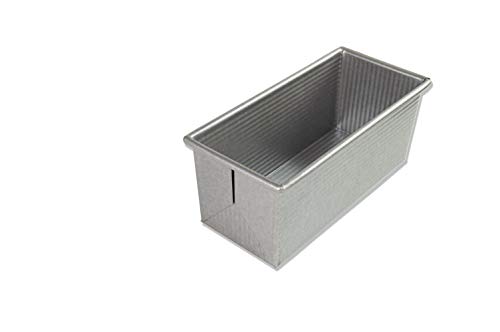
This is the pan the category grew up in: bare aluminium, pale and even-heating, with nothing on its surface to wear out because there is nothing on its surface at all. Its sandwich loaf was the review’s benchmark for tender, even crumb and gentle colour; its pound cake baked with a steadiness that flattered the recipe; and its banana bread, given a parchment sling, released cleanly and browned like a bakery’s. Without the sling, sticky batters ask for thorough greasing and a confident hand — the pan’s one recurring demand. In return it offers the longest horizon in the collection: a pan that tolerates metal tools once the loaf is out, forgives firm washing, shrugs off thermal drama that would threaten glass, and ages by deepening patina rather than by decline. It is also, not incidentally, the pan most likely to be found in the kitchens of bakers who have owned one pan for a very long time. Strengths: gentle even heat, near-immortal surface, entry-to-mid tier value, total indifference to utensils. Trade-offs: preparation is the baker’s job, every time; no coating will rescue a forgotten greasing. Best for: yeast bakers, traditionalists, buy-once households. Not suited for: bakers who want sticky loaves to release untouched.
Le Creuset Stoneware Loaf Pan Review
Stoneware changes what a loaf pan is for. The bake itself is superb in its manner — slow, steady heat producing moist crumbs, even colour, and crusts with a handsome, matte finish — but the pan’s defining performance begins when the oven door opens: it goes to the table. A lemon loaf served in this pan is a centrepiece; a terrine unmoulded from it is an event; leftovers simply stay in the dish that baked them. That double life is the premium tier’s entire argument, and for households that entertain, it convinces. The costs are physical and must be respected: the pan is heavy empty and seriously heavy full, demanding a two-handed, properly gloved lift to a landing place prepared in advance, and it shares glass’s dislike of sudden temperature change, asking for trivets and patience rather than cold counters and cold water. Its glaze releases well when greased and cleans kindly. Strengths: baking steadiness, presentation, storage-in-the-dish convenience, longevity. Trade-offs: weight, thermal courtesy, premium tier. Best for: hosts, gift bakers, bake-and-serve households. Not suited for: batch bakers, small countertop ovens, or anyone for whom the hot lift is a concern.
OXO Good Grips Non-Stick Pro Loaf Pan Review
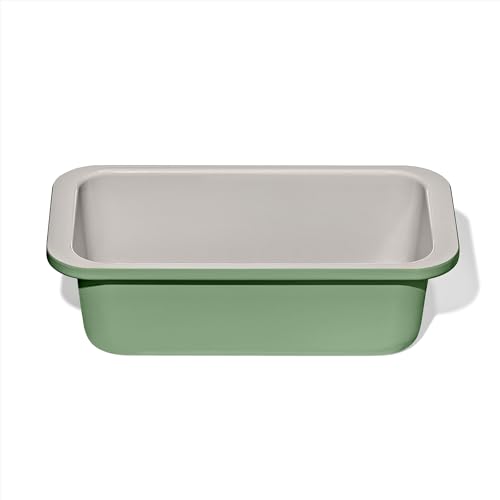
Some pans are designed from the batter outward; this one feels designed from the hands inward. The grip-conscious detailing that its maker is known for shows up exactly where loaf pans are usually weakest — the moment of the lift, full and hot — and the coated baking surface behind those hands is a strong performer in its own right: banana bread released whole, pound cake browned evenly, the sandwich loaf came away clean. Across the repertoire it ran the USA Pan close, with a slightly different emphasis: where that pan’s story is its corrugated surface, this one’s is its handling, and bakers with grip concerns, or simply an appreciation for tools that consider the human holding them, will feel the difference at every bake. The coating terms apply in full, as they do to every coated pan in this collection, and the review’s advice is identical: gentle tools, gentle washing, maker guidance respected. Strengths: handling, release, even results, thoughtful finish. Trade-offs: coating care in full; a mid-tier commitment. Best for: quick-bread regulars who value confident handling. Not suited for: households where pans are portioned in and scrubbed hard.

Pyrex Basics Glass Loaf Pan Review
The glass pan is the collection’s great generalist, and its review reads like a tour of the whole repertoire rather than a single speciality. The sandwich loaf baked soundly, if with a crust that metal would have made crisper. The banana bread browned under full observation — glass’s unique gift is that you watch the sides and base colour and judge the bake by evidence — and released well when greased. The meatloaf was its home fixture: even cooking, handsome slices, a dish that served at the table and washed without a coating to protect. Frozen and chilled loaves extend its range beyond anything metal attempts. Its two disciplines are real: loaves must be rested briefly and turned out rather than left in the heat-holding dish to steam, and the dish must be spared sudden temperature shocks — no cold wet counters under a hot pan, no cold liquid into a hot dish — courtesies that become habit within a week. At its entry tier, it is the easiest pan in this collection to justify and the hardest to outgrow completely. Strengths: versatility, visibility, serving, tier. Trade-offs: retained heat management, thermal-shock rules, softer crusts than metal. Best for: small multi-tasking kitchens and observant bakers. Not suited for: crisp-crust purists and the chronically forgetful.

Wilton Perfect Results Loaf Pan Review
Every category needs its honest starter, and this widely available coated pan fills the role with dignity. Its bakes were good — the banana bread released kindly, the sandwich loaf shaped properly, the pound cake browned acceptably — and for a new baker learning sizing, preparation, and browning behaviour, good is precisely what is needed, at a tier that makes the lesson inexpensive. Where it yields to the mid-tier pans is in substance and in the long game: it feels lighter in the hand, and its coating should be regarded as a surface with a school-length rather than a lifetime ahead of it. That is not a condemnation; it is a job description. Bought as an apprenticeship — with the intention of learning the category and later settling on a forever pan informed by experience — it is one of the smartest purchases in this collection. Bought as a forever pan by a daily baker, it would be the wrong tool asked to do the wrong span of work. Strengths: accessible tier, kind release, forgiving for learners. Trade-offs: build substance and coating longevity sit a class below the mid-tier. Best for: new and occasional bakers. Not suited for: daily bakers, who should begin a tier up.
Head-to-Head: The Comparisons Buyers Actually Make
Most buyers narrow the field to two pans and then stall, so here are the collection’s commonest duels decided plainly. Coated workhorse against bare classic — USA Pan against Nordic Ware — is the category’s central argument: release and convenience against lifespan and gentleness. Decide it by your sink and your batter: sticky repertoires and gentle hands take the coating; rough washing and yeast repertoires take the bare metal, and neither loser is a lesser pan. Stoneware against glass — Le Creuset against Pyrex — is the serving duel: both present at the table, but stoneware bakes steadier and feels like an heirloom while glass watches the bake and covers more kinds of cooking at a friendlier tier; hosts take stoneware, all-rounders take glass. The two coated mid-tiers — USA Pan against OXO — divide on emphasis, surface engineering against handling design, and the honest tiebreaker is to hold the idea of each at a hot oven door and ask which your gloved hands trust. The starter against the workhorse — Wilton against USA Pan — is a frequency question wearing a price costume: bake monthly and the starter serves for years; bake weekly and the workhorse’s substance repays its tier within the first season. Every duel in this collection resolves the same way, by a fact about the buyer rather than a fact about the pans — which is the deepest finding these reviews can offer. If a duel still will not resolve, the tiebreaker of last resort is the probation principle: choose the pan whose return to the shop would grieve you less to imagine, buy the other, and let its first month of loaves confirm what the reviews could only argue. Indecision between two good pans is a pleasant problem, and it should be ended by baking, not by further reading — a sentence this collection offers as its most honest piece of consumer advice.
How to Choose Among These Reviews
Start with your dominant loaf and read its examination across the reviews: the sticky-batter baker should compare release paragraphs, the sandwich baker structure paragraphs, the host the serving notes. Then apply the household filter — washing habits, grip confidence, storage, oven size — because it eliminates more pans than performance does. Then set the tier by frequency, using the ladder this series applies consistently: entry for learning and occasional baking, mid for the weekly rhythm, premium where serving and decades are truly in view, with the fuller method set out in the loaf pan buying guide and the step-by-step version in how to choose a loaf pan. Finally, confirm the size your recipes specify in the current listing before buying, because the finest review in the world cannot rescue a pan bought in the wrong size. Bakers equipping the surrounding kitchen at the same time will find the neighbouring bakeware surveyed in the best USA Pan bakeware range, Nordic Ware bakeware favourites, and glass bakeware sets for oven use. A last procedural suggestion, offered because it has settled more real purchases than any paragraph above: write your shortlist of two on the recipe card of your most-baked loaf, live with the sight of the names for a day, and notice which one you are quietly hoping wins. That hope is usually your household knowledge speaking before your analysis has finished, and in a category this forgiving, it is a voice worth obeying.
Care and Keeping: What the Reviews Assume
Every longevity judgement in these reviews assumes a short list of habits, and fairness requires stating them. All pans: soak before scrubbing, dry thoroughly, store without violence. Coated pans: non-metal tools, soft washing, no cutting in the pan, and maker heat guidance followed as routine, since coated bakeware carries manufacturer limits that are part of its design. Bare metal: grease or line for sticky batters, and dry completely to keep the surface bright. Glass and stoneware: rest loaves briefly, turn them out rather than letting them steam, lift full dishes with dry oven gloves on both hands to a prepared surface, and never invite thermal shock with cold counters or cold water. Pans kept this way — and paired with sound technique, from parchment slings to the weighing habits supported by kitchen scales for baking — will match these reviews’ expectations for years. Pans kept otherwise will write their own, shorter reviews. It is worth one more sentence on storage, because more reviewed pans are damaged in cupboards than in ovens: nest metal pans freely, separate coated surfaces with cloth or paper, give glass and stoneware a shelf where nothing heavy lives above them, and the collection you chose so carefully will still be the collection you reviewed, years from now.
The Reviews in One Table
| Pan | Material | Tier | Review in a Phrase |
|---|---|---|---|
| USA Pan Bakeware Loaf Pan | Coated metal | Mid | The complete mainstream workhorse |
| Nordic Ware Natural Aluminum Loaf Pan | Bare metal | Entry to mid | The immortal traditionalist |
| Le Creuset Stoneware Loaf Pan | Stoneware | Premium | The oven-to-table showpiece |
| OXO Good Grips Non-Stick Pro Loaf Pan | Coated metal | Mid | The handling specialist |
| Pyrex Basics Glass Loaf Pan | Glass | Entry | The see-through generalist |
| Wilton Perfect Results Loaf Pan | Coated metal | Entry | The honest apprenticeship |
Bottom Line Across All Reviews
Six pans, six households perfectly served, and not a failure among them — that is the state of this mature category, and it makes the buyer’s task one of matching rather than hunting. Match material to batter, size to recipe, surface to sink, tier to frequency, and any pan in this collection will bake loaves your household is glad to eat, for years. The trade-offs catalogued in loaf pan pros and cons apply to the field as a whole, and the value question is settled in is a loaf pan worth it; what these reviews add is the individual temperaments, so that the pan you choose arrives as a known character rather than a stranger. Choose the character your kitchen will get along with. The loaves will do the rest. And if, after all this comparison, two finalists still stand inseparable, choose the one whose care terms your household will keep without effort — because in year three, the pan that was washed the way it likes is the pan that still bakes like the one in its review, and that quiet fidelity, more than any single bake, is what these reviews were ultimately trying to predict. Prediction, in a category this well understood, is a modest art: the pans are known, the batters are known, and the only variable left is you.
Extended Notes: Living With Each Pan
Short reviews capture first impressions; ownership is a longer story, and this section records what each pan is like to live with across a season of baking — the details that decide whether a good review becomes a good purchase. Read it as the second sitting of the court: same pans, deeper evidence.
Living With the USA Pan: The Weekly Rhythm
Week after week, this pan’s character is reliability at the sticky end of the repertoire. The banana bread that opens most baking weeks releases with a confidence that stops being remarked on; the zucchini loaf in its season behaves the same; the occasional pound cake browns with a steadiness that makes timing predictable enough to set a routine by. Ownership settles into small rituals: the soft sponge kept for it, the loaf portioned on the board rather than in the pan, the pan stored with a cloth against its neighbour. None of that is burdensome, and the pan repays it by never being the reason a bake is postponed. Its one recurring negotiation is with delicate, pale bakes, where its assertive browning asks the baker to watch and, where the maker suggests, adjust — a negotiation experienced owners conduct without thinking. As a household’s default loaf pan, it earns the title the way defaults should: by being right, quietly, most of the time.
Living With the Nordic Ware: The Decade Pan
The bare aluminium pan’s ownership story is measured in a different unit: not weeks but years. Its rituals are older than any coating’s — the thorough greasing, the flour dusting for cakes, the parchment sling for the stickiest customers — and they become, with repetition, a kind of craft pleasure rather than a chore. Its surface asks nothing of the sink and receives whatever the sink gives; its bakes are the gentlest in this collection, which makes it the pan experienced bakers reach for when a recipe is new and they want the pan to contribute no surprises of its own. Sandwich loaves from it have a particular tenderness that its owners defend in arguments. If the collection has a pan that will be handed on, it is this one, and its review should be read with that horizon in mind: judged over a decade, its preparation demands are a trivial rent for a surface that never retires.
Living With the Le Creuset: The Occasion Pan
Stoneware ownership reorganises baking around occasions, because the pan turns an ordinary loaf into a presented one. Its week looks different: the loaf baked on Saturday is served from the pan at lunch, covered in the pan for the afternoon, and finished from the pan at tea, and that continuous, handsome presence is a pleasure no metal pan offers. Its weight becomes familiar — the two-handed lift, the trivet kept where the pan lands — and its thermal courtesies become as automatic as any kitchen safety habit. Bakers who entertain monthly describe it as the hardest-working serving dish they own that also bakes; bakers who bought it for daily sandwich loaves describe it, honestly, as more pan than the job needs. Both reports are in its review because both are true, and the difference between them is the calendar on the kitchen wall.
Living With the OXO: The Confident Handful
The OXO’s ownership signature is the lift. Bake after bake, the moment that other pans make faintly anxious — full, hot, gloved, mid-kitchen — this pan makes composed, and composure compounds into affection faster than any baking statistic. Its coated surface performs in the first rank of its class, its results across the repertoire are even and obliging, and its care terms are the class standard. Owners with grip concerns single it out, but so do owners with no concerns at all who simply notice, one day, that they have been reaching for it first for months. In a collection of strong pans, that quiet first-reach status is a meaningful verdict, and it is why this review keeps the pan in the first rank despite sharing its tier and its material with a formidable rival.
Living With the Pyrex: The One-Dish Week
Glass ownership is a study in range. In a single week the dish might bake a banana bread, shape a meatloaf, set a chilled terrine for guests, and hold a frozen loaf dessert — a workload no other pan in this collection attempts, and one that makes it the hardest pan here to imagine a small kitchen without. Its disciplines become second nature quickly: the prompt turn-out, the trivet, the refusal to shock it. Its crusts are a touch softer than metal’s, a fact its owners either accept as the price of range or answer by keeping a metal pan for the crust-critical bakes — a two-pan arrangement this collection endorses for serious bakers. Judged as a system rather than a specialist, the glass pan may be the best value in the entire set of reviews.
Living With the Wilton: The First Year
The starter pan’s year is the most instructive in the collection, because its owner is learning the category on it. Its kind release forgives the beginner’s uneven greasing; its honest browning teaches the oven’s personality; its modest tier removes the fear that makes new bakers tentative. By year’s end its owner knows their size, their material preference, and their frequency — knowledge no guide can give as surely as twelve months of loaves — and the pan either settles into honourable occasional service or hands its duties to a considered successor. Either outcome is a success, and reviews that sneer at starter pans misunderstand the economics of learning. This one teaches well, and that is a high compliment in a teaching role.
What These Reviews Deliberately Left Out
A word about method, because reviews are trusted in proportion to their candour about their limits. These reviews do not score pans on novelty, on the beauty of their packaging, or on features that do not survive contact with a batter. They do not repeat makers’ promises as findings; where a claim matters — release, evenness, longevity — it is expressed as behaviour across the repertoire, not as a slogan. They do not pretend that a pan can be separated from its household: every longevity and care judgement here is conditional on the habits named in the care section, and a reader whose household differs should adjust the relevant review accordingly. And they do not manufacture a loser to make the winners shine, because in a mature category at these tiers, there is no loser to manufacture — only fits and misfits. Readers who want the underlying trade-offs argued from first principles, rather than embodied in products, will find them in loaf pan pros and cons, which these reviews treat as their theoretical companion.
Season by Season: Which Pan Earns Its Keep When
Baking is seasonal, and the collection’s honours rotate with the calendar in ways a single review day cannot show. In the deep winter, the stoneware pan earns double — gingerbread and fruit loaves served warm from the dish at dark teatimes, meatloaves carried straight to the table. In spring, the glass pan comes forward for the first terrines and the lemon loaves whose colour it lets you watch like a promise. Summer belongs to the coated workhorses and the zucchini glut, when loaves are baked in pairs for freezers and neighbours and release is a daily mercy. Autumn, the great loaf season, belongs to everyone at once: sandwich loaves return with school, bake sales demand the reliable, and the bare-metal classic takes the fruit loaves with the authority of long practice. A household that bakes all year will find each pan in this collection having its season of first choice — which is the practical argument, for committed bakers, behind owning two complementary pans rather than one champion.
If You Can Only Read Three Reviews
Time is a fair constraint, so here is the triage this collection recommends. Read the workhorse review — the USA Pan — whatever your profile, because it defines the centre of the modern category and every other pan is partly a variation on its settlement between release, browning, and build. Read the bare-metal review — the Nordic Ware — because it represents the category’s longest tradition and its strongest longevity case, and because the choice between coated and bare is the one decision every buyer must make consciously. Then read the review that matches your calendar: stoneware if you entertain, glass if your kitchen must multi-task, the OXO if your hands want confidence, the Wilton if you are beginning. Three reviews, chosen that way, contain nearly all the decision-relevant information in this article — the remaining reviews reward the thorough, but the triage reader is not short-changed, merely efficient. And whichever three you read, carry away the method rather than the medals: batter, household, size, tier, in that order, will choose well among pans that have not been reviewed yet, in shops these pages have never seen.
A Note on Pairs: The Two-Pan Households
Many of the happiest outcomes behind these reviews were not single pans at all but pairs, and the pattern is worth stating for buyers whose baking justifies it. The classic pairing is one coated and one bare pan in the same standard size: the coated pan takes the sticky repertoire, the bare pan takes the yeast repertoire and the decades, and between them every loaf in this article’s repertoire has its ideal vessel. The host’s pairing is stoneware for serving and metal for batch work, so the showpiece is never hostage to a second bake. The small kitchen’s pairing is glass for range and one metal pan for crusts. In each case the second pan is bought after the first has revealed the household’s true pattern — the sequence this series recommends everywhere — and in each case the pair costs less, across its life, than the cycle of single almost-right pans it replaces. Reviews usually judge objects one at a time; kitchens, sensibly, judge them in company.
Reviewing the Reviewers: How to Use Other Opinions
These are not the only loaf pan reviews a buyer will meet, and a collection that respects its readers should teach them to read the others. Trust reviews that name a repertoire — a review of a loaf pan that never mentions a sticky batter has not examined the pan where it is weakest. Trust reviews that state care terms and size plainly, and distrust any that promise a pan will never stick, never warp, and never age, because materials do not sign such contracts. Notice whether a reviewer’s household resembles yours: a glowing account of a coated pan from a careful single cook and a bitter one from a communal kitchen can both be honest, and the difference is data about fit, not about the pan. Be wary of verdicts formed on a single bake, in this category above all, because the second bake in any pan is the informative one and the fifth is the truthful one. And hold every review, including this one, to the probation standard: one familiar loaf, baked attentively in the pan you are judging, outranks a library of other people’s opinions — including, when they conflict, ours.
The Upgrade Paths These Reviews Suggest
Reviews are also maps of where bakers go next, and the paths out of this collection are well worn. The starter pan’s owner graduates, most often, to the workhorse or the classic — the Wilton’s year of lessons converted into a deliberate mid-tier choice — and that graduation is the single most satisfying purchase pattern in the category. The workhorse’s owner, baking weekly and happily, upgrades sideways rather than up: a stoneware pan joins for occasions, or a bare pan joins for the yeast repertoire, and the original keeps its job. The classic’s owner, decades in, buys a coated companion for the sticky bakes and discovers the two-pan household described above. The glass pan’s owner adds metal for crusts; the stoneware’s owner adds metal for batches. Notice what no path contains: regret-driven replacement of a pan that was matched when bought. Every upgrade here is an addition prompted by a growing repertoire, which is the signature of a category bought well — and a quiet argument for spending the choosing effort once, at the start, rather than the replacing effort repeatedly.
Closing the Collection: A Reviewer’s Confession
Every reviewer of this category ends with the same confession, and this collection will not break the tradition: after all the examinations, the pan a reviewer would save from a fire is rarely the highest-scoring one. It is the pan associated with the most loaves — the one whose patina is a diary, whose quirks are known like a friend’s, whose presence on the counter means the house will smell of baking by evening. Reviews can measure release and browning and build; they cannot measure that accumulation, which is why the final advice of this collection is not a product at all. Choose any pan here whose profile matches your kitchen, keep it well, bake in it often, and let it accumulate. In ten years your review of it will be warmer than any in this article, and it will also, in the only sense that finally matters, be the most accurate one ever written about that pan.
Loaf Pan: What Long-Term Use Reveals That a First Test Misses
Start with how a {p} holds up once the novelty wears off and routines settle in. Most coverage of a loaf pan concentrates on the first week of ownership, yet the decisions that matter most tend to surface later, once the loaf pan has to earn its place in an ordinary weekday routine rather than a carefully staged first attempt. Write down the three jobs you expect it to do most often, in the order you actually do them, and judge every claim you read against that short personal list instead of against a generic ideal.
Maintenance decides how long the good results last. Set a simple rhythm: a quick wipe or rinse after each use, a deeper clean on a fixed day, and a periodic check of the parts that move, seal or bear weight. A loaf pan that needs fiddly disassembly for basic care will be cleaned less often, and performance drifts long before anything actually breaks. Prefer designs where the parts that get dirtiest are the parts that are easiest to reach, and be honest with yourself about which cleaning steps you will genuinely keep up.
Finally, plan the first fortnight deliberately. Use the loaf pan for one familiar job first, so you have a baseline you trust, then introduce the harder cases one at a time and note what changes. Small adjustments to arrangement, timing, quantity or preparation usually close most of the gap between disappointing first results and the performance the design is capable of. That short learning period is also the fairest test of long-term ownership: if the routine has not settled by the end of it, the mismatch is real, and it is better to know while returning or exchanging is still straightforward.
Use a short decision checklist to finish. One, does it fit the space and the storage you really have. Two, does it handle your three most common jobs without a workaround. Three, do the edge cases you listed stay manageable. Four, can every wear part be cleaned or replaced without drama. Five, would you still choose it if a friend described the same drawbacks in their own kitchen. A loaf pan that passes all five is a sound buy; one that fails two or more is a compromise you are choosing with open eyes, which is a very different thing from being surprised later.
Troubleshooting is easier when you expect the usual failure points. With any loaf pan, the recurring problems tend to cluster in the same places: uneven results from overloading or poor arrangement, wear showing first on the parts handled most often, and small annoyances with lids, seals, handles, controls or fittings that only appear after repeated use. Before buying, look for whether those wear parts can be cleaned properly, replaced or worked around, and whether the instructions address them directly rather than pretending they never happen.
When you check listings such as USA Pan Bakeware Loaf Pan, Nordic Ware Natural Aluminum Loaf Pan and Le Creuset Stoneware Loaf Pan, use them as worked examples: run through the same checks below on each one in turn, so the comparison stays honest and like for like rather than based on whichever listing happens to shout loudest.
Edge cases deserve a deliberate pass. Think about the odd shapes, the thicker or thinner than usual loads, the leftovers, the second helping and the guest with different preferences. A well-chosen loaf pan handles the exceptions gracefully, or at least predictably, while a poor match turns every exception into a workaround. List your two or three most common exceptions in advance and check, from the manual or the listing details, that nothing about them is ruled out by size, shape, material or care requirements.
Measure before you commit. Note the footprint, the clearance above and behind the spot where the loaf pan will live, and the route you will carry it by when it is hot, full or awkward. A loaf pan that technically fits but blocks a cupboard door, crowds a neighbouring appliance or has to be dragged across a worktop every time will quietly fall out of use, whatever its merits on paper. In the Kitchen Cookware category especially, a few centimetres of clearance and a sensible storage plan separate a daily tool from a bulky regret.
Work through a realistic scenario, not a best case. Picture the busiest version of the job: more people to serve, less time than planned, ingredients or materials that are slightly out of the ordinary, and a clean-up waiting at the end. Ask how the loaf pan behaves at that upper edge, because a model that only shines on a small, simple load will disappoint precisely when you need it most. If the honest answer is that you would split the job into batches or fall back on an older method, factor that into the decision now rather than discovering it later.
One more check worth doing with any loaf pan is to read the care and safety instructions in full before the first use, not after the first problem. The manual for a loaf pan usually states plainly which materials, loads and cleaning methods are off limits, and most early disappointments trace back to a line in those pages that was skimmed. Five minutes with the instructions is the cheapest performance upgrade available in the whole Kitchen Cookware category.
Frequently Asked Questions
Which loaf pan do these reviews recommend for most people?
The USA Pan Bakeware Loaf Pan, because the mainstream repertoire — sticky quick breads, loaf cakes, the occasional yeast loaf — is exactly what its coated, even-baking design serves, and most households bake from that repertoire weekly. The recommendation flips for specific profiles: bare metal for longevity-first and yeast-first bakers, stoneware for hosts, glass for all-rounders. Most people, though, are the profile the workhorse was built for.
Which reviewed pan lasts the longest?
The Nordic Ware bare aluminium pan, by material logic: with no coating to wear and a surface indifferent to utensils and firm washing, its service life is measured in decades and limited mainly by physical damage. Stoneware is its closest rival in longevity, with the caveat of chips and thermal shocks. Coated pans serve long under kind treatment but are surfaces with an eventual horizon, which their reviews state plainly.
Which is the best reviewed pan for banana bread?
Banana bread asks for release and browning control together, so the coated mid-tier pans lead — the USA Pan for its surface, the OXO for its handling — with the bare Nordic Ware and a parchment sling the longevity-minded alternative. Glass rewards bakers who watch the bake and turn out promptly. The pan to avoid for this loaf is a dark, thin one, whose edges will outrun its centre.
Are the premium reviews worth it over the entry tier?
For the profiles they serve, yes: stoneware’s premium buys a second life as serving ware and a steadiness daily bakers feel, which occasional bakers will rarely collect. The entry pans in this collection are genuinely good, and the honest ladder is frequency — monthly bakers lose little at the entry tier, weekly bakers feel every mid-tier improvement, and hosts and daily bakers can justify the premium. Buy the tier your calendar, not your ambition, describes.
Which reviewed pan is best for a small kitchen?
The Pyrex glass pan, for the breadth of work — sweet loaves, meatloaf, terrines, frozen desserts — that a single compact dish covers, letting one object do the work of several. A standard metal pan is the close alternative where crisp crusts matter more than crossover range. Either way, small kitchens should buy the standard size their recipes assume and resist specialty shapes until the core repertoire is running.
Can I trust reviews that do not rank one pan first overall?
You can trust them more, in this category. Loaf pans divide by material, and materials divide by batter and household, so a single overall winner would be a fiction that serves the reviewer rather than the reader. These reviews rank within profiles — best workhorse, best longevity, best serving, best versatility, best start — because that is how the pans will actually be lived with, one kitchen at a time.
Related reading: stand mixers for bread dough, non-stick bakeware sets compared, and knives for cutting crusty bread.
A final practical word before the choosing begins in earnest. Reviews, this one included, are best used the night before a purchase, not the month after: read for fit, decide by profile, confirm the size in the listing, and then close the tabs and bake. The pans above have been compared as thoroughly as print allows, and the differences that remain between the finalists for your kitchen are smaller than the difference a single season of regular baking will make to your results in any of them. That is not a dismissal of the choosing — the choosing is what this article is for — but a reminder of its proportion. The loaf pan is a means; the loaf is the end; and the best-reviewed pan in this collection is, in the end, simply the one that gets you to the loaf soonest and serves you longest once you are there. So choose with the care this collection has tried to model, and then bake with more confidence than the care might suggest — because every pan reviewed here has earned, on the evidence, the right to be trusted with your favourite recipe.


