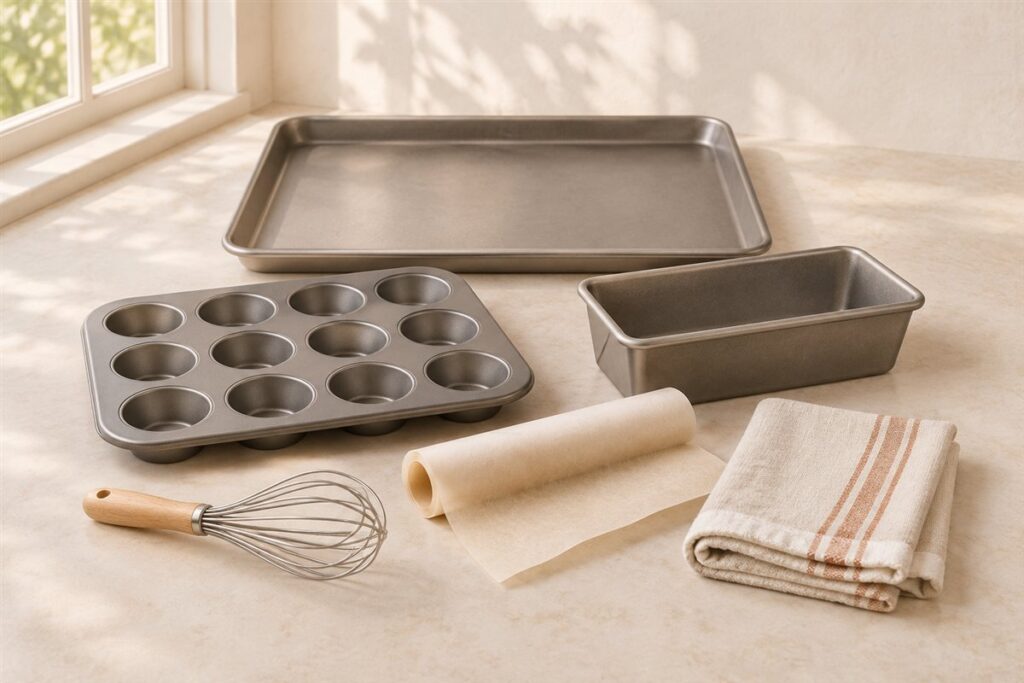
Baking sheets are usually sold as full, half or quarter sheets, and the half sheet is the one most home cooks use. A half sheet is commonly about 18 by 13 inches, a quarter sheet about 13 by 9 inches, and a full sheet about 26 by 18 inches. Exact sizes vary by maker, so check the product details against your oven.
The Common Sizes
| Name | Typical size | Best for |
|---|---|---|
| Full sheet | About 26 x 18 in | Commercial ovens and large batches |
| Half sheet | About 18 x 13 in | Everyday roasting and cookies |
| Quarter sheet | About 13 x 9 in | Small ovens, toaster ovens, small batches |
| Jelly roll pan | About 15 x 10 in | Sponge rolls and thin cakes |
Think of the names as fractions of the full commercial sheet. Cut a full sheet in half, and you have the half sheet pan.
Will It Fit Your Oven?
Home ovens differ, and a full sheet will not fit in most of them. Before you buy, measure the inside width and depth of your oven, not the outside. Leave a little room around the pan so hot air can move. Also check that the pan clears the oven door and any racks.
- Measure the inside of the oven from side to side.
- Measure from the back wall to the door when closed.
- Compare against the pan’s outer length and width, including the rim.
- Leave a gap of at least a finger’s width on each side.
Rim Height and Edges
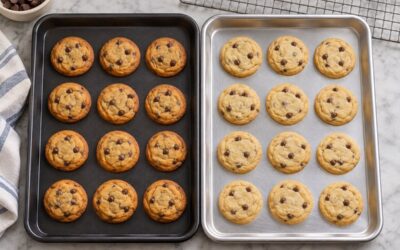
Sheet pans have a low rim, often about one inch tall. This keeps juices in and lets heat reach the food. A rimmed pan is different from a flat cookie sheet, which has one or no raised edges and can make sliding cookies off easier, but it cannot hold liquid. Some cooks use both: a rimmed pan for roasting and a flat sheet for baking cookies.
A rolled or reinforced edge helps the pan stay stiff. Check the maker’s guide for the maximum oven temperature.
Choosing a Size by Task
- Choose a half sheet for roasting vegetables, baking cookies and making sheet-pan dinners.
- Choose a quarter sheet for one or two servings or a small oven.
- Choose a jelly roll pan for cake rolls and bar cookies.
- Buy two half sheets if you often bake large batches.
Pan Material and Finish Choices
Size is only half of the decision. The metal and surface of a sheet pan change how food browns, how easy the pan is to clean and how long it lasts. Bare aluminum is a common choice because it spreads heat evenly and is light to handle. Steel pans tend to feel heavier and stiffer, and some people find they resist bending. Listings may also describe coated or nonstick surfaces, which can help with release but may come with lower temperature limits and advice against metal utensils.
Color matters too. Darker surfaces generally absorb more heat and can brown the underside of cookies faster, while lighter surfaces brown more gently. If you bake delicate items, a lighter pan may be more forgiving. For roasting, either works well. Always read the maker’s care notes before you buy, since some finishes should be hand washed and others tolerate a dishwasher.
Warping, Thickness and Edge Strength
If you have ever heard a pan pop in the oven, you have met warping. Thin metal can flex when the heat is uneven, for example when a cold pan meets a hot oven or when cold food lands on a hot pan. Thicker gauge pans and pans with a rolled or wire-reinforced rim usually resist this better. The listing may not state the thickness, so look for wording about construction and reinforced edges, and read what other buyers say about flatness over time.
- Preheat gently and avoid running a hot pan under cold water.
- Do not pile cold, wet food onto a very hot pan.
- Keep the pan away from direct flame or broiler elements unless the maker allows it.
A slight warp does not always ruin a pan, but a pan that spins or rocks on a flat rack may cook unevenly and let oils pool in one corner.
How Many Pans to Own
Most home cooks are better served by two matching half sheets than by one large pan. Two pans let you roast vegetables and a protein at the same time, or bake two trays of cookies while one rests. They also mean you can rotate trays between racks. A single quarter sheet is a useful extra for toasting nuts, reheating a slice of pizza or cooking for one without heating a large oven.
Think about storage too. Pans of the same size nest and stand on edge in a narrow cabinet or slot, which saves space. Mixing many sizes can be handy for certain cooks but may leave you hunting for the right piece. If you are building a collection slowly, begin with the size most recipes call for, then add smaller pans only when a real need appears.
Racks, Liners and Accessories
A sheet pan becomes more versatile with a few add-ons. A wire rack that fits inside the pan lifts food so air circulates, which helps with crisp bacon, roasted wings or glazed items that should not sit in their juices. Check that the rack’s outer dimensions match the inside of the pan, since racks and pans are often sold in matching sizes but not always.
Parchment paper and silicone baking mats make cleanup easier and protect the surface. Parchment is often sold pre-cut to fit common pan sizes, so check the sheet size against your pan. Silicone mats have their own temperature limits, so read the guidance before use. Foil can also line a pan, but follow the maker’s advice for acidic foods and nonstick surfaces.
Cleaning, Staining and When to Replace
Discoloration on a sheet pan is normal, especially on bare aluminum and steel, and it usually does not affect cooking. Baked-on grease can be loosened by soaking in warm soapy water and wiping with a soft sponge. Avoid harsh abrasives on coated pans, and check whether the maker warns against certain cleaners on aluminum, which can darken with strong alkaline products.
Signs it is time to replace a pan include a deep warp that will not lie flat, a coating that is flaking or peeling, rust spots that keep returning, and bent corners that no longer let the pan sit square in the oven. A pan with a damaged nonstick surface should be retired rather than used for food contact. Dry pans fully before stacking to reduce the chance of rust on steel models.
FAQ
Do recipes assume a certain size?
Many American recipes assume a half sheet pan. If yours is much smaller, split the food into batches so it does not crowd.
Can I stack sheet pans?
Many can nest, but stacking wet pans traps moisture. Dry them fully first.
Is a darker or lighter baking sheet better?
It depends on what you bake. Darker pans tend to brown the bottoms faster, which suits some roasting but can overcook delicate cookies. Lighter pans brown more gently, so many bakers prefer them for sweet items. Check the maker's notes for your pan.
Why does my sheet pan make a popping sound in the oven?
The metal is flexing as it heats unevenly, which is common with thinner pans. It often settles once the pan is evenly hot. If the pan stays warped or rocks on a flat surface, it may be time to replace it.
Can I put a wire rack inside a half sheet pan?
Many racks are made to fit inside a pan of a matching size, but dimensions vary. Compare the rack's outer size with the pan's inside measurements and check the maker's temperature guidance for both.
Should I line my sheet pan?
Lining is optional. Parchment or a silicone mat can ease cleanup and help delicate foods release. Read the temperature limits for any liner and follow the pan maker's advice on coated surfaces.
Are nonstick sheet pans safe at high heat?
Limits differ by coating and maker, so check the product details and the manual. If you roast at high temperatures often, look for a pan with a stated temperature range that covers your cooking.
How do I stop sheet pans from rusting?
Dry them completely after washing, avoid leaving them soaking, and store them somewhere dry. Rust is most common on steel pans and on edges where a coating has worn away. Replace any pan with spreading rust.
The Short Version
The half sheet is the all-round choice, the quarter sheet suits small ovens, and the full sheet is mostly for commercial kitchens. Measure your oven before you choose, and check the maker’s guide for exact dimensions.