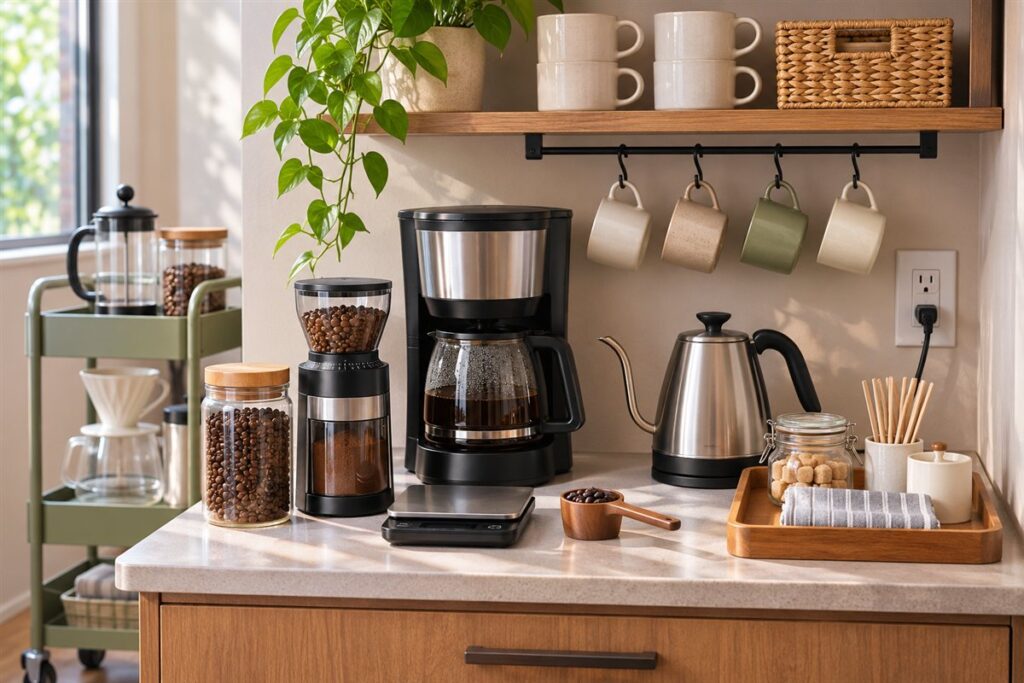
A coffee corner is a small, dedicated space where your brewing gear, mugs, and supplies live together. To set one up, choose a spot near an outlet and water, arrange your tools in the order you use them, and keep extras in a nearby drawer or basket. Even a short stretch of counter can do the job.
Choose the Spot
Look for a flat, level surface that is easy to wipe clean. Stay away from the edge of the stove, and keep any electric appliance away from the sink splash zone. Read the maker’s instructions for each device on clearance and ventilation, and use outlets that suit the appliance.
Setting It Up Step by Step
- Clear the area. Remove items that do not belong to the coffee routine.
- Place the main brewer. Set it at the back so the front stays free for mugs and filling.
- Add a kettle or water source. Keep it within arm’s reach of the brewer.
- Arrange tools in order. Put the grinder, scoop, filters, and scale in the order you use them.
- Store beans or grounds. Use an airtight container away from heat and sun.
- Place mugs and extras. Hang mugs on hooks or stack them on a shelf, and keep sweeteners, stirrers, and cloths in a tray.
What to Keep in the Corner
| Item | Where it goes | Note |
|---|---|---|
| Brewer | Back of counter | Follow clearance advice |
| Kettle | Beside the brewer | Place on a heatproof surface |
| Beans or grounds | Airtight container | Keep away from heat |
| Mugs | Hooks or shelf | Easy to reach |
| Cleaning cloth | Front tray | For quick wipes |
Keeping It Tidy
- Wipe spills as they happen so sticky rings do not form.
- Empty grounds and rinse reusable filters after each use.
- Clean and descale equipment following the maker’s guide.
- Use a tray to corral small items and make cleaning simple.
- Limit mugs to the number you really use.
Ideas for Small Spaces
If counters are scarce, use a rolling cart, a wall shelf, or the top of a low cabinet. A cart can be tucked away when guests arrive. Wall shelves with hooks let mugs hang and free up room underneath for the brewer.
Matching the Brewer to Your Routine
The brewer sets the shape of your whole coffee corner, so choose one that suits how you actually drink coffee. Drip machines brew a full pot with little effort and suit households that drink several cups at once. Single-serve pod machines are quick and tidy, and they work well when people want different drinks, though the pods add recurring supplies and waste, and compatible pod types differ between machines. Pour-over setups, French presses and similar manual brewers give you more control and take little space, but they need more attention and a kettle.
Espresso machines open the door to espresso-based drinks. They range from simple to complex, and they require more counter space, more cleaning and often a grinder. Moka pots brew on the stove and need no outlet. Cold brew makers use time rather than heat and need fridge space.
- Think about how many cups you make at once.
- Consider how much time you have in the morning.
- Decide whether you want to learn a manual technique or prefer a push-button routine.
Check the listing for dimensions, including the height needed to fit under cabinets, and the manual for clearance. Choose the brewer that you will use daily, not the one that looks most impressive. Matching the gear to your habits keeps the corner in use.
Grinder, Kettle and Scale Choices
If you brew with whole beans, a grinder is the next major piece. Blade grinders chop beans with a spinning blade and are compact and easy to use, but particle size tends to be uneven. Burr grinders crush beans between two surfaces, which gives more consistent particles and usually more control over coarseness. Manual burr grinders are portable and quiet but need arm effort, while electric ones are faster. Match the grind size to your brewer, since different methods need different coarseness. Check the manual for the grinder’s capacity and cleaning steps.
A kettle makes hot water quickly and keeps the brewer free. Gooseneck kettles have a narrow spout that gives precise pouring for pour-over methods. Some have temperature settings, which help if you want to control water temperature. Standard kettles are fine for presses and many other methods. Whatever you choose, confirm it fits your stove or outlet, and place it on a heat-safe surface.
A small kitchen scale lets you measure beans and water by weight, which makes results more repeatable than scoops. A timer helps too, and many scales have one built in.
- Choose tools that fit the space you have.
- Add them gradually as your interest grows.
Storing Beans, Grounds and Filters
Coffee loses aroma and flavor over time, and how you store it affects quality. Keep beans or grounds in an airtight container, away from light, heat and moisture. Opaque containers with a tight seal work well. Avoid storing coffee next to the stove or in a sunny window. Whole beans stay fresh longer than pre-ground coffee, so grinding just before brewing preserves more flavor. Look at the roast date or best-by date on the package, and buy in amounts you can use in a reasonable time.
Opinions differ on the fridge and freezer. Moisture and odors are risks when you open a cold container in a warm room, because condensation can form. If you freeze coffee, split it into small airtight portions and thaw only what you need, avoiding repeated cycles. Check the coffee maker’s guidance if you have one.
- Keep filters in a dry container, and match the size to your brewer.
- Store spoons or scoops where they stay clean and dry.
- Label containers with roast or opening dates.
Keep your supply modest, since a stockpile that goes stale does not serve you. A small canister at the corner and the rest stored in a cool cupboard works well for many households.
Water Quality, Descaling and Machine Care
Coffee is mostly water, so water quality shapes taste and equipment life. If your tap water has a strong taste or smell, filtered water may improve your coffee. Very hard water leaves mineral deposits inside machines, which slows heating and can affect performance. Very soft water can sometimes taste flat. Look at the maker’s guidance on water type, especially for espresso machines, which can be sensitive.
Descaling removes mineral buildup. How often you need to do it depends on your water and usage, and makers publish their own schedules and recommended products. Use only descaling solutions that the manual approves, and follow the steps closely, including rinse cycles. Some machines have indicator lights that signal when to descale.
- Empty and rinse the reservoir regularly, and let it air dry.
- Wash removable parts such as baskets, carafes and drip trays often.
- Clean grinders as the maker advises, to remove oils and fine dust.
- Wipe the steam wand after each use if you have one.
Stale oils and scale can make coffee taste bitter or off. If you notice slow brewing, strange tastes or odd noises, check the manual’s troubleshooting section before replacing the machine.
Making the Corner Guest-Friendly and Safe
A coffee corner can also serve friends and family, so think about how others will use it. Keep mugs, spoons, sweeteners and milk alternatives where guests can find them. Label canisters, especially if you keep decaf and regular next to each other. Provide a small tray of extras such as stirrers, napkins and a spare cloth. If you serve milk, keep it in the fridge until needed and follow food-safety guidance for how long it can be out.
Safety matters around hot equipment. Keep cords tidy and away from water and heat, and use outlets that suit the appliance, avoiding overloaded power strips. Place hot kettles and pots well back from the edge. If children are present, keep hot beverages and equipment out of reach. Never leave a heating appliance running unattended for long periods unless the manual says it is designed for that.
- Keep the drip tray clear so spills do not creep to outlets.
- Provide a trivet or mat for hot carafes.
- Offer a variety, such as tea, decaf or hot chocolate, if you host often.
With a little planning, the corner becomes a welcoming, tidy spot that makes hosting easier and your own mornings calmer.
FAQ
Do I need a separate grinder?
Not always. Many people buy ground coffee. If you prefer grinding at home, a grinder adds a step and takes up room, so decide whether the extra effort suits your mornings.
How do I keep beans fresh?
Store them in a sealed container in a cool, dark spot. Buy amounts you will use within a few weeks and check the package instructions.
What is the minimum I need for a coffee corner?
A brewer, mugs, a container for coffee and a spot to wipe spills. A kettle, scale and grinder are optional additions.
Is a burr grinder worth it?
Burr grinders give more even particles and better control, which many people find improves flavor. Whether it is worth the cost and space depends on how much you care about the difference.
How often should I descale my coffee maker?
It depends on your water hardness and how often you brew. Check the maker's manual for guidance.
Can I keep coffee in the freezer?
Some people do, in small airtight portions to limit condensation. Others prefer a cool cupboard and smaller purchases.
Where should I put the coffee corner in a small kitchen?
Use a spot near an outlet with some counter space, away from the stove and sink. A cart or wall shelf can add space.
Do I need filtered water?
Not always, but if your tap water tastes strong or leaves heavy scale, filtered water may help. Check your machine's guidance.
How do I keep my coffee area from looking cluttered?
Use a tray to group small items, hang mugs, and keep only daily-use items on the counter. Store extras in a nearby cabinet.
The Short Version
Choose a stable, clean spot, place the brewer at the back, and arrange tools in the order you use them. Keep supplies sealed, wipe up as you go, and follow each maker’s care instructions.