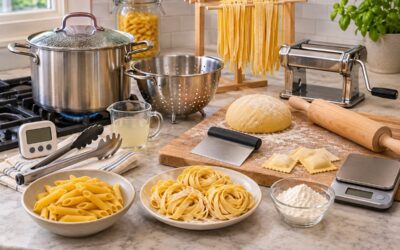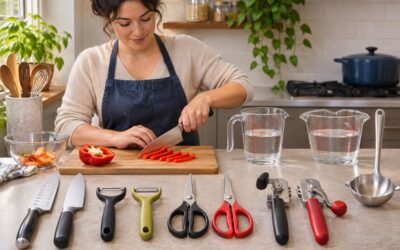
A small kitchen works best with a short list of multi-purpose tools, vertical storage and a clear layout. Decide what you cook most, buy tools that do more than one job, and keep the counters clear. Here is a practical way to plan it.
Plan Around How You Cook
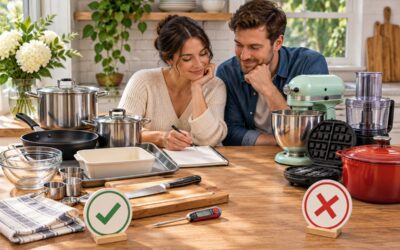
Write down the meals you make in a typical week. A person who mostly makes stir-fries and pasta needs a different set of tools from someone who bakes. Let that list guide what stays and what goes, rather than copying a generic checklist.
A Lean Tool List
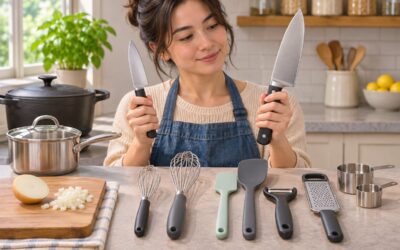
- One chef’s knife, one paring knife and a small cutting board.
- One skillet and one saucepan with a lid, plus a larger pot if you cook for several people.
- A baking sheet that doubles as a roasting tray.
- A wooden spoon, a spatula, tongs and a ladle.
- A set of nesting bowls and a nesting set of measuring tools.
- A colander that folds flat.
Smart Storage Ideas
| Space | Idea | Benefit |
|---|---|---|
| Walls | Rail with hooks or a magnetic strip | Frees drawer space |
| Inside cabinet doors | Slim racks or hooks | Uses wasted space |
| Above the fridge or cabinets | Baskets for rarely used items | Clears eye-level shelves |
| Under the sink | Stackable bins | Keeps supplies neat |
| Shelves | Risers to double the height | Stores more in the same footprint |
Layout Steps
- Clear the counters completely.
- Put back only what you use daily, such as a kettle or a board.
- Keep tools near where you use them: spoons by the stove, knives near the prep spot.
- Store rare tools high or low and daily tools at waist level.
- Leave a clear stretch of counter for chopping.
If you mount items on a wall, use the right fixings for the wall type and follow the maker’s instructions. Keep knives out of easy reach of children.
Habits for a Small Space
- Wash as you go so dishes do not pile up.
- Keep a bin or basket for items that need to leave the kitchen.
- Buy fewer, better tools and replace worn ones.
- Revisit the set every season and let go of anything unused.
Adjusting Over Time
A small kitchen is never finished. Notice which tools you reach for and which ones get in the way, then change the setup a little each month. Moving a hook, swapping a shelf riser or clearing a corner of the counter often makes cooking feel noticeably easier without any new purchases.
Auditing What You Already Own
Before buying any storage or new tools, take everything out and look at it honestly. Many small kitchens feel cramped not because of the space but because of duplicates, rarely used gadgets and items that belong somewhere else. A one-time audit makes every later decision easier.
Sort items into three groups: used weekly or more, used a few times a year, and not used at all. Weekly items earn prime space. Occasional items go to harder-to-reach spots, such as high shelves or the back of a cabinet. Items you never use should leave the kitchen, whether donated, passed on or stored elsewhere in the home.
Look for duplicates and ask whether you need them. Three spatulas might all earn their place if you cook with several pans at once, but five probably do not. The same goes for mugs, containers and mixing bowls. Match the number of items to the number of people who actually use the kitchen, plus a modest allowance for guests.
- Check food containers and match every lid to a base. Discard orphans.
- Check expiration dates in the pantry and group similar items.
- Note any appliance you have not used in a year and consider whether it earns its footprint.
The aim is not an empty kitchen. It is a kitchen where every item is there for a reason and can be reached without moving three other things first.
Choosing Multi-Use Cookware and Tools
In a small space, versatility is more useful than variety. Look for pieces that can do several jobs. A deep skillet with a lid can sear, saute, braise and even bake in the oven if the handle allows it. A medium pot can boil pasta, make soup and cook grains. A sheet pan can roast vegetables, bake cookies and catch drips under a casserole.
Think about how pieces store, not just how they cook. Pans with removable or foldable handles can nest or stack. Pots that share a lid size reduce the number of lids to store. Nesting bowls, collapsible colanders and stackable measuring cups reclaim shelf space. Always check the listing and the maker’s guide to confirm what is oven safe, dishwasher safe or compatible with your stovetop.
Be careful with very cheap thin pans, which may warp and heat unevenly, and which you may need to replace sooner. A smaller number of sturdier items often lasts longer and takes up less room than a large set of lighter ones. That said, you do not need top-of-the-range pieces everywhere. Spend more on what you use daily, like a main skillet and a knife, and less on occasional items.
Ask yourself before each purchase whether it replaces something, does a job you cannot do any other way, and has a spot to live. If the answer to any of these is no, wait.
Using Vertical and Hidden Space Well
Floor and counter space may be limited, but walls, doors and the areas above and below usually offer more room than people use. Start with the wall. A rail with hooks can hold utensils, pans and mugs. A magnetic strip can hold knives, but it should be mounted securely and out of children’s reach. Use fixings suited to your wall type, and follow the instructions from the maker.
Inside cabinets, add shelf risers so that plates, bowls or cans occupy two levels instead of one. Drawer dividers keep utensils from tangling, and a shallow tray stops small items from migrating. Inside cabinet doors, slim racks or hooks can hold lids, cutting boards or measuring spoons.
Look at awkward spaces:
- The side of the fridge can hold a narrow rack or magnetic hooks, if the fridge is magnetic and the placement does not block ventilation.
- The gap between the fridge and wall may fit a slim rolling cart.
- The top of cabinets suits rarely used platters in baskets.
- Under-sink areas work well with stackable bins, but keep cleaning chemicals away from food and children.
Renters should check what they are allowed to attach. Adhesive hooks, tension rods and freestanding racks often avoid drilling. Whatever you choose, check weight limits on each product, and keep heavy items low.
Arranging Zones So Cooking Flows
A small kitchen gets easier to use when it is organized into zones that follow your workflow. A simple model has four: storage for food, prep, cooking and cleanup. Even if the room is just a short run of cabinets, thinking in zones helps you decide what lives where.
Put things where you first need them. Cutting boards, knives and mixing bowls belong near the best stretch of counter. Oils, salt and spices belong near the stove, but not so close to the heat that they degrade. Pots and pans are best near the cooktop, and plates and cups near the dishwasher or drying rack, to shorten the walk during unloading.
Protect your prep surface. If you only have one usable stretch of counter, keep it clear. Appliances that are used daily, such as a kettle or toaster, can stay out if they do not interrupt prep. Others can live on a shelf or in a cabinet and come out when needed.
Make cleanup easy. A drying rack that folds or sits over the sink, a small bin for compost or recycling, and a hook for the dish towel keep the area tidy. Test your layout by cooking a normal meal and noting every time you had to hunt for something or move something aside. Adjust one thing at a time until the routine feels smooth.
If more than one person cooks, ask them where they instinctively look for things. A layout that matches how everyone already moves is easier to maintain than one that depends on a single person remembering where each item lives, and a few simple labels on shelves or bins can help a shared kitchen stay in order.
Common Small Kitchen Mistakes and How to Avoid Them
Certain missteps show up again and again, and most are easy to avoid once you know them.
- Buying storage before decluttering: organizers just hold the clutter in a neater form. Reduce first, then buy only what the remaining items need.
- Overloading wall racks: check weight limits and use correct fixings. A falling rack of pans is dangerous.
- Ignoring ventilation and heat: do not store plastic items or flammable materials close to the stove or oven, and keep towels away from burners.
- Blocking access: shelving or carts that obstruct a door, an appliance vent or the fridge door create new problems.
- Buying novelty gadgets: single-purpose tools take space and often go unused. If a knife or spoon can do the job, skip the gadget.
- Forgetting maintenance: a plan that needs daily tidying to function is fragile. Choose systems that are easy to reset.
Review the setup after a month or two. Cooking habits change, and so should the layout. A short seasonal check, removing what went unused and moving items that proved awkward, keeps the kitchen working without large purchases.
It also helps to set a simple one-in, one-out rule. When a new pan, mug or gadget arrives, decide which existing item it replaces. This keeps the total from creeping upward and ensures that every purchase is a considered one, which matters far more in a small room than in a large one.
FAQ
Should I buy a big set to save space?
Not always. Nesting sets save room, but a large set with many pieces can crowd a small kitchen.
What if I have no counter space?
A cutting board that fits over the sink or a rolling cart can create a temporary work surface.
What are the first things to buy for a tiny kitchen?
Start with a good chef knife, a cutting board, a skillet with a lid and a medium pot. Add other items only when your cooking shows a clear need.
How do I add counter space without remodeling?
A rolling cart, a board that fits over the sink or a fold-down shelf can create temporary workspace. Check weight limits and make sure whatever you add does not block exits or appliances.
Are open shelves a good idea in a small kitchen?
They can make a room feel larger and keep daily items within reach. They do require tidiness, and items may collect grease and dust, so keep only things you use often there.
How should I store knives safely in a small space?
Use a block, a sheath, an in-drawer tray or a securely mounted magnetic strip, and keep them out of reach of children. Avoid loose storage in a drawer where blades touch other metal.
Do I need a dish rack?
Not always, but a compact or over-sink rack helps if you hand wash. A folded towel on the counter can serve in a pinch, though it takes more room and dries slower.
How often should I reorganize?
A quick review each season is usually enough. Do an extra pass if your cooking habits or household change.
The Short Version
Choose multi-use tools, store things vertically and keep counters clear. Build around the meals you actually cook, and add pieces only when you truly need them.