Bakeware mistakes usually come from size, finish and storage. Buying pans that do not match your recipes, or that will not fit your oven and cupboards, leads to uneven results and wasted money. A little planning avoids most of it.
Getting the Size Wrong
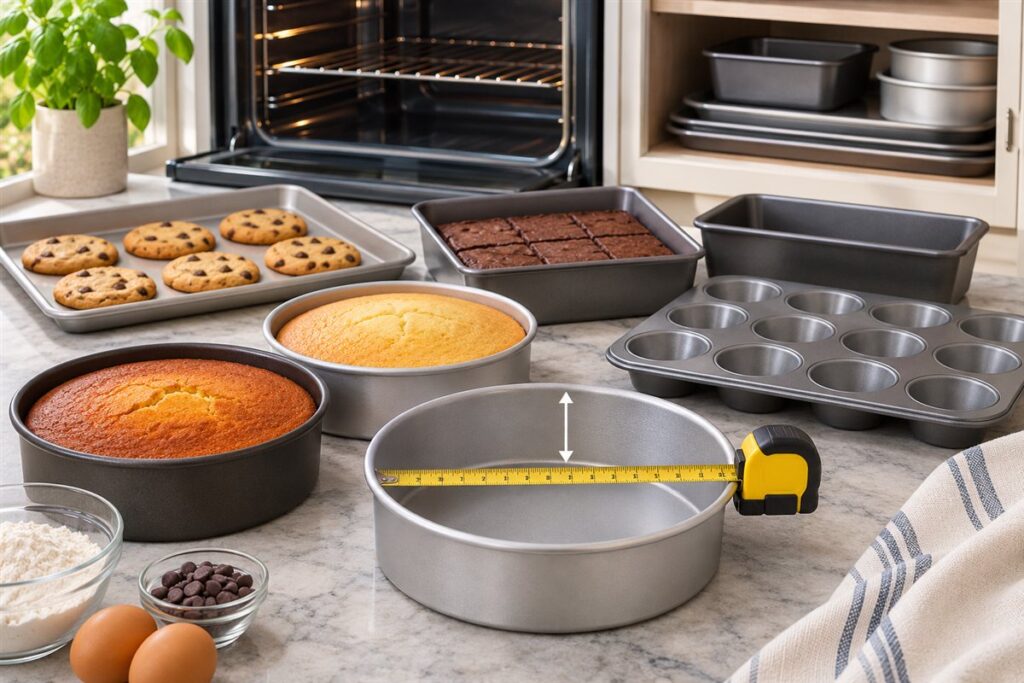
Recipes assume a particular pan size, and a different one changes depth, bake time and texture. A batter spread thin dries out sooner, while a deep pan may need longer. Always check the recipe’s pan size and measure your own pan across the top and the depth.
- Measure inside edge to inside edge, not outside rim.
- Check that the pan fits through your oven door and on the rack.
- Leave a little room around the pan for air to move.
Overlooking Finish and Colour
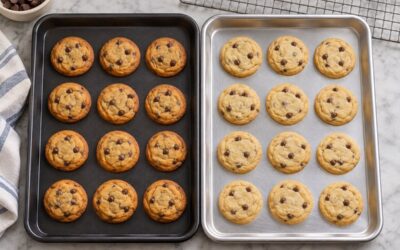
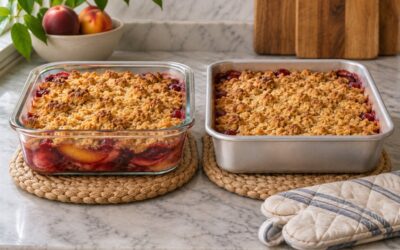
Pale and dark metal finishes absorb heat differently. A dark pan tends to brown faster, so recipes written for light pans may need a shorter time or slightly lower setting. Glass and ceramic hold heat longer and also behave differently from metal.
The simple rule is to know what your recipe expects and adjust gently. Follow the maker’s guide for oven limits and any advice on adjusting time.
Skipping the Practical Details
Think about how a pan will be used and cleaned across a whole year, not just on the first bake. A pan that is awkward to wash or store tends to stay in the cupboard.
- Look at the rim. A rolled or reinforced edge resists warping better than a thin one.
- Check whether the surface needs lining with paper or a light coat of fat.
- Read the cleaning notes, since some surfaces dislike soaking or harsh scrubbing.
- Consider stacking. Pans that nest save a lot of room.
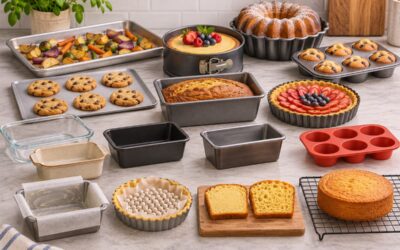
Buying a very large set of shapes you rarely use is another common error. Most bakers cover the majority of recipes with a few basics.
Core Kit Comparison
| Pan type | Common use | Worth owning if |
|---|---|---|
| Flat sheet pan | Cookies, roasting vegetables | You cook or bake often |
| Square or rectangular pan | Brownies, bars, sheet cakes | You bake for a group |
| Round cake pans | Layer cakes | You make celebration cakes |
| Loaf pan | Bread, loaf cakes | You bake bread |
| Muffin pan | Muffins, cupcakes | You bake small portions |
FAQ
Can I swap one pan size for another?
Sometimes, but expect the timing to change. Use the same volume of batter and watch the bake closely, checking for doneness with the cues in the recipe.
Do I need to replace worn bakeware?
If a pan is badly warped, or the surface is peeling or flaking, follow the maker’s guidance and consider replacing it.
The Short Version
Match pans to your recipes, know how finish changes browning, and think about storage. A small, well-chosen set beats a large one you never open.