Disclosure: As an Amazon Associate, topratedkitchenware.com earns from qualifying purchases. Links on this page are affiliate links; they cost you nothing extra. Prices and availability change often, so check the current Amazon listing before you buy.
Searching for kitchenaid mixer alternatives usually means one of three things: the KitchenAid you want costs more than your budget allows, your baking has outgrown what its tilt-head design does best, or you simply want to know what else the market offers before committing to the default choice. All three are good reasons, because the stand mixer market beyond KitchenAid is more interesting than its reputation suggests. Rival machines win on price, on dough capacity, on specialised bread engineering, and on design, and a few of them beat the benchmark at the specific jobs they were built for. This guide compares the alternatives that genuinely deserve your attention, verified listing by verified listing, explains the philosophy behind each design, and keeps the KitchenAid Artisan in the frame throughout as the standard they are measured against. By the end you will know which alternative fits your kitchen, and, just as usefully, when the honest answer is to buy the KitchenAid after all. Readers whose needs are narrower can also browse our list of mixers excluding KitchenAid for a wider field.
In this guide
Quick Picks: The Alternatives at a Glance
| Machine | Design idea | Choose it if… |
|---|---|---|
| Cuisinart Precision Master 5.5-Quart | The full-size rival at a friendlier tier | You want Artisan-class capacity and speeds for less |
| Hamilton Beach 4-Quart Stand Mixer | The budget planetary mixer | You bake occasionally and want the lowest sensible entry |
| Bosch Universal Plus | The bottom-drive dough specialist | Bread in quantity is your main event |
| Ankarsrum Assistent Original | The rotating-bowl Scandinavian system | You knead large doughs and value a lifetime machine |
| Smeg 50’s Retro Stand Mixer | The design-led planetary mixer | Looks matter as much as mixing in your kitchen |
| KitchenAid Artisan (the benchmark) | The reference tilt-head | You want the deepest ecosystem and colour range |
How the Alternatives Differ: Four Design Philosophies
Stand mixers look interchangeable on a shelf and are anything but. The KitchenAid pattern, which Cuisinart, Hamilton Beach, and Smeg also follow, is the planetary tilt-head: a motor in a tilting head drives a beater that orbits the bowl, and attachments mount on a hub at the front. It is the most versatile domestic format, equally at home creaming, whipping, and kneading moderate doughs. The Bosch Universal Plus inverts the layout entirely: the motor sits in the base and drives tools from below, through the centre of an open bowl, which makes it a dough machine first and a general mixer second, with a huge working capacity and unobstructed access to the bowl. The Ankarsrum takes a third path, rotating the bowl itself against a stationary roller and scraper, an arrangement borrowed from commercial dough handling that kneads large, wet doughs with unusual gentleness and strength. Understanding which philosophy matches your baking matters more than any specification, because each design’s strengths and awkwardnesses flow from its layout. Our guide to choosing a stand mixer generalises the framework for shoppers comparing across the whole category.

Cuisinart Precision Master 5.5-Quart — The Direct Rival
At a glance: Cuisinart stand mixer with a 5.5-quart stainless steel bowl, 12 speeds, and a chef’s whisk, mixing paddle, dough hook, and splash guard in the verified listing.
Cuisinart’s Precision Master is the alternative most shoppers are really asking about: a full-size planetary tilt-head with a slightly larger bowl than the Artisan, more speed steps, and a street position a clear tier below the benchmark. In the kitchen it behaves like what it is, a serious generalist: creaming is thorough, whipping is brisk, and dough work covers standard loaves with the same caveats as any tilt-head. Its accessory ecosystem is smaller than KitchenAid’s, which is the honest price of leaving the default choice, but for bakers who use the core tools and little else, the trade is painless.
Strengths
- Capacity and speed range that match or exceed the benchmark’s, at a friendlier tier
- Complete core tool set including a splash guard in the box
- Refined, quiet-mannered operation for its class
Trade-offs
- A smaller attachment ecosystem than KitchenAid’s hub world
- Less colour theatre; the range is tasteful rather than vast
- Resale recognition trails the benchmark’s
Best for: value-conscious general bakers who want full size without the flagship tariff. Not suited for: attachment collectors or colour-first buyers.

Hamilton Beach 4-Quart — The Budget Gateway
At a glance: Hamilton Beach electric stand mixer, 4-quart capacity, 7 speeds, with dough hook, flat beater, whisk, and splash guard in the verified listing.
Hamilton Beach’s proposition is disarmingly simple: genuine planetary mixing at the lowest tier at which a stand mixer makes sense. It creams, beats, and whips with more competence than its price suggests, handles light doughs in small batches, and asks little counter space in return. What it does not offer is the benchmark’s mass, longevity expectations, or dough authority, and heavy weekly baking will find its limits. For the occasional baker, the holiday baker, and the first-flat kitchen, those limits may never be reached, which makes this the alternative that saves the most money for the people who need the least machine.
Strengths
- The lowest sensible entry point into real planetary mixing
- Complete tool set and splash guard included
- Light and compact enough for small kitchens and storage
Trade-offs
- Light dough capacity and a smaller bowl
- Build and longevity expectations sit a class below the benchmark
- Seven speeds with less finesse at the extremes
Best for: occasional bakers and small budgets that still want a stand mixer. Not suited for: weekly bread bakers or heavy cookie production.
Bosch Universal Plus — The Dough Specialist
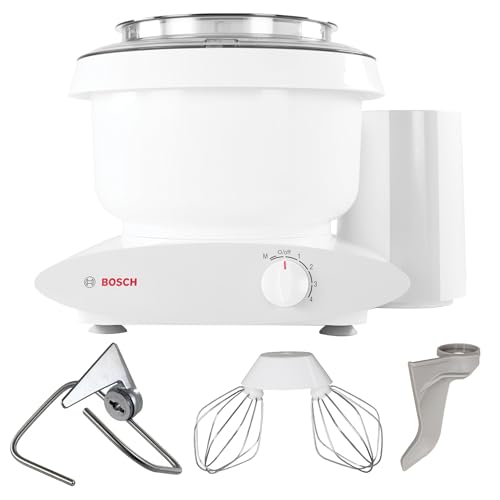
At a glance: Bosch Universal Plus stand mixer, 500-watt base-drive design, 6.5-quart bowl, supplied in the verified listing as a bundle with wire whips, dough hook, and a dough hook extender.
The Bosch is the alternative that bread bakers write essays about. Driving from below, it kneads large batches of dough, multiple loaves’ worth, with an ease no tilt-head matches, because the design was born for dough and everything else is an adaptation. The open bowl is a joy for adding ingredients, and the machine’s capacity swallows family-scale and bake-sale quantities alike. Its compromises live at the other end of the repertoire: small whipped quantities sit awkwardly in the big bowl, the aesthetic is utilitarian, and the accessory path is its own rather than an industry standard. If dough is your main event, none of that matters much.
Strengths
- Outstanding large-batch dough capacity and kneading stamina
- Open-bowl access that makes adding ingredients effortless
- A decades-long reputation among serious bread households
Trade-offs
- Small-batch whipping and creaming are its weak end
- Utilitarian looks and a distinct accessory ecosystem
- The bowl and drive layout take a week to become intuitive
Best for: bread-first households baking in quantity. Not suited for: dessert-focused bakers who mostly whip and cream small batches.
Ankarsrum Assistent Original — The Lifetime Machine
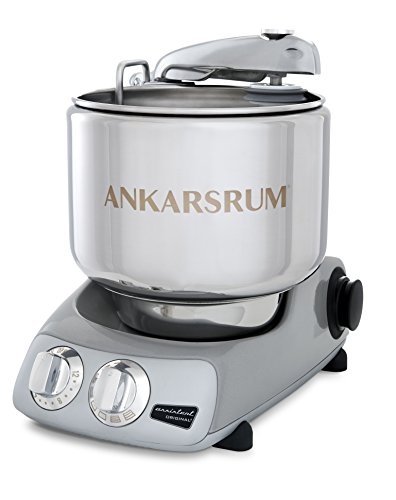
At a glance: Ankarsrum Original stand mixer (AKM6230) in Jubilee Silver, the Swedish rotating-bowl system with a large stainless bowl driven against a roller and scraper.
The Ankarsrum is the alternative for bakers who think in decades. Its bowl rotates against a stationary arm, kneading dough the way commercial systems do, with a capacity and gentleness that handle everything from delicate enriched doughs to large lean batches. The machine is built in Sweden to a standard that treats domestic appliances as heirlooms, and its accessory system, while entirely its own, is deep and serious. The costs of entry are real: a premium tier, a learning curve unlike any tilt-head, and a footprint that asks for a committed home. For the baker who kneads weekly and buys once, it is less an alternative to KitchenAid than an answer to a different question altogether.
Strengths
- Superb dough handling across large and delicate batches alike
- Exceptional build quality with a buy-once philosophy
- Generous bowl capacity for production baking
Trade-offs
- Premium pricing and a distinct, proprietary accessory world
- A genuine learning curve for tilt-head natives
- Large presence on the counter
Best for: committed bread bakers buying a lifetime machine. Not suited for: casual bakers or anyone who wants the familiar tilt-head routine.

Smeg 50’s Retro Stand Mixer — The Design Statement
At a glance: Smeg 50’s Retro stand mixer in red, with a die-cast aluminium body, stainless steel bowl, 10 speed settings, and a 600-watt motor per the verified listing.
Smeg sells the alternative for kitchens where the mixer is part of the room’s design, and it backs the styling with real planetary mixing: ten speeds, a solid die-cast body, and competent performance across the general repertoire. It will not out-knead the specialists or out-value the budget picks, and its accessory range is narrower than the benchmark’s, but as a generalist machine that doubles as sculpture it has few peers. Buyers should choose it with eyes open: the premium buys design and solidity in equal measure, and for the right kitchen that is a fair trade stated honestly.
Strengths
- Iconic retro design in a solid die-cast body
- Competent ten-speed planetary mixing for general baking
- Part of a matching appliance family for design-led kitchens
Trade-offs
- Premium pricing for its capability class
- Narrower accessory ecosystem than the benchmark
- Dough work is generalist-grade, not specialist-grade
Best for: design-first kitchens that still bake regularly. Not suited for: dough specialists or value maximisers.
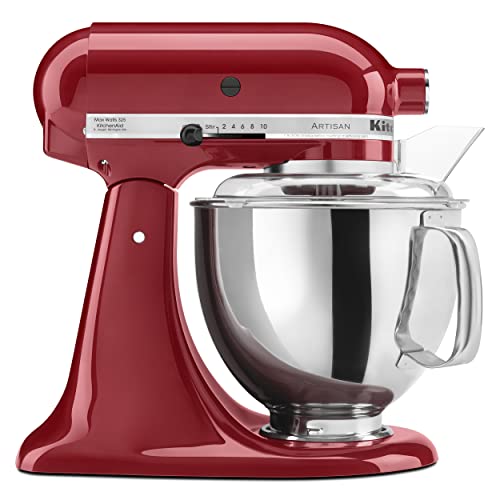
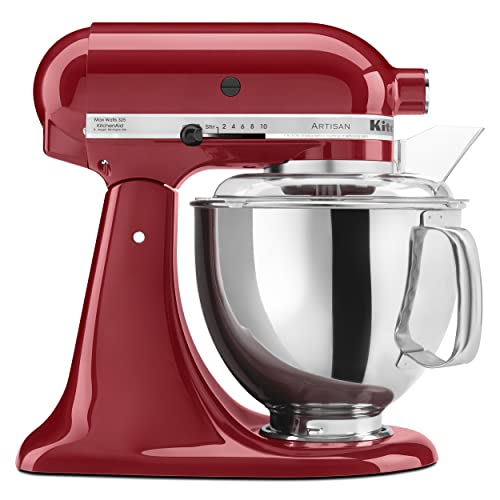
The Benchmark Itself: KitchenAid Artisan
At a glance: KitchenAid Artisan 5-quart tilt-head stand mixer (KSM150PS), 10 speeds, handled bowl, pouring shield in the verified listing, and the family’s full hub compatibility.
Any honest alternatives guide must say plainly why the benchmark is the benchmark: the deepest accessory ecosystem in the category, the widest colour range, parts support measured in decades, and a generalist performance with no embarrassing weak end. The alternatives above each beat it somewhere specific: price, dough, design, or capacity. None beats it everywhere, and for a baker whose work is varied and whose ambitions include attachments, the Artisan remains the safe centre of the market against which every alternative should be priced.
Strengths
- The category’s deepest attachment and parts ecosystem
- Balanced performance across every common task
- Colour range and resale strength no rival matches
Trade-offs
- Premium tier pricing for the tilt-head class
- Dough capacity capped by its hinged design
- Its popularity means few genuine bargains outside promotions
Best for: varied bakers who want the ecosystem and the safe long-term choice. Not suited for: dough specialists or the tightest budgets.
Head to Head: The Alternatives on the Criteria That Matter
Dough, ranked by honesty
The Ankarsrum and the Bosch stand alone at the top for dough, in that order for finesse and the reverse for raw value: both knead quantities and stiffnesses that tilt-heads negotiate with. The Artisan and the Cuisinart occupy the competent middle, handling standard loaves and moderate batches with the usual tilt-head courtesies. The Smeg matches that middle on paper and feels a touch more delicate in manner. The Hamilton Beach kneads small, soft doughs and should not be asked for more. If your alternative search began with bread disappointment, your shortlist is the first two names in this paragraph and nothing else, a conclusion our specialist guide to stand mixers for bread dough reaches from the other direction.
Whipping and creaming
Here the planetary machines rule. The Artisan and Cuisinart whip and cream with the authority of designs built around the task, and the Smeg follows closely. The Hamilton Beach performs creditably at its scale. The Bosch and Ankarsrum, for all their dough genius, are at their least elegant with a small quantity of cream in a large bowl; owners of both keep a hand mixer for exactly this job, which tells you everything about where their genius lives. Dessert-led bakers should weight this section as heavily as bread bakers weight the last one.
Capacity and batch rhythm
Capacity means different things across philosophies. The Bosch’s 6.5-quart bottom-drive bowl and the Ankarsrum’s generous rotating bowl are production capacities, sized for multiple loaves and doubled everything. The Cuisinart’s 5.5 and the Artisan’s 5 quarts are family capacities, sized for standard recipes with headroom. The Smeg sits with them in spirit. The Hamilton Beach’s 4 quarts are household-modest, sized for undoubled recipes and small families. Match the word to your life before matching the number to your budget.
Ecosystems and the ten-year view
A stand mixer is a platform purchase, and platforms diverge over time. KitchenAid’s hub ecosystem is the industry’s deepest, with attachments for pasta, grinding, milling, and more, plus parts support that treats old machines as current customers. Cuisinart and Smeg offer respectable but smaller ranges. Bosch and Ankarsrum run serious proprietary systems oriented to their machines’ strengths. Hamilton Beach keeps things simple and inexpensive. None of these is a wrong answer, but they are different futures: the attachment enthusiast, the dough specialist, and the minimalist each flourish in a different ecosystem, and the time to choose yours is before the first machine, not after the third attachment.
Common Mistakes When Leaving the Default Choice
Buying the dough specialist for a dessert kitchen. The Bosch and Ankarsrum are magnificent at what they do and merely adequate at small whipped work. Match the philosophy to the repertoire, not to the reputation.
Underbuying capacity to save money. A budget mixer that forces split batches weekly costs more in time and temper than the step up would have. The Hamilton Beach is a fine machine for occasional baking and a false economy for production habits.
Ignoring the ecosystem. If pasta rollers, grinders, or mills are in your future, price the attachments in each system before choosing the machine, because the machine is the cheap part of some ecosystems.
Assuming the benchmark is overpriced by default. The Artisan’s premium buys support, colours, resale, and the deepest accessory pool. For varied bakers it is often the rational purchase, which is why it anchors this guide rather than being dismissed by it. Our full KitchenAid mixer comparison shows how it sits within its own family if you decide to stay.
Forgetting the counter. The Ankarsrum and Bosch ask for committed counter homes; the Hamilton Beach can live in a cupboard. Measure first, as our notes on stand mixers for small kitchens insist for every machine in this class.
How to Choose: A Five-Question Method
Answer in order and stop when the answer is clear. One: is dough your main event? If yes, Bosch for value in quantity, Ankarsrum for finesse and longevity. Two: is your budget the binding constraint while your baking stays occasional? Hamilton Beach. Three: do you want the benchmark’s shape of machine at a friendlier tier, accepting a smaller ecosystem? Cuisinart. Four: is the machine a design object in a kitchen you are composing? Smeg. Five: is your baking varied, attachment-curious, and long-term? Then the alternative search has done its job, which was to confirm that the Artisan is your machine, bought now with knowledge rather than by default. There is no sixth question, because every household we have ever advised fits one of the five.
Learning Curves: The First Month With Each Design
Alternatives differ in how much of you they ask for in the first month. The planetary tilt-heads, Cuisinart, Hamilton Beach, and Smeg, ask almost nothing: if you have ever seen a stand mixer used, you already know them, and the first bake feels familiar by the second batch. The Bosch asks for a week of re-education. Its tools mount from below, its bowl is open and inviting, and its dough hook works with a rhythm that tilt-head owners initially misread, until the first large batch of bread dough converts them. The Ankarsrum asks the most and repays it longest: the roller-and-scraper system has its own technique for adding flour and judging development, and owners describe a month of apprenticeship followed by years of fluency. None of these curves should frighten a committed baker, but casual bakers should count the Ankarsrum’s apprenticeship as part of its price, and households buying a machine for a reluctant cook should stay with the familiar format. A machine that intimidates its owner is an alternative in name only.
Cleaning and Daily Manners
Daily life with these machines diverges in the sink as much as at the bowl. The tilt-heads share a routine: bowl and tools wash conventionally, the head wipes down, and flour dust collects in the hinge area where a brush keeps order. The Bosch’s open bowl rinses easily and its base-drive design keeps the motor out of the splash zone entirely, a quiet hygienic elegance; its larger bowl, however, is a larger object in a domestic sink. The Ankarsrum’s bowl and roller wash straightforwardly, and its lack of a tilting head means fewer crevices for batter to colonise. The Smeg’s glossy die-cast body shows every splash and rewards a wipe after each use, which its owners, having bought it for beauty, tend to provide willingly. None of these routines is burdensome; all of them reward the same five minutes of attention, and the machine you will clean happily is, once again, the machine whose design you chose on purpose.
The Wider Field: Names You Will Meet and How to Place Them
Beyond the five alternatives reviewed here, the market offers a long tail of budget planetary mixers from brands such as Dash, Aucma, and a rotating cast of online labels, plus compact curiosities that promise stand-mixer results at hand-mixer prices. Our advice on the tail is uniform: judge by mass, by the honesty of the dough claims, and by whether parts and tools will exist in five years. Some are perfectly serviceable light-duty machines for dorm rooms and first flats. None has the support depth of the names in this guide, and a baker with serious intentions should treat the tail as a starting point to outgrow rather than a destination. At the other end, professional planetary machines from commercial manufacturers exist for those whose home baking has become a business, and they belong to a different buying conversation entirely, one involving premises wiring and service contracts. The five machines reviewed above occupy the serious domestic ground between those extremes, which is where nearly every reader of this guide actually lives.
Pairing Strategies: When the Alternative Is a Second Machine
An under-discussed outcome of an alternatives search is the two-machine kitchen, and it deserves a fair hearing. A Bosch or Ankarsrum for dough, paired with an inexpensive hand mixer for small whipped work, covers the repertoire with specialist excellence at both ends, at a total outlay comparable to a flagship generalist. Conversely, an Artisan for general work paired with nothing at all covers the same repertoire with less excellence at the extremes and far less counter commitment. Households with the space and the production habits of a small bakery lean toward the first arrangement; households baking for a family lean toward the second. The mistake is drifting into a two-machine kitchen by accident, accumulating a generalist that almost kneads and a specialist that almost whips, when a deliberate choice at the start would have produced either a clean pairing or a contented single machine.
Support, Parts, and the Five-Year Test
Apply a five-year test to every machine in this guide: in five years, when a beater coating chips or a bowl meets the floor, how easily does life continue? KitchenAid passes with the deepest marks, its tools and bowls stocked everywhere and its older models still treated as current. Cuisinart, as a major brand with a broad appliance business, passes comfortably. Bosch and Ankarsrum pass through dedicated channels, with the Ankarsrum’s importer network notably devoted and the Bosch’s dough-machine community an informal support system of its own. Smeg passes through its appliance dealer network, at dealer pace. Hamilton Beach passes on price: its tools are inexpensive enough that replacement is a shrug. None of the six strands its owner, which is precisely why they are the six in this guide, but the depth of the first answer is a genuine part of the benchmark’s premium and should be counted when its price is compared against rivals that look equivalent on the shelf.
Noise and Household Diplomacy
Alternatives sound different, and in open-plan homes sound is a feature. The tilt-heads share a family resemblance in voice, a mechanical brightness at speed that settles under load. The Cuisinart is often remarked on as the mannerly one of its class. The Bosch’s base drive produces a lower, more contained working note, and its dough work is comparatively serene because the design is never straining at its speciality. The Ankarsrum is the quiet marvel of the group at dough speeds, its rotating bowl producing more rhythm than roar, though its size means the sound it does make has presence. The Hamilton Beach, light in mass, is the most likely to add vibration to volume on a hollow counter. Early-morning bakers and flat-dwellers should weight this section; everyone should put a mat under any of them and discover how much of mixer noise was ever the counter’s fault.
Resale and the Exit Question
Durable goods should be bought with their exits in view. The Artisan resells fastest and firmest, a liquid asset among appliances. The Ankarsrum resells to a smaller but devoted market that knows exactly what it is, and holds value accordingly. The Bosch’s bread community gives it a ready secondhand audience. The Cuisinart and Smeg resell respectably, the Smeg helped by its design audience. The Hamilton Beach resells for what it is, a working budget tool, quickly and cheaply. None of this should lead a purchase, but for households whose baking is evolving fast, buying the machine with the graceful exit is a hedge worth having, and it is one more line in the benchmark’s favour that alternatives shoppers should price honestly rather than resent.
What the Benchmark’s Ecosystem Really Contains
Since the ecosystem is the benchmark’s trump card, alternatives shoppers deserve its contents itemised rather than invoked. The hub at the front of a KitchenAid accepts, across the current range, pasta rollers and cutters that turn the mixer into a pasta studio, a food grinder for mince and sausage work, a grain mill, a spiralizer, a food processor attachment, an ice cream maker driven from the bowl, citrus and general juicing options, slicers and shredders, and a long tail of specialised tools that appear and retire with the seasons. The point is not that any household needs all of them; almost none does. The point is optionality over a decade of evolving hobbies, plus a secondhand market so deep that yesterday’s attachments circulate at friendly prices. Rival ecosystems answer with focus: Bosch’s attachments serve its dough-and-prep philosophy, Ankarsrum’s are engineered like its machine, Cuisinart’s cover the greatest hits. A baker whose five-year plan includes pasta nights and sausage weekends should count the ecosystem as a first-order factor. A baker whose plan is bread, cake, and cookies can safely treat it as a footnote and let dough, design, or budget lead instead, which is what makes the alternatives in this guide real alternatives rather than consolation prizes.
The Ranked Summary, With Its Reasoning Attached
Rankings without context are decoration, so here is this guide’s order with its conditions stated. For the general baker leaving the default choice on price, the Cuisinart ranks first: it is the benchmark’s experience with the least surrendered. For the dough-led household, the Ankarsrum ranks first on merit and the Bosch first on value, and the order between them is a budget question, not a quality question. For the design-led kitchen, the Smeg stands alone, because no other machine in the guide was drawn the way it was. For the smallest budgets and the lightest duties, the Hamilton Beach ranks first by being honest about what it is. And across all conditions, the Artisan remains the reference that defines the scale, the machine each alternative beats somewhere and none beats everywhere. A ranking that survives its conditions is a tool; one that hides them is an advertisement. Keep the conditions attached to the order and this one will serve you in the shop.
Counter Planning, Machine by Machine
Each design asks the kitchen for something different, and the tape measure should have its say before the heart does. The tilt-heads, Cuisinart, Smeg, Hamilton Beach, and the Artisan alike, need depth for the bowl and height for the raised head, with the Hamilton Beach the only one light enough to make cupboard storage a genuine lifestyle. The Bosch sits lower and wider in spirit, its open bowl needing elbow room at the sides rather than height above, which suits kitchens with low cabinets and generous counters. The Ankarsrum is the largest presence of the six and the one most likely to become the counter’s permanent anchor tenant; buy it only with a named home in mind. In every case, the machine’s home should be near the flour and the oven, because the walk between them is made carrying full bowls, and the best mixer in this guide will be resented in a kitchen where that walk crosses a room. Alternatives are chosen on philosophy, but they are lived with in centimetres.
Gifts and Registries Beyond the Default
Registries default to the benchmark so reliably that choosing an alternative can feel like a statement, and for some couples it should be: the bread-devoted pair who register for the Bosch or the Ankarsrum are telling their guests the truth about their kitchen, and the design-led pair who choose the Smeg are doing the same. Gift givers should take the hint gracefully and buy the machine on the list rather than substituting the famous name, because the couple’s research is likely better than the giver’s instincts. Where no list exists, the Cuisinart is the alternative most likely to delight a general baker without explanation, and the Hamilton Beach is the kind, budget-true gift for a first kitchen. The benchmark remains the safest unlisted gift of all, which is not a failure of imagination but a recognition of why defaults become defaults.
Coming From a Hand Mixer: What Changes, What Does Not
Many alternatives shoppers are not switching brands but graduating from a hand mixer, and their expectations deserve calibrating. Every machine in this guide will transform creaming, whipping endurance, and dough from arm labour into supervision, and the first month feels like acquiring a sous-chef. What does not change is technique: ingredients at the right temperature, flour added gradually, bowls scraped at the right moments, and dough judged by its feel rather than the clock. A stand mixer amplifies good habits and bad ones with equal fidelity, which is why the budget Hamilton Beach in skilled hands outperforms a flagship in careless ones across most of the repertoire. Graduates should therefore choose their machine by workload and philosophy, as this guide has argued throughout, and invest the savings from a mid-tier choice in the unglamorous upgrades that actually raise a kitchen’s game: a scale, good bowls, and the ingredients themselves.
Materials, Longevity, and the Responsible Purchase
The six machines in this guide share a virtue their price spread might conceal: all are built as durable goods rather than disposables, with metal where it matters and manufacturers who sell parts after the sale. The responsible purchase among them is the one matched so well to its household that it is never replaced for inadequacy, because replacement, not manufacture, is where appliance waste accumulates. That principle quietly favours buying the specialist you need over the generalist you might outgrow, and the generalist you will love over the specialist whose learning curve will exile it to a cupboard. Read your own baking with the honesty this guide has tried to model, and the alternative you choose, whichever name it carries, will be the sustainable one as a side effect of being the right one.
The Alternative Inside the Family
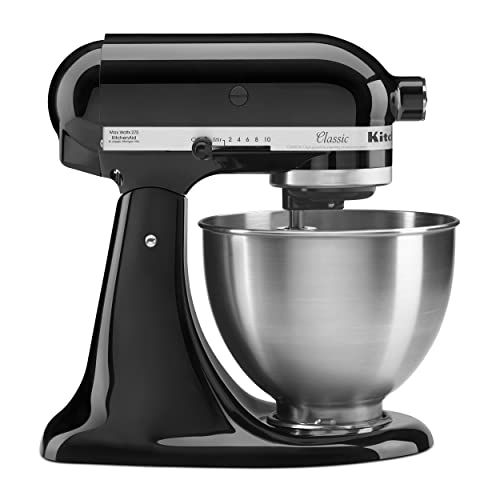
A complete alternatives guide should acknowledge the option hiding in plain sight: staying with KitchenAid but stepping down its ladder. The Classic offers the benchmark’s platform, hub, and support at the family’s lowest tier, and for a shopper whose objection to the Artisan is purely price, it is a more coherent answer than a rival brand, because the ecosystem and the parts support come with it. The Artisan Mini answers the size objection from inside the family as well. Our comparisons of classic versus artisan mini and the wider family in the kitchenaid mixer comparison guide cover that internal ladder in detail. The external alternatives in this guide earn their place when the objection is different: when dough philosophy, design, or a rival’s value at full size is the point. Know which objection is yours, and you will know whether your alternative wears the same badge or a different one.
The Last Word on Leaving the Default
Default choices become defaults by serving the median kitchen well, and the median kitchen is a real place with varied baking, moderate dough, and a decade of attachments curiosity ahead of it. The alternatives in this guide exist for the kitchens that are not median in some specific, nameable way: dough-led, budget-bound, design-led, or value-led at full size. Name your kitchen’s deviation honestly and the right machine selects itself from the six above with unusual clarity. Fail to name it, and you will buy either the default by inertia or an alternative by fashion, and both mistakes cost the same decade. The shoppers who end up happiest with an alternative are those who can finish the sentence that began their search: I need something other than the benchmark because. Finish yours, and buy accordingly.
Controls and Speeds: The Interface Layer
Interfaces divide the six more than brochures admit. The tilt-heads use levers and dials in the traditional manner, with speed counts from Hamilton Beach’s seven to Cuisinart’s twelve, and the practical truth is that bakers live at three speeds regardless of how many are offered: the gentle start, the working middle, and the whip. Extra steps buy finesse in the transitions, which experienced bakers appreciate and beginners never miss. The Bosch’s control is a simple dial matched to its base-drive calm, and the Ankarsrum adds a timer, a feature its owners come to love because dough work is timed work and walking away from a kneading bowl is a legitimate ambition. Judge controls by your habits: the baker who hovers needs only clarity; the baker who multitasks benefits from the machine that can be trusted with a timer and a closed lid. In neither case does the speed count on the box deserve the weight marketing gives it, in this guide’s six or in any other line-up.
Buying Notes: Bundles, Channels, and What to Check
Each machine in this guide reaches the market differently, and the differences are worth a paragraph of diligence. The Bosch is frequently sold in bundles, like the verified listing used here, whose extender and whip combinations vary; read the bundle’s contents as carefully as any retail variant in the KitchenAid family, because the base machine is constant and the value lives in the box. The Ankarsrum is sold through specialist channels whose staff tend to know the machine deeply, an advantage worth using: ask them about the accessory path for your baking before choosing a configuration. The Cuisinart, Smeg, and Hamilton Beach move through general retail with seasonal promotions that reward the same same-day comparison discipline recommended throughout this series. And the Artisan, as established, is promoted in waves that make its street price a moving target. In all six cases, record the model code, confirm the tool list in writing, and keep the receipt with both. Platforms are bought once and accessorised for years, and the paperwork of the first day is what makes the tenth year simple.
A Note on Wattage and Other Misleading Numbers
Alternatives shoppers are bombarded with wattage figures, and a service this guide can do is to retire them. Wattage describes electrical consumption under a manufacturer’s chosen test, not mixing authority, and the numbers are not comparable across brands, designs, or drive layouts: a bottom-drive machine and a tilt-head convert electricity into work through entirely different machinery, and a rotating-bowl system through a third. The Ankarsrum kneads more dough than machines advertising multiples of its consumption; the Bosch’s modest figure belies its dough stamina; the budget machines’ figures flatter them in both directions. Judge by design, by mass, by the task-specific evidence in this guide, and by the manufacturer’s own batch guidance where published. The wattage on the box is the least informative number in the entire comparison, and the shopper who learns to ignore it has taken the first step toward reading mixers the way engineers build them.
One closing observation ties the six machines together. Each of them, in its own philosophy, is an attempt to answer the same question the benchmark answered first for the mass market: how should a home kitchen mechanise mixing? The tilt-heads answer with versatility, the bottom-drive with dough-first openness, the rotating bowl with commercial gentleness at domestic scale. There is no scandal in the benchmark being the most popular answer, and no virtue in choosing an alternative for its own sake. The virtue is in the match, between a machine’s philosophy and a household’s actual baking, and matches made on that basis have a way of lasting decades, whichever badge they wear. Make yours deliberately, and the machine will repay the deliberation every week it works.
How This Guide Verified Its Machines
A word on method, because alternatives guides are only as good as their listings. Every machine recommended here was checked against the current retail catalogue before writing, and the links in this guide point to the specific verified listings whose titles, capacities, and included tools are quoted in each review. Where a specification in the text traces to a listing, such as the Bosch bundle’s contents or the Smeg’s motor figure, it is the listing’s own claim, presented as such. Where the guide speaks of behaviour, dough stamina, whipping manners, learning curves, it speaks from the accumulated evidence of each design’s long ownership record rather than from any single test. Readers comparing live listings should expect colours and bundle contents to vary around the verified cores, and should apply the model-code discipline this series recommends everywhere: the code identifies the machine, the listing identifies the box, and together they identify the purchase.
It bears repeating, at the end of a long guide, that none of the six machines here is a mistake in the abstract. Mistakes in this category are relational: a specialist in a generalist’s kitchen, a lightweight in a production household, a flagship bought for a fortnight’s annual use. The comparisons, rankings, and methods above exist to prevent relational mistakes, which is why they keep returning to your repertoire, your counter, and your decade rather than to any machine’s isolated virtues. Bring those three facts to the purchase and the alternatives market becomes what it should be: not a maze of rival claims, but a short list of honest machines, one of which is shaped like your baking life.
A Word on Trying Before Committing
Alternatives divide by philosophy, and philosophies are felt in the hands faster than they are understood on the page, so this guide ends its advice with an errand. If a retailer near you stocks any of these machines, go and handle them: tilt the tilt-heads, lift the Bosch’s bowl, turn the Ankarsrum’s great bowl on its drive, and notice which machine’s logic your hands accept without translation. Borrow where borrowing is possible; a friend’s machine, making your recipe in your presence, is worth a shelf of reviews. Where handling is impossible, let the return policy carry the risk and buy from a channel whose terms you have read, because a stand mixer is a heavy parcel and a decade-long commitment, and the cheapest listing is no bargain if changing your mind costs a morning and a courier fee. The machines in this guide have all earned their places; the errand exists to find which place is yours.
Whichever machine the errand selects, buy it completely: the full tool set in the correct fitment, the bowl it was designed around, and the paperwork kept with the model code recorded. An alternative chosen deliberately and equipped completely will out-serve a benchmark bought hastily and equipped by halves, because kitchens run on systems rather than on single inspired purchases. That, in the end, is the alternatives market’s deepest lesson, and it applies with equal force whichever badge comes home in the box.
Keep the receipt, the model code, and this guide’s five questions together in a drawer, and the machine’s second decade will be as well administered as its first week was well chosen. Future you, ordering a replacement beater in year nine without a moment’s research, will be grateful for the filing.
Frequently Asked Questions
What is the closest alternative to a KitchenAid Artisan?
The Cuisinart Precision Master 5.5-quart is the nearest neighbour: the same planetary tilt-head philosophy, a slightly larger bowl, more speed steps, and a friendlier price tier. What you give up is the depth of KitchenAid’s attachment ecosystem, its colour range, and some resale strength. For bakers who live on the core tools, it is the alternative most likely to satisfy completely.
Which alternative is best for bread dough?
The Ankarsrum Assistent for finesse across large and delicate doughs, and the Bosch Universal Plus for large-batch value. Both were designed around dough in a way no tilt-head was, and both knead quantities that make generalist machines negotiate. Occasional loaf bakers do not need either; weekly bread households should shortlist nothing else until these two are eliminated.
Are cheaper stand mixers worth it?
At the Hamilton Beach level, yes, for the baking they are built for: occasional cakes, cookies, and whipped work in modest batches, with planetary action that shames hand-mixer compromises. They become false economy when asked to live a heavier life, because their dough capacity, mass, and longevity expectations are honestly lower. Match the machine to the workload and the cheap mixer is a bargain; mismatch them and it is a down payment on the machine you actually needed.
Do non-KitchenAid mixers have good attachments?
They have good attachment systems of their own, narrower than KitchenAid’s. Bosch and Ankarsrum offer serious proprietary ranges aligned with their strengths; Cuisinart and Smeg cover the popular categories. What none matches is the sheer breadth and secondhand abundance of the KitchenAid hub world. If attachments are central to your plans, compare ecosystems before machines, because you are buying a platform, not an appliance.
Should I just buy the KitchenAid?
If your baking is varied, your budget reaches it, and you value the ecosystem and the colour choice, yes, and this guide’s alternatives will have served you by confirming the choice rather than replacing it. The shoppers who should not default to it are the dough specialists, the truly budget-bound, and the design-led, each of whom has a machine in this guide built more precisely for their kitchen than the benchmark is.
How long do these alternatives last?
Longevity follows build and workload more than brand. The Ankarsrum is engineered and priced as a lifetime machine; the Bosch has a decades-deep reputation among bread households; the Artisan and Cuisinart sit in the durable mainstream; the Smeg’s die-cast body promises well; the Hamilton Beach asks to be judged as a budget tool with a budget lifespan. In every case, batches kept within the design envelope and light, regular care are what convert a good machine into an old one.
How can I judge an alternative’s real dough capacity before buying it?
Ignore the headline bowl volume for a moment and look for the maker’s stated flour capacity, because that figure, not the empty bowl size, governs how much dough the drive and frame can work without straining. Then check the dough hook design and the lowest speed: a well-shaped hook at a genuinely slow setting keeps dough climbing under control, while a fast lowest speed throws stiff dough around the bowl. If a brand publishes neither a flour limit nor clear low-speed guidance, treat its bread claims cautiously and favour a model whose limits are stated plainly enough to plan a batch around.