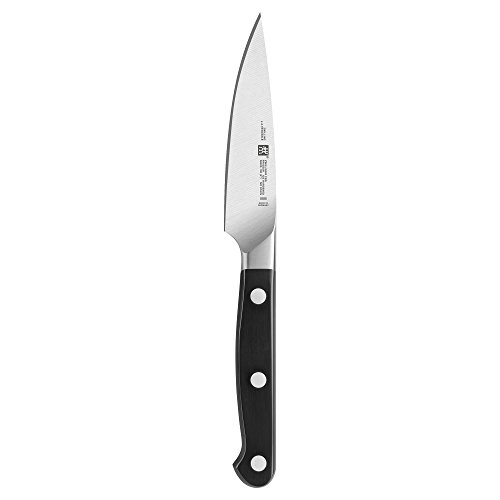
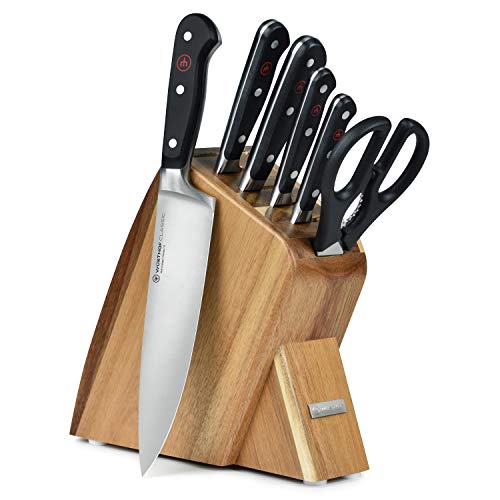
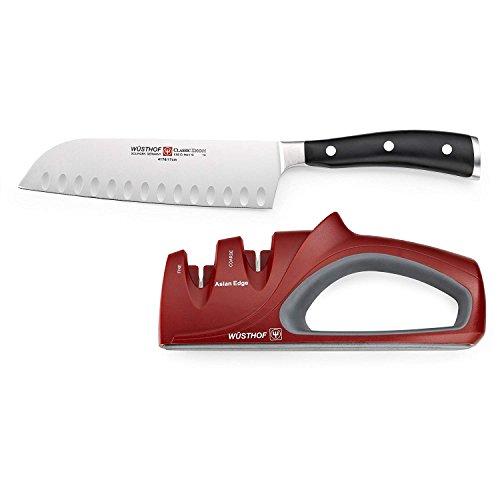
A small paring knife and a chef knife serve different preparation needs. The right choice depends on the operation and safe control. Reaching for whichever knife is nearest is a common habit, and it often leads to awkward, less safe cutting.
What to do
Identify whether the task requires a board, a long slice or a small precise cut. Use the appropriate technique and keep the blade within the work it is designed to do.
A good question to ask is whether the food will sit stably on a board. If yes, a chef knife is usually the more controlled tool. If you need to work in the hand or on a small detail, a paring knife is the better fit.
In this guide
Which knife for which job
- Chef knife: chopping onions, slicing meat, dicing vegetables, cutting large produce and mincing herbs on a board.
- Paring knife: peeling, trimming, coring, hulling strawberries and cutting small items where precision matters.
- Either: some tasks, such as slicing a lemon or garlic, can suit either knife depending on the setting and your comfort.
Many cooks find that using both for their intended jobs makes preparation quicker and more comfortable.
A mistake to avoid
Do not choose a tiny knife for a large unstable ingredient just because it feels less intimidating. Nor should a large blade be forced into delicate work.
A short blade on a large squash can slip, and a big blade for peeling a small fruit in your hand is awkward and risky.
A detail worth checking
Ask for a demonstration when the tool choice feels uncertain. A safe technique appropriate to the ingredient is more useful than treating a smaller blade as inherently suitable for every beginner task.
Basic technique, such as the claw grip for the guiding hand and cutting away from your body, matters more than the knife size.
Try this practical check
Make a preparation list for one meal and assign each task to an appropriate tool before starting. Reconsider any task that demands force or an awkward grip.
Stable food on a non-slip board, a sharp knife and a clear workspace are the foundation of controlled cutting.
Matching the Knife to the Food in Your Hand
The simplest way to decide between a paring knife and a chef knife is to look at the food before you pick up anything. Ask two questions. How big is the item, and how much of it do you need to cut? A single strawberry, a garlic clove or a small shallot is a paring knife job, because the blade is short, light and sits close to the work. A large onion, a head of cabbage, a pile of carrots or a whole chicken breast is a chef knife job, because the longer blade moves through more food in fewer strokes and the weight of the knife does part of the work.
If you reach for the wrong knife, you feel it quickly. A paring knife used on a squash feels cramped and slow, and your fingers end up too near the cutting edge. A chef knife used for hulling a strawberry feels clumsy and wastes fruit. Letting the food decide keeps both safe and efficient.
A Task Table for Everyday Cooking
| Task | Better choice | Why |
|---|---|---|
| Hulling strawberries | Paring knife | Small tip, close control |
| Dicing an onion | Chef knife | Long blade and board contact |
| Peeling an apple by hand | Paring knife | Short blade follows the curve |
| Chopping herbs | Chef knife | Rocking motion, wide blade |
| Trimming green beans | Either | Short or long, depending on the batch |
| Segmenting citrus | Paring knife | Fine tip to follow the membranes |
| Slicing a cooked roast | Chef knife or slicer | Length for a single clean stroke |
Hand Position and Board Use
Each knife asks for a different relationship with the board. A chef knife is generally used on a board, with the tip near the surface and the guiding hand curled into a claw so fingertips stay behind the knuckles. A paring knife is often used in the hand, for peeling or trimming small items, but this is also where most small cuts occur. When you can, put the food on a board and use the paring knife there too, especially for anything slippery. If you do work in the hand, cut away from your body and your other hand, and keep the thumb out of the line of the blade.
Worked Example: Prepping a Simple Salad
Imagine a salad of cucumber, tomato, red onion, parsley and a few radishes. Begin with the chef knife for the cucumber, halving it lengthwise and slicing it in half moons on the board. Use it again to chop the parsley and to slice the onion thinly. Then switch to the paring knife to core the tomatoes, trim the radish tops and tails, and pick out any blemishes. Switching takes only a few seconds and gives you a tidier result than forcing one knife to do everything. The same pattern works for nearly any meal.
When Either Knife Will Do
There is a wide middle ground where either knife works, and personal preference decides. Cutting a single potato into cubes, trimming a pepper or slicing a small piece of cheese can be done with a paring knife or a chef knife. If you have small hands or a small board, you may reach for the paring knife more often. If you chop large volumes, you will prefer the chef knife. Neither choice is wrong, and your comfort matters. The aim is to feel in control, with the blade moving where you intend.
Common Mistakes With Each Knife
- Using a paring knife for tough, large items such as squash, which can slip or flex.
- Using a chef knife for delicate in-hand peeling, which is awkward and unsafe.
- Cutting toward your thumb with a paring knife.
- Letting the guiding hand drift into the path of the chef knife.
- Ignoring a dull edge, which makes both knives need more force and increases the chance of slipping.
Caring for Both Blades
A paring knife, with its small blade, is often the first to dull because it gets used for so many little jobs. Clean it promptly, dry it and store it where the edge will not rattle against metal. The chef knife needs the same treatment, plus a regular touch with a honing rod to keep the edge aligned. Check the maker guidance for sharpening advice, and sharpen when the knife begins to slip on tomato skin or tear soft herbs. Wash both by hand and avoid leaving them in the sink, where they can be missed under suds.
Thinking About Two or Three Knives in a Small Kitchen
If you only own two knives, the usual pairing is a chef knife and a paring knife, with a serrated bread knife as a useful third. That trio covers most home cooking. Before adding more, notice what tasks frustrate you. If you often slice meat, consider a longer slicing knife. If you handle lots of delicate fruit, a second paring knife could help. Buy to fix a problem you actually have, not to fill a block.
Blade Length, Weight and Balance Compared
The two knives differ in more than size. A chef knife is generally long enough to span a good portion of a board, with a belly that curves upward toward the tip so the blade can rock. It carries weight in the blade and often near the bolster, which helps it fall through food with less push from your hand. A paring knife is short, light and often straight along the edge, with a pointed tip that excels at detail. Because it weighs little, you feel every movement, which is exactly what you want when peeling or trimming but not what you want when chopping a pile of carrots.
When you pick up either knife, notice where it balances. A knife that balances near the handle junction feels controlled, and one that tips heavily to the front or back can tire your hand. Comfort is personal, so hold a knife for a minute and make a few slow cutting motions before deciding.
Safety Differences You Should Know
A sharp, well-chosen knife is safer than a dull one, but each type has its own risks. With a chef knife, the main danger is the guiding hand drifting into the path of the blade, and slips when the board moves. Set a damp cloth under the board to keep it steady. With a paring knife, the risk is cutting toward your own hand or thumb when working in the palm. If you are new to knife work, practice on a board first and keep your cuts away from your body. Keep children away from blades and store knives out of easy reach, following the guidance of the maker and common household safety advice.
- Stabilize the board on a damp cloth or mat.
- Cut flat sides first so food does not roll.
- Pass a knife handle first, never point first.
- Never try to catch a falling knife.
Handle Shape and Hand Size
Handles matter as much as blades. People with large hands may find a small paring knife handle fiddly, while people with small hands may find a big chef knife handle heavy and clumsy. Look for a handle that fills your palm without forcing your fingers to stretch. A good chef knife allows a pinch grip, with your thumb and forefinger on the blade just ahead of the handle, which gives precise control. A paring knife is often held more like a pencil or in a simple fist. Try different grips with the knife you own and notice which feels secure.
Common Scenarios
A cook with limited board space
If your board is small, a shorter blade may feel easier, but do not give up the chef knife entirely. Use it on a slightly angled board or cut smaller batches at a time.
A cook who mostly prepares fruit
A good paring knife, and perhaps a second one, will serve you better than a large blade.
A cook who preps for several days of meals
The chef knife will do the heavy work, while the paring knife handles trims and fine details.
Quick Checklist and Glossary
- Look at the size of the food first.
- Choose the longer blade for volume, the shorter for detail.
- Keep fingertips curled and away from the edge.
- Keep both blades clean, dry and sharp.
Claw grip: curling fingertips under while guiding the food. Tip: the point of the blade. Heel: the rear part of the edge. Honing: realigning the edge with a rod.
Quick Answers
Do I need both knives?
Most kitchens benefit from both. If you only buy one, a chef knife covers more tasks, but a paring knife handles small, in-hand jobs more safely.
Is a smaller knife safer?
Not automatically. Safety depends on technique, sharpness and stability. A suitable knife for the task is safer than one that is too small or too large.
Can I peel with a chef knife?
It is generally awkward. A paring knife or a peeler gives better control for peeling.
Size, Shape and Reach of Each Knife
The physical differences between a paring knife and a chef knife explain why each suits particular jobs. A paring knife has a short blade, often only a few inches long, with a pointed tip. Its small size lets you hold the food in one hand and the knife in the other, and it can follow curves, such as the skin of an apple or the edge of a strawberry hull.
A chef knife has a much longer and taller blade with a curved belly. The length supports long slicing strokes and the height gives your guiding hand clearance above the board. The weight also helps: the knife does part of the work as it moves through food, which makes repeated chopping less tiring.
These differences affect control. With a paring knife, your fingers are close to the blade, so the cuts are small and deliberate. With a chef knife, you use the board as a stable platform and the claw grip to protect your fingertips. Neither is inherently safer, and the safest choice is the one that matches the task and how steadily the food sits.
When comparing models, check blade length, blade height and handle shape in the product listing. A paring knife with a handle that is too small can be hard to hold, and a chef knife that is too long for your board or hand can feel unwieldy. Choose sizes you can manage comfortably.
Tasks That Fall Between the Two Knives
Some preparation jobs do not clearly belong to either knife, and the right choice depends on the food and your comfort. Cutting a small onion, trimming green beans, deveining shrimp or slicing a shallot can be done with either, depending on the quantity and technique.
A few rules of thumb help:
- If the item can be placed flat on a board and cut downward, use the chef knife for speed and stability.
- If the item is small, round or awkward and you need to work it in your hand, the paring knife offers more control.
- If you are making many repeated cuts, such as dicing a pile of vegetables, the chef knife saves time and effort.
- If you are making one or two precise cuts, such as removing a pit or trimming a mushroom, the paring knife is quicker to pick up.
There are also special cases. Large fruits like melons and pineapples are best cut on a board with a larger knife. Very small tasks like removing eyes from potatoes may be easier with the paring knife, or with a peeler.
Think about what you are doing with your other hand. If it is holding the food in the air, the paring knife is usually the right choice. If it is guiding food on a board with a protective claw grip, reach for the larger knife. Taking a moment to choose often prevents slips caused by using the wrong tool.
Technique and Safe Handling for Each Knife
Good technique reduces risk with any blade. For the chef knife, use a pinch grip with the thumb and forefinger on either side of the blade just in front of the handle, with the remaining fingers wrapped around the handle. Curl the fingertips of the other hand into a claw, with knuckles forward as a guide, and keep the tip of the knife on the board during rocking cuts.
For the paring knife, hold the handle like a pencil or in a fist grip, depending on the job. When peeling toward you, keep your thumb braced against the back of the blade and move the food, not the knife. For trimming or cutting small items, use the board whenever you can rather than cutting in your palm.
Common safety principles apply to both:
- Keep the blade sharp. Dull knives need more force and slip more easily.
- Use a stable board. A damp cloth or non-slip mat under the board stops it from sliding.
- Cut away from your body and away from the hand holding the food.
- Never try to catch a falling knife.
- Carry knives with the tip pointed down and the edge facing away from you.
If you are a beginner, practice on firm, stable ingredients before attempting slippery or round ones. Consider asking a more experienced cook or taking a class to learn grips. The maker’s manual may also include helpful safety guidance.
What to Look for When Buying and Caring for Each
If you are shopping, the chef knife deserves the larger share of your attention, since it handles the bulk of cutting. Look at blade length that suits your hand and board size, a comfortable handle, a balanced feel and a steel the maker describes with clear care directions. Consider whether the knife is stainless or carbon, and whether it needs special handling.
A paring knife can be a more modest purchase, though it still benefits from a comfortable handle and a blade that holds an edge. Because it does small, frequent jobs, you may use it a lot. Some people keep two or three around the kitchen for convenience.
Care is similar for both. Wash by hand with mild soap and dry right away. Do not leave them in a sink where someone might reach in unaware. Store them in a block, on a magnetic strip or in a sheath so the edges are protected. Hone regularly, and sharpen when honing no longer restores a clean cut. A paring knife’s small blade can be harder to sharpen on a large stone, so check what the maker recommends or ask a sharpening service.
Replace a knife if the handle loosens, the blade is chipped or bent, or the edge cannot be restored.
Building a Simple Knife Set Around Your Cooking
You do not need a large block of knives. A practical set starts with a chef knife and a paring knife, and many cooks add a bread knife later. This trio covers most tasks in a typical home kitchen. Add other knives only when you identify a job that these three do poorly.
To decide what to add, track your cooking for a few weeks. If you often struggle to slice crusty bread or tomatoes, a serrated knife helps. If you prepare large cuts of meat, a long slicer may be useful. If you do a lot of detailed work, such as segmenting citrus or trimming vegetables, consider a second paring knife or a small utility knife.
Think about budget in qualitative terms. Put the larger share of your spending into the knife you use most, the chef knife, and choose a sturdy but less costly paring knife. A paring knife is more likely to be dropped, lost or damaged, so you may not want to overspend on it.
Finally, make sure you have the tools to maintain your knives, such as a honing rod and a suitable board. Even the best knife performs poorly if it is dull or used on a hard surface. A modest, well-kept set will serve you better than a large, neglected one.
Following Both Knives Through a Real Recipe
Abstract task lists become clearer when you follow a single dish from start to finish. Take a simple apple crumble. The chef knife quarters the apples on the board in seconds, its length and weight making each cut a single stroke, and it goes on to chop any nuts for the topping and cut the butter into the flour mixture. The paring knife takes over for everything the board cannot help with: peeling the quarters in hand, cutting out the cores at an angle, and picking out the odd bruised patch without wasting the fruit around it. Neither knife is supervising the other; the work simply changes character, and the knife changes with it.
A stir-fry tells the same story with the balance reversed. The chef knife does nearly everything: slicing peppers, carrots, onions and meat into even pieces at speed, then mincing garlic and ginger with a rocking motion the paring knife cannot imitate. The paring knife appears briefly, to trim the pepper stems, top the carrots and cut the chillies open for deseeding, small acts of tidying that prepare the ingredients for the big knife. Watching one recipe closely teaches the division of labour better than any chart: the chef knife processes, the paring knife prepares and finishes.
Salads, sandwiches and packed lunches fill in the middle ground. The chef knife halves tomatoes cleanly and slices bread and cheese; the paring knife hulls strawberries, segments citrus and trims the ends of beans. Once you see the pattern, you stop asking which knife is better and start reaching automatically, which is exactly the fluency this comparison is meant to build. The reaching becomes so natural that cooks often cannot say afterwards which knife they used for a given job, and that is a sign the kitchen is working well.
The In-Hand Knife: What Paring Work Really Demands
Paring knife technique deserves a closer look, because it is the half of this comparison most cooks were never taught. In-hand work means the food is held in your non-dominant hand and the blade moves toward the thumb of that same hand in short, controlled strokes, with the thumb acting as a brake and a guide. Done properly it is safe and precise; done carelessly it is how thumbs get nicked. The essentials are a short blade you can cap with your index finger along the spine for control, small movements, and the discipline to stop and put the food on the board the moment a task grows beyond peeling and trimming.
The chef knife cannot do this work, and the reason is geometry rather than skill. Its blade is longer than most foods it would pare, its edge sits far from the holding hand, and its weight works against the tiny forces in-hand cutting requires. Attempting to peel an apple with a chef knife is not advanced technique; it is a mismatch that trades control for risk. Conversely, the paring knife’s limits on the board are just as physical: its short edge cannot finish a cut through a large onion in one stroke, and its light build gives no help through dense vegetables.
If in-hand work makes you nervous, that is useful information rather than a failing. Many cooks do nearly all their paring-knife jobs on the board instead, using the small blade for trimming, coring and detail work with the food resting on a surface, and there is nothing wrong with that pattern at all. The knife earns its place either way. What matters is recognising which tasks belong to which tool, and refusing to force either knife into the other’s territory out of reluctance to wash a second blade.
Building Fluency: Drills and Habits That Teach the Difference
A week of deliberate practice settles the comparison in your hands. Choose one ingredient a day and prepare it with both knives in turn: peel and slice a cucumber each way, trim and dice a pepper with the paring knife doing the trimming and the chef knife the dicing, hull strawberries with the paring knife and then halve them with the chef knife. The contrast in effort, speed and neatness across a handful of ordinary ingredients teaches more than any specification table, and it reveals your own preferences, which are allowed to settle the question.
Notice, during that week, where each knife slows you down. Most cooks discover a personal pattern: perhaps the paring knife handles all their fruit work while the chef knife owns every vegetable, or perhaps a small kitchen and small board push more work than expected toward the paring knife. There is no standard pattern to match. Your tally of which knife you reached for, and which you wished you had reached for, is the buying and organising advice that applies to your kitchen.
End the week by arranging storage to match what you learned. The knife you use twenty times a day belongs in the most accessible slot, guard or strip position, and the other belongs close behind it. Fluency is partly storage: a paring knife buried at the back of a drawer will be skipped in favour of the chef knife for jobs it does badly, and the resulting struggle gets blamed on the cook rather than the drawer. Put both knives within one easy reach of the board and the task-first habit this guide recommends becomes the path of least resistance.
When a Third Knife Enters the Argument
Sooner or later, most cooks meet the knives that live between these two: the utility knife, the petty knife and the small santoku. These mid-sized blades exist precisely because some tasks feel large for a paring knife and small for a chef knife: slicing a sandwich, portioning cheese, cutting a melon into wedges, trimming a joint of meat. If your cooking is full of such in-between jobs, a mid-sized knife is a legitimate answer, and it does not invalidate the task-first rule; it refines it, by giving the middle tasks a tool of their own.
What a third knife should not do is blur the ends of the range. It cannot pare in hand like a true paring knife, and it cannot power through a prep session like a full chef knife. Kitchens that buy the middle knife first, hoping it will cover everything, usually end up buying the other two later anyway, having spent the intervening months compromising at both ends. The sounder order is the one this guide implies: secure the two ends of the range first, because they cover the most ground between them, then add the middle only if your cooking keeps asking for it.
That sequence also keeps spending honest. A good paring knife is among the least expensive serious tools in the kitchen, and a chef knife chosen for your tasks rather than a catalogue’s prestige will serve for years. Together they form the working core of a knife collection, and everything else, from bread knives to cleavers, is a specialist added when a real, recurring task demands it. Task first, knife second: applied consistently, that rule builds a small set of knives that are all used, all maintained and all missed when they are away being sharpened.
What Each Knife Teaches Your Hands
There is a training effect in owning both knives that neither provides alone. The chef knife teaches the guiding hand: knuckles curled, fingertips tucked, the hand retreating in rhythm as the blade advances. That claw grip is the foundation of safe, fast board work, and it is only learnable with a blade tall enough to ride against the knuckles. The paring knife teaches the opposite lesson, control at the fingertips: small forces, short strokes, the thumb as brake and guide. A cook fluent in both has, without noticing, learned most of what knife technique contains.
This is why the order of learning matters. Board skills first, because the board forgives and the claw grip protects; in-hand skills second, built on the confidence and edge-awareness the board work created. Kitchens that teach children to cook usually follow exactly this sequence, starting youngsters on board work with a suitable knife under close supervision and reserving in-hand paring for much later, when judgement and steadiness have grown. The two-knife system is therefore not just a division of labour; it is a curriculum.
Even experienced cooks benefit from noticing which teacher they have been neglecting. A cook who does everything with the chef knife often has excellent board skills and hesitant in-hand work, and their fruit preparation shows it. A cook who leans on the paring knife for everything may be avoiding the board skills that would transform their vegetable prep. Deliberately practising with the underused knife for a week, on ordinary meals, balances the pair of skills, and the balance, more than either skill alone, is what makes a cook look effortless.
Cost, Quality and Where the Money Matters
The two knives ask for money in different proportions, and understanding why helps you spend well. The chef knife is the workhorse: it does the volume, takes the wear and rewards quality in steel, geometry and handle more than any other knife in the kitchen. Money spent there is spent on the tool you will hold for most of your cooking life. The paring knife’s work, by contrast, is light and precise; a modest, well-shaped paring knife performs nearly as well as a costly one, because the tasks ask for control rather than power or edge endurance. Many wise kitchens therefore pair a serious chef knife with an inexpensive paring knife, replaced without regret when it tires.
That asymmetry extends to maintenance. The chef knife earns careful honing, timely sharpening and the best storage slot. The paring knife, cheap and hard-working, is sometimes treated as semi-disposable, though it still deserves washing, drying and a guard, because a dull or damaged small knife is exactly the kind that slips during in-hand work. Treat the paring knife’s edge with respect even if its price tag invites casualness; your thumb will thank you.
Beware the set that inverts these proportions, offering a glamorous collection in which the chef knife is ordinary and the money has gone into numbers and presentation. Judge any purchase by the two ends of the range: is the chef knife genuinely good, and is there a paring knife you would happily peel with? If both answers are yes, the middle can look after itself. If either answer is no, no quantity of additional pieces repairs the fault, because the fault sits exactly where your daily work happens.
The Two Knives in Small and Unusual Kitchens
Boat galleys, studio flats, caravans and office kitchenettes all compress the knife question, and the task-first rule survives the compression gracefully. In the smallest kitchen, the pair still earns its place, because the tasks do not shrink with the counter: fruit still needs peeling and onions still need dicing. What changes is storage and size at the margins: a shorter chef knife for a smaller board, a paring knife with a guard that lives in a cutlery drawer, both washed and dried immediately because there is nowhere for them to wait.
Outdoor cooking makes the same point in a different accent. A camp kitchen’s prep is mostly board work on a small surface plus in-hand trimming, and the pair covers it with nothing wasted. Cooks who travel to cook, to holiday cottages or family houses, often pack exactly these two knives and leave the rest of the collection at home, confident that between them they can produce any meal the trip requires. That packing decision, repeated by generations of travelling cooks, is perhaps the strongest practical endorsement the pairing has.
So the comparison ends where it began: not with a winner, but with a division of labour so well matched to the structure of cooking that it survives every change of kitchen, cuisine and budget. Choose the task first, and the knife chooses itself. Keep both knives sharp, stored and within reach, and the question this article’s title poses will quietly stop arising, because your hands will already know the answer.
Left-Handed Cooks and the Two Knives
Left-handed cooks meet a few asymmetries worth naming. Most knife handles are effectively neutral, and both the chef knife and the paring knife serve either hand for the great majority of work, so the task-first rule applies unchanged. The differences appear at the edges of the craft: some blades are ground with a bias intended for right-handed use, and in-hand paring technique mirrors, with the food held in the right hand and the blade working toward the right thumb. A left-handed beginner learning from right-handed demonstrations should mirror every instruction deliberately rather than copying the picture literally, because the safety of in-hand work lives in the relationship between blade and thumb, and that relationship must be preserved, not the picture.
Shared kitchens with one cook of each hand add a practical note: neither knife needs duplicating, but storage should present handles so either cook can draw safely, and honing and sharpening habits should be agreed, since an edge maintained by two people at two angles satisfies neither. These are small arrangements, easily made, and they keep the two-knife system serving the whole household rather than its majority.
Replacing One Knife Without Disturbing the Other
Knives wear out at different rates, and the pair should be maintained as two separate tools with separate timelines. The paring knife, doing light work, may last for many years or, in its inexpensive forms, be replaced several times during the life of one chef knife. The chef knife, sharpened over years, slowly narrows as metal is removed, and eventually its geometry changes enough that board clearance and cutting feel shift; that is its retirement signal, and it may arrive after a decade or more of service. Replacing either knife is a chance to re-run the task-first analysis rather than buying the same again by reflex, because your cooking will have changed in the interval.
When a replacement arrives, give it a short proving period in ordinary cooking before judging it against its predecessor. Hands are loyal to familiar tools, and a new knife of either kind feels wrong for the first few sessions almost regardless of its quality. A week of real meals is a fair trial. If the new knife still fights you after that week, the mismatch is real information about size, weight or shape, and it is better acted on while return or exchange is still possible than endured for years out of inertia.
One Last Check: Watch Your Hands for a Week
If any doubt remains about the balance between your two knives, settle it the way this guide has recommended throughout: by observation rather than argument. For one ordinary week, simply notice each time you pick up either knife, and each time you put one down to fetch the other. That small tally, kept honestly, is a portrait of your cooking that no general advice can match. Most cooks find the pattern reassuringly clear by the week’s end: the chef knife owning the board, the paring knife owning the hand, and a small, interesting territory between them where personal preference rightly rules. Arrange your storage, your sharpening and any future purchase around that portrait, and the two knives will serve you as a pair in fact as well as in name.
Common Questions
Can I peel vegetables with a chef knife?
It is possible but awkward and riskier, because the large blade is hard to control in the hand. A peeler or a paring knife is usually better.
Is a paring knife safe for beginners?
It can be, as long as you use proper technique and keep the cutting hand away from the blade path. Practicing on a board with stable food helps build confidence.
How long should a paring knife blade be?
Lengths vary by maker, so check the listing and choose one that fits your hand and tasks. A shorter blade gives more control for small work.
Should I get a serrated paring knife?
Some people like one for tomatoes and soft fruit. A straight edge is more versatile, so consider which foods you cut most often.
Can I use a chef knife for small tasks if I am careful?
Many cooks do so on a board, such as mincing garlic. Just ensure the food is stable and the knife has enough room to move.
How often should I sharpen each knife?
It depends on use, cutting surface and steel. Hone regularly, and sharpen when the knife begins to crush rather than slice.
Which knife should a complete beginner buy first?
The chef knife, because it covers the widest range of everyday tasks and teaches the board skills, grip and guiding-hand habits that all other knife work builds on. Add the paring knife soon after, once basic board confidence is in place, since in-hand work asks for a steadier hand. A beginner who starts with only a paring knife will struggle through main prep and may develop forcing habits that are hard to unlearn.
Can a paring knife handle a whole meal’s prep if it has to?
It can manage a small, simple meal, slowly, and cooks in tiny kitchens or on camping trips do exactly that. What it cannot do is match the chef knife’s efficiency on anything bulky or dense, and your hand will feel the difference in a pile of potatoes or a whole cabbage. Treat it as a capable stand-in for one meal, not as a reason to skip the larger knife in a settled kitchen.
Why do paring knives come in different blade shapes?
The common shapes suit different in-hand motions. A straight or spear-point blade is the generalist, good for peeling, trimming and detail work. A curved bird’s-beak blade follows round fruit and vegetables and is the classic choice for turning vegetables. A sheep’s-foot shape, with its straight edge, works well for board-based trimming. Most households need only the generalist shape; specialists add the others when a particular job becomes routine.
Is it wasteful to own both if I cook simple food?
No, because simple food still divides into board work and hand work. Toast, fruit, salads and sandwiches all contain small trimming and peeling jobs that a chef knife does clumsily, and larger slicing jobs a paring knife does slowly. The pair is inexpensive as kitchen equipment goes, both knives are used constantly in even the plainest cooking, and each protects the other from work it does badly.
How do I stop myself reaching for the wrong knife out of habit?
Make the right knife the easy knife. Store both within one reach of the board, keep both sharp, and wash as you go so a clean paring knife is never more than a moment away. Most wrong-knife moments happen because the right knife is dirty or buried. Remove that friction for a fortnight and the task-first habit usually installs itself without further effort.
Related reading
6 Best Paring Knives: Forged, Stamped and Japanese (2026)
Reference and further practice
WUSTHOF knife maintenance and compatibility FAQs
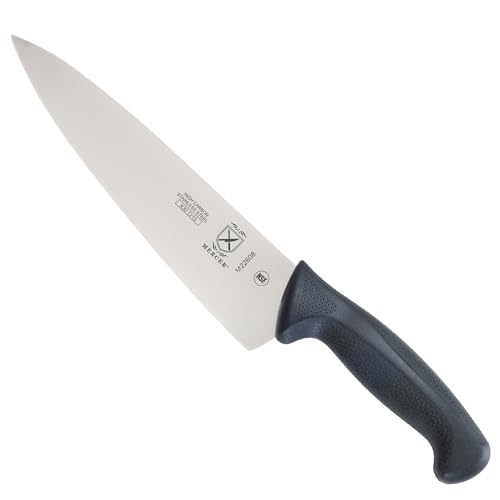
Ready to Buy? Start Here
If this guide helped you decide what to look for, these products are a place to start.

As an Amazon Associate we earn from qualifying purchases. Prices and availability are shown on Amazon.
Related Guides
- Chef Knife vs Santoku: Shape, Feel and Best Uses Compared
- How to Choose a Chef Knife That Feels Right in Your Hand
- 6 Best Kitchen Chef Knives: Forged and Japanese (2026)
- Paring Knife vs Utility Knife: Choosing the Right Small Blade
- 6 Best Knife Sets With Both Santoku and Chef Knives