Disclosure: As an Amazon Associate, Reviews Took earns from qualifying purchases. Links to Amazon on this page are affiliate links; they cost you nothing extra.
Check size against your oven.
This guide is built from Amazon product listings and maker specs, not our own testing, so confirm size, contents and current price on each product page.
Check the current price on Amazon for each pick.
Last updated: November 2, 2026.
In this guide
Quick Picks
| Product | Type | Best for |
|---|---|---|
| Large Pizza Stone for Oven and Grill 16 Inch Round with Wood | Pizza stone set | oven and grill baking |
| 16” Cordierite Pizza Stone for Oven and Grill with Pizza Peel | Pizza stone set | oven and grill baking |
| Hans Grill Rectangular Pizza Stone with Peel | Pizza stone set | oven and grill baking |
| 16-Inch Pizza Stone Set for Oven and Grill with Peel | Pizza stone set | oven and grill baking |
| Pizza Stone 5 PCS Set | Pizza stone set | oven and grill baking |
| 13 Pizza Stone for Oven and Grill with Pizza Peel | Pizza stone set | oven and grill baking |
| Large Pizza Stone for Oven and Grill Set – 15″ x 12″ – 3PCs | Pizza stone set | oven and grill baking |
| 15”Pizza Stone for Oven and Grill with Pizza Peel | Pizza stone set | oven and grill baking |
Our Picks
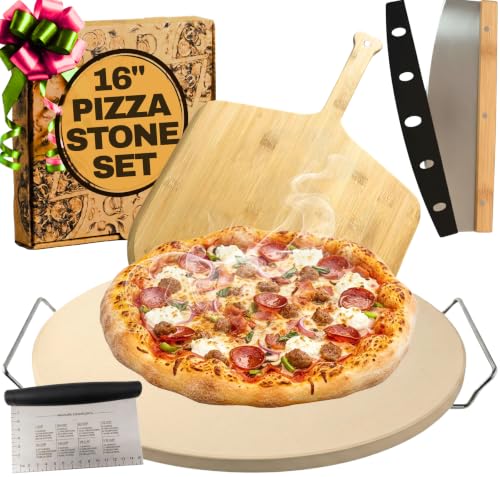
Top pickBest for oven and grill baking
1. Large Pizza Stone for Oven and Grill 16 Inch Round with Wood
A Large Pizza Stone for Oven and Grill 16 Inch Round with Wood (pizza stone set), per the listing. Check price on Amazon.
Good for: oven and grill baking. Watch out: Can crack with sudden heat.

Best for oven and grill baking
2. 16” Cordierite Pizza Stone for Oven and Grill with Pizza Peel
A 16” Cordierite Pizza Stone for Oven and Grill with Pizza Peel (pizza stone set), per the listing. Check price on Amazon.
Good for: oven and grill baking. Watch out: Can crack with sudden heat.

Best for oven and grill baking
3. Hans Grill Rectangular Pizza Stone with Peel
A Hans Grill Rectangular Pizza Stone with Peel (pizza stone set), per the listing. Check price on Amazon.
Good for: oven and grill baking. Watch out: Can crack with sudden heat.

Best for oven and grill baking
4. 16-Inch Pizza Stone Set for Oven and Grill with Peel
A 16-Inch Pizza Stone Set for Oven and Grill with Peel (pizza stone set), per the listing. Check price on Amazon.
Good for: oven and grill baking. Watch out: Can crack with sudden heat.

Best for oven and grill baking
5. Pizza Stone 5 PCS Set
A Pizza Stone 5 PCS Set (pizza stone set), per the listing. Check price on Amazon.
Good for: oven and grill baking. Watch out: Can crack with sudden heat.

Best for oven and grill baking
6. 13 Pizza Stone for Oven and Grill with Pizza Peel
A 13 Pizza Stone for Oven and Grill with Pizza Peel (pizza stone set), per the listing. Check price on Amazon.
Good for: oven and grill baking. Watch out: Can crack with sudden heat.

Best for oven and grill baking
7. Large Pizza Stone for Oven and Grill Set – 15″ x 12″ – 3PCs
A Large Pizza Stone for Oven and Grill Set – 15″ x 12″ – 3PCs (pizza stone set), per the listing. Check price on Amazon.
Good for: oven and grill baking. Watch out: Can crack with sudden heat.

Best for oven and grill baking
8. 15”Pizza Stone for Oven and Grill with Pizza Peel
A 15”Pizza Stone for Oven and Grill with Pizza Peel (pizza stone set), per the listing. Check price on Amazon.
Good for: oven and grill baking. Watch out: Can crack with sudden heat.
Best Picks by Category
These labels summarize listing details and are not hands-on test results.
- Top rated: 13 Pizza Stone for Oven and Grill with Pizza Peel.
- Most reviewed: Hans Grill Rectangular Pizza Stone with Peel.
- Best value: Large Pizza Stone for Oven and Grill Set – 15″ x 12″ – 3PCs — a budget-tier pick.
- Lowest price: Large Pizza Stone for Oven and Grill Set – 15″ x 12″ – 3PCs — a budget-tier pick.
- Premium option: Large Pizza Stone for Oven and Grill 16 Inch Round with Wood — a premium-tier pick.
Price, Rating and Review Comparison
The table lists the picks with their price tier. Prices change often, so check price on Amazon to confirm the current price.
| Product | Price | Rating | Ratings | Price tier |
|---|---|---|---|---|
| Large Pizza Stone for Oven and Grill Set – 15″ x 12″ – 3PCs | Check price on Amazon | — | — | Budget |
| 13 Pizza Stone for Oven and Grill with Pizza Peel | Check price on Amazon | — | — | Mid-range |
| 15”Pizza Stone for Oven and Grill with Pizza Peel | Check price on Amazon | — | — | Mid-range |
| Pizza Stone 5 PCS Set | Check price on Amazon | — | — | Mid-range |
| 16” Cordierite Pizza Stone for Oven and Grill with Pizza Peel | Check price on Amazon | — | — | Mid-range |
| Hans Grill Rectangular Pizza Stone with Peel | Check price on Amazon | — | — | Mid-range |
| 16-Inch Pizza Stone Set for Oven and Grill with Peel | Check price on Amazon | — | — | Mid-range |
| Large Pizza Stone for Oven and Grill 16 Inch Round with Wood | Check price on Amazon | — | — | Premium |
How Much Feedback Backs Each Rating
Check the listing on Amazon for current feedback on each pick.
How to Choose
Size
Check the max pizza or capacity size.
Fuel and power
Match fuel or power to where you cook.
Cleaning
Removable parts make cleanup easier.
How a Pizza Stone Works and Why It Helps
A pizza stone is a thick slab of ceramic, cordierite or similar material that you preheat with the oven or grill. Because it stores a great deal of heat, it hits the bottom of the dough with a burst of energy the moment the pizza lands, and it pulls moisture out of the crust. The result is a base that browns and crisps in a way a thin metal pan seldom matches. It also stabilizes oven temperature, since the stone recovers quickly after you open the door.
The stone does not change what your oven can do. A home oven peaks at around 500 to 550 degrees Fahrenheit, well below a wood-fired pizza oven. A stone helps you get the most out of that heat. Grills can often get hotter than an oven, which is why several of the listings in this guide are sold for both oven and grill use.
Most of these listings are sets, not just a stone. They may include a pizza peel, a cutter, a cleaning brush or a serving rack. A peel is handy, since it lets you slide a pizza onto the stone without handling hot surfaces. Check what is included in each set, because the contents vary.
Understanding the Types of Pizza Stones
Cordierite stones
Cordierite is a ceramic known for resisting thermal shock, meaning it copes better with fast temperature change. It is a common choice for oven and grill stones, and one listing here names it. It tends to be more durable than basic ceramic stones.
Ceramic and clay stones
Traditional stones fired from clay are widely sold at lower prices. They absorb moisture well and make a crisp crust, but they can crack more easily if heated or cooled fast.
Round versus rectangular
Round stones suit traditional pizza and fit round grates. Rectangular stones give more room for flatbreads, sheet-style pizzas, loaves and cookies, and they use the oven space more efficiently. The Hans Grill pick in this guide is listed as rectangular.
Stone with a wooden or metal rack
Some sets come with a serving rack or a carrier, helpful for moving a hot stone or serving at the table. A rack with wood handles looks good but can be a hazard near high heat, so check what it is rated for.
Baking steels and other options
A steel plate conducts heat faster and does not crack, but it is a different product and not what these sets include. If you often bake pizzas at home, it is worth knowing that steel exists, but a stone is cheaper and more forgiving of moisture.
Size, Thickness and Fit in Your Oven or Grill
The most frequent mistake is buying a stone that does not fit. Take measurements first.
- Oven interior. Measure the width and depth of your oven rack, and leave at least an inch or two of clearance around the stone so air can circulate. A stone that touches the walls can block heat.
- Grill grate. Round stones in the 13 to 16 inch range suit many kettle and gas grills, but a smaller grill may only take the smaller sizes. Check the grate dimensions and the lid clearance.
- Thickness. A thicker stone holds more heat and makes a crisper crust, but it takes longer to preheat and weighs more. A thin one heats fast and is easier to handle, but cools quicker.
- Pizza size. A 13 inch stone suits a personal pizza. A 15 or 16 inch stone fits a larger pie but needs a bigger oven and a peel that can handle it.
- Weight. A big stone can be heavy to lift in and out of a hot oven. Consider whether you will leave it in permanently.
Many bakers leave a stone in the oven all the time because it steadies temperature. If you do, it will take up a rack and may slow the oven’s preheat a little.
Using and Caring for a Pizza Stone
A stone is simple to use, but certain habits are the difference between a stone that lasts for years and one that cracks in the first month.
Preheat gradually
Place the stone in a cold oven, then heat both together. Allow at least thirty minutes, and up to an hour, at the target temperature. Putting a cold stone into a hot oven or grill is a common cause of cracking.
Avoid sudden changes
Do not put cold dough with wet toppings on a stone that is not fully heated, and do not pour water on a hot stone. Let the stone cool inside the oven after you finish.
Keep it dry and clean without soap
A stone is porous, so soap soaks in and can taste in later bakes. Scrape off residue with a plastic scraper or brush, and wipe with a damp cloth when cool. Do not soak it. Stains and dark spots are normal and are not a sign of damage.
Use flour or semolina and parchment wisely
Dust the peel with flour or cornmeal so the dough slides off. Excess flour on the stone can burn and smoke at high heat. Some bakers use parchment paper for easy transfer, but the paper may darken at high temperatures, so check its temperature rating.
Expect some marks
Over time, oil and cheese leave spots on the stone. A self-cleaning cycle is not recommended for most stones, because the extreme heat can crack them.
Choosing a Set for the Way You Cook
Weekly oven pizza
A round or rectangular stone that fits your oven rack, plus a peel, covers the basics. Pick the thicker option for crispness and leave it in the oven.
Grill pizza
Check that the stone is rated for grill use and fits under the lid. Preheat it slowly over indirect heat to avoid cracking, and watch closely, since a grill can burn the bottom quickly.
Bread, cookies and frozen pizza
A rectangular stone handles loaves, flatbreads and trays of cookies. Frozen pizzas bake nicely on a preheated stone, which gives a crisper base.
Gifts and beginners
Multi-piece sets with a peel, cutter and brush are a convenient package. Check which pieces matter to you, since extras vary in quality.
Small kitchens
If storage is tight, a smaller or rectangular stone that can stay in the oven is easiest.
Budget Versus Premium: Where the Money Goes
The stone sets in this guide span budget to premium tiers. The base tier tends to buy a stone and a few basic tools. Higher tiers usually reflect extra accessories, thicker material, a wooden serving rack or a nicer peel. The key factor, the stone material and its resistance to cracking, is not always obvious from the tier.
Read the listing for the material, the maximum temperature, and whether grill use is supported. Check buyer feedback for cracking, odor on first use and flaking, which are the common complaints for stones. Weigh the accessories honestly: a wooden peel and cutter are useful, but a sound stone matters most.
If you plan to bake pizza regularly, a durable stone that fits your oven is the better investment than a longer list of accessories. If you bake occasionally, a modest set is fine. In either case, proper preheating and careful handling will extend the life of the stone more than a higher price.
Common Problems and How to Avoid Them
The complaint buyers raise most often is a cracked stone. Stones can crack when they are heated too fast, cooled too fast, or dropped, and a thin stone is more prone to it. Gradual heating, handling with care and storing the stone flat in a dry spot all reduce the risk. If a stone cracks along a clean line, some people still use the pieces, but a crack can also be a sign it is near the end of its life.
Another is smoke. Sauce, cheese and excess flour that drop on a hot stone can burn, producing smoke and an acrid smell. Keep toppings contained, use only a light dusting of flour or semolina, and ventilate the kitchen.
A third is a crust that sticks. Wet dough, too little flour on the peel, or hesitating while the pizza sits on the peel causes it. Build the pizza quickly, shake the peel to check that it moves, and slide the dough off in one motion.
Getting Reliable Results From a New Pizza Stone
A pizza stone stores heat and passes it into the dough, which is why it can give a crisper base than a thin tray. Stones are also sensitive to sudden temperature swings and to moisture, so a gentle routine protects them. Always follow the maker’s instructions first, since materials and limits vary.
- Wash your hands, then wipe the stone with a dry or barely damp cloth before the first use.
- Place the stone in a cold oven or on a cold grill and let it heat up along with the oven, not after.
- Allow plenty of preheating time, as the maker advises, so the surface is evenly hot.
- Use a peel dusted with a little flour or semolina to slide the pizza on.
- Let the stone cool inside the oven or grill after use, and do not place it on a wet surface while hot.
Cleaning and Care Table
| Do | Avoid |
|---|---|
| Scrape off stuck bits with a plastic or wooden scraper | Soap, which porous stone can absorb |
| Wipe with a damp cloth once fully cool | Soaking the stone in water |
| Dry thoroughly before storing | Putting a damp stone back in the oven |
| Accept stains as normal | Scrubbing hard to restore the original colour |
Check the size against your oven or grill, leaving a margin for air flow around the edges. Some sets include a peel or a rack, and these are handy for moving the hot stone, but use oven gloves and follow the set’s instructions.
Handling reminders
- Never place a stone straight onto an open flame unless the maker says it is designed for that.
- Keep the stone dry between uses, and store it somewhere it will not be knocked.
- Replace a stone that has cracked through, as the maker suggests.
Your First Bakes on a New Stone: A Sensible Sequence
A new pizza stone should be introduced to your cooking gradually, not because the stone is fragile in normal use, but because you are learning its behaviour at the same time. For the first bake, choose a simple pizza or even a flatbread, preheat the stone thoroughly in a cold-start oven as the care guidance above describes, and watch how the base colours compared with your old method. Every stone and oven pairing has its own timing, and one calm observation bake teaches you the baseline that all later adjustments depend on.
For the next few bakes, change one variable at a time. Move the stone to a different rack position and note the effect on the top and base balance. Try a longer preheat. Try semolina instead of flour for the launch. Because a stone’s heat is steady and repeatable, these small experiments give clear answers, and within a few sessions you will know exactly how your oven and stone behave together. That knowledge, not any particular brand of stone, is what produces reliably crisp bases.
Only then is it worth attempting the ambitious bakes: very thin bases, heavily topped pizzas, back-to-back cooking for a group. Back-to-back baking is the real test of a stone’s thickness and heat retention, since each pizza draws heat out and the stone must recover. If the third pizza in a row bakes paler than the first, a longer rest between bakes, or a thicker stone next time, is the honest fix, and the size and thickness discussion earlier in this guide explains why.
Pizza Stone or Baking Steel or Cast Iron: Choosing Honestly
Stones are not the only way to bake pizza at home, and a fair comparison helps you choose rather than default. A stone stores heat and releases it gently and evenly, which suits most home ovens and most doughs, and it doubles for bread and reheating. Its weaknesses are fragility if dropped or shocked, and a slower recovery between pizzas than heavier alternatives. For the majority of households in this guide’s audience, those weaknesses are manageable and the stone remains the balanced choice.
A baking steel conducts heat faster, giving very assertive base colouring and quick recovery, at the cost of weight, price and a real risk of scorching a base if the steel is overheated. Steels suit experienced bakers chasing a particular style, and they never crack, but they are heavy to move and must be kept seasoned and dry. Cast iron pans and griddles sit between the two: excellent heat retention and durability, a natural fit for pan-style pizzas, but limited in size and heavy to handle when hot.
The practical question is what you bake most. Weekly family pizza and bread point to a stone. Pan pizza and stovetop-to-oven cooking point to cast iron. Enthusiast experiments with very fast bakes point to steel. Many of the sets above include peels and extras that work with any of these surfaces, so the surface itself can be chosen on its merits. Buy for your real menu, and the surface will feel like an upgrade rather than a compromise.
Baking Bread, Roasting and Reheating on the Same Stone
A stone that only bakes pizza is underemployed. Bread is its second great talent: loaves baked on a preheated stone develop a better crust and base than those baked on a thin tray, because the stone delivers steady heat from below from the first minute. Place the loaf on parchment for an easy transfer, and remember that the stone must be preheated with the oven, never heated empty and then shocked by cold dough placed carelessly. Sourdough and rustic loaves in particular reward this treatment.
Roasting on a stone works differently, since the stone acts as a heat reservoir under a tray rather than as the cooking surface itself. Vegetables, potatoes and traybakes cook more evenly with a stone beneath the tray in ovens with a weak or uneven base element. The stone smooths out the oven’s hot and cold spots, a benefit that applies to frozen products too, which bake crisper and more evenly than the packet instructions assume.
Reheating is the quiet daily win. Leftover pizza, pastries and flatbreads recover their texture on a hot stone in minutes, without the sogginess a microwave guarantees. Keep expectations aligned with the material guidance above: never run cold water over a hot stone, let it cool in the oven, and scrape rather than soak it clean. Treated that way, a stone becomes one of the hardest-working objects in the kitchen, which reframes its price entirely when you compare the sets in this guide.
Storing, Moving and Living With a Heavy, Fragile Stone
Most stones are damaged outside the oven, not inside it, so storage deserves real thought. The safest home for a stone is often the oven itself, where it cannot be dropped, knocked or buried under pans, provided everyone in the household knows it lives there before preheating for other cooking. If it must live in a cupboard, store it upright like a chopping board in a slot where it cannot slide, or flat with nothing heavy stacked on top. A stone stored under a pile of cast iron is a stone waiting to crack.
Moving a stone safely means two hands, dry hands, and a clear route. Never carry a hot stone further than necessary, use proper oven gloves with a real grip, and set it down on a heat-proof surface that is completely flat. Thermal shock is the other enemy covered in the care section: a hot stone placed on a cold, wet or metal surface can crack on the spot. Make it a household rule that the stone cools where it cooked, and most accidents simply never happen.
If a stone does crack, the story is not always over. A clean crack across a stone that still sits flat in the oven often leaves it perfectly usable for baking, since the pieces are held in place and heat as one. Chips at the edge are cosmetic. What ends a stone’s life is warping, crumbling or a crack that makes it rock or shed fragments. Knowing the difference saves owners from replacing a serviceable stone in a panic, and from keeping a genuinely failed one out of misplaced thrift.
Matching the Sets Above to Your Oven, Grill and Menu
The sets in this guide differ in shape, size and extras, and the right match starts with a tape measure. Measure your oven’s interior width and depth and your grill’s grate, then compare honestly with the stone sizes listed, remembering you need clearance around the stone for air to circulate and for the peel to work. A rectangular stone uses the space of most ovens more efficiently and suits bread and traybakes as well as pizza, while a round stone is the natural partner for round pizzas and many grills.
Consider the extras as a system. A set that includes a well-sized peel saves a separate purchase and guarantees the peel and stone were designed to work together, which matters for the launching technique described earlier. Racks and servers add value if you will genuinely use them for serving and cooling; they add clutter if you will not. Judge the bundle by the pieces you will use weekly, not by the total count in the box.
Finally, match the stone to your menu’s centre of gravity. Households baking large family pizzas need the bigger formats; couples baking two modest pizzas and a weekly loaf are better served by a mid-size rectangular stone that preheats faster and stores more easily. Grill cooks should confirm the stone is suited to their grill’s heat pattern and lid clearance. Read across the eight options above with your measurements and menu in hand, and the decision becomes a short one.
Thermal Shock: The One Rule That Protects Your Stone
Almost every stone failure traces back to thermal shock, so it is worth isolating the rule from the rest of the care advice. A stone must change temperature gradually and evenly, and it must never meet cold water, a cold wet surface, or a freezing draught while hot. Put it into a cold oven and heat them together, let it cool inside the closed oven, and keep liquids away from it during baking, including very wet toppings placed on a stone that has not fully preheated. Follow that single discipline and a stone’s lifespan is measured in years.
The rule also explains most mysterious cracks. A stone that cracked during a bake usually met something cold: a frozen product placed directly on it, a spill of sauce over the edge onto a hotter zone, or a door opened repeatedly in a cold kitchen. Knowing the mechanism lets you prevent the next crack rather than blaming the material, and it applies identically to every stone in this guide regardless of price.
Positioning the Stone in Different Ovens
Where the stone sits changes what it does. Low in the oven, near the base element, it charges with heat and bakes assertive bases, but risks scorching in ovens with fierce bottom heat. High in the oven, the top of the pizza gets more radiant heat from the roof and elements, balancing a pale-top problem. The middle is the compromise most households settle on. Experiment deliberately: bake the same pizza at two heights on two nights and compare, because your oven’s personality, not general advice, decides the answer.
On a grill, position is about lid clearance and burner pattern. Centre the stone over the most even heat you can arrange, preheat with the lid down, and learn where the grill’s hot stripe falls by baking a row of small test flatbreads once. That single mapping exercise, ten minutes with scrap dough, tells you where to place pizzas and where to rotate them for the whole life of the stone.
Flour, Semolina and Parchment: Release Methods Compared
How the pizza leaves the peel and meets the stone shapes the base as much as the stone does. Flour is traditional and effective but burns and turns bitter if used heavily. Semolina rolls under the base like tiny bearings, releases beautifully and adds a pleasant texture, and is the choice of many experienced home bakers. A blend of the two balances cost and performance for weekly use. Whichever you choose, the shake test before launching remains the real guarantee: a base that moves freely will land cleanly.
Parchment is the confidence option for beginners and for very wet or fragile doughs: assemble on the paper, launch paper and all, and remove the paper partway through the bake if you want maximum base contact for the finish. It slightly insulates the base, so expect a marginally gentler bake. There is no shame in any of these methods; there is only the one that gets your pizza onto the stone intact, which is the entire job.
Baking Two Pizzas in Sequence and Managing Recovery
Households rarely bake one pizza, so recovery time matters. Each bake draws heat from the stone, and the second pizza tells you how much: if its base colours noticeably slower, your stone needs a few minutes of empty reheat between pizzas, or a longer initial preheat to bank more heat. Thicker stones forgive back-to-back baking; thinner ones ask for patience. Neither is a defect, but knowing your stone’s rhythm prevents the classic complaint that the first pizza was perfect and the rest were pale.
Organise the interval productively: the resting time between bakes is exactly enough to stretch and top the next base, so a well-run sequence feels continuous rather than interrupted. If you regularly cook for a crowd, this rhythm, stone recovering while hands work, is the practical ceiling on any home setup, and it is reached by organisation rather than by buying a bigger stone.
Stones for Bread Bakers: Loading, Steam and Scoring
Bread bakers ask more of a stone than pizza makers do. Loading a proved loaf onto a hot stone without deflating it takes a peel or parchment and a confident hand, and the stone must be fully preheated or the loaf’s base will be its weakest part. Steam in the first minutes of the bake keeps the crust supple while the loaf expands, and home ovens achieve it with a preheated tray of hot water below the stone or a cover over the loaf, both compatible with stone baking if thermal shock rules are respected: nothing cold touches the stone itself.
Scoring, the cuts that control the loaf’s expansion, should be done decisively just before loading, with the loaf already on its parchment or peel. Hesitant, repeated cuts tear the surface and leak gas. Bread baked this way on a good stone, with these small disciplines, is the strongest argument for choosing a rectangular stone sized to your oven, and it is why so many of the sets above earn shelf space in bread households that rarely make pizza.
A Stone Buying Recap You Can Use in the Shop
Compress this guide into five checks before you buy. Measure your oven or grill and choose the largest stone that fits with working clearance. Prefer the thickness your baking rhythm needs, thicker for back-to-back and bread, standard for single pizzas. Confirm the material suits your heat source and your willingness to handle weight. Value included extras, especially a properly sized peel, at what you would pay for them separately. Finally, commit to the thermal shock rule, because the best stone in this list will fail early without it and a modest one will serve for years with it.
If two stones remain tied, choose the one whose shape matches your wider cooking, rectangular for bread and trays, round for pizza purists and round grills. Then stop researching and start baking: a stone teaches its owner within three sessions, and those lessons are worth more than another evening of comparison.
Stones in Small Kitchens and Small Ovens
Small ovens change the stone calculation in useful ways. A stone sized honestly to a compact oven preheats faster, stores inside the oven without drama, and suits the smaller pizzas and single loaves that small households actually bake. Resist the temptation to maximise size at the cost of clearance: a stone that nearly touches the oven walls blocks circulation, makes the peel’s work awkward and can bake unevenly despite its impressive dimensions. Working room is a feature, and in a small oven it is the first feature to protect.
Renters and shared kitchens add a social dimension: a stone that lives in the oven affects everyone who uses that oven, so agree its residence with the household, and consider a stone that stores easily in a cupboard slot if the oven is communal territory. The right stone in a small kitchen is the one whose presence is a pleasure rather than a negotiation, and that is decided by storage and courtesy as much as by baking performance.
How Stones Age: Patina, Stains and Performance Over Years
A working stone darkens, stains and develops a map of its own history, and none of that is failure. The darkened areas are seasoned by use, and many bakers find an old stone bakes more evenly than a new one because its owner has learned it completely. Judge a stone by structure, not complexion: flat, sound, free of crumbling and cracks that catch the peel. A stone can look magnificent and be cracked through, or look like a veteran and have a decade left in it.
Performance drift, when it comes, is usually the oven changing rather than the stone: elements age, seals leak, thermostats wander. If a trusted stone suddenly seems to bake worse, test the oven’s temperature honesty before replacing the stone. Owners who understand this keep good stones for years and spend their money on the actual fault, which is the final form of the care philosophy running through this guide.
Pizza Stones as Gifts and as Second-Hand Buys
A stone makes a fine gift for a known baker and a risky one for an unknown kitchen, because fit is everything. Gift successfully by measuring the recipient’s oven in advance, through tact or a co-conspirator, and by including the peel if they lack one, since a stone without its launching partner is half a present. A note with the care essentials, especially the thermal shock rule, turns the gift from an object into a small apprenticeship, and recipients remember it.
Second-hand stones can be excellent value: inspect for cracks by eye and by the ring of a knuckle tap, check flatness, and ask what it was used for. A sound used stone, cleaned by heat in its first long bake at home, serves exactly as a new one does. The material does not wear out in any normal sense, so the second-hand market is one of the few where used genuinely rivals new, provided the inspection is honest.
The Stone Decision, Distilled to a Single Evening’s Thought
Sit with the guide’s evidence for one evening and decide. Measure the oven, name your main bakes, choose shape by menu and size by measurement, choose thickness by rhythm, and pick the set whose extras you will use weekly. Then stop, order, and give the stone its three learning bakes before forming any opinion. Almost every stone in this guide will delight an owner who chose it that way and learned it properly.
What you are really buying is not a slab of ceramic or cordierite but a change in what your oven is capable of, every week, for years. Bought with that understanding, and kept with the simple disciplines described throughout, a pizza stone is among the highest-value objects a home baker can own, and the eight sets above are a sound place to find yours.
Test Bakes: Using Cheap Dough to Learn Expensive Lessons
Before a stone ever meets your best dough and a table of guests, give it test bakes with cheap, simple dough whose only job is information. Bake a plain base with nothing on it and read it like a report: where it coloured first, where it stayed pale, how long the stone took to recover for a second base. Move the stone a rack, change one thing, and bake another. Three test bases, costing almost nothing, teach the map of your oven and stone that months of ordinary baking would reveal only slowly.
Repeat a shortened version of the test whenever something structural changes: a new oven, a new stone, a move to a grill, even a new flour that behaves differently. Experienced bakers test constantly and call it normal; beginners test never and call their confusion bad luck. The stone rewards the first group extravagantly, and the test bake is the cheapest tuition in all of baking.
Pairing the Stone With Your Oven’s Other Talents
A stone changes more than pizza night because it changes the oven itself. With a stone resident, the oven preheats into a steadier, more even cavity that roasts, bakes and reheats better across the board, and many households find their general baking improves as a side effect of a pizza purchase. Casseroles sit on stored heat, pastry bottoms set more crisply, and the Sunday roast’s potatoes meet a fiercer floor. If your stone lives in the oven full time, learn to cook with its presence rather than around it, adjusting timings by observation as you did in the first bakes.
That residency has one housekeeping consequence worth stating: everyone who uses the oven must know the stone is there, especially before preheating for something delicate or before sliding a hand in carelessly. A household that shares that knowledge gets the stone’s benefits daily; a household that does not gets one surprised cook and, occasionally, one cracked stone. Communication, as with so much in this guide, is a baking technique.
Related guides
- 6 Best Wine Dispensing Systems for Home: Pour Without Pulling Corks (2026)
- 6 Best Ceramic Beer Mugs for a Home Bar: Steins and Tankards
- 6 Best Yeti Tumbler Alternatives: RTIC, Stanley, Hydro Flask (2026)
- 6 Best Blenders for Cocktails: Frozen Drinks at Home
Frequently Asked Questions
Is it easy to use?
Most are simple with a short learning curve.
What do I need extra?
A peel and a thermometer help.
Is it safe?
Follow the maker instructions.
Can a pizza stone go in a cold oven?
Yes, and that is the recommended way. Put the stone in before turning the oven on so it heats up gradually with the oven. Sudden temperature changes are the main reason stones crack, so avoid placing a cold stone into a hot oven.
Do I need to season a pizza stone?
No. Unlike cast iron, a stone does not need seasoning. It darkens and gets spots from oil and use, which is normal. Avoid putting oil on it before baking, since it can smoke and absorb into the porous surface.
How do I clean a pizza stone?
Let it cool, scrape off residue with a plastic scraper or brush, and wipe with a damp cloth. Do not use soap or soak it, since the stone is porous. Let it dry fully before using it again.
What temperature can a pizza stone handle?
Limits vary by material and maker, so check the listing or manual. Many stones are used at the highest home oven settings, but not all are rated for the higher heat of a grill. Heat slowly either way.
Can I use a pizza stone on a gas grill?
Many can, if the listing says it is rated for grill use. Place it on the grate, close the lid, and preheat slowly using indirect heat. Watch the bottom of the crust closely, because grill heat can scorch it quickly.
Bottom Line
Cordierite stones with a peel suit ovens and grills.
More Kitchen Guides
- Best Electric Grain Grinders for Flour and Spices
- Best Manual Grain Mills
- Best Indoor Electric Pizza Ovens

