Disclosure: topratedkitchenware.com is reader-supported. When you buy through links on our site, we may earn an affiliate commission from Amazon and other retailers, at no extra cost to you.
Where to buy
All six picks in this guide to best mixers for atkins are listed on Amazon, where you can check the latest price on Amazon, confirm the exact model and finish, and read the current listing details before ordering. Bundles and colours change, so match the full model name on the listing to the pick reviewed below before you buy.
- Best Overall: Cuisinart Stand Mixer, 12 Speed, 5.5 Quart, Periwinkle Blue, SM-50TQNAS — Check on Amazon
- Cuisinart Stand Mixer, 12 Speed, 5.5 Quart, Ruby Red, SM-50R — Check on Amazon
- Hamilton Beach 6-Speed Electric Hand Mixer with QuickBurst and Bowl Rest, 62682G — Check on Amazon
- KitchenAid 5 Ultra Power Speed Hand Mixer, KHM512, Empire Red — Check on Amazon
- LILPARTNER Hand Mixer Electric, 7-Speed — Check on Amazon
- KitchenAid 5 Ultra Power Speed Hand Mixer, KHM512, Contour Silver — Check on Amazon
Read the full guide ↓
Cooking on a low-carb plan changes what a mixer has to do, and the best mixers for atkins style cooking are the ones that handle almond flour batters, whipped egg whites, sugar-free whipped cream and dense, cheese-heavy mixtures without stalling or spraying the counter. Wheat flour is forgiving; low-carb ingredients are not. Almond flour is heavier and oilier, coconut flour drinks liquid and thickens as it sits, and many Atkins-friendly recipes lean on eggs and cream cheese for structure instead of gluten. A mixer that felt fine for ordinary cake batter can struggle, splash or leave lumps in exactly the mixtures a low-carb kitchen makes every week.
This guide compares six verified mixers through that specific lens: two Cuisinart SM-50 stand mixers for hands-free batch work, and four hand mixers from Hamilton Beach, KitchenAid and LILPARTNER for the smaller, more frequent jobs. Every pick was checked against its verified listing details, and only specifications that appear in those listings are quoted here. There are no prices and no ratings in this guide, because both change constantly; instead, each pick is matched to the low-carb jobs it genuinely suits, with its limits stated plainly.
One honesty note before the picks. A mixer does not make a recipe low-carb, and no appliance changes the carbohydrate content of what you put in the bowl. What the right mixer does is make low-carb cooking practical: egg whites whipped properly for flourless bakes, cream whipped without sugar, cauliflower and turnip mashed smooth, and fathead-style doughs mixed evenly instead of fought with a spoon. If your Atkins cooking is mostly savoury, look at the hand mixers first. If you bake low-carb breads and desserts weekly, the stand mixers earn their counter space. Readers comparing dough capacity for conventional bread should also see our guide to Best Mixers For Baguettes, which covers the same stand-versus-hand question from a bread angle.
Key Takeaways
- Low-carb batters are denser than wheat batters, so low-end speed control and enough motor for thick mixtures matter more than top speed.
- The two Cuisinart SM-50 stand mixers are the picks for weekly low-carb baking: 5.5 quart bowls, twelve speeds, and whisk, paddle and dough hook included.
- For daily savoury jobs like mashed cauliflower, whipped cream and egg-based dishes, a hand mixer is faster to use and far faster to wash.
- The Hamilton Beach 62682G adds a QuickBurst button and a bowl rest, two small features that help with thick, cheese-rich mixtures.
- KitchenAid KHM512 models whip egg whites and cream well, but their listed set is beaters only, so check what is in the box before assuming a whisk is included.
- No mixer changes carb counts; it only makes the cooking easier, so buy for the recipes you actually make each week.
In this guide
Quick Picks
The table below is the short version. Two stand mixers anchor the list for bakers, and four hand mixers cover the everyday low-carb jobs at different levels of control, accessories and storage convenience.
| Badge | Pick | Why it is here | Link |
|---|---|---|---|
| Best Overall | Cuisinart SM-50 Stand Mixer, Periwinkle Blue | Stand mixer with whisk, paddle and dough hook for low-carb breads, batters and batch cooking. | Check on Amazon |
| Best for Weekend Batch Cooking | Cuisinart SM-50 Stand Mixer, Ruby Red | The same SM-50 platform in ruby red, suited to big weekend prep sessions. | Check on Amazon |
| Best Hand Mixer for Everyday Low-Carb Cooking | Hamilton Beach 6-Speed Hand Mixer, 62682G | Six speeds, QuickBurst and a bowl rest for thick savoury mixtures. | Check on Amazon |
| Best for Whipping and Egg Whites | KitchenAid KHM512 Hand Mixer, Empire Red | Turbo Beaters and an easy-release button for egg whites and cream. | Check on Amazon |
| Most Accessories in the Box | LILPARTNER 7-Speed Hand Mixer | Seven speeds and five stainless accessories, dishwasher safe. | Check on Amazon |
| Best Compact Pick | KitchenAid KHM512 Hand Mixer, Contour Silver | Compact, proven hand mixer for small kitchens and quick jobs. | Check on Amazon |
How These Picks Were Chosen
These picks were chosen from a verified pool for this site: every model below was cross-checked against its Amazon listing data through the Creators API, and the ASIN, title and image in our sources file match that check. We only quote specifications that appear in the verified listing, such as speed counts, the wattage figures Hamilton Beach and Proctor Silex publish, the 5.5 quart bowl on the Cuisinart stand mixers, and the attachments each listing names. Where a listing does not state a figure, this guide does not invent one.
The selection was then filtered through Atkins-style cooking tasks rather than general baking. We weighted low-speed control, because almond and coconut flour mixtures splash and then thicken quickly; whisking ability, because egg whites and whipped cream carry a lot of low-carb baking and desserts; and batch capacity, because many low-carb cooks prep several days of food at once. Models that only made sense for conventional wheat baking were ranked below models that handle the dense, egg-rich, cheese-rich mixtures this style of cooking produces daily.
This is a research-led guide, not a laboratory test. We do not claim hands-on testing we did not do. The judgements here come from verified specifications, the documented design of each machine, and well-established low-carb cooking technique: how almond flour behaves, why coconut flour needs resting time, and why egg-white foams collapse when fat sneaks into the bowl. Where a pick has a real limitation for this style of cooking, the review says so directly.
The 6 Best mixers for atkins
Each review below follows the same pattern: what the machine is, how it behaves on low-carb mixtures, who should buy it, and one honest limitation. Badges match the Quick Picks table so you can cross-reference quickly.
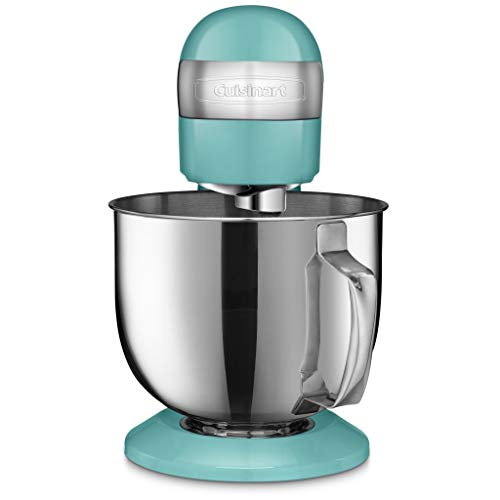
Cuisinart Stand Mixer, 12 Speed, 5.5 Quart, Periwinkle Blue, SM-50TQNAS
Badge: Best Overall
Strengths
- A full stand mixer, so it works hands-free while you prep the next ingredient
- Three attachments cover whisking, mixing and dough work in one machine
- The 5.5 quart bowl handles family-size batches that would overwhelm a hand mixer
Trade-offs
- Takes permanent counter space and is heavy to move in and out of a cupboard
- One machine in one finish: the periwinkle blue will not match every kitchen
- Overkill for a single small bowl of whipped cream
Mini spec box
- 12 speed settings
- 5.5 quart stainless steel bowl
- Chef’s whisk, mixing paddle and dough hook included
- Splash guard with pour spout
- Finish: Periwinkle Blue
- Model: SM-50TQNAS
The periwinkle blue SM-50 is the most complete answer in this guide for anyone who bakes low-carb regularly. Twelve speeds give you a genuinely slow start for almond flour, which matters because almond flour does not absorb liquid the way wheat flour does and will slosh out of a bowl that starts too fast. The paddle handles cream-cheese-based batters and fathead-style doughs evenly, the whisk builds egg-white foams for flourless cakes and cloud-style breads, and the dough hook takes over the heavy mixing that makes low-carb bread doughs tiring by hand.
The 5.5 quart stainless bowl is the batch-cooking advantage: a double batch of low-carb muffin batter, a large tray of meatball mixture, or a week of breakfast bakes fits without crowding. The splash guard with pour spout lets you add liquid slowly, which coconut flour recipes reward, since that flour keeps absorbing for a minute or two after mixing. The honest limitation is size and commitment. This is a counter appliance, and if your low-carb cooking is mostly eggs, salads and grilled proteins, it will sit idle while a hand mixer does the daily work.
Best for: weekly low-carb bakers who want one machine for breads, batters and batch prep / Not suited for: cooks who rarely bake and would leave a stand mixer idle
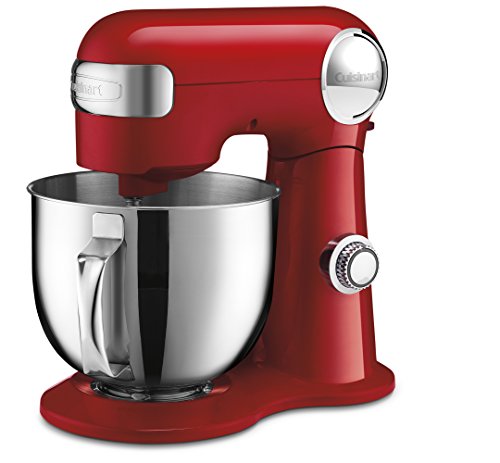
Cuisinart Stand Mixer, 12 Speed, 5.5 Quart, Ruby Red, SM-50R
Badge: Best for Weekend Batch Cooking
Strengths
- Same capable SM-50 stand-mixer platform in a bold ruby red finish
- Hands-free mixing with whisk, paddle and dough hook for batch work
- Splash guard with pour spout makes adding ingredients mid-mix cleaner
Trade-offs
- Mechanically the same machine as the other SM-50 finishes, so choose it for the colour
- Counter footprint and weight are the usual stand-mixer compromise
- A hand mixer is still faster to wash for tiny jobs
Mini spec box
- 12 speed settings
- 5.5 quart stainless steel bowl
- Chef’s whisk, mixing paddle and dough hook included
- Splash guard with pour spout
- Finish: Ruby Red
- Model: SM-50R
Mechanically, the ruby red SM-50 is the same stand mixer as the periwinkle model above: twelve speeds, a 5.5 quart stainless bowl, and the whisk, paddle and dough hook set with a splash guard. We list it separately because it is a separate verified listing and finish, and because it suits a slightly different buyer: the weekend batch cook who preps low-carb staples in volume and wants the machine that lives on the counter to be the one they enjoy looking at.
For batch work the routine is simple. The paddle creams butter and cream cheese for dessert bases, the whisk handles big volumes of egg whites or cream, and the hook mixes dense savoury doughs while you portion vegetables or line trays. Hands-free running is the real feature here; low-carb prep involves a lot of small parallel tasks, and a mixer that keeps working while your hands are elsewhere saves genuine time. The limitation is the mirror of its strength: it is a lot of machine for a single serving of whipped cream, and the two SM-50 finishes in this guide are alternatives, not a pair to buy together.
Best for: weekend batch cooks who prep low-carb staples in volume / Not suited for: anyone who already owns an SM-50 in another finish; it is the same machine

Hamilton Beach 6-Speed Electric Hand Mixer with QuickBurst and Bowl Rest, 62682G
Badge: Best Hand Mixer for Everyday Low-Carb Cooking
Strengths
- QuickBurst gives a short extra push of power for a stubborn pocket of mixture
- The bowl-rest design lets you set the mixer on the bowl rim between additions instead of on the counter
- A verified 250 watt motor and six speeds cover everyday mixing well
Trade-offs
- The listed attachment is traditional beaters, so whisk and hook work is not covered in the box
- Bowl rest only helps if your bowl rim suits it
- White plastic can pick up stains from coloured batters
Mini spec box
- 6 speed settings
- QuickBurst extra-power button
- 250 watt motor
- Traditional beaters included
- Bowl-rest feature
- Snap-on storage case
- Finish: White
- Model: 62682G
The Hamilton Beach 62682G is the hand mixer we would hand to a low-carb cook who rarely bakes but constantly mashes, whips and mixes. Six speeds and a verified 250 watt motor cover mashed cauliflower and turnip, whipped butter blends, egg mixtures for crustless quiches, and cream-cheese frostings sweetened without sugar. The QuickBurst button is more useful than it sounds: thick mixtures form stubborn pockets, and a short extra push of power pulls them in without cranking the speed for the whole job.
The bowl-rest feature suits this style of cooking too. Low-carb recipes often add ingredients in stages, grated cheese, then herbs, then a little cream, and being able to park the mixer on the bowl rim instead of a messy counter keeps the process calm. The snap-on case keeps the beaters with the machine. The limitation is attachments: the verified listing names traditional beaters, so there is no whisk in the box for serious egg-white work and no hooks for dough. For whipping-focused cooking, the KitchenAid picks below are the better fit.
Best for: savoury low-carb cooking: mashes, quiche mixtures, cheese-rich batters / Not suited for: egg-white specialists, since no whisk is listed in the box
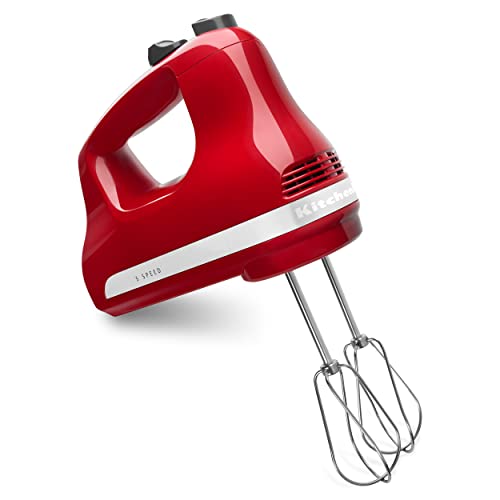
KitchenAid 5 Ultra Power Speed Hand Mixer, KHM512, Empire Red
Badge: Best for Whipping and Egg Whites
Strengths
- Turbo Beaters are efficient on batters and soft mixtures
- Swivel cord locks to either side, which keeps it clear of the bowl rim
- Easy-release button ejects beaters without pulling them by hand
Trade-offs
- A five-speed range is basic next to nine-speed rivals
- The listed set is beaters only, with no whisk or hooks in the title specification
- Like every hand mixer here, it relies on your arm for long mixing jobs
Mini spec box
- 5 speed settings
- Turbo Beaters included
- Lockable swivel cord
- Easy-release beater button
- Dishwasher-safe beaters
- Finish: Empire Red
- Model: KHM512
Egg whites are structural in low-carb baking, and the Empire Red KHM512 is the hand mixer here that treats them best. The Turbo Beaters move through whites and cream efficiently, the five speeds are simple to manage with wet hands, and the easy-release button means you are not pulling sticky beaters out with your fingers between stages. Whipped cream without sugar, meringue-style toppings, and foams for flourless chocolate cakes are all realistic jobs for this machine.
The lockable swivel cord deserves a mention in small low-carb kitchens, where the mixer often works next to a hob or a pile of prep bowls; pinning the cord to one side keeps it out of the mixture and off hot surfaces. The limitations are honest ones: five speeds is a basic range, the listed set is beaters only, and a hand mixer asks your arm to hold it through longer whipping sessions. For an occasional batch of whipped cream it is ideal; for weekly low-carb bread, step up to a stand mixer.
Best for: whipped cream, egg whites and flourless bakes in small batches / Not suited for: heavy dough work or anyone who needs hooks and a whisk included

LILPARTNER Hand Mixer Electric, 7-Speed
Badge: Most Accessories in the Box
Strengths
- The widest speed range of any hand mixer in this guide, which helps when a job needs a genuinely gentle start
- Five stainless steel accessories in the box, more than the typical two-beater set
- Accessories are dishwasher safe, so clean-up after sticky batters is simple
Trade-offs
- A newer, lesser-known brand, so long-term parts and support are less proven than the big names
- The light pink finish will not suit every kitchen
- Top speeds are lively, so flour and cocoa need a deep bowl and a slow start despite the speed range
Mini spec box
- 7 speed settings
- 5 stainless steel accessories
- Accessories listed for whipping dough, cream and cake
- Dishwasher-safe accessories
- Finish: Light Pink
The LILPARTNER is the accessory-led option: seven speeds, the widest range among the hand mixers in this guide, and five stainless steel accessories listed for whipping dough, cream and cake. For a low-carb cook that range matters at both ends. The low gears start almond flour mixtures gently, and the higher gears whip cream and egg whites quickly. Having several accessories in the box also means a clean spare set when one pair is coated in cream cheese, which happens constantly in this style of cooking.
Dishwasher-safe accessories are a practical plus, because low-carb mixtures are fatty and cling; being able to put everything straight into the dishwasher after a cheesecake batter is a real quality-of-life detail. The trade-offs are brand and finish. LILPARTNER is a newer name than KitchenAid or Cuisinart, so long-term support is less proven, and the light pink finish is a commitment. Treat it as a well-equipped, good-value tool rather than a decade-long heirloom and it makes sense.
Best for: varied low-carb jobs where spare accessories and seven speeds help / Not suited for: buyers who want a long-established brand behind their purchase

KitchenAid 5 Ultra Power Speed Hand Mixer, KHM512, Contour Silver
Badge: Best Compact Pick
Strengths
- Turbo Beaters are designed to mix efficiently without the clogging a centre post can cause
- The lockable swivel cord stays left or right, out of the bowl and out of the way
- One-button beater release keeps messy hands off the attachments
Trade-offs
- Five speeds is a narrower range than the nine-speed options in this guide
- Only beaters are listed in the box, so whisk and dough work means add-on attachments
- Hand mixers still ask you to hold the machine for the whole job
Mini spec box
- 5 speed settings
- Turbo Beaters included
- Lockable swivel cord
- Easy-release beater button
- Dishwasher-safe beaters
- Finish: Contour Silver
- Model: KHM512
The Contour Silver KHM512 is the compact, no-fuss pick: the same KitchenAid hand-mixer design as the Empire Red model, in a neutral finish that disappears into any kitchen. For Atkins-style cooking it covers the frequent small jobs well: whipped cream for berries, beaten eggs for omelettes and frittatas, quick cream-cheese spreads, and small batches of almond flour pancake batter. The Turbo Beaters are efficient, the beaters go in the dishwasher, and the whole machine stores in a drawer.
Its role in this guide is deliberately narrow. It is not the batch-cooking answer and it is not the dough answer; the verified listing is a five-speed beater set, and that is what it should be judged on. Bought for quick daily tasks, it is exactly right and will probably be used more often than a stand mixer in a savoury-leaning low-carb kitchen. Bought expecting it to knead low-carb bread dough every week, it will disappoint, and the fault will be the match, not the machine.
Best for: quick daily jobs in a small kitchen / Not suited for: weekly low-carb bread baking or large batches
Comparison Table
The table strips the six picks down to format, speeds and the low-carb job each does best. Finishes differ on the two SM-50 stand mixers; the platform is the same.
| Pick | Badge | Speeds / format | Standout point | Link |
|---|---|---|---|---|
| Cuisinart SM-50 Stand Mixer, Periwinkle Blue | Best Overall | 12 speed settings | Stand format; whisk, paddle and dough hook included | Check on Amazon |
| Cuisinart SM-50 Stand Mixer, Ruby Red | Best for Weekend Batch Cooking | 12 speed settings | Stand format; best for large weekend prep sessions | Check on Amazon |
| Hamilton Beach 6-Speed Hand Mixer, 62682G | Best Hand Mixer for Everyday Low-Carb Cooking | 6 speed settings | QuickBurst button and bowl rest; 250 watt motor | Check on Amazon |
| KitchenAid KHM512 Hand Mixer, Empire Red | Best for Whipping and Egg Whites | 5 speed settings | Turbo Beaters for egg whites and cream | Check on Amazon |
| LILPARTNER 7-Speed Hand Mixer | Most Accessories in the Box | 7 speed settings | Five stainless accessories, dishwasher safe | Check on Amazon |
| KitchenAid KHM512 Hand Mixer, Contour Silver | Best Compact Pick | 5 speed settings | Compact drawer storage; dishwasher-safe beaters | Check on Amazon |
How to Choose Among the best mixers for atkins
Start with your actual week of low-carb cooking, not the recipes you save and never make. If most of your mixer jobs are savoury and small, mashed cauliflower, whipped butter, beaten eggs, a quick sauce, a hand mixer will be used daily and washed in a minute, and a stand mixer will mostly decorate the counter. If you bake low-carb bread, pizza bases, muffins or desserts most weeks, the equation flips: dense alternative-flour mixtures are exactly the jobs where hands-free power and a big bowl pay for themselves.
Speed range matters in a specific way for this style of cooking. Alternative flours splash at the start and thicken late, so a gentle first gear is worth more than a dramatic top speed. The nine- and twelve-speed machines in this guide give the finest control, the seven-speed LILPARTNER is close behind, and the five- and six-speed models are perfectly adequate if you start dry ingredients slowly and add liquid in stages. What you should not do is judge by top speed alone; whipped cream and egg whites need pace, but almost everything else in a low-carb kitchen needs patience.
Attachments decide what the machine can really do. A whisk is the key tool for egg whites and cream, a paddle is the workhorse for batters and cream-cheese mixtures, and a dough hook is what turns a mixer into a bread machine helper. Check the verified contents of each pick: the SM-50 stand mixers include all three, the LILPARTNER lists five stainless accessories, and the KitchenAid hand mixers list Turbo Beaters only. Neither is a trick; they are different kits for different kitchens, priced and sized accordingly, and the right choice is the one whose box contains the tools your recipes actually call for.
Capacity is the quiet deciding factor. Low-carb batch cooking is popular for a reason: almond flour bakes take effort, so people make a week at once. A 5.5 quart stand bowl doubles recipes comfortably. Hand mixers work in whatever bowl you own, which is flexible, but doubling a dense batter in a medium bowl with a hand mixer is slow, splashy work. Single-person households cooking fresh each day can ignore capacity entirely and buy the smallest, simplest machine here.
Finally, think about cleaning, because low-carb food is fatty food. Cream cheese, butter and oils coat beaters and bowls. Dishwasher-safe beaters, listed on the KitchenAid and LILPARTNER picks, and a stainless stand bowl that rinses clean, will decide whether the mixer gets used on a tired Tuesday. Storage matters the same way: snap-on cases and drawer-size hand mixers suit small kitchens, while a stand mixer needs a permanent home you are happy to give it.
How to Mix Low-Carb Batters, Foams and Doughs Step by Step
Step one: bring ingredients to the right state before the mixer comes out. Cream cheese and butter should be soft for smooth batters, eggs whip best at room temperature, and cream whips best cold, in a cold bowl if your kitchen is warm. Almond flour should be whisked dry first to break up clumps, because its oils make it pack in the bag. These small preparations do more for low-carb results than any machine setting.
Step two: start slow, always. Put dry ingredients in the bowl, start on the lowest speed, and add liquid gradually. Almond flour mixtures look too wet, then set up; coconut flour mixtures look fine, then thicken sharply after a minute of resting. Mix until just combined, rest the batter for a few minutes, and only then judge whether it needs more liquid. Overmixing is less of a gluten risk without wheat, but it still warms butter, breaks foams and turns batters gummy.
Step three: treat egg whites like the structure they are. The bowl and beaters must be completely clean and free of grease, with no yolk in the whites. Whip on a medium-high speed until the foam holds the stage your recipe asks for, then fold it into the base mixture by hand with a spatula, never with the mixer, or you will knock out the air you just built. This single technique decides whether flourless cakes and low-carb breads rise or slump.
Step four: clean as you finish. Rinse beaters and bowls before fatty mixtures dry on them, use the dishwasher where the listing allows it, and dry stand-mixer attachments before storing. Wipe the mixer body with a damp cloth, never immerse it, and check the cord and vents for flour dust if the machine lives near your baking area.
Troubleshooting
Problem: the batter splashed out of the bowl at the start → the speed was too high for dry alternative flour. Start on the lowest gear, use a deeper bowl, and add liquid before increasing speed.
Problem: coconut flour batter turned thick and dry while mixing → it kept absorbing liquid, which is normal for that flour. Rest the batter for several minutes, then add liquid a spoonful at a time rather than thinning it all at once.
Problem: egg whites will not whip or collapse immediately → grease or yolk reached the bowl, or the foam was mixed instead of folded into the base. Start again with scrupulously clean equipment and fold by hand.
The Low-Carb Pantry Jobs a Mixer Quietly Takes Over
Beyond baking, a mixer earns its place in an Atkins-style kitchen on savoury work. Mashed cauliflower and turnip become smooth rather than lumpy with thirty seconds of beating. Compound butters with herbs, garlic or spices whip into something you will actually use on vegetables and grilled meats. Egg mixtures for crustless quiches and frittatas combine evenly, so the cheese distributes instead of sinking. Homemade mayonnaise-style sauces and creamy dressings come together more reliably with steady mechanical mixing than with a tired wrist and a whisk.
Desserts are the other quiet category. Whipped cream sweetened without sugar is the default low-carb topping, and a mixer makes it a two-minute job instead of a chore, which changes whether you bother. Cream-cheese-based frostings and cheesecake fillings need to be beaten smooth without overworking, and fathead-style doughs for pizza and rolls need even mixing of hot cheese and almond flour, a job that is miserable with a spoon. None of these jobs requires a stand mixer, but all of them happen more often when the tool is quick to use and quick to wash.
Hand Mixer or Stand Mixer on a Low-Carb Plan?
The honest answer depends on your baking frequency, and the drink-mixer guides elsewhere in this cluster, such as Best Mixers For Bacardi Rum and Best Mixers For Bad Vodka, are a useful reminder that the word mixer covers very different tools; here we are only talking about kitchen machines. For low-carb cooking, choose a hand mixer if your week is mostly savoury, your batches are single recipes, and your kitchen storage is tight. Choose a stand mixer if low-carb bread or baking is a weekly habit, if you double recipes, or if holding a hand mixer through thick mixtures bothers your hands or wrists.
Budget thinking helps too, in qualitative terms. A stand mixer is the premium-tier option in this guide and only justifies itself with use; a hand mixer is the lower-cost route and covers most low-carb jobs well. Many committed low-carb cooks end up with the stand mixer doing the weekend baking while a small hand mixer handles weekday cream and eggs. If you can only buy one, buy for the job you do most often, not the job you aspire to. Our related reading on Best Mixers For Bacardi 151, Best Mixers For Bacardi Gold and Best Mixers For Bacardi White Rum covers the beverage side of the mixer word, for readers who landed here from a drinks search.
How Low-Carb Ingredients Behave Under the Beaters
Almond flour is the workhorse of low-carb baking and it behaves nothing like wheat flour. It is ground nuts, which means it carries oil, has no gluten, and packs into dense clumps in the bag. Under the beaters it first sloshes, because it does not absorb liquid on contact, then suddenly coheres once the liquid and eggs catch up. That two-stage behaviour is why this guide keeps returning to low starting speeds and patience: a batter that looks too wet at minute one is often exactly right at minute three, and thinning or thickening it early, in either direction, is the most common way low-carb bakes go wrong.
Coconut flour is the opposite personality. It absorbs several times its weight in liquid and keeps absorbing while the batter rests, so a mixture that pours beautifully can set into a stiff paste before it reaches the tin. Mix it, rest it, and only then judge it, adding liquid in spoonfuls. Cream cheese and butter, the other structural pillars of this style of baking, need the opposite treatment: they must be soft before mixing begins, because a mixer cannot beat cold cream cheese smooth without also whipping in lumps that survive the oven. Eggs tie the system together, providing the lift and setting power that gluten would normally supply, which is why egg temperature and clean whipping equipment matter so much in this kitchen.
Sweeteners deserve a practical note. Granular sugar alternatives do not dissolve or cream the way sugar does, so low-carb bakers should not expect the pale, fluffy creaming stage of a conventional cake; the goal with butter and a granular sweetener is an even, smooth mixture, not volume. Powdered forms blend into frostings and whipped cream more cleanly than granular ones. None of this requires special equipment, but all of it rewards a mixer with a gentle low gear and a cook who understands what the mixture in the bowl is actually doing.
A Week of Low-Carb Staples, Planned Around the Mixer
Low-carb eating stays sustainable when the staple foods are easy, and a simple weekly rhythm shows where each type of mixer in this guide earns its place. A weekend session with a stand mixer can produce the structural items: a batch of low-carb bread or rolls mixed with the dough hook, a tray of muffins or a flourless cake from the paddle, and a bowl of whipped topping from the whisk. Those are the foods that make weekday meals feel normal, and they are exactly the jobs where hands-free power and a 5.5 quart bowl stop being luxuries.
Weekday cooking is hand-mixer territory. Mashed cauliflower for dinner, beaten eggs for a frittata, a quick cream-cheese sauce, whipped cream for berries: each takes minutes, uses one bowl, and ends with beaters in the dishwasher. This division of labour, big structured bakes weekly, small fresh jobs daily, is why so many committed low-carb cooks own both formats eventually, and why this guide refuses to declare one format the winner. The right question is which of your weekly jobs is currently the annoying one, and to buy the machine that removes that annoyance.
Storage makes the rhythm work. Low-carb bakes stale differently from wheat bakes because almond flour goods are moist and rich; most keep best refrigerated and many freeze well in portions. Whipped items should be made fresh where possible. A mixer cannot fix a storage problem, but a kitchen that batches, portions and freezes sensibly will use its mixer more, and complain about it less, than one that cooks every meal from zero.
A Note on Portions and Satiety in Low-Carb Cooking
One practical subject belongs in any honest Atkins cooking guide: portions. Low-carb bakes and dishes are rich by design, built on fats and proteins rather than flour and sugar, and a mixer makes them easy to produce in quantity, which is both the convenience and the trap. Batch cooking works best when the output is portioned deliberately at the moment it is made: muffins frozen individually, bread sliced before freezing, whipped desserts served in small pots rather than one large bowl. The machine’s job is to make the food; the cook’s job is to decide how it will actually be eaten across the week.
Variety is the other half of staying power. A single staple, however good, pales by the fourth consecutive day, and the mixers in this guide are versatile enough to rotate textures: something whipped, something baked, something mashed, something crisp from the oven. Planning that rotation takes minutes and uses the same equipment in different modes, which is a better return on a purchase than any single recipe. Buyers who think in weeks rather than in single meals will get the most from whichever pick they choose.
Common Buying Mistakes
- Buying a stand mixer for a savoury kitchen. If you rarely bake, the big machine will sit unused while its cost and counter space go to waste; a hand mixer fits that cooking style better.
- Judging by top speed. Low-carb mixtures need gentle starts and steady torque far more than a dramatic highest gear.
- Assuming a whisk is in the box. Some listings here are beaters only. Egg-white work is central to low-carb baking, so verify the attachment list before ordering.
- Adding coconut flour liquid all at once. The flour keeps absorbing after mixing; rest the batter and adjust gradually or bakes come out dry.
- Mixing egg-white foam into batter with the machine. That destroys the air that gives flourless bakes their lift. Always fold by hand.
- Ignoring clean-up. Fatty low-carb mixtures coat everything. If the parts are not easy to wash, the mixer will quietly stop being used.
Final Recommendation
For most Atkins-style kitchens that bake, the periwinkle blue Cuisinart SM-50 is the complete package: twelve speeds, a 5.5 quart bowl, and the whisk, paddle and dough hook set that low-carb breads, batters and batch cooking actually use. Start with the Cuisinart SM-50 Stand Mixer, Periwinkle Blue if you want the safest all-round choice. If that does not fit your kitchen or your habits, the Cuisinart SM-50 Stand Mixer, Ruby Red is the alternative we would look at next. Savoury-leaning cooks should skip the stand mixers entirely and take the Hamilton Beach 62682G for daily mashing and mixing, or a KitchenAid KHM512 if whipping cream and egg whites is the main job. The LILPARTNER suits anyone who wants the most accessories and the widest hand-mixer speed range in one box.
Whichever route you take, match the machine to the recipes you repeat weekly. In a low-carb kitchen the best mixer is not the biggest one; it is the one that makes your staple foods easy enough that the plan stays enjoyable month after month.
Frequently Asked Questions
Can a hand mixer handle almond flour dough and batter?
Yes, for single batches of batter and soft dough-style mixtures, provided you start on a low speed and add liquid gradually. Almond flour mixtures are dense and oily, so work in a deep bowl and do not overload the machine. For stiff, bread-like low-carb doughs made weekly, a stand mixer with a dough hook is the better tool.
Which mixer jobs matter most on an Atkins-style plan?
Whipping egg whites and cream, beating cream-cheese batters and frostings smooth, mashing cauliflower and other low-carb vegetables, and mixing egg-based dishes evenly. Baking low-carb bread adds dough mixing to that list, which is where stand mixers pull ahead.
Do I need a whisk attachment for low-carb baking?
For egg-white foams and whipped cream, a whisk or efficient beaters matter a lot, because those foams provide structure in flourless recipes. The SM-50 stand mixers include a chef’s whisk; some hand mixers in this guide list beaters only, so check the verified contents of the exact model before buying.
Why does my coconut flour batter keep getting thicker?
Coconut flour absorbs a large amount of liquid and keeps absorbing for a few minutes after mixing. Mix the batter, rest it, then adjust with small additions of liquid. Judging the consistency immediately leads to over-thinning, and then to a dry, crumbly bake once the flour finishes hydrating.
Is a stand mixer worth it if I only bake low-carb occasionally?
Probably not. It is the premium-tier, counter-space option in this guide, and occasional bakers are usually happier with a capable hand mixer that stores in a drawer. If low-carb bread or batch baking becomes a weekly habit, the stand mixer earns its place quickly.
How do I stop low-carb batters splashing out of the bowl?
Use a deep bowl, start on the lowest speed, add liquid before raising the speed, and consider a splash guard where one is included, as on the SM-50 stand mixers. Alternative flours are light and dry on top at the start, so the first ten seconds decide whether your counter stays clean.


