Disclosure: topratedkitchenware.com is reader-supported. When you buy through links on our site, we may earn an affiliate commission from Amazon and other retailers, at no extra cost to you.
Where to buy
A stained toilet bowl is a special kind of frustrating: the toilet works perfectly, yet the bathroom never looks clean. Rust-colored streaks under the rim jets, a gray waterline ring, mineral crust at the water’s edge — these are surface problems, and the best non stain toilets fight them at the surface. They pair smooth, well-glazed bowls with flushes that rinse the entire bowl wall every time, and in the one-piece designs that dominate this list, they remove the seams and ledges where discoloration loves to start. The six models below were shortlisted on glaze quality, rinse coverage, and cleanability. Start with our top pick and check the latest price on Amazon: Check on Amazon.
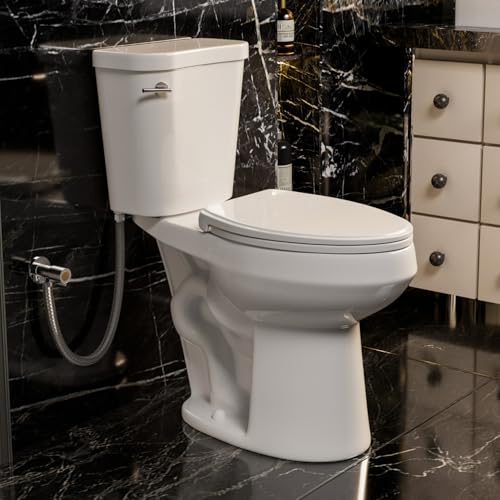
- IDEALHOUSE ADA 17-Inch Elongated Toilet, Easy Clean Porcelain — Best Overall
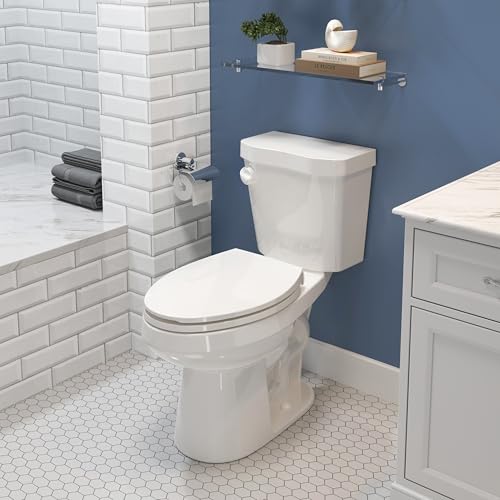
- American Standard Cadet PRO Right Height Elongated Toilet — Best Trusted-Brand Pick
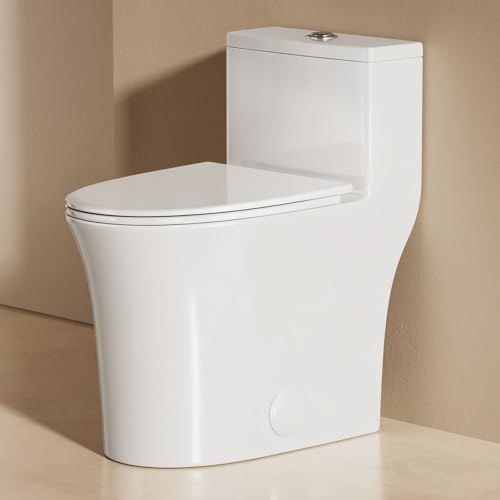
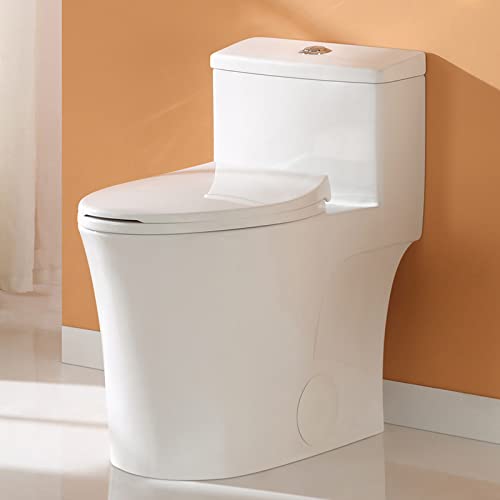
- HOROW T0338W One-Piece Toilet, Skirted, Dual Flush — Best One-Piece Easy-Clean Design
- DeerValley Compact One-Piece Toilet, Skirted — Best for Small Bathrooms
- BayRoll One-Piece Round Toilet, Dual Flush 0.9/1.28 GPF — Best Water-Saving Pick
- Casta Diva Elongated One-Piece Toilet, 17-Inch Chair Height — Best Comfort-Height One-Piece
Read the full guide ↓
Stains on porcelain come from three sources, and it helps to name them before shopping. The first is mineral: hard water leaves calcium and magnesium scale that starts as a faint ring and hardens into a rough, discolored crust — and roughness is self-reinforcing, because a rough patch gives the next layer of minerals and waste something to grip. The second is metal: iron in well water paints bowls orange-brown, and manganese can leave dark gray or black streaks. The third is biological: mold and bacteria colonize the damp, sheltered places — under the rim, around the seat hinges, along the waterline — especially in humid bathrooms. A toilet earns the label non stain not by being made of some magical material, but by denying all three their foothold: a glass-smooth glaze that minerals cannot key into, a rinse that reaches every part of the bowl so nothing sits and dries, and an exterior and bowl geometry without hidden ledges where moisture and grime gather unseen.
This guide evaluates six toilets through that lens. Four of the six are one-piece designs, and that is not a coincidence: the fused tank-and-bowl construction removes the seam behind the bowl where dust, moisture, and cleaning runoff collect on a two-piece toilet, and the skirted versions go further, replacing the corrugated exposed trapway — a notorious dust-and-grime trap — with a smooth wall you can wipe in one pass. We also cover the maintenance half of the equation honestly: no glaze survives abrasive scouring powders and pumice abuse forever, hard water eventually marks any bowl that is never cleaned, and the right non-scratch cleaning routine is what lets a good glaze stay good for a decade. Readers whose staining problem is specifically a sweating, dripping tank feeding mold on the floor should also see the separate research on Best Non Sweating Toilets; here, the battlefield is the bowl and the porcelain itself. If your water is hard, your current bowl is already ringed, and you are tired of apologizing for a toilet that is actually clean, this is your shortlist.
Key Takeaways
- Stain resistance is a system: smooth glaze, complete bowl rinse, and geometry without hidden ledges — no single feature does it alone.
- The IDEALHOUSE 17-inch elongated toilet is our top pick for its easy-clean porcelain positioning, comfort height, and strong 1.28 GPF siphonic jet flush.
- One-piece and skirted designs (HOROW T0338W, DeerValley, BayRoll, Casta Diva) remove the seams and trapway corrugations where grime and mold start.
- The American Standard Cadet PRO is the trusted-brand route, with a mature platform and deep parts support.
- Abrasive cleaners destroy glaze over time; a non-scratch routine is what keeps a stain-resistant bowl stain-resistant.
- Dual-flush models (HOROW, DeerValley, BayRoll, Casta Diva) rinse more often for less water, and frequent rinsing is itself stain prevention.
In this guide
Quick Picks
| Pick | Badge | Flush | Design / Height | Link |
|---|---|---|---|---|
| IDEALHOUSE ADA 17-Inch Elongated | Best Overall | 1.28 GPF siphonic jet | Two-piece / 17-inch comfort height | Check on Amazon |
| American Standard Cadet PRO Right Height | Best Trusted-Brand Pick | 1.6 GPF two-piece flush | Two-piece / Right Height elongated | Check on Amazon |
| HOROW T0338W One-Piece | Best One-Piece Easy-Clean Design | Dual flush 1.1/1.6 GPF, MAP 1000g | One-piece skirted / 17.3-inch ADA | Check on Amazon |
| DeerValley Compact One-Piece | Best for Small Bathrooms | Dual flush 1.1/1.6 GPF | One-piece skirted / standard height, compact | Check on Amazon |
| BayRoll One-Piece Round | Best Water-Saving Pick | Dual flush 0.9/1.28 GPF, MAP 1000g | One-piece fully skirted round / 17-inch ADA | Check on Amazon |
| Casta Diva Elongated One-Piece | Best Comfort-Height One-Piece | Dual flush 1.1/1.6 GPF | One-piece / 17-inch chair height | Check on Amazon |
Notice how the list divides: two-piece models compete on glaze and flush engineering, while the one-piece models compete on geometry — fewer places for discoloration to begin. Both strategies are legitimate, and the detailed reviews below explain which suits which bathroom. The same smooth surfaces that resist stains also resist waste buildup, which is why this shortlist overlaps naturally with our clog-focused research on Best Nonclog Toilets: a bowl that rinses clean is a bowl that flushes clean, and vice versa.
How These Picks Were Chosen
This is a research-led guide built from verified manufacturer listings, not a hands-on staining trial — running a fair, months-long hard-water test on six toilets is beyond any honest buying guide, and we will not dress up a weekend of use as one. What we compared instead are the verifiable inputs to stain resistance: how each listing describes its bowl surface and cleaning design, whether the flush rinses the full bowl, whether the construction is one-piece or two-piece, whether the trapway is exposed or skirted, and whether the flush has a published performance figure (two models here carry MAP 1000g in their listings) to confirm that the rinse is backed by real clearing power.
Weighting favored the bowl surface and rinse first, because mineral and waste staining happen inside the bowl. Geometry came second: one-piece construction removes the tank-to-bowl seam, skirted sides remove the trapway’s dust-collecting contours, and both reduce the exterior staining and mold growth that make a bathroom look dirty even when the bowl is fine. Cleanability in the ordinary sense — can you reach everything with a brush and a cloth, are the seat and its hinges removable or at least accessible — came third. Finally we considered fit: heights from standard to 17-inch chair height, a compact model for small bathrooms, a round-front option where an elongated bowl will not fit, and dual-flush water savings for households that rinse often. We deliberately included one legacy two-piece design, the American Standard Cadet PRO, as the control case: proof that a well-made conventional toilet with a quality finish and a strong flush remains a rational stain-conscious buy, especially where parts support and installer familiarity matter. Readers comparing the wider one-piece category will find adjacent models gathered under Best One Piece Comfort Height Toilets, which several of these picks also anchor.
The 6 Best Non Stain Toilets

IDEALHOUSE ADA Compliant 17-Inch Elongated Toilet
Badge: Best Overall
Strengths
- Easy-clean white porcelain positioning in the listing, paired with a 1.28 GPF siphonic jet flush that rinses decisively.
- 17-inch comfort height elongated bowl suits most adults and gives a generous, easy-to-scrub bowl shape.
- Soft-close seat avoids slam wear on the bowl rim and its mounting points, where chips become stain anchors.
Trade-offs
- Two-piece construction keeps a tank-to-bowl seam that needs a wipe-down as part of regular cleaning.
- Exposed trapway contours collect dust faster than the skirted one-piece models here.
- IDEALHOUSE is a newer name than American Standard, so long-term parts depth is less certain.
Mini spec box: Two-piece elongated ceramic toilet; 1.28 GPF siphonic jet flush; 17-inch ADA comfort height; soft-close seat; 12-inch rough-in; easy-clean white porcelain.
The IDEALHOUSE takes the top spot by doing the fundamentals of stain resistance in the right order. Inside the bowl — where mineral rings and waste marks actually form — it offers an easy-clean porcelain surface and a siphonic jet flush that moves water with enough conviction to rinse the bowl wall rather than merely wetting it. That combination is the core of the whole category: minerals and residue stain by sitting still on a surface, and a bowl that is fully rinsed on every flush, over a smooth finish, gives them neither the time nor the texture they need. The elongated bowl shape helps in a small way too, spreading the water’s work over a shape with no tight corners where a brush — or the rinse itself — cannot reach.
Around that core, the package is sensibly adult: a 17-inch comfort height most users prefer, a soft-close seat that protects the rim from the chip-and-crack cycle (a chipped rim is a permanent stain anchor, because exposed ceramic under the glaze is porous), and a standard 12-inch rough-in that drops into most bathrooms without drama. The honest limitations are architectural. As a two-piece toilet it has a seam where tank meets bowl, and as an exposed-trapway design its sides have the traditional contours that gather dust; both are manageable with a weekly wipe, but the skirted one-piece models below genuinely need less of that attention. If your staining problem is inside the bowl — and for most people it is — this is the most balanced answer in the guide.
Best for: Most households fighting bowl rings and streaks who want comfort height / Not suited for: Owners who want a seam-free, skirted exterior above all else

American Standard Cadet PRO Right Height Elongated Toilet
Badge: Best Trusted-Brand Pick
Strengths
- A mature, widely installed platform from one of the longest-established names in American plumbing.
- 1.6 GPF flush volume gives a thorough bowl rinse for households whose water makes light rinses risky.
- Right Height elongated format and a deep professional installer base make fitting and servicing straightforward.
Trade-offs
- Conventional two-piece design with exposed trapway: more exterior surfaces to wipe than any skirted rival.
- Higher flush volume than the 1.28 GPF and dual-flush models, which matters on metered water.
- The listing does not position a specialty easy-clean glaze, so its stain case rests on finish quality and rinse volume.
Mini spec box: Two-piece elongated toilet; 1.6 GPF; Right Height bowl; white finish; model 215AA004.020 in the listing.
The Cadet PRO is the conservative choice, and for stain resistance conservative has a specific meaning: a proven porcelain finish from a manufacturer that has been firing bowls for generations, a generous 1.6 GPF rinse that physically carries residue away, and no experimental surfaces to wonder about. In homes with iron-bearing well water — the hardest staining environment there is — a thorough rinse matters enormously, because iron stains form when iron-laden water sits and oxidizes on the surface. A toilet that exchanges its bowl water completely and briskly, many times a day, simply presents less standing, staining water to the porcelain than a timid flusher does. That is the Cadet PRO’s argument, and generations of installed units say the finish holds up its end when it is cleaned without abrasives.
What you give up is geometry. This is a traditional two-piece toilet: a seam at the tank, an exposed trapway with its dust-catching curves, and more exterior to wipe than any other pick here. Buyers renovating for a sleek look will pass it by, and water-conscious households will note the higher per-flush volume against the dual-flush models. But there is a reason plumbers recommend this class of toilet to relatives: it is known, it is serviceable anywhere in the country, and its bowl — kept clean with non-scratch methods — stays presentable for a very long time. For a rental property or a family home where the cleaner is whoever is available, that robustness to ordinary care is a stain strategy in itself.
Best for: Well-water homes, rentals, and buyers who value a proven finish and universal serviceability / Not suited for: Design-led renovations or strict water budgets
HOROW T0338W One-Piece Toilet with ADA Chair Height
Badge: Best One-Piece Easy-Clean Design
Strengths
- One-piece skirted construction removes the tank seam and hides the trapway behind a smooth, wipe-clean wall.
- Dual flush 1.1/1.6 GPF with a MAP 1000g figure in the listing — the rinse is backed by tested clearing power.
- Compact skirted footprint with a 17.3-inch chair height suits smaller bathrooms that still need adult comfort.
Trade-offs
- One-piece toilets are heavier to maneuver into place; plan on two people for installation.
- Skirted sides complicate access to the mounting bolts compared with an exposed design.
- Dual-flush valve asks for the same light annual attention as any two-mode mechanism.
Mini spec box: One-piece elongated toilet; dual flush 1.1/1.6 GPF; MAP 1000g in the listing; 17.3-inch ADA chair height; compact skirted design; 12-inch rough-in; white.
The T0338W is what happens when a manufacturer designs against staining as a whole-bathroom problem rather than only a bowl problem. The one-piece body means there is no horizontal seam behind the bowl collecting the gray film that two-piece owners know well; the skirted sides mean the trapway’s corrugated silhouette — a shelf for dust, hair, and mop splash that eventually reads as permanent dinginess — is replaced by a flat surface that a cloth crosses in seconds. Inside, the listing’s easy-clean positioning and the dual-flush system keep the bowl rinsed on the light cycle for liquid waste, so the bowl sees fresh water more often for less total water, which is precisely the rhythm that discourages waterline rings.
The MAP 1000g figure deserves its mention here as well as in clog guides, because a flush that clears decisively also rinses decisively: weak flushes leave the last fraction of waste filmed on the bowl to dry into a mark, while a tested, complete exchange does not. The costs of the design are practical rather than functional. One-piece toilets concentrate all their weight in a single casting, so installation is a two-person lift with no mid-course corrections, and the skirt that looks so clean also stands between you and the floor bolts if you ever need them. Neither matters weekly; both matter on install day. For a primary bathroom in a hard-water home, this is the pick we would expect to look newest in five years with the least cleaning effort.
Best for: Hard-water homes and primary bathrooms where exterior grime is half the complaint / Not suited for: Solo DIY installers, or anyone who prioritizes easy bolt access

DeerValley Compact One-Piece Toilet for Small Bathrooms
Badge: Best for Small Bathrooms
Strengths
- Compact one-piece skirted body fits small bathrooms while keeping the seam-free, wipe-clean exterior.
- Dual flush 1.1/1.6 GPF described in the listing as powerful and quiet — frequent light rinses without the noise penalty.
- Standard seat height suits shorter adults and children, and keeps the profile low in tight spaces.
Trade-offs
- Compact dimensions mean a smaller water surface and bowl than full-size elongated models.
- Standard height will not suit tall users or those who need chair height for mobility.
- No MAP figure in the listing, so clearing power is asserted rather than test-published.
Mini spec box: One-piece toilet; dual flush 1.1/1.6 GPF; compact skirted design; standard seat height; 12-inch rough-in; white.
Small bathrooms stain faster, for a simple reason: everything is closer to everything else. The toilet sits beside the tub, under the towel rail, within splash range of the sink, in a room that steams up completely at every shower and dries slowly. Exterior grime and mold find more opportunities, and cleaning access is worse — nobody scrubs enthusiastically in a space where they cannot kneel. The DeerValley answers with the smallest complete version of the one-piece formula in this guide: a compact skirted body with no seams to harbor film, no trapway contours to dust, and a footprint that leaves a little more floor visible and reachable around it, which in a small room is the difference between a weekly wipe that happens and one that does not.
The dual-flush system, positioned in the listing as powerful and quiet, fits the small-bathroom pattern too: in a powder-room-sized space, often near bedrooms or living areas, a quiet light flush at night is a genuine quality-of-life feature, and the light cycle still exchanges the bowl water — the anti-stain rinse — without the full volume. The trade-offs are the honest ones of any compact fixture. The bowl is smaller, the seat height is standard rather than chair height, and larger adults will feel both. Buy it for the bathroom it fits: a small full bath, an ensuite, or a half bath where a full-size elongated one-piece would crowd the door swing. In that setting, its combination of compact size and seam-free cleanability is not a compromise at all — it is the correct tool.
Best for: Small bathrooms, ensuites, and half baths where space and cleanability are both tight / Not suited for: Tall users or anyone who needs chair height and a full elongated bowl

BayRoll One-Piece Sleek Modern Toilet, Round, Dual Flush
Badge: Best Water-Saving Pick
Strengths
- Dual flush 0.9/1.28 GPF — the lightest light cycle in this guide — keeps the bowl rinsed often for very little water.
- MAP 1000g figure in the listing confirms the full cycle clears decisively despite the low volumes.
- Fully skirted round one-piece body: seam-free exterior in the shape that fits bathrooms an elongated bowl cannot.
Trade-offs
- Round bowl offers less sitting room than elongated designs; some adults find it noticeably less comfortable.
- The very light 0.9 GPF cycle depends on users choosing the full flush for solid waste — habit-dependent.
- Sleek modern styling may sit oddly in a traditional bathroom.
Mini spec box: One-piece round toilet; dual flush 0.9/1.28 GPF; MAP 1000g in the listing; 17-inch ADA chair height; fully skirted compact design; soft-close seat; 12-inch rough-in.
The BayRoll makes the water-saving case for stain prevention, and it is a better case than it first sounds. Stains form in standing water and dried residue; the countermeasure is frequent, complete rinsing. A household on metered water with a 1.6 GPF toilet rinses reluctantly, while a household whose light cycle costs less than a gallon rinses freely — and the BayRoll’s 0.9 GPF light cycle is the cheapest rinse in this guide. Crucially, the listing’s MAP 1000g figure says the frugality does not come at the cost of the full flush: when the toilet is asked to clear a real load, the tested result is there. Frugal for liquids, proven for solids, is exactly the profile a stain-conscious, water-conscious buyer wants.
The round, fully skirted body is the other half of its identity. Round-front bowls fit the bathrooms — older, smaller, or with tight door swings — where elongated models simply cannot go, and the full skirt keeps the exterior as wipe-simple as the HOROW’s. At a 17-inch ADA chair height it does not ask shorter rooms to accept a low seat, either. The compromises are shape and habit: a round bowl is a smaller seat, full stop, and the two-button discipline matters more here than anywhere, because the gap between 0.9 and 1.28 is where an under-flushed solid load becomes a dried mark. Households with young children who press whichever button is closer should weigh that honestly; households of adults get the most efficient stain-fighter on the list. Buyers comparing round one-piece options across the wider category will find this model also featured in Best One Piece Round Toilets research.
Best for: Water-meters households and smaller bathrooms needing a round bowl / Not suited for: Adults who strongly prefer elongated seating, or homes with button-random young children

Casta Diva Elongated One-Piece Toilet with 17-Inch Chair Height
Badge: Best Comfort-Height One-Piece
Strengths
- Elongated one-piece body at a true 17-inch chair height — the comfort format most adults ask for, without seams.
- Dual flush 1.1/1.6 GPF high-efficiency system keeps the bowl exchanged on the light cycle.
- Compact-for-elongated footprint suits standard bathrooms that cannot spare extra inches.
Trade-offs
- No MAP figure in the listing; clearing confidence rests on the dual-flush design rather than a published score.
- One-piece weight and handling caveats apply at installation, as with the HOROW and DeerValley.
- Casta Diva is a smaller brand presence than American Standard for long-term support.
Mini spec box: One-piece elongated toilet; dual flush 1.1/1.6 GPF; 17-inch comfort chair height; compact design; 12-inch rough-in; white bowl.
The Casta Diva is the straightforward synthesis of this guide’s two themes: the elongated chair-height format that the two-piece IDEALHOUSE offers, delivered in the seam-free one-piece construction that makes the HOROW and DeerValley so easy to keep looking clean. For the buyer who read the top pick and thought “yes, but I want it in one piece,” this is the answer. The elongated bowl gives adults the seating room the round BayRoll cannot, the 17-inch height matches what most households now expect, and the exterior is a single smooth casting from tank to base — no seam to film over, and a profile the listing positions as compact, so it does not demand a large bathroom to earn its place.
Its dual-flush system follows the guide’s familiar logic: a light 1.1 GPF cycle for the liquid majority, keeping the bowl water fresh and the waterline ring at bay, and the full 1.6 GPF cycle when the load requires it. What it does not carry is a published MAP score, so a buyer choosing between it and the HOROW T0338W is trading a test figure for the elongated chair-height format in a compact body — a reasonable trade for many, but one to make knowingly. As with all one-piece models, arrange a second pair of hands for installation and confirm the 12-inch rough-in before the box is opened. Fitted into a primary bathroom and cleaned with the non-scratch routine below, it should hold its looks with very little weekly effort.
Best for: Buyers who want elongated chair height in a seam-free one-piece body / Not suited for: Shoppers who require a published MAP figure, or solo installers
Comparison Table
| Model | Construction | Flush | Height | Stain-Fighting Strength | Link |
|---|---|---|---|---|---|
| IDEALHOUSE 17-Inch Elongated | Two-piece | 1.28 GPF siphonic jet | 17-inch ADA | Easy-clean porcelain plus decisive rinse | Check on Amazon |
| American Standard Cadet PRO | Two-piece | 1.6 GPF | Right Height | Proven finish, thorough rinse volume | Check on Amazon |
| HOROW T0338W | One-piece skirted | Dual 1.1/1.6 GPF, MAP 1000g | 17.3-inch ADA | Seam-free exterior, tested flush | Check on Amazon |
| DeerValley Compact | One-piece skirted | Dual 1.1/1.6 GPF | Standard | Compact seam-free body for small rooms | Check on Amazon |
| BayRoll Round | One-piece fully skirted | Dual 0.9/1.28 GPF, MAP 1000g | 17-inch ADA | Cheapest frequent rinse, tested power | Check on Amazon |
| Casta Diva Elongated | One-piece | Dual 1.1/1.6 GPF | 17-inch chair | Elongated comfort without seams | Check on Amazon |
How to Choose a Toilet That Resists Stains
Diagnose your stain before choosing your toilet, because the three stain families reward different defenses. If your enemy is the hard, pale crust of mineral scale, prioritize glaze smoothness and rinse completeness, and plan on the cleaning routine below — scale forms on any porcelain given hard water and time, and the best toilet is the one whose surface releases scale easily when you do clean. If your enemy is iron’s orange-brown filming, prioritize rinse volume and frequency: the Cadet PRO’s generous flush or a dual-flush model whose light cycle you will actually use many times a day, because iron stains need standing time on the surface and frequent exchange denies it. If your enemy is the dingy exterior — dust shelves, seam film, mold at the base in a humid room — prioritize geometry: one-piece, skirted, and compact enough that you can actually reach around it.
Then check the unglamorous specifications. Confirm the rough-in (12 inches for every model here) and measure your space for elongated versus round honestly, door swing included. Decide on height by user, not by fashion: chair heights around 17 inches suit most adults, standard height suits shorter users and children, and a household split between the two should usually favor the primary bathroom’s main users. Treat dual flush as a stain feature, not just a water feature: the light cycle is a rinse subscription, and bowls that are rinsed often stain slowly. Finally, think about the ten-year surface, not the showroom surface. Every glaze looks perfect new; the question is whether your cleaning habits will preserve it. If your household reaches for scouring powder and stiff brushes by default, no toilet in this guide will stay non stain — so let the purchase also be the moment the cleaning caddy changes, as the next section describes. For unplumbed settings where none of these plumbed fixtures applies, the separate Best Off Grid Toilets category is the correct shelf to browse.
How to Clean a Toilet Without Destroying Its Stain Resistance
The central paradox of this category is that aggressive cleaning causes the staining it fights. Porcelain glaze is a glass surface; abrasive powders, pumice, and stiff metal brushes score it with microscopic scratches, and each scratch is a foothold for minerals and pigment. A bowl cleaned harshly for a year can end up staining faster than an identical bowl cleaned gently, which is why the routine matters as much as the toilet. Work in this order. Weekly: a standard bowl cleaner or a simple solution of dish soap and water, a soft bowl brush, and two minutes of contact time before scrubbing; wipe the exterior — especially the base and, on two-piece models, the tank seam — with a cloth and bathroom cleaner, and dry the base afterward in humid rooms so mold loses its standing moisture. Monthly: check under the rim with a mirror or phone light for mold or scale at the jets, and clean the seat hinges and mounting area, where residue accumulates out of sight. As needed for mineral rings: a paste of baking soda or a citric-acid-based descaler, applied and left to sit — time dissolves scale more safely than force — then a gentle brush and a flush.
Know what to keep away from the bowl. Avoid scouring powders and pumice on glazed surfaces except as a one-time rescue on old, already-damaged porcelain where the trade-off has already been lost. Avoid mixing bleach with other cleaners, and avoid leaving strong bleach sitting in the bowl for hours; it does nothing for mineral scale anyway, because bleach whitens organic stains but does not dissolve calcium. In-tank drop-in tablets deserve special caution: they can degrade flappers and seals and may void parts of a manufacturer’s warranty, and a bowl kept clean by its own rinse rarely needs them. For iron staining on well water, an iron-specific cleaner used occasionally, exactly as directed, beats weekly scrubbing with the wrong product.
Troubleshooting, in the pattern that matters:
- Problem: A hard ring keeps returning at the waterline → it is mineral scale from hard water, not dirt. Soak the ring with a citric-acid descaler or vinegar-wetted paper towels for several hours, then brush gently. If it returns within weeks, a water softener or a more frequent light-cleaning rhythm is the real fix.
- Problem: Orange-brown streaks under the rim jets → iron in the water supply oxidizing on the bowl. Use an iron-removal cleaner as directed, and check whether the streaks correspond to specific jets, which can indicate scale narrowing those jets and slowing the rinse.
- Problem: Dark spots or pink film near the waterline and base → mold or bacterial film feeding on standing moisture. Clean, then dry the surfaces and improve bathroom ventilation; a bowl and base that dry between uses starve the film. Persistent growth behind a skirted base warrants checking for a slow leak feeding it.
Hard Water, Well Water, and City Water: Matching the Toilet to Your Supply
Your water supply writes the first draft of your staining story. Hard municipal water — common across much of the country — deposits scale steadily and rewards smooth glazes and descaling discipline; any pick here works, with the one-piece models easing the exterior half of the chore. Well water adds iron and manganese to the cast, and for those homes rinse volume and frequency move to the top of the priority list: the Cadet PRO’s full-volume exchange, or a dual-flush toilet whose light cycle gets used a dozen times a day, keeps iron-laden water from standing long enough to film. Softened water is the gentlest environment of all, and in a softened home even a mid-pack glaze will look good for years — which means softener owners can safely prioritize comfort and design among these six. City water with heavy chlorination sits in between: kind to porcelain, occasionally unkind to rubber seals over long horizons, and no special toilet choice is required. The practical takeaway is to spend your budget where your water is worst: the harsher the supply, the more the surface-and-rinse engineering in this guide earns its keep, and the more a modest investment in the cleaning routine outperforms any single product decision.
The Forgotten Stain Zones: Seat, Hinges, Rim Jets, and the Tank Interior
Ask homeowners where their toilet looks dirty and most point at the bowl — but a honest tour of a five-year-old toilet finds the worst discoloration in four places nobody chose the toilet for. The first is the seat underside and its hinges, where spray, moisture, and cleaning runoff collect in the hinge barrels and around the mounting bolts; plastic seats yellow with age and chemistry, and a seat that cannot be removed, or at least lifted fully, for cleaning will eventually make a clean toilet look unclean. Several picks in this guide include soft-close seats, which helps indirectly — a seat that is never slammed lasts longer without the micro-cracks that discolor — but whatever model you buy, put the hinges on the monthly wipe list and expect to replace the seat itself once over a long ownership; it is a wear part, and a fresh seat is the cheapest bathroom refresh in existence.
The second zone is under the rim, where the jets live. Scale and mold build there invisibly, and the first symptom is usually a stain pattern rather than a visible cause: streaks that always reappear in the same arcs, because the jets feeding those arcs are partially scaled and rinse unevenly. The mirror-and-light check in the cleaning section exists for this zone. The third zone is the tank interior, which nobody sees and everybody should, once a year: a rusting flush-valve component or a deteriorating flapper can shed discolored water into every flush, painting faint streaks that no amount of bowl scrubbing prevents, because the bowl is being re-stained by its own tank. If streaks return within days of a thorough clean, lift the tank lid before blaming the porcelain. The fourth zone belongs to the bidet-curious: a bidet seat, which many of these bowls accept, changes the staining equation by washing with water instead of wiping with paper, leaving less residue in the bowl per use — readers exploring that route will find integrated options surveyed under Best One Piece Bidet Toilets, while the toilets ranked here accept add-on seats in most standard elongated and round configurations. The lesson across all four zones is the same one this guide began with: staining is a system property, and the buyers who win are the ones who maintain the system, not just the surface they can see.
Common Buying Mistakes
- Expecting any toilet to be stain-proof forever. Stain resistance is a slower clock, not a stopped one. Hard water and iron mark any bowl that is never cleaned.
- Scrubbing with abrasives to fix the first ring. Scouring powders and pumice scratch the glaze, and scratched glaze stains faster. Dissolve scale with time and mild acid instead.
- Ignoring the exterior when the complaint is a dirty-looking bathroom. Seams, trapway contours, and the base collect as much visible grime as the bowl. One-piece skirted designs exist for this reason.
- Choosing elongated for a bathroom that needs round. A bowl that crowds the door gets cleaned less and bumped more. Measure the space, swing included.
- Using in-tank bleach tablets as a cleaning strategy. They can attack seals and flappers while doing nothing against mineral scale. Clean the bowl, not the tank.
- Blaming the toilet for a water problem. Severe iron or hardness will defeat any fixture eventually. Treat the water, or at least price the cleaning reality into the choice.
Final Recommendation
For most buyers, start with the IDEALHOUSE 17-inch elongated toilet: easy-clean porcelain, a decisive siphonic jet rinse, and the comfort height most adults want, in a serviceable two-piece format. If your complaint is as much about the exterior as the bowl — seams, dust shelves, a dingy base — step to the HOROW T0338W one-piece, whose skirted, seam-free body and tested dual flush make it the lowest-effort keeper in the guide. Well-water homes should weigh the Cadet PRO’s thorough rinse, small bathrooms the DeerValley, metered-water households the BayRoll, and elongated one-piece loyalists the Casta Diva. Whichever arrives at your door, retire the scouring powder the same day: the glaze you protect is the stain resistance you paid for.
Frequently Asked Questions
What actually makes a toilet stain-resistant?
A combination, not a coating claim: a smooth, well-fired glaze that minerals and residue cannot grip, a flush that rinses the entire bowl so nothing sits and dries, and — for the exterior — geometry without seams and ledges where film collects. The six models here were chosen for those verifiable traits in their listings.
Is a one-piece toilet better for stains than a two-piece?
For exterior staining and grime, yes: one-piece construction removes the tank-to-bowl seam, and skirted versions hide the trapway’s dust-collecting contours. Inside the bowl, a two-piece toilet with an easy-clean surface and a strong rinse — like the IDEALHOUSE at the top of this guide — performs just as well. Choose based on where your staining actually appears.
How do I remove a hard water ring without damaging the glaze?
Give chemistry time instead of using force. Apply a citric-acid-based descaler, or vinegar-wetted paper towels, directly on the ring and let it sit for several hours, then brush gently and flush. Repeat if needed. Avoid pumice and scouring powders on a glaze you intend to keep; they remove the ring by removing the surface’s smoothness, and the ring returns faster each time.
Why does my bowl get orange stains?
That is iron in the water — most common with well water — oxidizing on the porcelain, often worst under the rim jets where water enters. An iron-specific cleaner used as directed removes it. Frequent flushing helps prevention, because iron films need standing time on the surface; a dual-flush toilet whose light cycle gets used often is a genuine advantage in iron country.
Do dual-flush toilets help prevent stains?
Indirectly, yes. Most flushes are liquid waste, and a light cycle that exchanges the bowl water cheaply encourages frequent rinsing — and frequent rinsing is the everyday mechanism that keeps waterline rings and residue films from establishing. The full cycle remains available for solid loads, so nothing is sacrificed.
Can I use bleach to keep the bowl stain-free?
Occasional, brief bowl cleaning with a bleach-based bowl cleaner is fine for organic stains and disinfection, but bleach does not dissolve mineral scale, should never be mixed with other cleaners, and should not sit in the bowl for hours. In-tank bleach tablets are the version to avoid: they can degrade flappers and seals over time.
When should I suspect a leak rather than a stain problem?
When discoloration or mold appears at the base, on the floor, or on the ceiling below — patterns that follow moisture, not use. Stains from water chemistry appear inside the bowl and under the rim; stains that grow outward from the base suggest water escaping where it should not. That is a different guide’s territory — start with the leak-focused research and a paper-towel check around the base.