Disclosure: topratedkitchenware.com is reader-supported. When you buy through links on our site, we may earn an affiliate commission from Amazon and other retailers, at no extra cost to you.
Where to buy
The best long lasting all metal kitchen faucets share one trait the listings do not always shout: a body whose material is documented, in writing, as metal — SUS 304 stainless steel or stainless construction in every linked pick below. Two models in the assigned pool are covered prose-only because their verified data never states a body material, and an all-metal guide cannot link what it cannot verify.
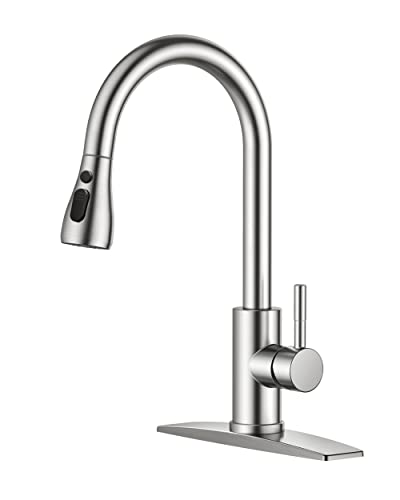
- Lufeidra Kitchen Faucet with Pull-Down Sprayer — Best Overall. Check on Amazon
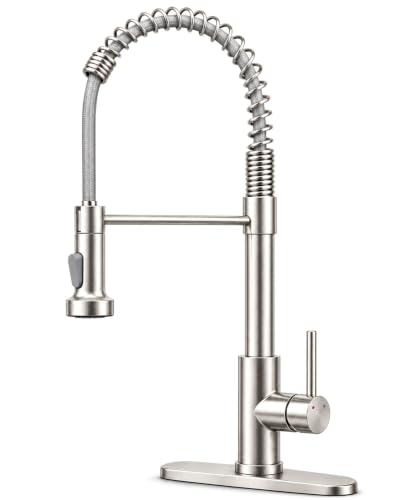
- FEELSO Kitchen Faucet with Pull Down Sprayer — Best Value Pick.
- WEWE Touchless Kitchen Faucet with Soap Dispenser Set — Best Touchless Metal Build.
- GIMILI Matte Black Touchless Kitchen Faucet — Prose-Only: Body Material Not Documented as All-Metal (covered in prose only; see its review for why).
- VFAUOSIT Kitchen Faucet with Pull Down Sprayer — Prose-Only: Body Material Not Documented (covered in prose only; see its review for why).
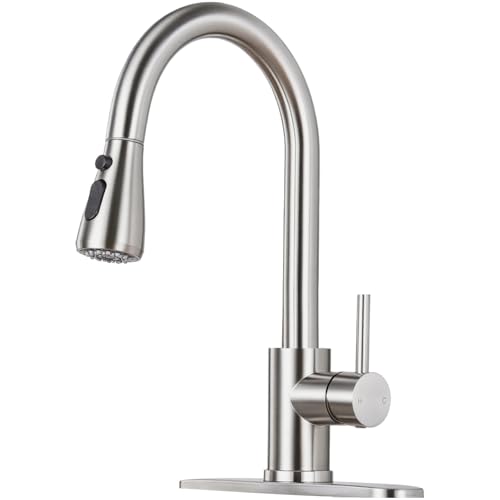
- WEWE High-Arc Pull-Down Kitchen Faucet — Best Documented Durability Stack.
Read the full guide ↓
Every faucet fails eventually, but the manner of failure divides the category. A plastic-bodied faucet fails structurally — a cracked housing, a stripped thread, a handle mount that gives up — and structural failure means replacement. A metal-bodied faucet usually fails at its wear parts instead: a cartridge, an O-ring, a hose, all replaceable. That is the entire argument behind the best long lasting all metal kitchen faucets, and it is why this guide treats documented body material as a hard filter rather than a preference.
The filter had teeth. Of the six models in the verified pool, four document metal construction in their listings — SUS 304 stainless steel or stainless steel, named outright — and those four are the linked picks. The other two, a touchless spring model and a compact bar model, may well contain plenty of metal, but their verified data does not say so, and an all-metal brief is exactly the wrong place to guess. They are reviewed in prose, clearly labeled, so you can see what was excluded and why.
Beyond the body, longevity is a stack: the cartridge that meters every drop, the hose that flexes every day, the finish that faces your water chemistry, and the certifications that show the maker submitted to outside testing. This guide reads that stack pick by pick. Readers whose priority is durability in the broader sense — not only metal construction — will find the companion angle in Best Long Lasting Kitchen Faucets, where brand support and repairability join materials in the ranking.
Key Takeaways
- Metal bodies fail at replaceable wear parts; plastic bodies fail structurally. That difference, more than any feature, is what “long lasting” means at a sink.
- All four linked picks document their body material in the verified data — SUS 304 stainless steel or stainless steel. The two prose-only models do not state a body material, so they are not linked in an all-metal guide.
- SUS 304 is the grade to look for: it is the food-industry stainless standard, highly resistant to the corrosion that makes faucets feel old.
- The cartridge is the second longevity decision. Ceramic cartridges appear throughout the linked picks and are the industry’s durable answer to drips.
- All-metal does not mean maintenance-free. Scale, hose wear, and seal aging still apply — they are simply serviceable instead of fatal.
- Certifications such as NSF and cUPC are supporting evidence of a maker that builds to external standards, not marketing decoration.
In this guide
Quick Picks
The short version, with body materials stated exactly as the verified listings state them.
| Pick | Badge | Why it stands out | Listing |
|---|---|---|---|
| Lufeidra pull-down | Best Overall | SUS304 body and ceramic cartridge in a classic, repairable format. | Check on Amazon |
| FEELSO pull-down | Best Value Pick | Lead-free stainless body with NSF certification at a value-tier positioning. | Check on Amazon |
| WEWE touchless set | Best Touchless Metal Build | SUS 304 body and ceramic cartridge under sensor operation, plus a soap dispenser. | Check on Amazon |
| GIMILI touchless | Prose-Only: Body Material Not Documented as All-Metal | Interesting sensor design, but the verified data never states an all-metal body. | Prose only |
| VFAUOSIT pull-down | Prose-Only: Body Material Not Documented | Strong certification list, but body material is unstated in the verified data. | Prose only |
| WEWE high-arc pull-down | Best Documented Durability Stack | SUS 304, ceramic cartridge, 360-degree swivel, and rub-clean silicone nozzles. | Check on Amazon |
How These Picks Were Chosen
This is a research-led guide built on verified listing data, and its method was subtraction. We began with the keyword’s non-negotiable: the faucet body must be documented as metal. Not implied by a premium look, not suggested by a finish name — stated. SUS 304 stainless steel and stainless steel construction both qualify, because both are claims a buyer can hold a listing to. Models whose verified data was silent on body material were moved to prose-only coverage regardless of their other virtues, and both of those reviews explain the decision in full.
With the body settled, we ranked the rest of the longevity stack. Cartridge type came next — ceramic cartridges dominate the linked picks, and their wear profile is the best-documented in the industry. Then the flexing parts: hoses, swivel joints, and spray faces, where details like rub-clean silicone nozzles signal a maker designing for year five rather than for the product photograph. Certifications — NSF marks for drinking-water safety, cUPC for code compliance — served as the tiebreaker evidence that a maker’s claims had survived outside scrutiny.
One nuance deserves honesty: “all metal” in any real faucet describes the body and primary structure, not literally every component. Cartridges contain ceramic and polymer elements, hoses are lined, seals are elastomer by necessity. A guide that promised a faucet with no non-metal anywhere would be describing a product that cannot work. What the linked picks offer is the meaningful version of the claim — a metal body and structure, documented — and this guide uses the phrase in that sense throughout. Shoppers comparing against the broader durability field can cross-check our hose-focused notes in Best Long Lasting Kitchen Pull Out Faucets, where the same material questions meet pull-out hardware.
Features were deliberately last. Spray modes, sensors, and dispensers appear in these reviews, but none of them outranked a documented body or a ceramic cartridge. Longevity is bought in the materials section of the listing, not the feature list.
The 6 Best Long Lasting All Metal Kitchen Faucets

Lufeidra Kitchen Faucet with Pull-Down Sprayer
Badge: Best Overall
Strengths
- SUS304 stainless steel body stated in the verified listing
- Ceramic cartridge — the durable, drip-resistant standard
- Classic format with 1- or 3-hole fit suits most decks
Trade-offs
- Brushed nickel finish will show water spots between wipes
- No headline spray-mode list in the verified data
- Generalist listing also names laundry, RV, and bar use
Key specs (from verified listing data):
- Body: SUS304 stainless steel
- Cartridge: Ceramic
- Mounting: Fits 1- or 3-hole
- Finish: Brushed nickel
- Mechanism: Pull-down sprayer
The Lufeidra earns the top badge in an all-metal guide by stating the two facts that matter most, plainly, in its verified listing: a SUS304 stainless steel body and a ceramic cartridge. SUS 304 is the grade used across food-processing equipment for a reason — its corrosion resistance holds up under constant water exposure, temperature swings, and the mild chemicals of kitchen cleaning — and a faucet body is essentially a small piece of food-industry plumbing that lives in your sink. Paired with a ceramic cartridge, whose discs resist the abrasive wear that makes lesser valves drip, the core longevity stack is as well documented as this class gets.
The format around that stack is deliberately classic. A single handle, a high accommodating arc in the pot-filler style, a pull-down sprayer for the basin’s corners, and a stated fit for 1- or 3-hole decks. Nothing in the design is experimental, and in a longevity guide that is praise: every mechanism here is a known quantity with a known service path. When something eventually wears — a seal, the cartridge — it wears in ways the industry has standardized answers for.
The listing’s additional named uses, from laundry to RV sinks, reinforce the reading. A faucet marketed for utility spaces is a faucet expected to be used hard and maintained lightly, and the proportions suit those spaces: compact, tolerant, unfussy. In a main kitchen it reads as a traditional, capable fixture rather than a showpiece, which for most longevity shoppers is the correct personality.
Trade-offs are modest. The brushed nickel finish shows water spots more readily than spot-resistant treatments, so the faucet will ask for a wipe now and then — a cosmetic chore, not a durability concern. The verified data does not headline a spray-mode list, so buyers who choose by modes should confirm the details on the listing. But for the brief as written — all metal, long lasting — the Lufeidra documents its case better than anything else in the pool.
Best for: buyers who want the all-metal claim and the cartridge documented in writing. / Not suited for: feature-first shoppers who rank spray modes above materials.

FEELSO Kitchen Faucet with Pull Down Sprayer
Badge: Best Value Pick
Strengths
- Stainless steel body, lead-free, stated in the verified listing
- NSF certification backs the drinking-water safety claim
- High-arc pull-down format at a value-tier positioning
Trade-offs
- Spray-mode detail is thinner in the verified data than 3-mode rivals
- Finish care is standard brushed-metal care — spots show
- Fewer documented extras than the premium picks in this guide
Key specs (from verified listing data):
- Body: Stainless steel, lead-free
- Certification: NSF certified
- Spout: High arc
- Mounting: 1 or 3 hole
- Mechanism: Pull-down sprayer
Longevity shoppers are often assumed to be big spenders, but the math of durability actually favors the value tier more than any other: a cheap plastic faucet replaced three times costs more than one honest metal faucet, and the FEELSO is this guide’s proof that the metal entry ticket does not have to be expensive. Its verified listing states a lead-free stainless steel body with NSF certification — the two claims this guide exists to verify — at a value-tier positioning.
The lead-free point deserves emphasis in a durability guide, because it is about the faucet’s whole life, not its first year. Lead-free construction, backed by NSF certification rather than by adjectives, means the wetted materials were built to a drinking-water standard you can check. A faucet you keep for a decade delivers a decade of drinking water; the certification stack is part of what you are keeping.
The format is the useful standard: a high-arc spout that clears the tall cookware older faucets stranded, a pull-down sprayer for the corners, a single handle, and a stated 1 or 3 hole mounting that covers most decks without adapter drama. The listing’s wider positioning — farmhouse, laundry, RV, and bar sinks — suggests the design is expected to work in unpampered environments, which is its own kind of durability evidence.
Where the value tier shows: the verified data is thinner on spray-mode specifics than the explicit three-mode listings elsewhere in this guide, and the finish asks for ordinary brushed-metal care. Neither touches the structural brief. If your goal is the cheapest honest route into a documented metal body — for a rental you own, a first home, a utility kitchen — the FEELSO is the rational buy, and its savings are better spent on the installation doing the faucet justice.
Best for: value-tier durability — rentals, first homes, utility kitchens. / Not suited for: buyers who want every spray mode and extra documented before ordering.
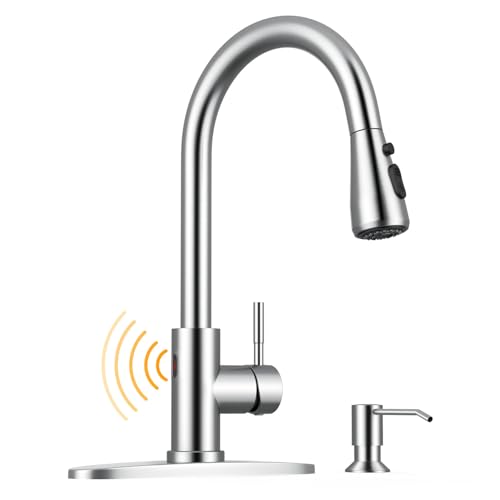
WEWE Touchless Kitchen Faucet with Soap Dispenser Set
Badge: Best Touchless Metal Build
Strengths
- SUS 304 stainless body and ceramic cartridge under the sensor hardware
- Soap dispenser included — one less plastic bottle ecosystem on the deck
- 360-degree swivel, 3 spray modes, easy-clean nozzles, all documented
Trade-offs
- Sensor electronics are the one non-serviceable-feeling system in this guide
- Power management (batteries or adapter) is a new maintenance category
- Busiest under-sink installation of the linked picks
Key specs (from verified listing data):
- Body: SUS 304 stainless steel
- Cartridge: Ceramic
- Operation: Touchless sensor
- Included: Soap dispenser set
- Swivel: 360 degrees
- Spray modes: 3
- Mounting: 1- or 3-hole fit
A touchless faucet in an all-metal longevity guide sounds like a contradiction — electronics are not famous for outliving plumbing — so this WEWE set had to earn its place on materials, and it does: the verified listing states a SUS 304 stainless steel body and a ceramic cartridge beneath the sensor hardware, with a 360-degree swivel, three spray modes, and easy-clean nozzles around them. The metal brief is fully documented. The sensor is an addition to a sound faucet, not a substitute for one.
That ordering matters for how you should judge it. Strip the electronics away mentally and ask whether the underlying faucet is built to last; here the answer, on documented materials, is yes. Then judge the sensor as what it is — a convenience layer with its own lifespan and its own small maintenance ritual of batteries or an adapter. Owners who accept that layering get genuinely cleaner, easier messy-day cooking: activation with an elbow’s worth of gesture while both hands are occupied with the pan and the hose.
The bundled soap dispenser plays a quiet longevity role of its own. Deck-mounted dispensers replace the parade of plastic pump bottles that crowd a sink, get knocked into it, and leave detergent rings on the finish. One refillable dispenser, fed from below, is a small permanent reduction in the daily abrasion a faucet’s surroundings endure — and on a three-hole deck it converts a spare hole into the job.
The honest costs: the install is the busiest in this guide, with sensor hardware and dispenser sharing under-sink space, and the electronics introduce the only component here that a handy owner cannot service with standard plumbing parts. If your longevity philosophy is “nothing I cannot repair,” choose a manual pick. If it is “a documented metal core, plus modern convenience, maintained knowingly,” this set is the most complete package in the guide — and its aesthetic pairs naturally with the streamlined kitchens in Best Looking Kitchen Faucets.
Best for: buyers who want documented metal construction plus touchless convenience. / Not suited for: repair-it-all-myself purists who want zero electronics at the sink.
GIMILI Matte Black Touchless Kitchen Faucet
Badge: Prose-Only: Body Material Not Documented as All-Metal
Strengths
- Motion-sensor operation and a spring pull-down sprayer are genuinely convenient
- Matte black finish suits deliberately dark kitchens
- Single-handle control is simple
Trade-offs
- Body material is not stated in the verified data — the all-metal claim cannot be confirmed
- Sensor system adds an electronic lifespan to a plumbing decision
- Single-hole mounting limits deck compatibility
Key specs (from verified listing data):
- Operation: Motion sensor, hands-free
- Mounting: Single hole installation
- Finish: Matte black
- Sprayer type: Spring pull-down
- Body material: Not stated in verified data
This is a prose-only review, and the reason is a single missing sentence. The GIMILI’s verified listing describes a motion-sensor, hands-free faucet with a spring pull-down sprayer in matte black — and never states what the body is made of. In most guides that omission would be a footnote. In an all-metal guide it is the whole ballgame: the keyword promises a construction material, and we cannot link a product as all-metal when its verified data does not say it is.
To be fair to the product, absence of evidence is not evidence of plastic. Plenty of well-built faucets have terse listings, and this one’s feature set — sensor activation, spring-held spray head, modern farmhouse styling — is coherent and appealing on its own terms. If your brief is touchless operation in a matte black kitchen, this may be exactly your faucet, and you can investigate its construction on the listing directly, where material details sometimes live below the headline.
But guides are read by people who trust the filter. A reader who buys from an all-metal shortlist should receive a faucet whose metal body the guide verified, not one it presumed. So the GIMILI stands here as a labeled exception: described honestly, praised where its data supports praise, and not linked under a claim its paperwork does not make.
There is a second, softer reason it sits comfortably in prose. A longevity brief built on materials sits uneasily with a sensor system whose lifespan is electronic rather than mechanical — not disqualifying, as the WEWE set above shows, but a tension that a documented metal body would have resolved in its favor. Without that documentation, prose is the right home for it in this guide.
Best for: matte black, touchless shoppers who will verify materials themselves. / Not suited for: anyone relying on this guide’s all-metal verification — it is not linked for that reason.
VFAUOSIT Kitchen Faucet with Pull Down Sprayer
Badge: Prose-Only: Body Material Not Documented
Strengths
- Certification list is strong: lead-free, NSF 61/372 and cUPC in the verified data
- 23-inch retractable hose and 3 spray modes documented
- Cold-start safety and a claimed fast, tool-free install
Trade-offs
- Body material is not stated in the verified data — all-metal cannot be confirmed
- Sold as a bar sink faucet, compact in format and ambition
- Cartridge type is not documented in the pool data
Key specs (from verified listing data):
- Certifications: Lead-free, NSF 61/372, cUPC
- Hose: 23in retractable
- Spray modes: 3
- Safety: Cold-start
- Format: Bar sink faucet (per listing)
- Body material: Not stated in verified data
The VFAUOSIT is the most frustrating entry in this guide, because so much of its paperwork is excellent. The verified listing documents lead-free construction with NSF 61/372 and cUPC marks, three spray modes, a 23-inch retractable hose, cold-start safety, and a claimed ten-minute tool-free installation. That is a certification stack several linked picks would envy. What it never states is the body material — and without that statement, an all-metal guide cannot link it, full stop.
The distinction we are enforcing is between safety certification and construction documentation. NSF and cUPC marks tell you the product met drinking-water and code standards at testing time; they do not tell you whether the body is stainless steel, brass, zinc alloy, or a composite. Longevity lives in that unspecified fact. A certified faucet with an undocumented body might last decades or might not, and “might” is not a basis for an all-metal recommendation.
Context softens the verdict slightly: the listing presents this as a bar sink faucet, a secondary-sink product where buying decisions reasonably weigh convenience over generational durability. For a wet bar or pantry sink, its documented package — long hose, fast install, cold-start safety — is genuinely attractive, and a shorter expected service context makes the material question less pivotal.
So the VFAUOSIT is covered in prose, with its real strengths on the record and its one disqualifying silence named. If a future listing revision states the body material, it would deserve re-examination for guides like this one. Until then, readers who need all-metal verified should choose from the four linked picks, whose listings make the claim this one does not.
Best for: bar and pantry sinks, where its certified, fast-install package shines. / Not suited for: an all-metal kitchen brief — the body material is undocumented, so it is not linked.
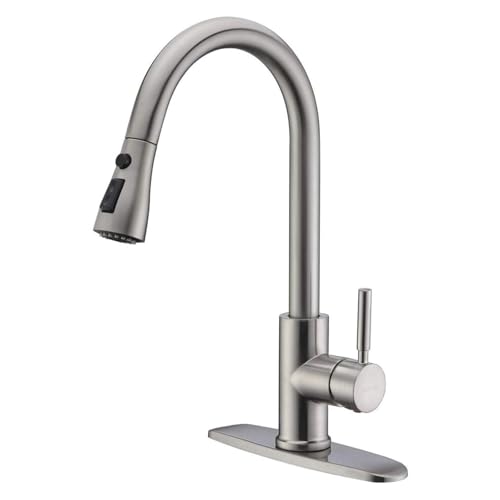
WEWE High-Arc Pull-Down Kitchen Faucet
Badge: Best Documented Durability Stack
Strengths
- SUS 304 body and ceramic cartridge, both documented
- 20-inch pull-down reach — the longest stated among linked picks
- Soft silicone nozzles clear scale by touch, aiding long-term spray quality
Trade-offs
- High arc needs vertical clearance
- Brushed nickel finish shows spots between cleanings
- Brand sells several similar models — verify the exact listing
Key specs (from verified listing data):
- Body: SUS 304 stainless steel
- Cartridge: Ceramic
- Reach: 20-inch pull-down reach (stated)
- Swivel: 360 degrees
- Spray modes: 3
- Nozzles: Soft silicone, rub-clean
- Mounting: 1- or 3-hole fit
If the Lufeidra wins this guide on the classic stack, the WEWE high-arc wins it on documentation depth. The verified listing states the SUS 304 stainless body and ceramic cartridge that anchor the brief, then keeps going: a 360-degree swivel, three spray modes, a 20-inch pull-down reach, braided-class hardware details, and — the detail longevity obsessives will circle — soft silicone nozzles designed to be rubbed clean of scale with a fingertip. Every one of those is a claim about year five, not day one.
The nozzles deserve the spotlight. In hard-water homes, faucets rarely die dramatically; they fade, as scale narrows the spray face and the pattern goes ragged, until owners replace a structurally sound faucet for a cosmetic failure. A spray face designed to be descaled by touch, mid-task, in seconds, directly attacks the most common real-world end-of-life pathway. It is the single most longevity-literate feature in this guide, and it costs the owner nothing but a habit.
The reach figure supports the same story from the mechanical side. Twenty documented inches of pull-down travel means the hose is long, the weight has room to work, and the sprayer genuinely leaves the sink — for floor buckets, counter pots, and the big pan that lives at an angle. Long hoses flex more over a life, so the SUS 304 body and ceramic cartridge matter here too: the moving system is only as durable as the structure it hangs from.
Caveats are the familiar ones: a high arc needs vertical clearance, brushed nickel shows its spots, and this brand’s model family is crowded enough that verifying the exact listing before ordering is a real step, not a formality. Do that, and this is the pick for evidence-driven buyers — the faucet whose listing reads like it was written by someone who expects to be checked. Shoppers working a tighter deck can compare the lower-profile direction in Best Low Arc Kitchen Faucets.
Best for: hard-water homes and evidence-driven buyers who read listings closely. / Not suited for: low-clearance decks, or anyone unwilling to verify the exact model variant.
Comparison Table
Body material is the headline column in this guide, stated exactly as the verified data states it. No prices, no ratings.
| Model | Body material (as documented) | Cartridge | Longevity-relevant extra | Listing |
|---|---|---|---|---|
| Lufeidra pull-down | SUS304 stainless steel | Ceramic | Classic, serviceable format | Check on Amazon |
| FEELSO pull-down | Stainless steel, lead-free | — | NSF certified; value tier | Check on Amazon |
| WEWE touchless set | SUS 304 stainless steel | Ceramic | Sensor layer over a metal core | Check on Amazon |
| GIMILI touchless | Not stated in verified data | — | Prose-only: material unverified | Prose only |
| VFAUOSIT pull-down | Not stated in verified data | — | Prose-only: material unverified | Prose only |
| WEWE high-arc pull-down | SUS 304 stainless steel | Ceramic | Rub-clean nozzles; 20-inch reach | Check on Amazon |
How to Choose an All-Metal Faucet That Actually Lasts
Read listings like an auditor. The body material should be stated as a specification — a grade like SUS 304, or an unambiguous “stainless steel” construction claim — not implied by words like “premium” or “metal-look.” If the material appears nowhere in the listing’s own data, treat the faucet as undocumented for longevity purposes, however handsome it is. That single habit reproduces this guide’s entire filter, and it will serve you in every future plumbing purchase.
Next, follow the wear path. Water and motion punish four places: the cartridge, the swivel joint, the hose, and the spray face. Ceramic cartridges address the first. A metal body protects the second structurally, though its seals remain service items. The third you judge by length, routing room, and the weight system. The fourth you judge by cleanability — silicone rub-clean nozzles being the current best answer for hard-water homes. A faucet that documents something sensible at all four stations is a faucet designed by people who have read their own warranty claims.
Then weigh the support ecosystem honestly. A documented metal faucet from a maker with findable parts will outlast a marginally better faucet from a maker who vanishes, because longevity in practice means repair events survived. This is also where certifications earn their keep — not as longevity proof, but as evidence the maker operates inside standards systems, documents products, and expects scrutiny.
Finally, match the faucet to your water. Hard water argues for rub-clean nozzles and against intricate spray faces. Aggressive or softened water argues for stainless grades with proven corrosion behavior. The best all-metal faucet is not a universal object; it is the documented metal faucet whose weak points your water and habits are least likely to find. Choose on that basis and the “long lasting” part of the keyword takes care of itself.
One last filter costs nothing and catches a surprising amount: read the listing’s own words about itself twice, once for what it claims and once for what it avoids. A maker with a documented stainless body says so early and repeats it in the specifications, because it is the strongest sentence they own. A maker avoiding the subject surrounds the silence with features — modes, finishes, installation minutes. Features are not flaws, and two reviews in this guide praise feature-rich models in prose. But when the sentence that matters most to a ten-year decision is missing, believe the omission and shop accordingly. Your future self, ordering a cartridge by model number in year eight, is the audience for every choice made here.
How to Maintain a Metal Faucet for Maximum Service Life
Metal construction forgives a lot, but the owners who get decades from a faucet share a few habits. First, water quality at the surface: wipe the faucet down weekly so detergent film and dried splashes do not sit on the finish, and never use abrasive pads or chlorine-heavy cleaners on brushed metal — the finish is a texture, and scouring rewrites it permanently. A soft cloth and mild soap are the entire finish-care program.
Second, scale management. Descale the spray face on the schedule your water dictates — rub silicone nozzles clear at the first sign of a wandering jet, and soak a standard aerator in vinegar when flow softens. Exercise the swivel through its full arc and the hose through its full travel weekly; seals and hoses that move stay supple, while ones parked at a single angle develop memory and ridges at exactly that angle.
Third, annual mechanical kindness. Check the mounting nut’s snugness, glance at the supply connections with a dry hand, and confirm the hose weight has not migrated. Ten minutes, once a year, catches the three loosenings that account for most “my faucet feels old” complaints.
Troubleshooting, in order. Problem: a drip from the spout → the cartridge is the suspect; on the linked picks it is a standard, replaceable part. Problem: the swivel feels gritty → descale the base and check for grit under it before assuming joint wear. Problem: spray pattern has gone ragged → scale in the face; clean it before pricing a replacement. Problem: a weep at the base when the spout turns → joint seals, serviceable on documented models. The pattern to notice: on a metal faucet, nearly every symptom has a part-level answer. That is the return on the all-metal investment, collected one small repair at a time.
What “All Metal” Does and Does Not Mean
Marketing uses “all metal” loosely, so let us fix the term for this guide. It means the faucet’s body and primary structure — the parts that hold pressure, hold the cartridge, and hold the faucet to your deck — are metal, documented as such. It does not mean every internal component is metal, because a working faucet cannot be built that way: seals must be elastomer, cartridge discs are ceramic, hose liners are polymer. Those materials are not cheats; they are the correct engineering choices for their jobs, chosen because they outlast metal at those specific tasks.
Where the phrase earns its keep is the failure ledger. Plastic bodies crack, creep under sustained clamping force, and strip threads; each of those ends the faucet’s life. Metal bodies essentially never do any of those things within a residential lifespan, which moves every realistic failure onto the replaceable list. When a listing documents a stainless body, it is making the one claim that reorganizes the faucet’s entire future — and when a listing omits the body material entirely, as two pool models here do, it is declining to make that claim, whatever the reason.
There is also a middle category worth recognizing: metal-look finishes over undocumented substrates, and zinc-alloy bodies, which are metal but softer and less corrosion-resistant than stainless grades. Neither is automatically a bad faucet. Both are reasons the grade and the documentation matter more than the adjective. Read for “SUS 304” or “stainless steel,” stated plainly, and you are reading the listings the way this guide did.
Stainless Steel, Brass, and Zinc: A Short Material Primer
Three metals dominate faucet bodies, and they are not equals. Stainless steel — particularly the 304 grade documented in this guide’s linked picks — is an alloy of steel with chromium and nickel that forms its own protective oxide surface. It resists rust and pitting in constant water contact, tolerates temperature swings, and does not need a coating to survive; the finish you see is close to the metal itself. For a component that is wet every day of its life, that self-protecting chemistry is why 304 became the food industry’s default and why this guide treats its documentation as a first-class signal.
Brass, the traditional plumbing metal, is copper and zinc, and its reputation was earned over a century of valves and fittings. It machines beautifully, threads cleanly, and resists dezincification in its modern low-lead formulations. Many fine faucets are brass under their finishes. Its relevance here is mostly as a reminder that “stainless” is not the only respectable answer — documentation is. A listing that states brass plainly would pass this guide’s filter just as a stainless one does; a listing that states nothing fails it, whatever the body turns out to be.
Zinc alloy sits at the budget end: easy to cast into complex shapes, genuinely metal, and noticeably softer and less corrosion-resistant than either rival. Zinc-bodied faucets can serve respectably in light-duty settings, but under a decade of clamping force, thermal cycling, and hard water, zinc is where threads tire and finishes lift first. The practical lesson is not to fear a material but to price it correctly — a zinc body at a stainless price is a bad trade, and only documented listings let you tell the difference before the box arrives.
The Repair Ledger: What Actually Gets Replaced Over a Long Life
Ask a plumber what kills faucets and the answer is rarely the body. The long-life ledger, in rough order of appearance, runs like this. First, the aerator or spray face clogs with scale and sediment — a cleaning, not a part. Next, often years in, a drip announces the cartridge’s wear; on documented models this is a standardized swap. Somewhere in the same era, the swivel joint’s seals may weep at the base, and the pull-down hose — flexed thousands of times, abraded where it passes the deck — eventually asks for replacement. Handles loosen; mounting hardware relaxes; finishes dull where hands and cleaners concentrate.
Notice what kind of list that is: every entry is a part, a cleaning, or an adjustment. None requires the faucet to leave the deck. That is the practical meaning of the all-metal brief — not that nothing wears, but that everything that wears is a line item rather than a funeral. The ledger also explains this guide’s secondary obsessions: rub-clean nozzles postpone the first entry, ceramic cartridges delay the second, and documented model identities make every subsequent entry orderable.
It is worth keeping your own ledger, literally. A note in a drawer — model, install date, cartridge type, hose length — converts each future repair from an investigation into a purchase. Owners of documented metal faucets who keep that note routinely report the ownership experience this keyword is really shopping for: a faucet that ages in place, serviced occasionally, never dramatically replaced. The metal body is what makes that story possible; the paperwork is what makes it easy.
Common Buying Mistakes
The first mistake is believing the adjective instead of the specification — buying “metal construction” language that never names a material. The second is the opposite pedantry: rejecting a faucet because its cartridge or seals are not metal, when those parts are non-metal by correct design. The third is ignoring the hose and spray face, the two places hard water and daily flexing actually spend a faucet’s life.
Fourth, buyers install a good metal faucet carelessly — grit under the base, a snagging hose loop, mounting hardware over-torqued — and blame the product for an installation’s sins. Fifth, they clean brushed metal with abrasives and scour the finish they paid for. And sixth, they discard documentation: model numbers, cartridge details, and parts information that turn a year-eight drip into a small order instead of a full replacement. Longevity is half product, half paperwork. Keep both.
Final Recommendation
For the brief as written, start with the Lufeidra pull-down: SUS304 body, ceramic cartridge, classic serviceable format, documented in its listing. If documented depth is your deciding factor, the WEWE high-arc matches that stack and adds the rub-clean nozzles hard-water homes will thank themselves for, with a stated 20-inch reach besides.
The FEELSO is the value route into a documented metal body, and the WEWE touchless set is the choice when sensor convenience must ride on a verified stainless core. The two prose-only models close the guide as its conscience: reasonable products, undocumented materials, and therefore not linked under an all-metal claim. That discipline — link only what the data states — is the whole value of a guide like this one.
Frequently Asked Questions
Is SUS 304 stainless steel really better than other faucet materials?
For corrosion resistance in constant water contact, it is the benchmark grade — the same family used for food-processing equipment and quality sinks. Brass has its own long plumbing pedigree, and zinc alloys are the softer budget option. What matters most is that the material is documented at all; grade comparisons come second, as this guide’s two prose-only entries show.
Does all-metal mean the faucet will never need repairs?
No — it means repairs stay possible and worthwhile. Cartridges, seals, and hoses are wear parts on any faucet. On a metal body, replacing them restores the faucet; on a cracked plastic body, nothing does. Long lasting means serviceable for a long time, not frozen in perfection.
Why were two faucets in this guide not linked?
Because their verified listings do not state a body material. They may contain substantial metal, but an all-metal guide links only documented claims. Both are reviewed in prose with their real strengths noted, so you can investigate them by name if their other features attract you.
How do ceramic cartridges help a faucet last?
The cartridge meters every drop and moves with every use, making it the hardest-working part in the faucet. Ceramic discs resist the abrasive wear that makes older washer-style valves drip, and they are standardized, replaceable parts. A ceramic cartridge on a metal body is the core longevity stack this guide looked for.
What maintenance does a metal faucet actually need?
Less than folklore suggests: a weekly wipe with a soft cloth, descaling of the spray face on your water’s schedule, full exercise of the swivel and hose, and an annual check of mounting and connections. Skip abrasive cleaners entirely — they damage brushed finishes that would otherwise outlast the kitchen around them.
Can a touchless faucet belong in a longevity guide?
Yes, if its plumbing core is documented like any other pick — as the linked WEWE set’s is, with a SUS 304 body and ceramic cartridge. The sensor layer has its own lifespan and power needs, which the review states plainly. Longevity purists may still prefer fully manual models, and this guide gives them three.