Disclosure: topratedkitchenware.com is reader-supported. When you buy through links on our site, we may earn an affiliate commission from Amazon and other retailers, at no extra cost to you.
Where to buy
This guide to the best high end 36 cooktops begins with the same honesty test every appliance guide should pass: of the six products in the verified research pool, exactly one is a 36-inch cooktop. The ThermoMate 36-inch gas model matches the width that defines this keyword, so it is the linked recommendation. The other five — a 30-inch gas cooktop and four portable single induction burners — are reviewed in full as prose-only entries with no sales link and no photo, because a 30-inch unit leaves a gap in a 36-inch cutout and a portable burner is not a built-in cooktop at all. Read them to understand the boundaries of the brief, not as substitutes for it.
- ThermoMate Heavy 36 Inch Gas Cooktop — Best Overall and the only true 36-inch match in this pool. Five Sabaf burners, 304 stainless steel, NG/LPG convertible.
- VEVOR Gas Cooktop 30 Inch 5 Burners — Best 30-Inch Alternative (prose-only: a genuine gas cooktop, but 30 inches wide, not 36).
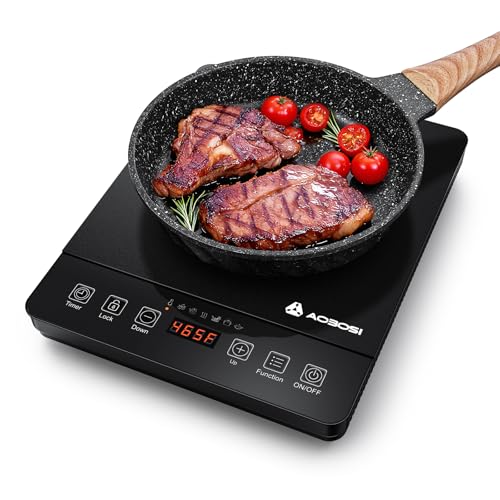
- AAOBOSI Portable Induction Cooktop — Best Portable Preset Alternative (prose-only: portable single burner, not a 36-inch built-in).
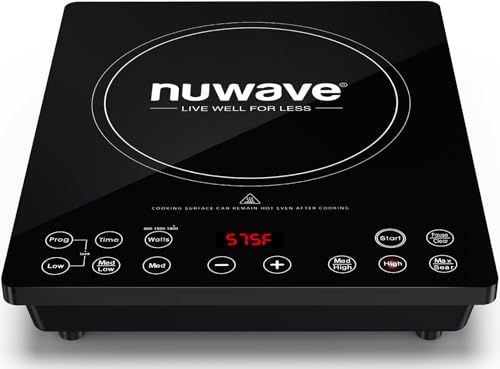
- OneSetNuf 1800W Portable Induction Cooker — Best Commercial-Style Portable Alternative (prose-only: portable single burner).
- Duxtop Gold 8100MC Induction Cooktop — Best Established Portable Alternative (prose-only: portable single burner).
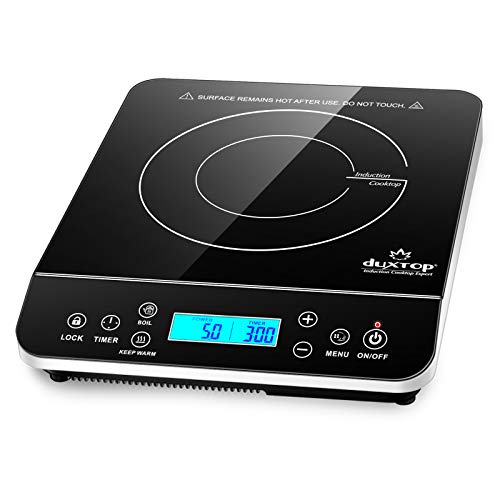
- Duxtop Silver 9600LS Induction Cooktop — Best Touch-Control Portable Alternative (prose-only: portable single burner).
Read the full guide ↓ for the detailed reviews, the comparison table, and the planning advice that a wider cooktop demands.
Why do cooks step up to 36 inches? Because width is working room. A 36-inch cooktop lets a large stockpot and a wide skillet coexist without either one stealing the other’s flame, lets a griddle span two burners for weekend pancakes, and lets two people cook a meal together without a constant negotiation of elbows and pan handles. People searching for the best high end 36 cooktops are usually renovating rather than merely replacing: they have chosen the wider format on purpose, often alongside a bigger range hood and deeper counters, and they expect the appliance to feel like the centrepiece it will visually become. This guide respects that intent. It judges the one true 36-inch product in the pool against the standards of the format, explains what the format demands from your kitchen, and shows clearly why the five near-misses — however competent in their own lanes — cannot fill a 36-inch brief.
Key Takeaways
- Only one of the six researched products — the ThermoMate 36-inch five-burner gas cooktop — matches the keyword’s core attribute of 36 inches, so it is the only linked recommendation here.
- A 30-inch cooktop in a 36-inch cutout is not a saving; it is a gap, a stability problem and a renovation error.
- Portable induction burners are single-burner countertop appliances. They can supplement a cooktop; they cannot be one.
- The real benefits of 36 inches are spacing, griddle room and two-cook comfort — judge the format by your largest pans, not by burner count alone.
- Named components matter at the high end: Sabaf burners and 304 stainless steel are verifiable quality signals in the linked pick’s listing.
- Plan ventilation, gas supply and counter depth around a 36-inch unit before ordering; the appliance is the easy part.
In this guide
Quick Picks
| Pick | Badge | Format | Fuel | Link |
|---|---|---|---|---|
| ThermoMate Heavy 36 Inch Gas Cooktop | Best Overall — True 36-Inch Match | 36-inch built-in, 5 burners | Gas, NG/LPG convertible | Check on Amazon |
| VEVOR Gas Cooktop 30 Inch 5 Burners | Best 30-Inch Alternative | 30-inch built-in, 5 burners | Gas, NG/LPG convertible | Prose-only — no link |
| AAOBOSI Portable Induction Cooktop | Best Portable Preset Alternative | Portable single burner | Induction (electric) | Prose-only — no link |
| OneSetNuf Portable Induction Cooker | Best Commercial-Style Portable Alternative | Portable single burner | Induction (electric) | Prose-only — no link |
| Duxtop Gold 8100MC Induction Cooktop | Best Established Portable Alternative | Portable single burner | Induction (electric) | Prose-only — no link |
| Duxtop Silver 9600LS Induction Cooktop | Best Touch-Control Portable Alternative | Portable single burner | Induction (electric) | Prose-only — no link |
If your project is specifically a gas project, the companion thinking in Best High End 36 Inch Gas Cooktops narrows this same format by fuel. If your cutout is still a drawing rather than a hole in a counter, keep reading before you let any badge decide for you — the planning sections below will save you more money than any product choice.
How These Picks Were Chosen
These picks were chosen through research, not hands-on testing, and the method was deliberately strict. Every product in the pool was verified against Creators API listing data — exact title, brand, width, fuel type and format — and then screened against the core attributes of this keyword: 36 inches wide and built-in cooktop format. A pick failing a core attribute became prose-only, with the reason stated in its review and in the sources file. That screen is why the VEVOR, a perfectly relevant product for a 30-inch search, is unlinked here, and why all four portable induction burners, which fail on width, format and burner count at once, carry neither link nor image.
Products that passed the screen were then weighed on the qualities that define the high end of this format: burner components and layout, construction material, fuel flexibility, named safety protection and certification. Where a fact was not present in the verified listing, it was not invented to fill space; you will find no output figures, dimensions beyond those stated, or performance claims in this guide that the listing data does not support. Prices and star ratings played no part in selection, because both fluctuate and neither measures whether a cooktop fits your kitchen or your cooking.
A final note on the word “high end” in a 36-inch context. At this width, buyers are typically spending on a kitchen, not just an appliance, so the guide treats high end as a standard of components, construction and safety rather than a price label. A cooktop with named Italian burners, the better grade of stainless steel and recognised certification meets that standard on evidence; a glossy photograph alone does not.
The 6 Best High End 36 Cooktops, Reviewed in Detail

ThermoMate Heavy 36 Inch Gas Cooktop
Badge: Best Overall — True 36-Inch Match
Strengths
- The genuine format this keyword asks for: a 36-inch built-in cooktop with five burners spread across a truly spacious surface.
- Five Italy Sabaf power burners — a named, reputable burner component rather than anonymous hardware.
- 304 stainless steel construction, thermocouple protection and CSA certification are all stated in the verified listing.
Trade-offs
- A 36-inch installation is a commitment: cutout, gas line position and ventilation must all be planned around it.
- Stainless steel at this size is a large, visible surface that shows fingerprints and needs regular wiping to look its best.
- Five burners tempt overcrowding with oversized pans; the width helps, but pan discipline still matters.
Mini spec box
- Format: 36-inch built-in gas cooktop
- Burners: 5 Italy Sabaf power burners
- Fuel: Natural gas / LPG convertible
- Material: 304 stainless steel
- Safety: Thermocouple protection
- Certification named in listing: CSA Certified
Start with the space, because space is the product. On a 36-inch surface, the five-burner layout stops being a compromise and becomes a workspace: a stockpot can sit at the back without leaning over the skillet in front, a wide sauté pan stops shading its neighbour’s flame, and a two-burner griddle becomes a realistic breakfast station rather than a stunt. For households that cook several components at once — a sauce, a grain, greens, a protein, something keeping warm — that breathing room is felt at every single meal, and it is the honest reason to choose this format over the 30-inch standard.
The component story supports the format story. Sabaf is an Italian manufacturer whose burners appear across many respected cooktop brands, and seeing the name in a listing is a different class of information from seeing the word “powerful.” Likewise, 304 stainless steel is the grade associated with better corrosion resistance and a finish that ages gracefully, and CSA certification tells you the design has been examined against North American safety standards. Add thermocouple flame-failure protection — the device that cuts gas if a flame dies — and NG/LPG convertibility, and the specification reads like a checklist written by someone who cooks and someone who worries, in the right proportions.
Who should buy it? The renovator whose plans already say 36 inches, the keen cook whose pan collection has outgrown 30 inches, and the household that cooks together and is tired of negotiating a crowded hob. Its honest limitation is the flip side of its virtue: it demands a kitchen built around it. Counter depth, cabinet runs, hood width and ducting all need to agree with the choice, and the wider buying-guide discussion in Best Highend Cooktops is worth reading if your project is still fluid. Within a committed 36-inch plan, though, this is the pick that honours the plan.
Best for: renovators and serious home cooks with a true 36-inch opening who want named burner components and 304 stainless / Not suited for: 30-inch replacements, renters, or kitchens that cannot accommodate the wider cutout and ventilation
VEVOR Gas Cooktop 30 Inch 5 Burners
Badge: Best 30-Inch Alternative
Strengths
- A real built-in gas cooktop with five burners, NG/LPG convertibility and thermocouple protection in its verified listing.
- Stainless steel design in the most common American cooktop width, fitting the standard cutout most kitchens already have.
- Its listing also positions it for varied settings including apartments and RV contexts, suggesting a flexible installation intent.
Trade-offs
- It is 30 inches wide. In a guide defined by 36 inches, that is a core size mismatch, and it is prose-only for exactly that reason.
- Five burners in the narrower frame are noticeably tighter with large pans than the same count spread over 36 inches.
- Fitting it into a 36-inch opening would leave gaps that no responsible installer would accept.
Mini spec box
- Format: 30-inch built-in gas cooktop
- Burners: 5
- Total output stated in listing: 12250 BTU
- Fuel: Natural gas / LPG convertible
- Surface: Stainless steel
- Safety: Thermocouple protection
There is nothing wrong with the VEVOR that a different keyword would not fix. Judged as a 30-inch five-burner, it offers the layout most family kitchens actually need, the fuel flexibility that helps in mixed mains-gas and bottled-gas situations, and a named safety feature that many budget listings omit. If your tape measure says 30 inches, this is a sensible product to research, and this guide’s sister coverage of the 30-inch class treats it as the leading pick.
Here, though, the ruling must be firm, because the physical facts are firm. A 36-inch brief usually exists because a counter has been cut, a design has been drawn, or a previous 36-inch appliance is being replaced. Dropping a 30-inch unit into that world creates an unstable, gapping installation with exposed cut edges — the kind of compromise that looks worse and works worse every day for the life of the kitchen. Good guides exist to stop that order being placed, which is why this review carries no link in this context.
Let the VEVOR instead serve as the comparison that clarifies your own project. If, reading this, you realise your kitchen is really a 30-inch kitchen and the 36-inch idea was aspirational, that is a valuable discovery to make on a webpage rather than on a delivery pallet. Its honest limitation in this guide is purely dimensional — and dimensions, in cooktops, are destiny.
Best for: households with a genuine 30-inch cutout wanting five gas burners and fuel flexibility / Not suited for: any 36-inch opening or project
AAOBOSI Portable Induction Cooktop
Badge: Best Portable Preset Alternative
Strengths
- Generous control range for a portable: 20 temperature and power levels with four preset modes, per the verified listing.
- A four-hour timer suits slow, unattended jobs like stocks and braises on a spare burner.
- Compact, portable and easy to clean, with the listing explicitly aiming at apartments, RVs and outdoor cooking with power.
Trade-offs
- It is a single portable burner — wrong format, wrong scale and wrong installation type for a 36-inch built-in brief, hence prose-only.
- Induction requires magnetic-base cookware; part of most pan collections will not work on it.
- One burner cannot reproduce the multi-pan choreography that makes a 36-inch cooktop desirable.
Mini spec box
- Format: Portable countertop single burner
- Fuel: Induction (electric)
- Power: 1800W
- Levels: 20 temperature and power levels
- Modes: 4 preset modes
- Timer: 4-hour
The AAOBOSI shows what the portable induction category does well. Twenty levels of adjustment is finer granularity than many portables offer, preset modes lower the learning curve for new induction users, and a long timer acknowledges how these burners are actually used — as the patient, set-and-forget station for the dish that needs hours rather than attention. In an apartment with a weak stove, in an RV with a hookup, or on a counter during a kitchen renovation when the main cooktop is disconnected, this is a genuinely useful appliance.
That last scenario is worth pausing on, because it is the one honest bridge between this product and this keyword’s audience. During a remodel, a portable burner or two can keep a household cooking while the 36-inch installation happens around them. Bought knowingly for that temporary role, the AAOBOSI makes sense. Bought as the cooktop itself — as the thing that will sit in the counter for a decade — it fails every term of the brief: it is not 36 inches, not built in, not multi-burner and not gas or any other fixed fuel.
So it stands here as a clearly labelled supporting player, reviewed in full and linked nowhere. Its honest limitation is categorical rather than qualitative: no portable single burner, however polished, can be a wide built-in cooktop, and any guide suggesting otherwise is selling, not advising.
Best for: temporary cooking during a remodel, apartment and RV use, and patient one-pot jobs on a spare burner / Not suited for: the 36-inch built-in role itself
OneSetNuf 1800W Portable Induction Cooker
Badge: Best Commercial-Style Portable Alternative
Strengths
- Commercial-grade positioning with dual IGBT power control, a detail from the verified listing that speaks to how the unit manages power delivery.
- Push-button controls are a deliberate alternative to touch panels — operable with wet hands and easy to read at a glance.
- An unusually long 10-hour timer and stainless steel body suit catering, demonstration and buffet-style holding work.
Trade-offs
- Portable and single-burner: it fails the 36-inch built-in brief on format, width and burner count, so it is prose-only.
- Its 8-inch coil size limits the pan diameters it heats evenly.
- Commercial styling prioritises function over kitchen looks; it reads as equipment, not furniture.
Mini spec box
- Format: Portable countertop single burner
- Fuel: Induction (electric)
- Power: 1800W
- Coil: 8-inch
- Power control: Dual IGBT
- Settings: 18 temperature settings
- Controls: Push-button
- Timer: 10-hour
- Body: Stainless steel
Most portable induction burners are styled for home counters; this one is styled for work. Push buttons instead of a glossy touch panel, a stainless body instead of glass minimalism, and a timer measured in shifts rather than minutes all point at the same user: someone running a buffet line, a market stall, a demonstration kitchen or a very serious home canning operation. In that world, the OneSetNuf’s specification is coherent and appealing, and its physical controls solve the wet-hands problem that touch panels struggle with.
None of that moves it toward this keyword. A 36-inch cooktop brief is about a permanent, wide, multi-burner installation at the centre of a kitchen. A commercial portable is about the opposite virtues: mobility, replaceability and single-task focus. The two products could happily coexist in the same building — the portable keeping a chafing dish warm in the dining room while the built-in handles dinner — but one cannot substitute for the other.
Its inclusion here, unlinked, is again about search reality: commercial portables surface constantly in cooktop results, and readers deserve to have the category named accurately. Its honest limitation for home cooks is the coil size and the single-burner ceiling; its honest strength is that, within its own category, the specification is unusually purposeful.
Best for: catering, buffet holding, demonstrations and utility cooking where a rugged portable is the goal / Not suited for: any built-in 36-inch installation
Duxtop 1800W Portable Induction Cooktop Gold 8100MC
Badge: Best Established Portable Alternative
Strengths
- A long-running model from one of portable induction’s most established specialist brands.
- Full 1800W output in a light, storable countertop unit.
- The gold finish is a genuine point of difference for a burner that will live on display.
Trade-offs
- Prose-only here: portable, single-burner and electric, against a brief demanding a 36-inch built-in.
- Occupies counter space permanently if left out, unlike the built-in it can never replace.
- Requires induction-compatible pans, like every model in its category.
Mini spec box
- Format: Portable countertop single burner
- Fuel: Induction (electric)
- Power: 1800W
- Model: 8100MC / BT-180G3
- Finish: Gold
Duxtop’s longevity in this niche is its own argument. The 8100MC has the settled, unshowy specification of a product that has been bought, used and re-bought for years: full power, a simple job, a finish option for people whose kitchens are not black-glass minimal. As an overflow burner at holidays, a sauce station beside a main stove, or the sole burner in a tiny flat, it is easy to understand its following.
In a 36-inch guide, its role is to be recognised and set aside. The shopper planning a wide built-in who clicks a result like this is usually being misled by a search page that sorted by popularity rather than relevance. Read the format line — portable, countertop, single burner — and the mismatch announces itself. That literacy, more than any single recommendation, is what protects a renovation budget.
Its honest limitation is the category’s limitation: one burner, one pan, magnetic pans only, and a power cord where a built-in has a gas line or a hardwired circuit. Useful tool; wrong job.
Best for: an established, simple portable burner for overflow and small-space cooking / Not suited for: the 36-inch built-in role
Duxtop Portable Induction Cooktop Silver 9600LS
Badge: Best Touch-Control Portable Alternative
Strengths
- LCD sensor touch controls give a completely flat panel that wipes clean with no knob crevices.
- Shares the established 1800W Duxtop portable platform with its gold sibling.
- Silver finish suits bright, traditional kitchens where black appliances sit heavily.
Trade-offs
- Prose-only for the identical core reasons: portable format, single burner, electric induction against a 36-inch built-in brief.
- Touch controls can misread steam and splashes and are awkward with wet hands.
- Numerical levels suit some cooks and alienate others who prefer judging heat by sight and feel.
Mini spec box
- Format: Portable countertop single burner
- Fuel: Induction (electric)
- Power: 1800W
- Controls: LCD sensor touch
- Model: 9600LS / BT-200DZ
- Finish: Silver
The 9600LS takes the same portable platform and gives it the control style of a modern built-in: a flat sensor panel and a digital display. There is an irony there worth noticing — the styling borrows the language of premium built-in cooktops while the product remains a plug-in single burner. That is not a criticism of the burner, which does its own job well, but it is exactly the visual confusion that lands portables in built-in searches and built-in budgets.
For its own audience — the cook who wants a tidy extra burner, the renter forbidden from changing appliances, the holiday host who needs one more ring for gravy — the flat panel and the established platform are sensible attractions. The wipe-clean surface is a real daily pleasure after cooking on grates.
Its honest limitation, in this guide, needs no elaboration beyond repetition with intent: it is not 36 inches, not built in and not a multi-burner cooktop. It closes the prose-only set as a reminder that polish is not fit, and fit is what a renovation actually buys.
Best for: touch-control fans needing a portable or supplementary burner / Not suited for: any permanent 36-inch installation
Comparison Table
| Pick | Width / Format | Fuel | Burners | Standout verified feature | Link |
|---|---|---|---|---|---|
| ThermoMate Gas Cooktop | 36-inch built-in | Gas NG/LPG | 5 Sabaf | 304 stainless, CSA certified | Check on Amazon |
| VEVOR Gas Cooktop | 30-inch built-in | Gas NG/LPG | 5 | Thermocouple protection | Prose-only |
| AAOBOSI Portable | Portable | Induction | 1 | 20 levels, 4 presets, 4-hour timer | Prose-only |
| OneSetNuf Cooker | Portable | Induction | 1 | Dual IGBT, 10-hour timer | Prose-only |
| Duxtop Gold 8100MC | Portable | Induction | 1 | Established 1800W design | Prose-only |
| Duxtop Silver 9600LS | Portable | Induction | 1 | LCD sensor touch | Prose-only |
The width column is the whole story of this table: one entry says 36 inches, and the keyword is answered. Everything else is context — useful, honestly described context, including the narrower built-in that anchors the 30-inch class discussed in Best Induction 30 Inch Cooktops for readers whose plans shrink on reflection.
How to Choose a 36-Inch Cooktop
Choose the format with your pans, not your dreams. Put your largest stockpot, your widest skillet and the pan you use third-most on a table and measure the trio. On a 30-inch cooktop those three are usually a negotiation; on 36 inches they should be a non-event, with a burner left over. If your actual pan collection is modest and your meals are simple, be honest about that too — the wider format costs counter space forever, and a household that never runs more than two burners has bought a larger cleaning surface, not a better kitchen.
Then plan the room around the appliance. A 36-inch cooktop wants a hood that is at least as wide and genuinely ducted outside, because five burners of gas combustion produce moisture and by-products at a scale a recirculating hood merely redistributes. It wants counter depth that leaves landing space on both sides for hot pans. It wants the gas line or electrical supply roughed in where the unit’s connections actually sit, which means choosing the appliance before the trades finish, not after. Renovations fail in the sequencing more often than in the shopping.
Within the format, judge components and construction. Named burner manufacturers, the better stainless grade, continuous heavy grates that let pans slide between burners, and flame-failure protection are the substance of “high end” at this size. Consider burner layout shapes as well as counts: a central strong burner suits wok cooking and big pots, while offset layouts suit households whose largest pans are wide rather than tall. If your fuel thinking is still open, remember that 36 inches exists in gas, induction and radiant electric, and the fuel decision — covered from the propane side in Best Home Propane Cooktops — will shape your cooking more than any single model choice.
Finally, budget honestly for the whole installation: appliance, gas or electrical work, ventilation, counter cutting and any cabinet modification. The cooktop’s ticket is often barely half the true cost of a format change. A household that plans the full figure chooses calmly; a household that discovers it in stages chooses resentfully, and sometimes chooses twice.
How to Plan, Install and Care for a Wide Gas Cooktop
Installation of a 36-inch gas unit follows the professional pattern: confirm the cutout and clearances to combustible surfaces, confirm the unit is configured for your gas type — a convertible model must be set up for natural gas or LPG as applicable — connect with approved fittings, leak-test every joint, and verify ignition and flame quality on all five burners. Flames should be blue, steady and evenly crowned around each burner head. Anything less is a conversation with the installer before the first meal, not after a month of guessing.
Ventilation deserves its own paragraph because width multiplies everything. Run the hood whenever burners are lit, start it a minute before ignition on big cooking sessions, and keep its filters clean on a schedule — a grease-choked filter undermines both extraction and fire safety. If your kitchen design places the cooktop on an island, be especially rigorous: island hoods work harder against cross-draughts, and undersized island ventilation is one of the most common regrets in renovated kitchens.
Care is a routine of small acts. Grates and burner caps lift off for washing; do it while spills are recent and the carbon is soft. Clear blocked burner ports gently with a soft brush or wooden pick, dry caps fully before refitting to avoid ignition clicking, and wipe stainless with the grain using non-abrasive cleaners. Once a season, check that every burner lights promptly and burns evenly, and that knobs turn smoothly through their full range.
Troubleshooting, in the usual pattern. Problem: one burner burns unevenly or with a lopsided flame → its cap is likely mis-seated or its ports partly blocked; clean, dry and reseat it. Problem: burners click repeatedly without lighting → check for moisture around the igniter and caps after cleaning or a boil-over, and let everything dry. Problem: a persistent smell of gas with burners off → leave the house without operating switches, and contact your gas supplier or emergency services from outside. Wide cooktop, small cooktop — that rule does not scale down.
Is 36 Inches Worth It? An Honest Assessment
For the right household, unambiguously yes. Entertainers, batch cooks, families cooking multiple dietary versions of the same meal, and two-cook households all feel the width weekly. The griddle alone — pancakes for six without batch juggling, smash burgers with room to work — converts some households permanently.
For the wrong household, the width is a tax: more steel to clean, more counter surrendered, a bigger hood to buy and run, and burners that may sit unused for months. The mature decision is to audit your last twenty real dinners and count burners and pans, then let that evidence — not a showroom photograph — pick the format. If the audit says two burners and a kettle, the 30-inch class will serve you better and cost you less in every currency including counter space.
Living With 36 Inches: Cleaning, Running Costs and Daily Reality
Ownership reality deserves a section of its own, because a 36-inch cooktop is a long relationship. Cleaning scales with area: five burners mean five caps, five burner heads and a grate system large enough that washing it in a standard sink becomes a manoeuvre rather than a task. Many owners adopt a rhythm — grates wiped in place weekly, lifted and soaked monthly — and the design detail that decides whether that rhythm survives is how easily the components lift, separate and go back together. Fiddly assemblies get cleaned late and then never; simple, heavy, obvious assemblies get cleaned as a matter of course. When you compare models, spend as much attention on the teardown as on the specification.
Running costs at this size are dominated less by the appliance than by behaviour. Five burners invite generous cooking, and gas used under pans smaller than the flame is gas heating your kitchen rather than your dinner. Match burner to pan base, keep flames from licking up pan sides, and the format costs little more to run than a 30-inch unit cooking the same meals. Households comparing fuels on running cost and responsiveness together may find the analysis in Best Highend Electric Cooktops useful, because at 36 inches the induction alternative is a genuine built-in rival rather than the portables reviewed above.
Finally, consider the room’s daily choreography. A wide cooktop centres a kitchen: homework migrates to the counter beside it, guests gather around it, and its surface becomes a landing strip for everything from post to shopping bags when the burners are cold. That is mostly joy, but it argues for a surface and grate system that tolerates real life without looking punished by it. The high-end purchase, in the end, is not the widest or the shiniest — it is the one whose daily reality, in cleaning, cooking and gathering, fits the household that will live with it for a decade.
Burner Layouts on a 36-Inch Surface: How to Read the Map
Two cooktops can both claim five burners and behave like entirely different appliances, because layout is a map of intentions. The classic 36-inch arrangement places one strong burner at the centre, ringed by medium and gentle burners at the corners. That map favours the cook whose biggest pot — a stockpot, a canner, a Dutch oven — deserves the place of honour, with supporting dishes orbiting it. The alternative map spreads two stronger burners along one side and keeps the other side gentle, favouring households that run two serious pans at once: a skillet searing while a wide sauté pan works beside it, sauces holding quietly at the back.
Read any layout against your three most-cooked meals. Where does the pasta pot go, and can the sauce sit beside it without crowding? When the wok comes out, which burner gives it a stable, centred seat with room for the tossing motion? When breakfast means a griddle, which pair of burners sits at the spacing the griddle was built for? A layout that answers your meals correctly is worth more than a higher burner count that answers somebody else’s. This is also where continuous grates earn their reputation: on a wide surface you slide heavy pans across burners constantly, and a grate system that makes that a glide rather than a lift changes the physical feel of cooking every day.
Simmer positions deserve a map reading of their own. On many five-burner layouts the gentlest burner is small and tucked at a rear corner — perfect for a small saucepan of sauce, awkward for a wide pan of risotto that wants low heat under a broad base. If your cooking leans on low, wide, patient dishes, look for a layout whose gentle burner can host a real pan, and treat that as a high-end feature even when the marketing leads with raw power. Power impresses in a headline; layout and simmer decide dinners.
Cookware and Pan Sizing for a Wide Cooktop
A wider cooktop quietly changes what cookware makes sense. Pans that felt oversized on a 30-inch surface — the 12-inch skillet, the wide braiser, the oval fish pan — come into their own, because their bases can sit fully over a flame without leaning into a neighbour’s territory. If you have been avoiding large pans because your old cooktop punished them, the 36-inch format is your permission to use the collection you actually own. Conversely, very small pans need a burner sized to them: a tiny milk pan adrift on the largest burner wastes heat up its sides and overheats its handle, so keep the small burners in your mental map for small work.
Griddle ownership deserves a specific check. A two-burner griddle only performs evenly when the two burners beneath it are spaced to its length and similar enough in output that one end does not run hotter than the other. Before buying a cooktop for weekend griddle cooking, compare the burner spacing with the griddle you own or intend to buy. It is a five-minute measurement that decides whether a headline feature becomes a weekly pleasure or a cupboard resident.
Material questions matter less on gas than on induction — flame is gloriously indiscriminate, heating warped, thin, copper, cast iron and enamelled pans alike — but weight and stability matter more. Heavy pans on high grates should not rock; lids should clear the pans behind them; long handles should have somewhere to point that is not over another flame. Spend one minute of your shopping imagining your heaviest full pot being slid, lifted and set down on the layout in front of you. The cooktop that passes that imagination test is the one your future self will thank you for.
Common Buying Mistakes
Mistake one: ordering the appliance before the cutout exists on paper, then discovering the counter, the cabinet and the hood were each planned around a different width. Mistake two: assuming a 30-inch unit can “make do” in a 36-inch opening with a trim ring — it cannot, safely or attractively. Mistake three: forgetting ventilation until the cooktop is in, when the correct hood is a structural decision. Mistake four: counting burners instead of measuring pans, and ending with five burners that cannot host your two favourite pans at once. Mistake five — the one this guide’s prose-only reviews exist to prevent — mistaking a polished portable induction burner in search results for a built-in cooktop, and discovering the difference on delivery day.
Final Recommendation
If your project is a true 36-inch project, the recommendation is the ThermoMate Heavy 36 Inch Gas Cooktop (Check on Amazon): the one product in this pool that matches the width, with five Sabaf burners, 304 stainless steel, thermocouple protection, CSA certification and NG/LPG flexibility. Plan its ventilation and installation with the same care as its purchase (Check on Amazon), and let the narrower and portable alternatives in this guide serve as what they are — good products for other kitchens. If your audit of real meals says the width is vanity, step down a format deliberately rather than accidentally (Check on Amazon). Measure twice, plan the room, buy once.
Frequently Asked Questions
What cutout does a 36-inch cooktop actually need?
Smaller than 36 inches — the figure describes the top surface, while the opening in the counter is defined by each manufacturer’s specification. Never cut from the headline width. Get the chosen model’s stated cutout dimensions, confirm depth and below-counter clearance as well, and have the counter cut to those numbers.
Can I put a 30-inch cooktop in a 36-inch opening temporarily?
No responsible installer would advise it. The unit would lack proper support and sealing, the exposed cut edges would collect grease and moisture, and the installation would fail the clearances the wider opening was designed around. If budget forces a delay, delay the project, not the fit.
Why are portable induction burners reviewed in a 36-inch cooktop guide?
Because they dominate the search results for cooktops generally, and readers planning a renovation deserve to have them identified accurately. They are good supplementary appliances — even useful during the remodel itself — but they are not built-in cooktops, so they are reviewed in full as prose-only entries with no link and no image.
Are five burners on 36 inches noticeably roomier than five on 30?
Yes, and the difference is practical rather than marginal. The extra width separates the burner centres enough that large pans stop overlapping flames and handles stop colliding. It is the difference between a layout that technically holds five pans and one that comfortably cooks with them.
What ventilation does a 36-inch gas cooktop need?
A hood at least as wide as the cooktop, ducted to the outside, with capture capacity matched to the total burner output and your cooking style. Frying and searing households should err generous. Ventilation is part of the appliance decision, not an accessory to consider afterwards.
Should I choose gas or induction at 36 inches?
Both fuels exist at this width and the choice is the household’s, not the format’s. Gas offers flame, any-pan freedom and outage resilience; induction offers exact temperatures, a cool flat surface and flameless safety. This pool’s linked pick is a gas model, but the criteria in this guide — components, construction, safety evidence and fit — apply unchanged to a built-in induction rival. Decide by your cooking’s evidence: the dishes you make weekly will vote more honestly than any showroom.
How long should a high-end 36-inch cooktop last?
A well-built unit from decent components should serve well beyond a decade, and the parts that decide longevity are unglamorous: burner quality, ignition reliability, grate material and how the surface finish handles daily cleaning. This is precisely why named components and construction grades carry weight in this guide — they are the closest a buyer can get, before purchase, to evidence about the years after purchase. Choose for the tenth year, not the first photograph.
Does NG/LPG convertible matter for a built-in this size?
It can. Convertible designs suit homes that may switch between mains gas and propane, properties with outbuildings on bottled gas, and buyers thinking about resale flexibility. What matters most is that the unit is correctly configured at installation for the gas actually connected — convertibility is an option, not a default state.